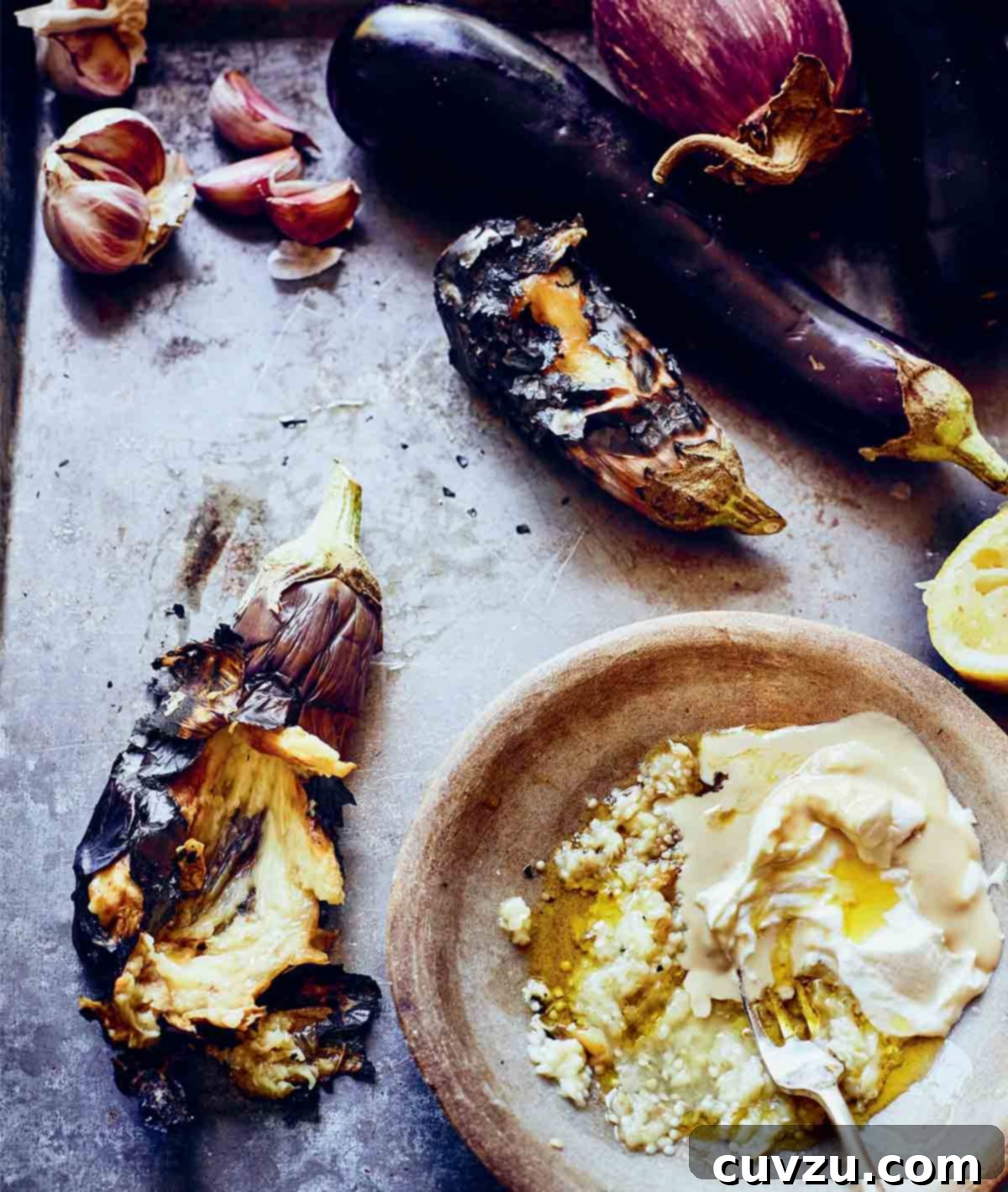
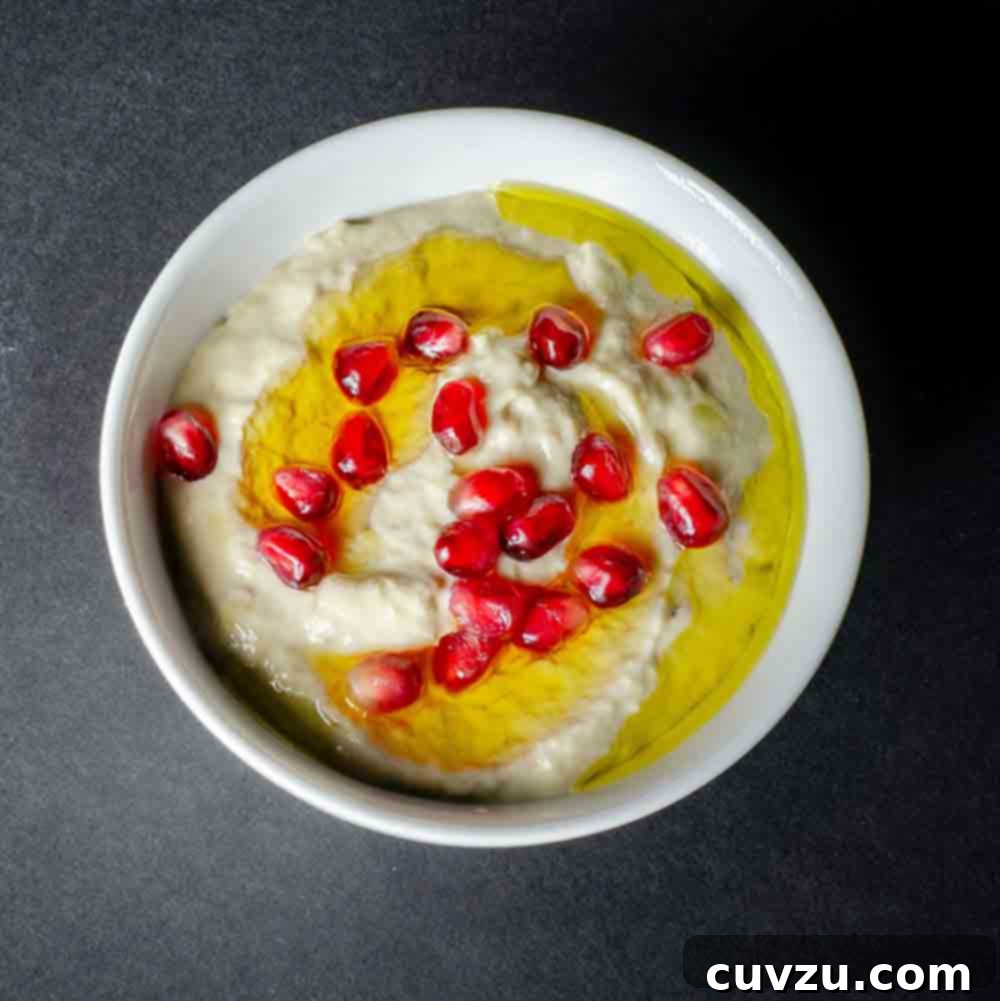
Moutabal, a luxurious roasted eggplant, yogurt, and tahini dip, transforms ordinary pita chips, vibrant crudités, and even simple crackers into an extraordinary culinary experience. Bursting with bright lemony notes, pungent garlic, and an irresistible smoky depth, this Middle Eastern classic is a symphony of flavors that leaves you craving more.
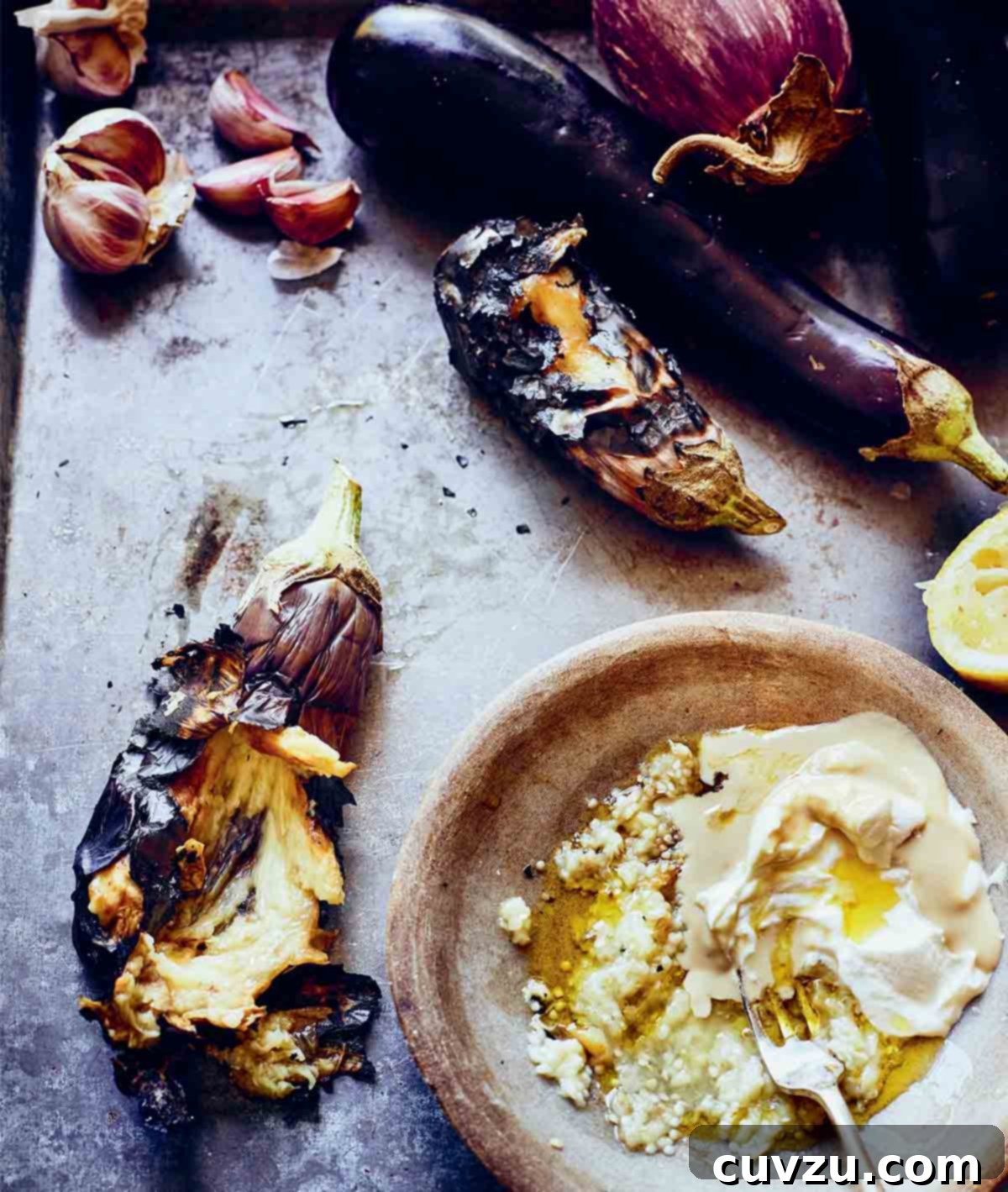
The journey to crafting the perfect Moutabal begins with embracing the art of charring eggplant. As Anas Atassi fondly recalls from his grandmother’s “eggplant oven”—an outdoor kitchen dedicated to strong-smelling tasks—the smoky essence is paramount. This robust aroma during preparation is a delightful precursor to the sultry, complex flavors that await you in this beloved dip. While modern kitchens may not feature an outdoor “eggplant oven,” the goal remains the same: coaxing out that deep, smoky character from the eggplant, which is the soul of an authentic Moutabal.
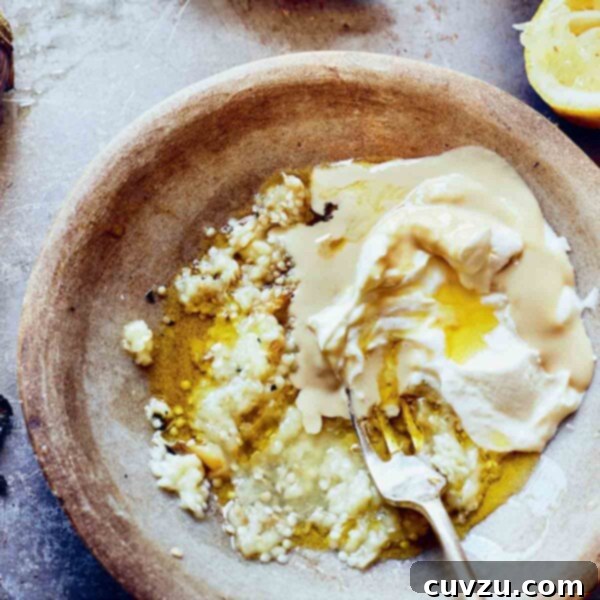
Moutabal: Roasted Eggplant, Yogurt, and Tahini Dip
Moutabal, a cornerstone of Middle Eastern cuisine, is typically enjoyed chilled as part of a lavish mezze spread. However, for those who appreciate more pronounced flavors, a secret preference for serving Moutabal warm truly elevates its aromatic complexity. This versatile dip is not just an appetizer; it’s a celebration of simple ingredients transformed into something extraordinary.
David Leite
Ingredients
- 1 (1-pound) eggplant
- 2 tablespoons tahini
- 3 tablespoons full-fat Greek yogurt
- 2 garlic cloves, pressed
- Juice of 1 lemon (2 to 4 tablespoons), preferably organic
- Salt, to taste
To Serve
- 1 to 2 tablespoons extra-virgin olive oil
- 1 handful of pomegranate seeds
- Pita chips, crackers, or crudité, for serving
Instructions
-
Roasting the Eggplant for Optimal Smoky Flavor
The smoky flavor is key to an exceptional Moutabal. There are two primary methods to achieve this:
Method 1: Open Flame, Gas Burner, or Grill
Pierce the eggplant a few times with a fork. Roast directly over an open flame (like a gas burner or charcoal grill), turning frequently with tongs until the skin is thoroughly charred and the eggplant flesh is soft and tender. This typically takes 15 to 20 minutes. This method yields the most intense smoky flavor, as highlighted by recipe tester Erin Bloys, who found the grill version “heads above the oven version.” Allow the roasted eggplant to cool for about 20 minutes until it’s comfortable to handle.
Method 2: Oven Roasting
Preheat your oven to 450°F (232°C). Pierce the eggplant a few times with a fork. Place the eggplant on a baking sheet and roast until its skin is slightly charred and the flesh is tender. This usually takes 40 to 55 minutes. For an enhanced smoky character, some testers, like Lisa Ward, recommend finishing under the broiler for a few minutes to achieve a good char. Let the eggplant cool for approximately 20 minutes, or until it’s cool enough to handle easily.
-
Preparing the Eggplant Flesh
Once the eggplant is cool enough, carefully scrape out the soft, cooked flesh into a bowl. Discard the charred skin. Using a fork for a chunkier texture or a food processor for a smoother consistency (as favored by Tricia M.), mash or purée the eggplant until it’s mostly smooth. Avoid over-blending to retain some texture, unless you prefer a completely smooth dip.
-
Combining Flavors
Add the tahini, Greek yogurt, pressed garlic, and lemon juice to the mashed eggplant. Blend all the ingredients thoroughly until well combined and creamy. Season with salt to taste, adjusting until the flavors are perfectly balanced. For a subtler garlic flavor, especially if preparing ahead, consider an expert tip from Jack V.: soak the pressed garlic in the lemon juice for 10 minutes before straining the lemon juice into the dip and discarding the pulp. This technique prevents the garlic from becoming overwhelmingly strong over time.
-
Serving Your Moutabal
Spoon the finished Moutabal into a serving bowl. Drizzle generously with a good quality extra-virgin olive oil. Garnish with vibrant pomegranate seeds for a burst of color and tartness, or a swirl of pomegranate molasses for deeper flavor. Serve immediately with warm pita bread, crispy pita chips, an assortment of crackers, or fresh crudités. While traditionally served cold, many, including the author and several testers, enjoy Moutabal at room temperature or even slightly warm for a more pronounced flavor profile.
Recipe Notes & Expert Tips
Understanding Tahini: The Creamy Heart of Moutabal
If you’ve enjoyed hummus, you’ve tasted tahini. This rich, thick, and unctuous spread is crafted from ground sesame seeds blended with oil, typically a mix of olive and sesame. Its nutty flavor provides essential depth and creaminess to Moutabal.
Most tahini is made from toasted sesame seeds, which imparts a deeper, more robust flavor. “Raw” tahini is also available, offering a lighter taste. Sesame seeds can be hulled or unhulled; unhulled seeds have a slightly bitter edge but boast a higher nutritional value. The quality of your tahini significantly impacts the final taste of your dip, so opt for a brand with a smooth consistency and pleasant aroma.
Choosing the Right Eggplant for Moutabal
Recipe tester Jack V. emphasizes the importance of using the correct eggplant variety. He recommends teardrop-shaped Italian eggplants, typically weighing between 210-245 grams each. These tend to have fewer seeds and achieve a silkier texture when roasted compared to larger globe eggplants, which can be seedy and require longer cooking times. Using smaller, denser eggplants ensures the other ingredients, like tahini and yogurt, aren’t overpowered.
Balancing Lemon and Garlic
Lemon juice can vary significantly in quantity. Jack V. suggests starting with 2 tablespoons of lemon juice per Italian eggplant to ensure a bright tang without dominating the delicate eggplant flavor. Adjust to your personal preference, as too much lemon can easily make the dip overly tart.
For garlic, if you plan to enjoy your Moutabal over several days, consider Michael Solomonov’s technique, adapted by Jack V.: soak pressed garlic cloves in the lemon juice for 10 minutes. Strain the lemon juice into the dip and discard the garlic pulp. This mellows the garlic’s intensity, preventing it from “blooming” and becoming overwhelmingly strong after a day or two in the refrigerator.
Moutabal vs. Baba Ganoush: What’s the Difference?
While often confused, Moutabal and Baba Ganoush are distinct Middle Eastern eggplant dips. Both feature roasted, mashed eggplant, tahini, lemon, and garlic. However, a key differentiator, as noted by tester Erin Bloys, is that Moutabal typically incorporates creamy Greek yogurt, which lends a lighter, tangier, and often smoother consistency. Baba Ganoush, on the other hand, usually omits yogurt, focusing more on the pure smoky eggplant and tahini flavor, sometimes with fresh parsley.
Serving Temperature and Customization
While traditionally a cold mezze item, several testers, including Tricia M. and Laura Hudeck, found the flavors of Moutabal more vibrant when served at room temperature or slightly warm. Experiment to discover your preferred serving temperature. Feel free to customize your Moutabal with additional garnishes such as fresh chopped parsley, toasted sesame seeds, or a drizzle of pomegranate molasses alongside the seeds, as Heidi V. suggests.
Adapted From
Sumac: Recipes and Stories from Syria to New York
Buy On Amazon
Nutrition Information & Health Benefits
Moutabal is not only delicious but also offers several health benefits thanks to its wholesome ingredients. Eggplant is a good source of dietary fiber, antioxidants, and vitamins. Tahini provides healthy monounsaturated fats, calcium, and protein. Greek yogurt adds probiotics for gut health and additional protein. Garlic and lemon contribute vitamins, minerals, and immune-boosting properties.
This dip can be a fantastic addition to a balanced diet, offering satisfying flavors without excessive calories, especially when paired with fresh vegetables or whole-grain pita.
Calories: 121 kcal
Carbohydrates: 11 g
Protein: 4 g
Fat: 8 g
Saturated Fat: 1 g
Cholesterol: 1 mg
Sodium: 10 mg
Fiber: 4 g
Sugar: 6 g
Nutrition information is automatically calculated and should be used as an approximation. Individual results may vary.
Tried this recipe?
Mention @leitesculinaria or tag #leitesculinaria on Instagram! We love seeing your creations!
Insights from Our Recipe Testers
Jack V.
This Moutabal is a truly delicious dip that exemplifies the “less is more” philosophy. With just a few well-treated ingredients, it yields fantastic results. The smoky undertones beautifully complement the nutty tahini, while a zing of garlic and lemon brightens the entire profile. It’s so good that even some eggplant skeptics have enjoyed it!
I’ve refined this recipe three times to ensure success for fellow home cooks. First, I highly recommend using the teardrop-shaped Italian eggplant, averaging 210-245 grams each. Larger globe eggplants, often twice the weight, tend to have more seeds and don’t achieve the same silky texture when roasted. Their extra bulk also dilutes the impact of the other ingredients. Second, the juice from a single lemon can vary widely. I’ve found 2 tablespoons per Italian eggplant provides optimal brightness without overshadowing the eggplant. My initial attempt, using the entire lemon (which yielded 4 tablespoons), was far too tart.
Regarding garlic, if you’re making this to consume on the same day, adding it directly is fine. However, for a dip meant to last several days, garlic tends to “bloom” and intensify in the fridge, becoming overpoweringly strong by day three. Inspired by Michael Solomonov’s “Zahev,” I soak crushed garlic in lemon juice for 10 minutes before straining the juice into the dip and discarding the pulp. This technique effectively prevents the garlic from becoming too pungent, ensuring the Moutabal tastes just as balanced on day three as it does on day one.
Lisa Amtower
This Moutabal is a delicious and incredibly easy dip, perfect for an afternoon snack with pita chips or as a party appetizer. I’ve made it three times recently, each time simply roasting the eggplant in the oven until nicely blackened. After allowing it to cool for about 25 minutes, I blend in the remaining ingredients with a fork. A few pinches of salt, and you have a truly wonderful dip!
Any leftovers taste fantastic the next day. The beauty of this recipe is its flexibility: you can easily adjust the flavors. For example, my lemon was particularly juicy, so I added a little extra tahini to maintain balance, and it worked perfectly. This recipe is definitely a keeper in my “oh-so-easy” file.
Heidi V.
As a big fan of baba ganoush, I was thrilled to try this Moutabal recipe, which offered a new variation for me! I hadn’t incorporated yogurt into an eggplant dip before, and typically use parsley instead of pomegranate seeds. The process is very simple and quick. The result is a beautifully balanced dip: creamy, smoky, with delightful sweet and sour notes, and just a hint of bitterness, all seasoned with the right amount of salt. It pairs wonderfully with crunchy kale and sunchoke chips.
Next time, I plan to add toasted sesame seeds and chopped parsley to further enhance the texture and freshness. However, I’ll definitely keep the pomegranate – or even drizzle in some pomegranate molasses if fresh seeds aren’t available – as it adds a lovely touch.
Lisa Ward
This quick and easy eggplant Moutabal dip is a delightful change from my usual hummus. It delivers so much flavor from surprisingly few ingredients. I’ve made a similar eggplant dip before, and that recipe often suggested using the broiler to achieve the necessary char for a smoky taste, even when oven roasting. If you’re using the oven method for this Moutabal, I would definitely recommend incorporating some broiler time to get that crucial char on the eggplant.
Even though my oven-roasted eggplant didn’t get quite as charred and smoky this time, I still found the final product incredibly tasty. I enjoyed it thoroughly with whole wheat pitas.
Tricia M.
We thoroughly enjoyed this Moutabal dip! I found that serving it cold from the fridge diminished its flavor significantly. I highly recommend serving it at room temperature, or even slightly warmer (a quick microwave boost works wonders), drizzled with olive oil, a touch of pomegranate molasses, and fresh pomegranate seeds. Prepared this way, it was absolutely delicious.
The prep is incredibly simple; the most time-consuming part is roasting the eggplant, but it’s largely hands-off. For those who prefer a smoother consistency, using a food processor is a must. I processed mine until it was fairly smooth, which was perfect.
I would categorize this Moutabal as a homemade hummus alternative – fantastic for a healthy lunch with pita and vegetables, a satisfying snack, or a delicious and wholesome dish to have on hand for quick enjoyment.
Laura Hudeck
I often prepare baba ganoush, so I was quite intrigued to try this Moutabal recipe with its similar yet distinct ingredients. I roasted the eggplant on my outdoor gas grill, where the temperature hovered around 500°F. The charring was perfect in about 20 minutes; the skin became black and hard, peeling away effortlessly without any scraping required. From there, the prep was a breeze – everything went into the food processor and was ready in just two minutes.
I served this Moutabal as an appetizer, still slightly warm, accompanied by homemade pita chips, sliced cucumber, and a glass of red wine. It was very good, but I found it a little too garlicky for my taste. Next time, I’ll start with just one clove of garlic and add the second only if needed. While the refrigerated leftovers were still enjoyable, I agree with the author that it truly shines when served warm.
Erin Bloys
Wow, what an incredible punch of flavor this Moutabal packs! It’s absolutely delicious and deceptively easy to make. The secret to achieving that deep, smoky flavor lies in roasting the eggplant over an open flame. I conducted a side-by-side comparison, making one version in the oven and another on the grill, and the grill version was undeniably superior. I had to genuinely restrain myself from devouring the entire batch in one sitting!
For years, I’ve known this dish as baba ganoush and have made a similar version. After looking into the differences, it seems many Middle Eastern cultures distinguish between the two by including tahini in Moutabal but often omitting it from baba ganoush, or sometimes adding yogurt to Moutabal as this recipe does. Whatever you choose to call it, this dip is simply delightful.
I served it with toasted pita triangles as part of a traditional mezze spread, alongside marinated olives, stuffed grape leaves, and fresh tabouli. It was the perfect complement.