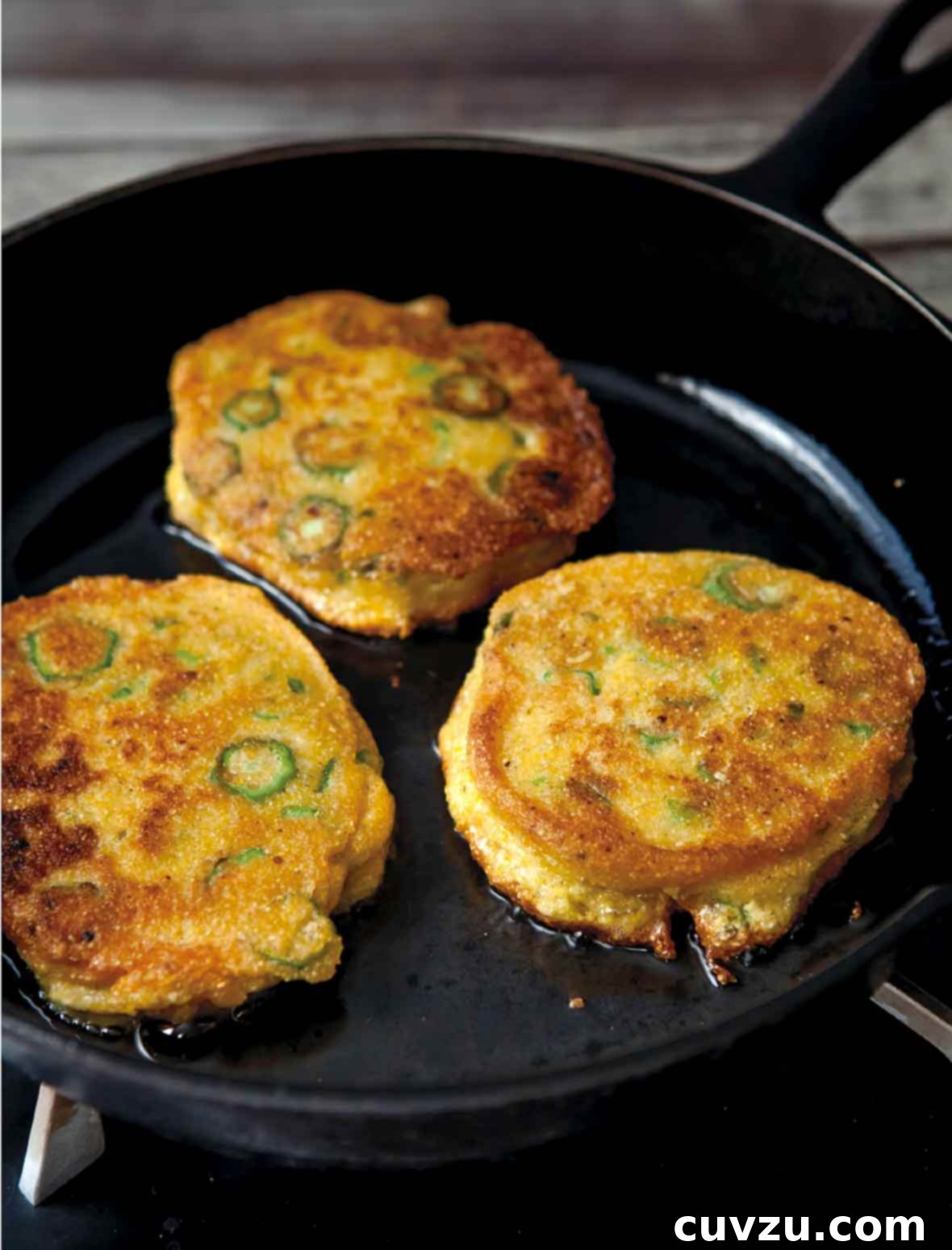
Discover the true essence of Southern comfort food with these exquisite Okra Cornmeal Cakes. Perfectly crisp on the outside and tender within, these savory cakes offer a delightful culinary experience. Whether you’re looking for an elegant bite-sized appetizer for a cocktail party or a hearty, flavorful side dish to complement your main course, these versatile fritters are an impeccable choice. When the season allows, incorporating freshly shucked corn kernels from the cob elevates their flavor profile, adding a burst of sweet, natural freshness that harmonizes beautifully with the earthy okra and rich cornmeal. This recipe isn’t just about cooking; it’s about embracing a heritage of simple, yet profoundly delicious, ingredients.
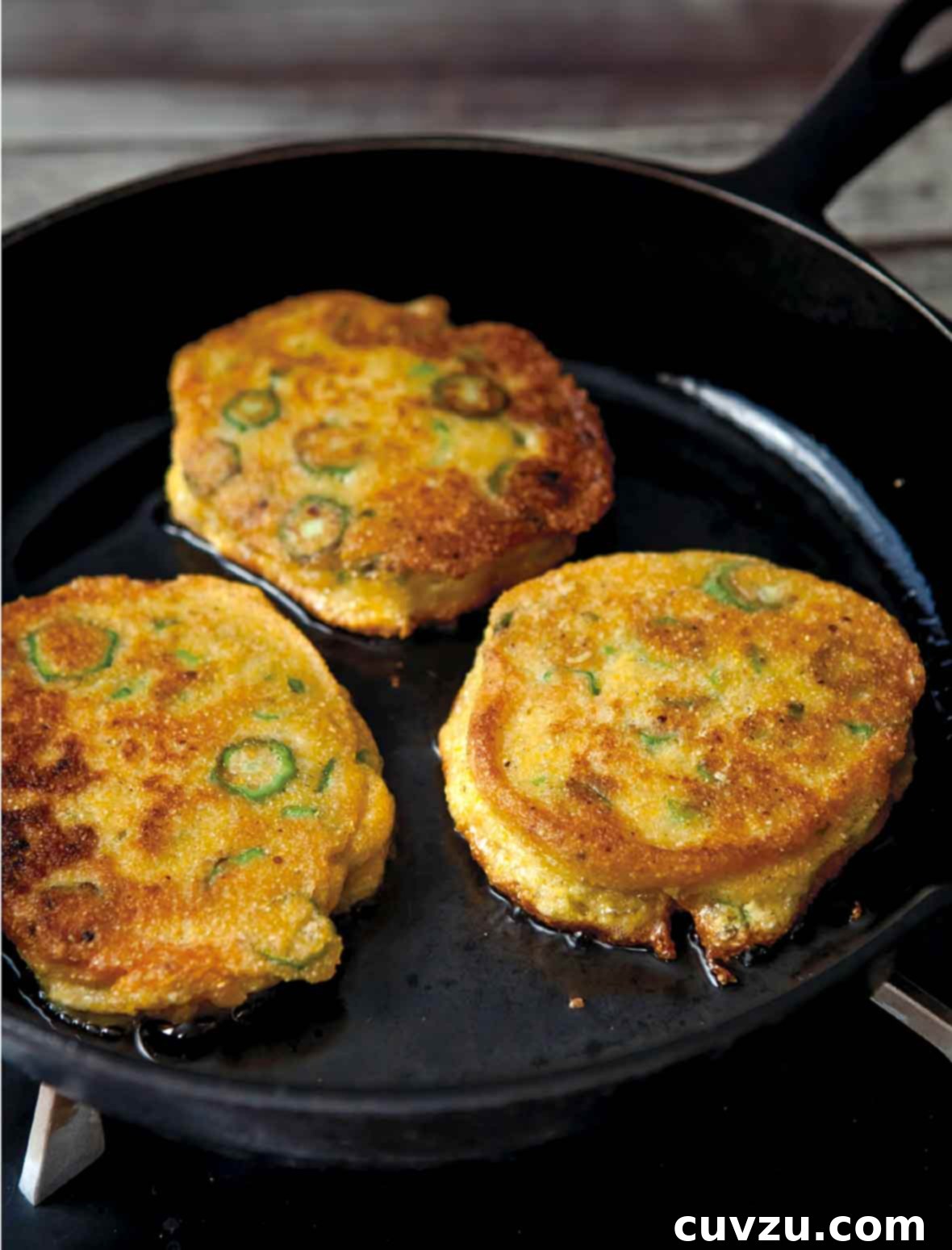
The culinary journey for these distinctive okra cakes began with an inspiring idea from Gloria Smiley, a celebrated food stylist and cherished friend from Atlanta. Hailing from the Low Country, Gloria’s roots naturally led her to a rice-based version of these savory delights, a testament to her regional culinary heritage. However, as someone from farther inland, renowned cookbook author Virginia Willis felt a natural pull towards cornmeal, a staple ingredient deeply embedded in her own upbringing and the Southern culinary landscape she cherishes. This personal connection birthed the unique cornmeal version presented here. In the peak of summer, Virginia suggests an extra touch of seasonal magic by folding in fresh corn kernels, cut directly from the cob, adding a sweet counterpoint to the vibrant okra. Serve these cakes either as charming, bite-sized morsels perfect for a social gathering or as substantial, flavorful patties ideal for a side dish. For an elevated presentation, consider layering them Napoleon-style with a luscious, creamy cheese like fresh goat cheese or ricotta, and thick slices of ripe, heirloom tomatoes. This transforms a simple dish into an unforgettable culinary statement.
Embracing the Napoleon Complex: A Creative Plating Philosophy
It’s not often that cookbook authors manage to elicit hearty laughter, but Virginia Willis’s insightful and humorous take on “Napoleon plating” certainly did the trick. Her explanation not only illuminates an alternative way to serve these savory cakes but also reveals a delightful aspect of her personality. As Virginia wittily notes, “A Napoleon is traditionally a stacked dessert of puff pastry, pastry cream, and fruit, but the term has come to mean pretty much anything stacked.” She playfully continues, “Sometimes the concept is taken a bit too far and the stack becomes towering and difficult to eat, more akin to a Napoleon complex, but it’s a very restaurant way of presenting a thin little cake or vegetable.” This observation perfectly captures the fine line between artistic presentation and culinary practicality, reminding us that while towering stacks might look impressive, the true joy lies in a dish that is both beautiful and easily enjoyed. For these Okra Cornmeal Cakes, a modest, elegant stack with fresh cheese and tomato slices truly elevates the experience without veering into comical excess.

Okra Cornmeal Cakes
David Leite
Ingredients
Crafting these delicious Okra Cornmeal Cakes starts with a selection of fresh, high-quality ingredients. The finely ground cornmeal provides the perfect texture, while fresh okra adds its distinctive flavor and a delightful bite. The jalapeño and garlic infuse the cakes with a gentle warmth and aromatic depth, making each serving a truly satisfying experience. Ensure your ingredients are fresh for the best possible outcome.
- 2 cups finely ground yellow cornmeal
- 2 teaspoons baking powder
- 1 teaspoon fine sea salt
- 1 large egg, lightly beaten
- 1 1/2 cups cold water, plus more if needed
- 8 ounces fresh okra, stems trimmed and sliced 1/4 inch thick
- 1 jalapeño, cored, seeded, and finely chopped
- 1 clove garlic, mashed into a paste
- 1/4 cup mild vegetable oil, for frying
Instructions
-
Before you begin cooking, prepare your landing zone for the finished cakes. Line a large plate or a wire rack set over a baking sheet with several layers of paper towels. This will help absorb any excess oil, ensuring your okra cornmeal cakes are perfectly crisp and not greasy.
-
In a spacious mixing bowl, combine the dry ingredients: the finely ground yellow cornmeal, baking powder, and fine sea salt. Whisk them together thoroughly, ensuring they are well-combined and evenly distributed. In a separate bowl or a large liquid measuring cup, crack the egg and lightly beat it, then add the cold water. Gradually pour this wet mixture into the dry ingredients, whisking continuously until a smooth, thick batter forms. At this stage, fold in the prepared fresh okra, finely chopped jalapeño, and mashed garlic paste. Stir until all ingredients are just combined. The batter should have a notably thick and wet consistency; if it appears too dry or stiff, add an additional tablespoon or two of cold water at a time until the desired texture is achieved. The exact amount of water needed can vary based on the specific grind and moisture content of your cornmeal.
-
Heat a cast-iron skillet over medium heat. Add a portion of the mild vegetable oil, typically starting with about 2-3 tablespoons, depending on how “fried” and crispy you prefer your cakes to be. Allow the oil to heat thoroughly, until it shimmers but is not smoking. Using a 1/4-cup measure, scoop portions of the batter onto the hot surface. If the cakes appear too thick, gently flatten them with the back of the spoon or ladle to create an even surface. Be mindful not to overcrowd the skillet, allowing ample space between each cake for even cooking and easy flipping. Cook the griddle cakes for approximately 2 to 3 minutes, or until their bottoms are beautifully golden brown and small bubbles begin to form on the surface and around the edges. Carefully flip each cake and continue cooking for another 2 to 3 minutes, or until the second side is also a rich, golden brown. Once cooked, transfer the cakes to your prepared paper towel-lined plate to drain any excess oil. While still warm, season the cooked griddle cakes generously with a sprinkle of salt and freshly ground pepper. Repeat this process with the remaining batter, adding more oil to the skillet as needed for subsequent batches. Serve these delicious Okra Cornmeal Cakes immediately for the best flavor and texture.
Tips for Perfect Okra Cornmeal Cakes
Achieving consistently perfect Okra Cornmeal Cakes requires attention to a few key details. Firstly, the quality of your cornmeal matters. Finely ground yellow cornmeal is ideal for a smooth, tender interior, but if you only have medium-ground, you might need a touch more water to prevent grittiness, as some of our testers discovered. Pay close attention to the batter consistency; it should be thick but pourable, not dry or overly runny. Adjust water gradually if needed, as humidity can affect how much liquid your cornmeal absorbs. When it comes to frying, a hot cast-iron skillet is your best friend. Ensure the oil is shimmering before adding the batter, as this promotes a crispy exterior and prevents the cakes from absorbing too much oil. Don’t overcrowd the pan; cooking in batches allows for even browning and temperature control. Lastly, seasoning immediately after removing from the pan is crucial—the warm cakes will better absorb the salt and pepper, enhancing their overall flavor. Consider a sprinkle of smoked paprika or a dash of cayenne for an extra layer of complexity.
Beyond the Plate: Creative Serving Ideas
While delicious on their own, Okra Cornmeal Cakes truly shine with creative accompaniments and presentations. For a sophisticated appetizer, serve them bite-sized with a dollop of créme fraîche or a tangy remoulade sauce. The “Napoleon style” Virginia Willis humorously mentioned is a fantastic way to elevate them: layer warm cakes with creamy fresh goat cheese or whipped ricotta, alternating with thin slices of ripe, juicy tomatoes. A drizzle of balsamic glaze or fresh herbs like basil or chives can further enhance this elegant stack. These cakes also make an excellent brunch item, served alongside scrambled eggs, crispy bacon, or a fresh fruit salad. For a heartier meal, pair them with grilled fish, roasted chicken, or slow-cooked pulled pork. Don’t shy away from adding a kick with your favorite hot sauce or a vibrant salsa. The possibilities are endless, allowing you to tailor this Southern classic to any occasion or palate.

Adapted From
Basic to Brilliant, Y’All: This recipe is a delightful adaptation from Virginia Willis’s acclaimed cookbook, a true guide to transforming simple Southern dishes into culinary masterpieces.
Buy On Amazon
Explore More with AI
Nutrition
Nutrition information is automatically calculated, so should only be used as an approximation.
Recipe Testers’ Reviews: Real Feedback for Real Cooks
Curious about how these Okra Cornmeal Cakes perform in home kitchens? Our dedicated team of recipe testers put this Southern classic through its paces, offering valuable insights and enthusiastic feedback. From adapting to different cornmeal grinds to experimenting with the “Napoleon” presentation, their experiences highlight the versatility and undeniable appeal of this dish. Read on to see what they loved and their clever tips for making these cakes a staple in your culinary repertoire.
Anna Scott
Anna Scott raved about this recipe, describing it as a brilliant twist on traditional fried okra, reminiscent of a delicious hybrid between fried green tomatoes and classic Southern fried okra. She found the batter straightforward to mix and appreciated the recipe’s visual cues, adding a little extra water to achieve the perfect “not dry” consistency. Anna particularly emphasized the importance of seasoning the cakes with salt and pepper immediately after frying, and she highly recommends a few dashes of your favorite hot sauce for an extra kick. Her highlight was preparing them Napoleon-style with creamy goat cheese and vibrant heirloom tomato slices, which she found to be an impressive and flavorful addition to her bourbon pork chops and turnip greens dinner. Anna also sees great potential for these cakes to be a standout item on a brunch menu.
Jo Ann Brown
Jo Ann Brown, a confessed lover of savory pancakes, was thoroughly impressed by these okra cornmeal cakes. She noted how the okra maintained its firm, earthy texture, while the jalapeño added a delightful, subtle warmth. Jo Ann found the recipe incredibly easy, perfect for a weeknight meal, with most ingredients being pantry staples. She offered a practical tip regarding the water quantity: “Depending on the circumstances, you will need more or less water than outlined in the recipe (hey, humidity happens).” Instead of using all the oil at once, she preferred to oil the pan as needed for each batch, finding that a well-greased pan consistently yielded a crisper, more golden-brown pancake. She served her cakes with pulled pork, envisioning them as a perfect base for all sorts of piled meats.
Lori Widmeyer
Lori Widmeyer wholeheartedly agreed with the cookbook’s philosophy: “basic to brilliant, y’all.” She found this simple Southern dish to be delicious on its own but truly spectacular when prepared as the “Napoleon” variation. With an abundance of cherry tomatoes, Lori crafted tiny cakes, perfect as an elegant appetizer. To ensure her children would enjoy them, she shrewdly cut her okra into extra small pieces, a tactic that proved successful. She also opted for a lighter frying method, using less than a tablespoon of oil initially and adding more sparingly as needed for subsequent batches. Lori expressed her love for the corncakes as a straightforward side dish, but her enthusiasm peaked for the cheese and tomato pairing, declaring it one of those dishes you can’t wait to share with more people.
Rebecca Marx
Rebecca Marx enthusiastically proclaimed this recipe capable of converting even the most adamant okra skeptics. She described the cakes as incredibly hearty, satisfying, and remarkably easy to make, noting that the most strenuous task was simply mashing garlic. Rebecca also found the recipe to be quite forgiving; she used medium-ground cornmeal instead of fine and, with a bit of extra water and cooking time, achieved a perfectly fine result despite her initial concerns about grittiness. She praised the perfect balance of okra, cornmeal, jalapeño, and garlic. As an added bonus, the cakes were delightfully non-greasy. Rebecca ultimately used about ½ cup more water than specified in the recipe to adjust for her batter’s dryness and fried her cakes with about 1 tablespoon of oil per batch, yielding 14 cakes. She enjoyed two cakes with a very cheesy omelet, which proved to be an excellent accompaniment, and suggested pairing them with Sriracha sauce for those who crave extra spice.