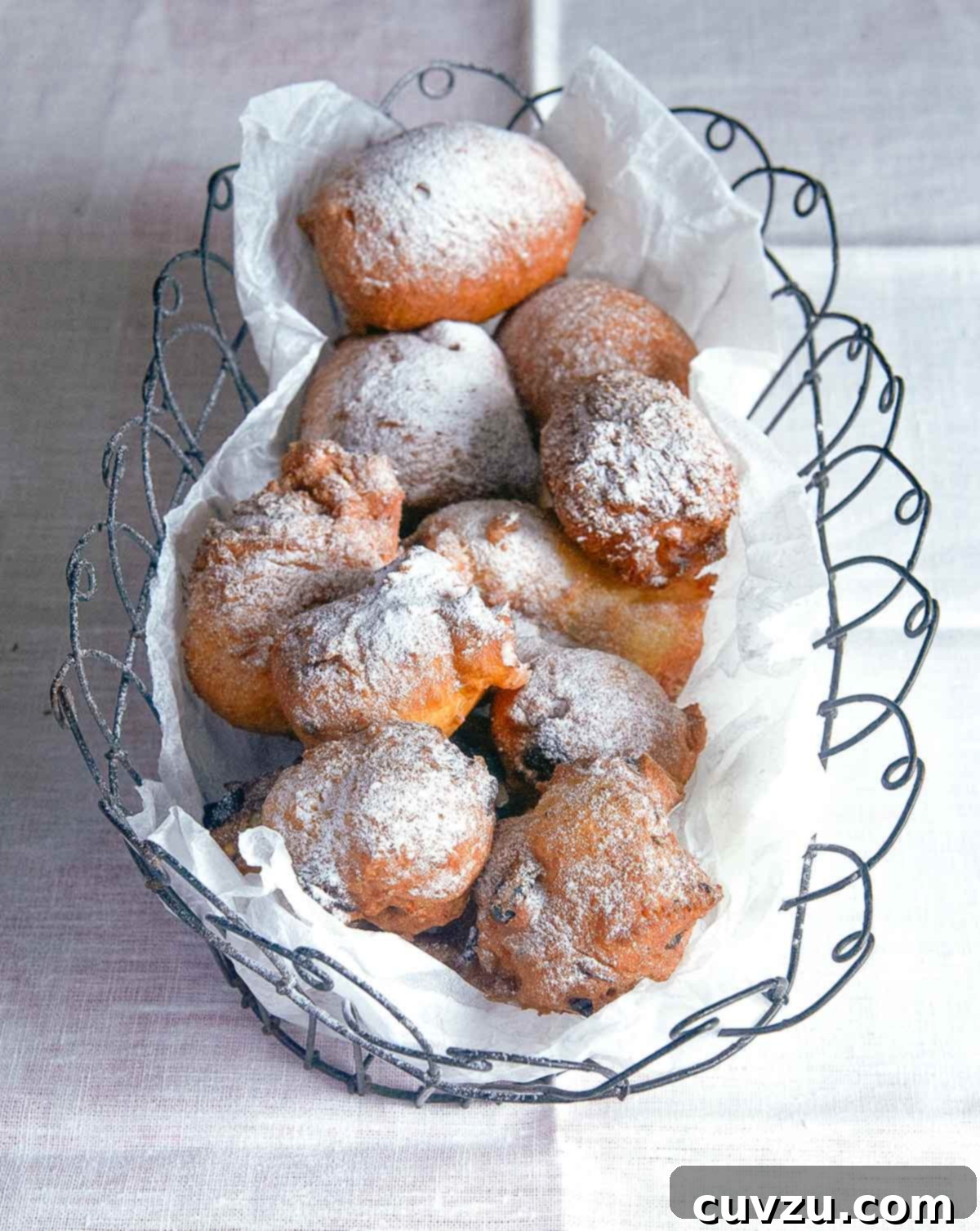
There’s an undeniable magic in warm, freshly fried dough, and for many, nothing quite captures that magic like Oliebollen. These traditional Dutch doughnuts are a symphony of textures and flavors, renowned for their invitingly crisp nooks and crannies that yield to a wonderfully pillowy center, all lovingly concealed beneath a delicate dusting of confectioners’ sugar. Far from being an ordinary pastry, Oliebollen offer a unique culinary experience, reminiscent of beignets but with a distinct character that has charmed generations.
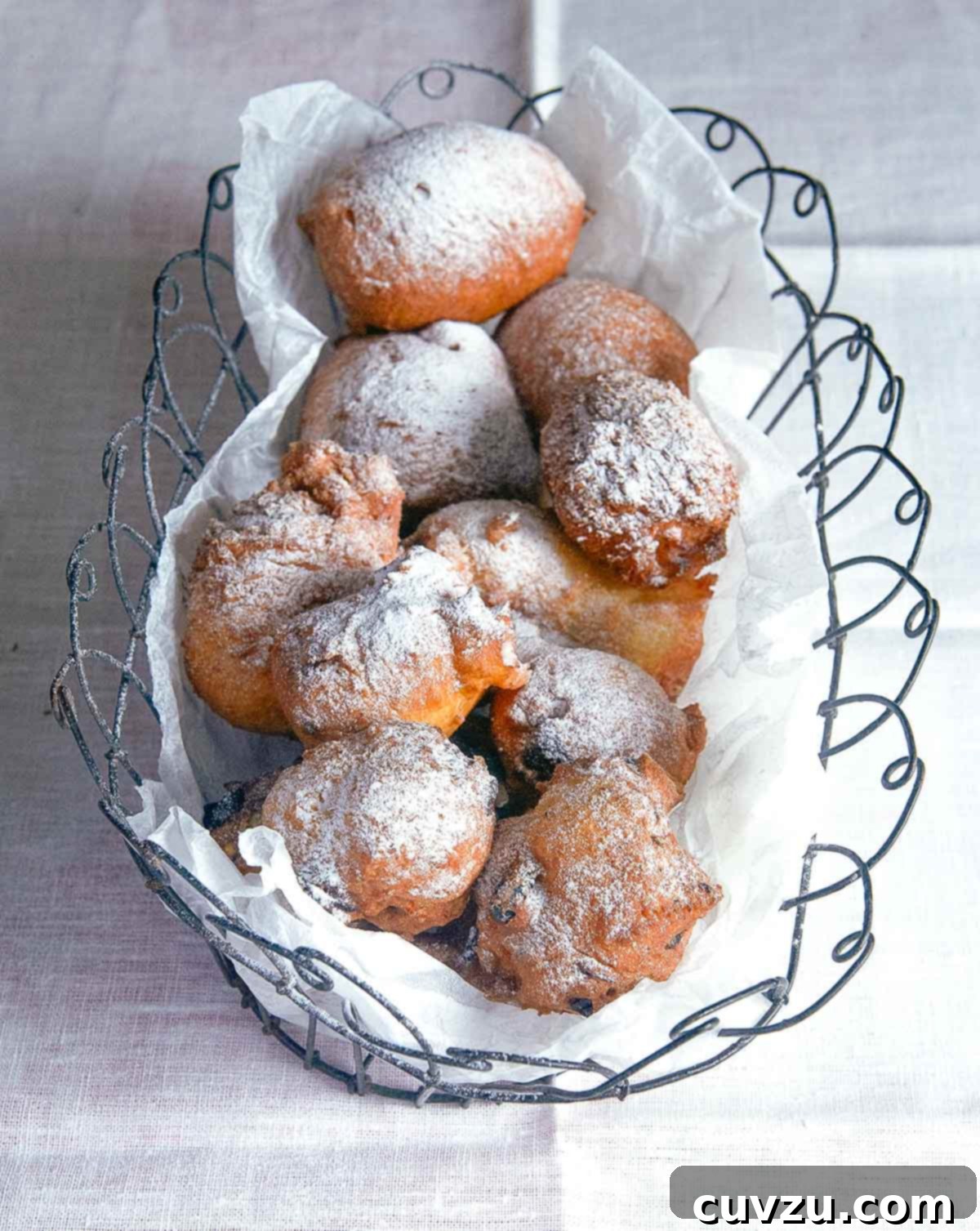
These deep-fried delights, often called “Dutch doughnuts,” boast a crisp exterior and a cakelike interior that is refreshingly not overly sweet. They are comforting orbs of perfection, each bite a testament to their rich heritage. As food writer Angie Zoobkoff aptly describes, these pastries are “entirely deserving of a name that just sorta begs you to roll it around in your mouth. Just like the roly-poly pastries they describe.”
Oliebollen: A Taste of Dutch Tradition
Oliebollen, literally meaning “oil balls,” have a storied past deeply intertwined with Dutch culture, particularly during the festive winter season. These humble yet delicious fritters are most famously enjoyed around New Year’s Eve in the Netherlands. Legend has it that the Germanic tribes would eat fried dough during the Yule season to appease the goddess Perchta. When she flew through the winter skies, attempting to cut open the stomachs of people, those who had eaten the greasy Oliebollen would be spared, as her sword would supposedly slide off their oiled bellies. While this tale is certainly folkloric, it highlights the ancient roots of consuming fried dough during winter celebrations.
Today, the tradition of eating Oliebollen on New Year’s Eve is less about appeasing goddesses and more about celebration, warmth, and family. As the clock ticks towards midnight, households across the Netherlands prepare or purchase vast quantities of these golden treats, often accompanied by warm glühwein (mulled wine) or champagne. They are a symbol of good luck for the coming year, a comforting antidote to the cold winter air, and a delicious way to ring in new beginnings. Street vendors, known as “oliebollenkramen,” pop up during the winter months, offering fresh, hot Oliebollen and apple fritters to eager crowds.
Your Essential Oliebollen Questions Answered
Absolutely! While classic Oliebollen are often plain, many enjoy customizing them. As Dan Kraan, our community moderator with Dutch heritage, shared, “a staple over the Yule season, especially over New Year’s, these deep-fried nuggets often have currants or raisins in them.” This addition infuses the fritters with a delightful burst of sweetness and chewiness, making this sugar-dusted treat even more magical during a season when imaginations and festivities run higher than the rest of the year. If you’re feeling adventurous, Dan also notes, “if you use apple chunks or rings instead of currants or raisins, you’ll get appelflappen,” which are another beloved Dutch treat. You might also find modernized versions of this treat, sometimes called “Dutchies,” in local doughnut shops, often incorporating various fillings or glazes. Other popular additions include a touch of orange zest for brightness, a pinch of cinnamon for warmth, or even small chocolate chips for a decadent twist. Don’t be afraid to experiment and make them your own!
Achieving the perfect Oliebollen—cooked all the way through with a beautiful golden exterior without burning—hinges on maintaining the correct oil temperature. Ideally, the oil should be precisely 350°F (180°C). Remember that every time you add batter to the hot oil, its temperature will naturally drop, so monitoring is key. If you don’t have a reliable deep-fry thermometer, don’t despair! There’s a simple, time-honored trick you can use. Gently drop a very small amount of batter into the hot oil. If it immediately sizzles aggressively and floats to the surface, the oil is hot enough and ready for frying. If it sinks and barely bubbles, the oil needs more time to heat up. If it darkens too quickly, the oil is too hot and needs to cool slightly before you proceed. This simple test ensures your Oliebollen cook evenly and achieve that desired crisp-tender texture.
Patience is a virtue, especially when it comes to the final flourish of your Oliebollen. While the desire to immediately dust them with sugar is tempting, it’s crucial to give them a minute or two after they emerge from the hot oil. This brief resting period allows any excess oil to drain thoroughly. Why is this important? Because hot oil and powdered sugar are not a good mix! If you sprinkle sugar on still-oily Oliebollen, the sugar will clump, dissolve, and create a sticky, unattractive mess instead of a delicate, snowy finish. Let them drain on paper towels or a wire rack until they are dry to the touch, but still delightfully warm. Once drained and slightly cooled, sprinkle them liberally with confectioners’ sugar, coating every nook and cranny. Then, pile them high on a serving plate and enjoy their warm, sweet perfection.
The Perfect Oliebollen Recipe | Dutch Doughnuts
Oliebollen | Dutch Doughnuts
Recipe by David Leite
Dessert
European
48
to 60 doughnuts
49
kcal
30 minutes
15 minutes
1 hour
45 minutes
Ingredients
-
2
cups
lukewarm milk, plus more as needed -
1
envelope
active dry yeast -
3
tablespoons
granulated sugar -
4
cups
all-purpose flour -
Pinch
salt -
1
large
egg -
2
quarts
vegetable oil, for frying - Confectioners’ sugar, for dusting
Instructions
-
In a small bowl, combine the lukewarm milk with the yeast and granulated sugar. Stir gently and let this mixture stand for about 10 minutes until the yeast is foamy. This indicates that your yeast is active and ready to work its magic.
-
Meanwhile, in a large mixing bowl, sift together the all-purpose flour with a pinch of salt. Sifting helps prevent lumps and aerates the flour, contributing to a lighter Oliebollen. Create a well in the center of the flour mixture and crack the large egg into it. Pour in the activated yeast mixture. Using an electric hand mixer, beat the ingredients together until well combined, adding more milk gradually if needed to achieve a thick batter with the consistency of a dense cake batter. The batter should be smooth but not runny. Cover the bowl with plastic wrap or a clean kitchen towel and set it aside in a warm place to rise for 1 to 2 hours, or until it has visibly doubled in size and is light and airy.
-
In a large, heavy-bottomed sauté pan or a dedicated deep-fry pan, pour in the vegetable oil. Place the pan over medium-high heat and carefully warm the oil to 350°F (180°C). Using two teaspoons that have been lightly greased with oil (this prevents the batter from sticking), scoop out balls of batter. Aim for portions no larger than 2 inches (5 cm) in diameter, roughly the size of a large golf ball. Gently slide these batter balls into the hot oil. Depending on the size of your pan, you can fry about 4 to 8 Oliebollen at a time, ensuring not to overcrowd the pan, which would lower the oil temperature too drastically. Cook the Oliebollen until they are golden brown on the outside and cooked through on the inside, flipping them halfway through cooking. This typically takes about 6 minutes in total, depending on their size. Once golden and puffed, use a slotted spoon or spider strainer to remove them from the oil and transfer them to a plate lined with paper towels to drain excess oil.
-
Serve the Oliebollen warm. Once they have drained for a minute or two and are no longer dripping oil, generously sprinkle them with confectioners’ sugar. Arrange them attractively on a plate and enjoy!
Adapted From
Home Made Winter
Buy On Amazon
Explore More with AI
Ingredient Substitutions
Scale Recipe
Summarize & Analyze
Nutrition Facts
Serving:
1
doughnut
Calories:
49
kcal
Carbohydrates:
9
g
Protein:
2
g
Fat:
1
g
Saturated Fat:
1
g
Monounsaturated Fat:
1
g
Trans Fat:
1
g
Cholesterol:
5
mg
Sodium:
6
mg
Fiber:
1
g
Sugar:
1
g
Nutrition information is automatically calculated, so should only be used as an approximation.
Tried this recipe?
Mention @leitesculinaria or tag #leitesculinaria!
Insights from Our Recipe Testers
Our dedicated team of recipe testers tried this Oliebollen recipe, offering valuable feedback and helpful tips to ensure your homemade Dutch doughnuts are nothing short of perfect. Here’s what they had to say:
Gail Rueckl
Gail was thrilled to try this recipe, finding the Oliebollen both delicious and surprisingly easy to make. She praised the batter for being super easy and quick to prepare, making the entire process enjoyable. She noted that while they are best eaten on the first day, leftovers can be stored effectively in an airtight container. For reheating, Gail recommends warming them in the oven at 400°F (200°C) for about 15 minutes, which helps them regain some of their crispness.
Her main suggestion for an even sweeter experience was to “maybe add a little more sugar in the batter for a bit more sweetness.” This is a great tip for those who prefer a slightly richer, sweeter dough, as the original recipe is designed to be moderately sweet, relying on the powdered sugar for the main sweetness.
Dan Kraan
Dan Kraan, with his Dutch background, found these Oliebollen “somewhat reminiscent of beignets, but smaller,” highlighting their crisp exterior and tender, cakelike interior. He appreciated their “slightly chewy texture with just the right amount of sweetness from the icing sugar.”
He offered a crucial insight regarding regional ingredient differences: “In Canada, our flour is a little different than in the United States. I needed close to half-cup of milk, or more, over what was initially asked for.” This is an excellent reminder that humidity and local flour characteristics can affect dough consistency, so don’t hesitate to adjust liquid amounts to achieve the specified batter texture. Despite the adjustment, Dan confirmed, “The results are still great, though.”
Dan also reiterated the traditional additions, noting, “Although not called for in this recipe, currants or even raisins are routinely added.” He emphasized the social aspect of Oliebollen, stating, “That size of batch is probably the right amount, because you’ll want to share! Also, once you have one…” implying they are incredibly addictive!
Regarding size, Dan offered practical advice: “The Dutch doughnuts I’m accustomed to, however, are usually one or two bites. Even using a couple of greased tablespoons yielded a size close to a regular doughnut. Using a couple of oiled teaspoons is probably the best method for getting the balls the right size for deep frying. The size of these will vary a lot, but I’d recommend trying to keep them 2-inches or less across the equator.” This attention to detail ensures they cook through properly and remain bite-sized delights.
Finally, a humorous but important “note of caution” from Dan: “When eating olibollen, do not inhale while taking a bite. You risk inhaling the confectioners’ sugar, too, making an enjoyable experience a little complicated.” A wise warning for all powdered sugar enthusiasts!
Making Oliebollen: A Joyful Culinary Journey
Preparing Oliebollen at home is more than just following a recipe; it’s an invitation to partake in a rich culinary tradition. The process, from activating the yeast to watching the golden spheres emerge from the bubbling oil, is incredibly rewarding. The aroma that fills your kitchen—a sweet, yeasty perfume mingling with the scent of hot oil—is a prelude to the delightful treat awaiting you.
Whether you’re celebrating New Year’s Eve, hosting a cozy winter gathering, or simply craving a unique and satisfying fried dough, Oliebollen are a perfect choice. Their versatility allows for customization with various fruits or spices, ensuring there’s a version to please every palate. Serve them warm, generously coated in confectioners’ sugar, perhaps alongside a cup of coffee or tea for a truly authentic Dutch experience.
Embrace the tradition, enjoy the process, and savor every bite of these truly irresistible Dutch doughnuts. They are a testament to simple ingredients coming together to create something profoundly comforting and celebratory.