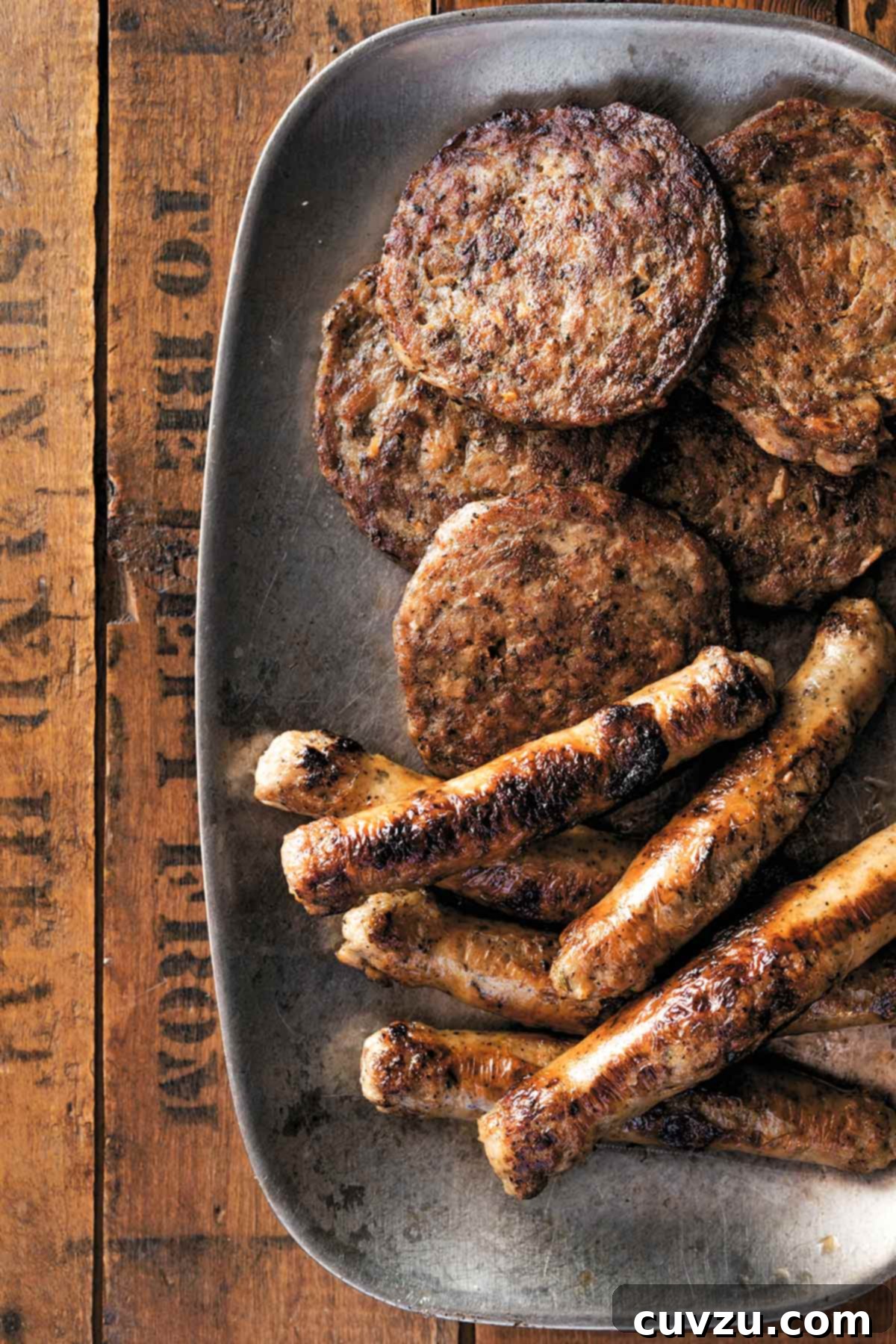
Homemade breakfast sausage. The very thought conjures images of rustic kitchens and hearty morning meals. If you’ve ever considered making your own, prepare for a culinary revelation. Once you experience the rich, nuanced flavors and satisfying texture of homemade breakfast sausage, returning to store-bought varieties will seem unthinkable. This guide will walk you through creating ridiculously simple yet outrageously indulgent sausage patties, along with expert tips on how to cook them to perfection.
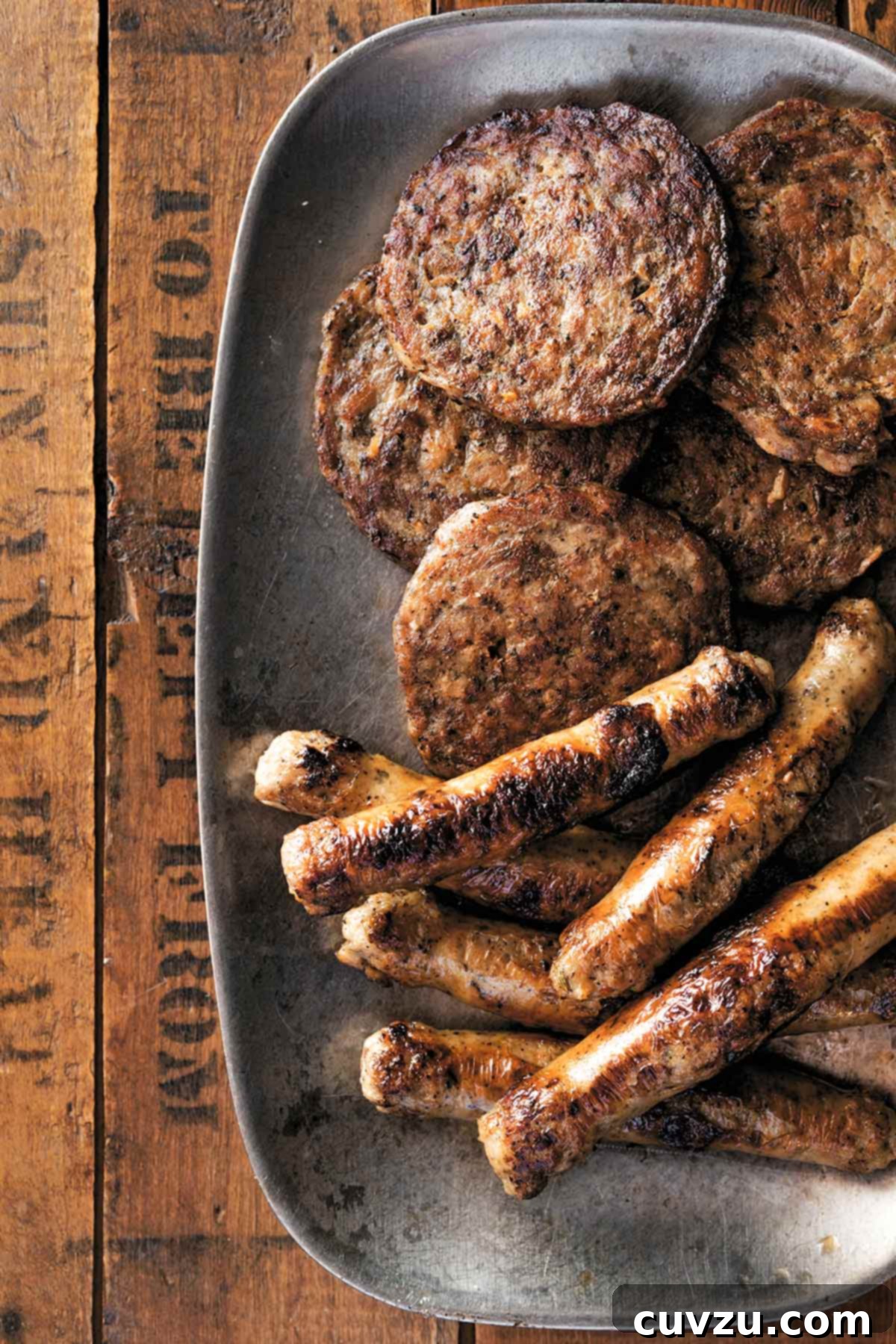
The Unmatched Flavor of Homemade Breakfast Sausage
Why bother making sausage from scratch when countless options line grocery store shelves? The answer lies in unparalleled flavor, freshness, and the ability to control every ingredient. Commercial sausages often contain fillers, preservatives, and generic spice blends that can’t compare to the vibrant taste of freshly ground pork seasoned with your hand-picked spices. By crafting your own, you ensure only the highest quality ingredients make it to your plate, resulting in a breakfast staple that’s healthier, more flavorful, and truly satisfying.
This recipe yields a generous batch of homemade breakfast sausage, perfect for stocking your freezer and ensuring a delicious breakfast is always within reach. We love having a ready supply of these flavorful patties, but we understand that the idea of preparing five pounds of sausage might feel a bit daunting. Fret not! This recipe is incredibly adaptable and can easily be scaled down to suit smaller households without compromising on taste or quality. Whether you choose to halve the recipe or prepare just a single pound, the process remains straightforward and rewarding. We’ve even done the math for you for smaller batches, detailed later in this article, so you can focus purely on the joy of creating.
Making Homemade Breakfast Sausage Without a Meat Grinder
Don’t have a meat grinder? No problem at all! While a grinder offers the ultimate control over texture, you can still achieve fantastic homemade sausage. The simplest solution is to visit your local butcher. Ask them to grind some fatty pork for you. They are usually happy to oblige and can provide the ideal fat-to-meat ratio for succulent sausage. Once you have your ground pork, all that’s left is to mix it with the spices by hand. It’s crucial to use your hands for this step to gently combine the ingredients.
A crucial tip: Resist the urge to use a food processor to mix the meat and spices. While tempting for its speed, a food processor can over-emulsify the fat and meat proteins. This scientific process transforms the texture, resulting in a strangely dense and rubbery sausage rather than the tender, crumbly patties you desire. Manual mixing ensures the fat remains distinct, melting beautifully as the sausage cooks and contributing to its rich flavor and juicy texture.

Homemade Breakfast Sausage
David Leite
Equipment
- Meat grinder (optional; if you don’t have a meat grinder, see the section below on how to make sausage without one)
Ingredients
- 5 pounds boneless pork shoulder, cut into 1 1/2-inch (4-cm) cubes, including all the fat
- 8 ounces pork fat (or substitute fatty bacon), cut into 1 1/2-inch (4-cm) cubes
- 7 tablespoons rubbed sage (do not substitute ground sage)
- 6 tablespoons dark brown sugar
- 5 tablespoons minced fresh garlic
- 2 to 4 tablespoons kosher salt
- 3 tablespoons black pepper
- 1 to 2 tablespoons red pepper flakes
- 1 1/2 tablespoons fennel seeds, toasted until fragrant and crushed
- 1 to 2 teaspoons cayenne pepper
Instructions
-
Combine all ingredients in a large stainless steel bowl. Use your hands to thoroughly mix everything until well combined. This ensures the spices are evenly distributed throughout the meat. Cover the bowl and refrigerate for at least 2 hours. This chilling period is crucial for the flavors to meld and for the fat to firm up, which aids in grinding and patty formation.
-
If using a meat grinder, place all its components (grinding head, blade, die, and auger) in the freezer to chill thoroughly while the meat mixture is refrigerating. This prevents the fat from smearing during grinding and ensures a clean, distinct texture. Set up your meat grinder with the smallest die according to the manufacturer’s directions. Working in batches, feed the chilled meat mixture into the grinding tube, allowing the sausage mixture to collect in a separate, chilled bowl placed underneath. Ensure the ground meat remains as cold as possible throughout this process.
-
Once the meat is ground, gently form it into patties. Measure out about 2 ounces (approximately 57 grams or 1/4 cup) of the sausage mixture for each patty. Gently press it between your palms to form a 2-inch (5 cm) round patty, about 1/2 inch (12 mm) thick. Repeat until all the sausage mixture has been used. For convenience and ease of cooking, we recommend patties, but if you prefer sausage links and have the necessary equipment and expertise, you can certainly stuff the mixture into casings. Arrange the sausage patties in a resealable plastic bag or airtight container, separated by squares of wax or parchment paper to prevent sticking. The raw sausage can be stored in the refrigerator for up to 4 days or frozen for up to 6 months. Always remember to safely thaw frozen sausage in the refrigerator before cooking.
-
To cook your homemade breakfast sausage patties, warm a cast-iron skillet or a heavy-bottomed sauté pan over medium heat for about 1 minute. No need for additional oil, as the sausage will render its own fat. Add a few patties to the hot pan, being careful not to overcrowd it, which can lower the pan temperature and prevent proper browning. Cook the patties, turning them every couple of minutes, until they are beautifully browned on both sides and cooked through to the center, typically about 10 minutes total. For food safety, the internal temperature of the pork should register at least 145°F (63°C) on an instant-read thermometer. Serve your delicious homemade breakfast sausage immediately and enjoy!
Notes
A Few Helpful Hints for Your Homemade Sausage Adventure
Choosing the Right Pork Fat for Breakfast Sausage: The fat content is key to a juicy, flavorful sausage. If you’re unsure about sourcing or selecting pork fat, an equal amount of fatty bacon can be a wonderful substitute, lending a smoky depth to your sausage. Alternatively, you could use salted pork fat, such as fatback, but if you do, be sure to reduce the amount of kosher salt in the recipe by half to avoid over-salting. While it’s possible to omit added fat if your pork shoulder is particularly fatty, we strongly advise against it. Fat is the primary carrier of flavor and contributes significantly to the sausage’s moist, indulgent texture. Modern research even supports the benefits of healthy fats, so don’t shy away from this essential ingredient for the best results!
Rubbed Sage vs. Ground Sage: This recipe specifically calls for rubbed sage. Rubbed sage is made from dried sage leaves that have been gently rubbed to create a fluffy, light texture. It has a more robust, earthy flavor compared to ground sage, which is finely powdered and can be much more potent. Substituting ground sage can lead to an overpowering sage flavor, so stick to rubbed sage for the intended balance.
Customizing Your Sausage: Feel free to adjust the spice levels to your preference. If you like more heat, increase the red pepper flakes and cayenne pepper. For a milder flavor, reduce them. You can also experiment with other spices like a pinch of nutmeg or a dash of maple syrup for added sweetness.
Smaller Batch Adaptations: Just for You!
Making a large batch of homemade breakfast sausage is fantastic for meal prepping, but sometimes you just want enough for a weekend breakfast or a smaller family. We’ve done the calculations to easily scale down this recipe, so you don’t have to crunch numbers. Here are the ingredient amounts for a single pound of homemade breakfast sausage:
- 1 pound boneless pork shoulder, cut into 1 1/2-inch (4-cm) cubes, including all the fat
- 1 1/2 tablespoons rubbed sage
- 1 rounded tablespoon dark brown sugar
- 1 tablespoon minced fresh garlic
- 1 1/2 teaspoons kosher salt (adjust to taste, especially if using salted pork fat substitute)
- Generous 1/2 tablespoon black pepper
- Just shy of 1/2 tablespoon red pepper flakes (adjust for desired heat)
- 1 teaspoon fennel seeds, toasted until fragrant and crushed
- 1/3 teaspoon cayenne pepper (adjust for desired heat)
Follow the same preparation and cooking instructions, adjusting the number of patties you form accordingly. This smaller batch is perfect for enjoying the fresh taste of homemade sausage without committing to a full freezer stash.

Adapted From
Big Bad Breakfast
Buy On Amazon
Recipe Testers’ Insights: Real-World Experiences
Our dedicated team of recipe testers put this homemade breakfast sausage recipe to the test, offering invaluable feedback and tips from their own kitchens. Their experiences highlight the versatility and deliciousness of this recipe, affirming it as a true winner.
Recipe Testers’ Reviews
Dawn English
Dawn found this homemade breakfast sausage recipe to yield a “sinfully decadent sausage with a great combination of sweet, spicy, savory, and juicy—the perfect flavor profile.” She wisely let her butcher handle the grinding, noting that her cut of pork shoulder already had ample fat, so no extra was needed. After mixing the spices with gloved hands, she formed 2-ounce patties, which caramelized beautifully in her cast iron skillet in just 10 minutes. Her internal temperature check confirmed they were perfectly cooked. Dawn enthusiastically recommends pairing these patties with cheddar biscuits for an unforgettable breakfast sandwich. She also successfully scaled the recipe down to a 1-pound quantity, yielding 8 patties, which she found to be “so incredibly and almost sinfully good.” Her note on adjusting salt content for personal preference is a great reminder for all cooks.
Jackie Gorman
Jackie appreciates the control that comes with making her own sausage, stating, “This homemade breakfast sausage recipe is a nice addition to my sausage file. It produces a flavorful, spicy breakfast sausage.” Recognizing the large yield, she wisely halved the recipe, still resulting in 24 two-ounce patties. She ultimately preferred 4-ounce packages for freezing, finding them more substantial. Jackie’s creativity shines in her serving suggestions: from a classic sandwich with a runny-yolk egg, to a more elaborate version with mayonnaise, hard-boiled egg slices, and heirloom tomatoes, or crumbled into scrambled eggs, and even poached eggs in spicy tomato sauce with sausage. Her extensive use of the frozen sausage underscores its versatility and makes it a perfect staple.
Larry Noak
Larry praises the recipe for its simplicity and superior results: “This delightful, simple breakfast sausage is quick to throw together and has the perfect texture and flavor. Armed with a recipe like this, you’ll never again need to purchase mediocre sausage at the grocery store.” He meticulously removed the bone from his pork shoulder, ending up with just over 4 pounds of pork and 8 ounces of additional fat, adhering closely to the recipe’s ideal ratios. His preparation and cubing took a mere fifteen minutes before chilling. Larry emphasizes the importance of cold equipment for grinding, suggesting freezing all meat grinder parts overnight. Though he usually would stuff casings, “laziness ruled the day,” so he opted for patties, neatly freezing them in resealable bags. His recommendation to use fatty bacon as a substitute for pork fat is a valuable alternative for those who might struggle to find pure pork fat.
Storage and Freezing for Future Enjoyment
This recipe makes a generous amount of sausage, ideal for preparing in advance. Once you’ve formed your patties, place them in a single layer on a parchment-lined baking sheet and freeze until solid. This prevents them from sticking together. Once frozen, transfer the patties to a freezer-safe bag or airtight container, separating layers with wax or parchment paper. Properly stored, your homemade breakfast sausage can be kept in the freezer for up to 6 months. When you’re ready to cook, thaw the desired number of patties in the refrigerator overnight. You can also cook them directly from frozen, though they may take a few extra minutes to cook through. This convenience makes homemade sausage a weeknight breakfast hero or a perfect addition to any brunch.
Nutrition
Nutrition information is automatically calculated, so should only be used as an approximation.