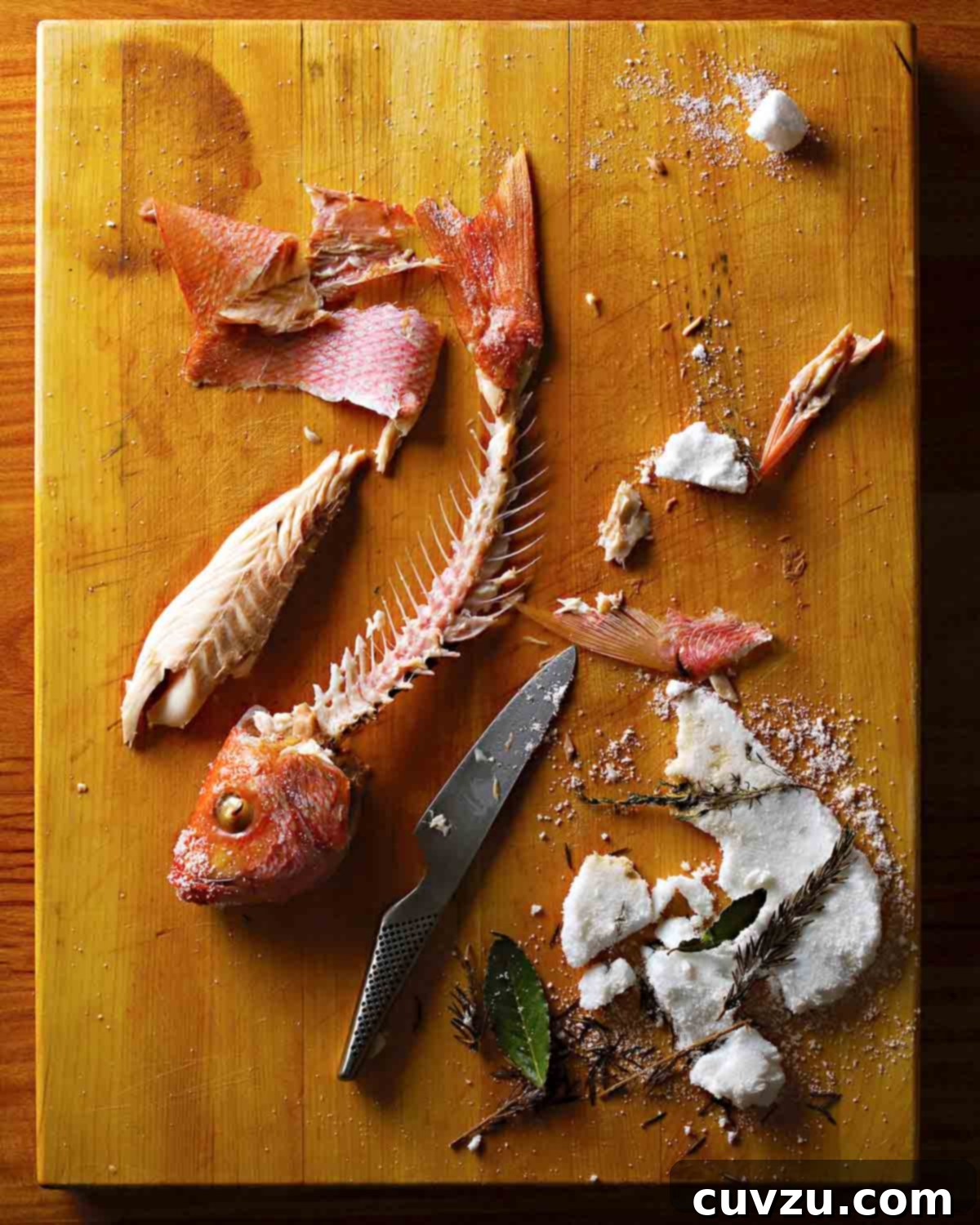
Salt-Baked Red Snapper: A Flawless Way to Cook Whole Fish for Incredible Flavor and Moisture
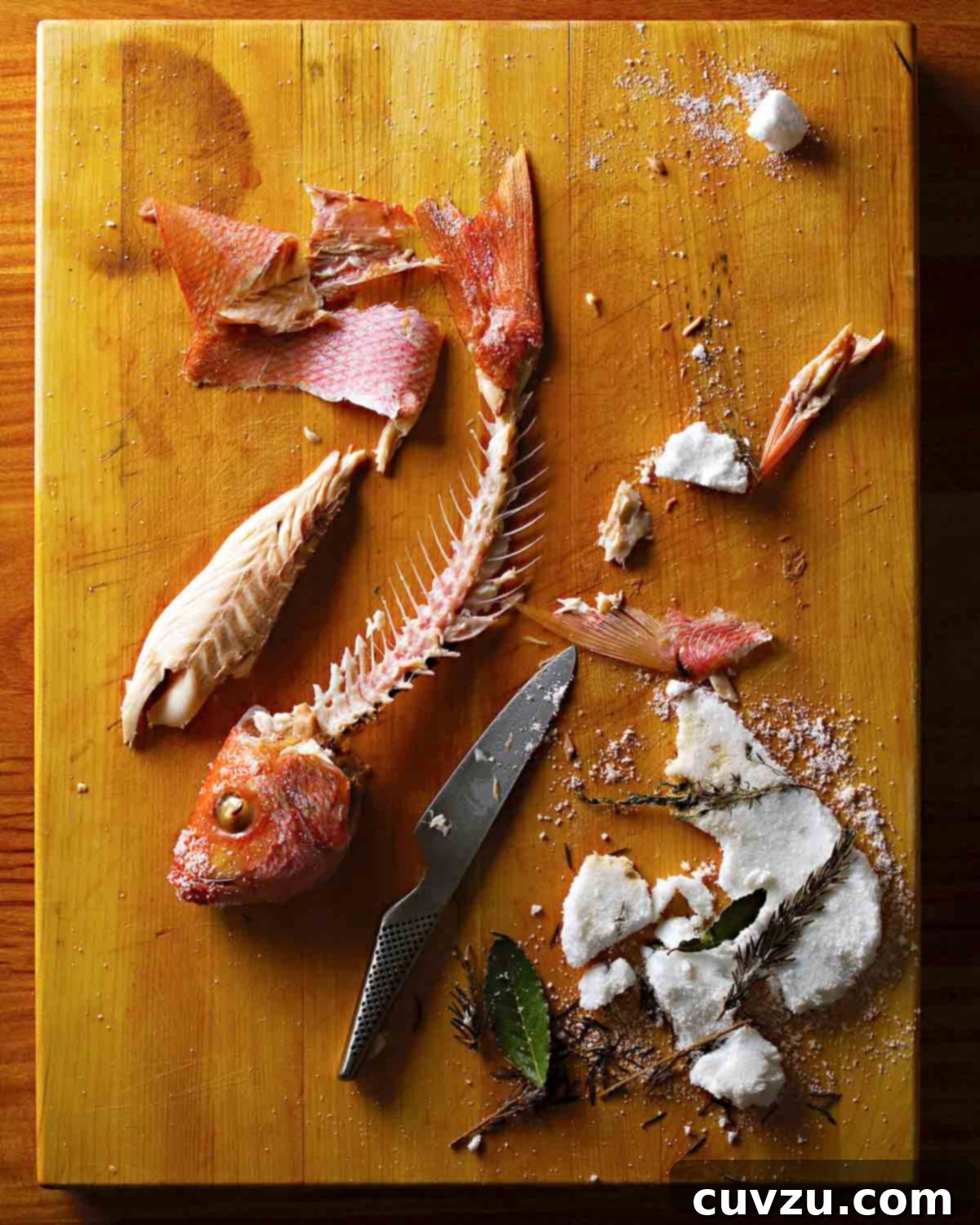
Imagine serving a whole fish so incredibly moist, tender, and subtly infused with aromatic herbs that it simply melts in your mouth – all without a hint of excessive saltiness. This culinary masterpiece is the Salt-Baked Red Snapper, a classic technique that embodies elegance and simplicity. While traditionally known as lubina a la sal (salt-baked sea bass) in Spanish cuisine, this method beautifully adapts to red snapper, delivering equally spectacular results.
Despite its impressive appearance, salt baking is one of the most straightforward and foolproof ways to prepare a whole fish. By encasing the snapper in a robust crust of coarse sea salt, you create a natural, self-contained oven. This ingenious crust seals in all the fish’s natural juices, allowing it to gently steam to perfect doneness while subtly absorbing the fresh aromas of herbs. The outcome is a truly show-stopping dish, a restaurant-quality experience that is surprisingly easy to replicate in your own home kitchen.
As renowned chef José Andrés eloquently puts it, “There’s no better or simpler technique for cooking fish than this.” He highlights the unique benefit: the fish baked within the salt shell emerges soft, moist, and free from overwhelming saltiness, defying common expectations. While mastering the perfect balance of temperature, cooking time, and fish weight might take a couple of tries, the journey is incredibly rewarding. This comprehensive guide will arm you with all the knowledge and tips you need to confidently prepare a perfectly cooked salt-baked red snapper every single time.
The Art and Science Behind Salt Baking
Salt baking is an ancient culinary technique with a rich history, particularly cherished in Mediterranean cultures for its ability to transform simple ingredients into extraordinary dishes. The method is deceptively simple: a whole fish, often unscaled, is completely covered in a thick layer of coarse sea salt, sometimes moistened with a little water to form a firm paste. As this salt-encased fish bakes, the crust hardens, creating a powerful seal that acts as a natural pressure cooker.
This ingenious crust serves multiple critical functions:
- Unparalleled Moisture Retention: The primary benefit is the incredible succulence it imparts. The fish steams gently within its salty enclosure, preventing any loss of moisture. This results in incredibly tender, flaky flesh that’s far superior to conventional baking or grilling methods.
- Even and Consistent Cooking: The thick salt layer acts as a remarkable insulator, distributing heat uniformly around the fish. This even heat transfer eliminates hotspots, ensuring the fish cooks through perfectly without any dry or undercooked sections.
- Delicate Flavor Infusion: While the salt prevents direct absorption into the fish flesh, the aromatics (like herbs or citrus) placed within the fish cavity or mixed into the salt crust impart a subtle, fragrant essence. The fish’s natural flavors are concentrated and beautifully preserved, offering a clean and pure taste experience.
- Spectacular Presentation: The grand reveal of cracking open the hardened, golden-brown salt crust at the dinner table is a moment of pure culinary theater. It’s a dramatic and elegant way to present a dish that is sure to captivate and impress your guests.
This versatile technique isn’t limited to red snapper; it works wonders with other whole fish like sea bass (branzino), gilthead bream (orata), or even larger cuts of meat, consistently delivering superior moisture and flavor.
Selecting the Ideal Red Snapper for Your Culinary Masterpiece
Red snapper is an exceptional candidate for salt baking due to its lean, firm, white flesh and distinctively sweet, mild flavor. To ensure the best possible results, it’s paramount to select the freshest fish available. When you’re at the fishmonger, look for these tell-tale signs of quality:
- Bright, Clear Eyes: The eyes should be full, glistening, and transparent, not sunken or cloudy.
- Vibrant Red Gills: Lift the gill plate to inspect the gills; they should be a vivid red, free from slime, and not brownish or dull.
- Shiny, Intact Skin: The skin should appear lustrous, taut, and bright, with scales firmly attached and not flaking off.
- Firm and Elastic Flesh: Gently press the flesh with your finger; it should bounce back immediately, indicating good texture and freshness.
- Clean, Ocean Scent: A fresh fish will smell subtly of the sea, clean and briny, never strongly “fishy” or ammoniated.
For a salt-baked preparation, a whole red snapper weighing between 2 to 3 pounds is ideal, typically serving 2 to 4 people comfortably depending on appetite. It is crucial to instruct your fishmonger to gut the fish but emphatically NOT to scale it. The intact scales act as a vital protective barrier, shielding the delicate flesh from direct contact with the salt and preventing it from becoming overly salty. Furthermore, leaving the scales on ensures that the skin peels away effortlessly after cooking, leaving you with pristine, flaky fillets ready for enjoyment.
Salt-Baked Red Snapper Recipe
Recipe by David Leite
Mains
Spanish
4 servings
351 kcal
20 minutes
40 minutes
1 hour
Ingredients
- 3 pounds coarse sea salt, plus more for serving
- 3 tablespoons cold water
- 4 bay leaves
- 6 rosemary sprigs
- 10 thyme sprigs
- 1 (2 1/2-pound) whole red snapper, gutted but not scaled
- 2 tablespoons extra-virgin olive oil, preferably Spanish, if desired
Instructions
- Prepare Your Oven: Preheat your oven to a steady 375°F (190°C). Position an oven rack in the middle of the oven to ensure consistent and even heat circulation around the fish.
- Craft the Salt Crust Mixture: In a large mixing bowl, combine the 3 pounds of coarse sea salt with 3 tablespoons of cold water. Stir the mixture thoroughly until the salt is uniformly moistened and reaches a consistency reminiscent of damp sand – it should be able to hold its shape when lightly compressed. Next, coarsely chop 2 of the bay leaves, 3 of the rosemary sprigs, and 5 of the thyme sprigs. Add these fragrant, freshly chopped aromatics to the damp salt mixture and mix everything well, ensuring the herbs are evenly distributed throughout.
- Encasing the Snapper: Take a rimmed baking sheet and spread approximately half of your herb-infused salt mixture evenly across it. This forms the base for your fish. Carefully place the whole red snapper (remember, gutted but not scaled) directly onto this salt bed. Now, take the remaining whole bay leaves, rosemary, and thyme sprigs and gently tuck them into the cavity of the fish. Finally, meticulously cover the entire fish with the remaining salt mixture, pressing and packing it firmly around the snapper to create a complete, robust, and airtight crust. Ensure there are no exposed areas of the fish to achieve optimal cooking.
- Bake and Rest: Transfer the baking sheet, with the salt-encased snapper, into your preheated oven. Bake for precisely 30 minutes. If your fish happens to be larger than the specified 2 1/2 pounds, adjust the cooking time by adding approximately 5 minutes for every additional pound of fish. Once the baking time is complete, remove the fish from the oven and allow it to rest undisturbed for 5 minutes. This crucial resting period permits the fish to continue cooking gently from residual heat and reabsorb its internal juices, resulting in maximum tenderness and flavor.
Chef’s Tip: For absolute confidence and culinary precision, insert an instant-read thermometer directly through the salt crust into the thickest part of the fish, making sure to avoid touching the bone. The red snapper is perfectly cooked and ready to serve when its internal temperature registers 145°F (63°C).
- Cracking the Crust: With the aid of a sturdy fork and a spoon, carefully crack open the hardened salt crust along the side of the fish. The upper half of the salt, which has now solidified into a hard shell, should lift off relatively easily. Be aware that it may crumble into a few pieces – this is normal. Gently remove any large chunks of salt to reveal the beautifully cooked fish beneath.
- Filleting and Serving: Using the edge of a fork, delicately peel away the snapper’s skin, which should come off cleanly and easily, and discard it. To fillet the fish, make a precise cut just below the head, slicing through the flesh all the way to the bone. Then, angle your knife and carefully slice lengthwise along the spine. Gently lift the entire fish fillet off the bone, ideally in one elegant piece, and transfer it to a warm serving platter. Turn the fish over and repeat the filleting process on the other side. The perfectly cooked fish should be beautifully opaque throughout and flake effortlessly with a fork.
Rustic Serving Suggestion: For a more casual yet equally impressive presentation, consider transferring the entire baking sheet directly to the dining table. Allow your guests the pleasure of flaking off portions of the perfectly cooked fish themselves, fostering a delightful communal dining experience.
- Final Seasoning and Enjoyment: Take a small, exploratory nibble of the freshly filleted snapper. If you are so inclined and desire an extra layer of flavor, drizzle a touch of high-quality extra-virgin olive oil (preferably Spanish, to enhance the regional theme) and perhaps a final, delicate pinch of coarse sea salt over the fish just prior to serving. This simple addition can amplify the inherent flavors and add a beautiful sheen. Serve immediately and savor the exquisite taste.

Adapted From
Made in Spain
Buy On Amazon
Nutrition Information (per serving)
Calories: 351 kcal
Carbohydrates: 1 g
Protein: 58 g
Fat: 11 g
Saturated Fat: 2 g
Monounsaturated Fat: 6 g
Cholesterol: 105 mg
Sodium: 1055 mg
Fiber: 1 g
Nutrition information is automatically calculated and should be used as an approximation.
Mastering the Art: Expert Tips for a Flawless Salt-Baked Red Snapper
While the salt-baking technique is fundamentally simple, a few expert tips can elevate your dish from good to absolutely outstanding. Our seasoned recipe testers and culinary professionals have shared their invaluable insights to help you achieve consistent perfection:
- Embrace the Thermometer for Precision: The most crucial tip for perfect doneness is to ditch guesswork. While the recipe provides general timing, oven calibrations vary, and fish sizes are rarely exact. Investing in an instant-read thermometer is key. Insert it through the salt crust into the thickest part of the fish, avoiding contact with the bone. The fish is flawlessly cooked when it registers an internal temperature of 145°F (63°C). This ensures juicy, tender flesh every single time.
- Leave the Scales On – It’s Essential: This might seem counterintuitive, but it’s a non-negotiable step for salt baking. The scales act as a natural, impenetrable barrier, preventing the fish’s delicate flesh from becoming oversalted. More importantly, they allow the skin to peel away effortlessly after cooking, leaving behind clean, pristine fillets ready for serving.
- Don’t Be Shy with the Salt Crust Thickness: For the salt crust to effectively create that steamy, insulating oven effect, it needs to be substantial. Aim for a thickness of at least 1/2 to 1 inch all around the fish. This robust casing ensures uniform cooking and superior moisture retention. When packing the salt, press it firmly to create a cohesive, stable shell that won’t crack prematurely.
- Amplify Flavor with Aromatics: The salt crust is excellent for infusing subtle flavors. While the recipe suggests bay leaves, rosemary, and thyme, feel free to get creative. Tuck lemon or orange slices, garlic cloves, or other fresh herbs like dill or parsley into the fish cavity. You can also experiment by adding different coarsely chopped herbs or even a pinch of dried chili flakes to the salt mixture for an added layer of aroma.
- Seasoning After the Fact: A common misconception is that the fish will be excessively salty. In reality, the salt acts more as a cooking vessel. Many of our testers found that the fish barely needed any additional seasoning after baking. Always taste a small piece first before adding extra salt or olive oil. A drizzle of high-quality extra-virgin olive oil and a fresh grind of black pepper are often all that’s needed to enhance its natural sweetness.
- Practice Makes Perfect for Presentation: The dramatic act of cracking open the salt crust at the table is part of the experience. Don’t worry if your first few attempts result in a crumbling crust; you’ll soon develop a knack for creating a stable, impressive shell. Alternatively, for a more rustic approach, simply bring the entire baking sheet to the table and let guests serve themselves, embracing the communal joy of the dish.
- Consider Fish Size Adjustments: While the thermometer is paramount, understand that larger fish will naturally require longer cooking times. If you’re baking a significantly larger snapper (e.g., 4-5 pounds), factor in an extra 5-7 minutes per pound. Conversely, for smaller fish, reduce the cooking time accordingly to prevent overcooking.
Elegant Pairings: Serving Suggestions for Salt-Baked Red Snapper
The delicate, sweet, and moist flavor profile of salt-baked red snapper makes it a versatile main course that pairs beautifully with a range of fresh, light, and complementary side dishes. To truly complete this Mediterranean-inspired meal, consider these thoughtful accompaniments:
- Crisp Green Salad: A simple, vibrant green salad dressed with a light vinaigrette (lemon and olive oil work perfectly) provides a refreshing counterpoint to the richness of the fish.
- Roasted or Grilled Vegetables: Seasonal vegetables such as tender asparagus, sweet cherry tomatoes, bell peppers, zucchini, or green beans, lightly roasted with olive oil, garlic, and a sprinkle of sea salt, make an excellent and healthy side.
- Simple Potatoes: Small new potatoes, steamed, boiled, or roasted until tender, and then tossed with fresh parsley, a knob of butter, or a drizzle of olive oil, offer a comforting and familiar starch.
- Light Grains: A fluffy couscous, a simple rice pilaf, or a nutty quinoa can absorb the subtle juices released by the fish, adding texture and substance to your plate.
- Fresh Lemon Wedges: A classic and indispensable accompaniment for any fish dish. Fresh lemon wedges allow guests to add a bright, acidic burst to their portion, enhancing the snapper’s natural flavors.
- Sauces with Spanish Flair: Elevate the experience with traditional Spanish sauces. A homemade aïoli (garlic mayonnaise) or a vibrant Romesco sauce (made with roasted red peppers, tomatoes, nuts, and garlic) can introduce delightful layers of flavor.
- Crusty Bread: Don’t forget a good crusty baguette to mop up any delicious olive oil or fish juices.
Praise from the Kitchen: What Our Recipe Testers Discovered
Our team of dedicated recipe testers unanimously celebrated this salt-baked red snapper for its impressive ease, dramatic presentation, and, above all, its consistently exceptional results. Their collective insights offer valuable perspectives and practical advice for home cooks:
- Sarina Mohanty found the dish nothing short of “divine,” praising its flaky texture and the subtle infusion of herbs. She noted that the inherent flavor of the fish was so perfect that additional salt and olive oil were barely necessary. Sarina emphasized the visually impressive nature of salt-baked fish and offered crucial advice regarding cooking times: if your oven tends to run cooler or if your fish exceeds the suggested 2 1/2 pounds, compensate by extending the baking time by an extra 3 to 5 minutes, or even up to 8 minutes for a fish closer to 3 pounds. She also highlighted the importance of crafting a sufficiently thick salt crust to prevent it from shattering during the grand reveal.
- Jenna Helwig confessed that the recipe initially seemed intimidating due to the whole fish and generous amount of salt, but she quickly discovered its extreme ease and virtually foolproof nature. She was particularly impressed by how effortlessly the salt crust lifted off after cooking, revealing a fish that tasted “sweet and moist—succulent,” in her words. Jenna’s key takeaways included a strong recommendation against adding extra salt to the filleted fish, as she found it perfectly seasoned, and a practical observation that a 2 1/2-pound fish might realistically serve two adults and one child rather than four, depending on portion sizes.
- Chiyo Ueyama thoughtfully clarified a common misunderstanding: the salt crust doesn’t directly season the fish, but rather serves two invaluable purposes. Firstly, it creates a magnificent presentation, and secondly, it ensures the fish remains “super-moist.” She thoroughly enjoyed the delicate and harmonious balance of flavors between the fish and the herbs. Chiyo confirmed that for her snapper, which weighed just under 2 1/2 pounds after gutting, the specified amount of salt and baking time were absolutely perfect. She also embraced a flexible approach to herb placement, distributing half of the aromatics within the fish’s cavity and the remainder between the fish and the top layer of the salt crust.
- Linda Pacchiano lauded the recipe as “quick and easy” with “outstanding” results, emphasizing its ability to produce wonderfully flavorful and moist fish. She enthusiastically recommended this method for other whole fish varieties, such as branzino (European sea bass) or orata (gilthead bream). Linda offered a clever modification to the herb preparation: instead of struggling to incorporate whole sprigs into the salt (which she found could make the crust prone to cracking), she finely chopped the herbs and blended them directly with the salt. For an enhanced flavor profile, she also placed fresh lemon slices and additional herb sprigs inside the fish’s cavity. Linda’s experiments confirmed the critical role of the scales in protecting the fish from absorbing excessive salt and found that a final drizzle of Spanish olive oil provided the ideal finishing touch without needing extra salt. She echoed the advice of using an instant-read thermometer for precise cooking, noting a perfect doneness at 140°F (slightly varying from David Leite’s 145°F, highlighting a personal preference in desired doneness).
The collective feedback from our testers unequivocally underscores that despite its visually dramatic presentation, the salt-baking technique is remarkably forgiving and consistently yields a moist, tender, and exquisitely flavorful fish. Key recommendations include utilizing an instant-read thermometer for ultimate accuracy, ensuring the fish remains unscaled, and confidently experimenting with internal aromatics to customize the flavor profile.
Tried this recipe?
Mention @leitesculinaria or tag #leitesculinaria!