Welcome to the ultimate guide for crafting the most incredible homemade potato gnocchi you’ll ever taste. Forget everything you thought you knew about this Italian classic; our recipe transforms humble russet potatoes, a touch of flour, an egg, and a pinch of salt into ethereal, melt-in-your-mouth potato dumplings. These aren’t just gnocchi; they’re miniature clouds of potato perfection, ridiculously simple to create, wonderfully inexpensive, and guaranteed to become a staple in your culinary repertoire. Experience the joy of making authentic Italian gnocchi from scratch, and prepare to be amazed by their tender texture and rich, comforting flavor. This comprehensive guide will walk you through every step, ensuring your journey from raw ingredients to exquisite dining is smooth and satisfying.
While the intricacies of Italian cooking are vast and wonderfully complex, mastering the art of homemade potato gnocchi is surprisingly achievable. You don’t need years of culinary training or a nonna whispering secrets in your ear to create these pillowy, light, and utterly perfect potato poufs. We’re confident that after trying this recipe, you’ll be swooning with delight. What’s even better? You likely have all five essential ingredients – potatoes, flour, egg, salt, and your chosen sauce base – already in your pantry. This accessibility makes our recipe an inviting introduction to the world of fresh pasta, promising a rewarding cooking experience and a truly unforgettable meal.
The Art of Gnocchi: Mastering the Essentials
Creating truly exceptional potato gnocchi boils down to understanding a few fundamental principles. These “Gnocchi Essentials” are the cornerstone of light, tender dumplings that absorb sauce beautifully, rather than dense, heavy ones. From selecting the right potatoes to the delicate art of shaping, each step plays a crucial role in achieving that coveted pillowy texture. Let’s explore these foundational techniques in detail.
Potato Selection and Preparation: The Foundation of Flavor
- Bake or Steam; Never Boil! This is perhaps the most critical rule for light gnocchi. Boiling potatoes causes them to absorb excess water, leading to a heavier, denser dough that requires more flour. Baking or steaming, conversely, concentrates the potato’s natural flavor and minimizes moisture content. For baking, pierce your potatoes and bake them whole until fork-tender. For steaming, peel and cut them into chunks, then steam until soft. The goal is to achieve fluffy, dry potatoes ready to absorb just the right amount of flour.
- Starchy Potatoes Rule: Not all potatoes are created equal when it comes to gnocchi. Starchy varieties like Russets (also known as Idaho potatoes) or Yukon Golds are your best friends. Their high starch content and relatively low moisture make them ideal for creating that airy, cloud-like texture. Waxy potatoes, on the other hand, tend to be too moist and can result in gummy gnocchi. Opt for mature, firm potatoes for the best results.
- Steam Off Excess Moisture: Even after baking or steaming, potatoes retain some moisture. To ensure your gnocchi are as light as possible, it’s essential to remove any lingering steam. Once cooked, immediately peel (if baked) and either press the hot potatoes through a potato ricer or mash them thoroughly with a fork. Spreading the mashed potato thinly on a clean surface for a few minutes allows residual steam to escape, resulting in a drier, fluffier base for your dough. This small step makes a significant difference in the final texture of your gnocchi.
Dough Dynamics: Do’s and Don’ts for Perfect Texture
The gnocchi dough is a delicate balance. Too much flour or too much handling can quickly turn your pillowy dreams into rubbery reality. Here’s how to navigate the dough-making process with confidence:
- Less Is More When It Comes to Flour: This cannot be stressed enough. The natural moisture in potatoes varies, so the amount of flour needed is always an approximation. Start with the minimum recommended amount and add flour gradually, only as needed, until the dough just comes together and is no longer excessively sticky. The less flour you use, the more delicate and tender your gnocchi will be. Over-flouring is the quickest way to dense, heavy gnocchi.
- Handle with Care: Overworking the dough develops the gluten in the flour, leading to a chewy, gummy texture – the antithesis of perfect gnocchi. Mix the ingredients gently, just until they form a cohesive dough. Use light hands and avoid vigorous kneading. Think of it as bringing the ingredients together rather than developing a strong dough structure.
- Rest Is Key: Once your dough is formed, resist the urge to start shaping immediately. Allow the dough to rest, covered, for about 20-30 minutes at room temperature. This resting period allows the flour to fully hydrate and the gluten to relax, making the dough much easier to handle and shape, resulting in smoother, more uniform gnocchi. It also contributes to a more tender final product.
Shaping Strategies: Crafting the Signature Look
The distinctive shape of gnocchi isn’t just for aesthetics; those ridges and dimples are designed to capture and hold your delicious sauces. Don’t worry if your first few aren’t perfect – practice makes perfect, and even imperfect gnocchi taste amazing!
- Rope, Roll, and Cut: The most common method involves rolling sections of the dough into long ropes, about 2/3 inch in diameter. Then, using a sharp knife or bench scraper, cut each rope into 1/2- to 3/4-inch lengths. These small pieces are the base for your individual gnocchi. Consistency in size helps ensure even cooking.
- Thumbs Up for Sauce-Grabbing Power: To create the classic gnocchi shape, take each small piece and gently roll it against a floured gnocchi board or the tines of a fork. As you roll, use your thumb to create a slight indentation in the center. This dimple, along with the ridges created by the board or fork, creates nooks and crannies that are perfect for cradling your chosen sauce, enhancing every bite.
- Freeze for Future Enjoyment: Gnocchi are fantastic to make ahead. After shaping, arrange the uncooked gnocchi in a single layer on a floured baking sheet. Flash-freeze them until solid (about 30-60 minutes), then transfer them to freezer-safe bags or containers. This prevents them from sticking together. You can cook frozen gnocchi directly from the freezer; there’s no need to thaw them first! This makes them a perfect weeknight meal solution.
Cooking Confidence and Serving Suggestions
Cooking gnocchi is quick and straightforward, but precision ensures they remain tender and delicate.
- Gentle Simmer, Not a Rolling Boil: Bring a large pot of lightly salted water to a gentle simmer, not a vigorous boil. A rapid boil can cause the delicate gnocchi to break apart. Add the gnocchi in small batches to avoid overcrowding the pot and lowering the water temperature too much. Cook them until they float to the surface, which usually takes only 1-3 minutes. This floating indicates they are cooked through. Keep a close eye on them, as overcooking will make them mushy.
- Sauce Soulmate: Gnocchi are incredibly versatile and pair beautifully with a variety of sauces. A simple melted butter and fresh sage sauce is a timeless classic, allowing the potato flavor to shine. Creamy tomato sauces, vibrant pesto, or even a rich gorgonzola cream sauce are also excellent choices. Don’t forget a generous sprinkle of freshly grated Parmesan cheese for an extra layer of flavor.
- Pan-Fry for a Textural Twist: For an irresistible crispy exterior, try pan-frying your cooked gnocchi. After boiling and draining, toss them in a hot pan with a bit of olive oil or butter until golden brown and slightly caramelized. This adds a delightful textural contrast and nutty flavor, turning a simple dish into something extraordinary. This method works particularly well with lighter sauces or simply a sprinkle of fresh herbs.
Potato Gnocchi FAQs: Your Questions Answered
Absolutely! Freezing gnocchi is a fantastic way to enjoy this homemade treat at a moment’s notice. After shaping, place the uncooked gnocchi in a single layer on a floured baking sheet and flash-freeze until completely solid. Once frozen, transfer them to airtight, individual-serving plastic bags or containers. They can be stored in the freezer for up to two months. The best part? There’s no need to thaw them before cooking. Simply drop them into simmering water directly from the freezer, and cook as instructed in the recipe until they float to the surface. It’s a convenient way to keep a taste of Italy on hand!
The versatility of gnocchi allows for endless serving possibilities. For a classic approach, gently toss them in a simple melted butter with fresh sage, or a rich homemade tomato sauce, and finish with a generous sprinkle of grated Parmesan cheese. For a heartier meal, stir them into a creamy gnocchi soup with bacon and cheese, or serve them alongside a perfectly pan-roasted chicken with gravy. If you’re seeking true indulgence, envelop the gnocchi in a luxurious gorgonzola cream sauce. Experiment with different pestos, rich ragùs, or even a light lemon-butter sauce for varied flavor profiles. The key is to choose a sauce that complements their delicate potato flavor without overpowering it.
Several pitfalls can lead to less-than-perfect gnocchi. The most common mistake is boiling the potatoes, which makes them waterlogged and results in a heavy, dense dumpling that requires too much flour. Another common error is adding too much flour, which makes the gnocchi tough and chewy. Overworking the dough is also detrimental, as it develops gluten, leading to a rubbery texture. Finally, overcooking the gnocchi in the boiling water can turn them mushy and cause them to disintegrate. By following our tips for potato preparation, mindful flour addition, gentle dough handling, and precise cooking times, you can easily avoid these common issues and achieve beautifully light gnocchi every time.
While traditional gnocchi are made with white potatoes, you can certainly experiment with other vegetables for delightful variations. Sweet potato gnocchi are a popular choice, offering a slightly sweeter flavor and vibrant orange hue. Pumpkin, ricotta, or even spinach can also be used as bases for gnocchi, each yielding unique flavors and textures. The key is to ensure the vegetable puree is as dry as possible to prevent the need for excessive flour. Adjust the amount of flour according to the moisture content of your chosen vegetable, aiming for a soft, pliable dough. These variations open up a world of creative possibilities for gnocchi lovers!
Homemade Potato Gnocchi: An Italian Classic
These homemade potato gnocchi are the pinnacle of Italian comfort food. Crafted with just four simple ingredients – russet potatoes, all-purpose flour, egg, and salt – they transform into delicate, pillowy dumplings. This recipe is not only incredibly easy to follow but also wonderfully inexpensive, making authentic Italian cuisine accessible to every home cook. Prepare to indulge in light, tender gnocchi that melt in your mouth, perfectly paired with your favorite sauce.
David Leite
Ingredients
- 2 1/4 pounds potatoes, preferably russets, peeled and cut into 1 1/2-inch chunks
- 1 to 1 3/4 cups all-purpose flour, plus more for dusting
- 1 large egg, lightly beaten
- Salt, to taste
- Butter, melted, or tomato sauce (for serving)
Instructions
-
Set up a steamer over boiling water. Place the peeled and chunked potatoes in the steamer basket. Steam the potatoes until they are very tender when pierced with a fork, which typically takes about 25 minutes. Steaming, rather than boiling, is crucial for preventing the potatoes from absorbing excess water, ensuring your gnocchi are light and airy.
-
While the potatoes are still hot, immediately mash them thoroughly. You can use a traditional potato masher, but for the lightest, smoothest gnocchi, we highly recommend pressing them through a potato ricer. Transfer the riced or mashed potatoes to a large bowl or directly onto a clean, lightly floured work surface. Spreading them out slightly allows any remaining steam to escape, further drying them out.
-
**Important Note on Flour:** Before proceeding, understand that the amount of flour is approximate. The goal is to use just enough flour to form a cohesive, soft, and elastic dough that is no longer excessively sticky. Too much flour will result in hard, dense gnocchi, while too little will cause them to fall apart during cooking. Trust your instincts and the feel of the dough.
Now, create a well in the center of your potatoes. Add 1 cup of all-purpose flour, the lightly beaten egg, and a generous pinch of salt into the well. Begin to gently knead the mixture with your hands, incorporating the flour into the potatoes. Continue kneading until a soft, smooth, and elastic dough forms. If the dough is still very sticky, gradually add more of the remaining 3/4 cup flour, a tablespoon at a time, until it reaches the desired consistency. Taste a small piece of the dough to check for salt and add more if needed. Remember, light handling is key to prevent gluten development. -
Divide the dough into about 6 equal portions. On a lightly floured surface, roll each portion into a long rope, aiming for a diameter just over 2/3 inch. Using a knife or bench scraper, cut each rope into 1/2- to 3/4-inch lengths.
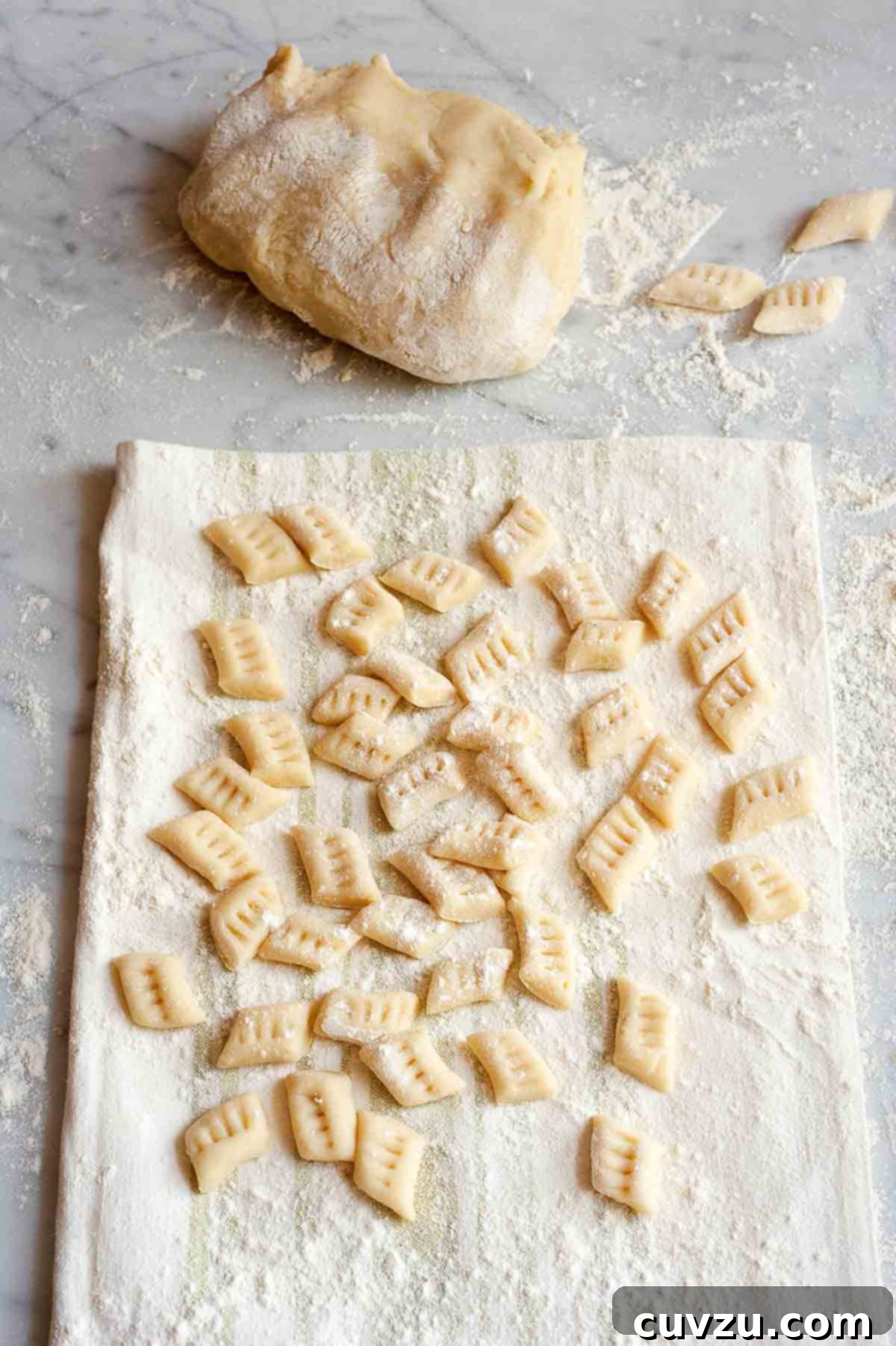
To shape the gnocchi, you have a couple of options:**Method 1 (Dimple and Grate):** Using the floured thumb of one hand, gently press each length to create a dimple in its center. If desired, lightly roll the piece against the back of a fine grater to imprint a pattern on the underside.
**Method 2 (Fork Ridges):** Hold a fork at a 45° angle, with its curved side facing you and the tips of the tines touching your work surface. Take one gnocchi piece at a time and gently roll it down the back of the fork tines, pressing lightly with your thumb. This creates characteristic ridges on one side, perfect for catching sauce. The gnocchi may curl slightly, which is perfectly normal and adds to their rustic charm.
Rest assured, shaping perfect gnocchi takes a bit of practice. Don’t be discouraged if your first few attempts are not flawless. Even slightly misshapen gnocchi will taste absolutely delicious!
-
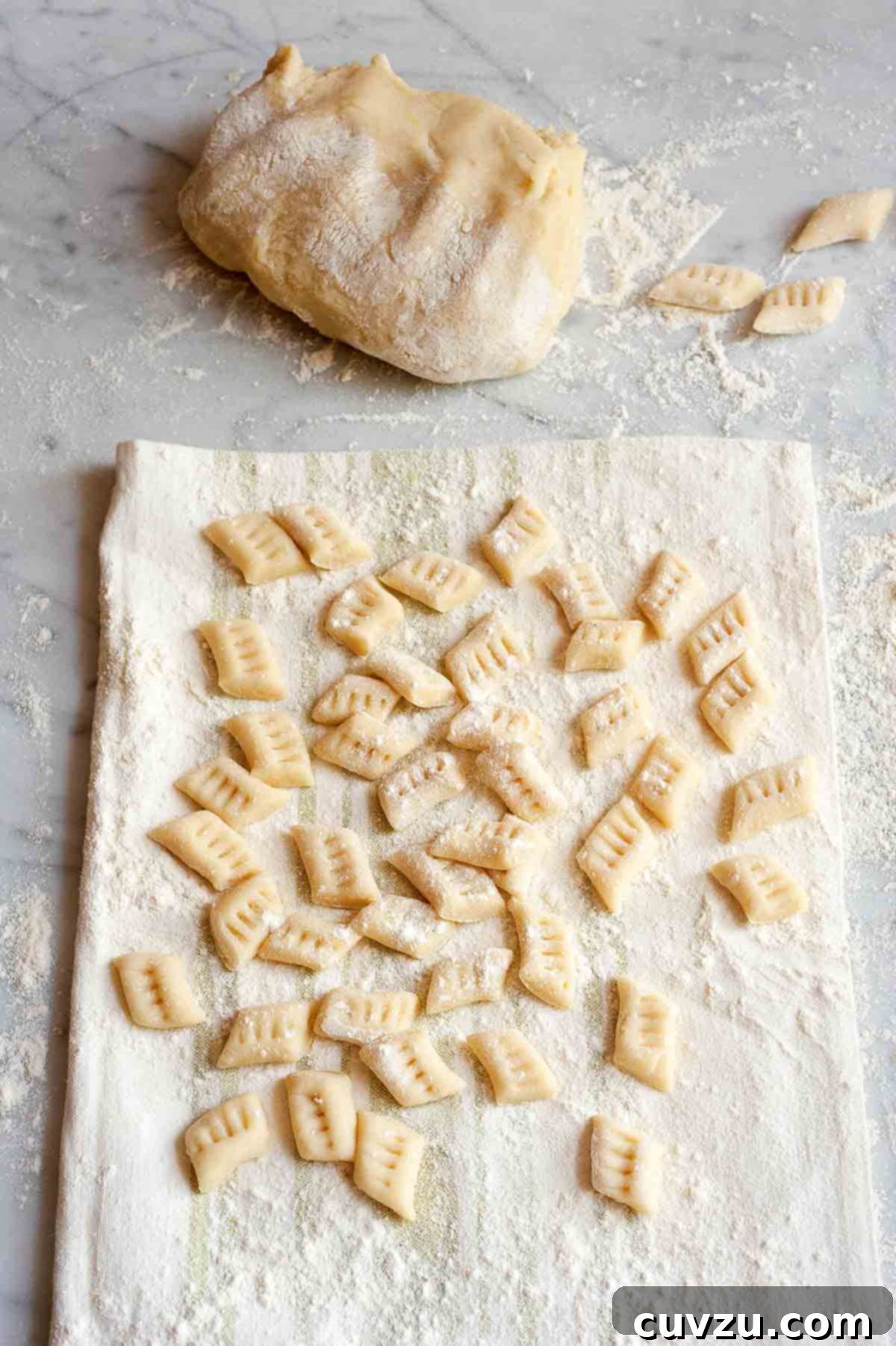
Prepare a baking sheet by lining it with wax paper or parchment paper. Place a clean, dry dish towel over the paper and lightly dust it with flour. Arrange the shaped gnocchi in a single layer on the floured towel, ensuring they don’t touch each other to prevent sticking. (As mentioned in the FAQ, you can freeze these gnocchi at this stage. Simply flash-freeze them on the baking sheet until solid, then transfer to freezer bags. There’s no need to thaw before cooking.)
-
When you are ready to cook the gnocchi, bring a large pot of lightly salted water to a gentle boil. Avoid a vigorous, rolling boil, as this can break the delicate gnocchi. Carefully add the gnocchi to the simmering water, a few at a time, ensuring you don’t overcrowd the pot. They will sink initially.
-
Keep a close watch on the gnocchi. They are cooked when they float gracefully to the surface of the water, which typically takes 1 to 3 minutes, depending on their size and whether they are fresh or frozen. It is crucial not to leave them in the water for too long after they float, as they can become mushy and fall apart. Use a slotted spoon or a spider strainer to promptly remove the gnocchi as soon as they rise, allowing any excess water to drip back into the pot. Transfer the cooked gnocchi to a warm serving dish or platter, and immediately toss them with your chosen melted butter or sauce. Devour them without delay to experience their optimal texture and flavor.
Adapted From
This exquisite gnocchi recipe is thoughtfully adapted from the culinary wisdom found in The Silver Spoon, a revered classic in Italian gastronomy, known for its authentic and comprehensive collection of traditional Italian recipes.
Buy On Amazon
Nutrition
Calories: 276 kcal
Carbohydrates: 58 g
Protein: 8 g
Fat: 1 g
Saturated Fat: 0.4 g
Monounsaturated Fat: 0.3 g
Trans Fat: 0.003 g
Cholesterol: 31 mg
Sodium: 23 mg
Fiber: 5 g
Sugar: 1 g
Nutrition information is automatically calculated and should be used only as an approximation.
Tried this recipe?
Share your culinary creations! Mention @leitesculinaria or tag #leitesculinaria on Instagram. We love to see your homemade gnocchi!
Recipe Testers’ Reviews: Real Feedback for Homemade Gnocchi

Natalie Reebel
My mother often spoke of her regret at not having inherited a traditional potato gnocchi recipe from her grandmother. This sentiment always stuck with me, leading me to believe that finding an authentic, reliable recipe was paramount. When I discovered this recipe adapted from The Silver Spoon, I knew I had found the ideal source for such a classic dish.
The thought of making potato gnocchi from scratch initially felt quite daunting. However, the instructions were clear and encouraging. To achieve the lightest possible gnocchi, I carefully steamed the potatoes, as advised, ensuring they wouldn’t become waterlogged. When it came to mixing the dough, I meticulously added the flour a half-cup at a time, patiently observing the dough’s texture until it achieved an elastic, yet slightly sticky, consistency. This careful approach prevented me from adding too much flour, a common pitfall that can lead to dense gnocchi.
Shaping the gnocchi was a learning curve. My initial attempts to roll the small pieces against the back of a fork resulted in some rather amusing, misshapen dumplings. However, with each subsequent piece, my technique improved, and they began to resemble proper gnocchi. This experience underscored the importance of practice in mastering traditional culinary arts. Once the water was simmering, I gently introduced my first batch of homemade gnocchi into the pot. I braced myself, half-expecting them to disintegrate, but to my absolute delight, they gracefully rose to the surface and floated after just about two minutes of cooking.
After draining the first batch, I was thrilled to find their texture was incredibly light and delicate, truly like feathers. The flavor profile was subtly sweet with enough depth to stand up to a light savory sauce, perfectly balancing the potato’s natural taste. Crafting my own gnocchi was a wonderfully fulfilling experience, and I’m incredibly excited to recreate this dish for my mom, finally sharing the authentic taste of homemade gnocchi she always wished for.

Sofia Reino
I was drawn to this particular gnocchi recipe because it seemed like a wonderful and approachable way to involve my toddler in the kitchen. The simple process and minimal ingredients made it perfect for little hands to help with the kneading and shaping, turning meal prep into a fun family activity.
I decided to be a bit adventurous and made two distinct batches. The first batch followed the recipe using conventional white all-purpose flour. This yielded beautifully tender gnocchi with a classic texture, exactly as described. For the second batch, I opted for whole-wheat unprocessed flour, curious to see how a more wholesome alternative would perform. As expected, the whole-wheat flour required a bit more liquid absorption, so I had to adjust by adding a slightly larger quantity of flour to achieve the desired dough consistency. Despite this minor adjustment, both batches turned out exceptionally well and were incredibly tasty. The whole-wheat gnocchi offered a slightly nuttier flavor and a more robust texture, which was a pleasant surprise.
This recipe proved to be not only easy to execute but also adaptable, making it a versatile choice for different dietary preferences or simply for exploring new flavors. Both my toddler and I thoroughly enjoyed the process and the delicious outcome, solidifying this homemade gnocchi recipe as a new family favorite. It’s a testament to how simple, quality ingredients and a straightforward technique can produce truly satisfying results.
As you embark on your own gnocchi-making journey, remember the key principles: dry potatoes, minimal flour, and gentle handling. These elements, combined with a little patience, will lead you to create gnocchi that are truly a cut above the rest. Whether you serve them with a classic tomato sauce, a vibrant pesto, or a rich butter and sage, these homemade potato gnocchi are sure to impress and delight. Enjoy the rewarding experience of bringing this timeless Italian delicacy to your table, and savor every pillowy bite.