Mastering the Perfect Thanksgiving Turkey: Your Guide to Finding the Thickest Part of the Thigh
Roasting the Thanksgiving turkey can be one of the most daunting culinary tasks of the year. For many home cooks, the mere mention of “inserting an instant-read thermometer into the thickest part of the thigh” can induce a mild panic. You want a perfectly cooked bird – juicy, flavorful, and, most importantly, safe to eat – but pinpointing that elusive ‘thickest part’ often feels like a culinary riddle. If you’ve ever found yourself staring blankly at your roasting turkey, unsure where to probe for an accurate temperature reading, you’re not alone. The good news is, we’ve got you covered. This simple, foolproof hack will not only demystify the process but also ensure your turkey is cooked to perfection every single time, saving your holiday meal from potential disaster!
TL;DR (Quick-Answer Box)
- The thickest part of a turkey thigh is essential for accurate temperature assessment and ensuring the entire bird is safely cooked without drying out.
- To find it, insert a digital thermometer into the thigh after 30-45 minutes of roasting.
- Gently move the probe around the thigh area. The point where you consistently register the lowest temperature is the thickest, coldest part.
- Monitor this spot until it reaches the USDA-recommended internal temperature of 165°F (74°C) for turkey.
- The USDA revised its turkey cooking temperatures to 165°F (74°C) for juicier, safer results, a beneficial change from previously higher recommendations.
- Always allow the turkey to rest after cooking for optimal juiciness and even temperature distribution.
For many years, the annual tradition of roasting a turkey felt less like a joyous culinary endeavor and more like a high-stakes gamble. From November’s first chill through New Year’s Day, the “turkey-eating season” often brought with it a familiar apprehension. I’d stand by the oven, meat thermometer in hand, a slight tremor in my fingers, genuinely wondering if this would be the year I finally cooked the bird to perfection. It seemed that no matter how carefully I followed instructions, I consistently missed the mark when it came to finding the true thickest part of the turkey thigh. This ongoing struggle eventually led me to delegate the main protein responsibilities to more confident hands, choosing instead to focus on the immensely less intimidating baking portion of our holiday meals.
Q: How do I accurately find the thickest part of a turkey thigh?
A: The trick is to use an instant-read thermometer. After your turkey has roasted for about 30-45 minutes, insert the thermometer into the thigh. Gently probe the area, moving the tip around. The spot where your thermometer registers the lowest temperature is, by definition, the thickest part. This is because it’s the area where heat has penetrated the least effectively, making it the last section to reach the desired doneness.
My Moment of Truth: A Thanksgiving Rescue Mission
I recall one particular Thanksgiving where my culinary misadventure reached epic proportions. Guests were beginning to arrive, and what I thought was a perfectly cooked turkey was, in fact, far from it. In a moment of sheer panic, I had to summon our good friend Matty, a former butcher with an uncanny ability to salvage kitchen catastrophes and an even greater talent for witty cocktail banter. To his eternal credit, Matty, despite his penchant for amusing anecdotes, never once breathed a word of my turkey ordeal to anyone – at least, not in my immediate presence. This act of quiet heroism saved not only the turkey but also my rapidly plummeting self-esteem.
What had happened? In my eagerness and a rush of pre-dinner stress, I had inserted my digital thermometer into what I *believed* was the thickest part of the thigh. However, I pushed it clean through the meat, right into the bird’s empty cavity. Naturally, the probe rapidly superheated in the open air, giving a false, alarmingly high reading. Convinced the turkey was done an hour ahead of schedule, I rushed everyone to the dining room. Upon carving, the scene was less a celebratory feast and more something out of a horror film – a truly regrettable sight of undercooked poultry. Matty, ever the professional, helped me quickly reassemble the bird, stick it back into a slow oven, and then skillfully entertained our guests in the living room while we all made a small bowl of cheese straws and some roasted Marcona almonds last an agonizingly long hour.
This incident highlighted my core problem: how was I supposed to accurately locate the thickest part of the thigh without some sort of internal x-ray vision? It felt like such a fundamental culinary skill, yet it consistently eluded me. That’s when I stumbled upon an incredibly simple, absolutely foolproof method. This discovery transformed my turkey roasting experience, and ever since, my birds have been consistently, perfectly cooked, much to the delight of my guests and the immense relief of my nerves.
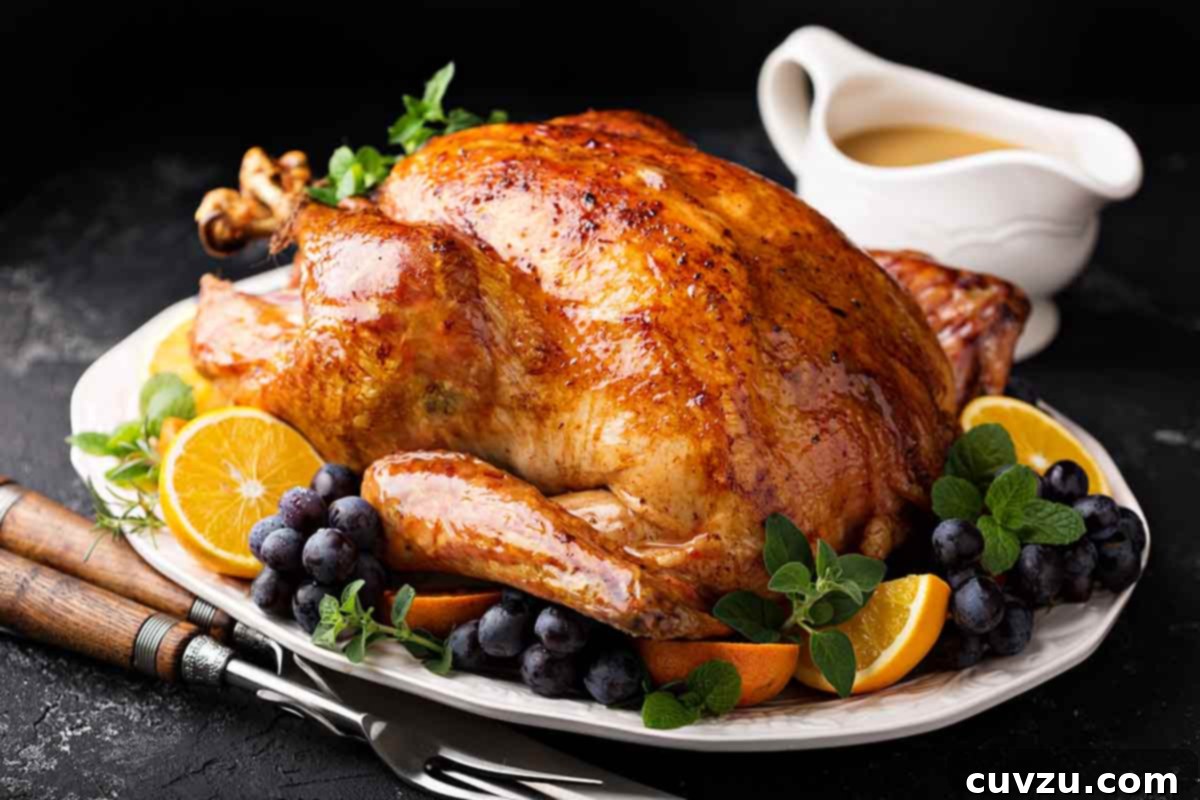
The Foolproof Method: Pinpointing the Thickest Part of the Turkey Thigh
The beauty of this hack lies in its simplicity and scientific accuracy. You can continue to roast your turkey using your preferred method and recipe. The key is in how and when you take its temperature. Here’s how to do it:
- Initial Roast: Place your turkey in the oven and let it roast for approximately 30 to 45 minutes. This initial roasting period allows some heat to begin penetrating the bird, making temperature differences more discernible.
- Remove from Oven (Briefly): Carefully remove the turkey from the oven. This brief removal allows you to work more comfortably and accurately.
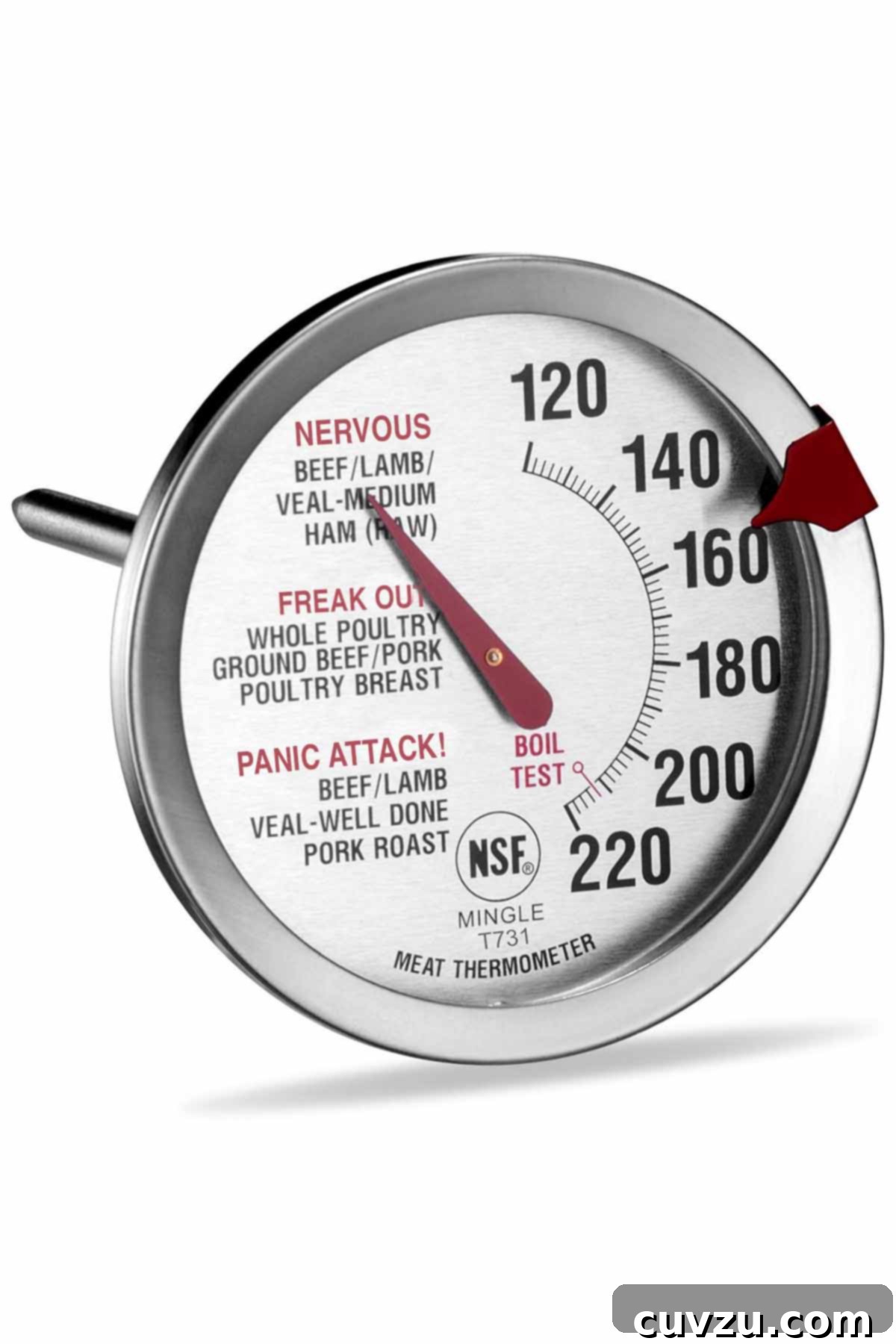
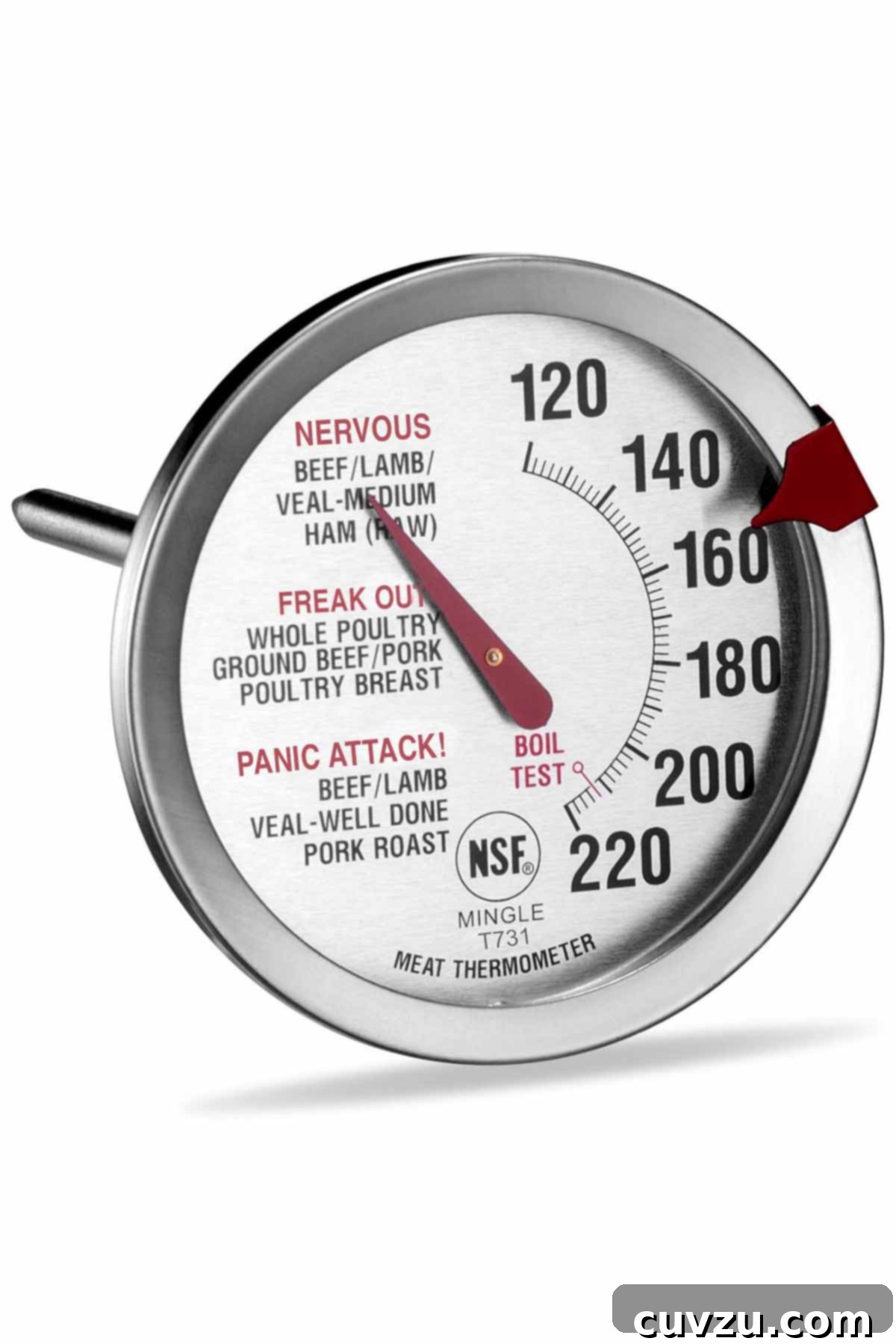
- Insert Your Thermometer: Use a reliable digital instant-read thermometer. I highly recommend an oven-safe digital thermometer with an alarm, which allows you to monitor the temperature continuously without constantly opening the oven.
- Probe and Find the Coldest Spot: Insert the thermometer probe into the thickest part of the turkey thigh. This isn’t just a guess; gently “jab” or move the probe around within the thigh meat. As you do, you’ll notice the temperature reading on your thermometer fluctuate. Your mission is to find the spot where the temperature reading is consistently the lowest.
- Why This Works: The area that registers the lowest temperature is the point where the least amount of heat has penetrated the meat. Logically, this means it is the densest, and therefore the thickest, section of the thigh. This is the last part of the thigh to cook through, and thus the most critical spot to monitor for food safety and optimal doneness.
Monitoring and Achieving the Perfect Temperature
Once you’ve identified that critical “coldest spot,” leave your oven-safe thermometer in place. Slide the turkey back into the oven, and continue roasting until your thermometer reaches the desired internal temperature. For turkey, I confidently aim for 165°F (74°C). This temperature ensures the turkey is safely cooked while retaining maximum moisture and flavor.
For a long time, the U.S. Department of Agriculture (USDA) recommended higher temperatures, often between 180°F to 185°F (82°C to 85°C) for turkey thighs. This often resulted in a frustratingly dry, almost “chokingly dry,” bird. Thankfully, in 2006, the USDA mercifully revised its temperature guidelines for poultry, lowering the recommended safe internal temperature for whole turkey to 165°F (74°C). This revision has been a game-changer for home cooks, significantly increasing our chances of achieving a wonderfully juicy and tender turkey every holiday season.
It’s important to remember that poultry, like other meats, benefits from carry-over cooking. This means that after you remove the turkey from the oven, its internal temperature will continue to rise by a few degrees as it rests. Therefore, pulling the turkey out when it hits 160-162°F (71-72°C) in the thickest part of the thigh and allowing it to rest can lead to a perfect 165°F (74°C) final temperature and even juicier results. Always double-check by ensuring the thermometer reaches 165°F (74°C) after resting, or simply cook it directly to 165°F (74°C) to be fully safe.
Beyond the Thigh: Other Critical Temperature Zones and Common Mistakes
While the thigh is crucial, for a whole turkey, it’s also wise to check the breast, ensuring it reaches 165°F (74°C). The breast meat often cooks faster than the thigh. If your bird is cooking unevenly, you might consider tenting the breast with foil partway through cooking to prevent it from drying out while the thighs finish.
Common Mistakes to Avoid:
- Probing Bones: Never let your thermometer touch a bone. Bones heat up much faster than meat, giving you an inaccurately high reading. Ensure the probe is fully inserted into the meat.
- Touching the Pan/Cavity: As my story highlights, pushing the probe through to the pan or into an empty cavity will give false readings.
- Not Checking Multiple Spots: Even with the “coldest spot” hack, it’s good practice to verify temperatures in a couple of different areas within the thigh to confirm even cooking.
- Forgetting to Rest: This is arguably one of the most critical steps. Once your turkey reaches its target temperature, remove it from the oven, tent it loosely with foil, and let it rest for at least 20-30 minutes (or even longer for larger birds). This allows the juices, which have been driven to the center of the bird during cooking, to redistribute throughout the meat, resulting in a much juicier and more tender turkey. Cutting into it too soon will cause those precious juices to run out, leaving you with dry meat.
- Not Calibrating Your Thermometer: Periodically check your thermometer’s accuracy. A simple way is to place it in a glass of ice water (it should read 32°F / 0°C) and then in boiling water (it should read 212°F / 100°C at sea level).
Embrace Confidence in Your Holiday Cooking
Armed with this simple yet effective trick, you no longer need to approach your holiday turkey with trepidation. The days of overcooked, dry poultry or, worse, undercooked and unsafe meat, are behind you. This method provides the precision and confidence needed to ensure your Thanksgiving turkey is not just edible, but truly memorable – perfectly juicy, flavorful, and cooked to a safe internal temperature every time. So go forth, embrace the festive season, and create a holiday meal that will be remembered for all the right reasons.
Chow,