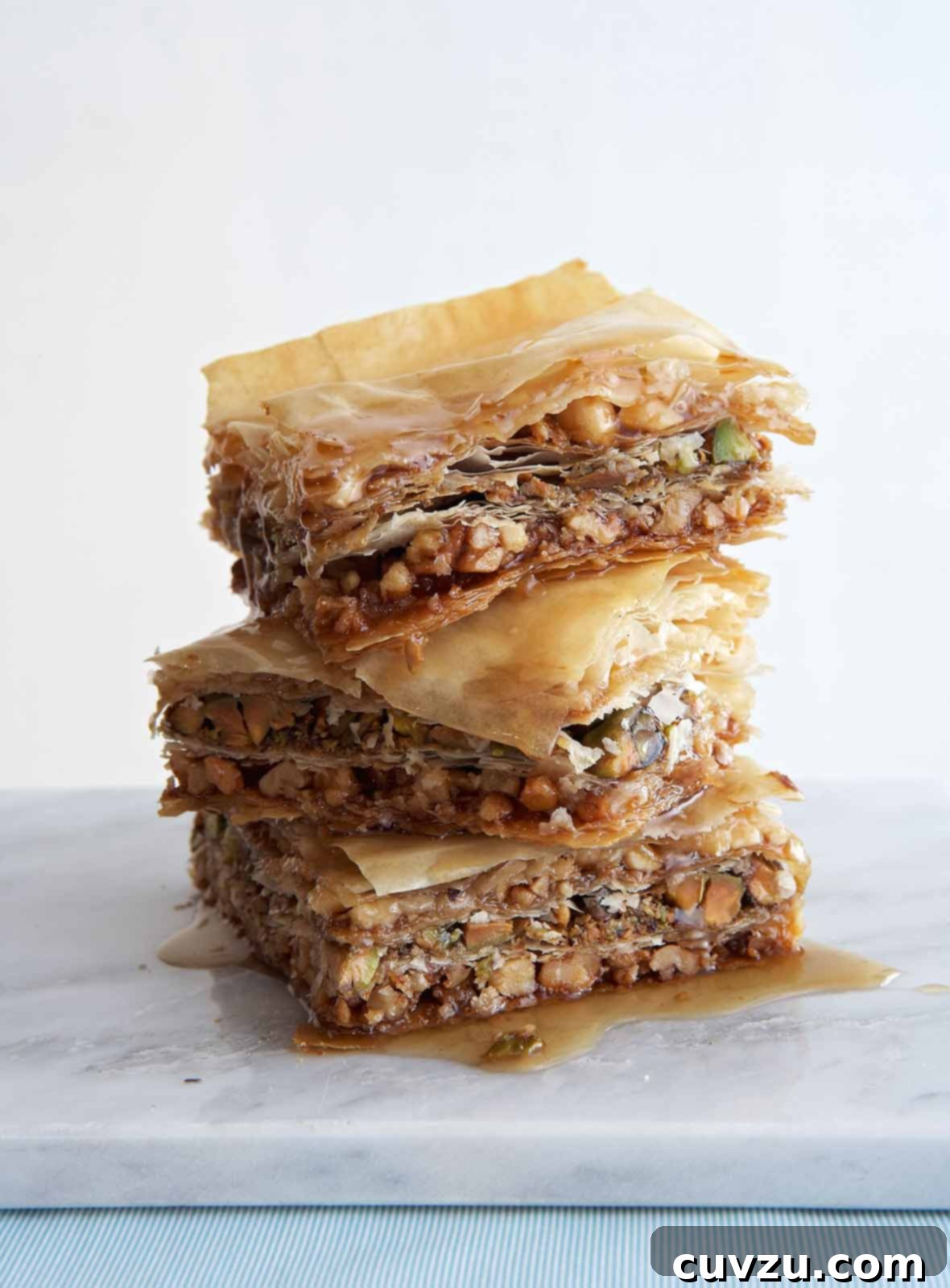
Ultimate Vegan Baklava: A Plant-Based Twist on a Greek Classic
Embark on a culinary journey to Greece with this extraordinary vegan baklava recipe. It masterfully recreates the timeless appeal of the beloved Greek classic, substituting traditional butter and honey with plant-based alternatives to create a dessert that is both familiar and refreshingly new. Using delicate phyllo dough, this recipe calls for golden agave nectar in place of honey, delivering a subtly sweet finish that’s less cloying but just as satisfying. What truly sets this baklava apart is not one, but a harmonious blend of three distinct nuts – walnuts, pistachios, and almonds – each contributing its unique flavor and texture to every delicious bite.
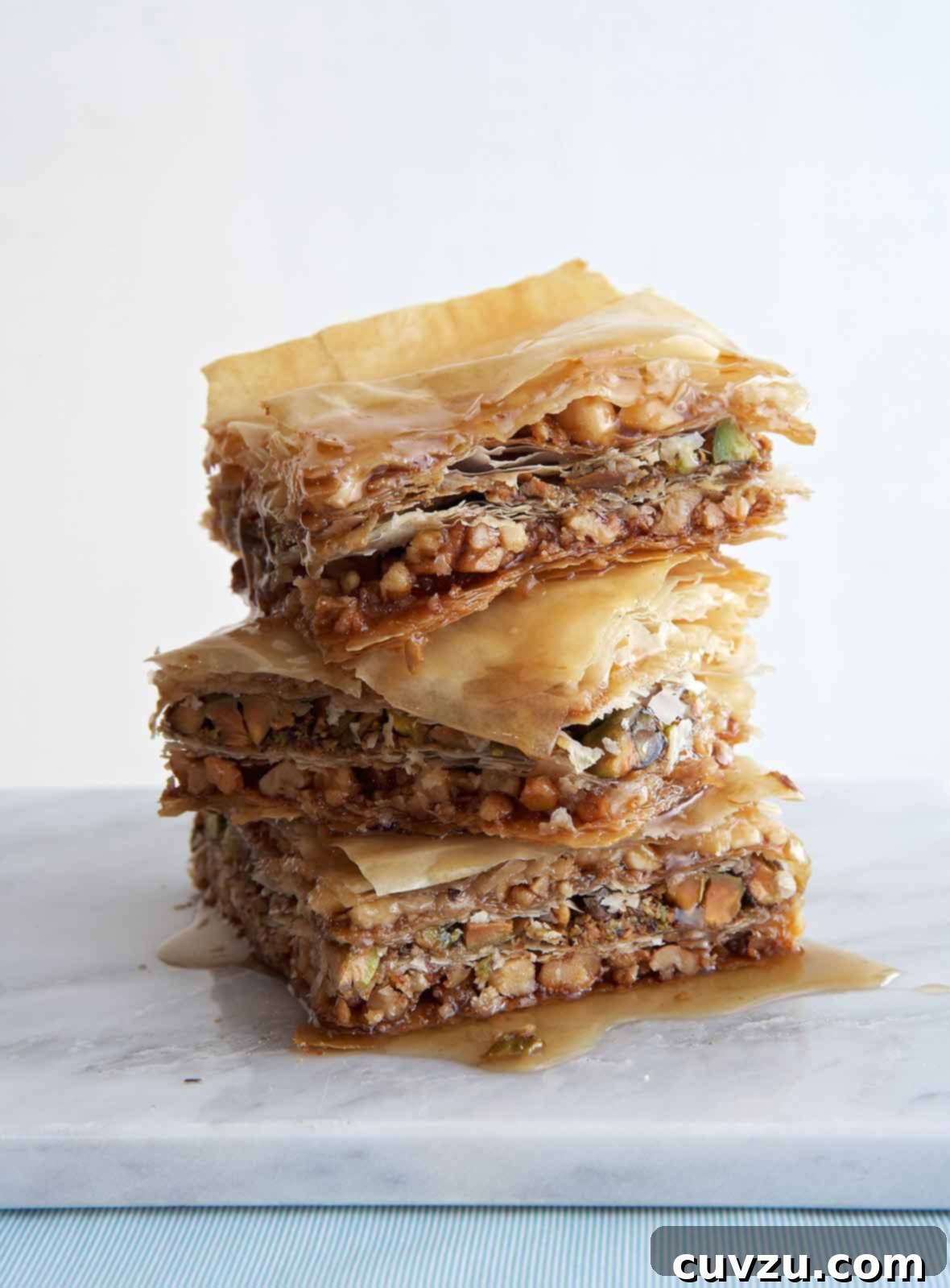
This vegan interpretation of baklava may not adhere strictly to every ancient Greek tradition, but it comes spectacularly close to the ideal, proving that plant-based doesn’t mean compromising on flavor or decadence. Its reliance on a modest amount of agave syrup, rather than copious quantities of honey, results in a dessert that’s exquisitely sweet without being overly rich. The outcome is a treat that is less cloying, yet altogether worthy of the gods themselves. We daresay you won’t be disappointed by this modern classic; we certainly weren’t.
Why Embrace Vegan Baklava? A Delightful Plant-Based Indulgence
In an evolving world of dietary preferences and health consciousness, this vegan baklava offers a compelling alternative to its traditional counterpart. Beyond accommodating a plant-based lifestyle, this recipe presents several benefits without sacrificing the quintessential baklava experience. By opting for agave nectar, we achieve a gentle, nuanced sweetness that allows the intricate flavors of the nuts and spices to shine through. This makes for a more balanced dessert, appealing to those who appreciate a less intensely sweet profile.
The absence of butter, replaced by a light olive or melted coconut oil, means this baklava is dairy-free, opening up this cherished dessert to a wider audience. The use of multiple nut varieties—walnuts, pistachios, and almonds—creates a richer, more complex flavor tapestry and a delightful textural contrast that keeps each bite exciting. This thoughtful combination elevates the baklava, making it a sophisticated addition to any meal or celebration. It’s proof that a dessert can be both authentic in spirit and innovative in its approach, delivering an unforgettable taste sensation.
The Essence of the Recipe: Key Ingredients and Their Purpose
Crafting perfect baklava, vegan or otherwise, relies on understanding the role of each ingredient. This recipe simplifies the process while maximizing flavor and texture.
- Phyllo Dough: The foundation of baklava, phyllo’s paper-thin sheets create those iconic crisp, flaky layers. Proper thawing is crucial; always thaw it overnight in the refrigerator, then bring it to room temperature for about an hour before use. Keep the dough covered with plastic wrap and a damp towel while working to prevent it from drying out and becoming brittle.
- Agave Nectar: This plant-based sweetener is the star of our vegan syrup. Lighter in consistency and often less viscous than honey, it provides a clean, mild sweetness that perfectly complements the nutty layers. It ensures the baklava remains truly vegan without compromising on that essential sweet glaze.
- The Triple-Nut Blend (Walnuts, Pistachios, Almonds): This diverse combination is a hallmark of this recipe. Walnuts offer a robust, earthy flavor and a satisfying crunch. Pistachios contribute a vibrant color and a distinctive, slightly sweet and savory note. Almonds add a subtle sweetness and a delicate texture. Together, they create a depth of flavor and a varied texture that surpasses single-nut baklava.
- Dark Brown Sugar & Ground Cinnamon: These two ingredients are finely ground with the nuts, providing a warm, caramel-like sweetness and an aromatic spice that is synonymous with traditional baklava.
- Light Olive Oil or Melted Coconut Oil: As the vegan alternative to butter, these oils provide the necessary fat to crisp the phyllo layers and impart a subtle richness. Light olive oil offers a neutral flavor, while coconut oil can add a hint of its distinct aroma if desired.
- Lemon Zest: Infused into the agave syrup, the lemon zest provides a bright, refreshing counterpoint to the sweetness and nuttiness, adding a layer of sophisticated flavor. Remember to remove it after simmering for a pure, clean syrup.
Vegan Baklava
Average Rating: 5 / 5 (3 votes)
This vegan baklava recipe creates a sweet and nutty Greek classic using agave syrup instead of honey, and a delightful blend of pistachios, almonds, and walnuts for exceptional crunch and flavor.
David Leite
Ingredients
- 1/2 cup dark brown sugar
- 1/2 teaspoon ground cinnamon
- 1 cup walnut pieces
- 1 cup shelled pistachios
- 3/4 cup raw almonds
- 12 sheets phyllo dough, thawed overnight in the refrigerator
- 1/2 cup light olive oil or melted coconut oil, plus more for the pan
- 1 cup agave syrup (or, for a non-vegan version, honey)
- 1/2 cup cold water
- Zest from 1 large lemon, preferably organic, removed in 1 long strip
Instructions
- Preheat the oven to 350°F (180°C). Lightly oil a 13-by-9-inch baking pan, ensuring the sides are also coated.
- In a blender, combine the dark brown sugar and ground cinnamon. Blitz until the mixture is very finely ground and powdery. Transfer this fragrant sugar mixture to a small bowl and set aside.
- Using the same blender or a food processor, pulse the walnut pieces until they are mostly finely chopped but still retain a slight chunky texture for character. Transfer the chopped walnuts to a separate small bowl and stir in 1/3 of the prepared sugar-cinnamon mixture. Repeat this process with the shelled pistachios, then with the raw almonds, ensuring each type of nut is combined with 1/3 of the sugar mixture in its own bowl.
- Carefully unroll the phyllo dough. To prevent it from drying out, immediately cover the sheets with a large piece of plastic wrap, then cover that with a towel that has been barely dampened. This will keep the phyllo pliable and easy to work with.
- Remove one sheet of phyllo dough and lay it flat on a clean, dry work surface. Lightly brush half of the phyllo sheet with either light olive oil or melted coconut oil. Fold the sheet in half, aligning the edges, and carefully place it into the prepared baking pan. Brush the top surface of this folded phyllo sheet with more oil. Repeat this layering process with two additional phyllo sheets, oiling and folding each before placing them into the pan, creating a total of three double-layered phyllo sheets as your base.
- Evenly scatter the prepared walnut mixture over the phyllo layers in the pan. Follow this with another three double-layered phyllo sheets, brushed with oil as before. Next, spread the pistachio mixture over these new phyllo layers. Add three more double-layered phyllo sheets, again brushing with oil, and then spread the almond mixture. Finally, top the baklava with the last three double-layered phyllo sheets, ensuring the top is also brushed with oil.
- Using a very sharp paring knife, score the top layer of phyllo. First, cut across the shorter side of the pan to form 6 evenly spaced strips. Then, score the phyllo diagonally from one corner to the opposite corner. Make two more cuts parallel to this diagonal line on each side, creating a diamond pattern. (If this cutting technique seems too intricate, simply cut the baklava into squares or triangles as you prefer—it will be delicious regardless of the shape!)
- Bake the baklava in the preheated oven for 40 minutes, or until the phyllo layers are beautifully golden brown and delightfully crisp.
- While the baklava is baking, prepare the agave syrup. In a small saucepan, combine the agave syrup, cold water, and the long strip of lemon zest. Bring the mixture to a boil over high heat, stirring gently to combine. Once boiling, reduce the heat to a simmer and let it cook, stirring occasionally, for 10 minutes. Remove the saucepan from the heat and allow the syrup to cool slightly. Carefully remove and discard the lemon zest.
- As soon as the baked baklava comes out of the oven, while it is still warm, slowly and evenly pour the slightly cooled agave syrup over the entire surface. Ensure the syrup is distributed across all the scored cuts. Cover the baklava tightly with plastic wrap and refrigerate for at least 1 hour before serving to allow the flavors to meld and the syrup to fully absorb. This vegan baklava can be stored, tightly covered in the refrigerator, for approximately 2 weeks, maintaining its crispness and fresh taste.
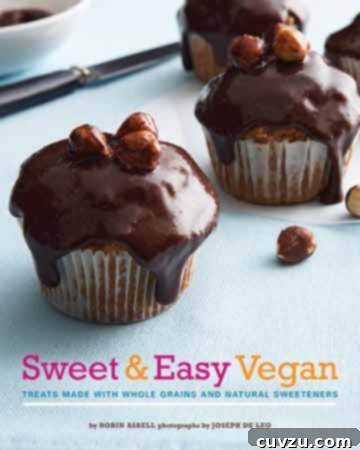
Adapted From
Sweet & Easy Vegan
Buy On Amazon
Insights from Our Recipe Testers
We believe the best recipes are those tried and tested by real home cooks. Our community of recipe testers diligently put this vegan baklava to the test, offering invaluable feedback and enthusiastic endorsements. Here’s what they had to say about their experience:

Gene C.
Gene C. raved about this baklava, declaring it “OMG delicious!” His friends and family echoed his sentiments with comments like, “Soooo good,” and immediate requests for the recipe. He noted that while it might not be strictly “authentic,” it perfectly replaces the classic in today’s health-conscious world. Gene particularly praised the innovative use of three nut varieties, which he felt added a wonderful new dimension and flavor. He used shelled, salted pistachios, finding their savoriness a fantastic complement to the sweetness. All ingredients were easily sourced from his local supermarket, and he specifically mentioned using agave, brown sugar, and wheat flour phyllo. Gene’s practical tip: “Cut it up, put a frilly toothpick in, and you’ll have the best dessert at any potluck or family gathering. Be warned, you’ll be making this again and again, so look into getting nuts in bulk. It’s that good!”

Dawn English
Dawn English described this recipe as “what baklava dreams are made of.” A self-proclaimed baklava lover, she found it tasted authentic even without butter. Dawn thoroughly enjoyed the baking process and the delicious outcome, calling it a “dessert splurge I won’t soon forget!” Interestingly, she opted for honey instead of agave, finding the syrup “quite lovely and not overbearingly sweet.” She also commended the scoring technique, which “worked perfectly.” Her family savored the baklava all week, and she happily reported that storing it in the covered baking dish kept it “nice and crisp and stayed fresh tasting all week long.” Dawn concluded by stating, “Another excellent recipe which I plan to make again!”

Shannon Parrish
Shannon Parrish found this vegan baklava “delicious!” She particularly highlighted how the addition of pistachios and almonds, beyond traditional walnuts, contributed “tremendous flavor.” Using regular phyllo dough and light olive oil, she was delighted with the results. Shannon did note that she needed about 1/4 cup of additional olive oil to adequately brush all the layers. While tempted by the agave syrup, she ultimately stuck with tradition and used honey, preferring its “gooey texture that agave syrup doesn’t seem to offer.” She found the baklava “simple to prepare,” but acknowledged that working with phyllo dough required “quite a bit of patience.” Shannon shared a valuable tip: she was initially worried about having 20 sheets of phyllo when the recipe called for 12, but realized that “having extra sheets ended up being a good thing!” as it allowed her to get the hang of handling without tearing. She playfully added that no one would notice if the cutting wasn’t perfect because “it’s so good, nobody is going to even notice how it’s cut. So delicious!”

Anna Scott
Anna Scott, a baklava enthusiast who had never attempted to make it before, was pleasantly surprised. She discovered it wasn’t as complicated as she’d assumed, merely requiring “a bit of time and quality ingredients.” Anna appreciated the “lightened up” aspect of the recipe. Resourcefully, she used a mix of half agave and half honey for the syrup, based on what her pantry offered, and found it resulted in “a nice balance of flavors and sweetness.” The clever inclusion of three different nut varieties was a hit, offering “variation and the flavors of these three nuts in the dessert.” Initially, Anna worried there wouldn’t be enough syrup, but after chilling, she found the sauce soaked perfectly into the layers, resulting in “crisp on top and each layer of nuts was perfectly flavored.” She truly enjoyed making this classic confection and intends to keep this recipe in her folder for future use.

Lori Widmeyer
As an experienced baklava maker, Lori Widmeyer is always on the lookout for better-tasting versions or simpler processes. She found this vegan baklava to be “definitely simpler than my current recipe and was equally well received.” She also appreciated that the final product was “not as thick as my usual recipe, which made it a little easier to eat.” Lori praised the “great” flavor combination of the three nuts but suggested for next time she might mix all the nuts together to reduce dirty dishes and steps. She also plans to toast the nuts beforehand and potentially add a tiny amount of butter (presumably vegan butter for a vegan version, or traditional butter for a non-vegan adaptation) to help them bind together more firmly.

Elizabeth and Lena Alvarez
Elizabeth and Lena Alvarez followed the recipe closely, using olive oil with whole wheat phyllo and opting for honey instead of agave syrup. Their final dessert was a “deliciousness with lemon and toasty nuts and honey.” They highlighted that it was a “fun and easy to make with a child,” indicating its accessibility for family baking projects.
Tips for Perfect Vegan Baklava Every Time
Achieving baklava perfection, whether traditional or vegan, often comes down to a few key techniques. Here are some expert tips to ensure your vegan baklava is consistently crisp, flavorful, and a true showstopper:
- Phyllo Mastery: The most crucial step is managing the phyllo dough. Always keep the unused sheets covered with plastic wrap and a lightly damp towel. This prevents them from drying out, which makes them brittle and prone to tearing. Work quickly but gently.
- Even Oiling: Don’t skimp on the oil! Each layer of phyllo needs to be brushed lightly but thoroughly. This is what creates those distinct, flaky layers. A pastry brush works wonders here.
- Sharp Cuts: Use a very sharp knife to score the baklava before baking. This helps the syrup penetrate all the layers evenly and makes it easier to cut into individual pieces after baking. If your cuts aren’t clean, the layers might separate unevenly.
- Temperature Contrast for Syrup: The classic baklava technique dictates pouring cool syrup over hot baklava, or vice versa. This recipe uses warm baklava and a slightly cooled syrup. This temperature difference helps the phyllo absorb the syrup without becoming soggy, ensuring a crisp top and moist interior.
- Patience with Chilling: While tempting to dive in immediately, chilling is non-negotiable for baklava. It allows the syrup to fully permeate the layers and the flavors to meld beautifully. The baklava will firm up and become even more delicious after at least an hour in the refrigerator.
- Storage: Baklava is surprisingly durable. Stored in an airtight container in the refrigerator, it can stay fresh and crisp for up to two weeks, making it an ideal make-ahead dessert for entertaining.
- Experiment with Nuts: While this recipe offers a fantastic triple-nut blend, feel free to experiment with other combinations or ratios based on your preferences. Pecans, cashews, or even hazelnuts could be delightful additions.
Nutrition
Calories: 133 kcal
Carbohydrates: 13 g
Protein: 2 g
Fat: 9 g
Saturated Fat: 3 g
Monounsaturated Fat: 2 g
Trans Fat: 1 g
Sodium: 32 mg
Fiber: 1 g
Sugar: 8 g
Nutrition information is automatically calculated and should only be used as an approximation.
Tried this recipe?
Mention @leitesculinaria or tag #leitesculinaria!