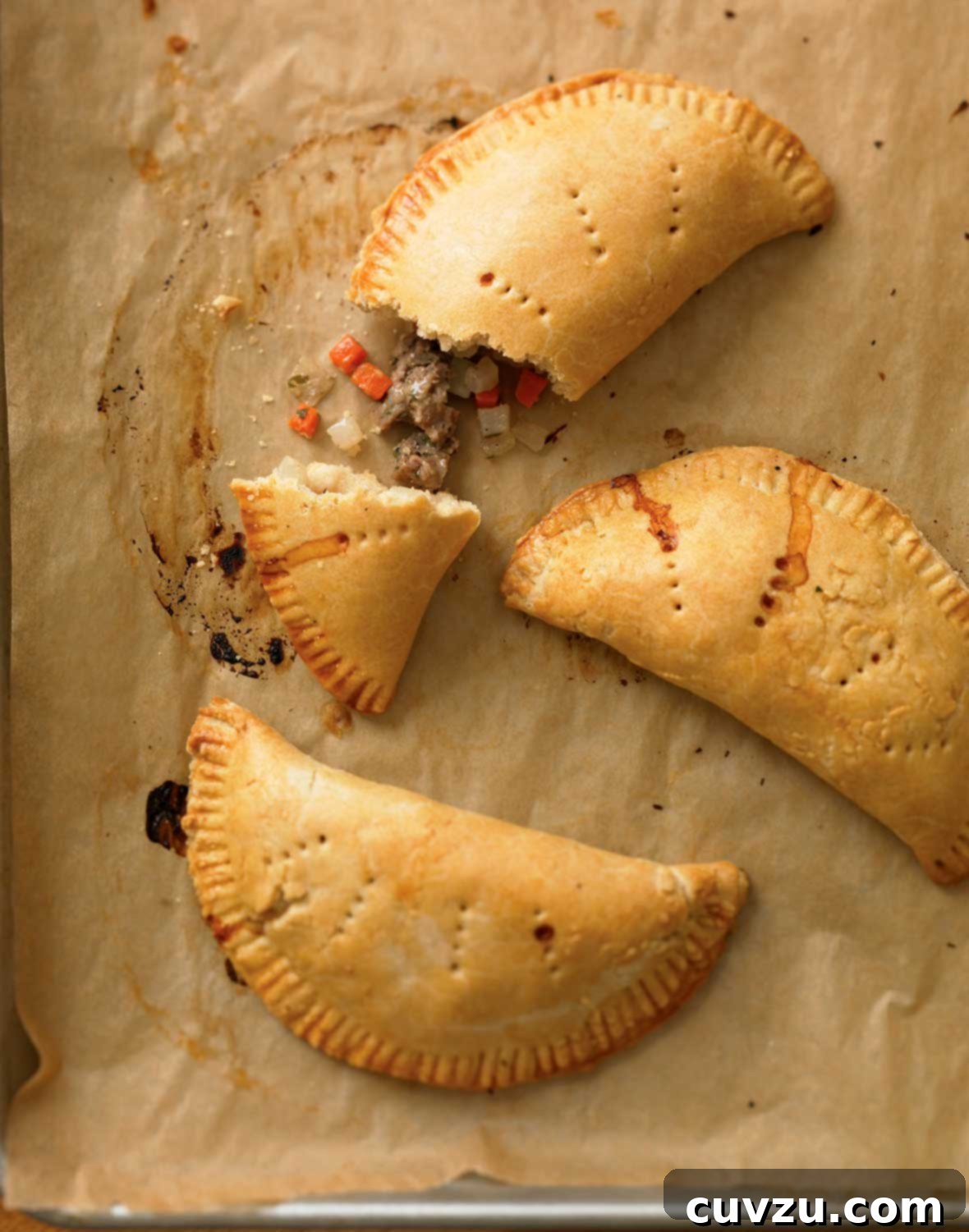
Authentic Homemade Cornish Pasties: A Hearty Taste of British Tradition
Discover the rich history and irresistible flavor of a true Cornish Pasty. This iconic British hand-pie, packed with tender beef and earthy vegetables in a robust, flaky pastry, is more than just a meal—it’s a culinary journey. Perfect for a cozy family dinner or a portable, satisfying lunch, our comprehensive guide will walk you through creating these beloved savory pastries from scratch, ensuring a delicious and authentic experience.
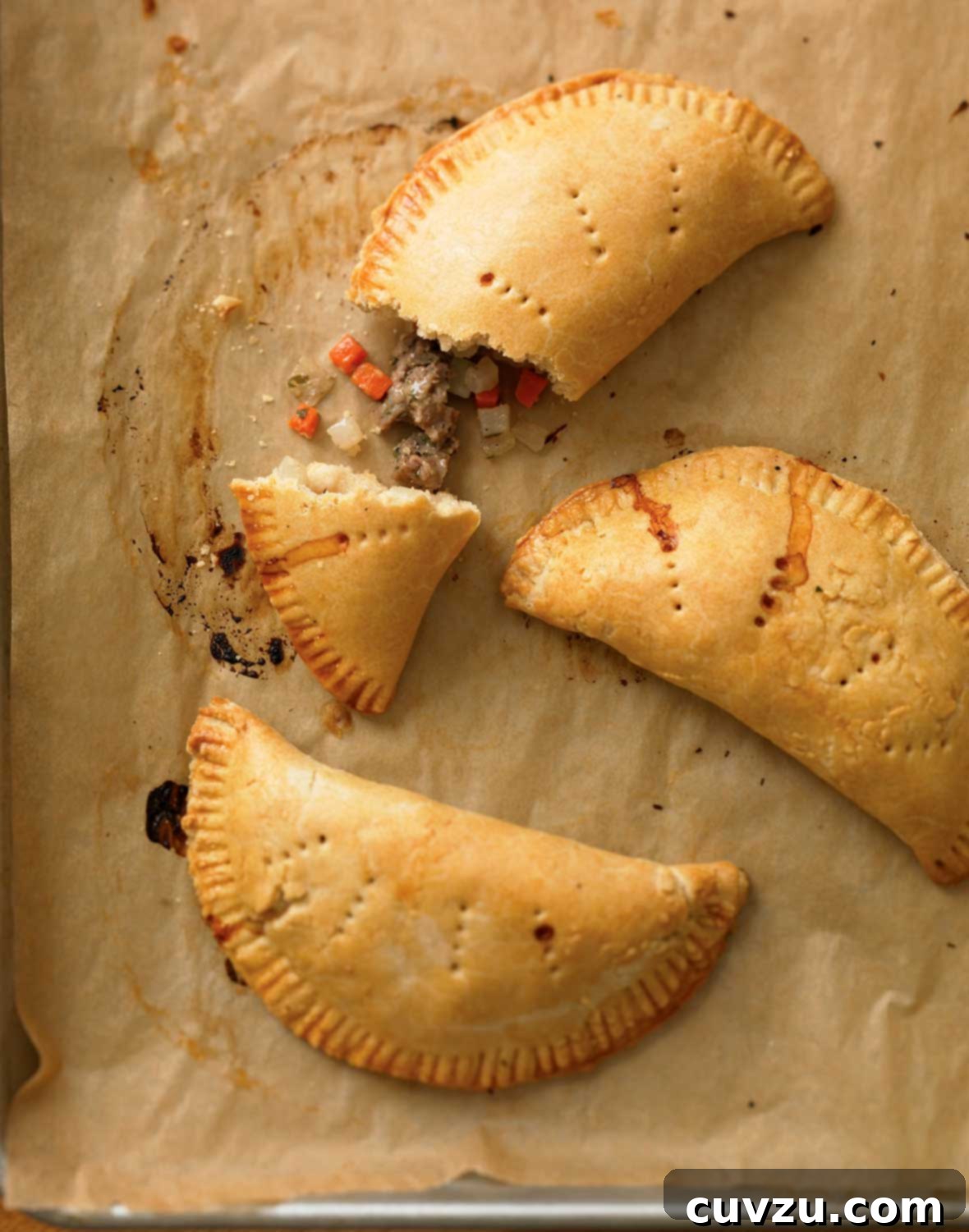
Cornish Pasties
A true taste of Cornwall, these sturdy pastries are traditionally filled with seasoned beef, potatoes, onions, and carrots, all encased in a rich, homemade dripping pastry. This recipe delivers the comforting, robust flavors that have made Cornish pasties a cherished staple for centuries.
Recipe by David Leite, Adapted from Jennifer McLagan
There’s something uniquely comforting about a Cornish pasty. For many, it evokes childhood memories, perhaps of a special treat allowed on the couch while watching television. But beyond personal nostalgia, the Cornish pasty holds a significant place in culinary history, revered for its practicality, heartiness, and delicious simplicity. These robust hand-pies are not just a meal; they’re a testament to resourceful cooking and a proud symbol of Cornwall’s heritage.
What Exactly is a Cornish Pasty?
At its core, a Cornish pasty is a sturdy, crimped pastry filled with raw meat and vegetables that cook together in their own juices. The magic lies in this self-contained cooking method, which infuses every bite with rich, concentrated flavors. Traditional Cornish pasties adhere to specific guidelines, granted Protected Geographical Indication (PGI) status in Europe, much like Champagne or Parma ham. This means an authentic Cornish pasty must be made in Cornwall, with a specific filling of roughly diced or minced beef, sliced potato, swede (rutabaga), and onion, seasoned with salt and pepper. All ingredients must be raw when assembled, and the pastry must be crimped on the side, not the top, creating that distinctive D-shape.
The pastry itself is crucial. For this recipe, we recommend using dripping pastry. Beef dripping or rendered suet lends an unparalleled richness and savory depth to the crust, making it incredibly sturdy yet tender. This pastry is strong enough to hold the substantial filling and provides a mild, beefy flavor that perfectly complements the interior.
A Glimpse into History: The Origins of the Cornish Pasty
The Cornish pasty’s history is as rich and comforting as its filling. Its roots trace back centuries, firmly established as the staple meal of Cornish miners. Imagine working deep underground, far from any heating source. A pasty was the perfect solution: a complete, hot meal encased in a thick, portable crust. Miners would carry them down the shafts, keeping them warm against their bodies. The distinctive thick crimped edge served a practical purpose too – it was essentially a handle that the miners could hold onto with their dirty, arsenic-stained hands. Once the filling was eaten, the crimp could be discarded, preventing the ingestion of harmful chemicals. This ingenious design speaks volumes about its origins as a working man’s lunch.
Over time, the pasty’s appeal transcended the mining community, becoming a beloved dish across all social strata in Cornwall and eventually throughout Britain and the world, carried by Cornish emigrants. Its relatives can be found globally: the savory empanadas of Latin America, the spiced samosas of India, and other filled pastries around the world all share the spirit of a portable, satisfying meal.
Crafting the Perfect Pasty: Key Components Explained
The Essential Dripping Pastry
The foundation of an authentic Cornish pasty is its robust pastry. While butter-based shortcrust pastry can be used, traditionalists swear by beef dripping or rendered suet. This type of fat creates a pastry that is incredibly strong, capable of holding a weighty, juicy filling without collapsing, and imparts a subtle, savory beef flavor that enhances the overall experience. To achieve a perfectly flaky and tender crust, ensure your fat and water are ice-cold, and work the dough minimally to prevent gluten development. Overworking leads to a tough pastry, and that’s the last thing you want for your pasty.
The Hearty, Uncooked Filling
The magic of a Cornish pasty filling lies in its simplicity and the fact that the ingredients are placed into the pastry raw. As the pasty bakes, the meat and vegetables gently steam and stew within their pastry casing, allowing their flavors to meld beautifully and creating a delicious gravy from the meat juices and vegetable moisture. The traditional filling includes:
- Beef: Marbled sirloin steak is ideal, cut into small cubes. The marbling ensures the meat remains tender and flavorful during the long, slow bake.
- Potatoes: Provide a satisfying bulk and absorb the delicious juices.
- Onions: Offer a sweet, aromatic base.
- Carrots (or Swede/Rutabaga): Adds a touch of sweetness and another layer of texture. Traditionally, swede (known as rutabaga in North America) is used, but carrots make a delicious and easily accessible substitute.
- Seasoning: A generous hand with sea salt and freshly ground black pepper is crucial. Fresh herbs like parsley and rosemary elevate the flavors further.
The precise dicing of the vegetables and meat is important; aim for uniform small pieces to ensure even cooking and distribution within each pasty.
The Signature Crimp
The distinctive crimped edge of a Cornish pasty is not merely decorative. It’s a hallmark of authenticity and an essential part of its structural integrity. This tightly sealed edge locks in all the precious juices and steam, allowing the filling to cook perfectly inside its edible parcel. Traditionally, pasties are formed with their crimped edge pointing skyward, but for ease of baking and to prevent tipping, you can bake them lying flat on a baking sheet. The key is to create a robust, secure seal that will not burst open during baking.
Recipe: How to Make Authentic Cornish Pasties
Ingredients
For the Dripping Pastry
- 4 cups (17 1/2 ounces) all-purpose flour
- 1 teaspoon fine salt
- 6 ounces beef dripping or diced rendered suet, chilled
- 1/4 cup plus 2 teaspoons ice-cold water
For the Pasties
- 1 recipe dripping pastry (prepared as above)
- 1 pound marbled sirloin steak, trimmed and finely diced
- 1 large potato, peeled and diced
- 1 large onion, peeled and diced
- 1 large carrot (or small swede/rutabaga), peeled and diced
- 1 tablespoon chopped fresh flat-leaf parsley leaves
- 1 teaspoon finely chopped fresh rosemary leaves
- 1 teaspoon sea salt, plus more to taste
- Freshly ground black pepper, to taste
- 1 large egg, for egg wash
- 1 tablespoon water, for egg wash
Instructions
Make the Pastry
-
In a food processor, combine the all-purpose flour and fine salt. Pulse a few times to ensure they are well mixed. Add the chilled beef dripping or diced rendered suet. Pulse again until the mixture resembles coarse bread crumbs with some pea-sized pieces of fat remaining. Transfer this mixture to a large bowl.
-
Pour 1/4 cup of the ice-cold water over the flour-dripping mixture. Mix with a fork until the dough starts to come together. To test the consistency, squeeze a small portion of the dough between your fingers. If it holds together without crumbling, it’s ready. If it’s too dry, mix in the remaining 2 teaspoons of ice-cold water, one teaspoon at a time, and test again until it reaches the desired consistency. Be careful not to add too much water.
-
Tip the dough onto a lightly floured surface. Gently knead it just enough to form a cohesive ball. Avoid overworking. Divide the pastry in half and flatten each half into a disk. Wrap each disk tightly in plastic wrap and refrigerate for at least 30 minutes, or up to 2 days, to allow the gluten to relax and the fat to firm up. This step is crucial for a tender, flaky crust.
Make the Pasties
-
Preheat your oven to 400°F (200°C). Remove the chilled pastry disks from the refrigerator about 10-15 minutes before you plan to roll them out to allow them to soften slightly, making them easier to work with.
-
Prepare the filling: Cut the marbled sirloin steak into 1/2-inch (1.25 cm) cubes, removing any tough sinew or excess fat. Place the diced meat in a large mixing bowl. Peel and dice the potato, onion, carrot (or turnip) into 1/4-inch (0.6 cm) cubes. Add the diced vegetables to the bowl with the meat. Stir in the chopped flat-leaf parsley, finely chopped rosemary, and sea salt. Season generously with freshly ground black pepper. Mix all the filling ingredients thoroughly to ensure even distribution of seasonings and vegetables. In a small separate bowl, whisk the large egg with the 1 tablespoon of water to create an egg wash; set aside.
-
On a lightly floured surface, take one disk of pastry and roll it out to approximately 1/4 inch (0.6 cm) thick. Using a 6-inch (15 cm) round cutter (or a saucer as a template), cut out as many circles as possible. Gather the pastry scraps, gently knead them together, and re-roll to cut out additional circles until you have nine 6-inch circles in total. For each pasty: Take one pastry circle and place about 1/3 cup of the raw filling onto one half of the circle, leaving a clear border around the edge. Brush the edges of the pastry circle with the prepared egg wash. Carefully fold the unoccupied half of the pastry over the filling to create a half-moon shape. Press the edges together firmly to seal, then crimp them tightly by pinching and twisting the pastry edges to form a decorative and secure seal. This distinctive crimp is vital to hold the juices in. Place the formed pasty onto a baking sheet lined with parchment paper. Repeat this process with the remaining pastry circles and filling.
-
Once all pasties are assembled and on the baking sheet, brush the tops of each pasty generously with the remaining egg wash. Using a fork, prick the top side of each pasty several times. This allows steam to escape during baking, preventing the pasties from bursting. Bake in the preheated oven at 400°F (200°C) for 20 minutes. After 20 minutes, reduce the oven temperature to 350°F (175°C) and continue baking for another 25 to 35 minutes, or until the pasties are beautifully golden brown and you see a little cooking juice leaking from the fork holes—a sign that the filling is perfectly cooked and tender inside. The total baking time will be around 45-55 minutes.
-
Remove the pasties from the oven and let them rest on the baking sheet for a few minutes before serving. This allows the internal juices to redistribute, ensuring a more flavorful experience.
Adapted From
Fat: An Appreciation of a Misunderstood Ingredient, with Recipes
Buy On Amazon
Serving Suggestions and Delicious Variations
Cornish pasties are incredibly versatile and can be enjoyed warm or at room temperature, making them ideal for picnics, packed lunches, or a hearty dinner. Traditionally, they are served simply, perhaps with a dollop of relish, a spoonful of tangy chutney, or a drizzle of classic tomato sauce. For a more complete meal, pair them with a fresh green salad or some pickled onions.
While the traditional filling is sacrosanct for purists, variations exist. Historically, sweet pasties filled with apples or other fruits were also made, sometimes even with a savory filling on one end and a sweet one on the other for a complete meal! Today, you might find vegetarian versions featuring cheese and onion or other vegetables. While these deviate from the strict PGI definition, they offer delicious alternatives for different dietary preferences.
Why Make Your Own Cornish Pasties?
Making your own Cornish pasties from scratch is a deeply rewarding experience. Not only do you get to control the quality of every ingredient, but there’s an immense satisfaction in bringing this historical dish to life in your own kitchen. The aroma filling your home, the flaky pastry, and the rich, savory filling are unmatched by any store-bought version. It’s a culinary tradition worth embracing and sharing.
Frequently Asked Questions About Cornish Pasties
- Can I use butter instead of beef dripping for the pastry?
- Yes, you can substitute butter for beef dripping. While it won’t have the same traditional richness or robust flavor, a good quality cold butter will still produce a delicious and flaky pastry. Use the same quantity as specified for dripping.
- Can Cornish pasties be frozen?
- Absolutely! Cornish pasties freeze exceptionally well. You can freeze them either unbaked or baked. If freezing unbaked, wrap each pasty tightly in plastic wrap and then foil, then freeze. Bake from frozen, adding about 20-30 minutes to the baking time and ensuring they are piping hot in the center. If freezing baked pasties, let them cool completely, wrap well, and freeze. Reheat in a moderate oven until warmed through.
- What’s the difference between a pasty and an empanada?
- While both are savory, filled pastries, the key differences lie in their origins, traditional fillings, and cooking methods. Cornish pasties are British, typically filled with raw beef and vegetables that cook inside the pastry, and are baked. Empanadas, from Latin America and Spain, feature a variety of pre-cooked fillings (meat, cheese, vegetables) and can be either baked or fried, often with a thinner, lighter dough.
- Why do my pasties sometimes leak juices during baking?
- A little leakage of juice from the fork pricks on top is actually a good sign! It indicates that the filling is cooking down and releasing its delicious juices, creating that characteristic moist and flavorful interior. As long as the crimped edge holds firm, it’s nothing to worry about and confirms you’re making an authentic pasty.
Nutrition
Serving:
1 portion
Calories:
468 kcal
Carbohydrates:
49 g
Protein:
19 g
Fat:
21 g
Saturated Fat:
11 g
Monounsaturated Fat:
7 g
Trans Fat:
1 g
Cholesterol:
64 mg
Sodium:
568 mg
Fiber:
3 g
Sugar:
1 g
Nutrition information is automatically calculated and should only be used as an approximation.