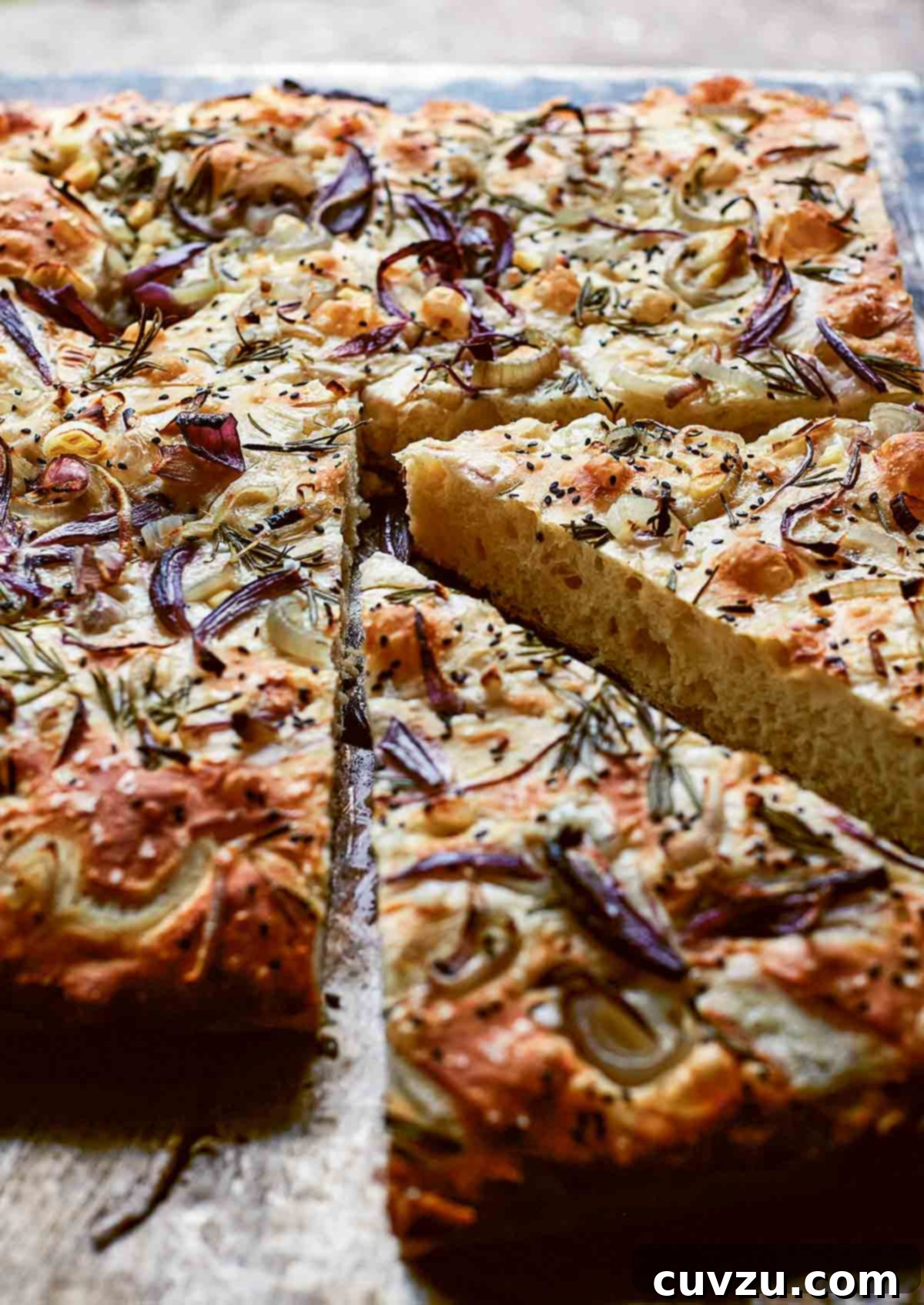
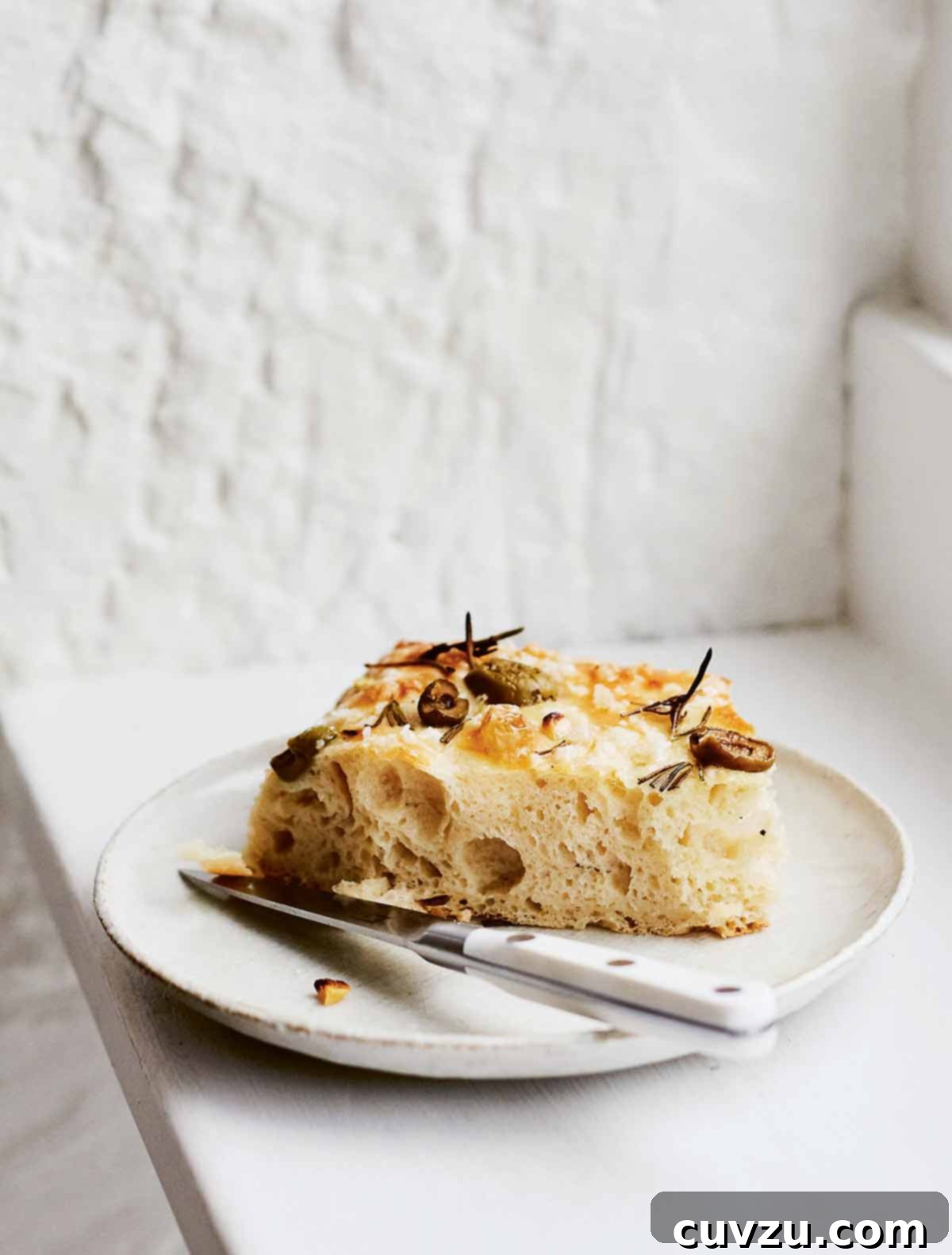
Welcome to the enchanting world of homemade focaccia, a classic Italian flatbread that promises to transport your senses straight to the heart of the Mediterranean. This particular recipe for Red Onion and Rosemary Focaccia stands out with its signature crunchy, perfectly salted crust and an irresistibly tender, airy interior. Crowned with sweet, caramelized red onions and fragrant fresh rosemary, this bread is more than just a side dish; it’s a culinary journey, offering a delightful distraction both in its creation and its savoring.
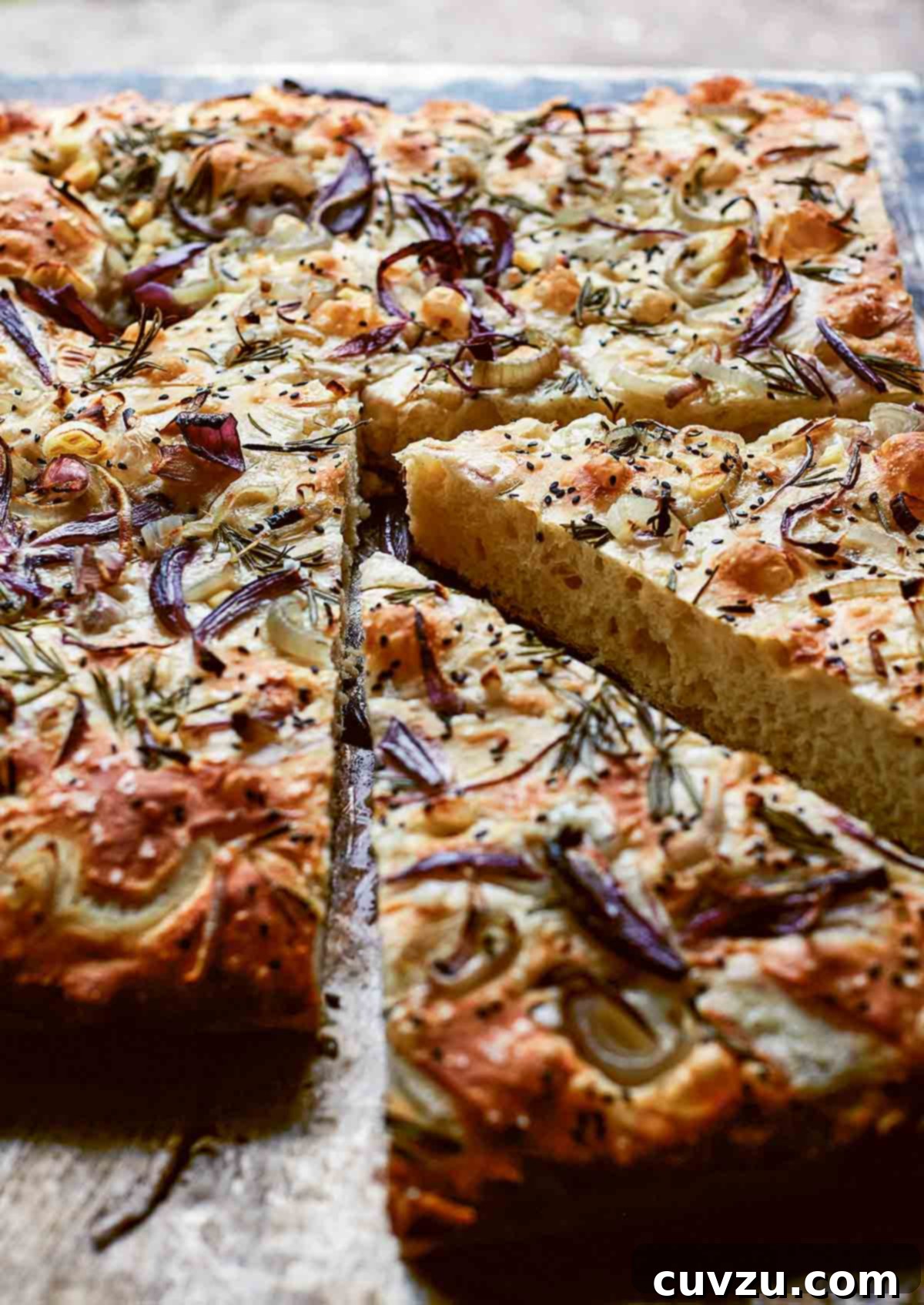
Achieving that coveted light and airy texture in focaccia requires a blend of patient technique and quality ingredients. Our recipe ensures a tender, chewy crumb by employing extensive kneading and a crucial overnight rest in the refrigerator. This allows the gluten to fully develop and the flavors to deepen, contributing to the bread’s remarkable character. The result is a focaccia that boasts a delightful crunch on the surface, beautifully speckled with coarse sea salt. The natural sharpness of red onion is expertly tamed through caramelization, adding a rich, sweet depth, while the herbaceous notes of rosemary infuse every bite with an aromatic freshness. This combination elevates a simple bread to an extraordinary experience.
Understanding High-Hydration Dough: Why Focaccia is So Sticky and Wet
One of the most frequently asked questions when preparing focaccia dough is about its exceptionally sticky and wet consistency. This characteristic, far from being a flaw, is actually key to achieving the bread’s signature texture. As the recipe author highlights, a “ninety percent hydration” dough, like this one, is intentionally wild and wet. This high water content is instrumental in creating a damp, soft, and open crumb structure that is wonderfully bouncy and light. When it comes to focaccia, a wetter dough consistently yields superior results. Therefore, patience and a willingness to work with a less conventional dough are essential.
The secret lies in the development of gluten. Despite its stickiness, thorough kneading is paramount. Whether using a stand mixer or employing specific hand-kneading techniques (more on that later), the goal is to build up the gluten network as much as possible. A brilliantly elastic dough is the reward, directly translating into a more satisfyingly chewy focaccia. Embrace the wetness; it’s your ally in crafting an authentic Italian focaccia with an inimitable texture that is both tender and resilient.
Focaccia with Red Onion and Rosemary
This red onion and rosemary focaccia offers that iconic crunchy, perfectly salted surface alongside a tender texture within. Topped with sweet caramelized onions and fragrant rosemary, it’s a delightful baking project and an even more delightful treat.
Recipe by David Leite
Ingredients
- 4 cups white bread flour
- 1 7/8 cups water (divided)
- 2 teaspoons kosher salt
- 1 generous teaspoon instant yeast
- 1 1/2 tablespoons extra virgin olive oil, plus more for the pan and drizzling
- Coarse sea salt, for sprinkling
- Finely chopped fresh rosemary
- Caramelized red onions for topping
Instructions
-
In the bowl of a stand mixer fitted with the dough hook, combine the bread flour, 1 2/3 cups (400g) of the water, kosher salt, instant yeast, and 1 1/2 tablespoons of extra virgin olive oil.
-
Mix on slow speed for 4 minutes until the ingredients are well combined. Then increase the mixer speed to high and continue mixing for 6 minutes to develop the gluten. Let the dough rest in the mixer bowl for 15 minutes.
☞ EXPERT TIP: This dough is exceptionally wet and sticky due to its high hydration. A stand mixer is highly recommended for efficient kneading. If kneading by hand, keep your hands lightly oiled or wet to prevent sticking.
-
Restart the mixer on slow speed, add the remaining water, and mix for an additional 4 minutes until fully incorporated. The dough will remain very soft and sticky.
-
Transfer the dough to a large, lightly oiled plastic container with a lid, ensuring it has enough space for the dough to at least double in size. Let it rise at a warm room temperature for about 1 hour, or until approximately doubled. During this hour, use a spatula to gently fold the dough every 15 minutes (while it’s still in the container). This helps build strength without handling the sticky dough excessively.
-
Cover the container tightly and refrigerate the dough overnight (for at least 12-18 hours). This slow, cold fermentation significantly enhances the flavor and improves the dough’s workability.
-
Two hours before you plan to bake, lightly oil an 8×12-inch or 9×13-inch (20×30 cm or 23×33 cm) baking or sheet pan. Gently tip the cold dough into the prepared pan. With wet hands, carefully stretch the dough out to fit the pan. If it resists, let it rest for 10-15 minutes, then continue stretching. Allow the dough to rest at room temperature for the full 2 hours, stretching it every 30 minutes or so if it begins to shrink back from the pan’s edges. This final proofing ensures a light and airy texture.
-
Thirty minutes before baking, preheat your oven to 450ºF (230°C).
-
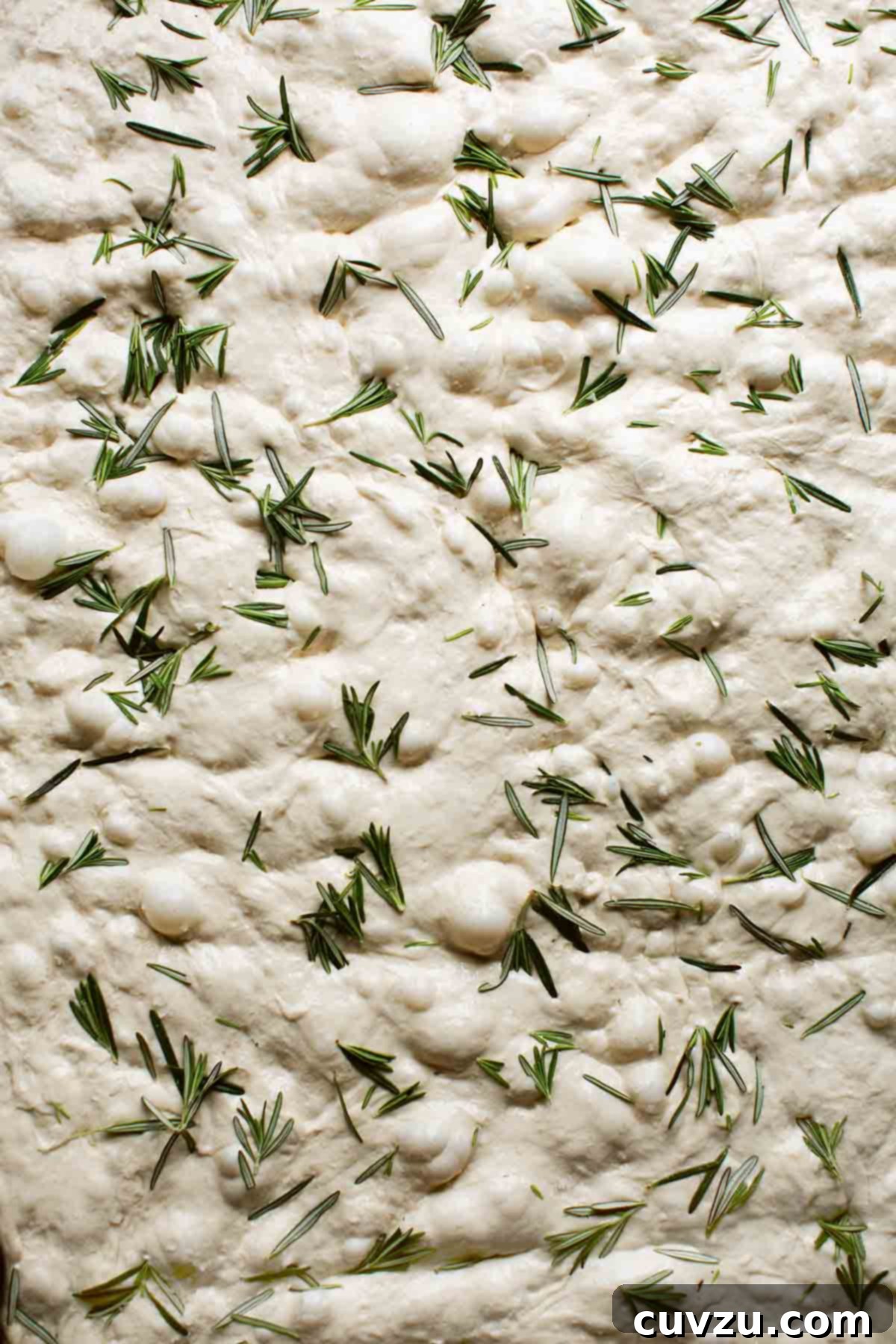
Once the oven is preheated and the dough has proofed, use your fingertips to gently dimple the surface of the dough. Sprinkle generously with coarse sea salt, then scatter the caramelized red onions and fresh rosemary evenly over the top.
-
Bake the focaccia for 17 to 20 minutes, or until it is cooked through and beautifully golden brown on the bottom. You can gently lift a corner with a spatula to peek at the underside. Once baked, remove from the oven, immediately drizzle with a little extra virgin olive oil for added flavor and shine, and serve warm.

Adapted From
Aran
Buy On Amazon
Nutrition Facts
Serving: 1 portion | Calories: 332 kcal | Carbohydrates: 61 g | Protein: 10 g | Fat: 5 g | Saturated Fat: 1 g | Monounsaturated Fat: 3 g | Sodium: 781 mg | Fiber: 2 g | Sugar: 1 g
Nutrition information is automatically calculated, so should only be used as an approximation.
Crafting the Perfect Toppings: More Than Just Red Onion and Rosemary
While the combination of caramelized red onion and fresh rosemary creates a truly memorable focaccia, the beauty of this Italian bread lies in its versatility. The dimpled surface is a canvas, eager to embrace a myriad of flavors. For those who appreciate simplicity, a classic focaccia with just coarse sea salt and a generous scattering of fresh rosemary is always a winner. You could easily swap rosemary for fresh thyme or a mix of Italian herbs for a different aromatic profile. Sticking to the Mediterranean theme, a handful of vibrant Sungold cherry tomatoes, burst with sweetness when baked, or briny black olives, pressed into the dough, make excellent choices.
But why limit yourself to convention? Focaccia invites culinary creativity. Imagine a topping of thinly sliced potatoes and a hint of fresh sage, or a medley of roasted bell peppers for a burst of color and sweetness. Crumbled feta cheese or dollops of fresh goat cheese can add a tangy counterpoint. For an unexpected twist, black sesame seeds provide a startling visual contrast and a subtle nutty flavor. Even a touch of spicy red pepper flakes can awaken the palate. Consider incorporating sun-dried tomatoes, thinly sliced garlic, or even a sprinkle of Parmesan before baking for an extra layer of umami. The possibilities are endless, encouraging you to experiment and make each focaccia uniquely your own. After all, life is too short for culinary limitations.
Expert Insights from Our Recipe Testers
Our team of dedicated recipe testers put this focaccia recipe through its paces, offering valuable insights and tips that can help home bakers achieve perfection. Their experiences highlight the nuances of working with high-hydration dough and the satisfying rewards of mastering this Italian staple.
Terry S.’s Journey to Focaccia Perfection
Terry S. embarked on a “tale of two loaves,” initially encountering challenges but ultimately achieving outstanding results. Her first attempt, using a standard cake pan and conventional oven settings, yielded a flavorful but slightly too thick loaf that didn’t brown ideally on top. This experience led her to consult her KitchenAid manual, discovering crucial tips about mixer usage for high-hydration doughs – specifically, starting with the dough hook and avoiding high speeds to protect the motor, contrary to some initial instructions. For her second attempt, Terry embraced modifications: leaving the dough in the mixing bowl for the initial proofing and simple stretch-and-folds, which resulted in a much lighter, pillowy dough. Baking in a quarter sheet pan on a convection setting at a slightly lower temperature (425°F) proved transformative, producing a moister loaf with superior browning. Her key takeaway? Don’t be afraid to adjust baking methods and use convection for better crust development.
Angie Zoobkoff’s Flawless Focaccia
Angie Zoobkoff described her focaccia as “perfect crumb, perfect moisture, perfect flavor.” She confirmed the dough’s sticky nature but praised its beautiful rise and the resulting airy pockets. Opting for a simple rosemary and sea salt topping, she served it warm to rave reviews. Angie noted that after the initial gentle stretch, her dough didn’t shrink back, eliminating the need for further stretching during the two-hour room temperature proof. Her success in a 9×13-inch pan reinforces that with the right technique, this recipe consistently delivers exceptional results.
Heidi Stafford’s Creative Topping Masterpiece
Heidi Stafford proclaimed this recipe yielded “probably the most perfect focaccia I have ever made!” Her creative spirit shone through in her choice of toppings: artichoke hearts, fresh sage, yellow peppers, and a sprinkle of Parmesan, served with olive oil. She even enjoyed it as her main meal, highlighting the bread’s satisfying versatility. Heidi’s review encourages bakers to explore beyond traditional toppings and embrace their culinary imagination.
K. Zimmerman’s Delightful Discovery
K. Zimmerman found this focaccia wonderful, describing it as a “soft, chewy loaf with a golden crispy crust.” She appreciated its standalone perfection and its ability to soak up sauces, thanks to its numerous nooks and crannies. The dough came together as directed, doubling nicely overnight. Her choice of sea salt and fresh rosemary topping was “exceptional.” She plans to make it again with different toppings, having enjoyed it with pasta and then with a dinner salad, showcasing its adaptability for various meals.
Christi B.’s Insights on Texture
Christi B. praised the focaccia’s airy yet crunchy texture, suggesting its suitability as a pizza crust, side dish, or flatbread. She too noted the dough’s extreme wetness and stickiness. Topped with fresh rosemary and sea salt, her loaf baked for 20 minutes until golden. While the texture was good with nice air pockets, she felt it almost seemed undercooked despite a fully done exterior. This suggests that bakers should trust the visual cues for browning, especially on the bottom, and possibly adjust baking time or temperature slightly based on individual oven performance, as Terry S. also discovered.
Jane Daniels’ Bakery-Inspired Home and Windowpane Test
Jane Daniels shared that the aroma of this focaccia transformed her home into a “bakery or pizzeria,” with the taste living up to the promise. She found the recipe easy and fun, appreciating the crunchy exterior and soft, chewy interior. Jane’s detailed account of the proofing and folding process highlighted the dough becoming “drier than when I started, but still moist,” and her successful windowpane test was a satisfying milestone. Limited by supplies, she used black olives and herbs de Provence, finding the olives added a “nice touch of saltiness.” She also noted that while her focaccia didn’t darken significantly, it was perfectly done after 20 minutes. Her excitement to try anchovies next underscores the adventurous spirit this recipe inspires. Her flexible serving size observations (2 as a nibble, 4 as a snack, 6 with a meal) are a practical addition.
Collectively, these tester reviews confirm the recipe’s ability to produce outstanding focaccia while offering practical tips for handling the wet dough, optimizing baking temperatures and pans, and encouraging creative topping variations. The common thread is the ultimate satisfaction derived from a truly authentic and delicious homemade Italian bread.
Expert Tips for Focaccia Success
Achieving the perfect focaccia at home is a rewarding experience, and a few expert tips can make all the difference, especially with a high-hydration dough:
- Embrace the Wetness: The dough’s sticky, wet nature is intentional. It’s the secret to an airy, open crumb. Don’t be tempted to add extra flour, as this will lead to a dense bread. Instead, use lightly wet or oiled hands when handling the dough.
- Gluten Development is Key: Whether using a stand mixer or hand-kneading, ensure sufficient time for gluten development. The dough should become elastic and pass the “windowpane test” – where a small piece of dough can be stretched thinly enough to see light through it without tearing.
- The Power of Cold Fermentation: Don’t skip the overnight refrigeration. This slow, cold proofing allows the yeast to work gradually, building complex flavors and a superior texture. It also makes the dough slightly easier to handle.
- Gentle Handling: When transferring and stretching the dough into the pan, be gentle. You want to preserve the air bubbles that have developed during fermentation. Use wet hands to coax the dough to the edges, rather than forcing it.
- Pan Choice Matters: A dark metal pan might promote better browning on the bottom. If using a lighter pan or experiencing under-browning, consider a convection setting if your oven has one, or placing the pan on a preheated baking steel/stone.
- Don’t Skimp on Olive Oil: Quality extra virgin olive oil is crucial, both in the dough and for drizzling generously before and after baking. It contributes to flavor, texture, and that beautiful golden crust.
- Coarse Salt for Crunch: Use coarse sea salt for sprinkling on top. It provides that iconic focaccia crunch and burst of savory flavor.
- Listen to Your Oven: Ovens vary significantly. The baking times provided are a guide. Watch for visual cues: a golden-brown top and, crucially, a deeply golden bottom.
Serving Suggestions for Your Homemade Focaccia
Once your aromatic Red Onion and Rosemary Focaccia emerges from the oven, its versatile nature means it can be enjoyed in countless ways:
- As an Appetizer: Serve warm, sliced into wedges, alongside a bowl of high-quality extra virgin olive oil for dipping. It’s perfect with olives, cured meats, or a cheese board.
- With Soups and Salads: Its tender crumb and savory toppings make it an excellent accompaniment to hearty soups like minestrone or a fresh, crisp green salad.
- Sandwiches and Panini: Slice horizontally and fill with your favorite sandwich ingredients – fresh mozzarella, prosciutto, roasted vegetables, or grilled chicken. The focaccia’s sturdy yet soft texture makes it ideal.
- A Side to Italian Meals: This bread is the quintessential companion to pasta dishes, lasagna, or any traditional Italian feast, soaking up rich sauces beautifully.
- A Simple Snack: Enjoy it on its own, perhaps with a glass of wine, for a simple yet incredibly satisfying treat.
However you choose to enjoy it, this Red Onion and Rosemary Focaccia is guaranteed to be a crowd-pleaser and a testament to the joys of homemade Italian baking.
Conclusion: The Enduring Appeal of Homemade Focaccia
Baking focaccia is more than just making bread; it’s an experience that engages all your senses, from the feel of the wet, developing dough to the intoxicating aroma filling your kitchen, and finally, the sublime taste of a perfectly baked loaf. This Red Onion and Rosemary Focaccia recipe, with its emphasis on high hydration and an overnight rest, promises a result that is both authentic and deeply satisfying – a crisp, salted exterior yielding to an incredibly tender and airy interior, all infused with the sweet depth of caramelized red onions and the aromatic brightness of rosemary.
Whether you’re an experienced baker or new to the world of artisan breads, this recipe provides a clear path to creating an impressive Italian staple. Embrace the unique characteristics of the dough, follow the steps with patience, and don’t hesitate to personalize your creation with a sprinkle of extra herbs or a different topping from our suggestions. The journey to a truly magnificent homemade focaccia is rewarding, and the culinary delight it brings to your table is unparalleled. So, gather your ingredients, set aside some time, and prepare to be captivated by the magic of this delightful Italian flatbread.