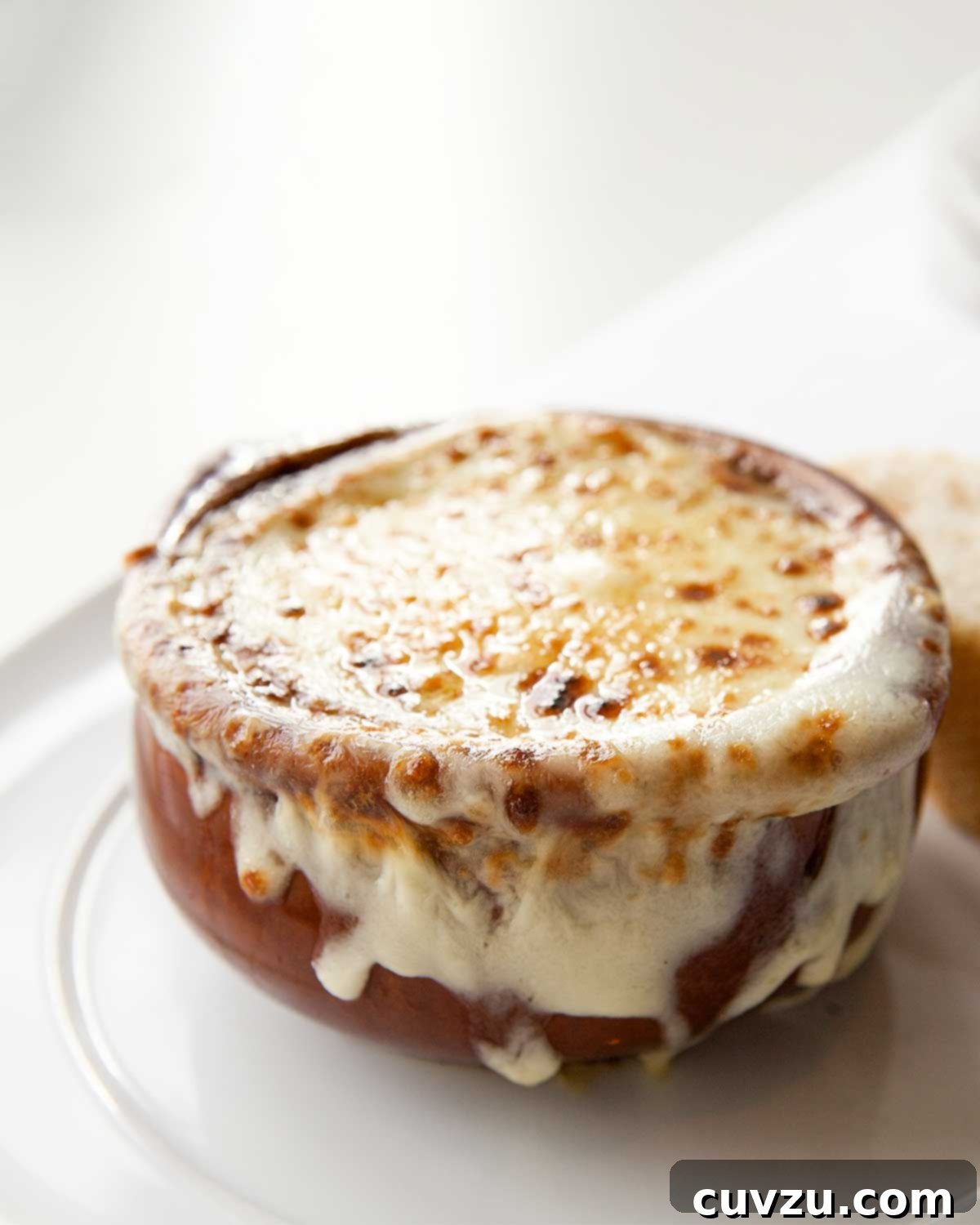
The Ultimate Classic French Onion Soup: A Recipe for Culinary Perfection
Few dishes command the same reverence and comfort as a perfectly prepared French Onion Soup. It’s a culinary masterpiece that marries simple ingredients with a patient technique to create an extraordinary depth of flavor. This guide will walk you through crafting a truly authentic version, one brimming with the sweet, savory essence of deeply caramelized onions and leeks, all submerged in a luscious homemade broth. We’re not just sharing a recipe; we’re refining the experience, ensuring every spoonful is pure bliss without the common dining dilemmas.
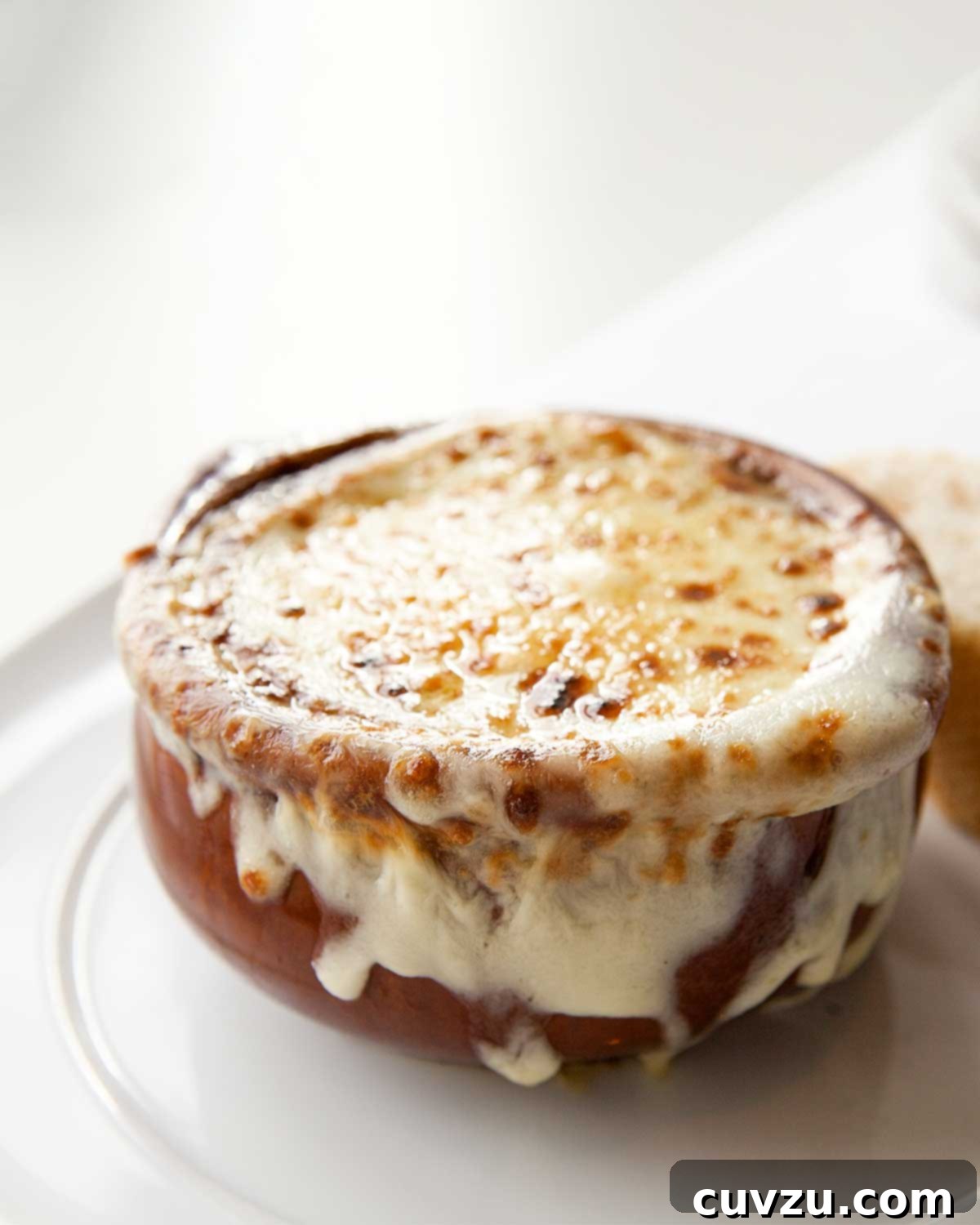
Redefining the Cheese Experience: Savor Every Bite with Our Unique Topping Method
While the image of a French onion soup entirely blanketed in a thick layer of bubbling, melted cheese is iconic, it often leads to a delightful mess. Many traditional recipes create a gooey, stringy “cheese trampoline” that stubbornly clings to the bowl, making it challenging to eat gracefully, especially in polite company. This recipe offers a refreshingly practical, yet equally delicious, alternative.
Instead of smothering the entire soup, we opt for a simple, elegant sprinkling of cheese directly onto toasted baguette slices. These cheese-laden croutons are then floated individually atop your warm soup portions just before serving. This ingenious approach offers a superior dining experience:
- Effortless Enjoyment: Gone are the days of wrestling with an unruly cheese pull. This method ensures each bite is perfectly balanced, allowing you to easily scoop up soup, onions, and cheesy bread without a struggle.
- Enhanced Flavor Harmony: By focusing the cheese on the bread, you achieve distinct layers of taste and texture. The bread soaks up the exquisite broth, the cheese melts beautifully into a golden crust, and crucially, the complex, sweet-savory flavors of the caramelized red and yellow onions and leeks shine through unhindered.
- Greater Cheese Versatility: This technique liberates you from needing only cheeses with extreme melting and sticking power. You can confidently choose your favorite melting cheeses, such as Gruyère, Emmental, or even a young Manchego, knowing they will perform perfectly on the toasted bread.
- Refined Presentation: While distinct from the conventional “cheese lid,” individually topped croutons still provide a stunning visual, offering a refined and inviting presentation for your guests.
This subtle but significant modification elevates the classic French onion soup, making it not only more enjoyable to eat but also allowing the nuanced flavors of the soup itself to take center stage. It’s a simple change that makes a world of difference for a truly refined French onion soup experience. –Renee Schettler
French Onion Soup vs. English Onion Soup: A Culinary Tale of Two Traditions
For many, “onion soup” immediately conjures images of the French classic, yet a fascinating relative, English onion soup, also holds a place in culinary history. While both are beloved for their comforting warmth and rich onion flavors, they possess distinct identities shaped by their respective culinary traditions. Both fundamentally rely on a generous amount of onions cooked in a flavorful brothy base, topped with bread and cheese, and finished under a broiler for that irresistible bubbly crust.
Delving into the Differences:
- Broth Foundation:
- French Onion Soup: Characteristically built upon a robust beef broth. This foundation provides a deep, savory, umami-rich base that is often further enriched with red wine, brandy, or cognac, lending a distinct aromatic complexity and a touch of elegance.
- English Onion Soup: Tends to be more adaptable, often prepared with chicken or vegetable stock. Its flavor profile is frequently enhanced by ingredients like sage and Worcestershire sauce, contributing a different aromatic dimension and a tangy depth unique to English cooking.
- Onion Selection:
- French Onion Soup: Typically focuses on a blend of red and/or yellow onions. These varieties are chosen for their ability to caramelize beautifully, developing a profound sweetness that forms the heart of the soup.
- English Onion Soup: Embraces a wider array of onion types, including red, white, shallots, and leeks. This combination can result in a more multifaceted, and sometimes sharper, onion flavor profile.
- Herb and Spice Palette:
- French Onion Soup: Thyme is the quintessential herb, frequently incorporated as part of a bouquet garni, providing an earthy and aromatic backbone to the soup.
- English Onion Soup: Sage is a common addition, offering a more rustic, slightly peppery, and robust herbal note that contrasts wonderfully with the sweetness of the onions.
- The Grand Finale: Bread and Cheese:
- French Onion Soup: Traditionally calls for thick slices of a day-old baguette, toasted to perfection. The crowning glory is a rich, nutty melting cheese like Gruyère, though Emmental and Swiss are also highly regarded for their superb melting qualities.
- English Onion Soup: Accommodates various dense bread types that can hold up to the hot broth. The cheese of choice is typically Cheddar, which introduces a sharper, more piquant flavor to the creamy, sweet onion base.
While both variations offer profound comfort and satisfaction, the French version leans into a sophisticated depth with a subtle hint of wine, whereas the English counterpart presents a more rustic, herbaceous, and tangy character. Understanding these subtle differences allows home cooks and gourmands alike to appreciate the unique qualities of each and to select the perfect onion soup for any occasion or preference.
The Enduring Appeal of Homemade French Onion Soup: Why Scratch Cooking Matters
In a world increasingly driven by convenience, there remains an unparalleled joy and satisfaction in crafting classic dishes from scratch. French Onion Soup, with its relatively simple ingredients transformed by patience and technique, is a prime example. Preparing this iconic soup at home offers a multitude of benefits that transcend mere sustenance, elevating the act of cooking into a truly rewarding experience.
The Irresistible Advantages of a Homemade Bowl:
- Uncompromised Flavor Depth: The soul of French Onion Soup lies in the deep caramelization of its onions, a process that cannot be rushed or artificially replicated. Homemade allows you to dedicate the time needed to coax out their natural sugars and complex savory notes, resulting in a richness that store-bought versions simply cannot match.
- Superior Ingredient Quality: When you cook at home, you control every component. You can choose the freshest onions and leeks, the highest quality butter and olive oil, and a premium broth, whether homemade or a carefully selected store-bought option. This focus on quality directly translates to a more flavorful and healthier final product.
- Tailored to Your Taste: Homemade grants you complete freedom to customize. Whether you prefer a vegetarian broth, a particular blend of cheeses, a splash of fortified wine, or specific seasoning adjustments, your kitchen is your canvas.
- Economical Indulgence: Compared to dining out or purchasing pre-made gourmet soups, preparing French Onion Soup from scratch is significantly more budget-friendly, especially when you’re feeding a family or entertaining guests.
- The Aromatic Journey: The slow cooking of onions fills your home with an intoxicating, comforting aroma that signals a culinary treat in progress. This sensory experience is part of the joy of making the soup.
- A Sense of Culinary Achievement: Presenting a steaming bowl of homemade French Onion Soup, knowing the care and time invested in its creation, brings a profound sense of pride and accomplishment. It’s a dish that genuinely impresses and delights.
More than just a recipe, homemade French Onion Soup is an act of culinary love. It’s an investment of time that yields incredibly satisfying rewards, a truly delicious testament to the power of scratch cooking.
Mastering the Art of Caramelized Onions: The Essential Foundation
If French Onion Soup has a beating heart, it is undoubtedly the perfectly caramelized onions. This crucial step is often underestimated and rushed, but it is the key to unlocking the soup’s profound depth, sweetness, and complex savory character. Caramelization isn’t merely cooking onions until they’re soft; it’s a slow, transformative process where their natural sugars brown and concentrate, yielding an almost jam-like texture and unparalleled flavor. Patience during this stage is not just a virtue; it is an absolute necessity for an exceptional soup.
The Science and Art of Onion Caramelization:
Our recipe smartly calls for a combination of yellow and red onions, complemented by leeks. Each contributes uniquely to the final profile: yellow onions offer a classic sweet foundation, red onions add a deeper hue and a slightly more robust sweetness, while leeks bring a delicate, earthy undertone and contribute to the silken texture of the finished base.
The journey begins by sautéing these thinly sliced aromatics in a blend of unsalted butter and olive oil over medium-high heat. The fats play a dual role: they help distribute heat evenly, preventing the onions from sticking and scorching, while also infusing richness. Initially, the onions will release a significant amount of moisture, appearing to steam rather than brown. During this phase (typically 5 to 10 minutes), they will begin to soften and dramatically reduce in volume. Regular stirring is essential to ensure even cooking.
The true magic unfolds as you reduce the heat to medium or even medium-low and continue to cook, stirring diligently, for an extended period – often an hour or more. This prolonged, gentle heat allows the onions’ complex sugars to gradually break down and caramelize without burning. You’ll observe a mesmerizing transformation: from opaque white, they will become translucent, then progressively turn a beautiful golden, finally culminating in a deep, rich caramel brown. Throughout this stage, vigilance is paramount. Should the onions begin to stick or brown too rapidly, lower the heat further or add a small splash of water or broth to deglaze the bottom of the pot. This lifts all those precious browned bits (known as “fond”) back into the mixture, enriching the flavor profile. The ultimate goal is a deep, even color and an almost ‘melted’ consistency, where individual onion strands are barely distinguishable, having merged into a unified, intensely flavorful base.
This patient caramelization is what develops the immense depth, sweetness, and savory complexity that defines a truly great French Onion Soup. It’s an investment of time that pays off handsomely in a bowl of unparalleled deliciousness.
Crafting the Perfect Broth: The Backbone of Your French Onion Soup
While the caramelized onions imbue French Onion Soup with its soul, the broth provides its robust backbone. A well-chosen and carefully prepared broth is crucial for providing the necessary liquid, body, and savory depth that beautifully complements the sweet onions. This recipe offers flexibility by suggesting either vegetable or chicken stock, allowing for adaptation to various dietary preferences without sacrificing flavor.
Selecting and Enhancing Your Stock:
- Homemade vs. Store-Bought: For the most profound and nuanced flavor, a rich, homemade stock – be it chicken or vegetable – is always recommended. Homemade stocks typically boast a greater depth of flavor and a natural gelatinous body that contributes significantly to the soup’s mouthfeel. If opting for store-bought, choose a high-quality, low-sodium brand to maintain control over the final seasoning.
- Beef Broth (The Traditional Choice): Classic French Onion Soup is most often made with beef broth, which imparts an unmistakably deep, savory richness. For those desiring this traditional, robust beefy flavor, a high-quality beef stock (homemade or low-sodium store-bought) is an excellent alternative to consider.
- Boosting Store-Bought Stock: Even a good quality store-bought stock can benefit from a little enhancement. Before adding it to the onions, simmer the stock with extra aromatics such as bay leaves, whole black peppercorns, and a sprig of fresh thyme for 15-20 minutes. This simple step can significantly deepen its flavor profile.
- The Role of Fortified Wine (Optional): Many classic French recipes incorporate a splash of red wine, brandy, or cognac after the flour is cooked into the onions. This step is a flavor powerhouse, adding an additional layer of complexity and an authentic French aroma. If you choose to include this, add about half a cup after the flour has cooked, deglaze the pot thoroughly, and allow the alcohol to reduce slightly before introducing the stock. Our recipe uses Worcestershire sauce, which provides a different kind of savory depth and umami, making it a wonderful alternative.
Once your onions are perfectly caramelized and lightly dusted with flour to create a thickening roux, the chosen stock is added. Bringing the soup to a boil and then reducing it to a gentle simmer allows all the incredible flavors to meld, deepen, and fully develop. The final addition of Worcestershire sauce, salt, and pepper harmonizes these layers, delivering that perfect savory balance that makes French Onion Soup so irresistibly comforting.
French Onion Soup Recipe
This rendition of classic French onion soup captures the authentic taste with abundant caramelized onions and leeks in a rich, homemade-style broth, all finished with a refined cheese topping. Here’s how to create this culinary delight.
Course: Main Dish, Soup
Cuisine: French
Servings: 6 servings
Calories: 327 kcal
Prep Time: 25 minutes
Cook Time: 1 hour 35 minutes
Total Time: 2 hours
Ingredients
- 2 large yellow onions, quartered and thinly sliced
- 2 red onions, quartered and thinly sliced
- 4 leeks, root ends and dark-green tops removed, sliced 1/4-inch thin, and thoroughly washed
- 1 tablespoon (1/2 oz) unsalted butter
- 1 tablespoon olive oil
- 2 tablespoons unbleached all-purpose flour
- 8 cups vegetable or chicken stock (preferably homemade for best flavor)
- 1 tablespoon Worcestershire sauce (or a splash of dry sherry or brandy for a more classic French touch)
- 1 teaspoon salt
- 1/2 teaspoon freshly ground black pepper
- 1 day-old baguette, sliced thickly
- 1/2 cup grated Parmigiano-Reggiano cheese
- 1/2 cup grated Gruyère cheese (or substitute Comté, Emmentaler, mozzarella, or young Manchego for similar melting qualities), plus more as needed for topping
Instructions
- In a large, heavy-bottomed soup pot or Dutch oven over medium-high heat, melt the unsalted butter with the olive oil. Add the thinly sliced yellow onions, red onions, and leeks. Sauté, stirring frequently, to prevent the onions from sticking to the bottom of the pot and scorching. Continue until they begin to soften and noticeably shrink in volume, which should take about 5 to 10 minutes.
- Reduce the heat to medium or medium-low. This is the crucial caramelization stage. Continue to cook the onions slowly for approximately one hour, or until they achieve a deep, rich caramel color and appear almost melted. Maintain a watchful eye on them, stirring often. If they start to brown too quickly or stick, lower the heat further or add a tiny splash of water or broth to deglaze the pot, incorporating all the flavorful browned bits. The goal is deep color and extreme tenderness, not burning.
- Once the onions are perfectly caramelized, sprinkle the all-purpose flour over them. Stir constantly for about 5 minutes to cook out the raw flour taste, creating a light roux that will slightly thicken the soup.
- Pour the vegetable or chicken stock over the caramelized onions. Bring the mixture to a boil over high heat, then immediately reduce the heat to a gentle simmer. Allow the soup to simmer for 30 minutes, enabling the flavors to meld beautifully. Stir in the Worcestershire sauce, salt, and freshly ground black pepper. Taste the soup and adjust the seasonings as necessary to achieve a perfect balance.
- While the soup simmers, prepare your baguette croutons. Preheat your oven to 350°F (175°C). Thickly slice the day-old baguette, brush both sides lightly with olive oil, and arrange the slices on a baking sheet. Bake until the bread is dried out and its edges turn a lovely golden brown. Once done, remove from the oven and preheat your broiler.
- Just before serving, whisk the grated Parmigiano-Reggiano cheese into the warm soup. This step is important to integrate the cheese smoothly and prevent it from clumping or burning at the bottom of the pot. Ladle the hot soup into individual heatproof bowls or crocks. Float one or two slices of the baked baguette in each bowl, then generously sprinkle the grated Gruyère cheese over each bread slice. Carefully place the bowls under the preheated broiler until the cheese is bubbling, melted, and golden brown. Serve immediately and enjoy!
Adapted From
This exquisite recipe finds its roots in the culinary wisdom of “Once Upon a Tart.”
Buy On Amazon
Nutrition Information
Serving: 1 portion | Calories: 327 kcal | Carbohydrates: 44 g | Protein: 12 g | Fat: 12 g | Saturated Fat: 5 g | Monounsaturated Fat: 4 g | Trans Fat: 1 g | Cholesterol: 23 mg | Sodium: 2110 mg | Fiber: 4 g | Sugar: 9 g
Nutrition information is automatically calculated and should only be used as an approximation.
Serving Suggestions and Creative Variations for Your French Onion Soup
A steaming bowl of French Onion Soup, especially with its delightful cheesy crouton, is often a complete and satisfying meal in itself. However, it can also serve as an elegant starter or be adapted to suit diverse tastes and occasions. Here are some ideas to enhance your French Onion Soup experience:
Perfect Pairings:
- A Simple Green Salad: The richness of the soup is beautifully balanced by the freshness of a light green salad tossed with a zesty vinaigrette dressing.
- Extra Crusty Bread: While the soup includes its own cheesy bread, having additional slices of plain, crusty bread on hand is always a welcome addition for soaking up every last drop of the delectable broth.
- Wine Complement: Pair your soup with a dry white wine such as a Sauvignon Blanc, or a light-bodied red like a Pinot Noir. These choices will complement the soup’s flavors without overpowering them.
- Charcuterie Board: For an appetizer spread, a rustic French onion soup can be served alongside a selection of cured meats, cornichons, and crusty bread.
Creative Variations to Explore:
- Mushroom French Onion Soup: For an earthier, umami-rich dimension, sauté sliced mushrooms (cremini or shiitake are excellent choices) alongside the onions during the initial caramelization phase.
- Vegetarian & Vegan Adaptations: For a vegetarian version, ensure you use a robust vegetable stock. To make it vegan, substitute the butter with additional olive oil or a quality plant-based butter, and either use a vegan melting cheese alternative for the topping or serve with plain toasted bread.
- Alternative Cheeses: Don’t be afraid to experiment beyond Gruyère. Provolone, Fontina, or even a sharp white cheddar can offer intriguing flavor profiles. The key is to choose cheeses known for good melting characteristics.
- Herbaceous Twists: While thyme is classic, a sprig of fresh rosemary or a bay leaf added during the simmering phase can subtly alter the aromatic notes, lending a slightly different depth.
- Fortified Wine Boost: If you’re keen on the classic French bistro flavor, add a splash of dry sherry, port, or Marsala wine along with the stock. This adds another layer of sophisticated complexity.
Make-Ahead Tips for Easy Entertaining:
French Onion Soup is an ideal dish for preparing in advance. The onion base and broth can be cooked several days ahead of time and stored safely in the refrigerator. In fact, many believe the flavors deepen and meld even more beautifully overnight. When ready to serve, simply reheat the soup gently on the stovetop, then proceed with toasting the baguette slices and broiling them with cheese just before serving. This ensures the freshest, crispiest, and most delicious topping.
From Our Kitchen to Yours: Insights from Our Recipe Testers
At our core, we believe in recipes that truly deliver. That’s why every dish is rigorously tested by passionate home cooks who provide invaluable feedback. Here’s what our dedicated recipe testers had to say about this particular French Onion Soup:

Dena Eran’s Experience:
“Revelation: The BEST French onion soup ever is NOT made with beef stock. Using slow cooker chicken stock was a real revelation. We really enjoyed this soup.”
“The addition of red onion and leeks really made for a richer soup. And the onions were cut in smaller pieces than specified in other recipes, so they didn’t dribble down our chins when we were spooning them out of the bowl. We used a combination of regular Gruyère and an aged Gruyère for the topping and it was superb. Our house guest, who had said he wasn’t a fan of French onion soup, ate his all up and asked for seconds.”
Feedback from Another Tester:
“Rich and sweet, the soup balances incredibly well with the saltiness of the Gruyère crouton on top. And surprisingly, it’s just as good even without the crouton if you prefer.”
“While it takes some dedicated time to bring all the ingredients together and caramelize those onions, it’s still a straightforward recipe and absolutely worth every effort. It promises to be a fantastic meal, especially on a chilly snow day.”
Conclusion: A Timeless Classic, Reimagined for Your Table
This French Onion Soup recipe transcends the ordinary, offering a truly exceptional and refined culinary experience. From the patient caramelization of a harmonious trio of onions and leeks to the creation of a rich, deeply flavored homemade broth, every element is meticulously designed to build a profound depth of flavor. Our innovative approach to the cheese topping ensures a delightful, mess-free enjoyment, allowing the true essence of the soup to shine through with every spoonful.
Whether you are a seasoned chef seeking to perfect a classic or an enthusiastic home cook eager to master an iconic dish, this recipe provides clear, detailed guidance to help you create a bowl of French Onion Soup that rivals any bistro. It is a comforting, elegant, and deeply satisfying dish that we are confident will earn a cherished place in your culinary repertoire. Embrace the process, savor the intoxicating aroma, and delight in the unparalleled taste of this timeless classic, brought to life in your own kitchen.