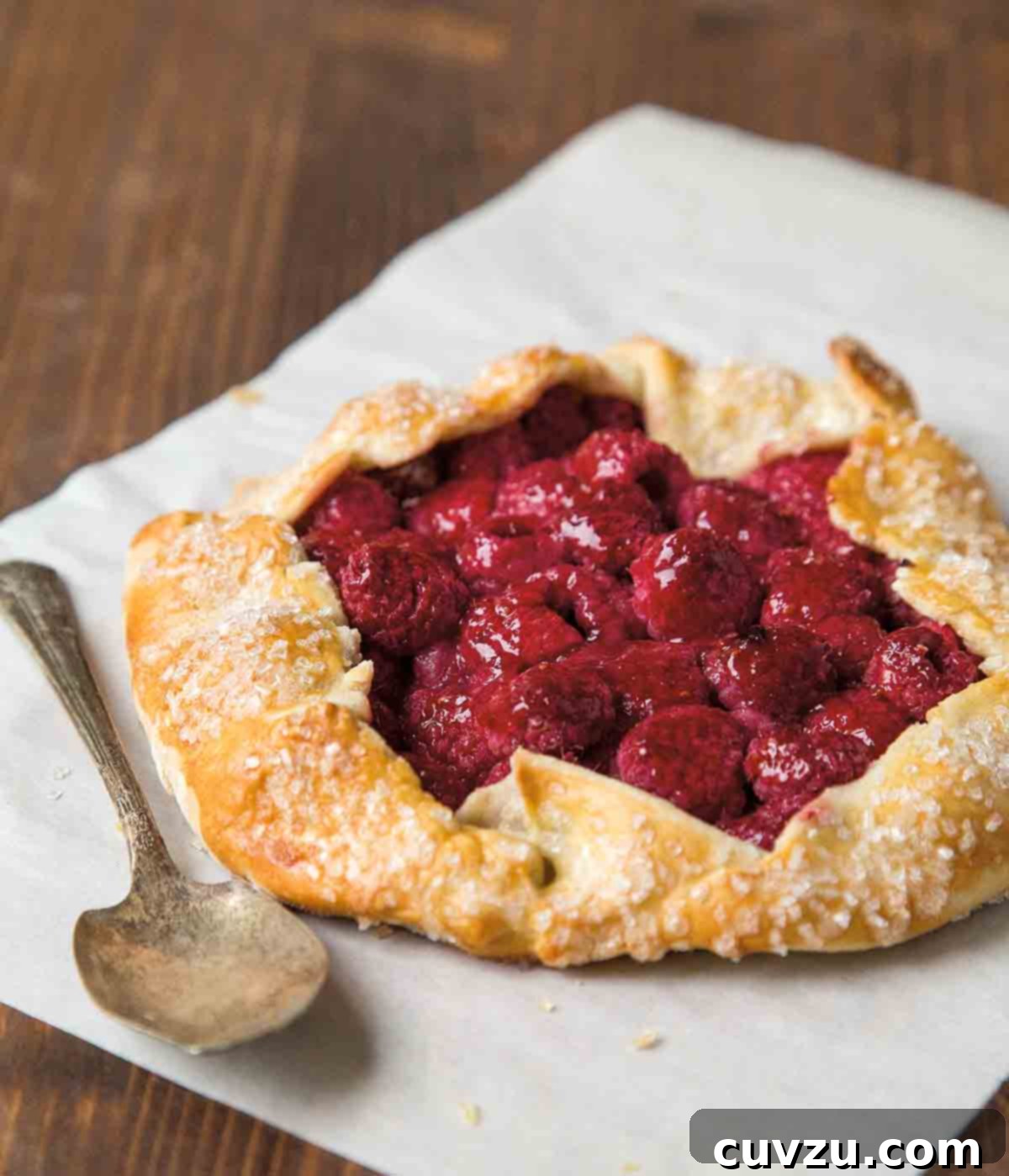
Welcome to the delightful world of rustic baking, where simplicity meets sublime flavor! Our **Raspberry Crostata** embodies this philosophy perfectly, offering a charming dessert experience that’s both effortless to prepare and utterly delicious. This free-form, open-faced tart, often affectionately called a “pick-up pie,” showcases the vibrant freshness of raspberries nestled within a tender, flaky crust. It’s the ideal sweet treat for an intimate gathering or a special moment when it’s just the two of you, promising a homemade touch without the fuss of a traditional pie. Imagine the sweet-tart burst of ripe raspberries complemented by a buttery, crisp pastry – a truly irresistible combination.
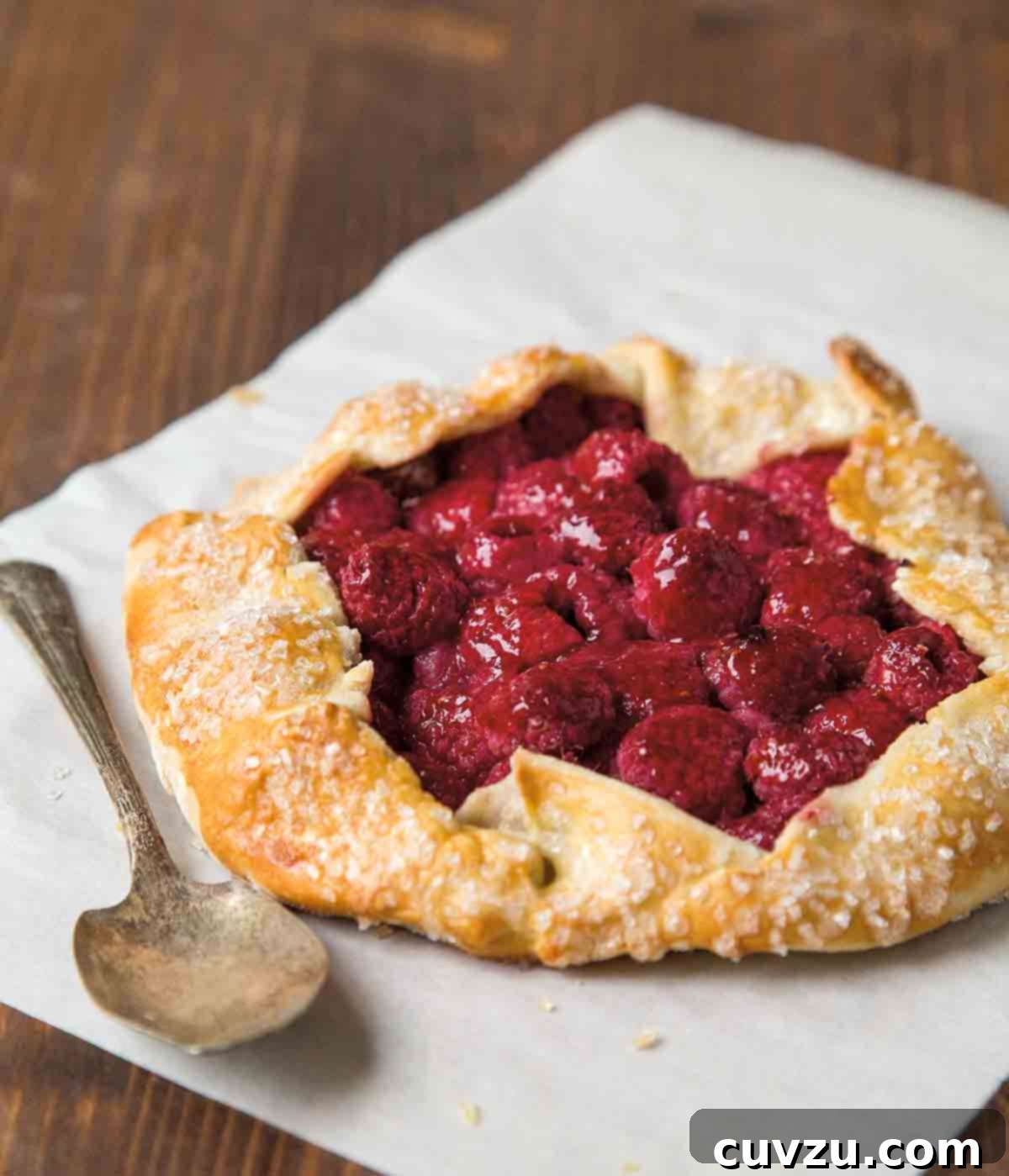
The true genius behind this captivating raspberry crostata lies in its unfussy approach to the crust. Unlike the often daunting task of crafting a perfect pie crust, this recipe simplifies the process dramatically, saving you precious time and effort without compromising on taste. As David Leite himself often notes, “taste-wise, it’s pretty darn much exactly the same as pie.” You’ll achieve a swoon-worthy, buttery crust that beautifully cradles the fruit, making every bite a delightful contrast of textures and flavors. It’s a testament to the fact that some of the most memorable desserts are born from the simplest methods.
Beyond its ease, the crostata celebrates the inherent beauty of its ingredients. The exposed, slightly slumped raspberries, glistening with their sweet, bubbling juices, invite you in, while the golden-brown, pleated edges of the pastry promise a satisfying crunch. This rustic charm makes it not just a dessert, but a centerpiece that speaks of homemade warmth and culinary affection. Whether you’re an experienced baker or a beginner venturing into the world of pastry, this raspberry crostata is an accessible and rewarding project that yields impressive results every time.
Raspberry Crostata FAQs: Your Essential Guide to Perfection
Absolutely, washing fresh fruit before consumption is always a good practice to remove any dirt, pesticides, or residues. However, raspberries are incredibly delicate, making their washing process a gentle art. They have a porous structure that can easily absorb water, becoming mushy if submerged for too long. To properly clean them without damage, place your raspberries in a colander. Gently immerse the colander into a larger bowl of cool water, swirling it quickly for just a few seconds. This allows dirt to release without the berries becoming waterlogged. Promptly remove the colander from the water and allow the raspberries to drain thoroughly. For best results, spread them in a single layer on paper towels or a clean kitchen towel to air dry for a bit before incorporating them into your crostata recipe. This crucial step prevents excess moisture from making your crust soggy.
Selecting high-quality raspberries is key to a truly exceptional crostata. When at the market, look for berries that are vibrantly and uniformly colored, indicating ripeness. They should appear plump, firm, and fully intact, with no signs of bruising, crushing, or shriveling. Carefully inspect the container; avoid any packages with excess moisture at the bottom, which can signal spoilage or mold. Gently flip the package over to check the underside for any hidden mold or soft spots. Discolored, squished, or moldy berries, or those beginning to shrivel, are clear indicators to pass on that batch. Opt for berries that smell faintly sweet – a lack of aroma often means a lack of flavor. Choosing fresh, firm, and fragrant raspberries will ensure your crostata bursts with the natural sweetness and tang you desire.
For this specific Raspberry Crostata recipe, we strongly recommend sticking to fresh raspberries. Frozen raspberries, while convenient for many baking applications, tend to release a significant amount of liquid as they thaw and bake. This excess moisture can compromise the delicate texture of your crostata crust, turning it soggy instead of achieving that coveted flaky, crisp perfection. While frozen berries can work wonderfully in recipes like crumbles, muffins, or sauces where extra liquid isn’t an issue, the rustic charm and textural integrity of this crostata rely heavily on the lower moisture content of fresh fruit. If fresh raspberries are unavailable, consider another dessert recipe or wait until you can source them for the best possible crostata experience.
Raspberry Crostata: A Rustic Delight for Two
5 from 1 vote
David Leite
PIN
Ingredients
For the crust
- 1/2 cup all-purpose flour, plus more for the work surface for rolling
- 1 teaspoon granulated sugar
- 1/8 teaspoon sea salt
- 2 tablespoons cold unsalted butter, diced
- 1/4 teaspoon white vinegar
- 2 to 3 tablespoons cold water
- Beaten egg yolk, for brushing
- Coarse sugar, (optional)
For the raspberry filling
- 6 ounces fresh raspberries
- 2 teaspoons all-purpose flour
- 4 teaspoons granulated sugar, plus more as needed
Instructions
Make the crust
-
In a medium bowl, combine the all-purpose flour, granulated sugar, and sea salt. Add the cold, diced unsalted butter. Using a pastry blender or two knives in a criss-cross motion, work the butter into the dry ingredients until the butter pieces are no larger than small peas and are evenly distributed throughout the mixture. This ensures a flaky crust.
-
In a separate small bowl, whisk together the white vinegar with 2 tablespoons of cold water. Gradually add this liquid to the flour-butter mixture, stirring with a fork until a shaggy, cohesive dough begins to form. If the dough appears too dry and crumbly, add up to 1 additional tablespoon of cold water, a few drops at a time, until it just comes together. Avoid overmixing. Gently shape the dough into a flat disk, wrap it tightly in plastic wrap, and refrigerate for a minimum of 30 minutes. This chilling period is crucial for relaxing the gluten and firming the butter, which contributes to a tender and flaky crust.
Make the filling
-
In a clean bowl, gently combine the fresh raspberries with the 2 teaspoons of all-purpose flour and 4 teaspoons of granulated sugar. The flour helps to thicken the raspberry juices during baking, preventing a soggy crust. Taste a raspberry at this stage; if the fruit is particularly tart, feel free to add a little more granulated sugar to the filling to balance the flavors to your preference. Mix very gently to avoid crushing the delicate berries.
Assemble and Bake the Raspberry Crostata
-
Preheat your oven to 375°F (191°C). Line a rimmed baking sheet with a sheet of parchment paper. This will prevent sticking and make cleanup much easier, especially if any juices bubble over.
-
Remove the chilled dough from the refrigerator. Lightly flour your work surface or, for easier handling, roll the dough between two sheets of parchment paper. Roll the dough into a roughly 8-inch (20 cm) circle. Don’t worry about achieving a perfect circle; the rustic nature is part of its charm. Carefully drape the rolled dough over your rolling pin, then gently transfer it to the prepared baking sheet.
-
Give the raspberry filling a gentle stir to re-combine any sugar or flour that may have settled at the bottom of the bowl. Pile the prepared raspberries in the center of the dough, leaving a clear 2-inch (5 cm) border of pastry all around the edges. Scrape the bowl thoroughly to ensure all the sugary mixture coats the berries. Now, starting at any point, gently pick up and fold the edges of the dough over the raspberries, allowing the dough to naturally fall into pleats as you work your way around. The majority of the beautiful raspberries will remain uncovered, showcasing their vibrant color. Brush the folded edges of the dough with the beaten egg yolk for a golden sheen, and if desired, sprinkle with coarse sugar for added texture and sparkle.
-
Bake the crostata for 35 to 40 minutes, or until the pastry crust is beautifully golden brown around the edges and the raspberries have softened, appearing slightly slumped, with their juices thick and bubbly. Allow the crostata to cool completely on the baking sheet before serving. This cooling time is important for the filling to set properly. If you wish to add an extra layer of sweetness and shine, gently warm some raspberry jam in the microwave and brush it over the exposed berries just before serving. Enjoy this delightful rustic tart!
Adapted From
Dessert for Two
Buy On Amazon
Explore More with AI
Substitutions
Scale
Summarize
Nutrition
Calories: 304 kcal
Carbohydrates: 46 g
Protein: 5 g
Fat: 12 g
Saturated Fat: 7 g
Monounsaturated Fat: 3 g
Trans Fat: 1 g
Cholesterol: 30 mg
Sodium: 149 mg
Fiber: 6 g
Sugar: 14 g
Nutrition information is automatically calculated, so should only be used as an approximation.

Tried this recipe?
Mention @leitesculinaria or tag #leitesculinaria!
Insights from Our Recipe Testers
Our dedicated team of recipe testers enthusiastically embraced this Raspberry Crostata, consistently praising its ease of preparation and delightful outcome. Many highlighted the crostata’s inherent rustic charm and unfussy nature as a significant draw, making it approachable even for novice bakers. The “pick-up pie” concept resonated well, offering a less intimidating alternative to traditional pies.
Effortless Dough & Assembly: Testers like Irene Seales and Suzanne Fortier lauded the dough for its simplicity and workability, noting that “hands-on time was no more than 15 minutes.” The convenience of using a pastry blender or even just knives to cut in the butter was appreciated for this small-batch recipe. Jeanie McCallister specifically mentioned that using the full 3 tablespoons of water resulted in an “easy to roll” dough. Sarah Heend found that a little extra chilling time in the freezer perfected the dough’s texture, achieving a “Goldilocks dough” – not too hard, not too soft.
Perfect Portions & Versatility: A key highlight was the crostata’s ideal size. Penny Martin and Trista Smith celebrated it as a “dessert-for-two” rarity, perfect for midweek treats without excessive leftovers. While officially serving two, many noted it could easily satisfy three more moderate appetites, or even a single indulgent craving. The versatility of the fruit filling also received high marks. Irene Seales successfully experimented with pitted cherries and blackberries, anticipating similar success with blueberries, while Marilee Johnson suggested strawberries or other berries as easy substitutions. Noelle C. Serafino and her husband are already planning to adapt the recipe for other fruits and even savory versions.
Balancing Sweetness & Tartness: Raspberry tartness was a common theme, prompting several testers to suggest personal adjustments. Trista Smith regretted not tasting her raspberries beforehand, recommending tailoring the sugar quantity to the fruit’s natural sweetness. Penny Martin also suggested adding orange zest, a little more sugar, honey, or raspberry jam if a sweeter profile is desired. Marilee Johnson likewise planned to add more sugar next time. On the other hand, Chiyo Ueyama enjoyed the fruit’s tartness, finding the consistency of the filling good with just enough flour and sugar to coat the berries.
Serving Suggestions & Presentation: The crostata was generally enjoyed slightly warm, often with accompaniments. Suzanne Fortier envisioned it as a romantic dinner dessert, paired with whipped cream or coconut whipped cream. Trista Smith found crème fraîche delightful, though she imagined lightly sweetened whipped cream or ice cream would be even better. Irene Seales drizzled hers with crème fraîche and raspberry preserve for an extra touch. The optional egg wash and coarse sugar were highly recommended by Jeanie McCallister and Noelle C. Serafino for a “sweet and crunchy finish” and “a little extra sweetness and texture.” The warm raspberry jam glaze, though skipped by some for its rustic appeal or out of laziness (Sarah Heend), was found to adhere beautifully to the warm fruit by Noelle C. Serafino, enhancing both aesthetics and flavor.
Texture & Crust: The crust’s texture was a point of interest. Sarah Heend liked her crisp, non-fragile crust, suitable for eating with fingers, but her husband desired a flakier texture and more flavor, suggesting a dash of vanilla. Noelle C. Serafino appreciated the crisp, buttery crust that balanced the sweetness of the raspberries. Chiyo Ueyama noted that the crust remained unsoggy even after the juicy filling had congealed upon cooling, perfect for a picnic-style hand-held dessert. Anya L. confirmed her raspberries held their shape beautifully, resulting in a delicate dessert that paired perfectly with tea.
In summary, this Raspberry Crostata is a highly recommended recipe for its ease, adaptability, and charming rustic appeal, offering a homemade dessert experience that is sure to impress without demanding extensive culinary skills.