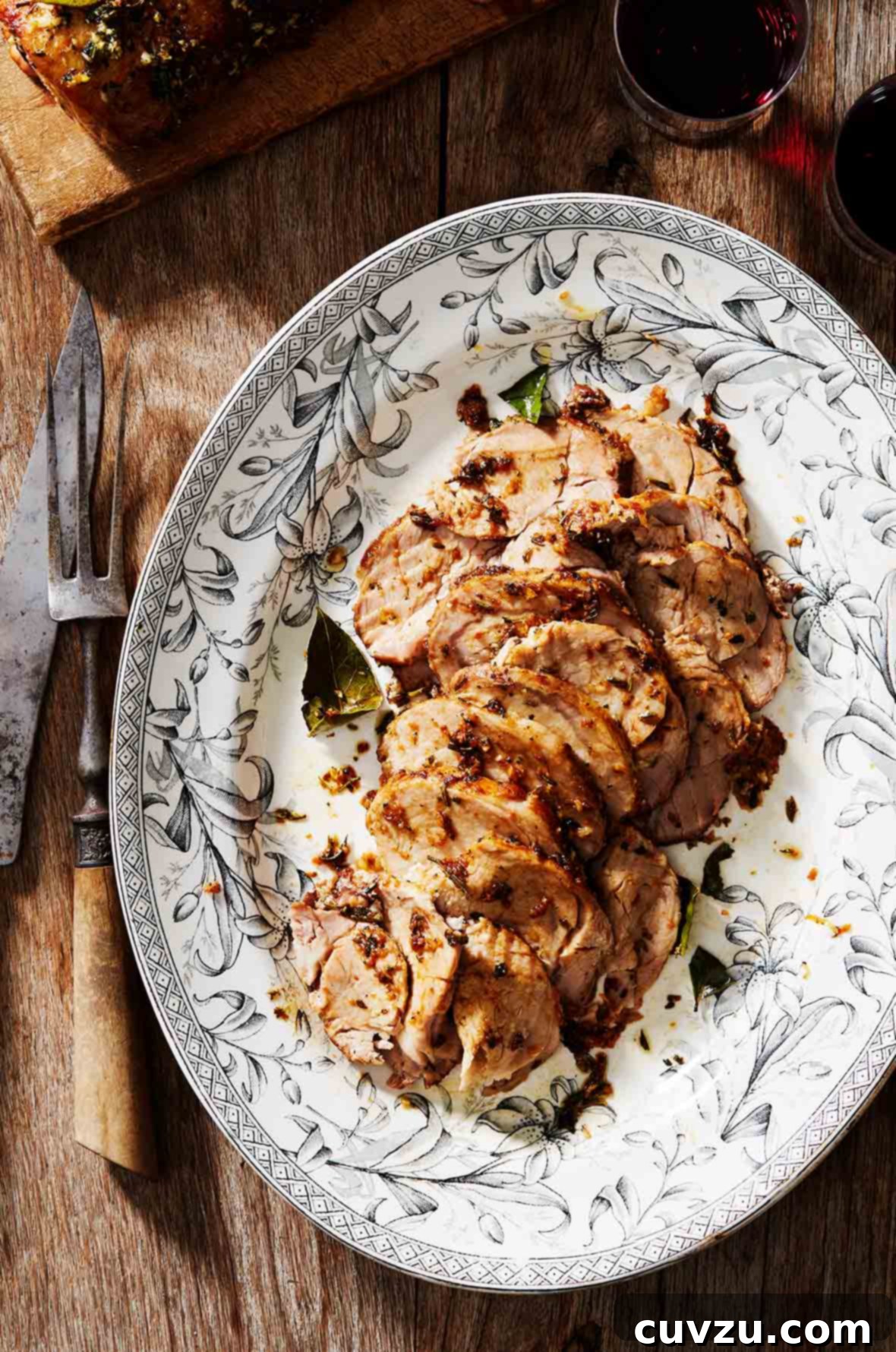
Tuscan Roast Pork: Arista alla Fiorentina – An Easy, Impressive Italian Delicacy
Unveil the culinary magic of Tuscany with this exquisite Tuscan roast pork, also revered in its native land as Arista alla Fiorentina. This recipe transforms a simple pork loin into a masterpiece, achieved by searing it to perfection, coating it with an aromatic paste of fresh garlic, fragrant rosemary, and earthy sage, then slowly roasting it to tender succulence in the oven. The result is a dish that is not only remarkably easy to prepare but also radiates an understated elegance, making it an undeniable showstopper certain to impress even the most discerning palates.
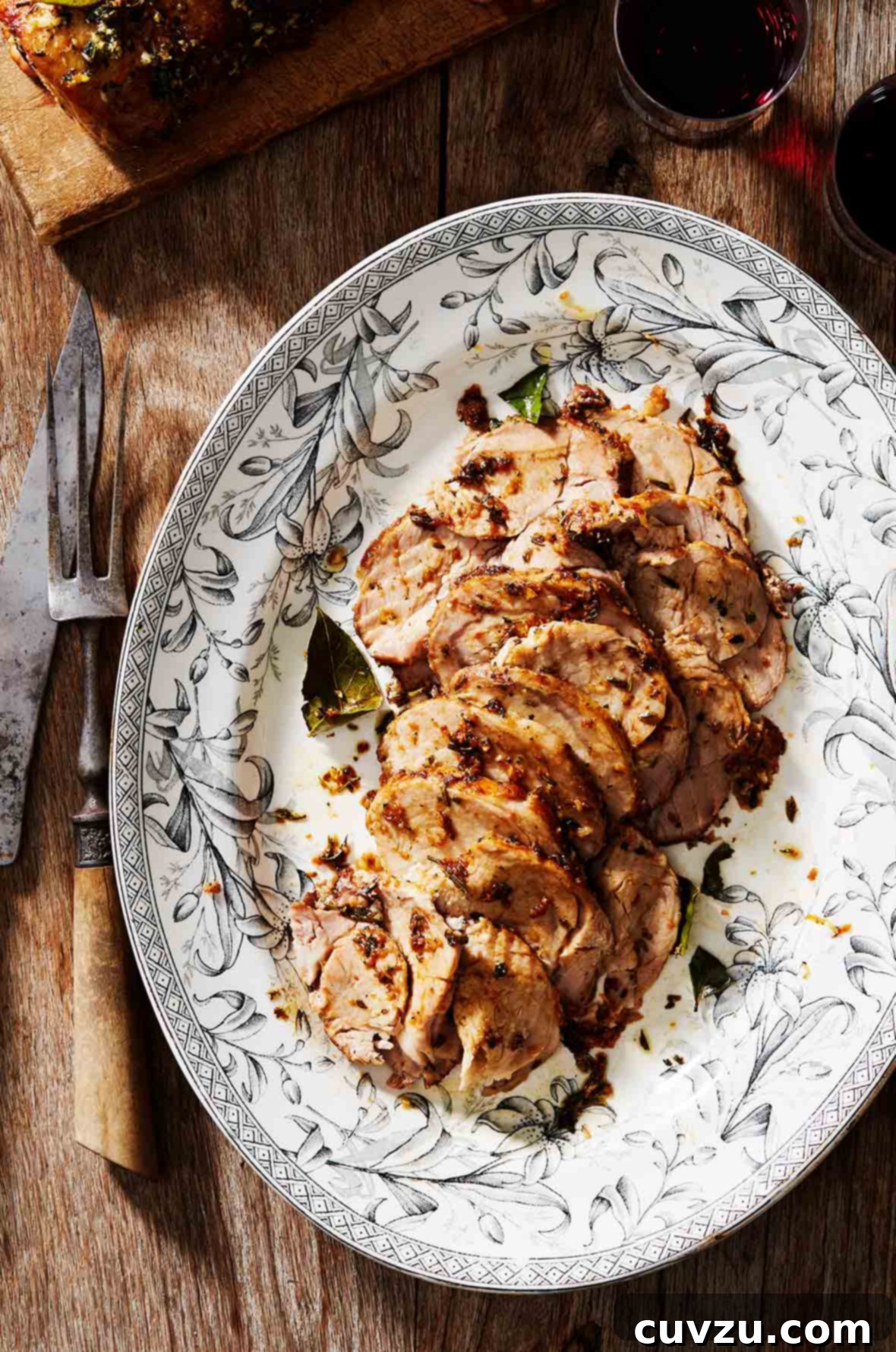
This slow-roasted pork loin, or Arista alla Fiorentina, embodies the essence of Tuscan cooking: sophisticated flavors delivered with surprising simplicity. It’s the ideal choice when you aim to create a memorable dining experience without being tethered to the kitchen. The process is straightforward yet incredibly rewarding: a quick sear to lock in juices, a generous rub with an intoxicating blend of herbs, and then a leisurely roast in the oven while you attend to other tasks or simply relax. When thinly sliced and artfully arranged on a platter, this magnificent roast pork guarantees a collective gasp of appreciation. Beyond its impressive presentation for guests, the rich, savory flavors make for exceptional leftovers, transforming into gourmet sandwiches that are so good, you might just intentionally leave some behind for the next day’s delight.
What Exactly Is Arista alla Fiorentina? Unveiling a Tuscan Classic
For those new to the delights of Italian cuisine, or simply curious about this specific dish, Arista alla Fiorentina represents a venerable tradition in Tuscany. At its heart, it’s a beautifully prepared roast pork, often served slightly warm, allowing its robust flavors to shine. The classic accompaniments typically include creamy white beans, offering a delightful textural and flavor contrast. While rosemary and garlic are almost always the stars of the seasoning, lending their quintessential Mediterranean aroma, a subtle yet transformative ingredient often makes an appearance: anchovy. As one culinary expert describes, the anchovy delivers a crucial “special something” – a profound depth of saltiness and savoriness – without imparting any noticeable fishy taste. Instead, it elevates the overall umami profile, making the roast truly unforgettable. This harmonious blend of simple, high-quality ingredients is a hallmark of authentic Florentine cooking, turning a humble pork loin into an extraordinary culinary experience.
The History and Heritage of Arista alla Fiorentina
The name “Arista” itself carries a fascinating history, said to have originated in the 15th century when Greek prelates, attending the Council of Florence, tasted the dish and exclaimed “Arista!” – meaning “the best” or “excellent” in Greek. This accidental naming perfectly captures the enduring appeal of this dish. Traditionally, it uses pork loin, a leaner cut, but the slow roasting method ensures it remains incredibly tender and juicy. The Tuscan preference for robust herbs like rosemary and sage, combined with pungent garlic and the secret weapon of anchovy, speaks to the region’s rich agricultural bounty and its straightforward, flavor-first approach to cooking. It’s a dish rooted in tradition, yet universally appealing, perfect for any occasion that calls for a truly satisfying and impressive main course.
Why This Tuscan Roast Pork Recipe Will Become Your Go-To
There are countless reasons why this particular Arista alla Fiorentina recipe stands out and is destined to become a beloved staple in your kitchen. First and foremost, it masters the art of minimal effort for maximum impact. Forget complicated techniques or obscure ingredients; this recipe relies on simple steps and fresh, accessible flavors. The hands-on time is surprisingly short, primarily involving preparing the herb paste and searing the pork. The oven does the majority of the work, slowly transforming the pork loin into a fork-tender delight. This “low and slow” roasting technique, though it might seem counter-intuitive for pork loin, is the secret to its incredible juiciness and depth of flavor, allowing the aromatic herb rub to thoroughly permeate the meat.
Furthermore, the optional addition of anchovy is a game-changer. For those hesitant about anchovies, rest assured that its role here is purely as a flavor enhancer, an invisible ingredient that amplifies the savory notes of the pork and herbs without any fishy undertones. It’s a secret weapon that adds a layer of complexity typical of authentic Italian dishes. Whether you’re planning an elegant dinner party, a special holiday meal, or simply craving a comforting and sophisticated Sunday roast, this Tuscan Roast Pork recipe delivers consistently outstanding results, promising a meal that is both impressive and deeply satisfying.
Mastering the Method: Tips for a Perfect Roast Pork
Achieving the perfect Tuscan Roast Pork is simpler than you might imagine, and a few key steps make all the difference. Start with a high-quality, boneless center-cut pork loin, ideally with a thick fat cap left intact. This fat renders slowly during roasting, basting the meat and contributing immensely to its moisture and flavor. Tying the pork with kitchen twine, though optional, helps it maintain a uniform shape, ensuring even cooking and a beautiful presentation when sliced. Don’t skip the searing step! A hot ovenproof skillet and a generous amount of olive oil are crucial for developing a rich, golden-brown crust on all sides. This initial sear not only adds flavor but also helps to lock in the juices before the slow roast.
The star of the show, beyond the pork itself, is the aromatic herb paste. Using fresh rosemary and sage is non-negotiable for authentic Tuscan flavor. Combining them with garlic and olive oil in a food processor or with a mortar and pestle creates a potent rub that infuses the pork with incredible aroma and taste. For those who appreciate a bolder garlic kick, reserving a tablespoon of the raw herb paste to brush on after roasting adds a vibrant fresh note. Finally, and perhaps most crucially, trust the low and slow roasting process and use a reliable meat thermometer. While 180°F (82°C) might seem high for pork, this recipe is designed to achieve a specific tenderness and succulent texture, rather than a traditional medium-rare. Allow the pork to rest for at least 5 minutes after cooking to redistribute the juices, ensuring every thin slice is as moist and flavorful as possible. Drizzle the reserved pan juices over the slices for an extra layer of savory goodness.
Serving Suggestions: Completing Your Tuscan Feast
The beauty of Arista alla Fiorentina lies in its versatility. While traditional Tuscan serving often pairs it with simple white beans, the possibilities are endless. Consider serving it with a robust side like creamy polenta or roasted potatoes, which can soak up the delicious pan juices. A vibrant green salad with a light vinaigrette provides a refreshing contrast to the richness of the pork. For a truly authentic experience, pair it with a side of sautéed greens like spinach or Swiss chard, perhaps with a touch of garlic and chili. During autumn, roasted root vegetables such as carrots, parsnips, or even Brussels sprouts would make excellent companions, their earthy sweetness complementing the savory herbs of the roast. Don’t forget a good, crusty bread to mop up any remaining juices on the plate – it’s too delicious to waste! And of course, a glass of full-bodied Tuscan red wine, like a Chianti Classico, would perfectly complete this magnificent meal.
Beyond the Dinner Plate: Creative Leftover Ideas
Should you be fortunate enough to have any leftover Tuscan Roast Pork – a rare occurrence, given its deliciousness – you’re in for another treat. The thinly sliced, herb-infused pork is simply divine in sandwiches. Layer it with some sharp provolone cheese, a smear of Dijon mustard, and perhaps some pickled onions or roasted red peppers on a crusty baguette for an elevated lunch. It also makes for excellent additions to salads, thinly shaved over a bed of mixed greens with a balsamic vinaigrette. Consider incorporating it into a pasta dish, tossed with olive oil, cherry tomatoes, and fresh basil, or even as a flavorful topping for homemade pizza. For a quick and comforting meal, warm slices can be served over soft polenta or even folded into an omelet or frittata. The rich flavors of the herb paste only deepen overnight, making leftovers a culinary gift that keeps on giving.
Explore More Impressive Pork Roast Recipes
Roast Pork Butt in the Oven
Total Time: 10 hrs 50 mins
For a melt-in-your-mouth experience, try this slow-roasted pork butt. It’s designed to cook for hours, resulting in incredibly tender meat that practically shreds itself, perfect for sandwiches, tacos, or a hearty main course.
Classic Pork Loin Roast
Total Time: 1 hr 35 mins
A timeless favorite, this pork loin roast is seasoned simply and cooked to perfection, making it a reliable and delicious option for any weeknight or special occasion. Its straightforward approach yields consistently delicious results.
Roast Pork Loin with Apples and Onions
Total Time: 1 hr 20 mins
Embrace the flavors of autumn with this succulent pork loin roasted alongside sweet apples and savory onions. The combination of sweet and savory notes creates a comforting and irresistible dish.
Roasted Pork Shoulder with Mustard Glaze
Total Time: 16 hrs
For a true culinary triumph with minimal active effort, this roasted pork shoulder with a tangy mustard glaze is a revelation. The long roasting time results in incredibly tender meat, perfect for a show-stopping feast.
Whether you’re seeking a comforting Sunday supper, an elegant centerpiece for a holiday, or a satisfying “low-and-slow” project that fills your home with irresistible aromas, we have a pork roast recipe for every occasion. Perhaps you’re in the mood for a pork butt that roasts in the oven for so long it practically shreds itself into a crave-able feast. Or how about a classic spin, like this timeless pork loin roast that’s so straightforward it’ll become a weeknight staple. If you’re feeling a bit more autumnal, a succulent roast pork loin with apples and onions hits all the right savory and sweet notes. And for those nights when you want a serious knockout with minimal effort, a roasted pork shoulder with a tangy mustard glaze will make you look like a freaking rock star.
★
Share Your Experience: Write a Review
If you make this recipe, or any dish on LC, consider leaving a review, a star rating, and your best photo in the comments below. We love hearing from you!–David
Featured Review: A Crowd-Pleasing Triumph!
David, I made your recipe for 80 people at my Sons & Daughters of Italy event here in Myrtle Beach, SC, and it got rave reviews! I seared and slathered 7 pork loins (each 8 to 11 pounds) exactly as directed. I was a little dubious about the 3-hour cook time at 180°F (82°C) (like you were), but it came out fabuloso! I did have to augment the drippings with some gravy, but that was no problem. I gave everyone who asked a copy of the recipe—along with a note to subscribe to your website. Thank you for letting me con the masses into thinking I’m a great chef! LOL! My advice to everyone: use a thermometer—180°F creeps up quickly if you’re not paying attention.
Frankie D
Tuscan Roast Pork Recipe
David Leite
Equipment
-
Kitchen twine
-
Small food processor or mortar and pestle
-
Large ovenproof skillet
-
Meat thermometer
Ingredients
- 4 large garlic cloves, peeled
- 2 tablespoons fresh rosemary leaves
- 2 tablespoons chopped fresh sage leaves
- 1 oil-packed anchovy fillet, or 1 teaspoon anchovy paste (optional, but highly recommended for depth of flavor)
- 5 tablespoons extra-virgin olive oil, divided
- 2 pounds boneless center-cut pork loin (not tenderloin), with a thick fat cap left on
- 2 bay leaves (optional, for aromatic enhancement)
- About 3/4 teaspoon kosher salt
- Freshly ground black pepper, to taste (optional)
Instructions
-
Preheat your oven to 225°F (110°C). Position an oven rack in the center.
-
While the oven preheats, prepare the aromatic herb paste. In the bowl of a small food processor, combine the 4 large garlic cloves, 2 tablespoons fresh rosemary leaves, 2 tablespoons chopped fresh sage leaves, the 1 oil-packed anchovy fillet (if using; it adds incredible depth without a fishy taste), and 3 tablespoons of extra-virgin olive oil. Process until a coarse, fragrant paste forms. If you don’t have a food processor, a mortar and pestle can also be used to achieve this mixture.
-
Prepare the pork loin. If desired, use kitchen string to tightly tie the 2 pounds boneless center-cut pork loin crosswise at approximately 2-inch (5 cm) intervals. This helps the roast cook evenly and holds its shape. If using the 2 bay leaves for extra aroma, slip them neatly under the twine. Alternatively, if you’re not tying the pork, make a couple of small slits in the meat and tuck the bay leaves into these incisions.
-
Season the pork generously on all sides with about 3/4 teaspoon kosher salt, rubbing it into the meat to ensure an even coating. Add freshly ground black pepper to taste, if desired.
-
Heat the remaining 2 tablespoons of olive oil in a large ovenproof skillet over medium-high heat until it shimmers. Carefully add the pork loin to the hot skillet, starting with the fatty side down. Sear the pork, using tongs to turn it, until all sides are beautifully dark golden brown. This should take 8 to 10 minutes total. Turn off the heat but leave the pork in the skillet.
-
Using an offset spatula or a pastry brush, evenly coat the seared pork loin with the prepared herb mixture. For those who enjoy the vibrant zing of raw garlic, you can opt to reserve 1 tablespoon of the herb mixture to apply to the pork after it comes out of the oven.
-
Transfer the skillet, with the pork, to the center rack in your preheated oven. Roast the pork until it is exceptionally tender and an internal temperature of around 180°F (82°C) is reached. This slow roasting process will typically take between 2 to 3 hours. While this internal temperature is higher than typical pork doneness, it is crucial for achieving the desired tenderness and texture in this specific Tuscan preparation. Rest assured, this method works beautifully.
-
Once the pork reaches the target temperature, carefully remove the skillet from the oven. If you reserved some herb mixture, now is the time to brush the top and sides of the pork with that fresh tablespoon for an extra burst of flavor. Allow the pork to cool and rest in the skillet for at least 5 minutes. This resting period is vital for the juices to redistribute, ensuring a moist and flavorful roast.
-
Transfer the rested pork to a clean cutting board. Make sure to reserve all the flavorful cooking juices left in the skillet. If you used kitchen string and bay leaves, carefully remove and discard them.
-
Slice the pork very thinly, aiming for approximately 1/8 inch (4 mm) thickness. Arrange the elegant slices on a warm serving platter. Drizzle generously with the reserved cooking juices and herbs from the pan. Serve this glorious Tuscan Roast Pork warm or at room temperature, perhaps alongside some classic white beans or roasted vegetables, and prepare for compliments!
Adapted From
Piatti
Buy On Amazon
Nutrition Information
Serving: 1 portion
Calories: 465 kcal
Carbohydrates: 2 g
Protein: 51 g
Fat: 27 g
Saturated Fat: 5 g
Monounsaturated Fat: 16 g
Cholesterol: 143 mg
Sodium: 558 mg
Fiber: 1 g
Sugar: 1 g
Nutrition information is automatically calculated and should be used only as an approximation.
Tried this recipe?
Mention @leitesculinaria or tag #leitesculinaria!
Insights from Our Recipe Testers: Real-World Experiences
Our dedicated team of recipe testers put this Tuscan Roast Pork to the test, offering invaluable feedback and insights into their cooking experiences. Their diverse perspectives highlight the recipe’s strengths and offer practical tips for home cooks. Read on to see how this elegant Italian classic performed in various kitchens.
Patty Fabian
In a word, OUTSTANDING! This roast pork came out wonderfully tender, juicy, and very flavorful. Could it be because it’s sliced so thinly or roasted low and slow or…who cares, whatever it is, it definitely works. The entire house smelled fabulous while it was roasting and we couldn’t wait to eat it!!
I used anchovy paste instead of an anchovy fillet since it was more convenient to use a little bit of the paste without having to open an entire tin of anchovies. This addition did add a subtle savory note of flavor to the roasted garlic and herbs in this dish.
I let it roast for 2 hours and checked the temperature and it registered 175°F. It looked beautiful so I took it out and let it rest while I prepared my side dishes. I opted not to use the remaining 1 tablespoon herb mixture after the roast came out of the oven, since I’m not a fan of raw garlic, and it was definitely not missed. The pan sauce drizzled over the slices was amazing!
In keeping with the flavors of Tuscany, I served the roast alongside warm white beans with rosemary and olives and steamed fresh broccoli.
I’ll definitely be serving this very impressive dish to guests!
Irene Seales
A lovely roast pork loin that combines ease of roasting along with the fun reverse-searing that’s so satisfying.
In place of a skillet, I used a higher-sided Le Creuset that was large enough for the meat and caught the spatter as I seared. The fresh herb rub was good although a bit rosemary dominant. I think with such a small volume, if you do not have a smaller food processor (mine is a full-size Cuisinart), pre-chopping the rosemary by hand or in a spice grinder would help make a better paste, but it still turned out lovely as instructed.
While this recipe may be a weekend project, it was possible to pull it off on a weeknight. Deliciously comforting and the perfect thing to cook when your garden’s rosemary and sage have broken out madly after winter and are growing like crazy!
Since my pork tenderloin was quite a bit larger than specified, I divided it, using just over 2 pounds for this recipe and reserved the remainder for other projects (you could cut your extra portion into center-cut chops). The searing was easy, using tongs, and all sides including the ends were nicely browned (I started with the fattier side). I used a silicone brush to apply the herb mixture. At 2 hours and 15 minutes we were at 178℉, and I removed it to rest and then sliced just enough for the two of us.
On the second evening, I had the opportunity to remove the excess fat from the surface of the chilled pan drippings. I heated it with some extra chopped fresh sage and then strained it and added a splash of heavy cream. This slightly more refined sauce was delicious over the roast pork. The rest of the roast pork will be incorporated into sandwiches and tacos.
Nekayah Snider
This roast pork loin was so juicy and delicious. Pretty simple ingredients with fresh herbs making all the difference. I did not use the anchovy fillet as the family is not a fan.
After nearly 2 hours, my pork loin had reached 184°F. I turned off the oven and finished up the sides. Pulled it out, sliced it thin and served with the juices from the pan.
Everyone raved. We will be making this again!
Greg Crawford
I don’t often cook roast pork loin and was intrigued by this recipe, especially the part about cooking it until it reaches 180°F. But the flavors sounded like a winner and so I gave it a shot. The recipe was super easy. It just took a long time.
And the recipe was right. Even though you cook the pork way beyond its technical done temperature, it didn’t dry out. In fact, when I pulled the pan out of the oven, there was a nice amount of pan juices that were delicious and great with the pork. Slicing it thinly, as the recipe calls for, is key.
I mashed everything up, sans anchovy, in my mortar and pestle and that worked fine. In lieu of anchovy, I sprinkled in a few drops of fish sauce.
Searing the meat is key, so be sure to get all sides nice and golden. Don’t rush it. It took fully 2 1/2 hours to roast and the meat was, indeed, juicy.
All in all, we really enjoyed this dish. Again, it was super easy but you have to be patient and let the magic of low and slow happen.
We got about 5 servings along with rosemary potatoes cooked on the grill and grilled asparagus.
Anna Scott
“Wow” is the first word that comes to mind when you smell the combination of flavors in the herb paste for this Tuscan-inspired pork loin. A fragrant mixture of garlic, anchovy, fresh rosemary, fresh sage and fruity olive oil, this combination will transport you to an Italian frame of mind in no time!
Simple in its ingredients and preparation, this unique dish was enjoyed by all of us.
The only thing I would change would be that even after 2 hours and 30 minutes of cooking in the low oven, I think the meat could have been the slightest bit more tender. I’m wondering if, to achieve this, maybe adding some liquid to the pan in the last half of cooking would work well? Some dry white wine or even stock? The meat was tender, but I think we were looking for it to be just a touch more so.
I served the pork with some boiled baby red potatoes tossed with a homemade basil pesto, and some roasted broccoli with sweet peppers, shallots, and capers. A healthy, well-rounded Italian meal that we simply adored! I would love to try this paste on a roasted leg of lamb or even a roasted chicken sometime.
Desiree Moore
At first I thought that there wasn’t going to be a sufficient amount of herb paste given the size of my pork loin. Upon spreading it evenly, it came out to be just enough, delivering excellent flavor all around. I was shocked at how much impact the herb mixture made. It pleased my household, that’s for sure, and took me by surprise.
This Tuscan Roast Pork, or Arista alla Fiorentina, stands as a testament to the power of simple, quality ingredients and a patient cooking method. It’s a dish that promises to deliver rich, complex flavors and a wonderfully tender texture, making it suitable for both casual family dinners and sophisticated entertaining. We encourage you to try this recipe and experience a true taste of Tuscany in your own home. Buon appetito!