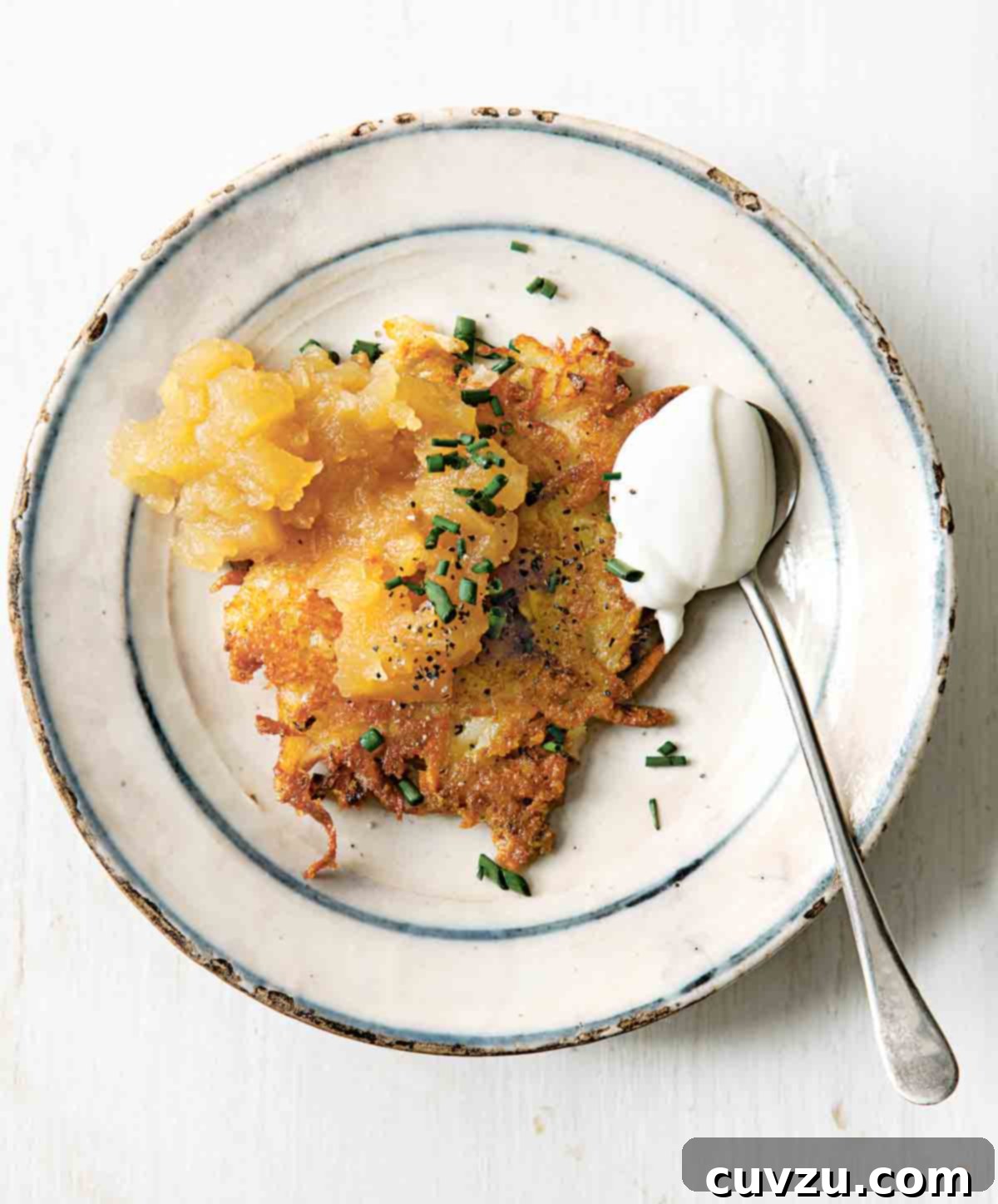
Indulge in the crispy, tender, and incredibly satisfying delight of these Cheddar and Potato Latkes. A delectable twist on the traditional potato pancake, this recipe elevates the classic with a generous infusion of gooey, melted Cheddar cheese, creating a truly irresistible culinary experience. Perfect for a special Hanukkah celebration that doesn’t include meat, or simply an indulgent weeknight treat, these cheesy latkes are guaranteed to become a new family favorite. Each golden-brown latke is meticulously crafted to achieve a perfectly crisp exterior, yielding to a luxuriously tender and flavorful interior, rich with the savory goodness of potato and sharp cheddar.
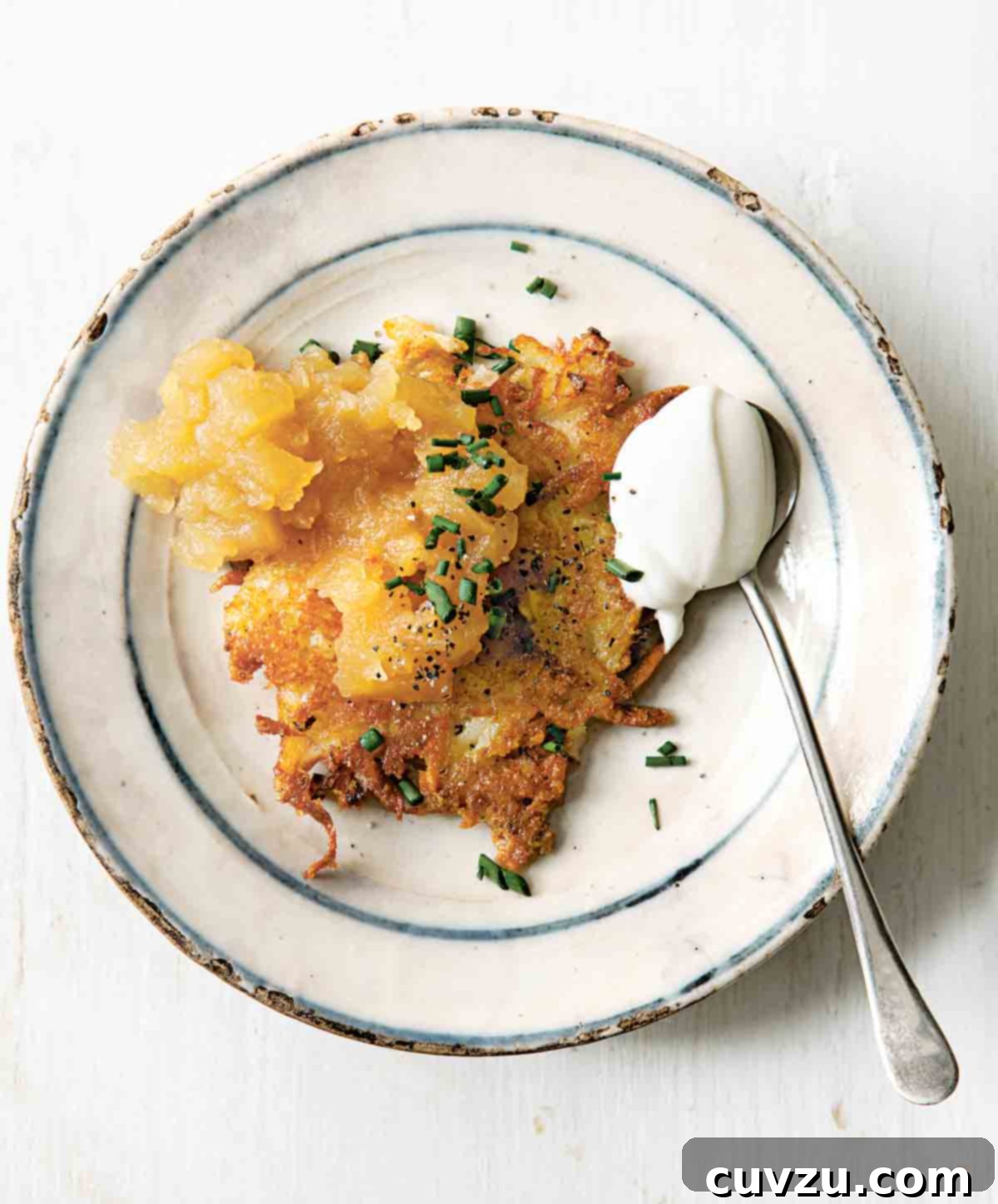
Imagine a potato pancake that offers the quintessential crispness on the outside, a delightful tenderness within, and an unmistakable indulgence throughout, thanks to the ample melted Cheddar. That’s precisely what awaits you with these magnificent Cheddar and potato latkes. They offer a comforting, savory experience that’s versatile enough for a festive Hanukkah meal, especially when keeping dairy and meat separate, or as a wonderfully satisfying dinner on any ordinary evening. The accompanying homemade brown sugar applesauce provides the perfect balance of sweet and tart, cutting through the richness of the latkes and completing this effortlessly elegant dish.

Why Our Testers Adore This Recipe
Our dedicated recipe testers were absolutely captivated by these cheesy potato latkes, and their enthusiasm speaks volumes. Tester Erin W. perfectly encapsulates their appeal, remarking, “These Cheddar and potato latkes were everything you’d want in a potato pancake—crisp on the outside, creamy on the inside, and pretty failproof.” We couldn’t agree more with her assessment. The combination of classic latke texture with the added richness of Cheddar cheese creates a potato pancake that is both familiar and exciting, making it an instant favorite for anyone who tries it. This recipe consistently delivers outstanding results, living up to its “failproof” reputation, even for novice cooks.
Essential Notes on Ingredients
Selecting the right ingredients is crucial for achieving the perfect balance of flavor and texture in these delectable latkes and their accompanying applesauce. Here are some detailed notes to guide you:
- Tart Apples: For the brown sugar applesauce, we highly recommend using tart apples like Granny Smith. These apples provide a lovely chunky texture and a vibrant tartness that beautifully complements the rich, savory, and cheesy latkes. The contrast between the sweet-tart applesauce and the indulgent latkes is key to the dish’s overall harmony. If you prefer a smoother, sweeter sauce, you can opt for sweeter varieties such as McIntosh or Golden Delicious, which break down more readily during cooking.
- Apple Cider: It’s important to use unprocessed apple cider, which is typically found in the refrigerated section of most supermarkets. This is distinct from the alcoholic beverage, hard cider. The natural sweetness and subtle tang of fresh apple cider enhance the flavor of the applesauce without overpowering it. Ensure you are using a non-alcoholic version for this recipe.
- Baking Potatoes: The type of potato significantly impacts the texture of your latkes. For best results, choose starchy potatoes like Idaho or russet potatoes. Their high starch content is essential for binding the latkes together, ensuring they hold their shape during frying and achieve that coveted crispness. Avoid waxy red or new potatoes, as they contain less starch and more moisture, which can result in a gummier texture that doesn’t crisp up as well. Proper potato choice is a cornerstone of a successful latke.
- Cheddar Cheese: A mild or medium Cheddar works best for these latkes, providing a creamy, melty quality and a savory depth without being too sharp or overpowering the potato flavor. Grating your own cheese from a block will yield a superior melt and flavor compared to pre-shredded varieties, which often contain anti-caking agents.
- All-Purpose Flour or Matzoh Meal: Both options serve as a binder for the latkes. All-purpose flour provides a neutral flavor and reliable structure. Matzoh meal, a traditional Jewish ingredient, offers a slightly coarser texture and a distinctive, nutty flavor that can add an authentic touch, especially during Hanukkah. The choice depends on your preference for texture and flavor profile.
Detailed Step-by-Step Instructions
Creating these delightful Cheddar and Potato Latkes and their accompanying brown sugar applesauce is a straightforward process when you follow these steps carefully. Each stage is designed to ensure maximum flavor and the perfect texture:
- Prepare the Homemade Brown Sugar Applesauce: Begin by combining the peeled, coarsely chopped tart apples (Granny Smith recommended), apple cider, light brown sugar, fresh lemon juice (strained), and coarse salt in a medium saucepan. Bring the mixture to a boil over medium-high heat, then reduce the heat slightly to a gentle simmer. Continue cooking, stirring occasionally, until the apples become very soft and begin to break down, which typically takes about 6 to 10 minutes. Once the apples reach your desired softness, remove the pot from the heat. Using a potato masher or the back of a sturdy wooden spoon, mash the apples to your preferred consistency – chunky or smooth. You should yield approximately 2 cups of delicious applesauce. Cover the pot to keep it warm while you prepare the latkes.
- Prepare the Potato and Onion Mixture: The key to crispy latkes is removing excess moisture. Take the grated baking potatoes (Idaho or russet) and finely chopped white onion and place them in the center of a large, clean, sturdy kitchen towel or a flour sack cloth. Gather the sides of the towel tightly around the vegetables to form a ball. Over a sink, squeeze the mixture with as much force as you can muster to extract as much liquid as possible. This step is crucial for preventing soggy latkes, so don’t skimp on the squeezing! Transfer the thoroughly drained potato and onion mixture to a large mixing bowl. Add the grated mild Cheddar cheese, all-purpose flour (or matzoh meal), beaten large eggs, coarse salt, and black pepper. Toss all the ingredients together vigorously to ensure they are well combined, forming a cohesive batter.
- Fry the Latkes to Golden Perfection: Heat approximately 1/4 cup of vegetable oil in a 10-inch sauté pan or a cast-iron skillet over medium heat until the oil is shimmering and very hot. To test the oil temperature, a tiny drop of the potato mixture should sizzle immediately upon contact. Working in batches to avoid overcrowding the pan (typically 3 to 5 latkes at a time), scoop 1/4-cup portions of the latke mixture into the hot oil. Flatten each mound slightly with the bottom of your measuring cup or a spatula to ensure even cooking and maximum crispiness. Fry the latkes until they turn a beautiful golden brown and become wonderfully crisp on the first side, which usually takes about 2 1/2 to 3 1/2 minutes. Carefully flip each latke with a spatula and continue frying the second side until it is also golden brown and crisp, taking another 3 1/2 minutes or so. As each batch finishes, transfer the cooked latkes to a baking sheet lined with paper towels to drain any excess oil. Repeat the frying process with the remaining latke batter, adding an additional tablespoon of vegetable oil to the pan as needed to maintain the proper oil level. You should yield about 12 latkes.
- Serve and Enjoy: Arrange the warm, freshly fried Cheddar and potato latkes on a serving platter. Top each latke with a generous spoonful of the warm brown sugar applesauce. For an extra touch of creamy indulgence, dollop with sour cream, if desired. Serve immediately and savor the incredible combination of crispy, cheesy latkes with the sweet and tart applesauce.
Frequently Asked Questions About Cheesy Latkes
Here are some common questions our readers ask about making latkes, particularly these cheesy potato pancakes:
While both all-purpose flour and matzoh meal serve as binders in latke recipes, they bring different qualities to the table. Matzoh is a type of unleavened bread that has been toasted and then ground, imparting a distinctive flavor and texture. Regular matzoh meal is typically coarse, making it excellent for fillings, breading meats, or coating vegetables, offering a slightly chewier bite. Matzoh cake meal, on the other hand, is much finer, designed as a flour substitute for baking cakes and cookies, and can also be used for thickening sauces and soups. All-purpose flour is a raw, smooth, and very fine powder. In the context of these latkes, all-purpose flour is an adequate and readily available substitute, providing a lighter texture. However, it’s important to remember that this isn’t universally true for all recipes; the unique properties of matzoh meal make it irreplaceable in certain traditional Jewish dishes.
We strongly advise against using waxy potato varieties like red-skinned or white-skinned potatoes for latkes. These potatoes have a lower starch content and higher moisture content, which are problematic for achieving the desired latke texture. Without sufficient starch, they struggle to bind together effectively, often requiring additional binding agents, and they tend to yield a gummier, less crispy result. The excess moisture also makes it harder to achieve that coveted golden-brown, crunchy exterior. Instead, opt for high-starch potatoes such as Idaho, Russet, or even sweet potatoes. Their robust starch content is crucial for a successful latke, allowing them to crisp beautifully on the outside while remaining tender and flavorful on the inside. Selecting the right potato ensures your latkes are perfectly structured and delightfully crispy.
These cheesy potato latkes are indeed a wonderful and festive option for a Hanukkah meal, celebrating the miracle of oil with their delicious fried goodness. However, it’s important to consider dietary guidelines, particularly if you observe kosher laws. Traditional Jewish dietary laws prohibit mixing dairy (like the Cheddar in these latkes) with meat. Therefore, if you are keeping kosher, these indulgent latkes should not be served alongside meat dishes such as roast chicken, braised brisket, or any other type of meat entree. They are best enjoyed as a standalone dairy meal or alongside other dairy or pareve (neutral) dishes. If you’re looking for latkes that can be served with meat while still adhering to kosher principles, consider preparing these delightful sweet potato latkes or the earthy root vegetable latkes, both of which are meat-friendly options.
Pro Tips & Troubleshooting for Perfect Latkes
Achieving perfectly crispy and flavorful latkes is easy with a few expert tips and troubleshooting advice:
- The Squeeze is Key: When extracting liquid from the grated potato and onion, use a very sturdy towel or a flour sack cloth. A thin or loosely woven towel may rip under the pressure, leaving you with a messy situation. Squeeze with all your might—the more liquid you remove, the crispier your latkes will be. This step is non-negotiable for a truly excellent result.
- Speed Up Preparation with a Food Processor: Grating potatoes can be time-consuming. To significantly reduce prep time, use the grating attachment of your food processor. This makes quick work of the potatoes and onions, allowing you to enjoy your latkes even faster without compromising quality.
- Storage and Reheating: While these Cheddar and potato latkes are undeniably best enjoyed fresh, straight from the pan, leftovers can be stored. Place cooled latkes in a sealed airtight container in the refrigerator for up to 2 days. To reheat, arrange them in a single layer on a baking sheet and bake in a preheated 350°F (175°C) oven until they are crisp and heated through, typically 10-15 minutes. Avoid reheating in the microwave, as it will make them soggy.
- Don’t Overcrowd the Pan: Frying latkes in too small a batch ensures consistent temperature and even crisping. Overcrowding the skillet will lower the oil temperature, leading to greasy and soggy latkes instead of golden-brown and crisp ones. Work in batches, usually 3-5 latkes at a time, allowing plenty of space between each.
- Maintain Oil Temperature: Use a neutral-flavored oil with a high smoke point, such as vegetable, canola, or grapeseed oil. Maintaining a consistent oil temperature of around 350-375°F (175-190°C) is vital. If the oil is too cold, the latkes will absorb too much oil and become greasy; if it’s too hot, they will burn on the outside before cooking through. A small piece of potato should sizzle immediately when dropped into the hot oil.
Explore More Delicious Latke Recipes
If you’ve fallen in love with these cheesy potato latkes, you’ll be thrilled to discover the incredible versatility of this beloved dish. Latkes can be adapted with various vegetables and flavor profiles to suit any palate or occasion. Dive into these other fantastic latke creations:
Share Your Experience: Write a Review!
We love hearing from you! If you make this Cheddar and potato latke recipe, or any other delightful dish from Leite’s Culinaria, please consider taking a moment to leave a review. Share your thoughts, assign a star rating, and even upload your best photo in the comments section below. Your feedback and culinary creations inspire us all! –David
Cheddar and Potato Latkes with Brown Sugar Applesauce
Recipe by David Leite
Sides, Appetizer, Main Dish
Jewish, American
12
latkes
231
kcal
15
30
45
Ingredients
For the Brown Sugar Applesauce
- 5 1/2 cups peeled, coarsely chopped tart apples, such as Granny Smith
- 1/4 cup plus 2 tablespoons apple cider (unprocessed)
- 1/4 cup light brown sugar
- 3 tablespoons fresh lemon juice, strained
- 1/4 plus 1/8 teaspoon coarse salt
For the Cheddar and Potato Latkes
- 2 pounds baking potatoes (such as Idaho or Russet), peeled and grated
- 1 cup finely chopped white onion
- 2 cups grated mild Cheddar cheese
- 1/4 cup all-purpose flour or matzoh meal
- 2 large eggs, beaten
- 1 to 1 1/2 teaspoons coarse salt (to taste)
- 8 grinds freshly ground black pepper (or to taste)
- About 1/4 cup plus 1 tablespoon vegetable oil, for frying
- Sour cream, for serving (optional)
Instructions
Make the Brown Sugar Applesauce
-
Combine the apples, cider, brown sugar, lemon juice, and salt in a medium saucepan. Bring the mixture to a boil over medium-high heat, then reduce the heat slightly to a simmer. Cook, stirring occasionally, until the apples become very soft, typically 6 to 10 minutes. Remove the saucepan from the heat.
-
Mash the softened apples with a potato masher or the back of a wooden spoon until you achieve your desired applesauce consistency (chunky or smooth). This should yield about 2 cups of applesauce. Cover the pot to keep the applesauce warm while you prepare the latkes.
Make the Cheddar and Potato Latkes
-
Place the grated potatoes and chopped onions in the center of a large, clean, and sturdy kitchen towel. Gather the edges of the towel over the vegetables and twist tightly, squeezing out as much excess liquid as possible over a sink. This step is critical for crispy latkes. Transfer the thoroughly drained potato and onion mixture to a large bowl. Stir in the grated Cheddar cheese, flour (or matzoh meal), beaten eggs, salt, and pepper. Toss well to combine all ingredients evenly.
-
Heat 1/4 cup of vegetable oil in a 10-inch sauté pan or cast-iron skillet over medium heat until the oil is shimmering hot. Using a 1/4-cup measuring cup, scoop portions of the batter into the hot skillet. Gently flatten each mound with the back of the measuring cup or a spatula to create even latkes. Do not overcrowd the pan; fry no more than 3 to 5 latkes at a time to maintain consistent oil temperature.
-
Cook the latkes for 2 1/2 to 3 1/2 minutes per side, or until they are golden brown and perfectly crisp. Carefully flip each latke and cook the other side for another 3 minutes or until similarly golden and crisp. Transfer the finished latkes to a baking sheet lined with paper towels to drain any excess oil.
-
Repeat the frying process with the remaining latke batter, adding an additional 1 tablespoon of oil to the pan as needed to keep it from going dry. You should yield approximately 12 latkes in total.
-
Serve the warm latkes immediately with the homemade brown sugar applesauce and a dollop of sour cream, if desired, for an exquisite combination of flavors and textures.
Notes
- Efficient Squeezing: For optimal results when squeezing liquid from the potato and onion mixture, always use a robust kitchen towel or a specialized flour sack cloth. Delicate or thin towels are prone to tearing under the necessary pressure, which can disrupt your preparation.
- Time-Saving Tip: To significantly reduce your prep time, consider using a food processor equipped with a grating attachment to quickly grate both the potatoes and onions. This method is much faster than manual grating and yields consistent results.
- Storing and Reheating: While latkes are at their absolute best when freshly made, any leftovers can be stored in an airtight container in the refrigerator for up to 2 days. To bring them back to their crispy glory, reheat them in a single layer on a baking sheet in a 350°F (175°C) oven until they are thoroughly heated and regain their crisp texture.

Adapted From
Meatless All Day
Buy On Amazon
Nutrition Information
Serving:
1 latke
Calories:
231 kcal
Carbohydrates:
31 g
Protein:
8 g
Fat:
9 g
Saturated Fat:
5 g
Monounsaturated Fat:
3 g
Trans Fat:
1 g
Cholesterol:
51 mg
Sodium:
434 mg
Fiber:
3 g
Sugar:
12 g
Nutrition information is automatically calculated and should be used as an approximation only. Individual results may vary.
Insights from Our Recipe Testers
Our dedicated team of recipe testers put these Cheddar and potato latkes to the test, and their feedback offers valuable perspectives and enthusiastic endorsements. Read on to see what they loved and their helpful tips:
Jackie Gorman
Jackie Gorman expressed a profound connection with these latkes, stating, “These are the latkes that I wish I’d grown up with. I actually don’t think that I grew up with potato latkes, but I should have, or rather, I tasted these Cheddar and potato latkes and wished that they were a memory.” Her sentiment beautifully captures the comforting and nostalgic potential of this recipe. She opted to make a half batch, which proved to be more than sufficient for two people, even leaving a few leftovers. While she was able to achieve a decent crispness when reheating the latkes, she noted that they weren’t quite as good on the second day, reinforcing the idea that fresh is best for maximum enjoyment.
The applesauce was a particular highlight for Jackie, enhanced by her use of fresh Gravenstein apples from a friend’s vineyard. She described these apples as “crisp and tart with marvelous flavor,” perfect for the chunky sauce she desired. She used six apples, each weighing between 5 1/2 and 6 1/2 ounces, and cooked them for a shorter duration of 7 to 8 minutes to maintain the desired chunky consistency.
Jackie shared a practical tip born from experience: “The only casualty in this recipe was the kitchen towel that tore while squeezing out the great deal of liquid from the potatoes and onion. I suggest that you don’t use a thin towel.” This underscores the importance of a sturdy towel for the crucial moisture removal step. She meticulously monitored the oil temperature, which hovered between 350°F and 400°F, and found that her 10-inch cast-iron skillet could only accommodate three latkes at a time when using a 1/4-cup measure. She advised close attention during frying, as her latkes were ready to turn after just 2 1/2 minutes, faster than the suggested time. Interestingly, after the first batch, she found that simply spooning the remaining batter into the skillet worked just as well, and her well-seasoned cast-iron pan required no additional oil. Jackie served her latkes with room-temperature applesauce and expressed a desire to make these a household tradition, even contemplating a future batch without cheese for comparison. Her mental soundtrack of “Oh Hanukkah, Oh Hanukkah” perfectly summed up the festive mood these latkes inspired.
Erin W.
Erin W. opened her review with an emphatic “Holy wow!” for these Cheddar and potato latkes, praising them as “everything you’d want in a potato pancake—crisp on the outside, creamy on the inside, and pretty failproof.” She highlighted the “fail-proof” aspect as particularly significant, given her extensive experience with various potato pancake recipes. Her success with this recipe attests to its robust and reliable nature, producing consistently delicious results. Erin chose to use all-purpose flour instead of matzoh meal in her latkes, demonstrating the recipe’s flexibility without compromising quality.
The applesauce also received high marks from Erin, who suggested that any homemade applesauce would work well as a substitute. However, she found the brown sugar version to be particularly delightful, even if it felt “almost decadent” to her, accustomed to making applesauce without added sugar. She strongly recommended the inclusion of cider vinegar in the applesauce, noting that it “adds a little punch that marries with the latkes and sour cream for a real mouthwatering dish.” Erin utilized about six large Granny Smith apples, acknowledging their tartness and tendency not to mash into an overly creamy sauce. This observation is helpful for those who prefer a smoother or sweeter applesauce, suggesting that a different apple variety might be more suitable for their preference.
For serving, Erin paired the latkes with roast pork tenderloin, concluding that a simple main dish is ideal. She humorously warned that “the latkes will overshadow everything else on the plate,” a testament to their exceptional flavor and satisfying quality. Her review reinforces the indulgent and crowd-pleasing nature of these cheesy potato latkes.
Dawn English
Dawn English highlighted the remarkable ease and efficiency of this potato latke recipe, noting its quick turnaround: “From start to finish, you can have delicious latkes in 30 minutes max, including cleanup.” She provided a valuable tip for further expediting the process, suggesting the use of a food processor for grating, which she said “will go even faster.” Dawn also experimented with the potatoes, deciding not to peel them, and found the results to be “great,” indicating a potential shortcut for busy cooks. She recommended using a white onion for its “nice flavor” contribution to the latkes.
Emphasizing a crucial step, Dawn reminded readers, “Don’t forget to rid any excess moisture from the shredded potatoes and chopped onion in a kitchen towel. Removing the excess liquid helps produce a nice end-product.” Her experience with well-seasoned cast-iron skillets meant that “2 tablespoons per pan was enough to get these going,” and she didn’t need to add more oil. Using a 1/4-cup measuring cup for scooping, her recipe yielded precisely 12 latkes.
Dawn’s enthusiasm for the recipe was evident in her busy schedule. She whipped up a batch just 40 minutes before leaving for a brunch event, where “the ladies loved them.” She even cooked a second batch on a Saturday afternoon for an easy Sunday morning breakfast, demonstrating the latkes’ versatility for meal prep. Although she didn’t make the applesauce, she could “only imagine how wonderful these two would pair together,” and agreed that “sour cream? That would take it to the next level.” Regarding seasoning, Dawn used half the recommended salt and all the pepper, finding the latkes “perfectly seasoned,” though on the verge of “too much pepper,” which she personally enjoyed. For her second batch, she innovatively substituted Toronto seasoning for salt and pepper, loving “the flavor of that version even more.”
Dawn’s culinary curiosity led her to compare rinsed versus unrinsed potatoes. She tested if “a pre-soak of cut potatoes in water yields a crisper, cleaner-tasting end result.” While the rinsed version was good and highlighted individual potato and onion shreds more, she ultimately preferred the recipe as written (unrinsed). She found the unrinsed version to have an “ever so slightly more moist and luxurious mouthfeel,” confirming the recipe’s original method as superior for its intended texture.
Gene C.
Gene C. found this cheese latkes recipe to be refreshingly “straightforward.” He used two large russet potatoes, which combined to a weight of 2 1/2 pounds, slightly more than the recipe called for. He adapted the oil usage to his larger 12-inch pan, pouring in about 1/4 inch of oil, suggesting that home cooks should adjust oil quantities based on their skillet size and desired frying depth. Gene praised the quick and easy prep, noting it took him “only about 15 minutes.” For draining the liquid, he found “flour sack cloths to be very effective,” though he confirmed that a tea towel would also work to ensure excess moisture removal, a critical step for crispy latkes.
He meticulously heated his oil to approximately 350°F, which “produces a nice, golden brown latke that is crisp on outside and very tender and cheesy inside.” Gene admitted to making his latkes significantly larger—around 4 inches in diameter and about 1/2 inch thick—which reduced his yield to 10 latkes, but he affirmed they were “oh so good.” Despite their larger size, he had no difficulty flattening them in the pan and adjusted his cooking time accordingly to ensure they were thoroughly cooked to his liking. His experience highlights the recipe’s adaptability to personal preferences regarding latke size.
The homemade applesauce was a resounding success with Gene, who declared it “really, really good.” He enthusiastically recommended it, stating, “If you’ve never tried to make your own, this recipe should be the one to try. Again, it’s very straightforward with no guesswork required.” He specifically used Granny Smith apples and noted that the applesauce is “better a little warm, but it’s also delicious cold on its own with a dash of cinnamon.”
Gene concluded that, when combined, “these recipes make a great side and can be done in about an hour, making the recipe good for a weeknight treat.” He appreciated that the applesauce could be prepared ahead of time and stored in the fridge. His ultimate endorsement: “Both recipes are now in my rotation,” solidifying their place as staple dishes in his home.
Eydie Desser
Eydie Desser began her review by playfully addressing the “oxymoron” of cheese in latkes for a Jewish dish, particularly in the context of Hanukkah meals served with brisket. She declared, “this Cheddar and potato latkes recipe is reason enough for me to become reformed!” Her lighthearted comment highlights the recipe’s exceptional appeal, even for those who might typically adhere to strict kosher traditions. The deliciousness of these latkes proves to be a compelling argument for culinary flexibility.
Eydie found the applesauce to be “delicious.” She used four medium apples, diced into 1/2-inch chunks, and observed that they softened in just “about 6 minutes.” In an accidental but successful deviation, she used sparkling apple cider, which “worked out just fine,” reassuring others that a “huge jug of apple cider” isn’t necessary. Her husband suggested adding “a pinch or two ground cinnamon,” a nice optional touch for flavor variation.
For the latkes, Eydie noted an “unusual part of the recipe was squeezing the chopped onion with the potato to extract as much liquid as possible.” She typically doesn’t combine onion with potato for squeezing, and while she wasn’t sure much liquid came from the onion, the shredded potato certainly yielded a good amount. Her technique involved squeezing the mixture in one towel, then using “another clean, dry towel and squeezed it again, which did the trick,” offering a valuable tip for thorough moisture removal. She then deviated from the recipe’s instruction to combine all ingredients at once, finding it made “more sense to me to whisk the eggs with salt and pepper, pour the egg over the onion and potato mixture and combine, add the flour, mix thoroughly, and finally mix in the Cheddar cheese.” This alternative mixing order may appeal to some home cooks.
Eydie provided a detailed method for checking pan readiness: adding small amounts of water to the pan to observe its behavior until it forms a “mercury ball,” then wiping it out before adding oil. She noted that the oil would quickly appear “wavy” and register around 325°F. She lightly packed the potato mixture into a 1/4-cup measuring cup, dumped it into the pan, and flattened it with the back of the cup. Crucially, she advised lowering the heat to medium at this point so the latkes would “brown beautifully instead of burn.” She cooked them for 2 1/2 to 3 minutes per side, observing that the second side cooked slightly faster. After transferring the cooked latkes, Eydie sprinkled “a touch of Maldon salt on top to give them that nice little salty crunch,” a gourmet finishing touch. She concluded that these latkes were “a huge hit and were so delicious with the Cheddar cheese,” and envisioned them as “fabulous hors d’oeuvres” if made very small and served with applesauce and sour cream.