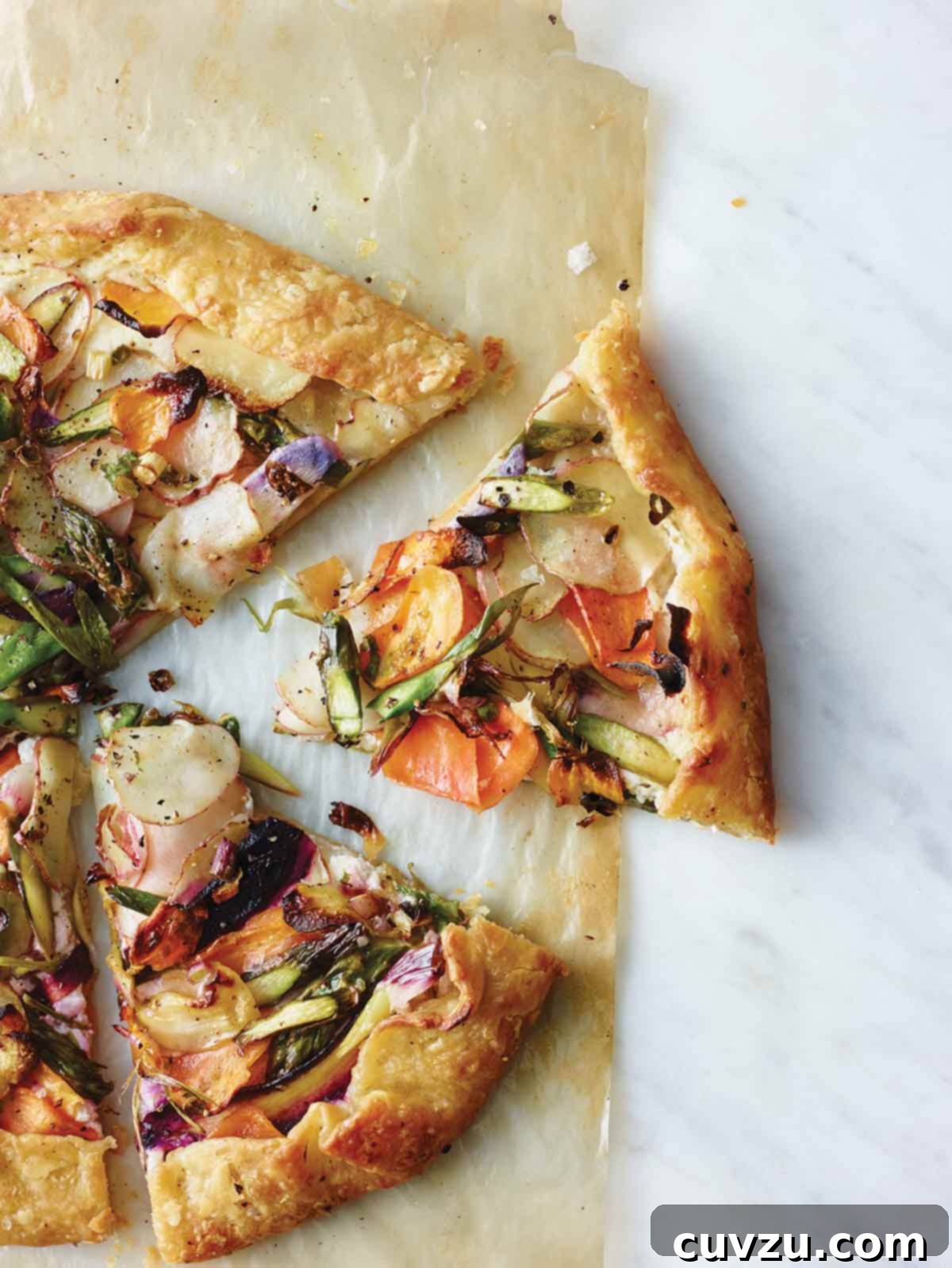
An Irresistible Vegetable Galette: Your New Favorite Savory Tart
This **vegetable galette** isn’t just a meal; it’s a culinary experience. Imagine a rustic yet refined savory tart, brimming with perfectly roasted vegetables like sweet carrots, tender potatoes, and vibrant asparagus. All of this goodness is nestled atop a quick, easy-to-make, impossibly flaky, and buttery pastry crust, then crowned with a luxuriously indulgent cheese sauce. Think of it as your beloved pizza, but having truly elevated its game – a dish that’s both comforting and elegant.
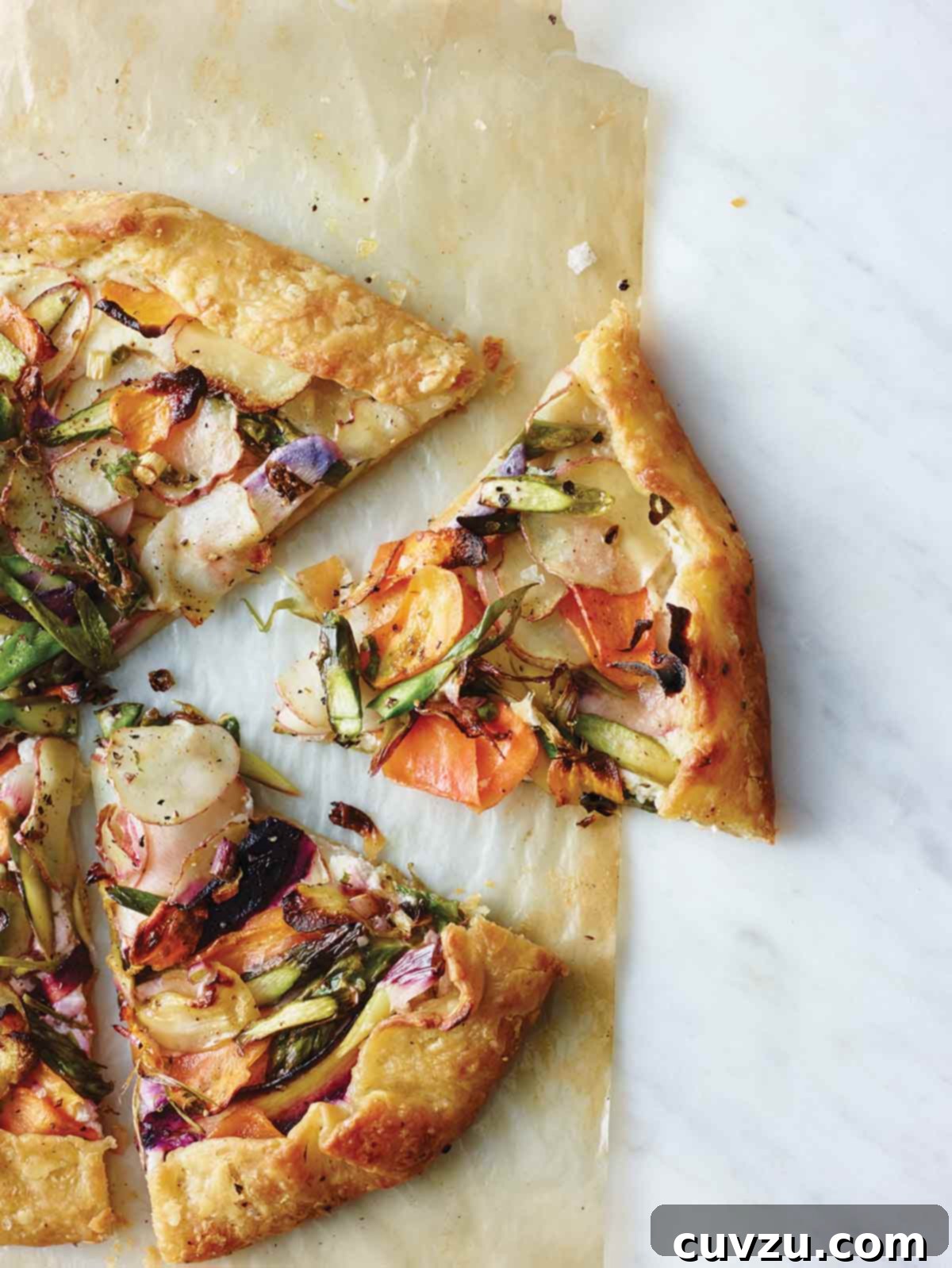
We all secretly wish for pie for dinner sometimes, don’t we? This savory galette isn’t just a fantasy; it’s a delicious reality that will convince you that pie for dinner is not only conceivable but utterly doable. Its buttery, flaky pastry serves as the perfect foundation for a creamy, rich cheese sauce and perfectly roasted vegetables, each bite offering a surprising sweetness and tenderness. So go ahead, indulge in a second slice. After all, you’re enjoying your vegetables in the most delightful way possible.
What Exactly is a Galette?
Often hailed as the “lazy chef’s pie,” a galette is a term used in French cuisine to describe various flat, round, or free-form cakes or pastries. Unlike a traditional pie that requires precise shaping in a pie dish, a galette is characterized by its rustic, free-form nature. The dough is simply rolled out, filled, and then the edges are folded haphazardly over the filling to create a beautiful, informal border. This approachable style makes it incredibly versatile and less intimidating than a perfect pie crust, yet it delivers all the deliciousness.
Savory galettes, like this vegetable version, are particularly wonderful. They offer a sophisticated alternative to quiches or standard vegetable tarts, with their open-faced presentation showcasing the vibrant colors of the ingredients. The beauty of a galette lies in its simplicity and adaptability – it can be an elegant appetizer, a satisfying main course for lunch or dinner, or even a delightful side dish. It embodies comfort food with a touch of gourmet flair, proving that sometimes, the simplest methods yield the most impressive results.
The Secret to Crafting the Flakiest Pastry
Achieving a truly flaky pastry is the cornerstone of an exceptional galette. While many home bakers know that cold butter is paramount, there’s a lesser-known, yet incredibly effective, technique that takes flakiness to an entirely new level. This crucial corollary to the “cold butter” rule dictates that not only must you start with butter that is thoroughly chilled, but it must also remain cold until the very moment it encounters the intense heat of your oven. The colder the butter remains, the more distinct and airy the layers in your crust will be.
To master this, the ingenious method involves grating the butter rather than cutting it into chunks. When butter is grated on the large holes of a box grater, it transforms into delicate, wispy shreds. These fine pieces can then be quickly and effortlessly tossed into the flour mixture, distributing evenly in a matter of seconds. This minimizes direct contact with your warm hands, preventing the butter from melting prematurely. Traditional methods of “cutting in” butter often involve prolonged handling, which inevitably warms the butter and can lead to a tough, less flaky crust.
By using grated butter, you bypass the challenge of trying to defy physics as you work the butter into smaller and smaller particles. The result? A pastry that is astonishingly crisp, yet tender, and so flaky it practically melts in your mouth. Once you experience the superior texture and ease this technique offers, we’re confident you’ll find yourself reaching for your grater every time you embark on a pastry-making adventure.
Tips for Perfect Pastry
- Keep Everything Cold: Not just the butter, but also your flour and even the bowl you mix in can benefit from a brief chill in the freezer before you start.
- Use Ice Water: The water added to the dough should be ice-cold. This further helps maintain the butter’s chill and prevents gluten from overdeveloping.
- Don’t Overwork: Knead the dough just until it comes together. Over-kneading develops too much gluten, resulting in a tough crust rather than a tender, flaky one.
- Resting is Key: The refrigeration period allows the gluten to relax, making the dough easier to roll out and contributing to a more tender finished product.
Vegetable Galette Recipe

Vegetable Galette
Recipe by David Leite
Ingredients
For the Pastry
- 1 1/4 cups all-purpose flour, plus more for the work surface
- 3/4 teaspoon kosher salt
- 3/4 teaspoon freshly ground black pepper
- 1 stick unsalted butter, frozen
- 1/3 cup ice water, plus more if needed
- Milk, for brushing
For the Toppings
- 3 medium carrots
- 4 ounces baby red potatoes (about 2 potatoes)
- 4 ounces asparagus (about 6 spears)
- 4 scallions
- 1 1/2 tablespoons extra-virgin olive oil
- 1/2 teaspoon finely grated lemon zest
- Kosher salt
- Freshly ground black pepper
- 1/2 cup sour cream or quark
- 2 tablespoons freshly grated Parmesan cheese
Instructions
Make the Pastry
-
In a large bowl, whisk together the all-purpose flour, kosher salt, and freshly ground black pepper until well combined. Place a box grater directly over the bowl and grate the frozen unsalted butter using the large holes. Gently toss the grated butter into the flour mixture with your fingertips or a fork, ensuring it is evenly distributed. Gradually add the ice water, stirring with a fork until the flour mixture is uniformly moistened and just comes together. If the dough appears too dry, incorporate an additional 1 to 2 teaspoons of ice water, stirring until thoroughly combined. Transfer the dough onto a clean work surface, gather any loose crumbs, and knead gently for about 2 minutes, just until a cohesive dough forms. Shape the dough into a flat disk, wrap it tightly in plastic wrap, and refrigerate for at least 1 hour, or until thoroughly chilled. This chilling period is crucial for a flaky crust.
-
On a lightly floured piece of parchment paper, roll out the chilled dough into a 14-inch (35-cm) round. Aim for an even thickness. Carefully slide the parchment paper, with the rolled dough on top, onto a rimmed baking sheet. Return the baking sheet to the refrigerator for another 15 minutes to chill the dough again before assembly, which will help prevent it from shrinking during baking.
Assemble and Bake the Galette
-
Preheat your oven to 450°F (232°C). This high initial temperature helps create that desired flaky crust.
-
While the dough is chilling for its second rest, prepare your vegetables. Slice the carrots diagonally into thin pieces, approximately 1/8-inch to 1/16-inch (3-mm to 1 1/2-mm) thick. Do the same for the baby red potatoes, aiming for consistent thinness to ensure even cooking. Trim the woody ends of the asparagus spears and cut them into 1 1/2-inch (4-cm) lengths. Finally, cut the scallions into similar 1 1/2-inch (4-cm) lengths.
-
In a large bowl, gently toss the sliced carrots, potatoes, asparagus, and scallions with the extra-virgin olive oil and finely grated lemon zest. Ensure all the vegetables are thoroughly coated. Season generously with kosher salt and freshly ground black pepper to taste.
-
In a small separate bowl, combine the sour cream (or quark) and freshly grated Parmesan cheese. Remove the dough from the refrigerator. Spread the creamy mixture evenly over the rolled dough, leaving an uncovered edge of about 1 1/2-inches (4-cm) all around the perimeter. Arrange the seasoned vegetable mixture attractively over the cream layer. Carefully fold the uncovered edge of the pastry up and over a portion of the vegetables, creating a rustic, folded border and leaving the center vegetables exposed. Lightly brush the folded edge of the dough with milk for a golden finish, taking care not to let any milk drip underneath the dough.
-
Bake the galette for 20 to 25 minutes, or until the pastry crust is beautifully golden brown and the vegetables are tender and slightly caramelized. Keep an eye on it to prevent over-browning. Allow the tart to cool slightly on the baking sheet for a few minutes before sliding the parchment paper and galette onto a cutting board. Cut it into wedges and serve immediately, either hot, warm, or at room temperature. This galette is delicious at any temperature!
Nutrition
Calories: 507 kcal
Carbohydrates: 42 g
Protein: 8 g
Fat: 35 g
Saturated Fat: 19 g
Monounsaturated Fat: 11 g
Trans Fat: 1 g
Cholesterol: 78 mg
Sodium: 541 mg
Fiber: 4 g
Sugar: 4 g
Nutrition information is automatically calculated, so should only be used as an approximation.
Tried this recipe?
Mention @leitesculinaria or tag #leitesculinaria!

Adapted From
Mad Genius Tips Cookbook – a source of endless kitchen inspiration and clever hacks.
Buy On Amazon
Insights and Tips from Our Recipe Testers
Our dedicated team of recipe testers put this vegetable galette to the test, offering valuable insights and proving just how versatile and delicious this savory tart can be. Their experiences highlight key tips for success and underscore the recipe’s broad appeal.
Angie Zoobkoff’s Experience
Angie praised the galette as an elegant and satisfying meal, noting the buttery, flaky pastry and the excellent savory kick from the black pepper. Her main tip for aspiring bakers: ensure carrots and potatoes are sliced as thinly as possible (around 1/16 inch) for thorough cooking and a tender texture. She found the vegetables perfectly seasoned and cooked, making it an ideal choice for lunch or a vegetarian main course.
Monica L. Helton’s Perspective
Monica was “sold” on the combination of flaky crust, roasted vegetables, and cheesy filling. She confirmed the pastry’s ease of preparation, noting the dough came together quickly with minimal kneading and no extra flour needed. Her recommendation for future attempts: extend baking time to 25 minutes to achieve a deeper golden crust and more pronounced caramelization on the vegetables, though 20 minutes still yielded a lightly golden result.
Larry Noak’s Enthusiastic Review
Larry, a self-proclaimed “devout carnivore,” was utterly astonished by this meat-free dish. He declared the vegetable galette “nothing short of perfection,” with a crust that is “flaky and as good a crust as you will find.” His tip for convenience: prepare the dough the evening before and refrigerate it. This makes the assembly and baking process the next day a true “snap,” proving that a little foresight can save significant time. His experience underscores that this galette is a culinary revelation, even for those who typically prefer meat-centric meals. The methods are sound, and the results truly are astonishing.
Deborah Wallace’s Gluten-Free Adaptation
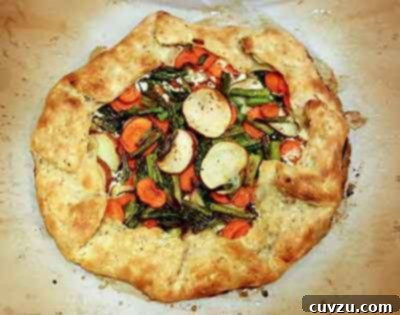
Deborah successfully tackled a gluten-free version, proving the recipe’s adaptability. She found the gluten-free dough, prepared using the box grater technique, surprisingly easy to work with despite its tendency to break, which she mitigated by rolling it between sheets of plastic wrap for easier transfer and less breakage. She also appreciated the savory contrast of pepper against the sweet vegetables and creamy base. Her family particularly loved the crisp, flavorful crust. Deborah noted the galette’s consistent deliciousness whether hot, warm, or at room temperature, and suggested experimenting with different vegetables and herbs for endless variations. She found that using a large bowl for mixing minimized clean-up, a practical tip for any busy cook.
Customizing Your Vegetable Galette
One of the true joys of making a galette is its incredible adaptability. While the classic combination of carrots, potatoes, and asparagus is divine, don’t hesitate to experiment with other seasonal vegetables and flavor profiles. Consider:
- Autumn Flavors: Replace some of the root vegetables with thinly sliced butternut squash, sweet potatoes, or parsnips. A sprinkle of fresh thyme or sage would be a wonderful addition.
- Summer Medley: Cherry tomatoes, zucchini ribbons, bell peppers, or corn kernels could create a lighter, brighter galette. Consider adding fresh basil or oregano.
- Hearty Greens: Wilted spinach, Swiss chard, or kale can add a delightful earthy note. Just be sure to squeeze out excess moisture before adding to the galette.
- Cheese Varieties: While Parmesan is excellent, experiment with Gruyère, sharp cheddar, goat cheese, or even a dollop of fresh ricotta for different creamy textures and tangy notes in your sauce.
- Spice It Up: A pinch of red pepper flakes with the vegetables can add a subtle heat, or consider a dash of smoked paprika for depth.
The lemon zest in this recipe adds a bright, fresh lift that beautifully complements the roasted vegetables and rich cheese. However, feel free to swap it for a different herb or spice if you’re exploring new combinations. This galette truly is a canvas for your culinary creativity!
Serving Suggestions
This vegetable galette is a star on its own, substantial enough to be a main course, especially when paired with a light accompaniment. Here are a few ideas to complete your meal:
- Simple Green Salad: A fresh, crisp green salad with a light vinaigrette is the perfect counterpoint to the richness of the galette. The acidity will cut through the cheese and butter, refreshing your palate.
- Soup Course: For a heartier meal, start with a light vegetable broth-based soup or a creamy tomato soup.
- Protein Pairing: If you’re not strictly vegetarian, a grilled chicken breast or a pan-seared piece of fish would complement the galette beautifully without overpowering its flavors.
- Wine Pairing: A crisp Sauvignon Blanc or a light-bodied Pinot Noir would pair wonderfully with the earthy vegetables and creamy cheese.
Whether you’re hosting a casual brunch, a family dinner, or simply enjoying a quiet meal at home, this vegetable galette offers a sophisticated yet comforting option that’s sure to impress.