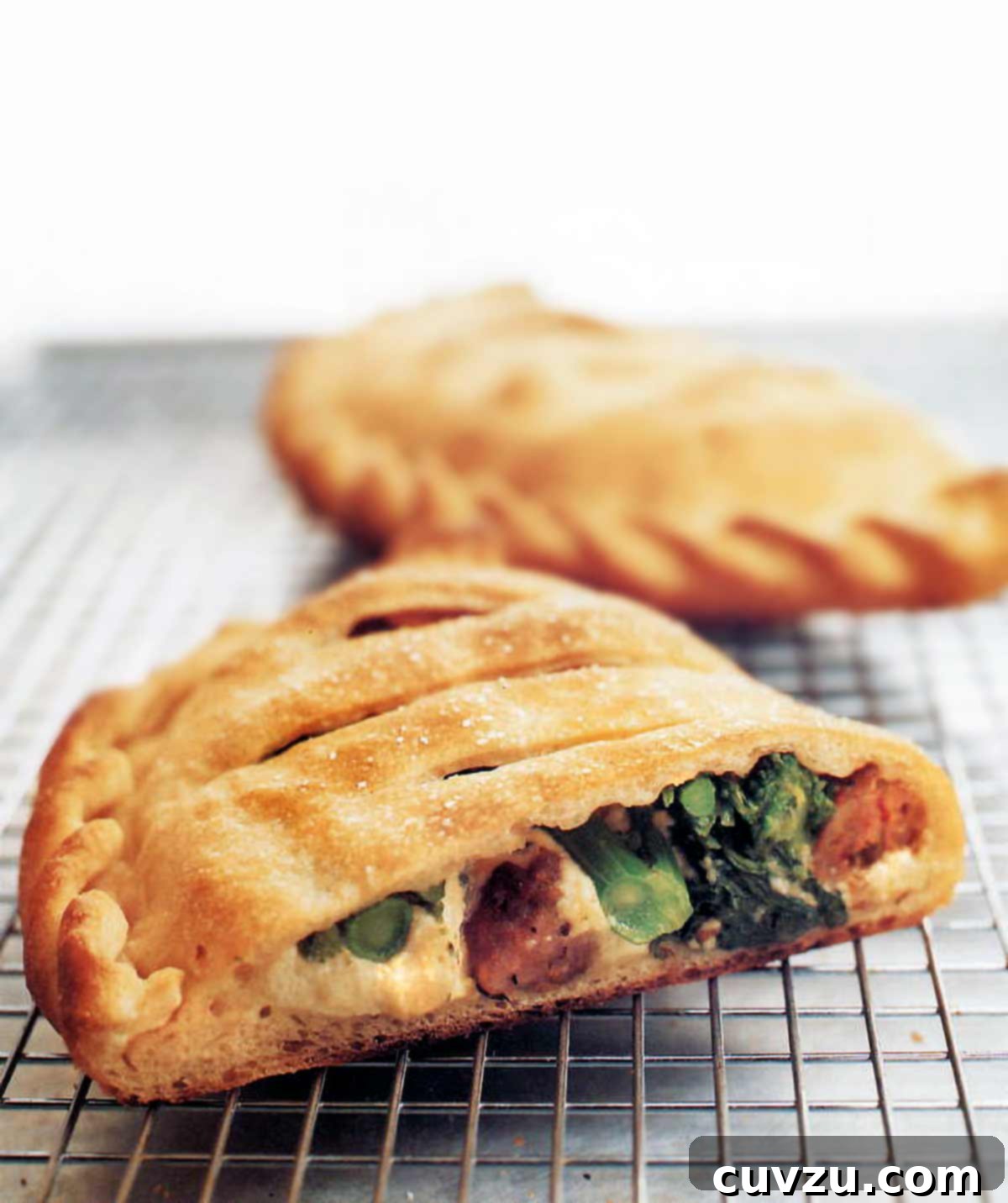
Embark on a culinary journey to the heart of Italy with our irresistible recipe for Calzones with Sausage and Broccoli Rabe. These traditional Italian stuffed breads offer a symphony of flavors, where savory sausage, slightly bitter broccoli rabe, and a rich blend of cheeses are encased in a golden, crispy crust. Far more than just a folded-over pizza, a calzone is a delightful parcel of indulgence, perfect for a hearty family meal or a satisfying gathering with friends.
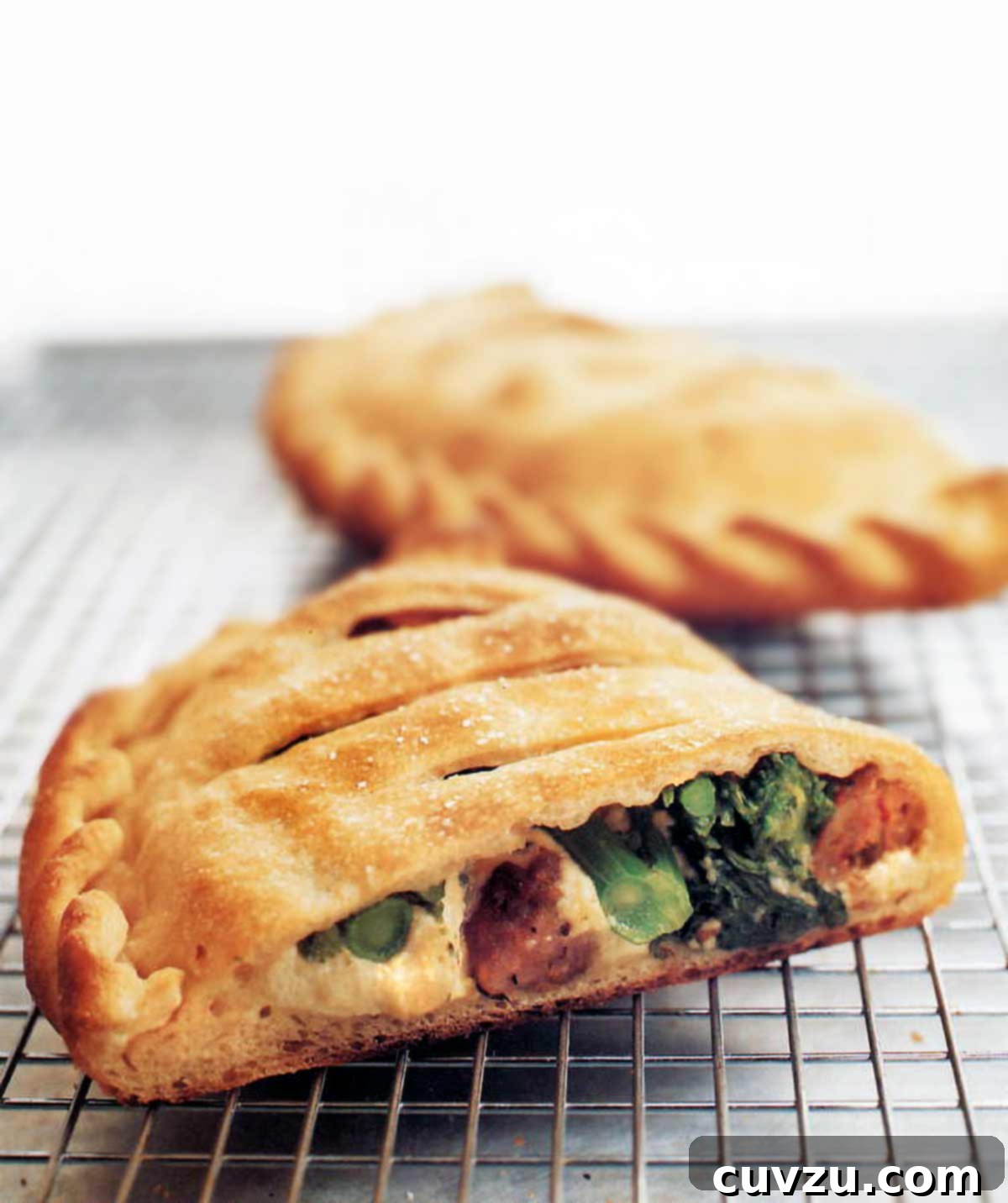
This recipe unites several beloved Italian flavors in a unique and utterly satisfying way, elevating beyond the ordinary pizza experience. While the steps may appear extensive, we assure you they are thoughtfully detailed, making the process straightforward and achievable for home cooks of all levels. Consider it a rewarding afternoon project, culminating in a truly spectacular dinner that will impress even the most discerning palates. The robust combination of seasoned sausage, the distinctive bite of broccoli rabe, and the creamy richness of ricotta, mozzarella, and Parmesan, all melded with fragrant garlic and a whisper of red pepper flakes, creates a dish that’s both comforting and exciting. Get ready to create a masterpiece that tastes like it came straight from a charming Italian trattoria.
Homemade Calzones with Sausage and Broccoli Rabe: An Ultimate Guide
Dive into the world of Italian stuffed bread with this comprehensive guide to crafting perfect calzones. From mastering the dough to achieving the ideal balance of savory fillings, we’ll walk you through every step to ensure a delicious and authentic experience.
Calzones with Sausage and Broccoli Rabe FAQs
While both calzones and strombolis are Italian-American culinary creations involving dough and delicious fillings, they possess distinct characteristics. A calzone, as featured in this recipe, is traditionally a half-moon-shaped, folded-over pizza. It’s essentially a stuffed pizza, with the ingredients typically placed on one half of the dough before being sealed. The primary cheese in a calzone is often ricotta, providing a creamy texture.
A stromboli, on the other hand, is more akin to a rolled-up pizza or a savory log. Its ingredients, which often include sliced meats and various cheeses (but typically less or no ricotta), are layered across the entire dough and then rolled up like a jelly roll before baking. While ingredients for strombolis can be quite diverse, calzones traditionally offer more flexibility in the choice of fillings, allowing you to easily adapt to your mood or whatever fresh ingredients you have on hand. Think of a calzone as a rustic, individual pocket of flavor, whereas a stromboli is often sliced and shared.
Broccoli rabe, also known as rapini, is a vibrant green cruciferous vegetable that, while visually similar to broccoli, offers a distinct flavor profile. Unlike its sweeter cousin, broccoli rabe is celebrated for its earthy and slightly bitter taste, which adds a wonderful complexity to dishes. Popular in Mediterranean and Southern Italian cuisine, all parts of the plant – the leaves, small buds (which resemble miniature broccoli florets), and tender stems – are edible. Its bitterness pairs beautifully with rich and savory ingredients like Italian sausage and creamy cheeses, cutting through the richness and providing a delightful counterpoint. When cooked correctly, its texture remains slightly crisp, contributing a pleasant chewiness to the calzone filling.
There’s a unique satisfaction in crafting your own calzones from scratch that simply can’t be replicated by takeout. Homemade calzones allow you complete control over the quality and freshness of ingredients, from the rich whole-milk ricotta to the spicy or sweet Italian sausage. You can customize the filling to your exact preferences, ensuring every bite is tailored to your taste. Furthermore, the process of making the dough, watching it rise, and shaping your own calzones is a rewarding culinary experience. The result is a calzone with a superior crust – crispy on the outside, wonderfully chewy on the inside – and a filling that bursts with vibrant, well-balanced flavors that are often missing in commercially prepared versions.
Absolutely! This recipe is ideal for staggered preparation, which helps manage the total cooking time and makes it more accessible for busy schedules. The dough can be made a day in advance and left to rise slowly in the refrigerator overnight. This slow fermentation can even enhance the flavor and texture of the crust. The cheese filling can also be mixed and stored in the refrigerator for up to 24 hours. The sausage and broccoli rabe mixture can be cooked, cooled, and refrigerated a day ahead as well. Just bring the filling to room temperature before assembling the calzones to ensure even cooking. This strategic planning turns a longer recipe into a manageable and enjoyable cooking project.
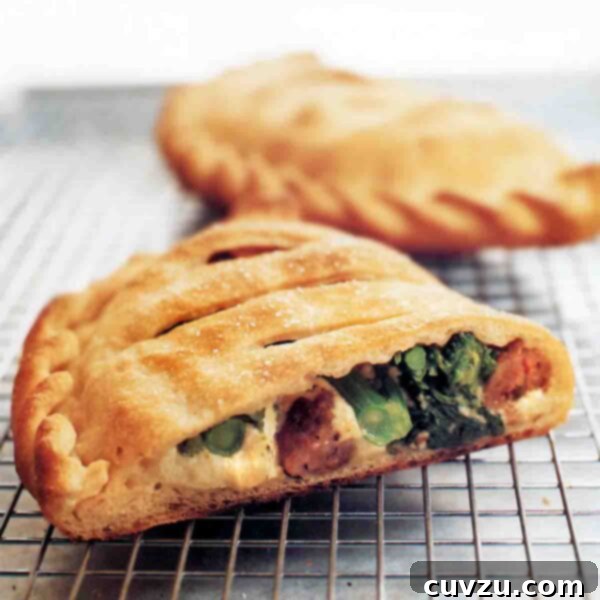
Calzones with Sausage and Broccoli Rabe: A Hearty Italian Delight
Recipe by David Leite
Equipment You’ll Need
-
Pizza stone or a couple of cast-iron skillets
-
Stand mixer with a dough hook (for ease)
-
Large nonstick skillet
-
Baking sheets and parchment paper
-
Rolling pin
Ingredients for Perfect Calzones
For the Fluffy Calzone Dough
- Nonstick spray oil (optional, for convenience)
- 4 cups bread flour, plus more for the work surface (bread flour provides a chewier crust)
- 1 envelope instant yeast, (approximately 2 1/4 teaspoons)
- 1 1/2 teaspoons table salt
- 2 tablespoons extra-virgin olive oil, plus additional for coating the bowl
- 1 1/2 cups plus 1 tablespoon warm water, (ideally around 110° F [43°C] for optimal yeast activation)
For the Rich Calzone Filling
- 15-ounce container whole-milk ricotta cheese (for creamy texture)
- 8 ounces mozzarella cheese, shredded (about 2 cups, low-moisture is best)
- 1 1/2 ounces finely grated Parmesan cheese, (roughly 3/4 cup, for sharp flavor)
- 1 large egg yolk (to bind the cheese mixture)
- 1 tablespoon fresh chopped oregano leaves (or 1 teaspoon dried)
- 1/4 teaspoon table salt
- 1/8 teaspoon ground black pepper
- 8 ounces hot or sweet Italian sausage (choose your preference for heat)
- 12 ounces broccoli rabe (rapini, for its distinctive bitter note)
- 1 tablespoon minced garlic (freshly minced for best flavor)
- 1/2 teaspoon red pepper flakes (adjust to your spice preference)
- 1 tablespoon cold water, plus more as needed (for cooking broccoli rabe)
- 1/8 teaspoon table salt (for cooking broccoli rabe)
- Extra-virgin olive oil, for brushing the calzones (for a golden, crispy crust)
- Kosher salt (for sprinkling before baking)
Step-by-Step Instructions for Homemade Calzones
Part 1: Crafting the Perfect Calzone Dough
-
In the large bowl of a stand mixer, begin by thoroughly whisking together the bread flour, instant yeast, and 1 1/2 teaspoons of table salt until they are well combined. Attach the bowl to your mixer and fit it with the dough hook. On a medium-low speed setting, first drizzle in the 2 tablespoons of extra-virgin olive oil, allowing it to incorporate into the dry ingredients. Then, gradually add the warm water in a slow, steady stream. Continue to mix for approximately 10 minutes, or until a smooth, elastic, and slightly tacky dough forms. The dough should pull away from the sides of the bowl.
-
Lightly coat a clean, large bowl with a little olive oil or nonstick spray. Carefully remove the dough from the mixer, shape it into a neat ball, and place it into the oiled bowl, seam side down. Cover the bowl tightly with plastic wrap that has also been lightly slicked with oil or nonstick vegetable spray. Allow the dough to rise in a warm, draft-free spot until it has proudly doubled in size. This will typically take 1 1/2 to 2 hours, depending on the warmth of your environment.
Part 2: Preparing the Flavorful Calzone Filling
-
While your dough is diligently rising, prepare the rich cheese mixture. In a spacious bowl, combine the whole-milk ricotta, shredded mozzarella, finely grated Parmesan cheese, egg yolk, fresh chopped oregano, 1/4 teaspoon of table salt, and ground black pepper. Mix these ingredients thoroughly until well blended. Cover the bowl with plastic wrap and refrigerate it until the dough is ready, ensuring the mixture stays chilled and fresh.
-
Next, tackle the sausage. Remove the casing from your hot or sweet Italian sausage. Heat a 12-inch nonstick skillet over medium-high heat. Add the sausage to the skillet and cook, stirring continuously with a wooden spoon and breaking it into small, uniform 1/2-inch crumbles. Continue cooking until the sausage is no longer pink, which usually takes about 5 minutes. Stir in the minced garlic and red pepper flakes, cooking for an additional 15 seconds or so, until the garlic becomes fragrant and the spices release their aroma. Be careful not to burn the garlic.
-
While the sausage mixture is cooking, prepare the broccoli rabe. Wash and thoroughly dry the broccoli rabe. Trim off the tough ends of the stalks, cutting approximately 1 inch below the leaves. Discard these ends. Then, cut the remaining broccoli rabe crosswise into 1-inch pieces.
-
Stir the prepared broccoli rabe into the skillet with the cooked sausage. Add 1 tablespoon of cold water and 1/8 teaspoon of salt. Continue to cook, stirring frequently, until the broccoli rabe is still slightly crisp but almost tender, and all the added water has evaporated. This process typically takes about 5 minutes. If the broccoli rabe seems too firm, add an additional tablespoon of water at a time and continue cooking until it reaches your desired tenderness. The goal is “almost tender,” retaining some bite.
-
Transfer the entire contents of the skillet to a plate generously lined with paper towels. Allow the mixture to cool completely to room temperature. Once cool, use additional paper towels to gently pat the sausage and broccoli rabe mixture dry. This crucial step helps absorb any excess moisture, preventing your finished calzones from becoming soggy.
Part 3: Assembling and Baking Your Calzones
-
Position your oven rack to the lowest possible setting. Place a pizza stone or a couple of cast-iron skillets (turned upside down) directly on this rack. Preheat your oven to a blazing 500 °F (260°C) for at least 30 minutes. This intense heat is key to achieving a beautifully crispy crust. While the oven preheats, line a large baking sheet with parchment paper and lightly slick it with olive oil.
-
Once your dough has risen, gently turn it out onto a clean, unfloured work surface. Divide the dough evenly in half, and then cut each half into three equal pieces, resulting in six portions. Gently shape each piece of dough into a smooth ball. Transfer these dough balls to the oiled parchment-lined baking sheet, ensuring they have space between them. Cover them loosely with plastic wrap that you’ve also slicked with a little oil. Let the dough balls rest for a minimum of 15 minutes, but no more than 30 minutes. This resting period allows the gluten to relax, making the dough easier to roll.
-
Cut eight 9-inch squares of parchment paper. Take one piece of rested dough, keeping the others covered to prevent drying. Lightly flour your work surface and rolling pin for easier handling. Roll the dough into a uniform 9-inch round. Place this dough round onto one of your parchment squares, then cover it with another parchment square. Repeat this process: roll out another dough ball, place it on top of the first covered round, and cover it again with parchment. Continue until you have a stack of three dough rounds, with the top round also covered by a parchment square. Form a second stack of three rounds using the remaining dough balls and parchment squares.
-
Now, it’s time to fill! Remove the top parchment square from the first stack of dough rounds and place the dough round on your lightly floured work surface. (If any dough rounds have shrunk slightly, gently re-roll them to achieve the 9-inch diameter.) Take approximately 1/6th of your prepared ricotta cheese mixture and spread it evenly over the bottom half of the dough round, leaving a clear 1-inch border around the edge. Next, place about 1/6th of the cooled sausage and broccoli rabe mixture on top of the cheese filling. Distribute it evenly, but avoid overfilling.
-
Carefully fold the top half of the dough over the filling-covered bottom half, ensuring a 1/2-inch border remains uncovered around the edge. Gently press your fingertips onto the top layer of dough to release any trapped air. To seal the calzone, start at one end of the seam. Place your index finger diagonally across the edge of the dough. Using your thumb, gently pull the bottom layer of dough up and over the tip of your index finger, pressing firmly to create a tight seal. Continue this crimping motion along the entire seam until the calzone is completely sealed, creating a decorative edge. With a very sharp paring knife or a razor blade, make 5 slits, each about 1 1/2 inches long, diagonally across the top of the calzone. These slits are vital as they allow steam to escape during baking, preventing the calzones from bursting and ensuring a crispier crust. Make sure to cut only through the top layer of dough, not completely through to the filling.
-
Using a pastry brush or your fingertips, lightly brush the tops and sides of each assembled calzone with extra-virgin olive oil. This will contribute to a beautiful golden-brown color and a crisp exterior. Then, lightly sprinkle each calzone with a pinch of kosher salt for added flavor. Trim any excess parchment paper from around the calzones, leaving just enough to handle them.
-
Carefully slide the calzones, along with their parchment paper, onto a pizza peel or an upside-down baking sheet. From there, deftly slide them onto the preheated pizza stone or the bottom of your hot cast-iron skillets in the oven. You will likely need to bake the calzones in batches; typically, two calzones will fit comfortably on a standard baking stone. Bake for about 15 minutes, or until the calzones achieve a magnificent golden-brown color and are puffed up and gloriously crispy.
-
Once baked to perfection, carefully slide the parchment and calzones back onto your pizza peel or upside-down baking sheet. Transfer them to a wire rack to cool. Gently remove the calzones from the parchment paper. If you can manage to resist the enticing aroma, allow them to cool for a brief 5 minutes before slicing and serving. This short cooling period helps the filling set and prevents scorching your tongue, allowing you to fully savor every delicious bite.
Tips for Calzone Success
- Don’t Rush the Rise: A well-risen dough is key to a light and airy calzone crust. Ensure your yeast is fresh and your water temperature is correct for optimal activity.
- Moisture is the Enemy: Patting the sausage and broccoli rabe mixture thoroughly dry is critical. Excess moisture can make your calzones soggy.
- Don’t Overfill: While tempting, overfilling can lead to bursting calzones and difficult sealing. Aim for a generous but manageable amount of filling.
- Preheat Your Baking Surface: A screaming hot pizza stone or cast-iron skillet provides a burst of heat to the bottom of the dough, creating that coveted crispy crust.
- Serve with Sauce: Although delicious on their own, calzones are often enjoyed with a side of warm marinara or spicy tomato sauce for dipping.
Variations and Substitutions
- Vegetable Swaps: If broccoli rabe isn’t available or preferred, consider using sautéed spinach, Swiss chard, or even roasted red peppers. Ensure any leafy greens are thoroughly squeezed dry to remove excess water.
- Sausage Alternatives: Ground chicken or turkey sausage can be used for a lighter option. For a vegetarian calzone, replace the sausage with sautéed mushrooms, bell peppers, or crumbled plant-based sausage.
- Cheese Variations: Experiment with provolone, fontina, or even a smoked mozzarella for different flavor profiles.
- Herb It Up: Fresh basil, thyme, or a blend of Italian herbs can be added to the cheese mixture for aromatic depth.
Adapted From
This remarkable recipe is expertly adapted from the revered Baking Illustrated cookbook, a testament to its foundational quality and delicious results. This classic resource provides invaluable baking wisdom.
Buy On Amazon
Nutrition Information (Approximate)
Calories: 2496 kcal
Carbohydrates: 97 g
Protein: 149 g
Fat: 167 g
Saturated Fat: 100 g
Monounsaturated Fat: 51 g
Cholesterol: 637 mg
Sodium: 2270 mg
Fiber: 4 g
Sugar: 4 g
Nutrition information is automatically calculated and should be used as an approximation only, based on average ingredient values.
Tried this recipe? Share your culinary creation!
Mention @leitesculinaria or tag #leitesculinaria on Instagram to let us see your delicious calzones!
Insights from Our Recipe Testers: Real Experiences with Calzones
Don’t just take our word for it! Our dedicated team of recipe testers put these Calzones with Sausage and Broccoli Rabe through their paces. Here’s what they had to say about the process, the flavors, and their overall experience. Their valuable feedback provides practical tips and reassurance for your own calzone-making adventure.
Courtney Nunes
These calzones with sausage and broccoli rabe were an absolute triumph for Mother’s Day dinner this year! Every guest eagerly devoured their calzones and, before leaving, made sure to ask for the recipe. While the preparation required a dedicated amount of time and effort, the phenomenal end result made every minute worthwhile. The combination of flavors was a huge hit, proving that some dishes are truly worth the investment of time.
Merlyn Cafaro
An excellent recipe that yielded truly satisfying results! While these calzones do require some time and thoughtful planning, the actual steps are not overly difficult, and the harmonious blend of flavors is utterly delicious. I found the dough came together beautifully and was surprisingly easy to manage and work with. The filling was perfectly seasoned, and let’s be honest, what could possibly be better than a delightful combination of savory sausage, fresh broccoli rabe, and an indulgent trio of Italian cheeses? These calzones are generously sized, and the filling is wonderfully abundant. I highly recommend serving them with a vibrant tomato sauce on the side for dipping. I particularly appreciate recipes like this because they lend themselves so well to creative substitutions and personal taste adjustments, especially with seasonal vegetables. The final touch of sprinkling kosher salt on the baked calzones was also a fantastic addition. My only minor complaint? I chose a particularly hot day to make them, and with the oven needing to be at such a high temperature, my kitchen became quite warm! This experience only strengthens my desire for an outdoor pizza oven!
Greg Crawford
Considering that sausage and broccoli rabe are an iconic Italian pairing, it’s no surprise that this recipe was a resounding success! The dough proved to be very cooperative and easy to handle, the cheese blend was incredibly flavorful, and the overall filling was exceptionally tasty. Dough can often be a tricky element, but the clear directions made it come together quite easily. My dough achieved a beautiful smooth and supple texture in just 6-7 minutes and doubled in about 1 1/2 hours, exactly as described. Most of the remaining steps in the recipe were straightforward. When cooking the broccoli rabe, the recipe instructs to let the water evaporate. However, I found it continued to release liquid, so I removed it from the heat a bit earlier to avoid overcooking. My other small challenge was with the instruction to take “1/6 of the cheese mix and 1/6 of the filling.” I’m not adept at eyeballing such precise divisions and seriously contemplated using a scale, but decided against it, guesstimating instead. This resulted in the final two calzones being truly stuffed – not necessarily a bad thing, but clearer measurements like “1/4 cup” or “1/2 cup” for each portion would have been more helpful. Additionally, the initial directions in Step 8 for arranging the dough stacks were a bit confusing for me, so I opted for a simpler approach (which is rare for me, as I usually stick strictly to recipes when testing!). Overall, these were minor points that didn’t detract from baking these wonderfully crispy-on-the-outside, chewy-on-the-inside, and incredibly flavorful calzones.
Daniela Trapani
While this isn’t a quick meal I’d recommend for a busy weeknight, it was an incredibly enjoyable and rewarding project for an afternoon, yielding absolutely delicious results. Everyone who tried them loved these calzones, affirming that they were well worth the effort. My stepdaughter’s boyfriend, in particular, was so impressed that he took a picture to send to his mom, playfully suggesting “she needs to step it up a notch.” These calzones are quite substantial, so they can easily be cut in half to accommodate smaller appetites or serve more people. Since I don’t own a pizza stone or a cast-iron skillet large enough to cook more than one calzone at a time, I opted to bake mine on a standard aluminum baking pan instead. I found this method worked beautifully; I was able to fit all six calzones on one full-size baking sheet and cook them in a single batch. I didn’t preheat the baking pan but simply increased the baking time to 26 minutes, and they turned out perfectly—beautifully crisp on the bottom and evenly browned. My dough took a bit longer to double, requiring 2 1/2 hours. Also, the particular sausage I used didn’t render much fat, so I added 2 teaspoons of olive oil to the pan before cooking the sausage. While an unfloured work surface was fine for dividing the dough and shaping it into balls, it was impossible to roll the dough into a 9-inch round without flouring the surface. I tried the first one this way, and it stuck stubbornly to my counter and rolling pin. With a lightly floured surface and rolling pin, rolling the dough out to a 9-inch round was no problem at all. A great recipe with fantastic results!
Victoria Filippi
This truly is an excellent recipe! The dough is nothing short of spectacular, achieving a perfect balance of texture, and the filling is absolutely delicious. The ingredient amounts are spot on for making six wonderfully large calzones. Although the recipe might appear lengthy at first glance, much of it consists of detailed, clear explanations that genuinely guide you toward making the perfect calzone. A significant portion of the work, thankfully, can be done while the dough is busy rising. The fact that the dough is kneaded in a stand mixer makes this homemade treat surprisingly simple to execute. I opted for sweet Italian sausage, and it paired wonderfully with the other flavors. The broccoli rabe cook time was precise, resulting in perfectly tender-crisp greens. The instructions for sealing the dough were exceptionally clear and easy to follow, a method I now absolutely love! I found it efficient to fill and pinch two calzones at a time, then, while they were baking on my pizza stone, prepare the next two. They emerged from the oven beautifully browned and perfectly cooked in just 10 minutes. Initially, I had a slight concern that the inherent bitterness of the broccoli rabe might overpower the other flavors, but it didn’t at all; instead, it added a delightful subtle complexity and a vibrant touch of color to the filling. For those who prefer, spinach could easily be used as a substitute. I served these magnificent calzones with a spicy marinara sauce on the side, and they were, quite simply, to die for! The recipe indeed makes six substantial servings – and trust me, they’re so good, you’ll definitely want that big serving.
Christiana Hart
My previous experiences with calzones were mainly limited to Italian takeout, where they were typically cheese-only affairs, and the mozzarella was often so dense and thick that I found it almost inedible. This recipe, with its thoughtful balance of cheese, meat, and vegetables, has completely revolutionized my opinion of calzones! Although there were quite a few steps involved in the process, much of the work could be effectively done while the dough was rising, which significantly saved overall time. I could easily envision swapping out the broccoli rabe for regular broccoli or romanesco, and I also believe lamb sausage could work wonderfully as a savory alternative. For the sausage, I used a delightful mix of two sweet Italian sausages and one hot Italian sausage for a balanced flavor profile. The dough was initially quite sticky, leading me to worry that there was too much liquid, but it firmed up beautifully as I continued to knead it. When cooking the sausage, as I didn’t have a nonstick skillet, I simply added a little oil to the pan. The instruction for sealing the dough was a bit unclear to me at first; my method involved placing my index finger on top of the top layer of the dough and using my thumb to gently pull the dough from underneath, then pressing to seal. This worked perfectly for me! Overall, a fantastic recipe that delivered on flavor and redefined my appreciation for homemade calzones.