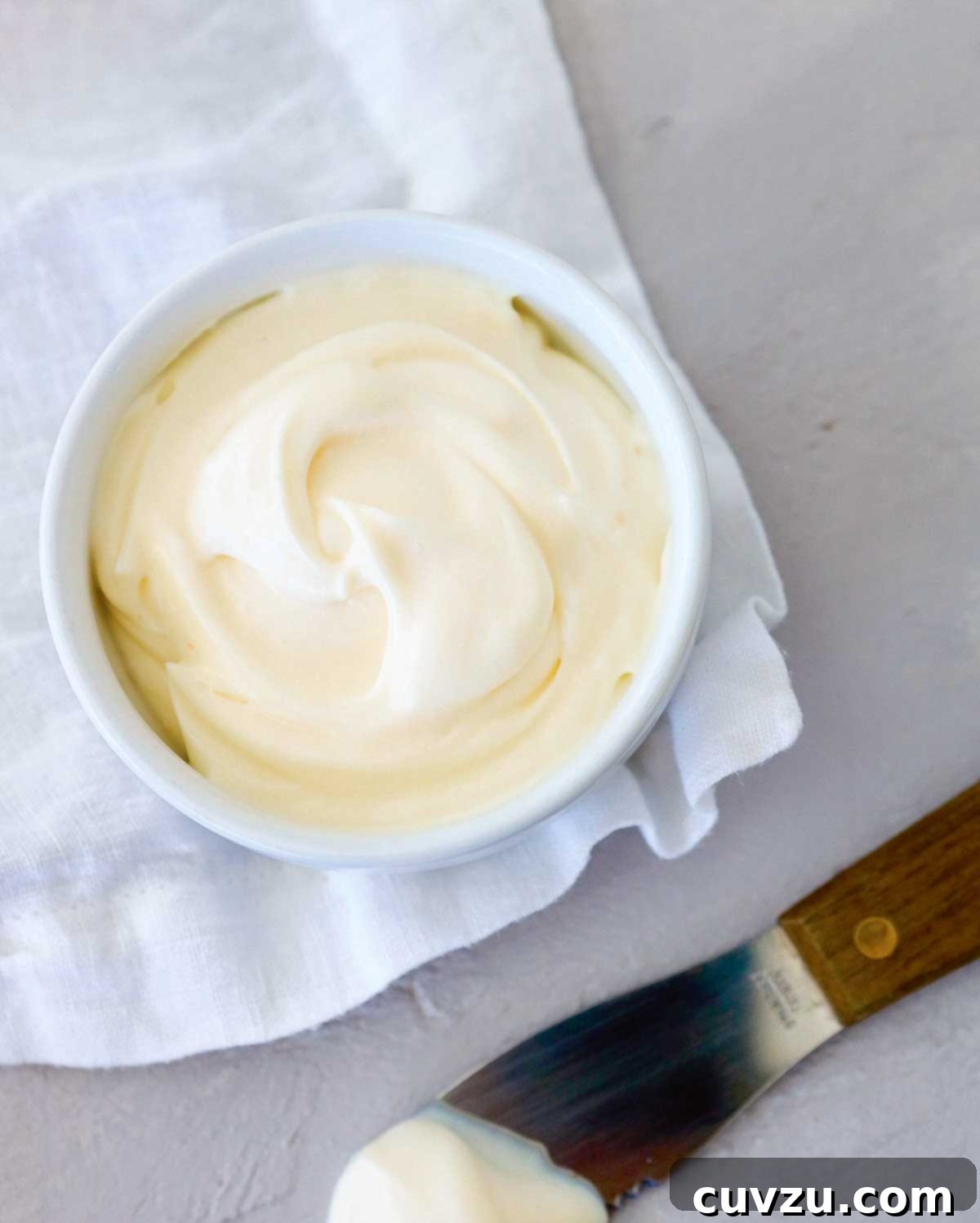
Unlock the Secret to Effortless, Creamy Homemade Mayonnaise in Just One Minute
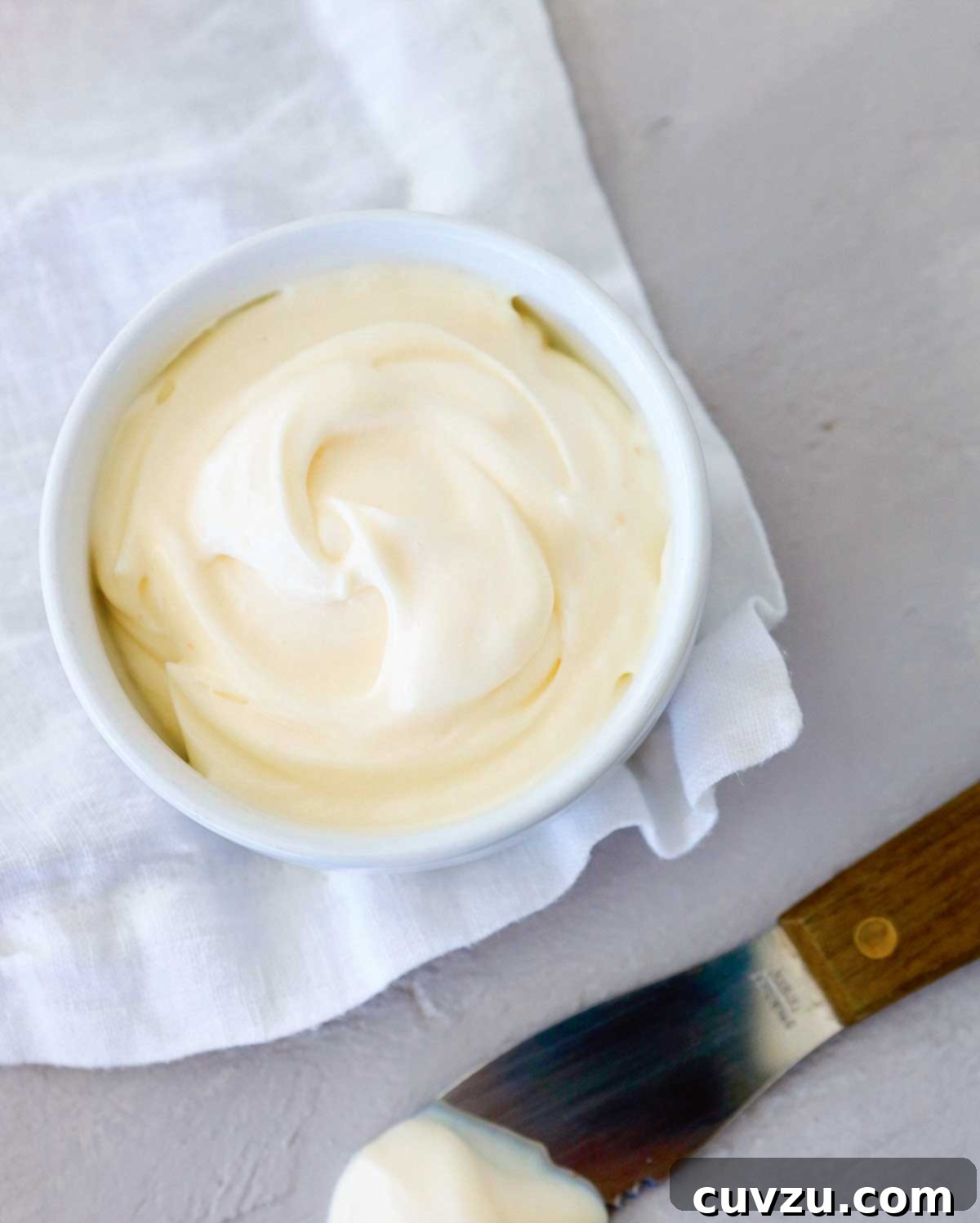
Imagine a dreamy, creamy emulsion, ready in a mere sixty seconds, perfect for slathering on sandwiches, transforming salads, or enriching any dish. This isn’t a culinary fantasy; it’s the reality of “One Minute Mayo.” The magic unfolds with just a jar and an immersion blender, eliminating the need for cumbersome appliances and extensive cleanup. This ingenious method makes creating a terrific homemade condiment not just easy, but truly a joy.
As author Michelle Smith aptly puts it, this easy homemade condiment recipe is a game-changer. Its consistent appearance across cookbooks and websites speaks volumes about its undeniable quality. This olive oil-based mayonnaise forms the perfect creamy foundation for an endless array of dressings, dips, and sauces, making it an indispensable staple in any kitchen. Beyond its incredible versatility, the sheer fun of watching it come together adds an extra layer of appeal to this remarkable recipe.
Why Homemade Mayonnaise is a Must-Try
In a world brimming with processed foods, taking a minute to whip up your own mayonnaise offers a refreshing return to wholesome, unadulterated flavors. Store-bought options, while convenient, often contain preservatives, artificial ingredients, and oils that may not align with your preferences. By making mayonnaise at home, you gain complete control over every ingredient, ensuring a fresher taste and a healthier condiment free from unwanted additives.
The immediate gratification of this “One Minute Mayo” recipe is unparalleled. Forget the painstaking process of slowly drizzling oil into a food processor or the dread of a broken emulsion. This method consistently delivers a smooth, thick, and velvety mayonnaise with minimal effort. It’s not just about saving time; it’s about elevating your culinary creations with a condiment that tastes incomparably superior to anything from a jar on a supermarket shelf.
Choosing the Right Oil for Your Mayonnaise
The type of oil you choose significantly impacts the flavor profile of your homemade mayonnaise. While this recipe traditionally calls for olive oil, we understand that its distinct, grassy notes might not appeal to everyone. To achieve a lighter, more subtle flavor, we recommend using the lightest-tasting olive oil you can find. These are often labeled as “light” or “extra-light” olive oil, which refers to their flavor intensity, not their calorie content.
If the robust flavor of olive oil isn’t your preference, don’t hesitate to experiment with other mild vegetable oils. Substituting part or all of the olive oil with options like canola, grapeseed, sunflower, or avocado oil will result in a more neutral-tasting mayonnaise. Avocado oil, in particular, is a popular choice for its mild flavor and health benefits. Whichever oil you select, ensure it is of good quality, as its taste will be prominent in your finished product. A blend of olive oil and a neutral oil can also offer a balanced flavor that many find appealing.
The Simple Science Behind the Creamy Emulsion
At its heart, mayonnaise is an emulsion—a stable mixture of two liquids that don’t typically mix, like oil and water (or in this case, egg yolk, which contains water and emulsifying proteins). The magic ingredient here is the egg yolk’s lecithin, a natural emulsifier that surrounds tiny droplets of oil and prevents them from separating. The immersion blender plays a crucial role by rapidly dispersing the oil into incredibly small droplets, which the lecithin can then effectively stabilize.
The key to a successful emulsion with an immersion blender lies in creating a powerful vortex that rapidly combines the ingredients, starting from the bottom where the egg yolk resides. By holding the blender steady initially, you allow the emulsification process to begin around the blade before slowly incorporating the rest of the oil. This controlled mixing ensures that the oil is incorporated gradually at a microscopic level, leading to that coveted thick, creamy texture without any risk of separation.
One Minute Mayonnaise
This one minute mayo whips up into a dreamy, creamy emulsion, perfect for slathering on everything. And the magic happens with just a jar and an immersion blender, which means there’s no need to haul out any heavy appliances or do a lot of dishes.
Authored by David Leite
Equipment
- Immersion blender
Ingredients
- 1 cup extra-light-tasting olive oil* (see NOTE above)
- 1 large egg
- 1 teaspoon Dijon mustard
- 1/2 teaspoon fresh lemon juice, plus more to taste
- 1/4 teaspoon salt
Instructions
-
In a tall, wide-mouthed pint-size mason jar or similar container, combine the olive oil, egg, mustard, lemon juice, and salt. Allow the ingredients to settle while you prepare your immersion blender.
-
Place an immersion blender into the liquid at the bottom of the jar, ensuring the blade is directly over the egg yolk and resting at the very bottom. This precise positioning is crucial for proper emulsification. Do not attempt to plunge the immersion blender into the oil while it is running; this will not create mayonnaise.
-
With the blender at the bottom, blend for 5 seconds without moving it to initiate the emulsification of the oil and egg. Then, very slowly move the blender up and down until the oil and egg are fully emulsified, which typically takes about 30 seconds more. If your immersion blender has multiple speeds, a low speed is ideal for this process.
-
Taste the mayonnaise, and add a dash more lemon juice, if desired, to brighten the flavor. Cover the jar and store the homemade mayonnaise in the refrigerator for up to 1 week.

Adapted From
The Whole Smiths Real Food Every Day
Buy On Amazon
Nutrition
Calories: 99 kcal
Carbohydrates: 0.04 g
Protein: 0.3 g
Fat: 11 g
Saturated Fat: 2 g
Monounsaturated Fat: 8 g
Trans Fat: 0.001 g
Cholesterol: 9 mg
Sodium: 36 mg
Fiber: 0.01 g
Sugar: 0.02 g
Nutrition information is automatically calculated, so should only be used as an approximation.
Expert Tips for Perfect One-Minute Mayonnaise Every Time
Achieving consistently perfect mayonnaise with an immersion blender is simple when you follow a few key tips, many of which come straight from our dedicated recipe testers:
- Room Temperature Ingredients: While not explicitly stated, using room temperature eggs and oil can significantly aid in the emulsification process, leading to a more stable and smoother mayo. Cold ingredients are more resistant to mixing.
- The Critical Starting Position: As emphasized by tester Irene Seales, the success of this recipe hinges on placing your immersion blender absolutely at the bottom of the jar, directly over the egg yolk. The blender’s “feet” or rim should rest firmly on the bottom. Do not lift the blender for the initial 5 seconds; let the emulsification begin at the base.
- Slow and Steady Lift: Once the initial emulsion forms at the bottom (you’ll see it turn opaque and thicken), slowly begin to lift and lower the blender, allowing the remaining oil to be drawn into the vortex and emulsify. This gradual movement is crucial for incorporating all the oil effectively.
- Choosing Your Blender Speed: Tester Danielle Roberson noted that using a low speed on immersion blenders with multiple settings works best for a gentle yet effective emulsification.
- Oil Selection Matters: Many testers, including Craig Relyea, Terri Lyons, and Helen Doberstein, found that while olive oil provides a unique flavor, a very light-tasting olive oil or a blend with neutral oils (like canola or avocado) can create a more versatile mayonnaise for various applications. Experiment to find your preferred balance.
- Adjusting Seasoning: The recipe provides a good base, but don’t hesitate to adjust the lemon juice and salt to your taste. Danielle Roberson added more lemon for a zippier flavor, and Helen Doberstein suggested extra mustard for more zing.
- Storage: Homemade mayonnaise, made with fresh eggs, should be stored in an airtight container in the refrigerator and consumed within one week for optimal freshness and safety.
Beyond the Basics: Flavorful Mayonnaise Variations
Once you master the basic one-minute mayonnaise, a world of flavor possibilities opens up. Use your homemade mayo as a canvas for endless customizations:
- Garlic Aioli: Mince 1-2 cloves of garlic and stir them into your finished mayo, or blend them in during the last few seconds for a smoother garlic flavor.
- Spicy Mayo: Incorporate a teaspoon or more of Sriracha, sambal oelek (as Terri Lyons did), or your favorite hot sauce for a fiery kick.
- Herb Mayonnaise: Finely chop fresh herbs like chives, parsley, dill, or tarragon and fold them into the mayo. This is excellent for fish or chicken.
- Smoked Paprika Mayo: Add a teaspoon of smoked paprika for a rich, smoky depth perfect for burgers or roasted vegetables.
- Pesto Mayo: Blend in a tablespoon or two of homemade or store-bought pesto for an Italian-inspired condiment.
- Curry Mayo: Stir in a half-teaspoon of curry powder for an exotic twist that pairs well with chicken or egg salads.
Creative Ways to Enjoy Your Homemade Mayonnaise
Your freshly made mayonnaise is incredibly versatile. Here are just a few ideas to put it to good use:
- Sandwiches and Wraps: Elevate any sandwich from simple turkey to a gourmet BLT.
- Dressings and Dips: Form the base for creamy salad dressings (like a ranch or Caesar) or delicious dips for vegetables and chips.
- Salad Staples: Essential for classic potato salad, macaroni salad, coleslaw, tuna salad, or chicken salad, as several testers highlighted.
- Grilled Cheese Upgrade: As tester Terri Lyons discovered, spreading mayonnaise on the outside of your bread before grilling creates an unbelievably crispy, golden crust on grilled cheese sandwiches.
- Sauce for Seafood: A perfect accompaniment for grilled fish, crab cakes, or steamed artichokes (as Irene Seales suggested).
- Marinades: Use it as a tenderizing and flavorful base for chicken or pork marinades.
Insights from Our Recipe Testers: The Proof is in the Pudding (or Mayo!)
Our team of dedicated recipe testers put this “One Minute Mayonnaise” through its paces, and the unanimous verdict is in: it’s a revelation. Common themes emerged from their experiences, solidifying this recipe’s status as a go-to for homemade condiments.
Danielle Roberson praised its speed and fool-proof nature, declaring it the “stuff of aioli dreams.” Her meticulous notes confirmed the accurate timing and praised the minimal cleanup, even using a Pyrex measuring cup for convenience. She, like many others, adjusted the lemon juice to her preference, highlighting the recipe’s adaptability.
Craig Relyea was astonished by the ease of creating mayo with an immersion blender, appreciating it as a welcome alternative to the tedious slow-drip method. His feedback underscored the importance of oil choice, finding pure olive oil too pronounced for his taste, and opting for a more neutral oil in the future. This reiterates the personal preference aspect of oil selection.
Terri Lyons echoed the sentiments of speed, simplicity, and deliciousness. She, too, preferred a combination of olive oil and canola for a neutral base, allowing her to control the final flavor. Her extensive testing—using the mayo in egg salad, grilled cheese, salad dressing, and a dipping sauce—demonstrated its incredible versatility, leading her to conclude she’ll be making it often.
Chelsea W. cemented the recipe’s “TC” (Tester’s Choice) status, hailing its flavorful, fluffy, creamy, and spreadable texture. She noted that after past frustrations with food processor methods, the immersion blender in a wide-mouth mason jar is the only way she’ll make mayo going forward. Her use of a ¾ cup olive oil and ¼ cup canola blend also highlighted a successful strategy for mitigating a strong olive oil flavor while retaining its depth.
Helen Doberstein, a first-timer in homemade mayonnaise, initially faced a strong olive oil taste but found success with a lighter olive oil. She confirmed its ease and deliciousness, emphasizing that it might not be as thick as store-bought but is “very nice.” Her clever tip for salvaging an overly olive-flavored batch—by adding dry mustard, onion, lemon, and tarragon for a sandwich spread—is invaluable.
Finally, Irene Seales provided an incredibly detailed and insightful review, calling the immersion blender method a “brilliant hack.” She meticulously explained the crucial “devil in the details” of positioning the immersion blender at the bottom, directly over the yolk, and the slow lifting technique. Her experience with different blender types and the emphasis on starting at the bottom to avoid “sad liquid” failures makes her review essential reading for anyone trying this recipe. She also affirmed the versatility, noting its suitability for artichokes and suggesting adding herbs.
The collective experience of our testers consistently proves that this one-minute mayonnaise recipe is not only incredibly easy and quick but also yields a delicious, adaptable condiment that can revolutionize your kitchen. It’s a back-pocket tool for home cooks, guaranteeing fresh, perfect mayo whenever inspiration strikes.
Mention @leitesculinaria or tag #leitesculinaria!