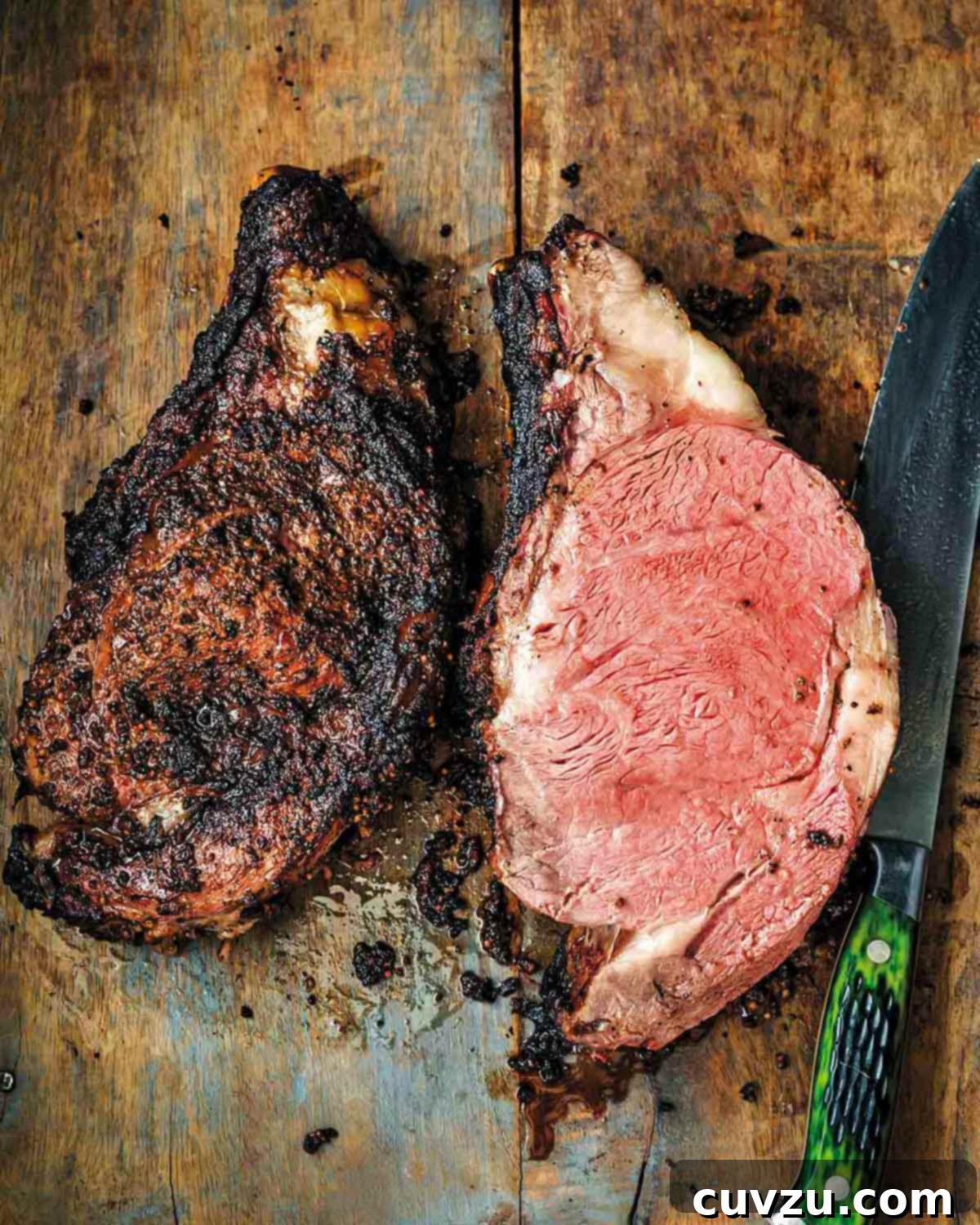
Prepare for an unforgettable culinary experience with this meticulously crafted smoked prime rib recipe. Coated in a unique sugar spice rub and generously slathered with a robust horseradish mustard mixture, this prime rib slowly absorbs a deep, tantalizing smoky flavor that transforms it into what many consider the finest prime rib they’ve ever tasted. It’s not just a meal; it’s a centerpiece, perfect for holidays, special occasions, or whenever you crave an extraordinary beef roast.
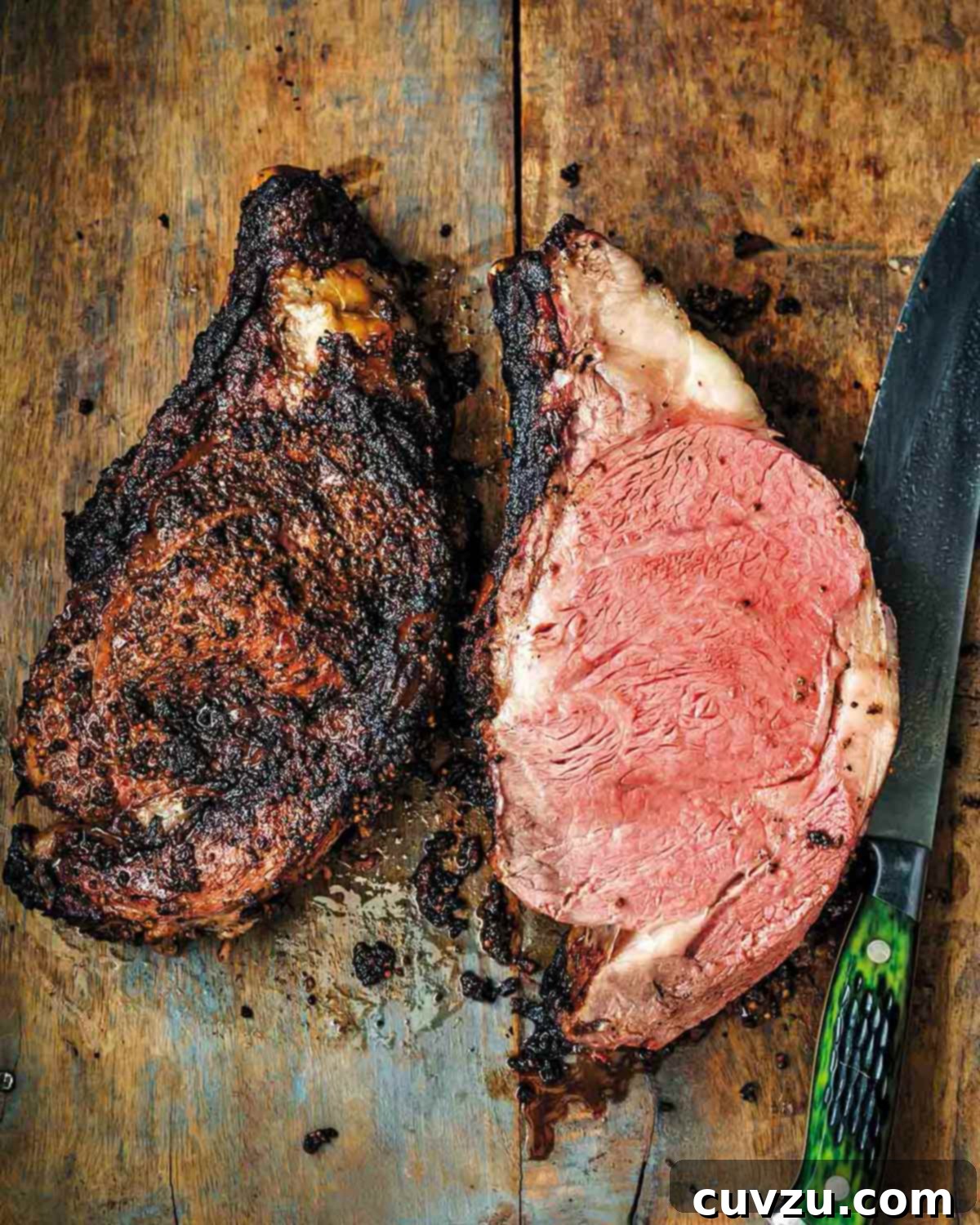
Many home cooks believe they’ve mastered the art of prime rib, but this smoked version invites a complete reevaluation. As Angie Zoobkoff aptly puts it, “The spice rub in tandem with the gentle infusion of smoke produces a prime rib unlike any other.” This recipe isn’t just about cooking; it’s about elevating a classic to new heights, delivering a depth of flavor and tenderness that will impress even the most discerning palates.
Why Smoke Your Prime Rib for Unparalleled Flavor?
Smoking prime rib offers a distinct advantage over traditional roasting methods, introducing a complex flavor profile that transforms the beef into something truly spectacular. Unlike an oven, a smoker imparts a gentle, aromatic essence deep into the meat, creating a culinary masterpiece with minimal effort.
- Unrivaled Flavor Depth: The slow, steady infusion of wood smoke adds layers of savory, often slightly sweet or fruity notes, complementing the rich beefiness of the prime rib without overwhelming it.
- Exceptional Tenderness: Low and slow cooking in a smoker breaks down connective tissues, resulting in an incredibly tender, melt-in-your-mouth texture.
- Superior Bark and Crust: The combination of the smoke, rub, and consistent temperature promotes the formation of a flavorful, crisp “bark” on the exterior of the roast, a texture highly sought after in barbecue and often difficult to achieve in a conventional oven.
- Hands-Off Cooking: Once the smoker is dialed in, the cooking process is largely hands-off, allowing you to focus on other aspects of your meal or simply enjoy your company.
- Frees Up Oven Space: Especially valuable during holidays or large gatherings, smoking your prime rib means your oven remains free for side dishes, desserts, or other culinary preparations.
For those seeking to elevate their holiday roast or create an unforgettable dinner, smoking is the definitive method for achieving a prime rib that stands apart.
Choosing the Perfect Prime Rib for Your Smoker
The journey to an exceptional smoked prime rib begins with selecting the right cut of meat. Understanding the nuances of prime rib can significantly impact the final taste and texture of your dish.
Bone-in vs. Boneless
- Bone-in Prime Rib: Often preferred by chefs and enthusiasts, the bones act as natural insulation, helping the roast cook more evenly and retain moisture. They also add a rich, savory flavor to the meat as it cooks. While carving might be slightly more challenging, the flavor benefits are undeniable.
- Boneless Prime Rib: Easier to carve and can be a good option if you prioritize convenience. However, it might cook slightly faster and could potentially lose a bit more moisture. If choosing boneless, ensure it’s tied securely to maintain its shape.
Dry-Aged vs. Regular
Dry-aging is a process where beef is stored in a controlled environment to allow natural enzymes to break down muscle tissue, resulting in more tender meat and a concentrated, richer, nuttier flavor. While more expensive, a dry-aged prime rib takes the flavor profile of your smoked roast to an entirely new level, adding a depth that perfectly complements the smoke.
Size and Quality
Aim for a prime rib that is well-marbled, meaning it has fine streaks of fat distributed throughout the muscle. Marbling is crucial for tenderness and flavor. For serving, a good rule of thumb is to allow approximately 1 pound of bone-in prime rib per person, or about 1/2 to 3/4 pound of boneless prime rib per person. When purchasing, talk to your butcher; they can often guide you to the best quality options available.
What is the Best Wood to Smoke Prime Rib With?
Given the exquisite quality—and investment—of prime rib, selecting the right smoking wood is paramount to enhancing its natural beefy flavor without overpowering it. The goal is to complement, not dominate.
- Recommended Woods (Mild & Fruity):
- Apple Wood: Offers a mild, sweet, and fruity smoke that is perfect for beef. It imparts a delicate flavor that enhances the prime rib without being aggressive.
- Cherry Wood: Similar to apple, cherry provides a slightly sweeter, fruitier smoke. It also gives the meat a beautiful mahogany color, making for a stunning presentation.
- Pecan Wood: A bit richer than apple or cherry but still milder than oak or hickory. Pecan offers a nutty, sweet flavor that pairs wonderfully with beef.
- Maple Wood: Provides a subtle, sweet, and mild smoke, ideal for those who prefer a very light smoky essence.
- Woods to Use with Caution (Stronger Flavors):
- Hickory Wood: While a barbecue staple for pork and chicken, hickory can be quite strong and pungent. It risks overwhelming the delicate flavor of prime rib, so if used, do so sparingly or in a blend.
- Oak Wood: Oak provides a medium-to-strong smoky flavor, which can be good for hearty cuts of beef. However, for prime rib, it might still be too intense for some palates. If you enjoy a robust smoke, use white oak in moderation.
When smoking prime rib, opt for a wood that yields a gentle, clean smoke. This ensures the beef’s inherent richness shines through, accented beautifully by a nuanced smoky aroma. You can use wood chips (for shorter smokes or gas/electric smokers), wood chunks (for longer smokes in charcoal or offset smokers), or pellets (for pellet grills), depending on your smoker type.
Smoked Prime Rib: The Ultimate Recipe
David Leite
Mains
American
6 to 8 servings
1174 kcal
30
2 30
3
Equipment
-
Smoker (pellet, electric, or charcoal); wood chips, chunks, or pellets (apple, cherry, or pecan recommended)
-
Reliable probe thermometer for monitoring internal meat temperature
-
Large cutting board and sharp carving knife
-
Small bowl for mixing the rub
Ingredients
- 5 pounds dry-aged bone-in prime rib
- 1/4 cup kosher salt
- 1/4 cup freshly ground black pepper
- 1 tablespoon yellow mustard seeds
- 1 tablespoon granulated sugar
- 3 tablespoons horseradish mustard
Instructions
-
Prepare your smoker according to the manufacturer’s directions, preheating it to a temperature of 325°F (160°C). Allow the prime rib to rest at room temperature while the smoker comes up to temperature, which typically takes about an hour.
-
In a small bowl, combine the kosher salt, freshly ground black pepper, yellow mustard seeds, and granulated sugar. Mix thoroughly until all ingredients are well incorporated, forming your flavorful spice rub.
-
Carefully pat the entire surface of the prime rib dry with paper towels. This step is crucial for achieving a crispy exterior. Next, evenly coat the meat with the horseradish mustard, ensuring it adheres well. Finally, generously season all sides of the prime rib with the prepared spice mixture. It’s perfectly normal if you have some spice mixture remaining.
-
Once your smoker is fully heated and producing a clean, light blue smoke, carefully place the seasoned prime rib inside. Cook, maintaining the smoker’s temperature as consistently as possible at 325°F (160°C). Monitor the beef’s internal temperature using a reliable probe thermometer. Cook until it reaches 125°F (50°C) for rare, or 135°F (57°C) for medium-rare, which typically takes between 2 to 3 hours, depending on the size and initial temperature of your roast. Continuously monitoring the internal temperature is key to perfect results.
-
Once the desired internal temperature is reached, carefully transfer the prime rib to a clean cutting board. Tent it loosely with aluminum foil and allow it to rest undisturbed for 20 to 30 minutes. This resting period is vital, as it allows the juices to redistribute throughout the meat, resulting in a more tender and flavorful roast. After resting, slice the prime rib to your desired thickness, always carving against the grain, and serve immediately.
Adapted From
Playing With Fire
Buy On Amazon
Nutrition
Serving: 1 portion
Calories: 1174 kcal
Carbohydrates: 9 g
Protein: 53 g
Fat: 102 g
Saturated Fat: 42 g
Monounsaturated Fat: 44 g
Trans Fat: 1 g
Cholesterol: 229 mg
Sodium: 4971 mg
Fiber: 3 g
Sugar: 2 g
Nutrition information is automatically calculated, so should only be used as an approximation.
Tried this recipe?
Mention @leitesculinaria or tag #leitesculinaria!
Achieving Perfection: Smoking Techniques and Tips
Mastering the art of smoking prime rib involves a few key techniques to ensure a perfectly cooked and incredibly flavorful roast.
Temperature Control is King
Maintaining a consistent smoker temperature of 325°F (160°C) is crucial. Fluctuations can lead to uneven cooking or a tougher texture. Use your smoker’s controls and, if necessary, adjust vents (for charcoal smokers) or settings (for electric/pellet smokers) to keep the temperature steady.
The Importance of Internal Temperature
The only true way to gauge doneness is with a reliable probe thermometer. Insert it into the thickest part of the roast, avoiding bone. Here are the target temperatures:
- Rare: 125°F (50°C)
- Medium-Rare: 130-135°F (54-57°C) – This is often recommended for prime rib to maximize tenderness and juiciness.
- Medium: 135-140°F (57-60°C)
Remember, the meat will continue to cook and rise by a few degrees during the resting period, so pull it off the smoker just before it reaches your desired final temperature.
“Clean Smoke” is Key
When you start your smoker, it might produce thick, white smoke. This “dirty smoke” can impart a bitter flavor. Wait until the smoke thins out and becomes almost invisible or a light blue hue (often called “thin blue smoke”) before adding your prime rib. This ensures you get a pleasant, aromatic smoky flavor.
Don’t Peek Too Often!
Opening the smoker lid or door frequently allows heat and smoke to escape, extending cooking time and potentially impacting the smoke infusion. Trust your probe thermometer and resist the urge to peek until absolutely necessary.
The Crucial Rest Period for Juicy Results
Once your prime rib reaches the desired internal temperature, the cooking process isn’t quite finished. The resting period is arguably as important as the smoking itself, and skipping it is a common mistake that can lead to dry meat.
When meat cooks, its muscle fibers contract, pushing juices towards the center. If you slice into the roast immediately, these juices will simply run out onto the cutting board, leaving your prime rib less succulent. Resting allows these muscle fibers to relax and reabsorb those delicious juices, ensuring every slice is as moist and tender as possible.
After removing the prime rib from the smoker, transfer it to a clean cutting board and tent it loosely with aluminum foil. Allow it to rest for at least 20 to 30 minutes, or even up to 45 minutes for larger roasts. This vital step ensures that when you carve, the juices remain locked within the meat, delivering an unparalleled eating experience.
Carving and Serving Your Smoked Prime Rib Masterpiece
With your perfectly smoked and rested prime rib ready, the final steps involve proper carving and thoughtful pairing to complete the gourmet experience.
Carving for Success
Always carve your prime rib against the grain. This means slicing perpendicular to the direction of the muscle fibers. Cutting against the grain shortens these fibers, making each slice more tender and easier to chew. If your prime rib is bone-in, first slice along the bones to remove the entire roast, then proceed to carve the meat. Save the bones for future stocks or gnawing!
Elegant Serving Suggestions
A dish as magnificent as smoked prime rib deserves equally impressive accompaniments. Here are some ideas to create a truly memorable meal:
- Potato Pairings:
- Creamy Mashed Potatoes (especially with mascarpone or garlic)
- Old-Fashioned Potato Gratin for a rich, comforting side.
- Roasted Potatoes with Rosemary and Garlic
- Vegetable Delights:
- Roasted Asparagus with Parmesan
- Creamed Spinach or Sautéed Leafy Greens
- Grilled or roasted Brussels sprouts, perhaps with a balsamic glaze
- Green Bean Almondine
- Sauces and Condiments:
- A simple Au Jus made from the drippings (if any are collected).
- Additional Fresh Horseradish Cream for an extra kick.
- A vibrant Chimichurri or Gremolata for a fresh, herbaceous contrast.
- Wine Pairings:
Pair your smoked prime rib with robust red wines that can stand up to its richness. Cabernet Sauvignon, Merlot, Zinfandel, or a full-bodied Syrah are excellent choices.
Recipe Testers’ Reviews: Real Feedback for Real Results
Don’t just take our word for it! Our team of dedicated recipe testers put this smoked prime rib through its paces, and their feedback speaks volumes about its undeniable success.
Nekayah Snider
This smoked prime rib was divine. We wanted a nice dinner for ourselves before we saw our families for the holidays and this really fit the bill. When you need something spectacular and don’t want to fuss or worry over the meat, this is your dish. It will give you plenty of time to pull together your sides or just time for entertaining before the meal. This is goof-proof and will turn out beautifully every time.
It was extremely fast to get it ready for the smoker and we smoked it to medium rare for a total time of 2 1/2 hours. We pulled it off, let it rest, and served it with the Old-Fashioned Potato Gratin from this site and a nice Brussels sprout dish.
Greg Crawford
Not many recipes earn a perfect 10 score, but this one does in spades. The smoke flavor combined with the spice rub produces a prime rib like none other. For me, prime rib is a cut of meat for a special occasion (in this case, Christmas) and this recipe made it extra special. Everyone raved about it.
Prime rib is the perfect foil for horseradish mustard, salt, pepper, sugar, and mustard seed. These are bold flavors and you need a cut that can stand up to them. Prime rib does it.
I found that cooking the prime rib on the smoker had many advantages in addition to the flavor including being able to use the oven for other dishes and no messy oven when the meat was finished cooking.
Take the prime rib out of the refrigerator an hour or so before it goes on the smoker so you’re not putting a cold roast on the smoker. The meat should be room temperature so you get an even cook.
The hardest part of this recipe—and I use the word “hardest” loosely—is keeping an eye on the smoker and the meat temperature. My roast was a little bigger than what the recipe called for and yet it was done—perfectly—at about 3 hours.
There was more than enough rub. The timing was accurate. I cooked mine, which was a little more than 5 pounds, for 3 hours. We got 6 servings along with mascarpone mashed potatoes, a mushroom bake, and grilled broccoli.
These enthusiastic reviews affirm that this smoked prime rib recipe is not just a dish but an experience, consistently delivering impressive results for any occasion.
Conclusion: Your Next Unforgettable Meal Awaits
This smoked prime rib recipe offers a truly exceptional way to prepare one of the most celebrated cuts of beef. From the careful selection of wood to the precise timing and the crucial resting period, every step contributes to a symphony of flavors and textures that is both sophisticated and deeply satisfying. It’s a recipe designed to impress, ensuring that your next holiday gathering or special dinner will be talked about for years to come. Dive in, savor the process, and prepare to enjoy the best prime rib you’ve ever had.
Tried this recipe?
Mention @leitesculinaria or tag #leitesculinaria!