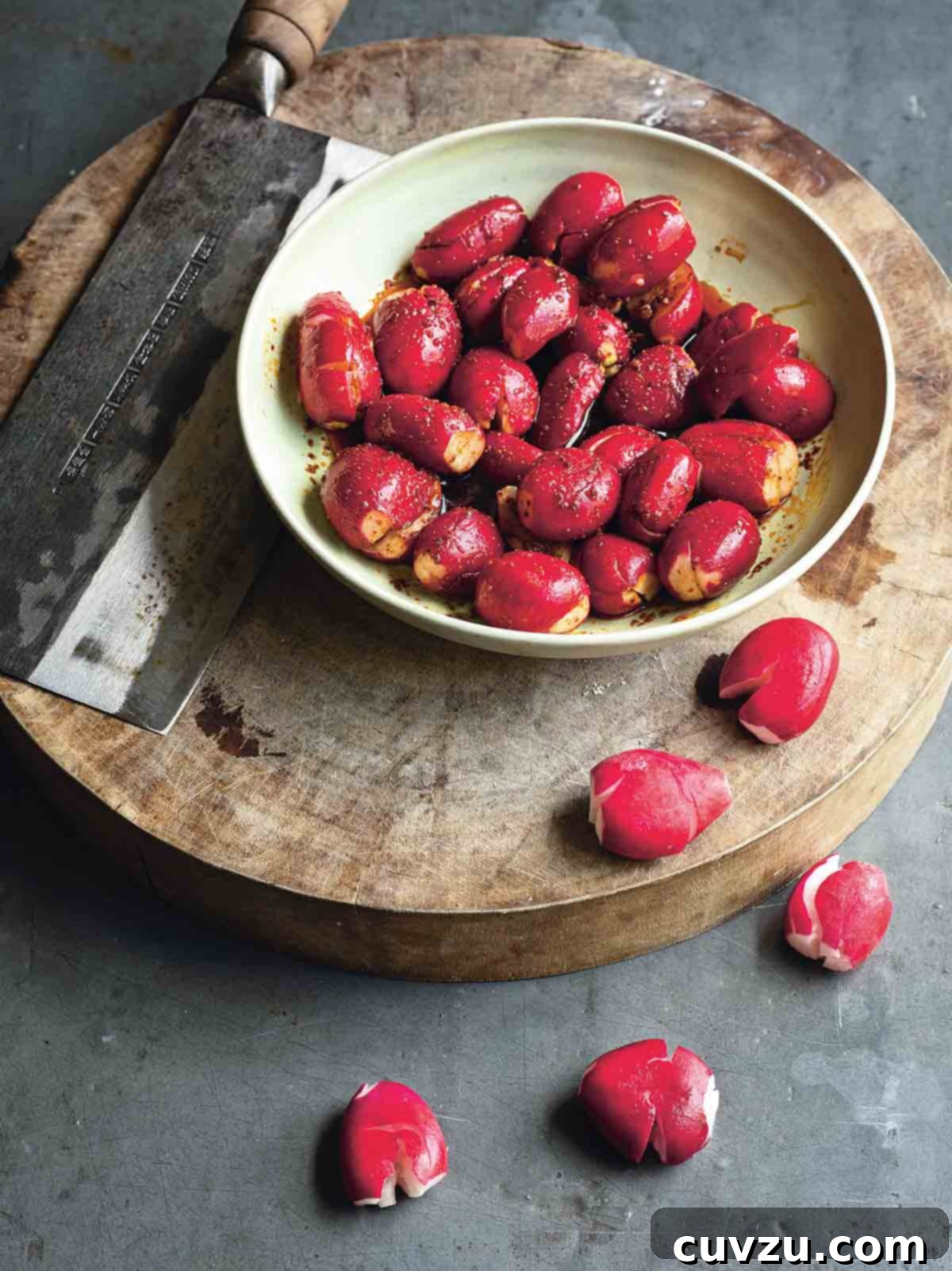
Prepare to tantalize your taste buds with a dish that promises to be a vibrant conversation starter: fresh radishes elegantly dressed in authentic Szechuan chile oil sauce. This incredibly simple yet stunning appetizer, known as Qiang Luo Bo, ignites the appetite and offers a delightful prelude to any meal. Imagine crisp, peppery radishes, lightly seasoned with salt, then slicked with a fragrant, hot spiced oil, creating an explosion of flavors and textures in every bite. It’s a culinary experience that is both refreshing and exhilarating, embodying the bold spirit of Szechuan cuisine.
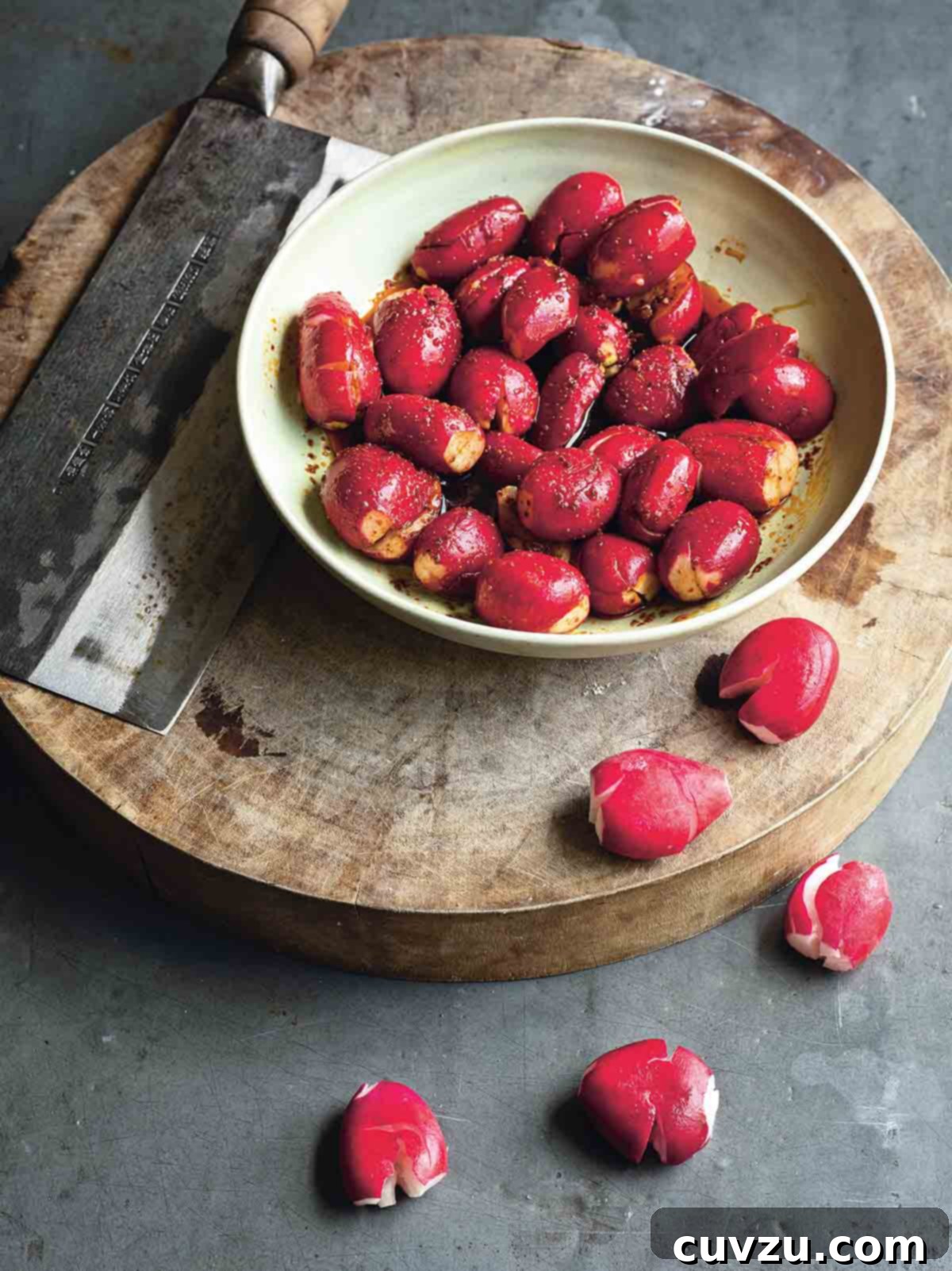
While small red radishes aren’t indigenous to China and are considered a relatively recent culinary import, their crisp texture and peppery bite lend themselves beautifully to this spicy, savory preparation. This particular recipe draws its inspiration from the philosophy of Ji ben jia chang cai, or home-style cooking, emphasizing accessibility, simplicity, and robust flavors. It’s a testament to how traditional techniques and ingredients can be adapted to embrace new produce, creating something truly special and memorable.
For those seeking to explore the depths of Chinese home cooking, this dish, as highlighted by renowned culinary expert Fuchsia Dunlop, perfectly encapsulates the essence of everyday Szechuan flavors with an unexpected ingredient. It’s a wonderful entry point into the vibrant world of Szechuanese culinary traditions, offering a quick and impactful way to introduce complex aromas and spice to your table.
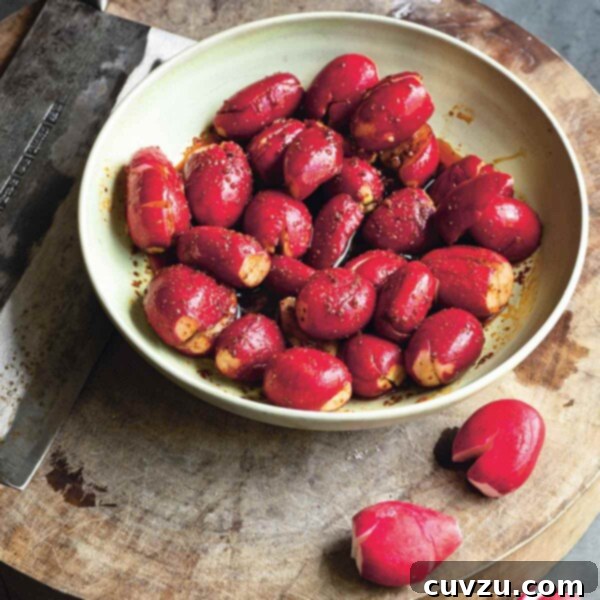
Radishes in Chile Oil Sauce | Qiang Luo Bo
A beautifully simple and intensely flavorful appetizer, these Szechuan-style radishes, doused in aromatic chile oil, are destined to rouse your appetite and become a guaranteed conversation starter at any gathering. Quick to prepare, vibrant in taste, and visually stunning.
David Leite
Appetizers
Chinese
4
to 6 servings
79
kcal
10 minutes
40 minutes
Ingredients
- 2 bunches small red radishes, trimmed, rinsed, and patted dry
- 3/4 teaspoon salt
- 1 teaspoon granulated sugar
- 2 tablespoons light soy sauce
- 2 tablespoons chile oil
- 1/2 teaspoon toasted sesame oil
Instructions
-
To prepare the radishes for optimal flavor absorption, lightly smack each one with the broad side of a cleaver or a heavy rolling pin. The goal here is not to crush them, but rather to gently crack their delicate skin and flesh. This ingenious technique creates more surface area for the sauce to cling to and absorb into, enhancing the overall taste and texture. Ensure they remain mostly intact, just bruised and slightly opened.
-
Gather the cracked radishes into a medium-sized bowl. Add the salt, sprinkling it evenly over the radishes. Toss them thoroughly to ensure each radish is lightly coated. Once salted, set the bowl aside for 30 minutes. During this time, the salt will work its magic, drawing out excess moisture from the radishes. This process not only concentrates their natural flavor but also gives them a slightly tender yet still wonderfully crisp texture.
-
While the radishes are resting, prepare the vibrant chile oil sauce. In a separate small bowl, combine the granulated sugar and light soy sauce. Stir continuously until the sugar is completely dissolved, ensuring a smooth, sweet, and savory base. Once dissolved, incorporate the aromatic chile oil and the distinctive toasted sesame oil. Mix these liquids well until they are fully emulsified, creating a rich, glossy, and intensely flavored dressing.
-
When you’re ready to serve, drain the radishes thoroughly. You’ll notice a significant amount of water has been released—this is exactly what you want! After draining, give the radishes a good shake or gently pat them dry to remove any lingering moisture. Pour the prepared chile oil mixture over the radishes. Toss everything together vigorously until every radish piece is glistening with the fragrant, spicy dressing. Serve immediately and enjoy the burst of Szechuan-inspired flavor. It’s truly that simple and astonishingly delicious!
Adapted From
Every Grain of Rice
Buy On Amazon
Nutrition Information
Calories: 79 kcal
Carbohydrates: 2 g
Protein: 1 g
Fat: 8 g
Saturated Fat: 1 g
Monounsaturated Fat: 5 g
Sodium: 734 mg
Fiber: 0.5 g
Sugar: 2 g
Nutrition information is automatically calculated, so should only be used as an approximation.
Tried this recipe?
Mention @leitesculinaria or tag #leitesculinaria!
The Art of Szechuan Chile Oil: A Culinary Staple
At the heart of this dish lies the captivating allure of Szechuan chile oil. This condiment is not merely about heat; it’s a complex symphony of flavors that defines Szechuan cuisine. Traditionally made by infusing hot oil with dried chilies, Szechuan peppercorns, and various aromatic spices like star anise, cinnamon, and bay leaves, it delivers a unique “mala” sensation – a combination of numbing (ma 麻) and spicy (la 辣). The nuanced fragrance and deep umami notes of a well-made chile oil elevate even the simplest ingredients. While store-bought chile oil works wonderfully for convenience, crafting your own from scratch offers an unparalleled depth of flavor, allowing you to customize the spice level and aromatic profile to your preference. This versatile oil can be drizzled over noodles, dumplings, or steamed vegetables, but its pairing with crisp radishes creates a particularly harmonious balance, where the oil’s richness and spice are cut by the radish’s refreshing bite.
Radishes Reimagined: From Garden to Global Delight
Radishes, often cherished for their vibrant color, crisp texture, and refreshing peppery kick, are a staple in many cuisines worldwide. Rich in vitamins C and B, potassium, and antioxidants, they offer a healthy crunch to salads and side dishes. In this Szechuan preparation, the radish transcends its typical role. The crucial technique of “smacking” the radishes is key. This seemingly aggressive act is actually a gentle way to break down the radish’s cellular structure without turning it into mush. By cracking them open, the radishes become more receptive to the complex flavors of the chile oil sauce, allowing them to absorb the savory, spicy, and sweet notes deep within. This method ensures that every bite is not just a mouthful of radish, but an immersive experience of the entire flavor profile. The salting process further enhances this by drawing out excess water, firming up the radish, and intensifying its natural essence, resulting in a perfectly textured, intensely flavored appetizer.
Serving Suggestions & Creative Variations
The beauty of Radishes in Chile Oil Sauce lies in its versatility. While it shines as an appetizer, designed to awaken the palate at the beginning of a meal, its uses extend far beyond. Consider serving it as a vibrant side dish alongside rich, savory meats like roasted pork or duck, or with grilled fish, where its piquant notes can provide a refreshing contrast. It also makes for an excellent light snack, especially for those who appreciate bold flavors. For a more substantial offering, fold these chile oil radishes into a rice bowl with some grilled chicken or tofu, or even use them as a lively topping for steamed buns.
Feeling adventurous? Don’t hesitate to experiment with variations. A sprinkle of fresh minced garlic or a touch of grated ginger added to the sauce can introduce an extra layer of aromatic complexity. For a brighter note, a splash of black vinegar or rice vinegar can enhance the tanginess, cutting through the richness of the oil. Toasted peanuts or cashews can provide a delightful textural crunch, while fresh cilantro or scallions add a burst of herbaceous freshness. You could even explore different types of radishes, such as daikon cut into small pieces for a milder flavor and different texture, or watermelon radishes for a stunning visual appeal.
A Nod to Culinary Expertise: Fuchsia Dunlop’s Influence
Fuchsia Dunlop stands as a towering figure in the world of Chinese cuisine, particularly Szechuan food, for her meticulous research, deep understanding, and eloquent storytelling. Her work has demystified complex regional Chinese cooking for Western audiences, bridging cultural gaps through the universal language of food. When she refers to this recipe as “Ji ben jia chang cai,” she emphasizes its roots in everyday, accessible home cooking. This isn’t a dish designed for elaborate banquets, but rather a simple, flavorful preparation that can be easily recreated in any home kitchen. Her endorsement highlights the dish’s authenticity in spirit, even if the primary ingredient is an adaptation. It speaks to the dynamic and evolving nature of cuisine, where classic techniques meet new ingredients to forge exciting, delicious paths.
Recipe Testers’ Reviews: A Chorus of Praise
Recipe Testers’ Reviews
Joan Osborne
Joan Osborne, one of our seasoned recipe testers, raved about these radishes in chile oil sauce, finding them utterly addictive. “I could hardly stop eating them,” she exclaimed, highlighting their irresistible appeal. Her husband, a fan of Korean cuisine, immediately recognized and praised the presence of sesame oil, confirming the dish’s aromatic depth. Joan noted the importance of using fresh, smallish radishes, ideally with their tops still attached, for the best texture and flavor. She enthusiastically recommended this recipe not just as a fantastic appetizer but also as a delightful snack or even a versatile side dish for an Asian-themed meal, suggesting it comfortably serves 4 to 5 people.
Anna Scott
Anna Scott found this recipe to be a uniquely delightful way to enjoy crisp, peppery radishes. As a self-professed radish enthusiast, she was particularly intrigued by this simple Chinese rendition. The exquisite blend of sesame oil, chile oil, soy sauce, and sugar created a sauce so delectable that Anna mused about its potential beyond radishes—imagining it as a future stir-fry base or even a vibrant vinaigrette for a tender leaf salad. Her creative suggestions included using it on shredded cabbage and daikon radishes for an unconventional coleslaw. Anna particularly praised the “ingenious” technique of smacking the radishes, which she confirmed greatly enhances their ability to absorb the flavorful oil mixture. She successfully used a meat cleaver for this step, noting that a rolling pin tended to split them too much. Served as an appetizer alongside crostini and goat cheese, the dish elegantly complemented the creamy cheese and crisp bread, with the leftover sauce providing an irresistible dipping opportunity. Anna’s experience underscored the dish’s adaptability and the wonderful chili oil remnants it creates.
Sita Krishnaswamy
Sita Krishnaswamy echoed the sentiments of her fellow testers, highlighting the versatility of these radishes in chile oil sauce as a condiment. She suggested serving them alongside various meats, incorporating them into pita pockets for a quick and flavorful bite, or simply presenting them as an enticing appetizer. Sita confirmed that using about 16 small red radishes (two bunches) yielded enough for approximately 6 people, making it an ideal choice for entertaining or a larger family meal. Her review reinforces the dish’s ability to seamlessly integrate into different meal settings, providing a burst of flavor wherever it’s introduced.
The collective feedback from our recipe testers unanimously celebrates the simplicity, unique flavor, and adaptability of this Radishes in Chile Oil Sauce. From Joan’s immediate adoration and her husband’s appreciation for the sesame oil, to Anna’s innovative ideas for using the sauce beyond the radishes, and Sita’s endorsement of its versatility, it’s clear this dish is a standout. The consensus highlights its potential as a memorable appetizer, a versatile condiment, and a delightful snack. Each tester’s experience underscores the dish’s captivating appeal and its ability to surprise and satisfy, making it a must-try for anyone looking to add a touch of Szechuan magic to their culinary repertoire.
Embrace the vibrant flavors and crisp textures of this Szechuan-style Radishes in Chile Oil Sauce. It’s a dish that promises ease of preparation, a burst of intriguing flavors, and a delightful introduction to the aromatic world of Szechuan cuisine. Whether you’re an experienced cook or a curious beginner, this recipe offers an accessible yet profound culinary adventure.
We encourage you to try this unique appetizer and share your experience with our community. Your culinary journey is important to us, and we love to see how you make our recipes your own. Don’t forget to mention @leitesculinaria or tag #leitesculinaria when you post your creations!