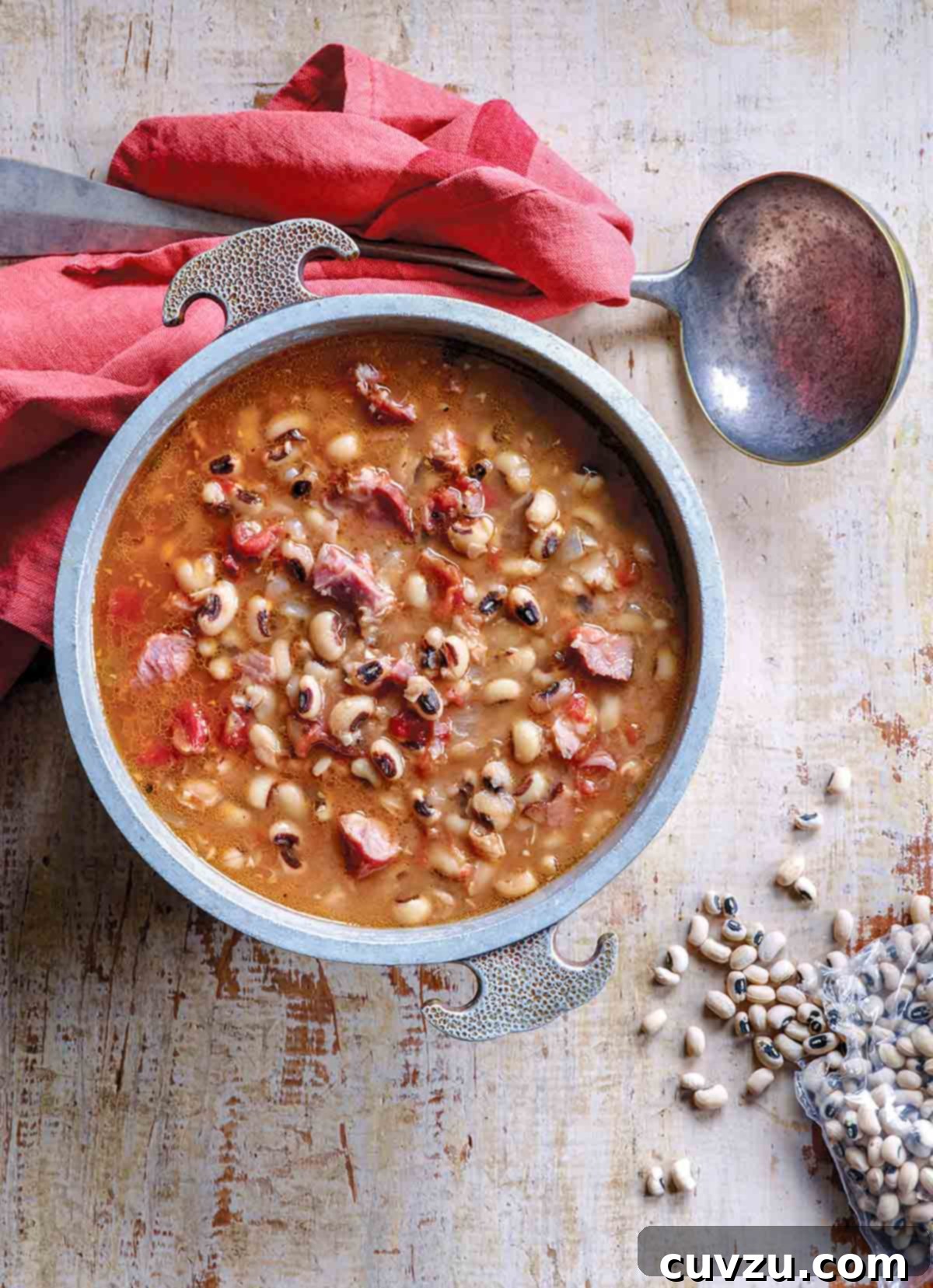
Hearty Black-Eyed Pea Stew: A Southern Tradition for Good Fortune
Embrace a timeless Southern tradition with this rich and flavorful Black-Eyed Pea Stew recipe. Savory ham hocks or zesty ground sausage transform humble black-eyed peas into a deeply satisfying dish. Revered for centuries, this stew is more than just a meal; it’s a symbol of good luck and prosperity for the year ahead, especially when enjoyed on New Year’s Day. Our cherished family recipe promises not just good fortune, but also a truly sated appetite, delivering comfort with every spoonful.
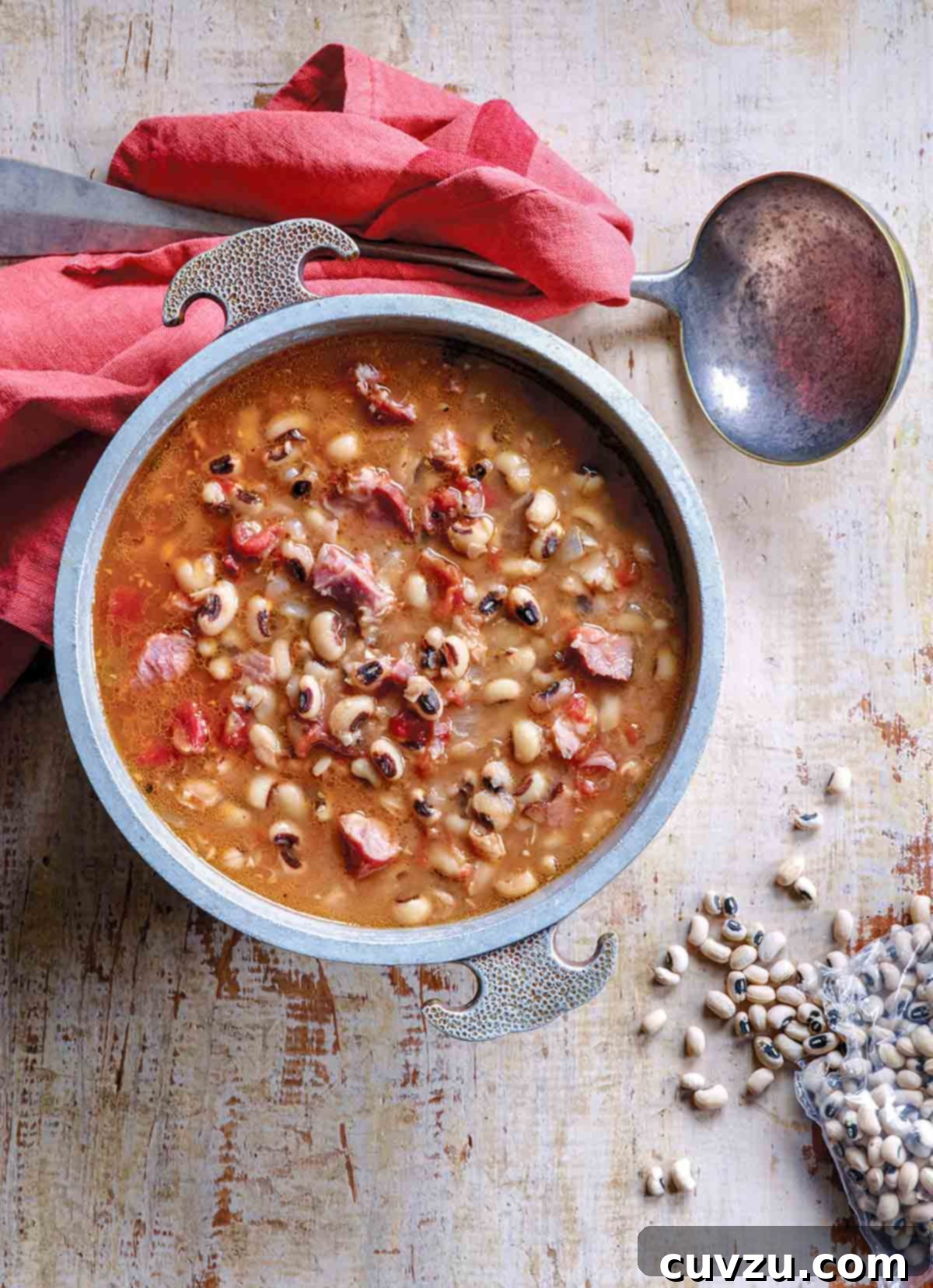
The Enduring Tradition of Black-Eyed Peas for Good Luck
Across the American South, black-eyed peas hold a special place in culinary traditions, particularly as a staple on New Year’s Day tables. This tradition dates back centuries, rooted in various historical events and beliefs. For many, consuming black-eyed peas on January 1st is believed to guarantee good fortune, prosperity, and luck for the entire year to come. The peas themselves are said to symbolize coins, especially when accompanied by collard greens (representing paper money) and cornbread (symbolizing gold). It’s a culinary ritual passed down through generations, embodying hope and optimism for the future.
This particular Black-Eyed Pea Stew recipe, a treasured heirloom from the Watkins family of Hartsville, South Carolina, carries the weight of this rich heritage. While countless delicious variations of black-eyed pea dishes exist throughout the South – from simple side dishes to elaborate stews and soups – this one stands out for its robust flavor and heartwarming essence. Whether you opt for the smoky depth of ham hocks or the spicy kick of Italian sausage, the core promise remains: a delicious start to a fortunate year. Indeed, while any black-eyed pea dish is considered lucky, we’re confident that this rendition will become your go-to, leaving you feeling truly blessed and thoroughly satisfied.
Share Your Culinary Journey
If you’ve prepared this delightful Black-Eyed Pea Stew or any other recipe from our collection, we’d love to hear about your experience! Consider sharing a review, a star rating, and even your best photo in the comments section below. Your feedback inspires us all. –David
Featured Review: A Timeless Classic
“We first made this black-eyed pea stew in January and were so impressed, we immediately saved a portion in the freezer. Recently, while looking to enjoy some stored favorites, we defrosted it. The flavors were just as vibrant and delicious as the day we first made it! This recipe has undoubtedly earned a permanent spot on our regular cooking rotation and we plan to make it again very soon.”
— Ginny

The Ultimate Black-Eyed Pea Stew
David Leite
- PIN
Print Recipe
Mains
Southern
6
to 8 servings
518
kcal
25 minutes
2 hours
20 minutes
2 hours
45 minutes
Ingredients
- 3 tablespoons vegetable oil or lard
- 1 1/2 cups chopped onions
- 1 1/4 pounds smoked ham hocks or hot Italian sausage links
- 2 teaspoons chopped garlic
- One (14.5-ounce) can crushed or diced tomatoes
- 1 quart store-bought or homemade chicken stock
- 1 pound dried black-eyed peas*
- 3 cups cold water, plus more as needed
- 1/4 to 1/2 teaspoon salt
- 1/4 teaspoon freshly ground pepper
Instructions
-
In a large Dutch oven or sturdy stockpot, heat the vegetable oil or lard over medium-high heat until shimmering. Add the chopped onions and cook, stirring occasionally, for 3 to 4 minutes, or until they have softened and become delightfully fragrant. This step builds the foundational aromatic flavor for your stew.
-
Introduce the ham hocks or sausage (if using sausage, ensure it’s removed from its casing and crumbled) and the minced garlic to the pot. Reduce the heat to medium and continue to cook for another 5 minutes, stirring frequently. The goal is to make the onions tender and translucent without allowing them to brown excessively, ensuring a sweet, mellow base.
-
Stir in the crushed or diced tomatoes. Cook for an additional 5 minutes, stirring often, allowing the tomatoes to break down slightly and their flavors to meld with the aromatics and meat. This adds a crucial layer of acidity and depth to the stew.
-
Pour in the chicken stock, add the dried black-eyed peas, and three cups of cold water. Increase the heat to bring the mixture to a full, rolling boil, then stir everything thoroughly. Season with salt and freshly ground pepper, then reduce the heat to maintain a steady, fairly vigorous simmer. Partially cover the pot and allow the stew to gently simmer, stirring occasionally, for 2 to 2 1/2 hours, or until the black-eyed peas are tender and creamy. Keep an eye on the consistency; if the stew becomes too thick, resembling oatmeal, add a little more water or stock as needed to achieve your desired stew-like consistency.
-
Carefully remove the ham hocks or sausage links from the pot and transfer them to a plate to cool slightly until they are comfortable to handle. Once cooled, shred the ham from the hocks or crumble/slice the sausage, then return the meat to the stew. Stir well to combine. Serve the black-eyed pea stew hot or warm, perhaps with a side of cornbread or collard greens for a truly authentic Southern meal.
Notes on Preparation
*Soaking Black-Eyed Peas: To Soak or Not to Soak?
The debate around soaking dried black-eyed peas (and other legumes) before cooking is a long-standing one. Traditional methods often call for an overnight soak in cold water. However, many contemporary cooks, especially those with less time, have discovered that skipping the overnight soak and simply simmering the peas directly in plenty of liquid yields equally delicious results. For this black-eyed pea stew, the longer simmering time ensures the peas become perfectly tender, whether or not they’ve been pre-soaked. This method allows for a more spontaneous cooking experience without compromising on flavor or texture.

Adapted From
Southern Soups & Stews
Buy On Amazon
Nutrition Facts (Approximate per Serving)
Serving:
1 portion
Calories:
518 kcal
Carbohydrates:
22 g
Protein:
23 g
Fat:
38 g
Saturated Fat:
12 g
Monounsaturated Fat:
16 g
Trans Fat:
1 g
Cholesterol:
72 mg
Sodium:
846 mg
Fiber:
6 g
Sugar:
4 g
Nutrition information is automatically calculated and should be used as an approximation only.
Tried this recipe?
Mention @leitesculinaria or tag #leitesculinaria!
Insights from Our Recipe Testers
Our dedicated team of recipe testers put this Black-Eyed Pea Stew through its paces, offering valuable feedback and insights. Read their experiences and discover why this recipe is a cherished favorite.
Beth Price
“This black-eyed pea stew is wonderfully easy to prepare and truly a perfect addition to any New Year’s menu, ensuring you get your peas for that essential good luck! I chose to use Italian sausage for this recipe, removing it from its casing and chopping it into bite-sized pieces to integrate seamlessly into the stew. For a future iteration, I’m considering trying a sage sausage to introduce a slightly different aromatic twist.”
“One key observation is that this stew greatly benefits from resting, allowing the flavors to meld more deeply and the broth to thicken to a luxurious consistency. I prepared it earlier in the day and simply reheated it for dinner, which worked beautifully. We paired it with a generous portion of creamed callaloo, though it would be equally delightful with classic collard greens or even sautéed spinach. The recipe yields a very substantial amount, so we conveniently froze individual servings, making them perfect for a quick, comforting lunch on a chilly day.”
Irene Seales
“This is truly a fantastic, hearty stew that works perfectly not just as a fall favorite but can be enjoyed year-round. I appreciate recipes that allow for quick weeknight dinners by utilizing ingredients I typically have on hand or can easily source, and this one fits the bill perfectly. While perhaps not a spur-of-the-moment meal, it’s a manageable afternoon project that delivers incredible rewards.”
“For our small household, this stew provided several days of delicious meals, each bowl tasting as good as, if not better than, the first. The fact that black-eyed peas generally don’t require pre-soaking simplifies the planning process immensely. You also have the flexibility to adjust the spice level to your preference. Lacking ham hocks, I opted for freshly made Italian sausage from my local butcher. To compensate for the smoky flavor typically provided by ham hocks, I used fire-roasted tomatoes and added a touch of Penzey’s Black and Red Pepper blend towards the end to fine-tune the seasoning. I also incorporated an additional cup of broth at this point as the stew seemed a bit dry. After returning the chopped sausage, adding the extra liquid, and adjusting seasonings, we gave the stew another 15 minutes of cooking time for the flavors to fully harmonize. The delicate casing of the sausage crumbled beautifully, blending seamlessly into the stew.”
“We enjoyed it hot on the first day and reheated the leftovers, which consistently proved to be delicious, offering just the right amount of warmth and spice. Most importantly, this recipe rekindled our love for black-eyed peas! Growing up, I only knew them prepared very simply, often with a dash of red wine vinegar and perhaps some wild greens, Greek-style, by my grandfather. I adore the robust and wholesome use of the beans with the sausage in this recipe, though a lovely meatless version would also be simple to create. With a little attention, you can have a gorgeous, flavorful stew on the table in under three hours.”
Pat Francis
“What a wonderfully hearty and earthy dish to welcome the colder months! This black-eyed pea stew doesn’t demand excessive attention, requiring just a bit of initial prep before it gently simmers its way to perfection. It’s a true winter warmer.”
“My main advice would be to monitor its progress a bit more closely than I initially did, as I found that a significant amount of the cooking liquid evaporated during the process. This was the only minor challenge I encountered with the recipe. Next time, I would definitely keep a more careful eye on the simmer and be prepared to add extra stock or water as it cooks to maintain the desired consistency.”
“As I’m not particularly fond of cooking with ham hocks, I chose the sausage option. Four hot Italian pork sausages weighed exactly 1 1/4 pounds. I suspect that the sausages might have displaced more liquid in the pot compared to ham hocks, which could have influenced the cooking time. After simmering for 1 3/4 hours, the peas were still not quite tender, and the liquid had reduced considerably. To remedy this, I temporarily removed the sausages so the beans could have the broth entirely to themselves, ensuring they were fully submerged. Once the peas were done, I sliced the sausages into 1/2-inch thick pieces and returned them to the pot.”
“Ordinarily, I would hesitate to add tomatoes at the beginning when cooking dried beans, as their acidity can sometimes impede softening. I’m curious if the beans would have cooked faster had the tomatoes been introduced once the black-eyed peas had already begun to soften. A shorter cooking time might also have helped prevent excessive liquid evaporation. I made this stew earlier in the day to reheat for dinner. Remembering that a stew should not be as thin as a soup, I still found it needed a little more liquid when reheating, so I added about 1/4 cup of chicken stock to each bowl. By the next day, the leftovers had absorbed all remaining liquid, becoming quite thick.”
Sue Epstein
“Having grown up in the South, black-eyed peas are an ingrained tradition for me on New Year’s Day. Interestingly, they also hold a similar traditional significance for Rosh Hashanah, the Jewish New Year. While I typically prepare a black-eyed pea salad, this year I decided to try this stew, and I am absolutely delighted with the outcome. All my guests thoroughly enjoyed it!”
“The stew was quite straightforward to assemble, requiring only about 15 minutes of prep time and just over two hours for cooking. I opted for mild beef sausage to ensure the stew wasn’t overly spicy, catering to all palates. I also believe this recipe would adapt exceptionally well to a slow cooker, offering an even more hands-off approach to this comforting dish.”