Have you ever wondered about the secret behind consistently perfect meals served by top chefs? Or perhaps you’ve seen a peculiar device submerged in a pot of water on a cooking show and thought, “What is that?” You’re not alone! Many home cooks are discovering the revolutionary method known as sous vide cooking. We’re here to demystify this remarkable culinary technique, breaking down what it is, how it works, the essential tools you’ll need, and invaluable tips to help you master it. Prepare to unlock a new level of precision and flavor in your kitchen.
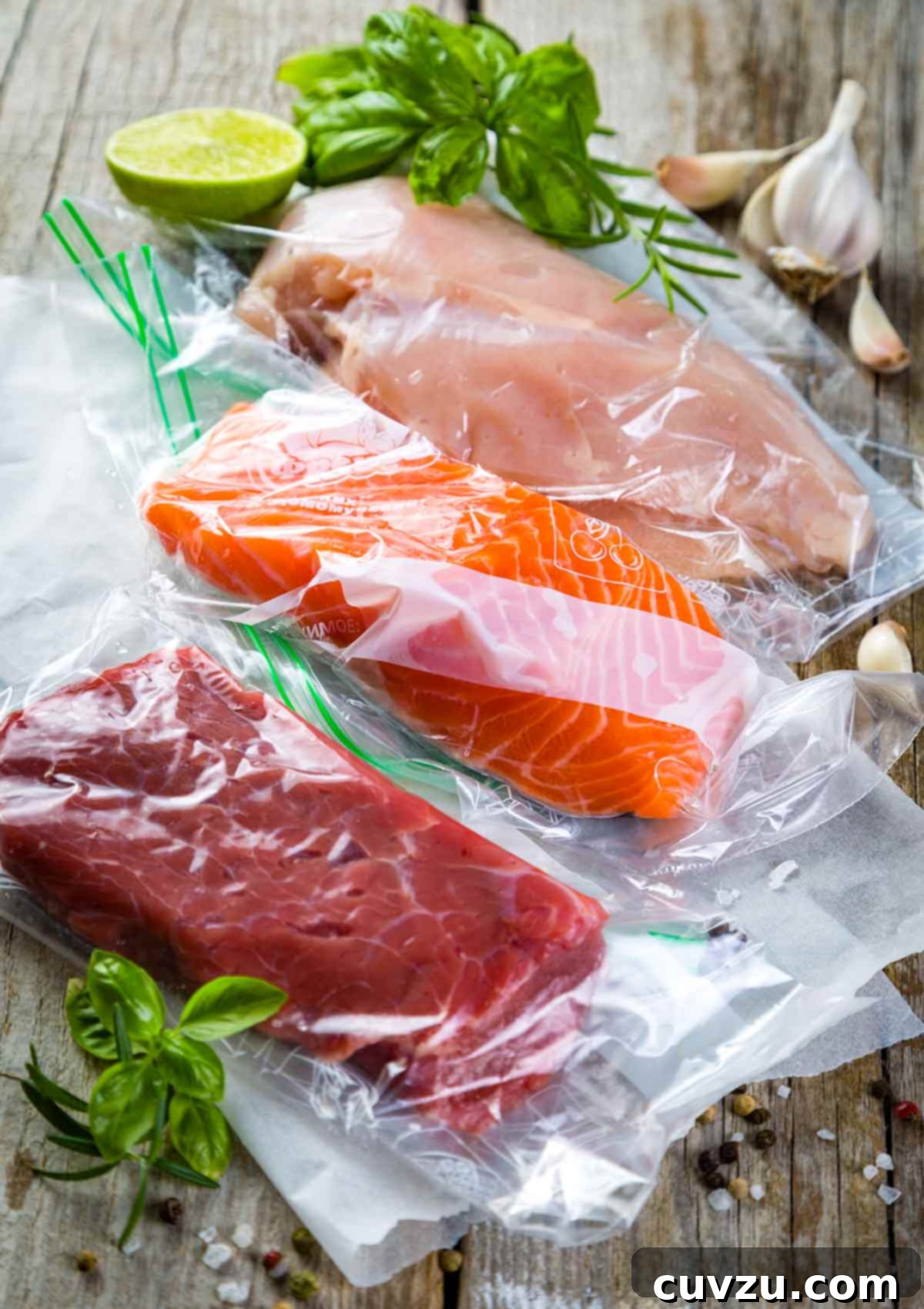
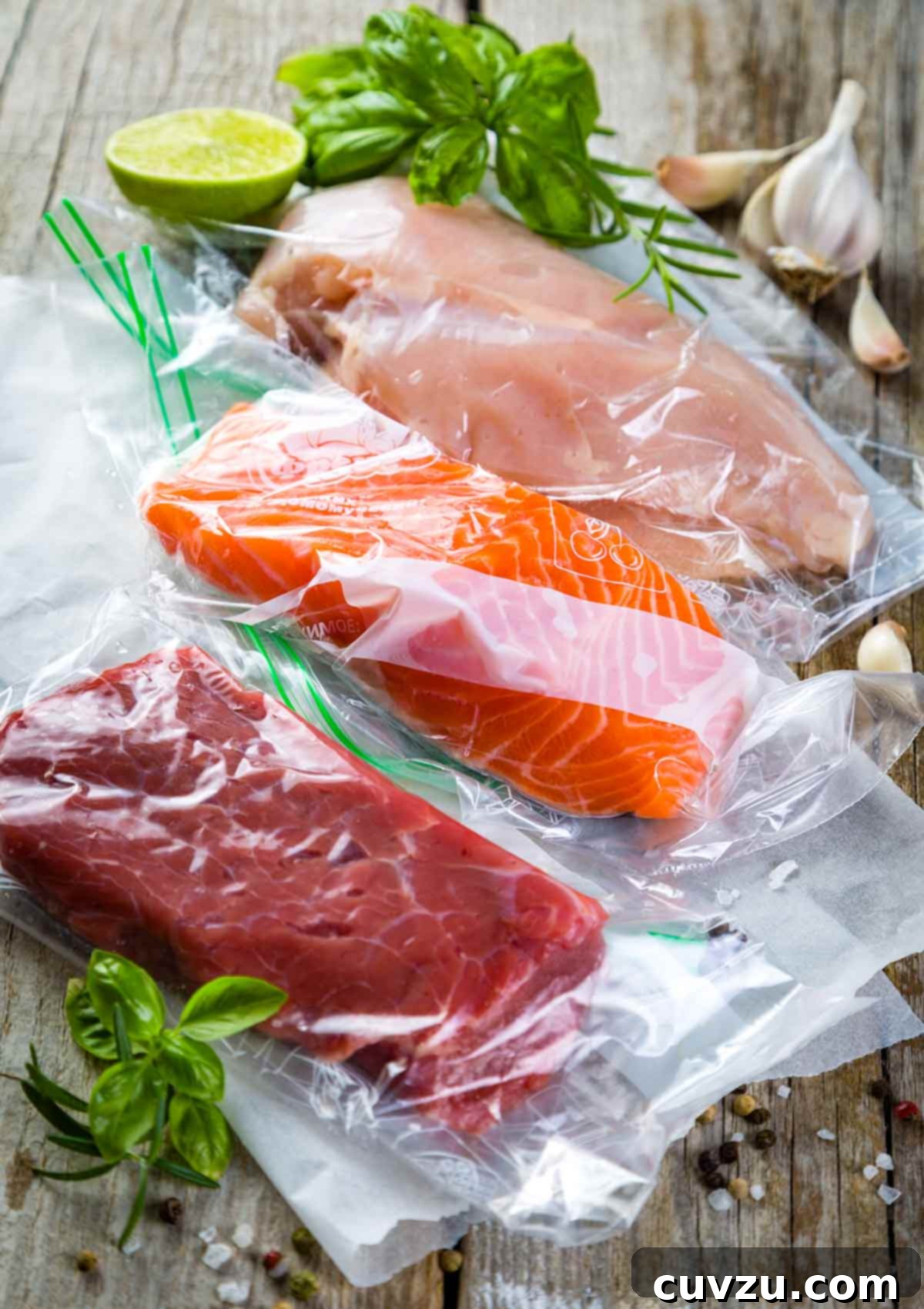
For years, professional chefs have relied on a sophisticated yet deceptively simple cooking technique to achieve unparalleled consistency and perfection in their dishes. This method, called “sous vide” (pronounced soo-veed), is a French term meaning “under vacuum.” It involves sealing food in a plastic bag—often vacuum-sealed—and then cooking it in a precisely temperature-controlled water bath. Unlike traditional cooking methods where temperatures can fluctuate wildly, sous vide ensures that your food cooks evenly from edge to edge to its exact desired doneness, without the risk of overcooking.
Initially confined to the realm of high-end restaurants, sous vide has steadily made its way into home kitchens, transforming how everyday cooks approach meal preparation. The journey from niche professional tool to accessible home appliance has been driven by advancements in technology and a growing desire among home cooks for restaurant-quality results. Early adopters faced a scarcity of information and equipment, leading to a trial-and-error learning process. Over time, however, the market expanded with more affordable and user-friendly devices, such as immersion circulators, making the art of sous vide cooking accessible to everyone. Today, a wealth of resources, from cookbooks to online communities, provides ample guidance, empowering home cooks to experiment and succeed with this innovative method.
While sous vide cooking may seem different from conventional methods, it is far from difficult. Like any new skill, it simply requires a willingness to learn its unique principles. Our extensive network of recipe testers, ranging from beginner home cooks to professional chefs, has provided invaluable insights into their experiences with sous vide. Approximately half of our testers currently own and regularly use a sous vide device, attesting to its growing popularity and practicality. Their collective expertise has helped us gather the most practical tips, tricks, and essential information to ensure your sous vide journey is smooth, enjoyable, and rewarding.
How Does Sous Vide Cooking Achieve Perfect Results?
At the heart of sous vide cooking is the immersion circulator, a device roughly the size of an immersion blender, which is clipped onto the side of a water bath container. This container can be anything from a large stockpot or deep pan to a dedicated plastic tub. The immersion circulator is a marvel of engineering, combining a heating element, a temperature control unit, and a small pump. Together, these components work to heat the water to a precise temperature and circulate it continuously, ensuring that the entire water bath maintains a perfectly uniform temperature throughout the cooking process.
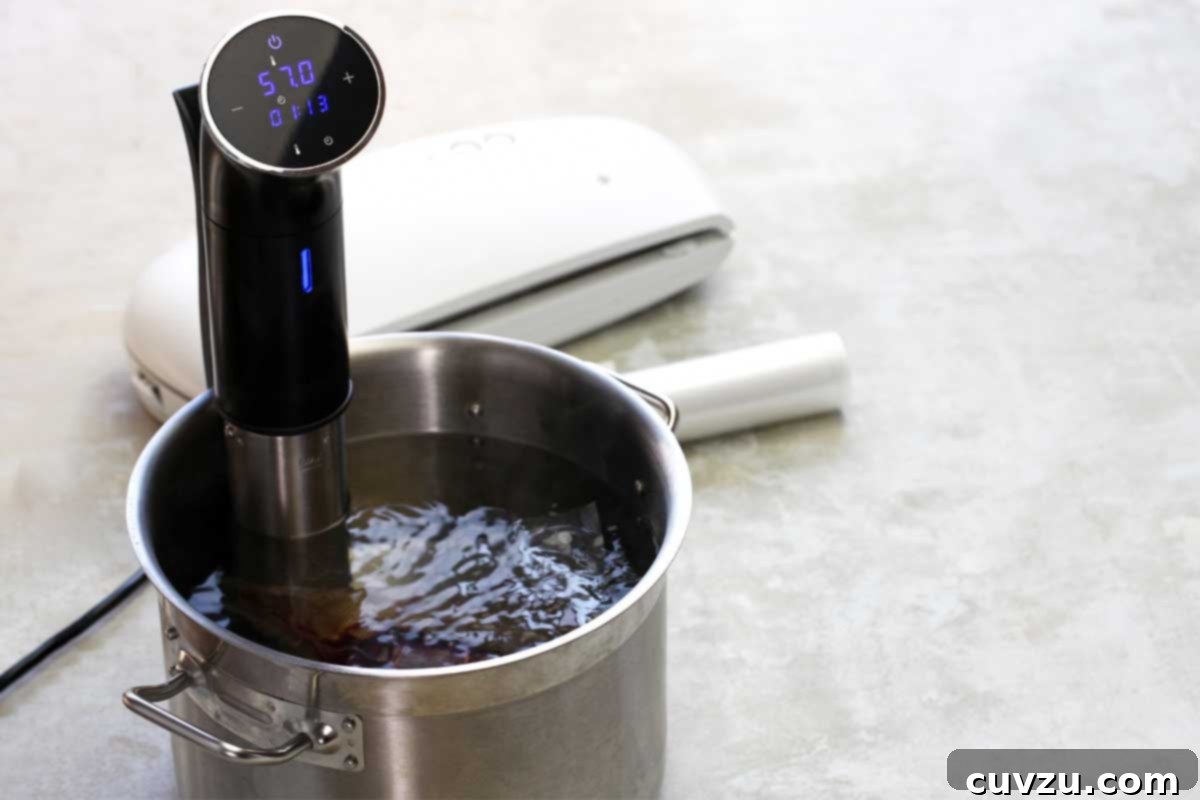
This unwavering temperature control is what truly sets sous vide apart from conventional cooking methods. Ovens and stovetops are notorious for temperature fluctuations, often varying by as much as 50°F (10°C). Such drastic swings can significantly impact cooking times and, more importantly, the final quality of your dish. With sous vide, your food is enveloped in an environment where the temperature remains constant, cooking it gently and evenly to the exact degree you desire. This precision eliminates guesswork and delivers consistently tender, juicy, and perfectly cooked results every time, whether you’re preparing delicate fish, robust meats, or vibrant vegetables.
Understanding Sous Vide Cooking Times: Patience for Perfection
Sous vide is, by nature, a slow cooking method, but this extended cooking time is one of its greatest assets. The initial phase involves heating your water bath to the target temperature, which can take some time. Once heated, the food requires specific cooking durations to reach its optimal texture and safe internal temperature. While delicate items like shrimp or thin fish fillets may be ready in as little as 30 minutes, denser foods such as poultry or larger cuts of meat can take several hours, or even a full day, to achieve their desired doneness.
This prolonged cooking window offers unparalleled flexibility, a tremendous advantage for busy home cooks. Imagine starting dinner hours in advance without the stress of constant monitoring. With sous vide, you can set your food to cook and then attend to other tasks, whether it’s a work call, helping the kids, or simply enjoying a moment of relaxation. Crucially, once your food reaches its target temperature, it can safely remain in the water bath for an extended period—often up to 90 minutes or more—without any risk of overcooking. This forgiveness means that unforeseen delays won’t ruin your meal, ensuring dinner is ready when you are, perfectly cooked and waiting.
Selecting the Right Temperature for Sous Vide Success
The ideal cooking temperature in sous vide depends entirely on the type of food you’re preparing and your desired outcome. Generally, delicate proteins like meat and seafood are cooked at lower temperatures, typically starting around 130°F (55°C) for a tender, medium-rare steak. Vegetables and fruits, which require more heat to soften their cell walls, are often cooked at higher temperatures, ranging up to 185°F (85°C). It is paramount to consult reliable sous vide recipes and guidelines, as specific temperatures yield distinct textures and levels of doneness. Always take the time to research recommended cooking times and temperatures for your particular ingredient, as cooking times can vary significantly based on the food’s thickness and density. For instance, a thin fish fillet will require a much shorter cooking time than a thick cut of beef to achieve its desired state without becoming mushy.
Can You Overcook Food with Sous Vide?
While it’s technically possible to “overcook” food using sous vide in terms of texture degradation (e.g., a steak becoming too soft if left for *excessively* long periods), it’s incredibly difficult to burn or dry out your food in the same way you might with traditional methods. The beauty of sous vide lies in its precision. When cooking a steak in a cast-iron skillet, you have a very narrow window to achieve perfect doneness, and a few seconds too long can turn a medium-rare masterpiece into an overdone disappointment. With sous vide, your steak will remain at your chosen temperature—be it a perfect medium-rare or medium—for an extended period, often an hour or more, after it reaches its target doneness. This extended “perfect window” significantly reduces the risk of culinary mishaps, giving you ample time to finish other preparations without stressing about your main course.
Choosing the Best Sous Vide Machine for Your Kitchen
The market for sous vide machines has expanded considerably, offering various options for every budget and cooking style. Immersion circulators are the most popular choice for home cooks due to their versatility and affordability. Brands like Anova and Joule dominate this segment, offering excellent performance. Many home cooks prefer the Anova due to its design which allows it to clip securely to the side of virtually any container. The Joule, while highly effective, features a magnetic base, which means you might need an adapter for non-metal water baths. Both units are compatible with a wide array of water bath sizes, from standard kitchen pots to larger plastic tubs.
While professional-grade sous vide units from brands like PolyScience can cost upwards of $1000, quality immersion circulators for home use are readily available for under $200, often found closer to $100 during sales events. These accessible price points have played a crucial role in bringing precision cooking into everyday households. When selecting your machine, consider factors such as power (which affects heating time), connectivity (Wi-Fi/Bluetooth for app control), and ease of cleaning, to find the best fit for your culinary needs.
Mastering Sous Vide Cooking Times and Food Safety
Understanding sous vide cooking times involves a slight learning curve, particularly regarding how different meats—tender cuts versus tougher ones—respond to specific temperatures and how connective tissues transform into gelatin. However, a critical aspect of sous vide is the interplay between bacterial growth and destruction. Cooking food in a water bath at temperatures above 130°F (55°C) effectively kills harmful bacteria. This means that sous vide cooking, when done correctly, functions as a form of pasteurization, making your meals not only delicious but also remarkably safe, especially for extended cooking periods.
Food safety doesn’t end when the cooking cycle finishes. If you don’t plan to consume your sous vide food immediately, it’s crucial to cool it rapidly to prevent bacterial growth. The recommended method is to immerse the sealed bag in an ice bath for 15-30 minutes until thoroughly chilled. Once cooled, the food should be promptly transferred to the refrigerator or freezer. This proper chilling technique ensures that your make-ahead meals remain safe and ready for future enjoyment, easily reheated without compromising quality.
Addressing Food Safety Concerns in Sous Vide Cooking
Food safety is paramount in any cooking method, and sous vide is no exception. As mentioned, maintaining temperatures above 130°F (55°C) during cooking is crucial for pasteurizing food and eliminating bacteria. However, handling cooked food correctly after the sous vide bath is equally important. If you intend to store your sous vide-cooked items for later consumption, you must cool them down rapidly in an ice bath immediately after removing them from the circulator. This quick chill prevents food from lingering in the “danger zone” (40°F to 140°F / 4°C to 60°C) where bacteria multiply rapidly. Once chilled, transfer the sealed food directly to the refrigerator or freezer for safe storage. This method makes sous vide ideal for efficient meal prepping, allowing you to create numerous delicious, pre-cooked meals that can be reheated perfectly later, straight from the fridge or freezer, preserving their texture and flavor.
Vacuum Sealing: Options for Every Home Cook
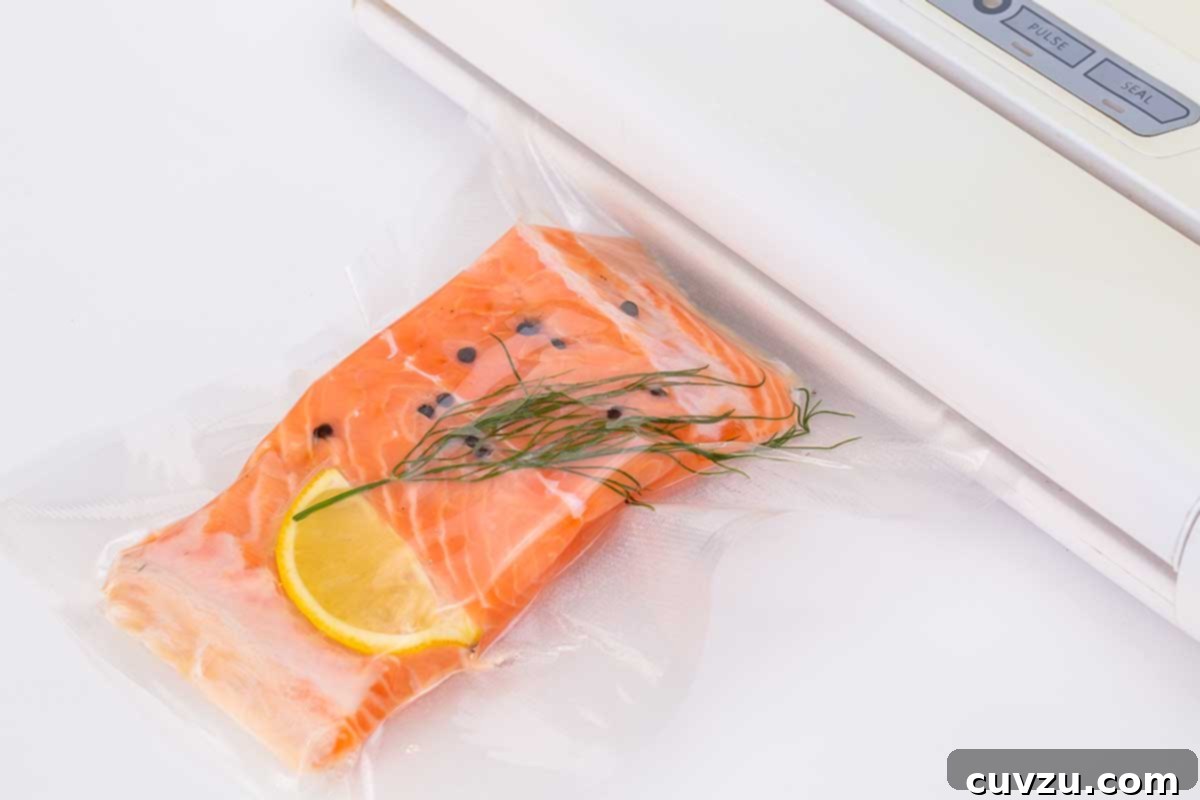
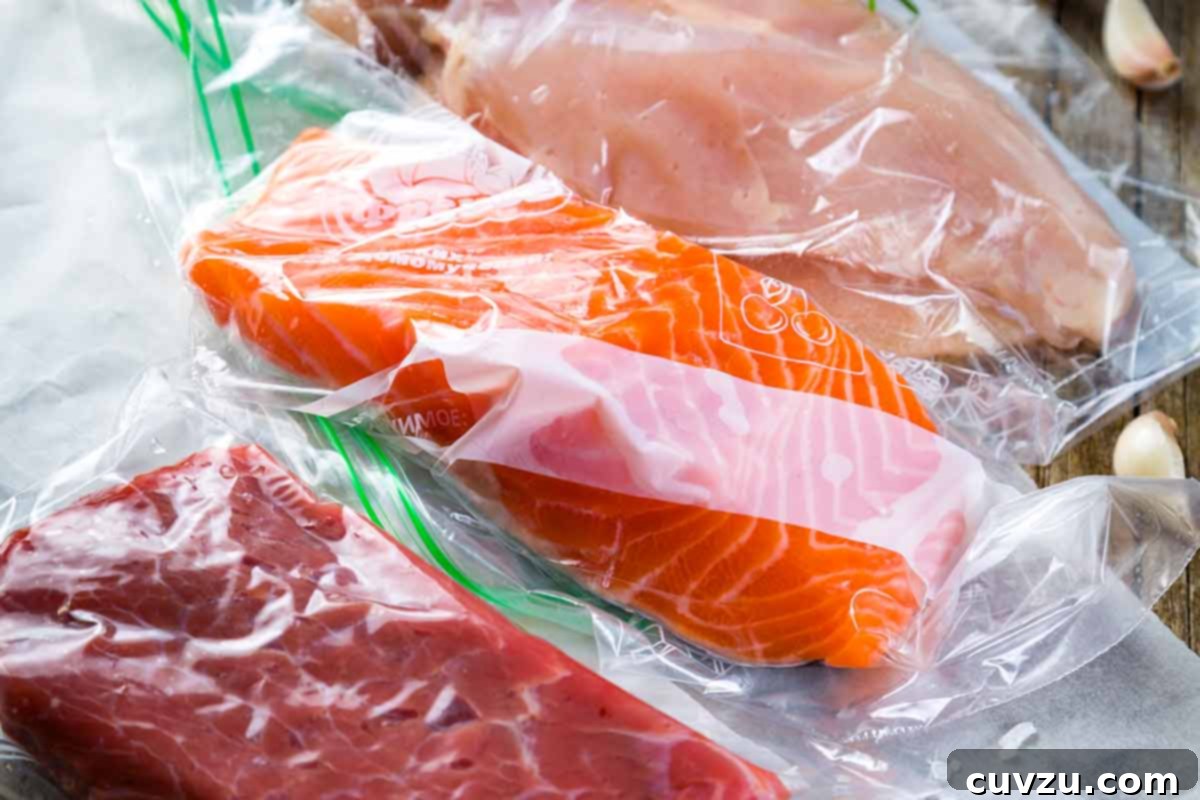
While many home cooks opt for dedicated vacuum sealers and precut vacuum sealer bags for optimal air removal, having a specialized vacuum sealer isn’t strictly necessary to enjoy the benefits of sous vide cooking. A popular and effective alternative is using high-quality resealable plastic bags, a method favored by a significant portion of our recipe testers. Additionally, reusable silicone bags have emerged as an eco-friendly option, gaining traction among those looking to minimize plastic waste while still achieving excellent results.
When using resealable plastic bags, the key is to effectively remove as much air as possible. This is where the “water displacement method” comes in handy, drawing inspiration from Archimedes’ Principle. To execute this, simply place your food in the bag, leaving a small gap (about one inch) open at the top seal. Slowly immerse the bag into a pot of water, allowing the water pressure to push the air out through the opening. Once most of the air has been expelled, seal the bag completely before fully submerging it in the water bath. This creates a sufficient vacuum for most sous vide applications.
One notable advantage of a dedicated vacuum sealer, however, is its ability to create a much tighter seal. This intensified vacuum accelerates and enhances the infusion of marinades and seasonings into your food, leading to more vibrant and deeply flavored results in a shorter amount of time. Adding a small amount of marinade to the bag before vacuum sealing can dramatically elevate the taste of chicken, steak, or fish, turning a quick marinade into an impactful flavor experience. While bags are an ongoing expense for sous vide enthusiasts, the enhanced flavor penetration offered by a vacuum sealer can be a worthwhile investment for those seeking maximum culinary impact.
Preventing Leaks: Essential Tips for Sous Vide Bags
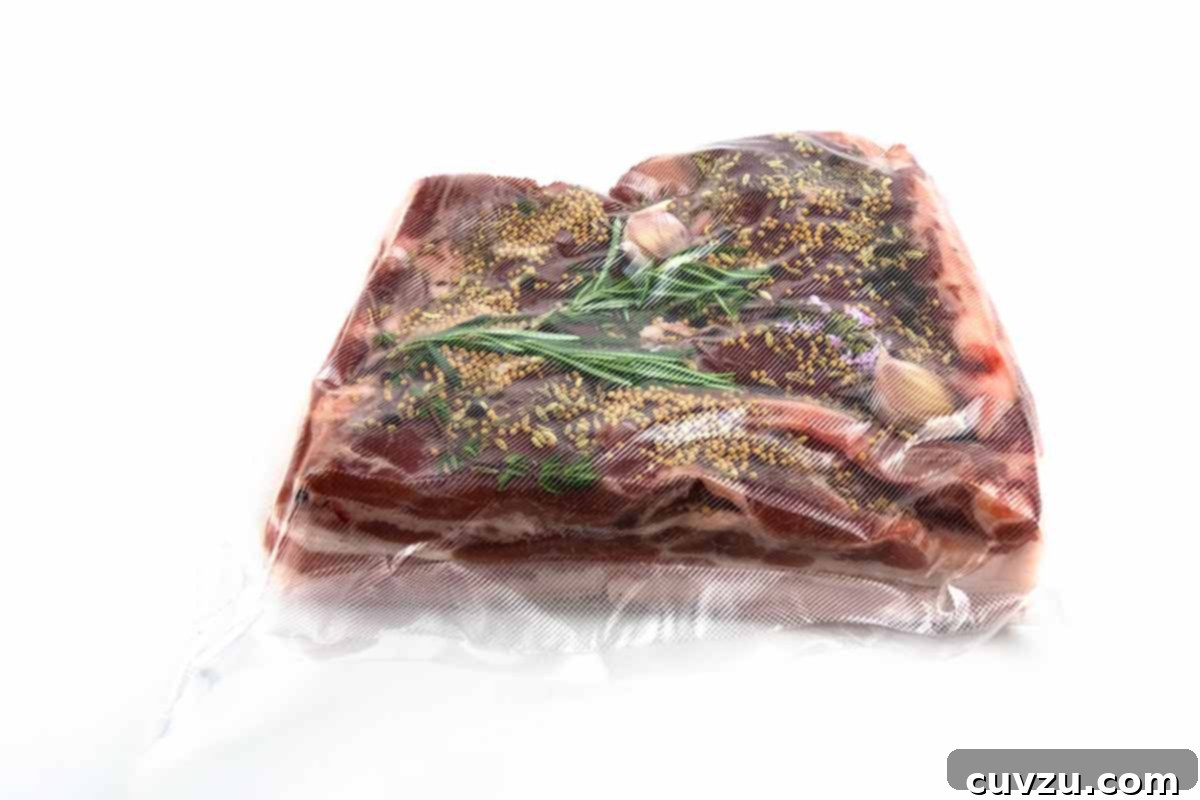
A leaking bag can quickly ruin your sous vide experience and potentially damage your immersion circulator. To avoid this common pitfall, extra care during the sealing process is crucial. If you’re using a vacuum sealer, always double-seal both the bottom and the top of the bag. This creates two robust barriers, significantly reducing the chance of a leak and providing peace of mind during extended cooks.
When cooking bone-in cuts like chops, ribs, or any meat with sharp protuberances, an additional protective measure is highly recommended. Wrap the tips of any bones in a small piece of aluminum foil before placing the food in the bag. This simple step creates a cushion, preventing the sharp edges from piercing the bag and compromising your vacuum seal. These small precautions ensure your food remains perfectly sealed and protected throughout the sous vide process.
Optimizing Your Sous Vide Water Bath Setup
An efficient water bath setup is key to a smooth sous vide experience. Positioning your water bath close to a water source, such as your kitchen sink, simplifies both the initial filling and later disposal of the water. This practical consideration saves effort and streamlines your cooking process.
For retaining heat, various strategies can be employed. Covering the water bath with ping-pong balls or aluminum foil acts as an effective insulator, minimizing heat loss and helping your circulator maintain a stable temperature more efficiently. For cooks planning high-volume sous vide sessions, investing in an inexpensive 22-quart Cambro box from a restaurant supply store is an excellent idea. These durable containers can be customized by cutting a hole in the lid for your immersion circulator, creating a dedicated, insulated water bath. Many enthusiasts also repurpose plastic insulated coolers for this purpose, leveraging their superior heat retention. For ultimate convenience, some sous vide devices now come with built-in water baths, and even popular multi-cookers like the Instant Pot offer a sous vide feature, integrating this technique into versatile kitchen appliances.
Ensuring your food bag is fully submerged in the water bath is critical for even cooking. Several methods can achieve this:
- **Binder Clips or Spring Clips:** Use metal binder clips or specialized nylon spring clips to secure the top of your sealed bag to the side of the pot, allowing the bag to hang submerged at the correct depth. Nylon clips are particularly useful as they don’t conduct heat to your hands when handling.
- **Weights:** Place heat-safe weights directly on top of the bag to keep it underwater. Common kitchen items like bacon presses or even clean ceramic plates can work in a pinch.
- **Ping-Pong Balls:** Beyond insulation, a layer of ping-pong balls on top of the water bath can also help gently press down on floating bags, keeping them submerged while providing additional thermal insulation.
Proper submersion guarantees consistent heat transfer, leading to perfectly cooked food every time.
Sous Vide Limitations: What Not to Cook
While sous vide offers incredible versatility, it does have certain limitations, primarily dictated by the size of your equipment. The main constraint often revolves around the dimensions of your sealed bag and the capacity of your water bath. Extremely large cuts of meat, such as a whole crown pork roast or an entire leg of lamb, may prove challenging to cook sous vide simply because finding a bag large enough to accommodate them and a water bath deep and wide enough for proper submersion can be difficult. For such sizable items, traditional cooking methods might still be more practical. However, for most everyday meals and even substantial roasts, sous vide machines are perfectly capable of delivering exceptional results.
Achieving Aesthetic Appeal: The Art of Finishing Sous Vide Food
One common observation among new sous vide users is that food emerging directly from the water bath might not look particularly appetizing. Meat, especially beef, often has a grayish, somewhat unappealing appearance straight out of the bag. This is entirely normal and easily rectified through a crucial final step: searing. To achieve that coveted browned crust and rich flavor, simply re-season your cooked product and sear it quickly over high heat—typically for about a minute or so per side—in a screaming hot pan or on a grill. This rapid high-heat treatment develops the Maillard reaction, creating a delicious crust and enhancing its visual appeal. Alternatively, you can sear steaks or chops *before* their sous vide bath, a technique known as “reverse sear sous vide.” Whichever method you choose, remember to collect any delicious pan drippings (jus) from searing to create an incredible pan sauce, elevating your dish even further.
Converting Traditional Recipes to Sous Vide
Adapting your favorite traditional recipes to the sous vide method is often straightforward, typically requiring only a few adjustments. The primary change will usually be the cooking time and temperature. The key is to research the optimal sous vide cooking parameters for the specific ingredient in your recipe. Once you have determined the ideal temperature for doneness and a suitable cooking duration, you can integrate sous vide into your existing culinary repertoire with ease.
For example, a beloved shrimp and grits recipe can be partially converted to sous vide for incredible convenience. You can prepare the flavorful andouille sausage and onion sauce on the stovetop, then chill it. Later, this sauce, along with raw shrimp, can be sealed in a bag and refrigerated, ready for a quick sous vide bath. Similarly, cheesy grits can be prepared in advance, bagged, and reheated in the water bath. This modular approach significantly simplifies meal preparation, especially when entertaining, allowing you to assemble complex dishes with minimal last-minute effort.
However, it’s worth noting that not every food item benefits equally from sous vide. While preparing soft-boiled eggs using sous vide yields perfectly consistent results, the hour-long cooking time might not be practical for everyday breakfast, especially when a traditional stovetop method takes only minutes. Such applications often serve more as a “science experiment” or for large-scale catering rather than a daily convenience. The key is to evaluate where sous vide genuinely enhances the cooking process and outcome for your specific needs, focusing on harmony with other methods rather than an either/or approach.
The Health Benefits of Sous Vide Cooking
Beyond precision and convenience, sous vide cooking offers notable health advantages. By cooking food at a low, consistent temperature in a sealed environment, this method ensures that ingredients retain significantly more moisture and, crucially, a higher percentage of their natural nutrients. Traditional cooking methods often expose food to direct, intense heat, water, and oxygen, which can destabilize or leach away valuable vitamins and minerals. Studies have shown that boiling vegetables, for example, can deplete up to 50% of their nutrient content, a similar loss observed when meats are charred on a grill.
Furthermore, the vacuum-sealing process in sous vide allows marinades and seasonings to infuse deeply and efficiently into the food. This enhanced flavor penetration means you can achieve rich, satisfying tastes with considerably less added fat, sugar, or sodium. This is particularly beneficial for those managing dietary restrictions. Sous vide naturally amplifies the inherent flavors of ingredients, often requiring less salt and pepper than traditional methods. Remember to adjust your seasoning accordingly, as you’ll likely need less during the sous vide phase and can always add more when finishing your dish.
Meal Prep Made Easy: Stocking Your Freezer with Sous Vide
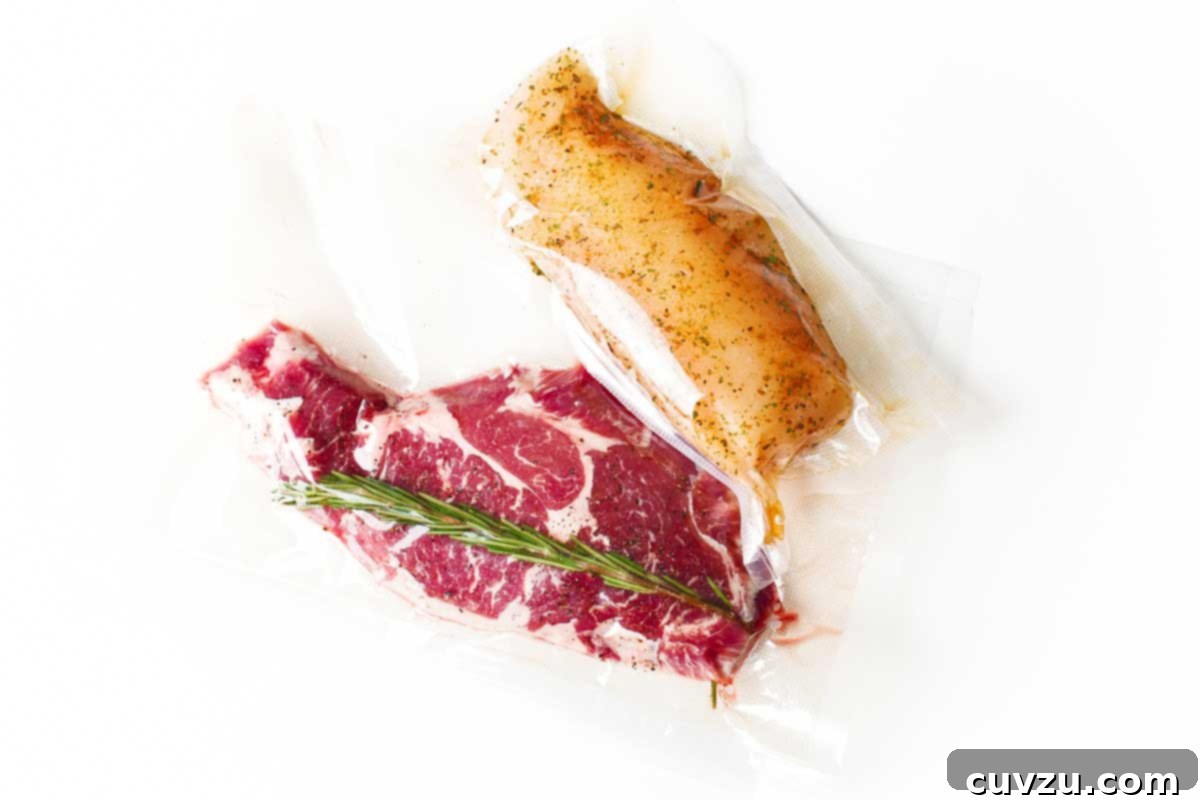
Sous vide is an absolute game-changer for efficient meal preparation and freezer stocking. The process of adding seasonings or marinades to food, vacuum sealing it into individual or family-sized portions, and then freezing it raw is incredibly simple. When you’re ready to cook, simply transfer the frozen bags to the refrigerator overnight to thaw. The next day, your food is perfectly prepped and ready for its sous vide bath. For even greater convenience, many foods can be cooked directly from a frozen state; just remember to increase the cooking time by approximately 50% compared to thawed ingredients.
This method is particularly advantageous when purchasing meats or seafood in bulk from large stores. Upon returning home, you can divide these larger quantities into perfectly portioned meals, season them to your liking, vacuum seal them, and freeze them. This ensures you always have ready-to-cook, perfectly seasoned ingredients on hand, eliminating waste and making weeknight dinners a breeze. Furthermore, sous vide is excellent for reheating leftovers. Vacuum seal your pre-cooked meals, and when reheating, set your water bath a few degrees lower than the original cooking temperature. This gentle reheating process ensures your food warms thoroughly without any risk of overcooking, maintaining its original texture and flavor.
Maintaining Your Sous Vide Machine: Cleaning and Descaling
To ensure the longevity and optimal performance of your immersion circulator, occasional cleaning to remove mineral deposits is essential, especially if you use tap water rather than filtered water. Mineral buildup, primarily from lime and calcium, can accumulate on the heating element and impeller over time, reducing efficiency. The descaling process is simple: most commercial “descalers” or even household solutions like white vinegar or CLR work effectively. Simply follow the product instructions, which usually involve soaking the circulator in the descaling solution. This routine maintenance isn’t overly time-consuming and becomes particularly important if you use your sous vide machine frequently, ensuring it continues to heat and circulate water precisely.
Sous Vide: The Ultimate Tool for Stress-Free Entertaining
While a sous vide machine may not be a daily kitchen appliance for everyone, its value becomes truly indispensable when entertaining. For hosts, the ability to precision-cook large quantities of food in advance significantly reduces stress and allows for more time spent with guests rather than being tethered to the stove. Imagine perfectly cooked steaks or tender chicken breasts, held at their ideal serving temperature until you’re ready to sear and serve. This “set it and forget it” aspect of sous vide ensures that every component of your meal is cooked to perfection, freeing you from last-minute culinary scrambles.

Sous vide transforms dinner parties from a high-pressure event into a seamless, enjoyable experience. Appetizers, side dishes, and main courses can all be prepared ahead of time, ensuring consistently impeccable results. This advanced preparation means you can focus on plating, garnishing, and engaging with your guests, rather than constantly monitoring cooking temperatures. It’s a culinary superpower that allows you to deliver restaurant-quality meals while remaining a relaxed and present host.
Acknowledging the Nuances: Potential Downsides of Sous Vide
While sous vide offers a plethora of benefits, it’s fair to acknowledge certain aspects that might be perceived as downsides, particularly for those who deeply enjoy the sensory experience of traditional cooking. For many passionate cooks, the act of cooking engages multiple senses: the satisfying sizzle of onions caramelizing in butter, the rich aromas that fill the kitchen as a sauce simmers, or the tactile feel of ingredients as they transform. These immediate, sensory cues are often central to gauging progress and deriving pleasure from the cooking process.
Pure sous vide cooking, performed entirely within a sealed bag in a water bath, largely bypasses these traditional sensory experiences. You won’t hear the sizzle or smell the aroma until the final searing step. However, this isn’t a limitation but rather an opportunity to integrate sous vide harmoniously with other cooking methods. The true mastery of sous vide often lies in using it as a foundational technique—a “precision cooking engine”—that complements traditional stovetop or oven finishing.
For example, shrimp cooked sous vide consistently achieve an unparalleled tenderness. A batch of perfectly cooked peel-and-eat shrimp can be quickly chilled in an ice bath, ready to be transformed into a sensational shrimp cocktail. For more complex dishes like shrimp and grits, sous vide can handle the shrimp while a rich, tomato-based sauce, fortified with andouille, onion, and garlic, simmers on the stovetop. Portions of the sauce can be frozen for later, and a portion added to the shrimp bag for marination before cooking sous vide. The finished shrimp and sauce can then be poured over creamy grits, creating a dish where the individual components are perfectly prepared through their optimal cooking methods. This approach illustrates that sous vide is not an exclusive method, but rather a powerful tool to be integrated into a broader culinary repertoire, achieving a harmonious blend of precision, flavor, and sensory satisfaction.