
Hearty & Flavorful Curried Cauliflower and Potato Pasties: A British Comfort Food Classic
Embrace the warmth of British comfort food with these exquisite Curried Cauliflower and Potato Pasties. This recipe brings together a rich, Indian-spiced tomato, potato, and cauliflower filling, lovingly encased in a wonderfully flaky hot water crust pastry. Perfect for a cozy meal or a delightful picnic, these pasties are a testament to how simple ingredients can create extraordinary flavors.

Why These Curried Pasties Will Become Your New Favorite
There’s something uniquely satisfying about a perfectly crafted pasty. These curried cauliflower and potato versions take that satisfaction to another level. They are incredibly versatile, tasting just as wholesome and delicious cold as they do piping hot. This makes them an ideal candidate for packed lunches, road trips, or as a delightful addition to any picnic spread.
As Chef Calum Franklin aptly puts it, these pasties rarely make it to a picnic basket in his house, as he’s “forever eating them piping hot out of the oven.” Their irresistible aroma and savory filling are a treat that’s hard to resist. For an extra touch of perfection, serve them with a spoonful of sweet and tangy mango chutney.
Understanding the Pasty: A Rich British Culinary Tradition
At its heart, a pasty is a handheld pie, typically featuring a savory filling enveloped in a robust pastry crust. While various fillings exist, curried versions have gained significant popularity, offering a vibrant twist on this classic. The pasty’s origins are deeply rooted in Cornwall, England, where it was historically a practical, all-in-one meal for miners and laborers to take to work.
Traditional Cornish pasties famously contain a hearty mixture of beef, onion, and potato, designed to be substantial and sustaining. However, beyond the Cornish borders, fillings have evolved dramatically over the years. This recipe proudly presents a vegetarian take, showcasing the incredible versatility of the pasty format.
The Magic of Hot Water Crust Pastry
One of the most distinctive features of a true pasty is its hot water crust pastry. Unlike flaky shortcrust or puff pastry, this dough is made by melting fat (traditionally lard) into hot water and then combining it with flour. This unique approach creates a dough that is firm yet pliable, making it easy to work with and shape. When baked, it transforms into a sturdy, beautifully crisp crust that holds its form exceptionally well, preventing any “soggy bottom” disasters and perfectly encasing its rich filling.
The hot water crust is crucial for a pasty that needs to be portable and eaten by hand, offering a satisfying bite without crumbling. Its unique texture is a hallmark of authentic British pasties, providing a wonderful contrast to the soft, flavorful filling inside.
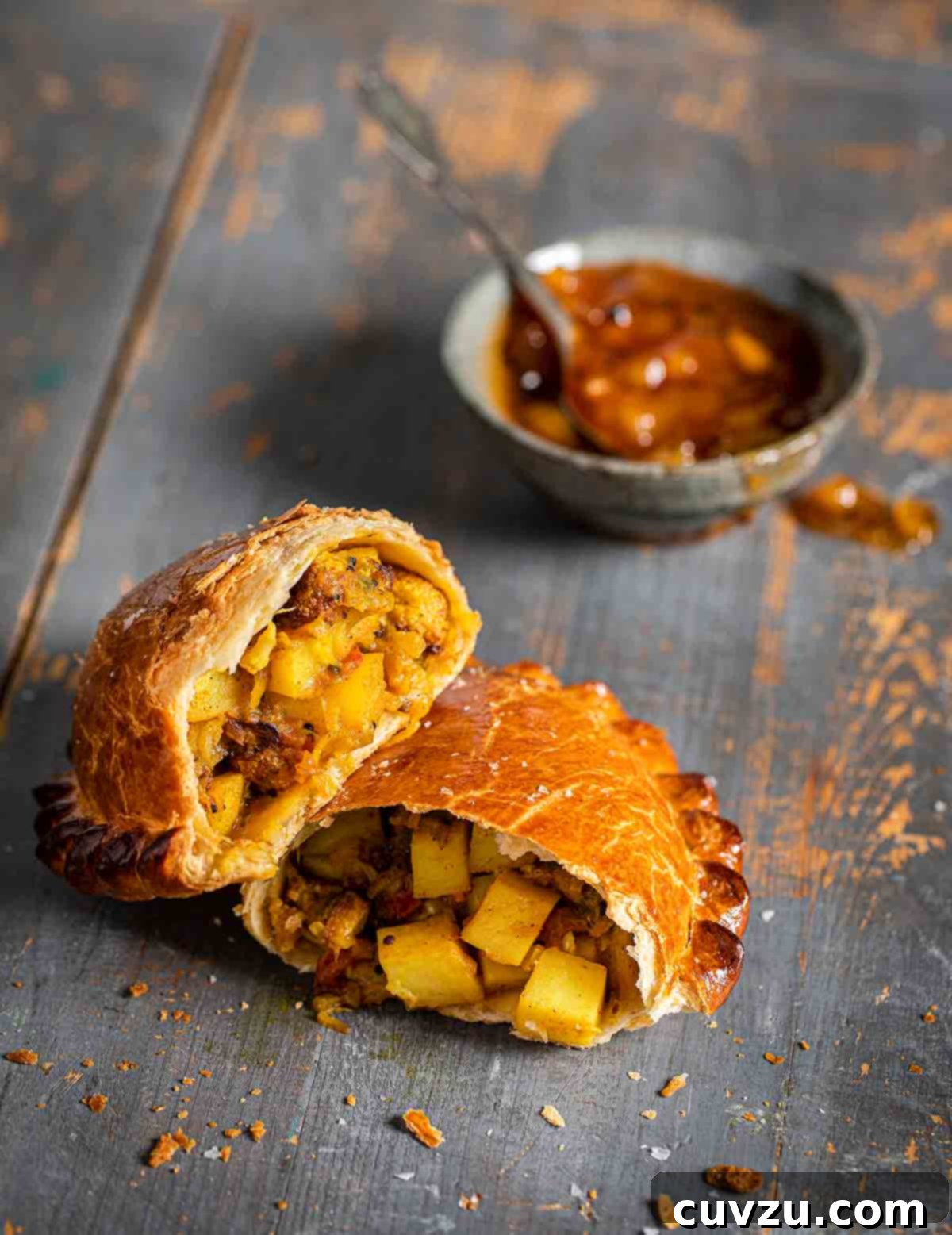

Curried Cauliflower and Potato Pasties
These curried cauliflower and potato pasties are classic British comfort food, featuring an Indian-spiced tomato, potato, and cauliflower filling encased in a flaky hot water pastry. A truly satisfying vegetarian delight!
Recipe by David Leite
Ingredients
For the Hot Water Crust Pastry
- Scant cup water (“scant” means “almost but not quite”)
- 5 3/4 ounces (about 3/4 cup) lard or shortening
- 2 rosemary sprigs (optional though recommended)
- 2 teaspoons table salt
- 18 ounces (about 3 3/4 cups) all-purpose flour
- 2 large eggs, beaten
For the Cauliflower and Potato Filling
- 2 tablespoons mild vegetable oil
- 1 teaspoon black mustard seeds
- 1 medium (7 oz) onion, thinly sliced
- 18 ounces floury potatoes, such as russets, peeled and cut into 1/2-inch (1cm) chunks
- 1 garlic clove, finely chopped
- 1 ounce fresh ginger, finely chopped
- 2 green chile peppers, seeded and finely chopped, or less to taste
- 1 teaspoon ground turmeric
- 1 teaspoon garam masala
- 2 medium (8 oz) plum tomatoes, roughly chopped
- 1/2 to 1 cup water
- 1 whole (1 1/2 lbs) cauliflower, cut into 1/2-inch (12-mm) florets
- 1/2 lime
- Table salt and black pepper, for seasoning
For Assembling the Pasties
- All-purpose flour, for the work surface
- 1 large egg yolk beaten with 1 teaspoon water, for brushing
- Store-bought or homemade Mango chutney, to serve (optional)
- Sea salt
Instructions
Make the Hot Water Crust Pastry
- In a medium saucepan over high heat, combine the scant cup of water, lard or shortening, rosemary sprigs, and 2 teaspoons of salt. Bring the mixture to a rolling boil. Once boiling, reduce the heat to a simmer and continue to cook until the lard or shortening has completely melted into the water. Turn off the heat and allow it to stand for at least 10 minutes to infuse.
- While the fat mixture infuses, sift the all-purpose flour into a large mixing bowl. Add the 2 beaten eggs. Using either a sturdy round-bladed knife to cut the egg into the flour or a stand mixer fitted with the paddle attachment on medium speed, begin to incorporate the eggs into the flour. Mix until the egg is thoroughly dispersed throughout the flour, a process that should take 1 to 2 minutes.
- Carefully remove the rosemary sprigs from the hot water and fat mixture. Return the water mixture to a boil. Slowly and gradually pour the boiling water over the flour and egg mixture in the bowl. As you pour, continuously scrape down the sides of the bowl and the paddle (if using a stand mixer) to prevent any lumps from forming. Continue mixing until all ingredients are well combined and a cohesive dough forms, typically taking 2 to 3 minutes.
- Transfer the warm dough onto a rimmed baking sheet lined with two pieces of parchment paper, placing the dough between them. Allow the dough to cool to room temperature. Once cooled, refrigerate the dough for at least 10 minutes before proceeding with assembly. This pastry dough can be stored in the refrigerator for up to 3 days, or frozen for up to 1 month. If using from the freezer, thaw it overnight in the refrigerator to bring it back to a workable temperature.
Make the Cauliflower and Potato Filling
- In a large skillet, warm 1 tablespoon of the mild vegetable oil over medium heat. Add the black mustard seeds and let them sizzle for approximately 30 seconds until they start to pop.
- Add the thinly sliced onion to the skillet along with a pinch of salt. Cook, stirring occasionally, until the onion softens and just begins to take on a light golden color, which should take about 8 to 10 minutes.
- Introduce the diced potatoes, finely chopped garlic, fresh ginger, and green chiles to the skillet. Stir in the ground turmeric and garam masala. Cook for 5 minutes, allowing the spices to become fragrant and coat the vegetables. Then, stir in the roughly chopped plum tomatoes and 1/2 cup of water. Cover the skillet and simmer until the potatoes are just cooked through and the sauce has noticeably thickened. Check periodically and add more water, up to another 1/2 cup, if the mixture appears too dry during simmering. This process typically takes between 15 to 30 minutes.
☞ TESTER TIP: For those who prefer a more pronounced and robust flavor profile, consider doubling the amounts of turmeric and garam masala. Adjust the green chiles according to your preferred level of heat.
- While the potato mixture simmers, preheat your oven to 450°F (232°C).
- In a separate bowl, toss the cauliflower florets with the remaining 1 tablespoon of vegetable oil. Spread the coated cauliflower in a single layer in a roasting pan or on a rimmed baking sheet. Roast in the preheated oven until the cauliflower is tender and has developed a nice golden-brown color, about 15 to 20 minutes.
- Once the cauliflower is roasted, reduce the oven temperature to 425°F (220°C).
- Add the roasted cauliflower to the potato mixture in the skillet. Squeeze in the juice from half a lime. Taste the filling and adjust seasoning with table salt and black pepper as needed. Allow the filling to cool completely before assembling the pasties.
Assemble the Pasties
- Divide the cooled hot water crust pastry dough into 8 equal portions. Lightly flour your work surface and, using a rolling pin, roll out each dough ball into a circle approximately 1/4-inch (6 mm) thick. The dough should be quite pliable and stretchy.
- Carefully spoon about 1/2 cup of the cooled cauliflower and potato filling onto one half of each pastry circle, leaving a clear border around the edge. Fold the other half of the pastry over the filling to create a half-moon shape. Firmly crimp the edges together to thoroughly seal the pasty, ensuring no filling escapes during baking.
- Line a rimmed baking sheet with parchment paper. Arrange the assembled pasties on the prepared sheet. In a small bowl, whisk together the large egg yolk with 1 teaspoon of water to create an egg wash. Brush the entire surface of each pasty with this egg wash, then sprinkle lightly with sea salt for extra flavor and a beautiful finish.
- Bake the pasties in the preheated 425°F (220°C) oven until they are beautifully golden brown and the pastry is crisp, approximately 25 minutes. Serve the pasties warm or at room temperature. If desired, accompany them with a generous spoonful of mango chutney for a delightful sweet and spicy contrast.
Expert Tips for Perfect Homemade Pasties
Creating perfect pasties involves a few key considerations that can elevate your baking experience and the final product. Here are some expert tips to guide you:
- Don’t Overwork the Pastry: While hot water crust pastry is more forgiving than traditional shortcrust, avoid excessive kneading once the flour and wet ingredients are combined. Mix until just combined to ensure a tender crust.
- Cool the Filling Completely: This is crucial! A warm filling can steam inside the pastry, leading to a soggy bottom and a less crisp crust. Ensure your cauliflower and potato mixture is fully cooled before spooning it into the dough.
- Experiment with Spices: The beauty of Indian-inspired dishes lies in customizable spice levels. If you enjoy more heat, increase the green chiles or add a pinch of cayenne pepper. For richer aroma, toast your mustard seeds until fragrant before adding other ingredients.
- The Art of Crimping: A well-sealed pasty is key. Practice your crimping technique (Paul Hollywood has excellent tutorials!) to create a robust edge that prevents leaks and gives your pasties a professional look.
- Uniform Florets and Cubes: Cutting your cauliflower florets and potato chunks to roughly the same 1/2-inch size ensures even cooking and a more cohesive filling texture, making the pasties easier to eat.
- Roasting the Cauliflower: Don’t skip roasting the cauliflower. This step adds a depth of flavor and a tender-crisp texture that boiling might not achieve, making the filling more dynamic.
Storage and Serving Suggestions
These Curried Cauliflower and Potato Pasties are incredibly versatile for meal planning. Store any leftover baked pasties in an airtight container in the refrigerator for up to 3-4 days. For longer storage, pasties can be frozen for up to 2-3 months. To reheat from refrigerated, simply warm them in an oven at 350°F (175°C) for 10-15 minutes until heated through and crisp again. If reheating from frozen, allow them to thaw overnight in the refrigerator before warming, or bake them directly from frozen at a lower temperature (around 300°F/150°C) for a longer period, approximately 30-40 minutes, until hot in the center.
While delicious on their own, a dollop of sweet mango chutney adds a fantastic tangy counterpoint to the savory, spiced filling. They also pair wonderfully with a simple green salad for a light meal, or a side of raita (Indian yogurt dip) to cool the palate.
Adapted From
The Pie Room
Buy On Amazon
Nutrition Information
Serving: 1 pasty
- Calories: 548 kcal
- Carbohydrates: 68 g
- Protein: 11 g
- Fat: 26 g
- Saturated Fat: 6 g
- Monounsaturated Fat: 10 g
- Trans Fat: 3 g
- Cholesterol: 47 mg
- Sodium: 668 mg
- Fiber: 6 g
- Sugar: 4 g
Nutrition information is automatically calculated and should only be used as an approximation.
Recipe Testers’ Insights: A Deeper Dive
Our dedicated team of recipe testers put these Curried Cauliflower and Potato Pasties through their paces. Here’s what they had to say about the unique hot water crust pastry, the aromatic filling, and their overall experience:
Louisa Sadiq
Louisa found these pasties to be “delicious crescents of flavor,” praising the pastry for its crisp, flaky texture and the delicate, subtle fragrance of rosemary that carried through. Her Pakistani mother-in-law was particularly impressed, noting that the filling captured the true flavors of Aloo Gobi.
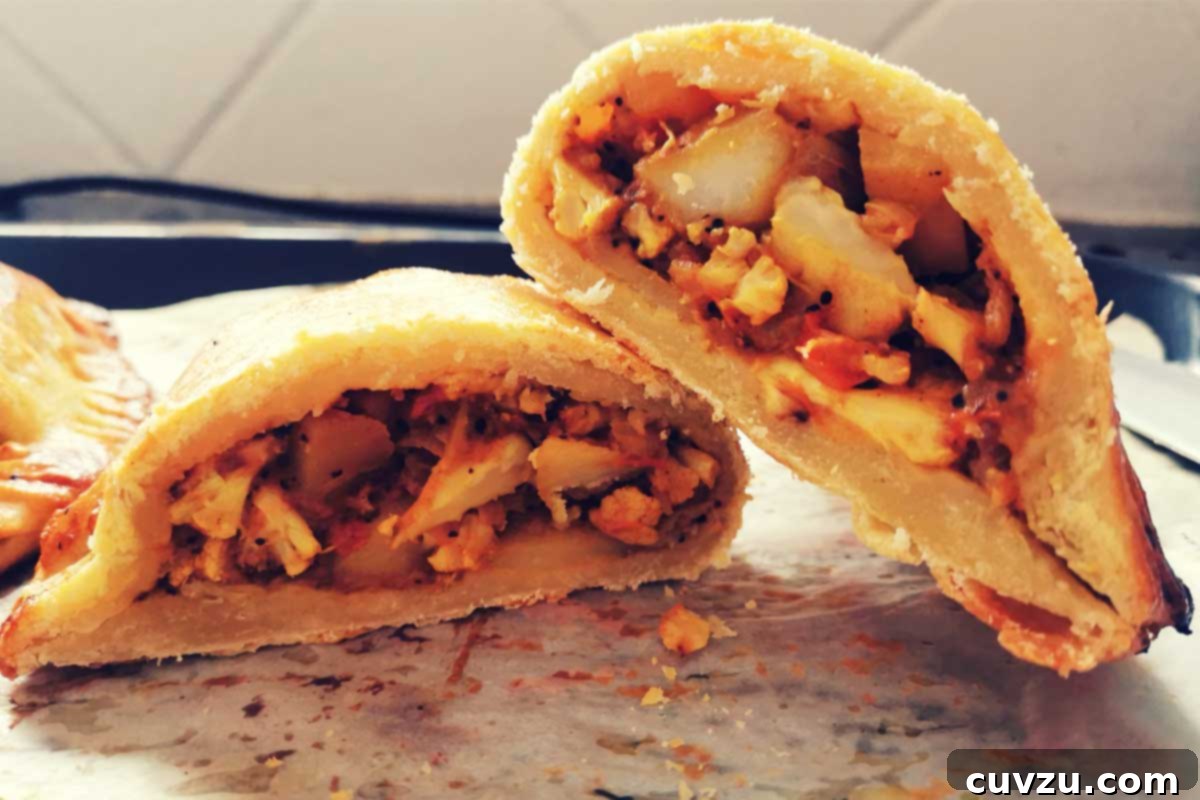
She successfully substituted margarine for lard, noting the dough was quick to make and easy to handle, resulting in beautifully baked pasties. While she appreciated the heat from the two chile peppers, she offered a helpful suggestion for the cooking process: she would prefer to cook the garlic, ginger, and spices slightly longer before adding the potatoes and tomatoes, to fully bloom their flavors and prevent sticking. Louisa also mused that the tangy sweetness of mango chutney would beautifully complement the pasty’s spiciness, even though she couldn’t try it herself due to seasonal availability. She confirmed they were equally enjoyable warm or cold.
Chiyo Ueyama
Chiyo enthusiastically described these as “portable curry,” loving the spiced, tender vegetables nestled in golden-brown pockets. She found them excellent both warm and at room temperature, highlighting the crust’s ability to remain dry and sturdy as it cools, cementing their status as an ideal picnic food. While mango chutney paired well, she noted the pasties were perfectly enjoyable plain.
She praised the hot water pastry for being super simple, pliable, and easy to handle, even after overnight refrigeration. Chiyo confirmed that shortening works beautifully as a vegan alternative to lard, producing a lighter crust with a more neutral flavor. Interestingly, she felt the rosemary in the pastry was unnecessary, as its aroma was completely overpowered by the robust curry filling. Her practical tip was to cut cauliflower florets into small, 1/2-inch pieces (matching the potatoes) to achieve a more cohesive filling, making stuffing and eating neater. She also pointed out that the recipe yields more filling than needed, which she happily considered a bonus.
Robin Currie
Robin truly channeled her inner Great British Baking Show contestant, even watching Paul Hollywood tutorials for crimping! She found the pastry “so easy” and “really fantastic,” baking into a perfectly flaky vessel with “NO SOGGY BOTTOM!” This highlights the robustness and quality of the hot water crust pastry method.
She chose to amplify the flavors by doubling the spices in the potato and cauliflower mixture, suggesting that the addition of some ground Indian peppers or paprika could further enhance the depth of flavor. Robin’s feedback underscores the adaptability of the recipe to individual taste preferences for spice and intensity.
Mollie T.
Mollie found the recipe, though a little time-consuming, to be a “great recipe that brought me out of my comfort zone.” She experimented with gluten-free flour, noting she would choose a different blend next time for the pastry, though she mentioned the filling itself was delicious enough to be enjoyed on its own. This insight is valuable for those considering dietary modifications.
She expressed her intention to make the pasties again, emphasizing the need for a better gluten-free flour blend. Mollie also suggested that a slightly sweet/tart topping would complement the pasties well, echoing the sentiment for mango chutney.
Chelsea W.
Chelsea was “obsessed” with the Hot Water Crust Pastry, declaring it foolproof and incredibly easy to work with, especially when using shortening. She appreciated that the dough is meant to be warm, eliminating the usual temperature concerns of other pastries. The baked result was sturdy, flaky, melt-in-your-mouth, and crunchy. She noted that infusing the fat with rosemary imparted a subtle flavor that perfectly complemented the filling, suggesting this dough is perfect for a variety of savory pies and pockets.
While she enjoyed the seasoned cauliflower and potato filling, Chelsea felt it was “a little dry” once baked into the pasties. She suggested increasing the tomatoes for more moisture or even spreading mango chutney directly onto the pastry dough before filling. Despite this, she concluded that the pasties were “delicious because of the crust,” even suggesting they could be made into two-bite appetizer sizes for gatherings.