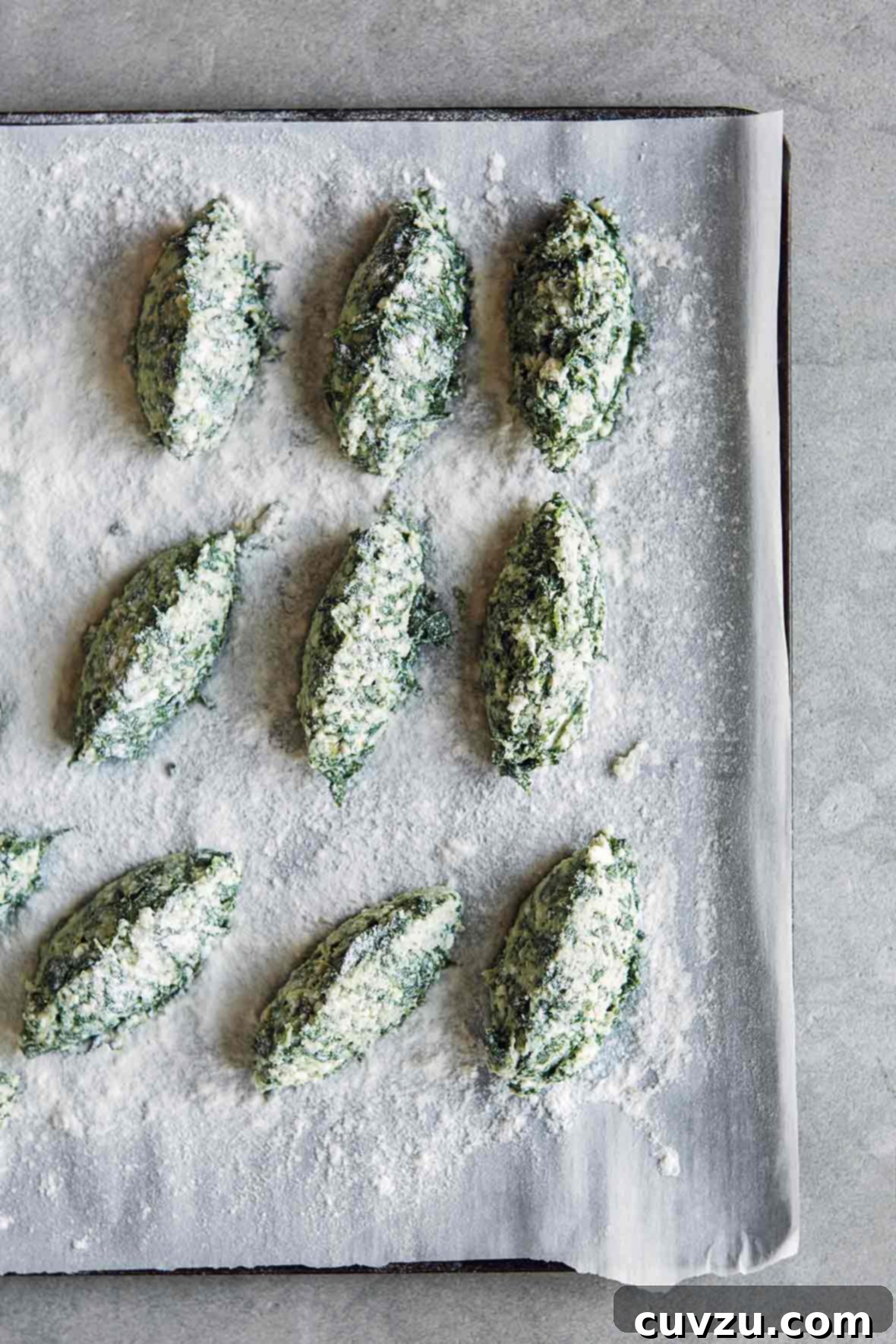
These Spinach and Ricotta Gnudi are a revelation in Italian cuisine, offering a delightful alternative to traditional gnocchi. Unlike their potato-based cousins, these Italian dumplings are crafted primarily from fresh ricotta cheese, vibrant spinach, and finely grated Parmigiano Reggiano. The result is an ethereal, cloud-like texture that truly lives up to their name – “gnudi” meaning “naked” in Tuscan dialect, referring to their gnocchi-like filling without the pasta casing. Each pillowy bite is incredibly light, melting in your mouth, especially when bathed in a simple yet incredibly rich and aromatic sage butter sauce. This recipe promises an authentic taste of Italy, bringing sophistication and comfort to your table with minimal fuss.
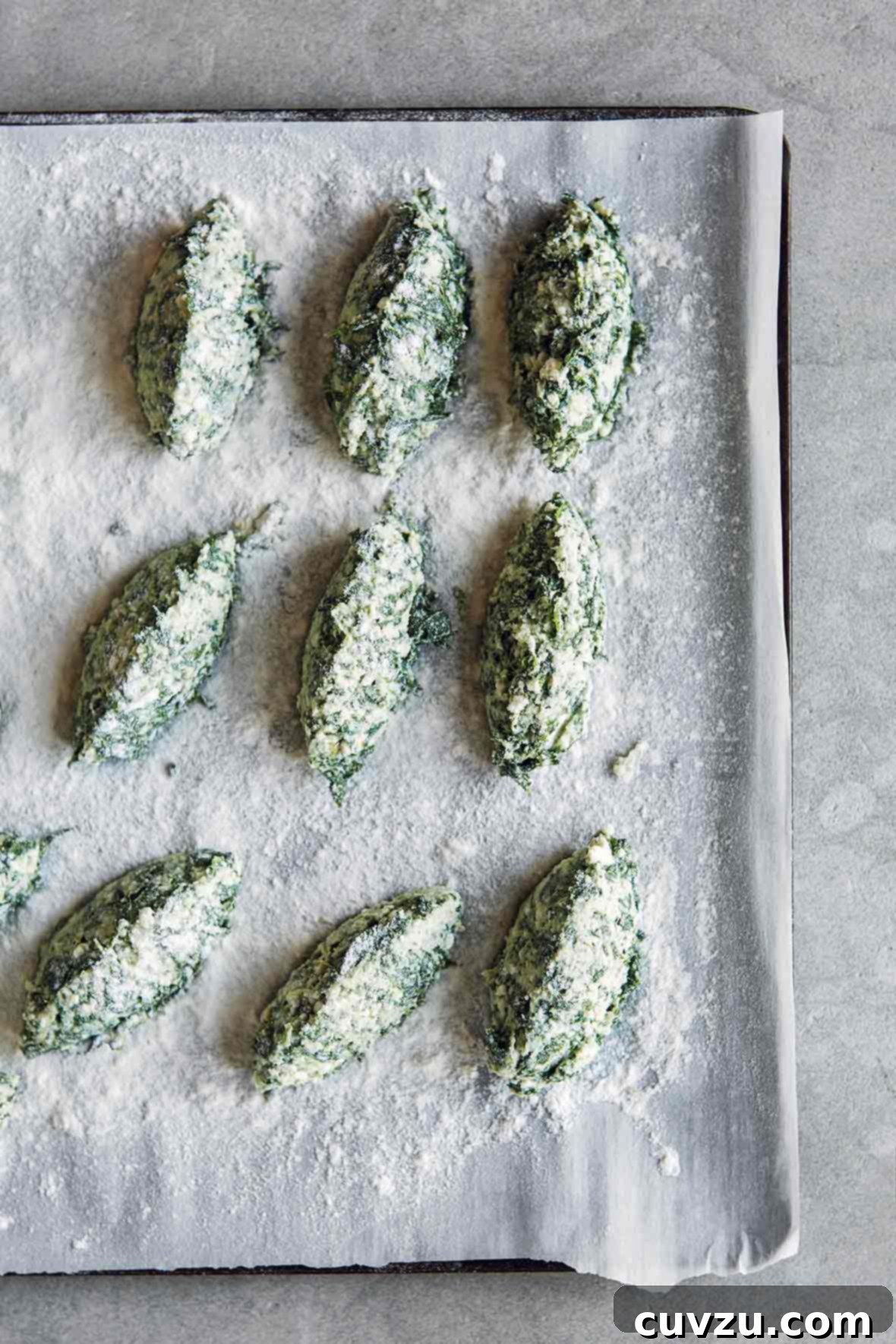
While potato gnocchi might be the more commonly known Italian dumpling, gnudi possess a subtle elegance and a captivating tenderness that sets them apart. Their delicate, airy structure makes them a truly unique culinary experience. This recipe, perfected by Angie Zoobkoff and celebrated by home cooks, showcases the beauty of simple, high-quality ingredients transformed into something extraordinary. Get ready to fall in love with these pillowy pockets of flavor, and you’ll find yourself saying their name with a smile. It’s not just a dish; it’s an experience.
What Exactly Are Spinach and Ricotta Gnudi?
Gnudi (pronounced “noo-dee”) are a delightful type of Italian dumpling, often hailed as the “naked ravioli” or “gnocchi without the shell.” Originating from Tuscany, they essentially consist of the delicious filling you might find in a ravioli, but served on its own. While potato gnocchi rely on potato starch for their structure, gnudi are primarily made from a blend of fresh ricotta cheese, cooked spinach, grated Parmigiano Reggiano, a touch of egg, and just enough flour to bind them. This unique composition gives them a remarkably soft, almost melt-in-your-mouth texture that is considerably lighter and airier than traditional gnocchi.
The beauty of gnudi lies in their simplicity and the quality of their ingredients. The creamy ricotta provides a luscious base, while the spinach adds a hint of earthy freshness and vibrant color. Parmigiano Reggiano contributes a salty, umami depth, elevating the overall flavor profile. Often served with a simple, yet profoundly flavorful sage butter sauce, gnudi allow the delicate taste of the cheese and spinach to truly shine through. They are typically gently boiled until they float to the surface, indicating they are cooked, then briefly sautéed in butter to achieve a slight golden crispness on the exterior. This contrast in textures — soft interior and lightly browned exterior — is part of what makes them so irresistible.
Why This Spinach and Ricotta Gnudi Recipe is a Must-Try
This particular recipe for Spinach and Ricotta Gnudi has garnered enthusiastic praise from those who have tried it, and for good reason. It captures the essence of authentic Italian cooking while making the process approachable for home chefs. Here’s why this recipe stands out:
- Unrivaled Lightness and Flavor: As noted by our featured tester, Mary L., these are the “spinach gnudi I have been looking for.” The recipe yields dumplings that are exceptionally light, airy, and bursting with the fresh, delicate flavors of spinach, ricotta, and Parmigiano Reggiano. The balance is simply perfect, offering a sophisticated taste without being heavy.
- Perfect Pairing with Sage Butter: The simple sage butter sauce is a harmonious match for the gnudi. The nutty, browned butter infused with crispy sage leaves creates a rich, aromatic coating that complements the delicate dumplings beautifully. It’s a classic pairing for a reason, enhancing every bite with its fragrant notes.
- Accessible to All Skill Levels: While making dumplings might seem intimidating, this recipe breaks down the process into manageable steps. Even if you’re new to making fresh pasta or dumplings, the clear instructions guide you to success. Our tester Sarah Heend found a workaround for forming the quenelles, proving that adaptability leads to delicious results!
- Versatile Serving Options: Whether you’re looking for an elegant appetizer or a satisfying main course, these gnudi fit the bill. Sarah Heend noted, “They would also make an elegant and impressive appetizer for a multi-course dinner,” while Nadine Bonda enjoyed them “as a main course for dinner.” This flexibility makes them ideal for various occasions.
- Rewarding Culinary Project: As Sarah Heend suggests, “the recipe is a bit time-consuming and I would recommend making the gnudi ahead of time… They would also be a great weekend cooking project.” The effort put into crafting these homemade dumplings is incredibly rewarding, offering a sense of accomplishment and a truly gourmet meal.
- Positive Tester Feedback: Both Sarah Heend and Nadine Bonda’s reviews highlight the deliciousness and successful outcomes of this recipe. Their insights provide valuable tips, such as browning the gnudi slightly longer for a “thin crunch” and the importance of good sage butter.
Featured Recipe Tester Comments: An Endorsement of Excellence
The true measure of a recipe’s success often comes from those who try it in their own kitchens. This Spinach and Ricotta Gnudi recipe has garnered enthusiastic reviews from our testers, highlighting its quality and appeal.
Recipe Testers’ Reviews
Sarah Heend
My husband’s enthusiastic quote summarizes it perfectly: “We have now discovered sage butter and it’s delicious.” He relished every last drop with his bread and even ‘borrowed’ a bit from my plate! These spinach and ricotta gnudi with sage butter made for a perfect date night dinner. We enjoyed them as a main course, accompanied by a fresh salad and some crusty bread. They are also elegant enough to serve as an impressive appetizer for a more elaborate multi-course meal. The spinach flavor was mild and beautifully balanced by the rich ricotta and salty Parmesan cheeses. The sage butter was truly the ideal finishing touch, tying the entire dish together.
I must admit, my attempt at forming the quenelles using two spoons was an epic failure. I quickly abandoned that method and instead used floured fingers to gently shape the mixture into ovals after scooping it with a spoon. This worked wonderfully!
Having made gnudi once before, I can confidently say this experience was vastly superior. The gnudi held together beautifully during boiling, unlike my previous attempt. Only one or two cracked slightly when I transferred them to drain on the towel, which was a minor issue. I chose to make a half recipe, mainly because the recipe note suggested eating them immediately, and there were only two of us. However, I found that the leftovers were perfectly fine after a brief rewarming in the microwave the next day.
I would advise that this recipe is a bit time-consuming, so planning ahead is key, especially if you’re tackling it on a busy weekday evening. It truly shines as a dedicated weekend cooking project, allowing you to savor the process.
Nadine Bonda
This recipe proved to be very tasty, and my eating partner and I thoroughly enjoyed it as a main course for dinner.
I had no trouble whatsoever forming the quenelles, which was a pleasant surprise. I experimented a bit with the cooking time in the butter; some I cooked for just 1 minute on each side, while others I allowed to cook slightly longer until they developed a lovely light brown color. We unanimously preferred the browned ones. That thin crunch on the exterior was absolutely delightful and added a wonderful textural contrast.
Not only did I sprinkle Parmigiano Reggiano on the gnudi as I plated them, but I also passed around an extra bowl of grated cheese. As expected, everyone took more, which I highly recommend!
For those considering this recipe as a main course, it’s worth noting our serving sizes: I ate 6 gnudi, and my eating partner consumed 12. This can help gauge portions for your own meal planning.
Spinach and Ricotta Gnudi Recipe
Spinach and Ricotta Gnudi
David Leite
- PIN
Mains
Italian
4
to 6 servings
786
kcal
30
45
1
15
Ingredients
For the gnudi
-
2
tablespoons
extra-virgin olive oil -
1
garlic clove,
peeled and halved -
1 1/2
pounds
baby spinach or spinach leaves (if using mature spinach,
remove the stalks, rinse, and pat it dry) -
12
ounces
ricotta (sheep or cow),
well drained -
1/2
cup
freshly grated Parmigiano Reggiano -
1
medium
egg -
1 3/4
ounces
00 flour or all-purpose flour*,
plus more for dusting - Sea salt and freshly ground black pepper
-
Freshly grated nutmeg,
to taste
For the sage butter
-
1
bunch
sage,
leaves stripped from the stalks except for 2 to 3 sprigs -
1/4
cup
grapeseed oil or other mild oil,
for frying -
11
tablespoons
salted butter -
1/4
cup
freshly grated Parmigiano Reggiano
Instructions
Make the gnudi
-
In a large skillet over medium heat, warm 1 tablespoon of olive oil. Prepare your draining setup by placing a strainer or colander over a large bowl. Spear half of the garlic clove with the tines of a fork. Once the oil is warm, add half of the spinach to the skillet, cover it with a lid or baking sheet, and cook. Stir the spinach every 30 seconds using the forked garlic until it is completely wilted, which should take approximately 2 to 3 minutes. Carefully transfer the cooked spinach into the prepared strainer or colander to begin draining.
-
Repeat the wilting process with the remaining spinach, using the rest of the olive oil and the other half of the garlic clove. Once wilted, add it to the already cooked spinach in the strainer. Allow the spinach to cool slightly. It is crucial to remove as much excess water as possible from the spinach to ensure your gnudi have the correct texture. You can achieve this by squeezing the spinach firmly in your hands, wringing it out thoroughly in a clean kitchen towel, or pressing down on it with the back of a spatula or spoon. If you are not using baby spinach, roughly chop the thoroughly drained spinach.
-
In a medium-sized mixing bowl, combine the well-drained ricotta cheese and the prepared spinach. Stir until they are thoroughly combined and evenly distributed. Next, incorporate the freshly grated Parmigiano Reggiano, the egg, and the flour. Continue to stir until all the ingredients are just combined, being careful not to overmix. Season the mixture generously with sea salt, freshly ground black pepper, and freshly grated nutmeg to taste. The nutmeg adds a classic Italian warmth to the dish.
-
Prepare a rimmed baking sheet by lining it with parchment paper and dusting it generously with flour. To form the gnudi, use two large spoons (soup spoons work well). Scoop a heaping spoonful of the mixture (approximately 1 ounce or 30 grams). Gently shape it into miniature egg-shaped dumplings or quenelles by repeatedly passing the mixture between the two spoons, turning and smoothing the sides as you go. For an easier method, as recommended by a tester, you can use one spoon to scoop the mixture and then use floured fingers to gently form it into an oval shape. Carefully place each formed gnudi onto the floured parchment paper. You should yield between 20 to 30 gnudi from this recipe. Lightly dust the tops of the gnudi with a little more flour, then loosely cover the baking sheet with plastic wrap. Set aside in a cool place until you are ready to cook them. The gnudi can be refrigerated for up to 24 hours before cooking, making this a great make-ahead option.
-
When you are ready to cook the gnudi, bring a large saucepan of generously salted water to a rolling boil. Carefully add the gnudi to the boiling water, then immediately reduce the heat to a gentle simmer. Allow them to cook gently until they rise to the surface, which indicates they are cooked through. This process typically takes about 3 to 5 minutes. Using a slotted spoon, carefully lift the cooked gnudi out of the water, allowing any excess water to drain for a moment. Gently place them back onto the baking sheet or a clean plate.
Make the sage butter
-
In a clean skillet over medium heat, warm the grapeseed oil (or other mild oil). Once warm, carefully add the stripped sage leaves in batches (about 6 to 8 at a time) and fry them for approximately 5 seconds. The goal is for them to become vibrant green and slightly crisp. Use tongs or a fork to transfer the fried sage leaves to paper towels to drain. Don’t worry if they don’t seem perfectly crisp immediately; they will crisp further as they cool.
-
In a separate large skillet, or the same cleaned skillet, melt the salted butter over medium heat along with the reserved sage sprigs. Keep a close eye on the butter; as soon as it begins to foam and take on a beautiful nutty brown color (this is brown butter, or beurre noisette!), add some of the cooked gnudi to the skillet. Ensure you do not overcrowd the pan, cooking in batches if necessary. Cook the gnudi until they just start to crisp and develop a golden-brown hue, which typically takes 1 to 2 minutes per side. Carefully turn them over and cook on the other side until lightly browned, another 1 to 2 minutes. This brief sautéing adds a wonderful texture.
Serve the gnudi
-
Divide the perfectly cooked and butter-sautéed gnudi among individual serving plates. Artfully arrange the crispy fried sage leaves around and on top of the gnudi. If desired, drizzle any remaining sage butter from the skillet over the gnudi for an extra layer of flavor. Finish by sprinkling a generous amount of freshly grated Parmigiano Reggiano over each serving. Serve immediately to enjoy their exquisite texture and warmth.
Notes
*Note How To Make Gluten-Free Spinach And Ricotta Gnudi
For those with gluten sensitivities or dietary preferences, this gnudi recipe can be easily adapted to be gluten-free. We achieved magnificent results by simply swapping an equal measure of your preferred gluten-free all-purpose flour blend for the 00 or regular all-purpose flour specified in the recipe. Ensure your chosen gluten-free blend contains a good balance of starches and gums for optimal texture and binding.
Adapted From
Cheese
Buy On Amazon
Nutrition
Serving:
1
serving
Calories:
786
kcal
Carbohydrates:
20
g
Protein:
24
g
Fat:
70
g
Saturated Fat:
33
g
Monounsaturated Fat:
20
g
Trans Fat:
1
g
Cholesterol:
180
mg
Sodium:
770
mg
Fiber:
4
g
Sugar:
1
g
Nutrition information is automatically calculated, so should only be used as an approximation.
Tried this recipe?
Mention @leitesculinaria or tag #leitesculinaria!
Expert Tips for Heavenly Gnudi
Crafting perfect spinach and ricotta gnudi is a rewarding process, and a few key tips can elevate your results from good to truly exceptional:
- Thoroughly Drain the Ricotta: This is arguably the most crucial step for achieving light, airy gnudi. Ricotta holds a lot of moisture, and excess water will lead to a heavy, dense dumpling. Place the ricotta in a fine-mesh sieve lined with cheesecloth and let it drain in the refrigerator for at least 4 hours, or even overnight. Pressing it gently can help expedite the process.
- Squeeze Out Spinach Moisture: Just like with ricotta, ensuring your cooked spinach is as dry as possible is vital. After wilting, wring out the spinach in a clean kitchen towel or paper towels until no more liquid comes out. This prevents the gnudi mixture from becoming too wet and sticky.
- Don’t Overwork the Dough: Gnudi dough is delicate. Once all ingredients are combined, mix just until incorporated. Overmixing can develop the gluten in the flour (even a small amount) and make the gnudi tough. Gentle handling is key to maintaining that ethereal texture.
- Generous Flour Dusting: When forming the gnudi, ensure your parchment paper and your hands (if using the hand-forming method) are generously dusted with flour. This prevents sticking and helps maintain their shape. Gnudi are fragile, so a little extra flour for dusting is your friend.
- Gentle Cooking in Water: When boiling, use a large pot of simmering, not vigorously boiling, salted water. Drop the gnudi in gently to avoid breaking them. They are cooked once they float to the surface, which typically takes only a few minutes.
- Achieve that Golden Brown Crust: As tester Nadine Bonda discovered, a little extra browning in the sage butter adds a delightful “thin crunch.” Don’t be afraid to let them cook for an extra minute or two on each side in the butter to develop that irresistible golden crust, enhancing both texture and flavor.
- Serve Immediately: Gnudi are at their absolute best when served fresh, straight from the sage butter. While they can be reheated (as Sarah Heend noted, “leftovers were just fine”), their delicate texture and warmth are most pronounced right after cooking.
- Freshly Grate Your Cheese: For the best flavor, always use freshly grated Parmigiano Reggiano. Pre-grated cheeses often contain anti-caking agents that can affect the texture and taste.
Serving Suggestions and Pairings
Spinach and Ricotta Gnudi, especially when finished with a fragrant sage butter, are a versatile dish that can be enjoyed in several ways. Their elegant simplicity makes them suitable for a variety of meal settings:
- As a Main Course: As many testers found, these gnudi make a delightful and satisfying main course. Pair them with a crisp green salad dressed with a light vinaigrette to cut through the richness of the butter. A side of crusty artisan bread is perfect for sopping up any leftover sage butter. For a more substantial meal, consider adding a simple grilled chicken breast or pan-seared scallops alongside.
- An Elegant Appetizer: If you’re hosting a multi-course dinner, these gnudi are an impressive and lighter appetizer option. Serve smaller portions (3-4 gnudi per plate) to open the palate without overwhelming it before the main event.
- Wine Pairings: For a perfect pairing, consider a light-bodied, crisp white wine that won’t overpower the delicate flavors of the gnudi. An Italian Pinot Grigio, Vermentino, or a dry Sauvignon Blanc would be excellent choices. If you prefer red, a very light Barbera or a young Chianti could work, but be mindful of heavy tannins.
- Alternative Sauces: While sage butter is classic and highly recommended, gnudi are also delicious with other light sauces. A simple fresh tomato sauce (passata), a light cream sauce with fresh herbs, or even a mushroom ragu can offer a different flavor profile. The key is to keep the sauce light so as not to mask the gnudi’s delicate texture.
Storage and Make-Ahead Tips
Preparing gnudi requires a bit of time, making it an excellent candidate for advance preparation. Here’s how to manage storage and make them ahead of time:
- Uncooked Gnudi: You can prepare the gnudi mixture and form the dumplings up to 24 hours in advance. After forming, dust them generously with flour on a parchment-lined baking sheet, ensuring they don’t touch each other. Loosely cover the tray with plastic wrap and refrigerate. When ready to cook, proceed directly to the boiling step.
- Cooked Gnudi (Before Sautéing): If you want to get even further ahead, you can boil the gnudi until they float, then immediately transfer them to an ice bath to stop the cooking. Once cooled, drain them thoroughly and gently toss them with a tiny bit of olive oil to prevent sticking. Store them in an airtight container in the refrigerator for up to 1-2 days. To reheat, you can gently sauté them in butter and sage, as per the recipe, or briefly warm them in a little chicken broth.
- Leftovers (After Sautéing): Cooked gnudi, especially those already sautéed in butter, are best eaten fresh. However, as Sarah Heend noted, “The leftovers were just fine briefly rewarmed in the microwave the next day.” Reheat gently in a microwave or a skillet with a touch of butter until just warmed through. Be aware that the texture may not be as ethereally light as freshly made gnudi.
Variations to Explore
While the classic spinach and ricotta gnudi with sage butter is undeniably delicious, don’t hesitate to experiment with variations to suit your taste or ingredients on hand:
- Gluten-Free Option: As highlighted in the recipe notes, substituting 00 flour with an equal measure of a quality gluten-free all-purpose flour blend works “to magnificent effect.” Ensure your blend contains xanthan gum for binding.
- Different Greens: While spinach is traditional, you could try other tender greens like finely chopped Swiss chard, kale (blanched and very well squeezed), or even wild ramps for a seasonal twist.
- Cheese Swaps: Experiment with different Italian cheeses. A blend of ricotta with some crumbled goat cheese or a touch of Pecorino Romano (use less as it’s saltier) could add interesting dimensions.
- Herb Variations for Butter Sauce: Instead of sage, consider fresh thyme, rosemary, or marjoram. A brown butter sauce infused with lemon zest and a different herb can be equally delightful.
- Spicier Kick: Add a pinch of red pepper flakes to the sage butter for a subtle warmth, or a tiny amount to the gnudi mixture itself if you enjoy heat.
- Nutty Crunch: Toasted pine nuts or finely chopped walnuts could be added to the gnudi mixture or sprinkled over the finished dish for an extra layer of texture.
Conclusion: Savor the Delight of Homemade Gnudi
These Spinach and Ricotta Gnudi are more than just a dish; they are a culinary journey into the heart of Italian comfort food. Their delicate, airy texture, combined with the rich simplicity of sage butter, creates an unforgettable dining experience. Whether you’re a seasoned chef or an adventurous home cook, this recipe offers a rewarding challenge that culminates in a truly spectacular meal. Take the time to drain your ricotta, squeeze your spinach, and handle your dough with care, and you’ll be rewarded with dumplings that taste like they came straight from a Tuscan trattoria. So, roll up your sleeves, embrace the process, and prepare to delight your senses with these exquisite homemade gnudi. Enjoy every pillowy, flavorful bite!