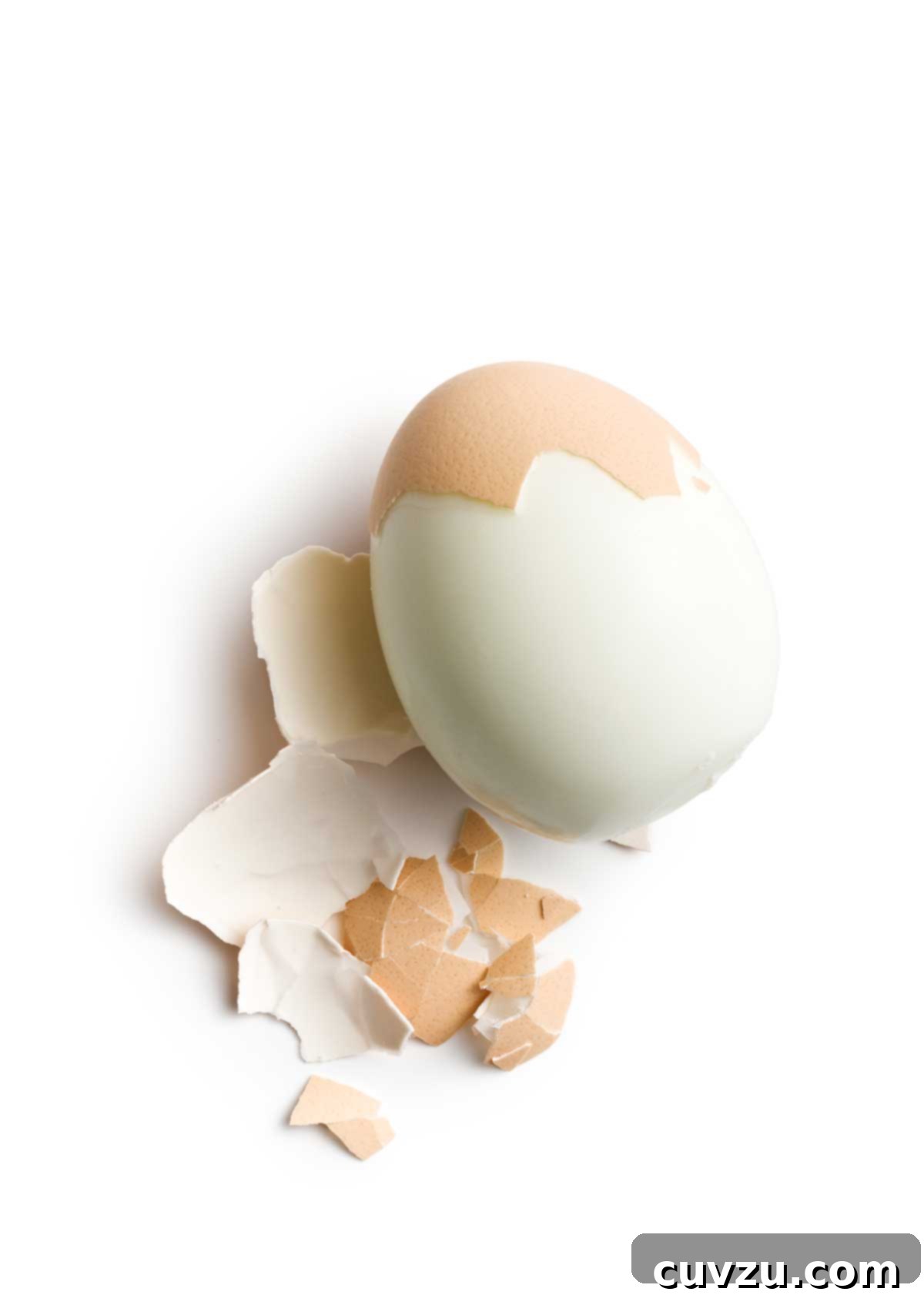
For decades, perfecting the art of the hard-boiled egg felt like a culinary enigma. The quest for flawless, easy-to-peel eggs often led to frustration, pockmarked whites, and a significant portion of the egg adhering stubbornly to its shell. Whether you’re preparing a batch for quick protein snacks, crafting elegant deviled eggs for a gathering, or whipping up a hearty egg salad, the struggle to achieve a smooth, unblemished surface is all too real. But what if there was a method that consistently delivered perfectly cooked, effortlessly peelable hard-boiled eggs every single time? The secret, it turns out, isn’t in boiling, but in the gentle power of steam.
Steaming eggs, rather than immersing them in boiling water, represents a revolutionary shift in how we approach this kitchen staple. This technique doesn’t just make peeling easier; it fundamentally changes the cooking process, resulting in eggs with superior texture and appearance. Say goodbye to jagged edges and unsightly craters, and welcome a world where your hard-boiled eggs are as visually appealing as they are delicious. This comprehensive guide will walk you through the science, the method, and the undeniable benefits of steaming your way to perfectly peeled hard-boiled eggs.
Unlock the Secret to Easy-Peel Hard-Boiled Eggs
Are You Tired of the Hard-Boiled Egg Peeling Nightmare?
If you’re like most home cooks, you’ve probably experienced the familiar frustration that comes with peeling hard-boiled eggs. You meticulously cook them, anticipating a perfect result, only to be met with the dreaded “egg acne”—those unsightly craters and gouges that mar the otherwise pristine egg white. This common problem can turn the simple task of preparing a snack or an appetizer into a frustrating chore.
Imagine this scenario: you’re preparing deviled eggs for a special occasion, hoping for elegant, smooth halves. Instead, each egg you peel resembles a battlefield, with chunks of precious egg white clinging to the shell, leaving you with less-than-appetizing, “bedeviled” eggs. Or perhaps you’re just trying to make a quick egg salad sandwich, and half the egg ends up in the trash with the shells. It’s enough to make anyone wary of making hard-boiled eggs at all, leading to a culinary standoff where your eggs seem as terrified of your peeling attempts as you are of their stubborn shells.
In the relentless pursuit of the perfect, easy-to-peel hard-boiled egg, many of us have tried every trick in the book. We’ve been told to use “gentle-aged” eggs, letting them sit in the fridge for days, only to find the results inconsistent at best. Some methods suggest adding eggs to cold water and then slowly bringing it to a boil, often resulting in cracked shells and messy whites. Others advocate for simmering the water instead of a vigorous boil, or adding various concoctions like salt or baking soda to the cooking water—each promising a miracle cure, but rarely delivering. The dramatic plunge into an ice bath immediately after cooking is a popular tip, and while helpful, it doesn’t always guarantee effortless peeling if the initial cooking method is flawed. Even allowing eggs to sit overnight in the fridge before peeling has been proposed. After countless failed attempts, a significant portion of our hard-boiled eggs inevitably ends up as egg salad fodder—delicious, yes, but not quite the pristine hard-boiled egg we set out to create.
The Science Behind Stubborn Shells: Why Are Hard-Boiled Eggs So Hard to Peel?
Understanding why some hard-boiled eggs cling so fiercely to their shells is the first step toward overcoming the challenge. At a fundamental level, the difficulty in peeling stems from the delicate membrane situated just beneath the eggshell. This thin, papery layer, often the bane of a cook’s existence, acts as a barrier between the shell and the egg white. The primary culprit behind its tenacious grip is the pH level of the egg white.
Fresh eggs naturally have a more acidic egg white. This acidity causes the proteins in the egg white to bind more tightly with the proteins in the membrane, effectively creating a strong, adhesive bond. The fresher the egg, the stronger this bond, making it incredibly difficult to separate the shell and membrane cleanly from the cooked white. This is why many cooks, in their quest for easy-peel eggs, swear by using older eggs. The pH of egg whites tends to rise as eggs age, becoming more alkaline, which weakens the bond between the white and the membrane.
However, relying solely on older eggs presents its own set of drawbacks. As eggs age, the whites can thin out, and the yolk tends to migrate away from the center. This can lead to undesirable “googly-eyed” deviled eggs, where the yolk is off-center, making for a less aesthetically pleasing presentation on your buffet table. So, while older eggs might offer a slight advantage in peeling, they often compromise the overall appearance and quality of your culinary creations. The challenge then becomes finding a method that ensures easy peeling without sacrificing the freshness and structural integrity of the egg.
Steaming vs. Boiling: Why Steaming Is the Superior Method for Perfect Hard-Boiled Eggs
The solution to the hard-boiled egg conundrum lies not in chemical additives or aging eggs, but in a simple change of cooking method: steaming. I first encountered the ingenious concept of steaming eggs a few years ago through Jeff Potter, the insightful author of Cooking for Geeks. His scientific approach revealed that steaming offers a distinct advantage over traditional boiling methods.
When eggs are steamed, the hot water vapor penetrates the permeable eggshell more effectively and consistently than liquid water does. This steam creates a pressure differential and helps to loosen the bond between the egg white and the inner membrane almost instantly. Unlike boiling, where the egg is constantly agitated and subjected to varying temperatures in the water, steaming provides a gentle, even heat distribution. This consistent, indirect heat facilitates the quick separation of the white from the membrane as the egg cooks, making the subsequent peeling process remarkably smooth and easy. The steam essentially acts as a subtle lubricant, ensuring that the shell comes away clean, leaving behind a perfectly smooth, unblemished hard-boiled egg.
Furthermore, steaming mitigates some of the issues associated with boiling. The risk of eggs cracking due to sudden temperature changes or bumping against each other in rapidly boiling water is significantly reduced. The gentle nature of steam cooking ensures that the egg cooks evenly from the outside in, contributing to a more uniform texture throughout the white and yolk. This method truly leverages food science to deliver consistently excellent results, transforming a notoriously tricky kitchen task into a straightforward and satisfying experience.
Your Step-by-Step Guide to Steaming Eggs for Effortless Peeling
Adopting the steaming method is incredibly simple and requires no specialized equipment beyond what you likely already have in your kitchen. Here’s how to achieve perfectly peelable hard-boiled eggs every time:
- Prepare Your Steamer Setup: Begin by placing a steamer insert (a collapsible basket steamer, a metal colander, or even a bamboo steamer will work) into a saucepan. Add about an inch or two of water to the bottom of the saucepan, ensuring the water level is below the base of the steamer insert and will not touch the eggs directly. This is crucial for creating true steam and not partially boiling the eggs. Cover the saucepan tightly with a lid to trap the steam effectively.
- Bring Water to a Rolling Boil: Place the covered saucepan over high heat and bring the water to a vigorous, rolling boil. You should see plenty of steam rising once the lid is lifted.
- Carefully Add Eggs to the Steamer: Once the water is boiling and steam is actively building, carefully nestle your large eggs directly from the refrigerator into the steamer insert. Using a pair of tongs can help prevent burns from the intense steam. Do not overcrowd the steamer; ensure there is enough space for the steam to circulate around each egg for even cooking.
- Cover and Steam: Immediately cover the saucepan tightly once the eggs are in place. This seals in the steam and allows the cooking process to begin efficiently.
- Steam According to Desired Doneness: Let the eggs steam for the recommended time based on your preferred yolk consistency (see timing guide below).
- Immediate Ice Bath: As soon as the steaming time is complete, carefully remove the eggs from the steamer and immediately plunge them into a prepared ice bath. An ice bath is a bowl filled with cold water and plenty of ice. This rapid cooling process halts the cooking, prevents the formation of the dreaded green ring around the yolk, and helps further separate the membrane from the egg white, making peeling even easier.
- Peel When Cool: Allow the eggs to sit in the ice bath for at least 5-10 minutes, or until they are cool enough to handle comfortably. Once cooled, gently crack the shell all over by tapping it on a hard surface, then roll it between your hands. The shell and membrane should then slide right off with minimal effort. You’ll often find you don’t even need to peel them under running water!
Perfect Timing: How Long to Steam Your Eggs for Every Preference
The beauty of steaming eggs is its precision. While the core benefit is easy peeling, the method also allows for consistent results in terms of yolk doneness, similar to boiling. However, factors such as egg size, initial temperature (straight from the fridge versus room temperature), altitude, and the number of eggs being steamed can all influence the precise cooking time. Here’s a general guideline for large eggs straight from the refrigerator, to help you achieve your desired yolk consistency:
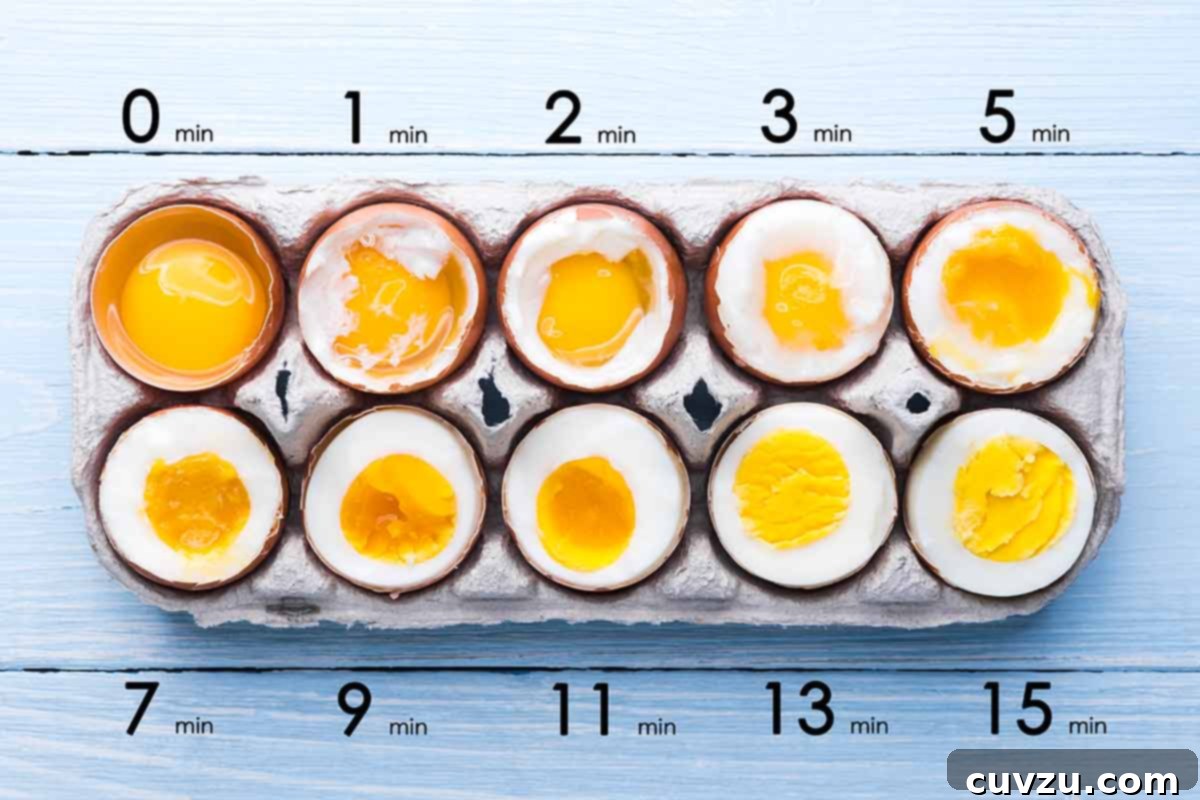
- 6-7 minutes: For a soft-boiled egg with a runny, custardy yolk and firm whites. Ideal for toast soldiers.
- 8 minutes: My personal preference, yielding a “jammy” yolk that is creamy and soft in the center, but no longer fully liquid. Perfect for salads or a rich snack.
- 9-10 minutes: For a firmer, yet still slightly moist and tender yolk. This is a great all-purpose hard-boiled egg.
- 11-12 minutes: For a fully firm, classic hard-boiled egg, where the yolk is completely set but not dry or chalky. This is often preferred for deviled eggs or egg salad where a solid yolk is desired.
It’s always a good idea to experiment with your specific stove and equipment to find the perfect timing for your taste. The visual chart below provides a fantastic reference point to guide you as you master the art of steamed eggs.
Banishing the Green Ring: A Guide to Perfectly Colored Yolks
Few things are more disheartening than slicing into a perfectly cooked egg only to discover that unappetizing, greenish-gray ring encircling the yolk. This “gruesome green ring,” as it’s often called, is a common issue with hard-cooked eggs and is a clear indicator of overcooking. It occurs due to a chemical reaction between the sulfur in the egg white and the iron in the yolk. When eggs are cooked for too long or at too high a temperature, these compounds react to form ferrous sulfide, which has a distinct green hue.
The great news is that steaming eggs naturally helps to prevent this unsightly discoloration. Steaming provides a gentler, more even heat than the tumultuous environment of furiously boiling water. This consistent, moderate heat allows the egg to cook through without reaching the excessive temperatures that trigger the ferrous sulfide reaction. Furthermore, the immediate plunge into an ice bath after steaming is a crucial step in preventing the green ring. Rapidly cooling the eggs quickly stops the cooking process, preventing any residual heat from continuing to cook the egg and encouraging that unwanted chemical reaction. By combining precise steaming with an immediate ice bath, you can consistently achieve beautiful, vibrant yellow yolks every time.
The Truth About Eggs and Cholesterol: Debunking the Myth
For many years, eggs, particularly their yolks, suffered from a bad reputation due to their cholesterol content. Health-conscious individuals were often advised to limit their egg intake, fearing that dietary cholesterol would directly translate to higher blood cholesterol levels and increased risk of heart disease. This widespread concern led many to avoid this nutritious food source or opt for egg whites only.
Thankfully, our understanding of dietary cholesterol and its impact on human health has evolved significantly. Recent research has provided compelling evidence that for most healthy individuals, dietary cholesterol from foods like eggs has a minimal effect on blood cholesterol levels. Instead, it’s saturated and trans fats that have a greater impact. In fact, studies have shown that eggs can actually help raise levels of high-density lipoprotein (HDL), often referred to as “good cholesterol,” which plays a crucial role in removing other forms of cholesterol from your arteries.
Recognizing this updated scientific understanding, major health organizations and dietary guidelines have revised their recommendations. The Federal dietary guidelines in the United States, for instance, were changed to reflect these new findings. Now, according to the Dietary Guidelines Advisory Committee, they no longer warn against dietary cholesterol and do not suggest limiting the number of eggs people consume. This is fantastic news for egg lovers!
Beyond cholesterol, eggs are a powerhouse of nutrition. They are an excellent source of high-quality protein, essential vitamins (like B12, D, and riboflavin), and minerals (including selenium, phosphorus, and iron). They also contain choline, an important nutrient for brain health. So, embrace the incredible edible egg! Whether steamed for a quick snack, mashed into a delicious egg salad, or halved for vibrant deviled eggs, you can enjoy them guilt-free and confidently incorporate them into a healthy and balanced diet.
Embrace the Steam for Flawless Hard-Boiled Eggs
The journey to consistently perfect, easy-to-peel hard-boiled eggs doesn’t have to be fraught with frustration. By shifting from traditional boiling to the superior method of steaming, you unlock a world of culinary ease and impeccable results. Steaming not only ensures that the shells virtually glide off, but it also contributes to a better-textured egg and eliminates the dreaded green ring around the yolk. This simple yet effective technique, backed by scientific understanding, transforms a common kitchen challenge into a simple, satisfying task.
So, next time you plan to make hard-boiled eggs, put away your boiling pot and embrace the steam. Experience the difference yourself: beautifully smooth, perfectly cooked eggs that are a joy to peel and a delight to eat. Your deviled eggs will look spectacular, your egg salads will be richer, and your snacks will be effortlessly convenient. Say goodbye to “egg acne” forever and hello to the era of perfectly steamed, easy-peel hard-boiled eggs!