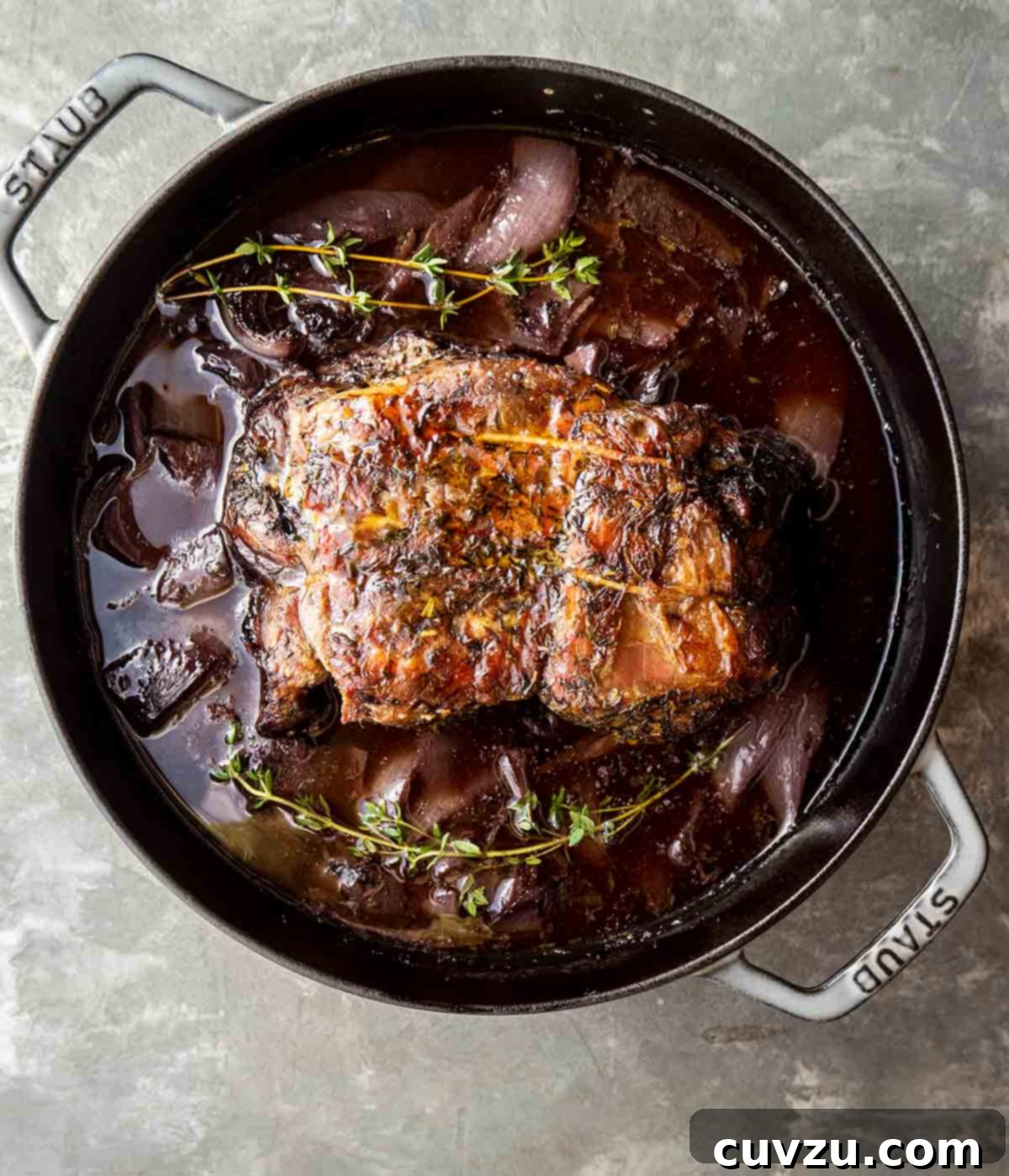
Red Wine Braised Pork Shoulder: An Effortless Culinary Masterpiece
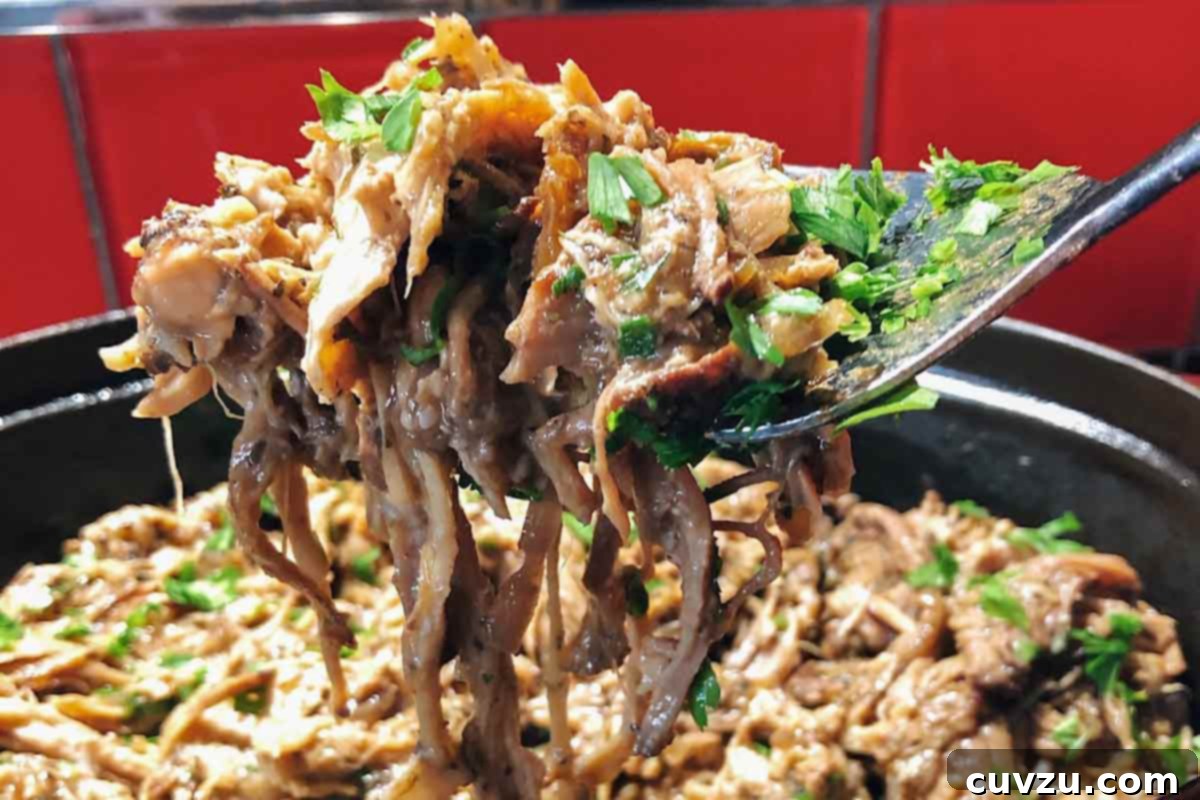
Discover the ultimate in comfort food with this exquisite red wine braised pork shoulder recipe. A truly easy, set-it-and-forget-it one-pot meal, it transforms humble pork shoulder into a meltingly tender, shredded delight. Infused with the aromatic complexity of red onions and a rich, herb-forward red wine sauce, this dish offers sophisticated French culinary overtones without any of the typical fuss. It’s the perfect solution for busy weeknights or elegant entertaining, promising a deeply flavorful experience with minimal effort.
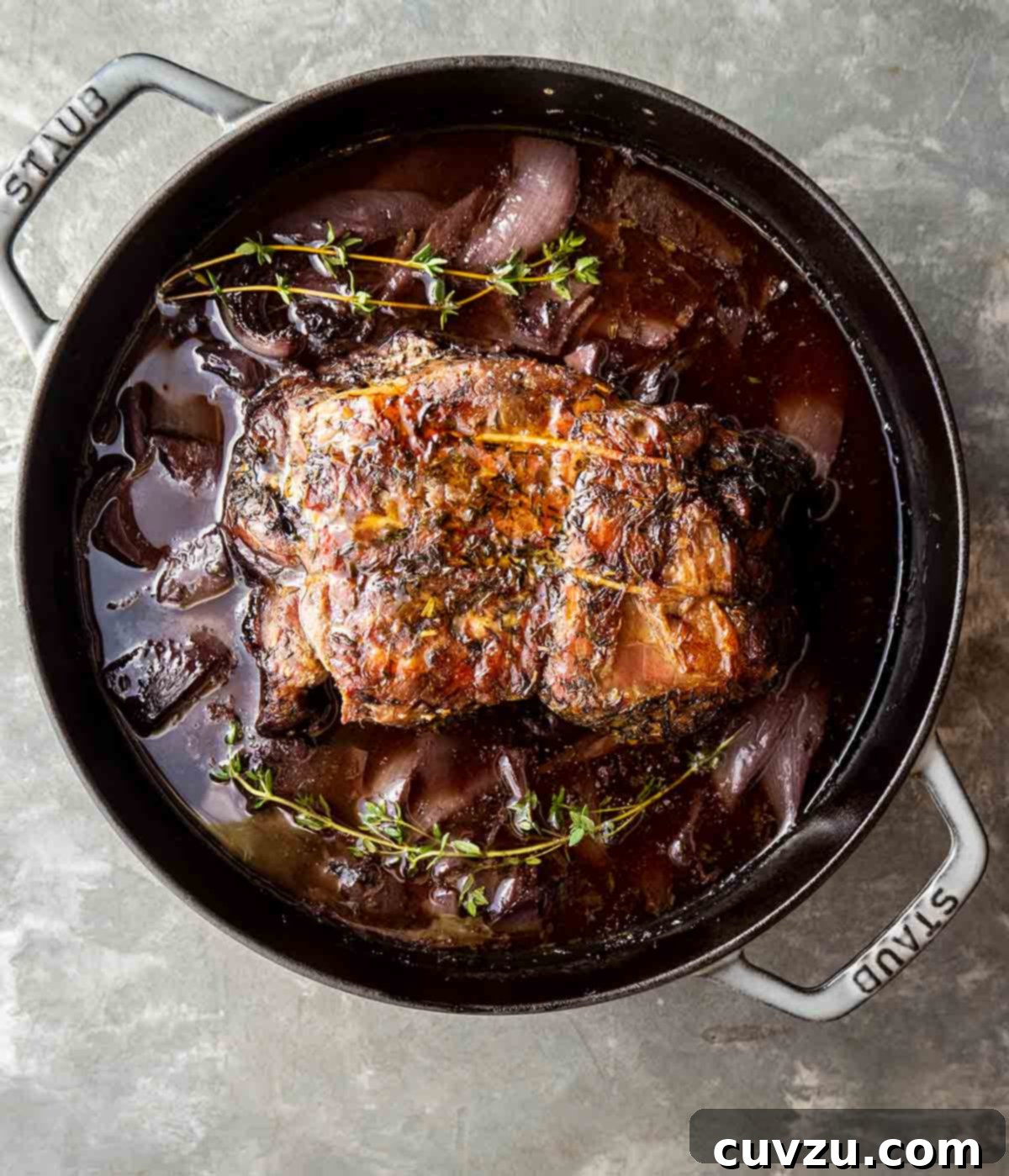
Featured Review: A Culinary Revelation
“This pork shoulder recipe is a revelation in both simplicity and taste! With just five minutes of prep, it was in the oven, and three hours later, the pork emerged incredibly tender, complemented by a silky, luxurious sauce. I opted for a Chilean Cab/Carmenere blend (Ruben & Flora) which lent a subtle whisper of spice. I confess, I couldn’t resist ‘testing’ piece after piece – it was simply that good! We enjoyed it as delicious sandwiches with a quick napa cabbage and curly parsley slaw, brightened by the lime dressing from Lime Coleslaw. Everyone was delighted, and there’s enough left for today – it will likely be even better!”
Lisa
This exceptional approach to cooking pork shoulder ensures a symphony of deep, resonant flavors that slowly develop as the meat gently braises. Beyond the initial quick chop and an occasional basting, the recipe is remarkably hands-off, making it an ideal choice for entertaining guests without being tethered to the kitchen. The versatility of dried herbs allows for personal preference, though basil, thyme, and parsley provide a classic, comforting base. Serve this succulent pork alongside a mound of creamy mashed potatoes for a truly perfect and soul-satisfying winter meal. The rich, aromatic sauce, infused with red wine, caramelised onions, and herbs, clings beautifully to the shredded pork, creating an unforgettable dining experience. –Andrea Bemis
Choosing the Perfect Red Wine for Braised Pork Shoulder
Selecting the right red wine is crucial for elevating this wine-braised pork shoulder to its full potential. You’ll want a dry, medium-to-full-bodied red wine that boasts a good fruit character and moderate tannins. The goal is to choose a wine with enough character and “brio” to stand up to the richness of the pork without overpowering or “bullying” its delicate flavors. The wine acts as both a tenderizer and a foundational flavor component, deepening the savory notes and creating a luxurious sauce.
Here are some top picks that consistently deliver excellent results, enhancing the dish with their unique profiles:
- Merlot: Often referred to as the “little black dress” of the wine world, Merlot is a safe and superb choice. Look for a dry variant that isn’t excessively oaky. Its naturally softer tannins and delightful plummy fruit notes integrate beautifully into the braise, ensuring a harmonious balance with the finished dish. Merlot contributes a smooth, rounded flavor that complements the pork’s richness without any harsh edges.
- Côtes du Rhône: This French blend, typically composed of Grenache, Syrah, and Mourvèdre, is a frequent go-to for braising. These wines are celebrated for their inviting red and dark fruit flavors, often accompanied by intriguing hints of herbs or a subtle peppery spice. They possess sufficient structure and body without being overly tannic, perfectly embodying those desired “Fancy-Pants French overtones” and often offering exceptional value. The complexity of these blends adds layers of flavor to the sauce.
- Pinot Noir: A good-quality Pinot Noir, whether from Burgundy, Oregon, or California, injects a welcome brightness and delicate earthy, cherry notes into the braise, making it an undeniable “slam-dunk” for pork. While generally lighter-bodied than Merlot or Côtes du Rhône, its subtle acidity and aromatic complexity contribute a wonderful depth to the final sauce, creating a sophisticated and nuanced flavor profile. Pinot Noir helps to cut through the richness of the pork, providing a lovely contrast.
Ultimately, the best wine is one you enjoy drinking. A wine that tastes good on its own will undoubtedly enhance your braised pork, adding depth, acidity, and a touch of elegance to every bite.
More Juicy & Tender Pork Shoulder Recipes
Slow-Roasted Pork Shoulder with Stuffed Squash
3 hrs 30 mins
Braised Pork Shoulder with Chorizo and White Beans
1 d
Roasted Pork Shoulder with Mustard Glaze
16 hrs
Smoked Pork Shoulder
22 hrs 15 mins
Share Your Experience: Write a Review
We love hearing from our community! If you make this delightful red wine braised pork shoulder, or any other dish featured on LC, please consider leaving a review, a star rating, and even sharing your best photo in the comments below. Your feedback and culinary adventures truly inspire us. –David
Indulgent Red Wine Braised Pork Shoulder
David Leite
Equipment
-
Dutch oven or heavy pot with a tight-fitting lid (ensure it fits the pork shoulder snugly to prevent excessive liquid evaporation)
Ingredients
- One (4 1/2 pound) bone-in pork shoulder or a 3 1/2- to 4-pound (1.6- to 1.8-kg) boneless shoulder (Boston butt works beautifully)
- 1 tablespoon dried basil
- 1 tablespoon dried thyme, or a couple sprigs fresh thyme
- 1 tablespoon dried parsley
- 1 tablespoon Diamond brand kosher salt or 2 teaspoons Morton kosher salt
- 2 teaspoons freshly ground black pepper
- 2 large (1 lb) red onions, thinly sliced
- 2 cups dry red wine (refer to the “Choosing the Perfect Red Wine” section above for recommendations)
- 1 bunch of fresh thyme, finely chopped, or a few sprigs parsley (optional, for garnish)
Instructions
-
1. Preheat your oven to a gentle 325°F (163°C). This low and slow temperature is key to achieving that desirable melt-in-your-mouth tenderness.
-
2. Prepare the pork: Thoroughly pat the pork shoulder dry with paper towels. This step helps the seasoning adhere better and can contribute to a slightly better crust on the fat cap, even without searing.
-
3. Create the spice rub: In a small bowl, combine the dried basil, dried thyme, dried parsley, kosher salt, and freshly ground black pepper. Mix them well to ensure an even distribution of flavors.
-
4. Assemble the braise: Arrange the thinly sliced red onions evenly across the bottom of a large Dutch oven or heavy pot. Place the pork shoulder on top of the onions, fat-side down, and generously sprinkle with half of the prepared spice mixture. Use your hands to rub the spices deeply and evenly into the meat. Flip the pork so the fat side is now facing up and rub it with the remaining spice mixture. Pour the dry red wine around the pork (not directly over the spices to avoid washing them off). Cover the Dutch oven tightly with its lid.
☞ TESTER TIP: The size of your Dutch oven matters significantly. It’s important to use a pot that fits the pork shoulder snugly, leaving only a small amount of room around the sides. If your pot is too large, the braising liquid will be too shallow and prone to evaporating too quickly, causing the meat to roast rather than braise. We’re aiming for a moist, tender braise, not a dry roast.
-
5. Begin the braising process: Carefully place the covered Dutch oven into your preheated oven. Allow the pork to braise, basting it gently every hour or so by spooning the liquid over the top. Continue cooking until the meat is incredibly tender, easily falling off the bone, and an instant-read thermometer inserted into the thickest part registers approximately 180°F (82°C). This typically takes 3 1/2 to 4 1/2 hours, with boneless roasts usually cooking faster than bone-in cuts. The long, slow cooking process breaks down connective tissues, yielding succulent results.
-
6. Rest the pork: Once tender, carefully remove the pork shoulder from the pot and transfer it to a cutting board. Tent it loosely with foil and allow it to rest while you prepare the glorious sauce. Resting allows the juices to redistribute, ensuring maximum flavor and moisture.
-
7. Prepare the sauce base: Skim any excess fat floating on the surface of the braising juices in the Dutch oven. Then, strain the flavorful liquid into a medium saucepan. This separates the rich liquid from any solids.
☞ TESTER TIP: For a sauce with minimal fat – though remember, fat equals flavor! – consider using a gravy separator, typically reserved for Thanksgiving. Alternatively, refrigerate or freeze your pan juices until the fat congeals on top, making it effortless to skim off the solidified layer.
-
8. Develop the sauce: Add about half of the cooked onions from the Dutch oven to the saucepan with the strained liquid. Return the remaining onions to the Dutch oven with the shredded pork. Place the saucepan over medium heat and bring the mixture to a gentle boil. Reduce the heat to a simmer and let it cook until the sauce has slightly reduced and intensified in flavor, typically 8 to 15 minutes. Note that this sauce is intentionally quite thin, allowing the natural flavors to shine.
-
9. Achieve a silky texture: Carefully pour the reduced sauce and onions from the saucepan into a high-speed blender. Puree until the sauce is completely smooth and velvety. This step creates a luxurious, restaurant-quality texture.
-
10. Combine and serve: Shred the rested pork shoulder using two forks and return it to the Dutch oven with the reserved onions. Drizzle generously with the freshly puréed sauce. Toss the pork and onions with the sauce until everything is beautifully coated. Keep warm over very low heat until you are ready to serve.
-
11. Garnish and enjoy: Divide the succulent pork among plates. If desired, garnish with freshly chopped thyme or parsley for a burst of fresh flavor and color. Serve immediately and savor every tender, wine-infused bite.

Adapted From
Local Dirt
Buy On Amazon
Nutrition Information
Nutrition information is automatically calculated, so should only be used as an approximation and is subject to variation based on ingredients and preparation methods.
Tried this recipe?
Mention @leitesculinaria or tag #leitesculinaria! We’d love to see your creations!
Insights and Reviews from Our Recipe Testers
Our dedicated team of recipe testers put this red wine braised pork shoulder through its paces, offering valuable feedback and reaffirming its status as a culinary hit. Across the board, they praised the dish for its remarkable ease of preparation, deep flavor, and consistently tender results. Many highlighted the minimal hands-on time required, making it ideal for entertaining or simply enjoying a luxurious meal on a busy day. Let’s delve into their experiences and tips:
Elie Nassar: A Delightful, Hands-Off Pulled Pork
Elie Nassar
Elie enthusiastically described this dish as a “delightful pulled pork,” reminiscent of French or Italian culinary traditions, complete with a tangy sauce and piquant onions. He marvelled at the “huge return on investment” due to its minimal work and impressive outcome. Elie shared his experience of preparing it on a weekday: “I seasoned it and put it in the pot, let it stay for an hour while I took some calls, and then put it in the oven and barely messed with it.” The pork held up “marvelously well until dinner time,” a testament to its braised nature. He found the pork tender and easy to shred, without falling apart excessively, which he considered perfect. Elie served his creation with a farro and sweet potato pilaf, alongside roasted acorn squash. Regarding the wine, he noted that a good red blend worked well and even speculated that a white wine, though different, could also be pleasant. His sauce, after puréeing, was thick enough to coat the meat beautifully.
Laura Tarlo: An Easy Revelation, Plus Fat Skimming Tips
Laura Tarlo
Laura initially approached the recipe with skepticism, finding it reminiscent of carnitas but with a distinct spice profile. She quickly found it “very easy to make.” Using a 3 1/2-pound boneless pork shoulder and Pinot Noir, her meat was “nicely done” after 3 1/2 hours. Laura shared a brilliant tip for fat removal: instead of skimming, she poured the liquid into a 9×13-inch baking dish and refrigerated it for three hours, allowing the fat to solidify and be easily removed. She prepared the sauce with half the onions and liquid, serving it over polenta. Later, it was enjoyed with mashed potatoes, proving its versatility. While she felt the recipe might not yield enough sauce for the entire amount of meat, she suggested adding a clove of garlic for future iterations. The leftover shredded pork was destined for pulled pork sandwiches, showcasing the dish’s excellent potential for meal prepping.
Anna Scott: The Power of Low and Slow, and Wine Quantity
Anna Scott
Anna’s review began with an enthusiastic “Boy, we are in for a treat!”, a sentiment that continued throughout her experience. She described braised dishes as her ultimate comfort food, always delivering “melt-in-your-mouth tender and oh so flavorful” results. This wine-braised pork shoulder was “no exception,” praising its simple preparation and ingredients, making it suitable for cooks of all levels. Anna noted that just “a trusty Dutch oven, dried herbs, and a bottle of red wine” were all that was needed for a “memorable meal.” She expressed initial hesitation about the mere two cups of wine called for, especially for such a large cut of pork and the evaporation expected over several hours of cooking. Consequently, she used an entire bottle of affordable Bordeaux, yet still found only about an inch of liquid remaining after cooking. She suggested recommending at least one full bottle of wine, and possibly some added stock, to yield more final sauce. Anna also appreciated the omission of a searing step, finding that the flavor and tenderness were in no way compromised. She also pondered adding rosemary or sage, or using fresh herbs for variations.
Darcy Buch: Deep Flavors and Sauce Consistency
Darcy Buch
Darcy found the recipe “easy and delicious,” noting that the pork was “beautifully tender and well-flavored,” with the aroma alone making stomachs growl. She used a medium-bodied Pinot Noir and suggested that varying the wine choice could lead to “very deep and interesting flavors.” Darcy observed that her sauce didn’t reduce significantly, resulting in a consistency more akin to “au jus” than a thicker sauce, though it still tasted great. Her primary recommendation for future attempts was to make a more deliberate effort to strain fat from the sauce, perhaps using a separator. Despite having a lean cut, she felt the sauce was a “little fattier” than her personal preference. She eagerly anticipates making this dish again, looking forward to experimenting further with wine choices and fat management.
Jack V.: A Perfect Fall Meal with Flavor Brightening Suggestions
Jack V.
Jack lauded this recipe as a “delicious fall one-pot meal,” emphasizing its minimal effort: “requiring nothing more than throwing everything in the pot and shoving it in an oven to forget about.” He highlighted the delightful aroma that permeated his home, perfect for a cold evening. The pork, he reported, was “wonderfully tender” and created an “excellent tangle of onions and sauce” that paired beautifully with polenta, buttered noodles, or even on its own. He also praised its make-ahead potential, as the sauce reheats very well. For his next attempt, Jack plans to reduce the salt, finding it a bit too much for the liquid, and suggests adding a splash of vinegar to the finished dish to “brighten the dark flavors up a tad.” He used a Cabernet Sauvignon for his braise.
Terry S.: Flexibility, Effortless Shredding, and Mashed Potato Perfection
Terry S.
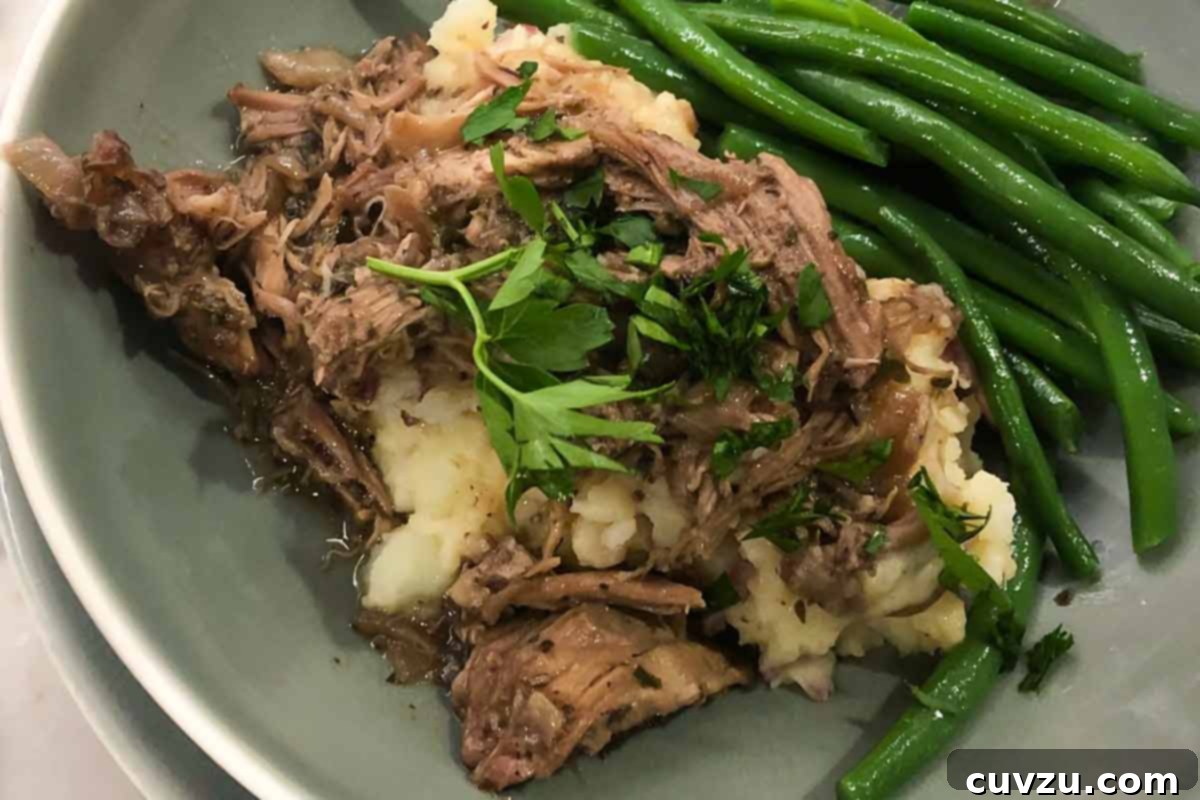
Terry confessed to questioning her sanity making a winter dish on a hot October day, but was ultimately “glad she did,” calling it “incredibly easy.” She outlined the simple steps: “Slice onions, rub pork with seasoning, add wine, and pop in the oven at 325° F for 3 1/2 hours.” She described the “scent will make anyone’s mouth begin to water” and proudly declared it “a recipe satisfying to both man and beast” (her daughter’s dog agreed!). Terry appreciated the recipe’s flexibility with herbs and wine. Using a bone-in pork shoulder, she swapped dried thyme and basil for two tablespoons of Herbes de Provence and used Decoy Pinot Noir for the wine, happily enjoying the rest herself. Shredding the meat after a 10-minute rest was “effortless.” She noted her sauce, simmered for 15 minutes, could have used more time for a “more syrup-like” consistency. In a self-admitted “brain fade,” she skipped pureeing the sauce but found “no harm no foul” as the onions had mostly broken down and the pork’s flavor was “spectacular.” She loves dishes that “can take care of themselves for the afternoon,” freeing her to focus on other aspects of the meal. Her husband declared it “one of the best recipes that I have tested so far,” and Terry plans to make it regularly. She perfectly paired it with Black Pepper Mashed Potatoes and green beans, noting the potatoes were the “perfect counterpoint.”
Denise McCormick: From Forty Pounds to Fantastic Flavor
Denise McCormick
Denise, like many, cherishes the ritual of a Sunday afternoon roast, reveling in the “savory smells swirling around the house all afternoon – priceless.” She recounted an amusing anecdote about inadvertently ordering “40 POUNDS of bone in pork shoulder” during the pandemic, leading to a significant butchering task. From this massive delivery, she extracted a 4-pound piece for testing. She declared the preparation “ridiculously easy for maximum fall flavor” and a roast she’d “make time and again.” The dish provided more than enough for six people, with leftovers ingeniously transformed into a comforting cottage pie. Using a boneless pork shoulder, her cook time of 3 1/2 hours was spot on. While the roast shredded easily after 20 minutes of resting, she suggested resting even longer to help with fat removal. Denise also recommended refrigerating the liquid or using a maigre (gravy separator) to remove more fat, as she found the pureed sauce to be “grey” from blending fatty liquid with red onion. She served her braise with whole roasted cauliflower, planning to roast cauliflower bits next time to layer the pork on top, ensuring more browned, flavorful pieces.
Ilda Costa-Sarnicki: A Skeptic Converted to “The Best Pulled Pork”
Ilda Costa-Sarnicki
Ilda initially didn’t expect to love this recipe, choosing it specifically because her husband isn’t a fan of caramelized onions or BBQ sauce. Her goal was to create a pulled pork he would adore. She was “very impressed with the ease of preparation” compared to her usual braised pork recipes. Despite initial concerns about the liquid level in her small oval cast iron Staub, the pan juices were almost covering the pork after the first hour, and the meat was easily dislodged from the bone at 2 hours and 40 minutes. She encountered “a lot of fat!” but easily separated it using a gravy separator, returning the onions to the reduced-fat sauce. The sauce, though “quite loose,” tasted “delicious,” and the meat was “moist and tender.” After reducing and pureeing the sauce to a “silky” consistency and resting the pork, she easily shredded it with two forks. The “marriage of the pork and the sauce required no ‘bejewelling’!” with flecks of red onion throughout. While “not the prettiest of finished dishes,” the lack of vibrant color was remedied with a side of sautéed pepper strips. Served on freshly baked English muffins, her husband declared it “smooth and mellow” and “the best pulled pork” he’d ever had! Ilda heartily agreed, especially given the minimal effort.
Jenny Latreille: A Divine Result from Simple Preparation
Jenny Latreille
Jenny proclaimed the recipe “SO good,” expressing disbelief at how easy it was to prepare pork shoulder for such a “divine result.” She typically finds pork shoulder very rich and this recipe was “no exception.” She settled on serving it with a simple salad and local handmade noodles, an “ideal combination” that was “not too heavy” and allowed the braised pork’s flavor to “really shine.” She anticipates the suggested side of mashed potatoes will be equally delicious when the snow arrives. Using a bone-in pork butt, it took nearly a full four hours to cook. After a 15-minute cool-down, she removed a large strip of fat before shredding. While the recipe didn’t specify removing fat before cooking, she plans to do so next time, finding the dish still rich enough. She confirmed that 8 minutes was an accurate reduction time for the liquid. Jenny “really enjoyed this recipe,” praising its beautiful flavors and the pork’s “tender and perfect” texture, confidently stating it’s “something that I will make again.”
Overall, the recipe testers consistently highlighted the dish’s exceptional flavor, ease of preparation, and versatility. Common themes included the benefits of slow cooking for tender results, the importance of fat management for sauce preference, and the joy of a “hands-off” meal that still delivers gourmet quality. Many expressed intentions to make this recipe a regular part of their culinary rotation, a strong testament to its appeal.