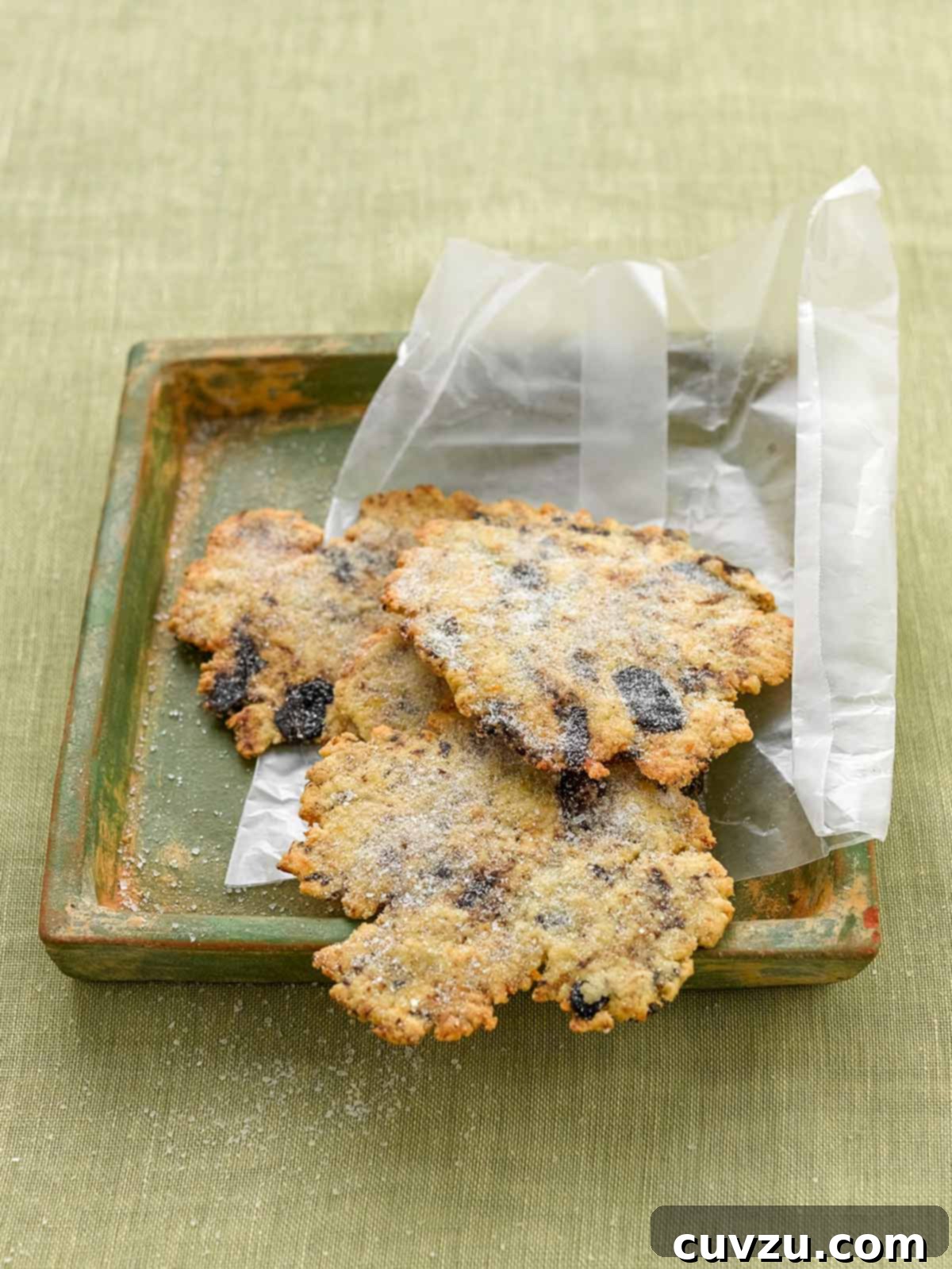
Portuguese Sweet Lemon-Black Olive Cookies: A Unique Culinary Delight
Step into a world where traditional flavors meet unexpected harmony with these incredible Portuguese Sweet Lemon-Black Olive Cookies. Imagine a delicate, crisp wafer that offers a symphony of tastes – the bright tang of lemon perfectly balanced by the earthy, slightly briny notes of black olives. These aren’t just cookies; they’re an experience, reminiscent of a refined British biscuit, ideal for dunking in your favorite hot beverage or savoring on their own.
While Portugal is globally celebrated for its rich culinary heritage, particularly its array of exquisite pastries like the iconic Pastel de Nata, cookies in the traditional sense haven’t always held the same prominence. Historically, Portuguese cookies often leaned towards simpler, crumbly textures, serving more as sturdy companions to coffee or tea rather than standalone gourmet delights. They were honest, humble, and comforting, but rarely adventurous in flavor combinations. This recipe, however, defies that tradition, offering a modern twist that respects classic Portuguese ingredients while creating something entirely new and captivating.
The Genesis of a Distinctive Cookie: A Culinary Journey
The inspiration for these extraordinary cookies stemmed from a memorable evening at a dinner party. There, amidst lively conversation and a spread of delectable dishes, a thin, sweet cookie caught my attention. Its delicate snap and intriguing flavor profile were unlike anything I’d encountered before in Portuguese baking. Each bite revealed a new layer of complexity – a subtle sweetness, a refreshing citrus note, and an unexpected hint of savory depth – leaving an indelible impression. I meticulously took mental notes, savoring one cookie after another, eager to decipher its many nuances. Yet, in the conviviality of the moment, I regrettably never thought to ask the hostess for the recipe, leaving me with a delightful mystery to unravel.
That encounter ignited a culinary quest. For months, I embarked on a journey of experimentation in my own kitchen, driven by the elusive memory of that perfect cookie. It was a process of trial and error, of subtle adjustments, and persistent refinement, exploring different ratios of flour to fat, varying sugar levels, and seeking that elusive crispness. Finally, after countless batches, I believe I not only recreated the essence of that original cookie but elevated it. I introduced two profoundly Portuguese elements that truly transform this treat: the vibrant zest of lemon and the distinctive character of black olives. These additions are not just flavors; they are a nod to the very soul of Portuguese cuisine, where simple, quality ingredients are celebrated and combined in ways that surprise and delight, creating a truly unique and unforgettable cookie.
These sweet lemon-olive cookies transcend the ordinary. Their compelling blend of sweet and savory notes makes them incredibly versatile. They can be enjoyed as a sophisticated standalone snack, a delightful accompaniment to your afternoon tea ritual, or a stimulating counterpoint to your morning coffee. For dessert, they are, in my personal opinion, exceptional as a crunchy, intriguing texture alongside a scoop of creamy vanilla ice cream or a refreshing lemon sorbet. Their unique flavor makes them a memorable addition to any dessert table or a thoughtful homemade gift, sure to impress even the most discerning palate.
Portuguese Sweet Lemon-Olive Cookie Recipe
★★★★☆
These delightful Portuguese sweet lemon-black olive cookies are elegant wafers bursting with flavor. Imagine a delicate biscuit perfect for tea time or a unique sweet snack, blending sweet citrus with savory olives.
David Leite
PIN
Ingredients for Portuguese Lemon-Olive Cookies
To embark on this delightful baking adventure, you’ll need a few staple pantry items and a couple of distinct Portuguese ingredients. Opt for high-quality extra-virgin olive oil and fresh, organic lemons to ensure the most vibrant flavors truly shine through in every bite of these unique cookies.
- 1 1/2 cups all-purpose flour
- 1/2 cup oil-cured black olives, rinsed quickly if particularly salty, pitted, and coarsely chopped
- 1/4 cup granulated sugar, plus more for coating
- 1/4 teaspoon baking powder
- 2 tablespoons grated lemon zest, preferably organic
- 1/8 teaspoon ground cinnamon
- Pinch of kosher salt
- 1/4 cup extra-virgin olive oil
- 1 large egg, beaten
Step-by-Step Instructions for Perfect Lemon-Olive Cookies
Creating these distinctive cookies is a straightforward process, but a few key details will ensure your success. Follow these steps carefully to achieve that coveted crisp texture and balanced flavor that makes these Portuguese treats so special.
-
Prepare Your Oven and Baking Sheets: Position an oven rack in the upper third of your oven, ensuring optimal heat distribution for these delicate wafers. Preheat your oven to a precise 375°F (190°C). This optimal temperature is crucial for achieving the perfect crispness and golden-brown edges. Cut three pieces of parchment paper to perfectly fit your standard baking sheets. Using parchment paper is essential as it prevents sticking, ensures even baking, and makes transferring the thin cookies a breeze after baking.
-
Combine Dry and Wet Ingredients: In a medium-sized mixing bowl, thoroughly combine all the dry ingredients. Add the all-purpose flour, the finely chopped oil-cured black olives (remembering to rinse them quickly if they’re particularly salty to prevent an overpowering brine taste), granulated sugar, baking powder, the wonderfully fragrant grated lemon zest (preferably from organic lemons for a purer aroma), ground cinnamon, and a pinch of kosher salt. Use a whisk to ensure everything is evenly distributed and no pockets of dry ingredients remain. In a separate small bowl, whisk together the extra-virgin olive oil and the beaten large egg until they are well emulsified. Pour this wet mixture into the dry ingredients. Using your hands, gently mix and knead until the dough comes together, no longer appearing dry and holding its shape when squeezed. This process should only take approximately 1 to 2 minutes. It’s crucial to avoid overmixing, as this can develop the gluten in the flour too much, leading to tough rather than tender cookies.
-
Shape and Roll the Cookies: Set a small bowl filled with extra granulated sugar nearby; this will be used generously for coating each cookie. Pinch off approximately 1 rounded tablespoon (about 1 ounce) of dough for each cookie. Roll this portion into a smooth ball between your palms. Generously coat the dough ball with sugar from the small bowl, ensuring an even layer all around. Place one piece of your pre-cut parchment paper on your clean work surface. Position a sugar-coated dough ball near one corner of the parchment. Place another piece of parchment paper directly on top of the dough ball. Using a rolling pin, carefully roll the ball into a thin 3 1/2- to 4-inch circle, aiming for a thickness of just under 1/16 inch. Don’t worry if the edges appear ragged or irregular; this rustic look is part of their inherent charm and authenticity. Repeat this process, placing 4 or 5 more wafers on the same parchment sheet, ensuring adequate spacing between them for even air circulation and baking. Once all cookies are rolled on one sheet, gently lift off the top piece of parchment and carefully slide the bottom parchment paper with the prepared cookies onto your baking sheet, ready for the oven.
-
Bake and Cool: Transfer the baking sheet to your preheated oven. Bake the lemon-olive cookies for 10 to 12 minutes, or until their edges turn a light golden brown and the tops appear slightly pebbled and set. The thinness of these cookies means they bake relatively quickly, so it’s important to keep a close eye on them to prevent over-browning, which can make them bitter. Once baked to perfection, carefully slide the parchment paper, with the cookies still on it, directly onto a wire cooling rack. This allows air to circulate freely around and beneath the cookies, ensuring they cool completely and achieve their signature delicate, crisp texture. Repeat the rolling and baking process with the remaining dough, using a fresh piece of parchment paper for each subsequent batch. Once fully cooled, these delicious and uniquely flavored cookies can be stored in an airtight container at room temperature for several days, maintaining their crispness and flavor. However, their irresistible appeal often means they disappear much faster than that!
Pro Tips for the Best Portuguese Lemon-Olive Cookies:
Achieving perfection with these unique cookies is simple with a few expert insights:
- Ingredient Quality Matters: The distinct flavor profile of these cookies heavily relies on the quality of your ingredients. Use fresh, organic lemons for their superior zest and opt for a good quality extra-virgin olive oil. The flavor of the olive oil will subtly permeate the cookie, so choose one you genuinely enjoy.
- Don’t Skimp on the Olives: Oil-cured black olives provide a savory depth that contrasts beautifully with the lemon and sugar. Ensure they are pitted and coarsely chopped to distribute their flavor evenly without overwhelming. If they are very salty, a quick rinse and pat dry can help mitigate excessive saltiness.
- Thin is In: The hallmark of these cookies is their delicate, wafer-like crispness. Rolling the dough to a scant 1/16 inch thickness is absolutely crucial. If they are too thick, they won’t achieve the desired snap and light texture. Don’t worry about perfect circles; the ragged edges add to their rustic, homemade charm.
- Even Coating of Sugar: Rolling the dough balls in extra granulated sugar before flattening them provides a lovely sweet crust. This sugar coating caramelizes slightly during baking, contributing significantly to the cookie’s crisp texture and appealing visual finish.
- Know Your Oven: Every oven is a little different. Keep an eye on the first batch closely. The cookies should be golden brown at the edges and appear set in the center. Remember, they will firm up further as they cool on the wire rack.
Serving Suggestions and Pairings:
These versatile cookies are a delightful addition to various occasions and can be paired in unexpected ways, making them a true culinary chameleon:
- Classic Tea Time: Their delicate nature and balanced flavors make them a perfect companion for an afternoon tea, whether it’s black, green, or herbal.
- Coffee Break: The savory notes from the olives cut through the bitterness of coffee, creating a harmonious and sophisticated balance.
- Dessert Enhancement: As suggested, they are exceptional alongside a scoop of creamy vanilla ice cream, a tangy lemon sorbet, or even a daring scoop of goat cheese ice cream for an adventurous pairing.
- Wine Pairing: Surprisingly, these cookies can pair beautifully with certain wines. Consider a dry, crisp white wine like a Vinho Verde from Portugal, or even a light, slightly fruity rosé, which can complement both the lemon and olive notes without overpowering them.
- Gourmet Gift: Packaged beautifully in a tin or cellophane bag, these unique cookies make an impressive and thoughtful homemade gift for food enthusiasts and adventurous eaters.
- Cheese Board Accent: For a truly unexpected and sophisticated twist, serve them on a cheese board with mild, creamy cheeses such as fresh chèvre or a soft brie. The sweet and savory profile provides an exciting contrast that elevates the entire experience.

Adapted From
The New Portuguese Table
Buy On Amazon
Explore More Culinary Insights
Ingredient Substitutions
Scale Recipe
Summarize
Nutrition Facts (Per Cookie)
Nutrition information is automatically calculated and should be used as an approximation only. Individual results may vary based on ingredients and preparation methods.
Calories: 102 kcal
Carbohydrates: 13 g
Protein: 2 g
Fat: 5 g
Saturated Fat: 1 g
Monounsaturated Fat: 3 g
Trans Fat: 1 g
Cholesterol: 12 mg
Sodium: 75 mg
Fiber: 1 g
Sugar: 3 g
Tried this recipe?
Mention @leitesculinaria or tag #leitesculinaria!