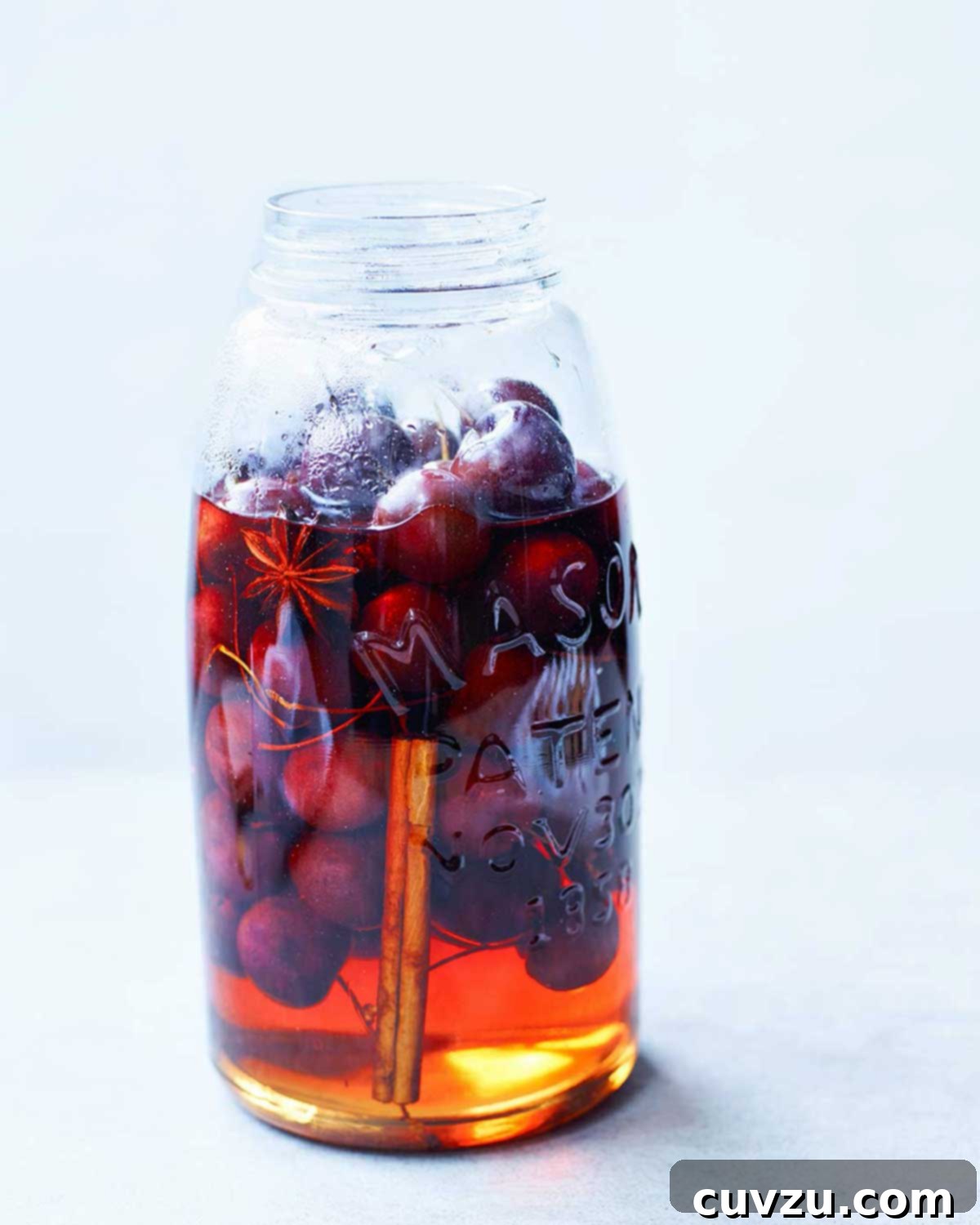
Mastering Pickled Cherries: Your Ultimate Guide to Preserving Summer’s Sweetness
As the warm days of summer bless us with an abundance of vibrant, fresh cherries, we often lament how quickly their season passes. But what if you could capture that peak flavor and enjoy it for months to come? Enter pickled cherries: a quick, easy, and utterly unexpected method to extend the cherry season far beyond its natural window. These little gems, tartly sweet, subtly spiced, and surprisingly hard to stop eating, transform into a versatile ingredient that effortlessly stretches the joy of summer. They offer a sophisticated twist that will tantalize your taste buds and impress your guests, becoming a truly indispensable staple in your pantry.
Crafting these pickled cherries is an artful way to take full advantage of the cherry season. The result is a stunning, simple, and truly conversation-starting preserve. Each lightly spiced, jewel-toned cherry delivers a complex burst of flavor—a delightful interplay of sweetness, tang, and warming spices that makes them spectacular with a wide array of foods. They are an impeccable pairing for a curated cheese selection or a generous charcuterie spread. Moreover, both the plump cherries and their infused syrup lend themselves beautifully to crafting exquisite cocktails and refreshing beverages, offering a unique depth that elevates your drinks. Consider this recipe your passport to extending the ephemeral beauty of fresh cherry season, transforming a fleeting pleasure into a lasting indulgence.
Unleashing Culinary Creativity: Diverse Uses for Pickled Cherries
Once you’ve successfully pickled a batch of these exquisite cherries, you’ll quickly discover that their versatility knows no bounds. Their unique flavor profile—a captivating blend of tart, sweet, and spiced—makes them a secret weapon in both sweet and savory applications. Don’t let your imagination be stifled; the possibilities for incorporating these vibrant preserves into your cooking and entertaining are endless. Here are some of our preferred incarnations to inspire you, but we encourage you to experiment and share your own delightful discoveries!
1. Elevate Your Entertaining: Cheese and Charcuterie Boards
- On a Cheese Board: Position these glistening red gems prominently on your next cheese board. Their bright acidity and subtle sweetness provide a perfect counterpoint to the richness of various cheeses. They pair exceptionally well with creamy goat cheese, robust cheddar, pungent blue cheeses, or even a mild brie, creating a sophisticated balance of flavors and textures. The vibrant color also adds an attractive visual pop.
- Alongside Charcuterie: Nibble pickled cherries alongside a selection of cured meats such as prosciutto, salami, or coppa. The tartness cuts through the savory, salty, and often fatty notes of the meats, offering a refreshing palate cleanser and adding a layer of gourmet complexity to your platter.
2. Sophisticated Sips: Cocktails and Refreshing Drinks
- Slip into Cocktails: Transform ordinary drinks into extraordinary concoctions. Drop a few pickled cherries into your favorite spirits like gin, whiskey, or vodka for an unexpected fruity-tart garnish. The pickling liquid itself can be used as a unique syrup, adding depth and a complex sweet-and-sour note to classic cocktails such as a Manhattan, Old Fashioned, or even a simple Gin & Tonic.
- Craft a “Cheater’s Shrub”: For a delightfully refreshing non-alcoholic option, simply toss a few pickled cherries and a splash of their pickling liquid into sparkling water. This creates an instant “shrub” — a vinegar-based syrup drink—offering a sophisticated and invigorating beverage that’s far from basic.
3. Dynamic Dishes: Salads and Savory Main Courses
- Toss into Salads: Add a burst of unexpected flavor and beautiful color to your green salads. Pickled cherries are particularly harmonious with bitter greens like arugula, radicchio, or endive. Pair them with toasted nuts (like pistachios or walnuts), crumbled feta or goat cheese, and perhaps some thinly sliced red onion for a truly gourmet salad. Be certain to save the remaining pickling liquid to dribble into your vinaigrette, infusing it with a unique sweet-tart zing.
- Stir into Pan Juices: Elevate your roasted meats by stirring a spoonful of chopped pickled cherries and a dash of their syrup into the pan juices of roast chicken, pork, or duck. The sweet and tart notes complement the savory richness of the meat, creating a surprisingly delicious glaze or a sophisticated sauce that adds depth and brightness.
4. Sweet Surprises: Desserts and Beyond
- Dessert Enhancement: While primarily leaning savory, these pickled cherries can also shine in sweet applications. Serve them alongside a creamy panna cotta, over a scoop of vanilla bean ice cream, or with a dollop of rich fromage blanc for an intriguing and elegant dessert experience. The tartness prevents the dessert from being overly sweet.
Pickled Cherries
David Leite
Equipment
- 1-quart glass jar with a lid and a rubber seal, sterilized
- Funnel (for easy pouring)
- Large saucepan
- Wooden skewer or popsicle stick (optional, for measuring liquid reduction)
Ingredients
- 3 cups granulated sugar
- 1 2/3 cups white wine vinegar
- 1 cinnamon stick
- 2 whole cloves
- 1 star anise
- 4 cups whole fresh cherries, whether Bing, Rainier, or another sweet variety
Instructions
-
If desired, gently remove the stems from the fresh cherries. It is crucial for the texture of the finished product that you do not remove the pits at this stage, as they help the cherries maintain their structure and contribute to the overall flavor during pickling.
-
In a large saucepan, combine the granulated sugar, white wine vinegar, cinnamon stick, whole cloves, and star anise. Stir the mixture continuously over low heat until all the sugar crystals have completely dissolved, which typically takes about 5 to 7 minutes. This gentle heating ensures a smooth, clear pickling liquid.
Increase the heat to bring the liquid to a rapid, rolling boil. Continue boiling vigorously until the volume of the liquid has reduced by approximately one-third. This concentration process usually takes between 10 to 15 minutes. To easily gauge when your mixture has reduced sufficiently, use a wooden skewer or popsicle stick as a depth gauge. Simply stick it into the pan at the beginning and make a notch at the liquid’s surface. Then, as you boil the mixture, take the pan off the heat every 5 minutes or so to let the bubbles calm down and check the depth against your marked stick, continuing until it aligns with the one-third reduction mark.
-
Once the pickling liquid has reduced, remove the pan from the heat. Immediately add the prepared cherries to the hot liquid. Allow the entire mixture to cool completely to room temperature. This cooling process is important as it allows the cherries to slowly absorb the spiced vinegar solution without becoming overly soft or mushy, preserving their delightful texture.
-
Using a funnel for ease and cleanliness, carefully pour the cooled cherries and their pickling liquid into your sterilized 1-quart glass jar, ensuring all cherries are submerged. If some cherries float, you can gently press them down with a small, food-safe weight or a piece of plastic wrap to keep them under the liquid. Close the lid securely with its rubber seal. Store the jar in a cool, dark place for at least 2 weeks before opening. During this curing period, the flavors will deepen and meld beautifully. You’ll observe the cherries becoming slightly wrinkled, somewhat similar to raisins, while retaining their rich dark or bright red color, depending on the variety initially used.
-
Once you’ve opened your jar of pickled cherries, they should be stored in the refrigerator. They will remain fresh and delicious for up to a month, providing a delightful culinary asset ready for use in various dishes or enjoyed simply as a unique snack.
Adapted From
Fermented
Buy On Amazon
Nutrition
Calories: 35 kcal
Carbohydrates: 9 g
Protein: 0.4 g
Fat: 0.1 g
Saturated Fat: 0.02 g
Monounsaturated Fat: 0.02 g
Sodium: 0.1 mg
Fiber: 1 g
Sugar: 8 g
Nutrition information is automatically calculated, so should only be used as an approximation.
Insights and Experiences from Our Recipe Testers
Our dedicated team of recipe testers rigorously evaluated this pickled cherries recipe, providing invaluable feedback and discovering a multitude of creative applications. Their enthusiastic reviews consistently highlight the recipe’s surprising ease of preparation, its captivating flavor profile, and the impressive versatility of the finished product. Read on to learn from their experiences, gain additional tips, and get inspired by their unique serving suggestions for these delightful preserves.
L. Mitchell
L. Mitchell’s review is a fervent call to action: “Quick! Run to your nearest farmer’s market and make these now!” She immediately declared these “little red gems” a definite summer staple, praising their delicious balance of tart, sweet, and spicy notes. L. Mitchell found them incredibly versatile, enjoying them on a simple ham and Cheddar sandwich, and brilliantly transforming them into an appetizer by serving them on crostini with soft goat cheese and baby arugula. Her culinary foresight extended to the leftover syrup, which she plans to repurpose into a gastrique, use for pickling shallots, or whisk into a vinaigrette, envisioning a perfect pairing with a roasted beet and goat cheese salad. A quick cherry shrub made with the syrup and soda water also earned high marks, solidifying her assessment that this recipe is “a real keeper!” She used sweet Bing cherries, noting the entire process came together rapidly: just 5 minutes to dissolve the sugar and another 5 minutes to reduce the liquid by one-third. After a two-week curing period, the cherries maintained their beautiful color and plumpness, yielding approximately three-quarters of a quart along with a generous amount of flavorful syrup.
Amy B.
Amy B. enthusiastically labeled these pickled cherries “pure ambrosia” or simply “umm umm good!” Despite growing up with a family that regularly canned and blanched, this recipe marked her first foray into canning, which she found surprisingly easy. The preparation, including washing the cherries, took a mere 15 minutes. She noted a “lovely aroma wafted up” from the pot as the sugar dissolved, which only intensified after 5 minutes of boiling. Overcome with curiosity, Amy admitted to tasting a sweet Bing cherry in the mixture before the recommended two-week waiting period, describing the experience as a “sweet, tangy flavor burst” reminiscent of childhood pickled peaches. She humorously added that if the flavor improves any further, she’d be in “cherry heaven.” The recipe yields a quart, which she divided into two 1-pint Mason jars. After testing both pitted and whole cherries, Amy unequivocally recommends keeping the cherries whole for the best results. This delightful recipe has, for Amy, solved the problem of cherries spoiling unused!
Paula D.
Paula D. immediately recognized the potential of these pickled cherries for holiday entertaining, envisioning them as a “wonderful” addition to charcuterie and cheese boards. She noted that the aroma of the simmering syrup filled her kitchen, evocatively reminding her of “winter days.” Paula’s anticipation was evident, confessing that she “opened the cupboard and peered in at them every single day” during the waiting period, confident they would be “well worth the wait.” She initially had concerns about the thickness of the syrup but realized, upon pouring it into the jar, that as the cherries sat for two weeks, more juice would naturally extract from them, likely reducing the syrup’s initial density. Paula also offered a practical tip for volume: while 4 cups of raw cherries might seem like too much for the jar initially, they will soften and compress significantly after cooking, allowing all 4 cups to fit perfectly once combined with the syrup.
Irene Seales
Irene Seales approached this pickled cherries recipe with great optimism, viewing it as a novel and promising method to capture the fleeting essence of cherry season. She found the recipe quite easy and believed it would work well with any available cherry variety, choosing Rainier cherries from her local market and expressing interest in trying Bing cherries next. Irene provided several valuable practical tips for success: she advised ensuring good ventilation, as the boiling vinegar can produce strong vapors. She also stressed the importance of carefully monitoring the sugar to prevent it from caramelizing, recommending the wooden skewer method as a depth gauge to accurately reduce the liquid by one-third. She found an 8-inch diameter, 3.2-quart saucepan to be ideal, as the rapid boil caused the liquid to bubble up quite a bit. After 15 minutes, she measured about 2 1/2 cups of the thick syrupy liquid before adding the cherries, which fit in a single layer. For trouble-free pouring, she highly recommended using a canning funnel. To address cherries floating, Irene cleverly used a food-safe canning lid insert under the ring and lid to keep the fruit submerged. The spiced syrup smelled delightful, and after sealing the jar for two weeks in the cellar, she eagerly anticipated tasting them, envisioning them on an appetizer board or mixed into drinks. She even discovered that a spoonful of the syrup in an infusion of ginger and cinnamon water solidified on the spoon and ice, reminding her of traditional Greek cherry spoon sweets.
Anna Scott
Anna Scott praised this recipe as a “wonderful way to reap the benefits of ripe produce year round,” especially noting its uniqueness among popular canning methods. She highlighted its distinct flavor components: fresh cherries combined with sugar, white wine vinegar (she personally used a Prosecco vinegar), and the comforting warmth of a cinnamon stick, two cloves, and one star anise. This blend, she explained, imparts a “tart ‘pop’ of flavor” while the spices contribute “real depth of flavor.” Anna confirmed that the two-week waiting period in a cool spot is “well worth the wait,” as the cherries emerged with a still-bright red color, a wonderful pickled flavor, and only a tiny bit of wrinkling. She looks forward to experimenting with them in many recipes, already planning to use them in a salad with curly endive, pistachios, and crumbled goat cheese, pairing them with fennel-crusted pork chops, and serving them as a sweet application with fresh mint over creamy fromage blanc. Regarding the process, she noted that the sugar dissolved in the vinegar mixture in about 10 minutes over low heat. Using Bing cherries, Anna specifically mentioned removing the stems before adding them to the jar, a small detail she deemed important. The cherries and liquid took approximately 20 minutes to cool to room temperature.
Shauna Hinchen-Joyal
Shauna Hinchen-Joyal found this pickled cherries recipe “super easy to put together,” making it accessible even for those, like herself, who aren’t seasoned pickle-makers. She was thrilled to discover a new and effective method for preserving local Massachusetts Rainier cherries, expressing excitement about adding these beautiful preserves to her next cheese board. Shauna particularly enjoyed the visual aspect, noting that the pickling liquid turned a “beautiful pink colored” once poured into the jar, adding to the allure of the finished product.
Elie Nassar
Elie Nassar highlighted this recipe as an excellent opportunity to take advantage of cherry season, especially when the fruit is abundant and well-priced. He found the recipe straightforward to prepare, yielding “lovely preserved cherries with an interesting texture.” He described the cherries as becoming “a bit wrinkled like a raisin but they do not fully cook or turn mushy,” thus retaining a pleasant, firm quality. Elie emphasized that keeping the cherries whole prevents them from being overpowered by the vinegar. He particularly enjoyed them served alongside thin slices of sourdough rye bread and a strong Cheddar cheese, offering a practical tip to “open those windows for ventilation with those vinegar fumes!” He noted that the cherries do wrinkle and the vinegar mixture absorbs much of their color. While the recipe produced a quart, Elie suggested that the amount of liquid might be slightly more than necessary, potentially allowing for a reduction of the pickling liquid by a quarter or a third, or alternatively, adding another cup or two of cherries. He also praised the leftover vinegar syrup as “delicious, kind of like a ‘shrub’,” and plans to repurpose it in various drinks and cocktails.