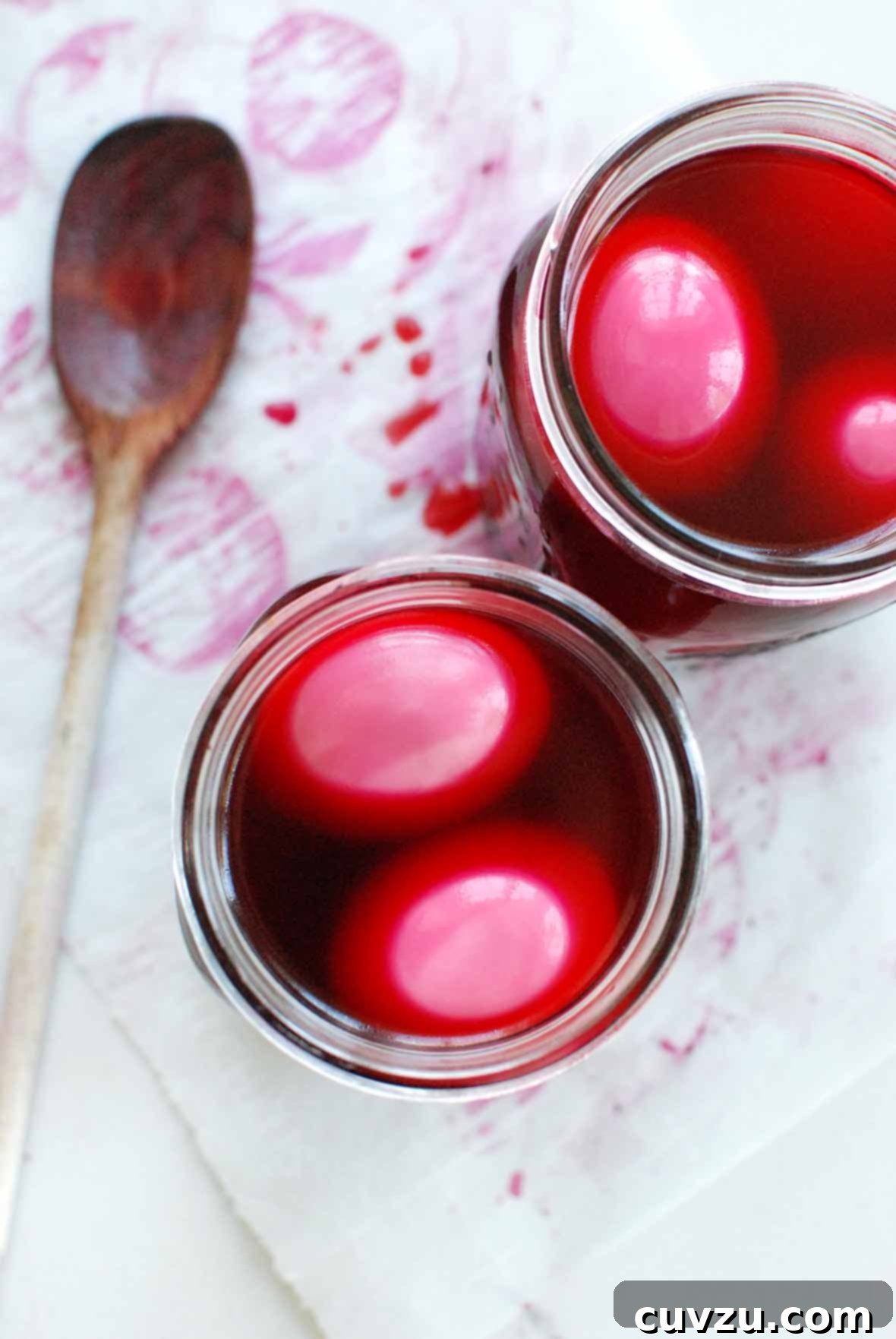
Unlock a vibrant culinary experience with these mesmerizing beet pickled eggs. Far from your grandmother’s mundane recipe, this version presents a contemporary brine infused with the earthy sweetness of beets, brightened by apple cider vinegar, and gently spiced with chile pepper, warm cinnamon, and aromatic coriander. The result is a truly magnificent magenta hue that makes these eggs a stunning visual feast, perfectly complemented by a creamy, tangy honey-mustard mayonnaise that adds a sophisticated depth of flavor.
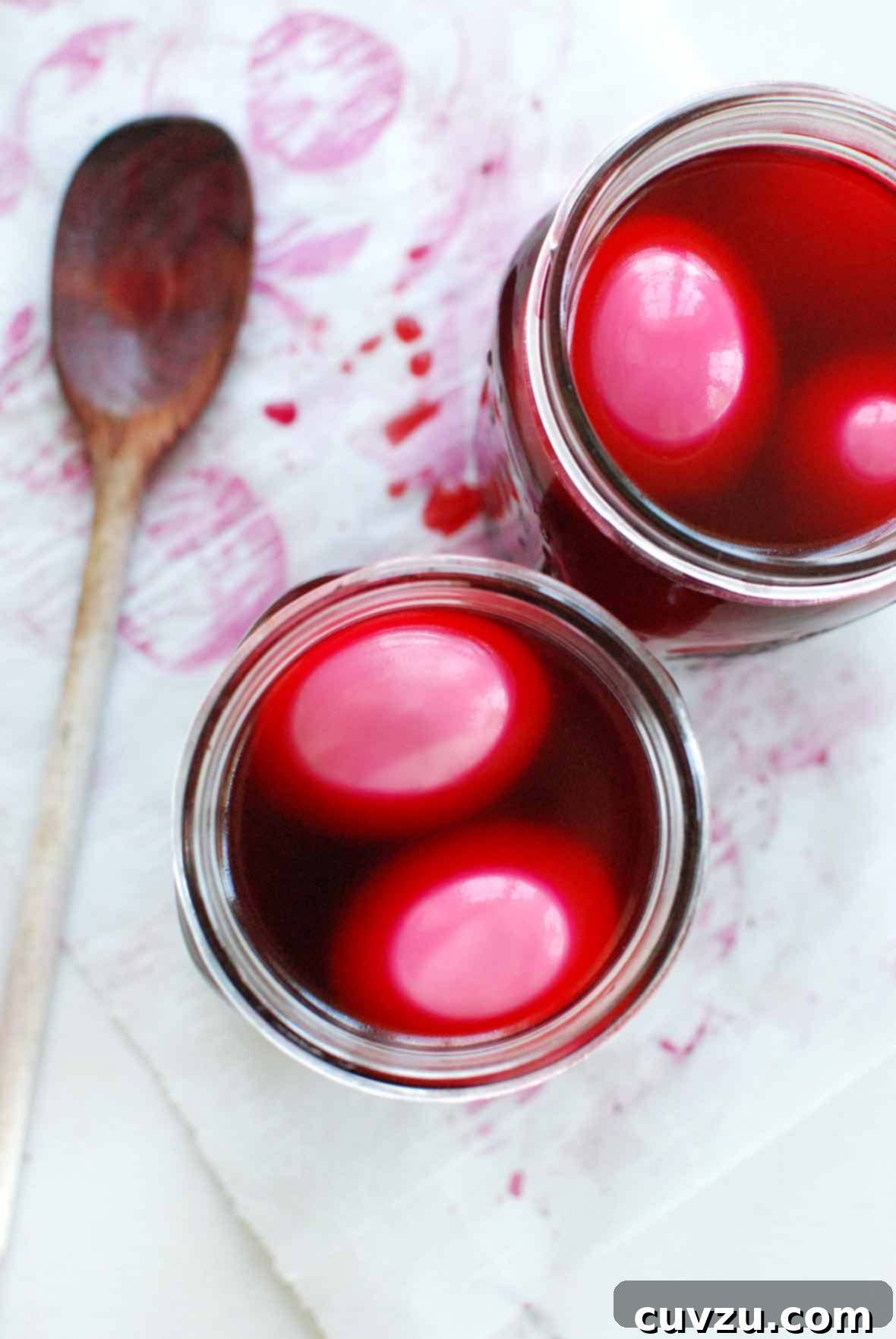
If you’re new to the world of pickled eggs, prepare to be amazed. These wonderfully magenta specimens are lightly spiced and captivating to behold, offering a burst of color and flavor that feels like celebrating Easter any time of the year. While traditionally not served with a honey-mustard mayonnaise, we believe this particular pairing elevates them to an extraordinary level. For those seeking an alternative pairing, a crisp beer makes an equally admirable accompaniment. This recipe, thoughtfully crafted and tested, promises an unforgettable journey into homemade pickling perfection.
The journey to creating the perfect pickled egg starts with a well-balanced brine. Our recipe distinguishes itself by steering clear of overly sweet or sour profiles, instead focusing on a harmonious blend of flavors that allows the natural essence of the egg to shine through while absorbing the vibrant characteristics of the pickling liquid. The beets contribute not only their signature shocking pink color but also a subtle, earthy sweetness that rounds out the tang of the vinegar. The addition of whole black peppercorns, dried red chiles, a cinnamon stick, and coriander seeds creates a complex aromatic foundation, providing warmth and a gentle kick without overpowering the delicate egg.
Beyond their stunning appearance and delightful taste, pickled eggs offer a versatile snack or appetizer that can be prepared in advance, making them ideal for entertaining or meal prepping. They are a testament to how simple ingredients can be transformed into something truly special with a little time and care. Whether you’re a seasoned pickler or a curious newcomer, this recipe guides you through each step, ensuring a successful and delicious outcome that will impress your family and friends. Get ready to add a splash of unexpected color and a depth of flavor to your table!
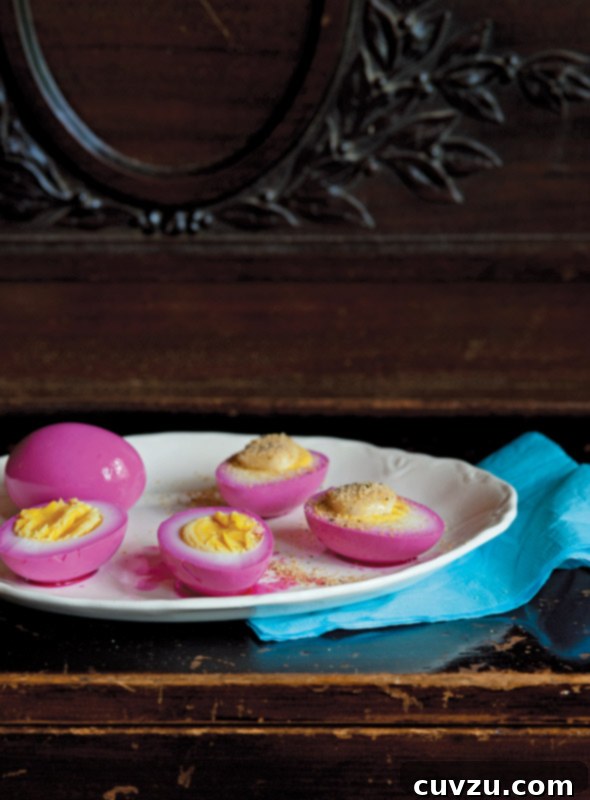
Vibrant Beet Pickled Eggs with Honey-Mustard Mayonnaise
David Leite
Print Recipe
Ingredients
For the Pickled Eggs
- 1 medium red beet, unpeeled
- 1 1/3 cups apple cider vinegar
- 1/4 cup granulated sugar
- 1 teaspoon whole black peppercorns
- 5 small dried red chiles
- 1 (3-inch) cinnamon stick
- 1 teaspoon coriander seeds
- 3/4 teaspoon salt
- 12 large eggs
For the Honey-Mustard Mayonnaise (Optional)
- 2 tablespoons yellow mustard seeds
- 1 large egg yolk
- 1 tablespoon fresh lemon juice
- 1 tablespoon cold water
- 1 cup canola oil
- 1/4 cup extra-virgin olive oil
- 1 1/2 tablespoons honey
- 1 teaspoon Dijon mustard
- Fine sea salt and freshly ground black pepper, to taste
Instructions
Prepare the Pickled Eggs
-
Wash and scrub the beet thoroughly, then trim and discard the ends. Slice the beet into uniform 1/2-inch-thick rounds. These slices will infuse the brine with their vibrant color and subtle sweetness.
-
In a medium saucepan, combine 3 cups of cold water, the sliced beet, apple cider vinegar, granulated sugar, whole black peppercorns, dried red chiles, cinnamon stick, coriander seeds, and salt. Bring this mixture to a gentle simmer over medium heat and cook for 10 minutes, allowing the flavors to meld and the beet to release its color. Remove the saucepan from the heat and let the pickling liquid cool completely to room temperature. Once cooled, pour the liquid into a large, clean storage container and refrigerate it.
-
Carefully place the 12 large eggs in a 2-quart saucepan. Add enough cold water to cover the eggs by at least 1 inch. Bring the water to a gentle simmer, then boil for precisely 1 minute. Immediately remove the pan from the heat, cover it, and let the eggs sit in the hot water for exactly 8 minutes. This method ensures perfectly cooked yolks and easier peeling. Drain the eggs. Gently crack the eggshells all over by tapping and rolling them against the countertop. Return the cracked eggs to the pan, add enough cold water to cover them again, and peel the eggs underwater. This technique helps the shell slide off more easily and prevents small shell fragments from adhering to the egg whites. Discard the shells responsibly.
-
Transfer the peeled eggs to the storage container with the chilled pickling liquid. Ensure the container is sufficiently narrow so that all the eggs are completely submerged in the liquid. If needed, you can place a small plate or a few of the beet slices on top of the eggs to keep them fully immersed. Cover the container tightly and refrigerate the eggs. Allow them to steep in the pickling liquid for at least overnight, but for the most vibrant color and deepest flavor penetration, we recommend pickling them for 3 to 7 days. The longer they steep, the more intense the hot pink color and pervasive the flavor will be throughout the egg.
Craft the Honey-Mustard Mayonnaise (Optional)
-
If making homemade mayonnaise, pulverize the yellow mustard seeds in a spice grinder or a dedicated coffee grinder until they are finely ground, but not a powdery dust. This fine grind will help integrate their flavor into the mayonnaise.
-
In a food processor, combine the large egg yolk, fresh lemon juice, and cold water. Process briefly to combine these ingredients. With the food processor running, begin to add the canola oil, starting with a very slow, consistent drizzle, drop by drop, until a stable emulsion forms. This initial slow addition is crucial for preventing the mayonnaise from breaking. Once emulsified, continue to slowly pour in the remaining canola oil, followed by the extra-virgin olive oil, in a very thin but steady stream, until all the oil is incorporated and the mayonnaise is thick and creamy. Season the mayonnaise with 4 teaspoons of the freshly ground mustard seeds, the honey, the Dijon mustard, and fine sea salt and freshly ground black pepper to taste. Reserve any remaining pulverized mustard seeds for garnishing the finished eggs. (Note: This recipe yields approximately 1 1/2 cups of mayonnaise, which is more than you’ll likely need for just the pickled eggs. Making a smaller batch in a food processor can be challenging. The leftover honey-mustard mayonnaise is fantastic and makes an amazing addition to potato salad, egg salad, or as a flavorful spread on sandwiches.)
Serve the Pickled Eggs
-
When ready to serve, carefully remove the pickled eggs from the brine and gently blot them dry with paper towels. Slice each egg in half lengthwise and arrange them attractively on a platter. A deviled egg platter can be a charming touch if you have one. If using, dollop a small spoonful of the homemade honey-mustard mayonnaise over the yolk of each halved egg. For an extra touch of flavor and visual appeal, sprinkle generously with the reserved finely ground mustard seeds (often referred to as ‘hot mustard dust’). These vibrant pickled eggs are best served chilled.
Notes
*Shortcut Honey-Mustard Mayonnaise: A Time-Saving Alternative
For those short on time or preferring convenience, you can easily create a delicious shortcut honey-mustard mayonnaise. Simply doctor up approximately 1 1/2 cups of your favorite store-bought mayonnaise by whisking in the same amounts of honey and Dijon mustard as specified in the homemade recipe. You can also incorporate the ground mustard seeds if desired, though store-bought mayo will typically already have a mustard base.
Hard-Boiling for Perfect Pickling
The method for boiling eggs in this recipe is designed to yield firm, perfectly cooked yolks and whites, ideal for pickling. The quick boil followed by resting in hot water allows the eggs to cook gently without developing a green ring around the yolk. Peeling them underwater helps to create a smoother surface, essential for the brine to penetrate evenly and for a beautiful final presentation.
Optimal Pickling Time and Color
While pickled eggs can be enjoyed after steeping overnight, the true magic happens over several days. The longer the eggs remain in the beet-infused brine, the more intense and uniform the magenta color becomes, permeating deeply into the egg white. Additionally, the flavors of the spices and vinegar become more pronounced and harmonized. We recommend at least 3 days for a good balance of color and flavor, and up to 7 days for maximum vibrancy and depth.
Creative Serving Suggestions
Beyond serving them halved with mayonnaise, these beet pickled eggs are incredibly versatile. Consider scooping out the yolks, mashing them with some of the honey-mustard mayonnaise, and refilling the whites for stunning deviled eggs. They also make a fantastic addition to charcuterie boards, antipasto platters, or as a unique side for grilled meats. Experiment with different garnishes like fresh dill, chives, or a sprinkle of smoked paprika for added flair.

Adapted From
The New Midwestern Table
Buy On Amazon
Explore More with AI
Curious about dietary adjustments, ingredient substitutions, or scaling this recipe? AI tools can help you explore options:
- Dietary Options: Consider using an AI assistant to suggest ingredient alternatives for gluten-free, vegetarian, vegan, or dairy-free diets, noting that such modifications may alter the original recipe’s taste and texture.
- Ingredient Substitutions: If an ingredient is unavailable or you wish to experiment with different flavor profiles, an AI can provide creative substitutions.
- Scaling Recipes: Need to adjust the yield of this recipe? AI can help you scale ingredient quantities accurately for different serving sizes.
- Summarize Insights: Use AI to quickly summarize key insights, tips, or nutritional information from the recipe.
When utilizing AI for recipe adjustments, always remember to verify information and be mindful that AI-suggested modifications may not have been personally tested by the original recipe developer.
Nutrition Facts
Calories: 73 kcal
Carbohydrates: 1 g
Protein: 6 g
Fat: 5 g
Saturated Fat: 2 g
Monounsaturated Fat: 2 g
Trans Fat: 0.02 g
Cholesterol: 186 mg
Sodium: 119 mg
Sugar: 1 g
Nutrition information is automatically calculated, so should only be used as an approximation.
Tried this recipe?Share your creation! Mention @leitesculinaria or tag #leitesculinaria on social media!
Recipe Testers’ Reviews
Sandy Hill
These pickled eggs were truly little treasures! Having never made pickled eggs before, this recipe proved to be an excellent introduction. The eggs, served with the homemade honey-mustard mayonnaise, offered a delightful balance of slight sweetness and savory depth. It was a comforting and sophisticated twist on the classic deviled egg.
I meticulously followed the instructions for boiling the eggs, and the timing was spot-on; the yolks were perfectly cooked to a firm yet creamy consistency. The suggestion to peel the eggs underwater was interesting, though I personally didn’t find it made a significant difference in ease of shell removal. After placing the eggs into the pickling liquid, I used the beet slices to gently weigh them down, ensuring complete submersion. We first tasted the eggs after 3 days of pickling, and again at 6 days. The difference was remarkable: the longer they steeped in the brine, the more intensely colored the whites became, achieving that magnificent magenta hue. For a future batch, I would consider adding an additional teaspoon of Dijon mustard to the mayonnaise for an extra layer of tangy zest.
These beautiful eggs would be an ideal addition to an Easter brunch buffet or as elegant hors d’oeuvres when paired with artisanal sausages and cheeses. A delightful bonus was the leftover honey-mustard mayonnaise, which I found to be an amazing enhancement to both egg salad and potato salad, adding a gourmet touch to everyday dishes.
Denise Grace
As someone who had never tried or made pickled eggs before, the stunning pink color in the recipe photo immediately captivated me and inspired me to dive in. Right from the start, I was incredibly impressed by how effortless the egg peeling process was. I had never encountered the trick of peeling them underwater before, and it worked like an absolute charm, making perfect hard-boiled eggs achievable and stress-free. This technique alone made the recipe a winner in my book.
I allowed my eggs to pickle for a full 5 days, and the results were absolutely beautiful. The vibrant color and pristine appearance were so striking that I shared a picture of them on Facebook. Immediately, a friend who regularly makes pickled eggs commented that they were “perfectly pickled,” which was a wonderful endorsement.
Beyond their visual appeal, these eggs taste truly great. While I adore the honey-mustard mayonnaise as a topping, they are also delicious enjoyed plain. I’m already envisioning them as a fantastic and colorful addition to my lunches throughout the week. My only minor suggestion for the recipe would be to explicitly list the amount of salt in the main ingredients section. As a home cook, I tend to gather all my ingredients directly from that list, and if salt isn’t there, it can sometimes throw me off. Aside from that small detail, this recipe is pure perfection.
Melissa Maedgen
Pickled eggs—I absolutely love them! My first introduction was the enigmatic jar found on gas station counters, certainly no fancy presentation there. You’d ask for an egg, they’d fish one out, and you’d simply eat it whole in your truck. Later, I began making them at home, though I never colored them with beet juice. They made a nice, simple addition to my workday lunches. This recipe, however, takes pickled eggs to a whole new level, tinting them a vibrant hot pink and dressing them up beautifully by halving them and serving with a homemade honey-mustard mayonnaise. Indeed, pickled eggs, you’ve certainly come a long way, babies!
The described method for boiling the eggs worked well, although I personally lean towards steaming eggs for about 15 minutes before shocking them in ice water for consistent results. I do concur with the recommendation to peel them underwater, preferably cold water, as it significantly aids in shell removal. However, I’d suggest doing this in a large separate bowl rather than the pot with all the eggs, to allow ample room for your hands. Even better, if you’re not in a drought-stricken region, peeling them under gently running water in the sink is my preferred method.
The recipe advises letting the eggs pickle overnight or up to 7 days. I sampled the eggs at various stages of the pickling process. I found that overnight, or even after 2 nights, wasn’t quite sufficient to develop that true, deep pickled egg flavor and color. For an optimal experience, I would absolutely plan on a minimum of 5 to 7 days in the brine. Rest assured, these eggs can keep in the brine for a much longer period—even months—and the pickling liquid will continue to penetrate deeper into the egg, affecting even the yolk.
Because this brine is quite low in salt and moderately low in sugar, the eggs taste a bit sour and somewhat incomplete on their own. But introduce that honey-mustard mayonnaise, and they truly come alive! The recipe for the mayo works exceptionally well, adding a much-needed layer of seasoning, richness, and balance to the eggs. The honey’s presence is subtle, ensuring the finished mayonnaise isn’t overtly sweet. Mustard is also an effective emulsifier, so I’d suggest adding the Dijon mustard right at the beginning of the mayonnaise-making process to aid in emulsion, but definitely save the ground mustard for the end. I actually neglected to reserve any ground mustard for sprinkling and added it all to the mayonnaise, which I’d do again, as freshly ground mustard seeds benefit from time to meld with other ingredients rather than being used as an immediate garnish. For seasoning the mayo, I found 1 teaspoon of kosher salt to be just right. The flavor of the mayonnaise dramatically improves after a period in the fridge, so I strongly recommend preparing it at least one day, and ideally two days, before you plan to serve the eggs.
The eggs, when pickled for at least 5 days and served with the generous dollop of mayo on top, were truly delightful. However, my curiosity led me to experiment further. I found that scooping out the yolks from the halved eggs, mashing them with about 2 teaspoons of the honey-mustard mayonnaise per yolk, and then refilling the egg whites created a stunning beet-pickled deviled egg. This variation, taste-wise, was even more exceptional than simply serving the eggs with the mayonnaise on top.
Pickled eggs offer endless possibilities for culinary creativity. For instance, you could use golden beets instead of red for a different color profile, or experiment with fresh turmeric or annatto seeds for alternative coloring and flavoring. Playing around with the spices in the brine, or the flavors in the mayonnaise, also opens up a world of options. I can easily envision adding a touch of tarragon to either the mayonnaise or the pickling brine for an herbaceous note. The potential for these eggs is vast, but one thing remains certain: these are far from your ordinary gas station pickled eggs. And while I’ve never before seen pickled eggs served with a spiced mayonnaise, in this instance, I would emphatically state that the mayonnaise is NOT optional. The flavor profile of these eggs, by design, necessitates the balance and richness that the honey-mustard mayonnaise provides. They are unequivocally intended to be enjoyed with the mayo.
Robert Castagna
This pickled eggs recipe delivered wonderfully on both flavor transfer and color. The method of peeling the eggs underwater genuinely made the process much easier, resulting in beautifully smooth eggs ready for pickling. They were exceptionally good when served precisely as the recipe instructs, with the honey-mustard mayonnaise. However, I also experimented and found them to be equally delicious with a dollop of strained Greek yogurt that I had blended with a touch of curry powder, adding another interesting dimension to this versatile dish.