
Vinegar Pie: Uncovering the Charm of a Classic “Desperation Dessert”
Step back in time and discover the delightful simplicity of Vinegar Pie, a truly old-fashioned dessert that has graced tables for generations. Often referred to as a “desperation pie,” this recipe emerged from periods when common flavoring agents were scarce, leading resourceful home bakers to create magic with humble ingredients. Don’t let the name mislead you – this pie offers a surprisingly sweet, tangy, and profoundly comforting experience. With its unique flavor profile, reminiscent of lemon, and a delightfully creamy texture, topped with a cloud of whipped cream and a fragrant dusting of nutmeg, Vinegar Pie is more than just a historical curiosity; it’s a testament to ingenuity and a delicious treat well worth reviving in modern kitchens.

What is Vinegar Pie, and Why is it Called “Desperation Pie”?
Vinegar Pie is a beloved relic from 19th-century American culinary history, born out of necessity and ingenuity. During times when fresh fruits, citrus, or exotic spices were either unavailable or prohibitively expensive, cooks ingeniously turned to pantry staples to create flavorful desserts. Vinegar, particularly white vinegar, was a readily accessible ingredient that, when combined with sugar, eggs, and butter, transformed into a surprisingly delicious and satisfying pie filling. This resourceful origin earned it the moniker “Desperation Pie” – a culinary innovation crafted when other options were scarce.
At its heart, Vinegar Pie is a type of custard pie, sharing textural similarities with classic Chess Pie or Buttermilk Pie. It boasts a rich, creamy filling that sets beautifully, encased in a flaky crust. While its historical roots are fascinating, its enduring appeal lies in its straightforward preparation and the ability to produce a wonderfully sweet and tangy dessert from basic ingredients. In today’s fast-paced world, where intricate recipes can feel overwhelming, this simple, old-school pie offers a comforting return to basics, proving that sometimes, the simplest ingredients yield the most profound flavors. It stands alongside other vintage treasures like the Wacky Cake as a testament to timeless, no-fuss baking.
The Surprising Flavor Profile: What Does Vinegar Pie Really Taste Like?
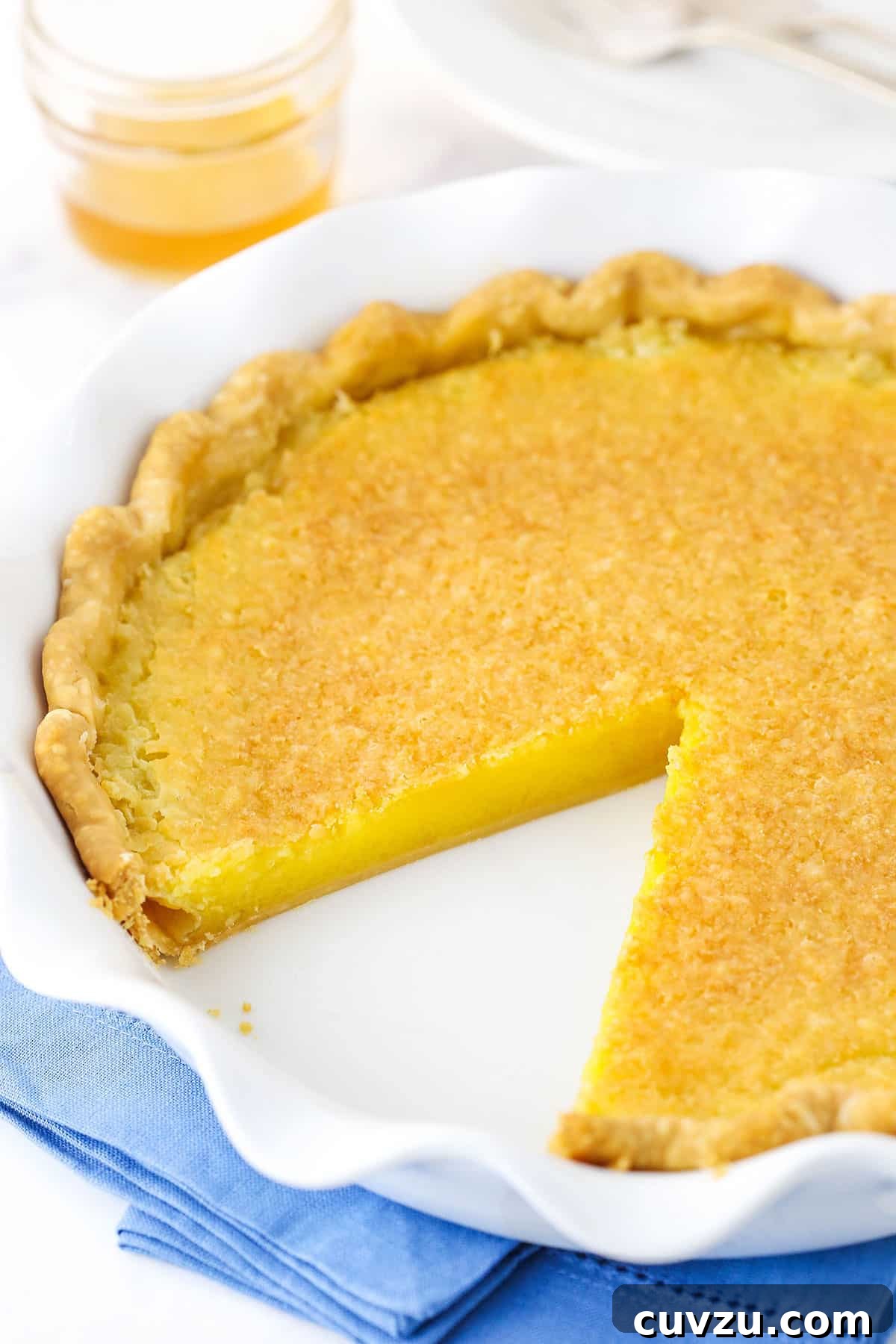
The most common question regarding this unique dessert is undoubtedly, “What does Vinegar Pie taste like?” It’s a natural concern, given the primary flavoring agent. However, prepare to be pleasantly surprised! The acidity of the vinegar, when baked with sugar and eggs, undergoes a remarkable transformation. Instead of a harsh, vinegary taste, it mellows into a bright, tangy flavor that remarkably mimics that of lemon. Many describe it as having a sweet-tart essence, akin to a lemon curd or lemon meringue pie, but with its own distinctive subtle character.
Beyond its intriguing flavor, the texture is a key highlight. Like a traditional Chess Pie, Vinegar Pie develops a delicate, browned crust on top during baking. This caramelized layer isn’t just for aesthetics; it adds a depth of rich, toasty flavor that beautifully complements the sweet and tangy custard beneath. The contrast between the slightly crisp, caramelized top and the smooth, creamy filling creates an incredibly satisfying mouthfeel.
To truly elevate the experience, serving Vinegar Pie with a generous dollop of freshly whipped cream and a sprinkle of freshly grated nutmeg is highly recommended. The cool, airy cream provides a perfect counterpoint to the pie’s richness, while the warm, earthy notes of nutmeg work wonders to further soften any hint of vinegar and enhance the overall complexity of the dessert. It’s these thoughtful additions that transform a simple pie into an unforgettable culinary delight.

A Glimpse into Culinary History: The Enduring Legacy of Desperation Pies
The story of Vinegar Pie is inextricably linked to a broader category of American heritage recipes known as “desperation pies” or “depression-era pies.” These ingenious creations were born from periods of economic hardship or geographical isolation, when access to luxury ingredients like fresh fruit was limited. Instead, resourceful cooks relied on pantry staples to create comforting and satisfying desserts. This culinary tradition reflects a remarkable spirit of resilience and creativity in the face of scarcity.
Beyond Vinegar Pie, this category includes other fascinating examples such as Water Pie, which remarkably uses only water, sugar, flour, and butter to create a sweet, custardy filling; Sugar Cream Pie, a simple yet decadent Indiana specialty; and Chess Pie, which often includes cornmeal for a unique texture. Each of these pies tells a story of a time when every ingredient counted, and the ability to transform the mundane into something magical was a highly valued skill. Recreating a Vinegar Pie today isn’t just about enjoying a delicious dessert; it’s about connecting with a rich culinary past and appreciating the cleverness of generations gone by.
Selecting the Optimal Method for Crafting Your Vinegar Pie
While the concept of Vinegar Pie is straightforward, there exist a couple of distinct approaches to its preparation. Over time, I’ve experimented with both popular methods to determine which yields the most desirable results in terms of flavor and texture, ultimately settling on a clear favorite.
My initial attempt involved a stovetop-cooked filling. In this method, the ingredients for the pie filling are simmered over heat until they thicken to a pudding-like consistency. This thickened mixture is then poured into a pre-baked pie crust and briefly baked before being refrigerated. While undeniably simple in its execution, I found this technique to be less appealing. The resulting texture was notably denser, more akin to a thick pudding than a classic custard pie. Crucially, the flavor profile was also less refined, with the vinegar’s acidity tending to be more pronounced and less harmoniously integrated into the overall sweetness. It lacked the nuanced balance and depth that I sought in a traditional old-fashioned pie.
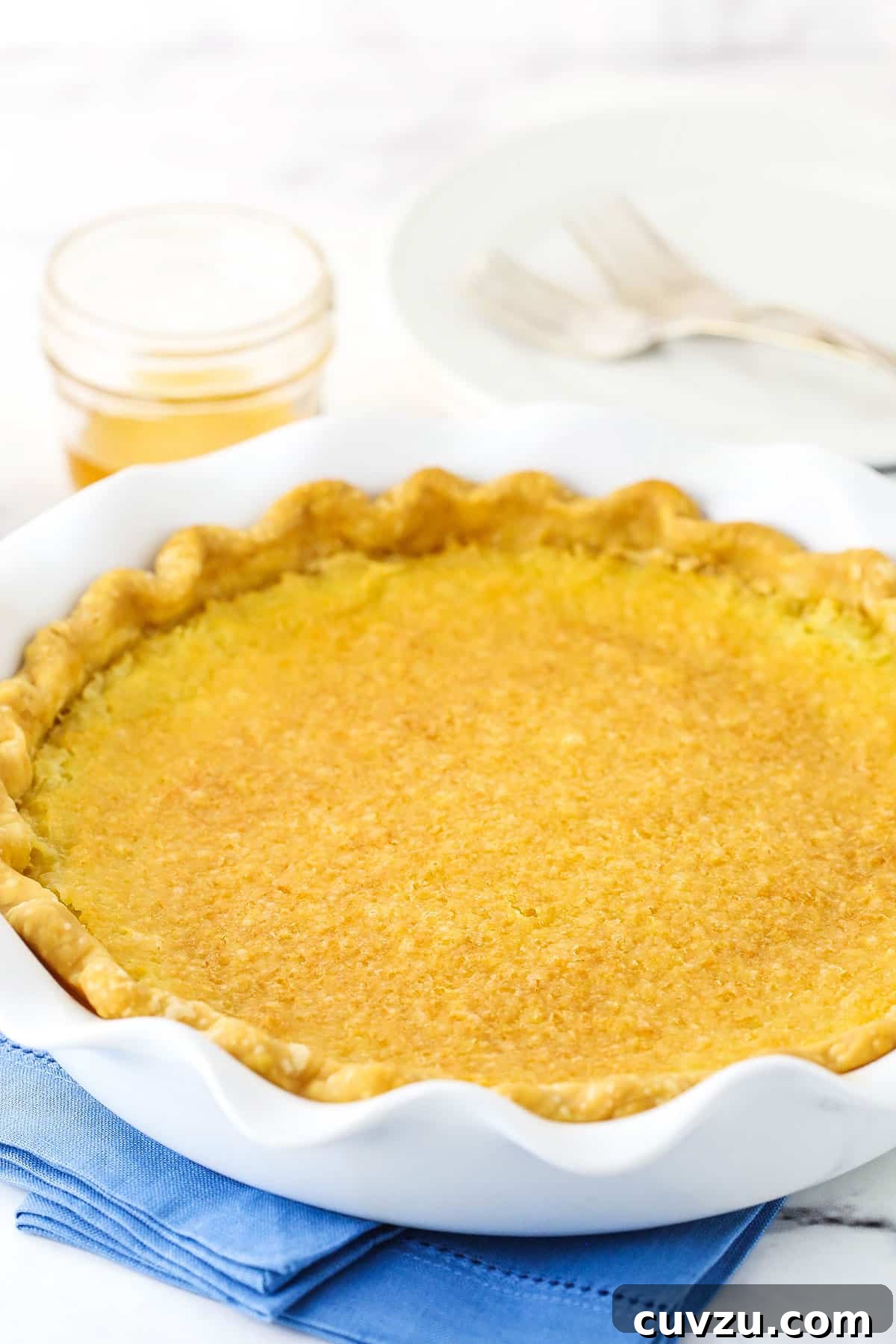
The second method, which I wholeheartedly endorse and present in the recipe below, involves baking the filling entirely in the oven. This approach, while requiring a slightly longer baking duration, is superior for several reasons. The extended oven time allows for the development of that signature caramelized crust on the pie’s surface, a crucial element that contributes immense flavor complexity. This browned layer adds a delightful sweetness and a hint of toasty richness that is simply absent in the stovetop version. Furthermore, the oven-baked filling achieves a more delicate, smooth, and traditional custard-like texture, reminiscent of a perfect Chess Pie. This method ensures a beautifully set pie that retains a slight jiggly quality in the center when perfectly cooked, transforming the humble ingredients into a truly exceptional dessert experience.
Step-by-Step Guide: How to Bake the Perfect Old-Fashioned Vinegar Pie
Crafting this delightful Vinegar Pie is a surprisingly simple and rewarding process. Follow these detailed steps to achieve a perfectly baked, flavorful dessert that will impress your family and friends:
- Prepare and Pre-Bake Your Pie Crust: Begin by carefully lining a standard 9-inch pie pan with your chosen refrigerated pie crust. Crimp the edges decoratively to create a pleasing presentation. It is absolutely crucial to pre-bake the crust according to the package directions. This essential step, often referred to as blind baking, helps prevent the bottom of the pie crust from becoming soggy once the filling is added. To ensure the crust maintains its shape and doesn’t puff up excessively during baking, gently line it with parchment paper and fill with pie weights, dried beans, or rice.
- Adjust Oven Temperature: Once your crust is golden and ready, remove the pie weights and parchment, and if necessary, adjust your oven temperature to 350°F (175°C) for baking the pie filling.
- Whip Up the Filling: While the pie crust is baking or cooling slightly, turn your attention to the incredibly easy filling. In a large mixing bowl, combine the eggs, granulated sugar, melted butter, white vinegar, and vanilla extract. Whisk all the ingredients together vigorously until they are thoroughly combined and smooth. This part genuinely couldn’t be simpler!
- Fill and Bake: Carefully pour the prepared liquid filling into your warm, pre-baked pie shell. Transfer the pie to the preheated oven and bake for approximately 30-40 minutes. The pie is perfectly done when the edges are set and lightly golden, but the very center still exhibits a slight, gentle wobble when the pan is lightly shaken. Avoid overbaking, as this can lead to a dry or rubbery texture.
- Cool and Chill to Perfection: Once baked, remove the pie from the oven and allow it to cool completely to room temperature on a wire rack. Patience is key here, as the pie continues to set as it cools. After reaching room temperature, transfer the pie to the refrigerator and chill thoroughly for at least 2-4 hours, or ideally overnight, until it is firm and perfectly ready to slice and serve. Chilling not only enhances the texture but also allows the flavors to mature.
- Garnish and Serve: For the ultimate Vinegar Pie experience, slice the chilled pie and serve each piece with a generous dollop of freshly made whipped cream. Finish with a delicate sprinkle of freshly grated nutmeg. Trust me, the nutmeg isn’t just for show; its warm, aromatic spice is a game-changer, complementing the pie’s unique flavor profile in an extraordinary way!
Essential Tips for a Flawless Vinegar Pie Every Time
To ensure your Vinegar Pie turns out perfectly and becomes a cherished part of your dessert repertoire, keep these expert tips in mind:
- Always Pre-Bake the Crust: This cannot be stressed enough. A properly pre-baked crust is the secret to preventing a soggy bottom, ensuring your pie has a wonderfully flaky foundation for its rich filling.
- Use White Vinegar: While other vinegars exist, white vinegar provides the clean acidity needed to achieve that delightful lemon-like flavor without introducing unwanted darker notes or complex flavors that might clash.
- Don’t Overmix the Filling: A gentle whisking until just combined is all that’s needed. Overmixing can introduce too much air, which might lead to cracks in the top of your pie.
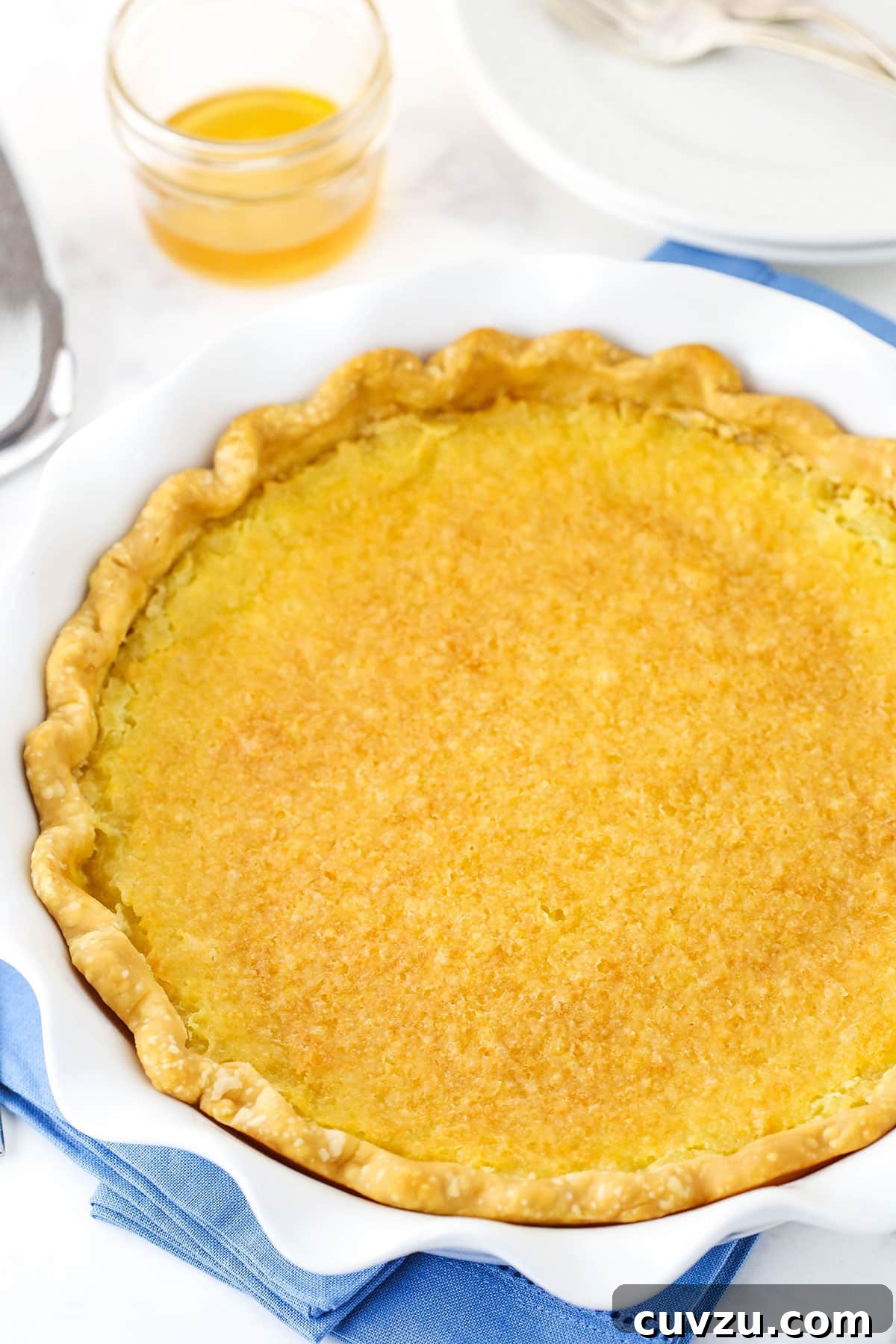
- Watch for the Wiggle: The “slight jiggly center” is the golden standard for doneness. This indicates a perfectly set custard that will become firm upon cooling, without being dry or rubbery.
- Chill Thoroughly: Resist the urge to cut into the pie too soon. A minimum of 2-4 hours of refrigeration is crucial for the pie to fully set and for the flavors to mature. An overnight chill is even better.
- Embrace the Nutmeg: As mentioned, the humble sprinkle of nutmeg is not optional for the best experience. It harmonizes with the pie’s flavor in a truly magical way, mellowing its tanginess and adding warmth.
- Room Temperature Ingredients (Eggs & Butter): While not explicitly stated in the original, for custards, room temperature eggs and butter often emulsify better, leading to a smoother, more uniform filling. This is a general baking tip that can enhance the outcome.
Creative Variations & Serving Suggestions for Your Vinegar Pie
While the classic Vinegar Pie is a delight on its own, there are several ways to customize and enhance this vintage dessert to suit your personal taste or occasion:
- Spice It Up: Beyond nutmeg, consider adding a pinch of cinnamon or a tiny dash of ground ginger to the filling for an extra layer of warmth and complexity. These spices can further complement the pie’s inherent tanginess.
- Citrus Boost: To accentuate the lemon-like notes, you could gently fold in a teaspoon of fresh lemon zest into the filling before baking. A hint of orange zest could also offer a pleasant aromatic twist.
- Different Crusts: Experiment with various pie crusts. While a classic flaky pastry is traditional, a graham cracker crust or even a shortbread crust could offer an interesting textural contrast and a different flavor base.
- Alternative Toppings: While whipped cream and nutmeg are iconic, don’t shy away from other garnishes. A scoop of vanilla bean ice cream would be decadent, or a light drizzle of caramel sauce could add another dimension of sweetness. Fresh berries, though not historically accurate, would offer a beautiful color contrast and burst of freshness.
- Individual Servings: For parties or portion control, consider baking smaller vinegar pies in tartlet pans. Adjust baking times accordingly.
You might also like these classic desserts:
Coconut Cream Pie
Salted Honey Pie
Apple Crumb Cheesecake Pie

Vinegar Pie
-
Author:
Lindsay -
Prep Time:
20 minutes -
Cook Time:
40 minutes -
Total Time:
1 hour -
Yield:
10–12 slices -
Category:
Dessert -
Method:
Oven -
Cuisine:
American
Description
This Vinegar Pie is a super simple old fashioned pie that has been around for years! It gets its flavor from a little bit of vinegar and is topped with whipped cream and a sprinkle of nutmeg!
Ingredients
Scale
- 1 refrigerated pie crust
- 4 large eggs
- 1 1/2 cups (310g) sugar
- 1/4 cup (56g) butter, melted
- 1 1/2 tbsp white vinegar
- 1 tsp vanilla extract
- Whipped cream, optional
- Nutmeg, optional
Instructions
- Place the pie crust in a 9-inch pie pan and crimp the edges. Pre-bake according to the temperature and time of the package directions. Use pie weights to keep the crust from puffing up too much when baking.
- Adjust oven temperature to 350°F (175°C), if needed.
- In a large bowl, combine the eggs, sugar, butter, vinegar, and vanilla extract. Whisk well to combine, then pour into pre-baked pie shell.
- Bake pie for 30-40 minutes, or until pie is set but the center is a little jiggly.
- Allow pie to cool to room temperature, then refrigerate pie until cool and firm and serve.
- Serve pie with whipped cream and a sprinkle of nutmeg. Don’t skip the nutmeg – trust me!
Nutrition
- Serving Size: 1 slice
- Calories: 241
- Sugar: 25.1 g
- Sodium: 102.6 mg
- Fat: 10.3 g
- Carbohydrates: 34.9 g
- Protein: 2.7 g
- Cholesterol: 72.2 mg
Why This Old-Fashioned Vinegar Pie Deserves a Spot in Your Recipe Box
In a world full of complex culinary trends, this Old-Fashioned Vinegar Pie stands as a beautiful reminder of simplicity, resourcefulness, and delicious tradition. It’s a dessert that tells a story, offering a unique flavor profile that surprises and satisfies. Easy to prepare with readily available ingredients, yet elegant enough for any gathering, it truly is a timeless classic. We invite you to bake this piece of history and rediscover the comforting charm of a truly exceptional “desperation dessert.” We are confident it will become a new favorite!
Recipe modified from Taste of Home.