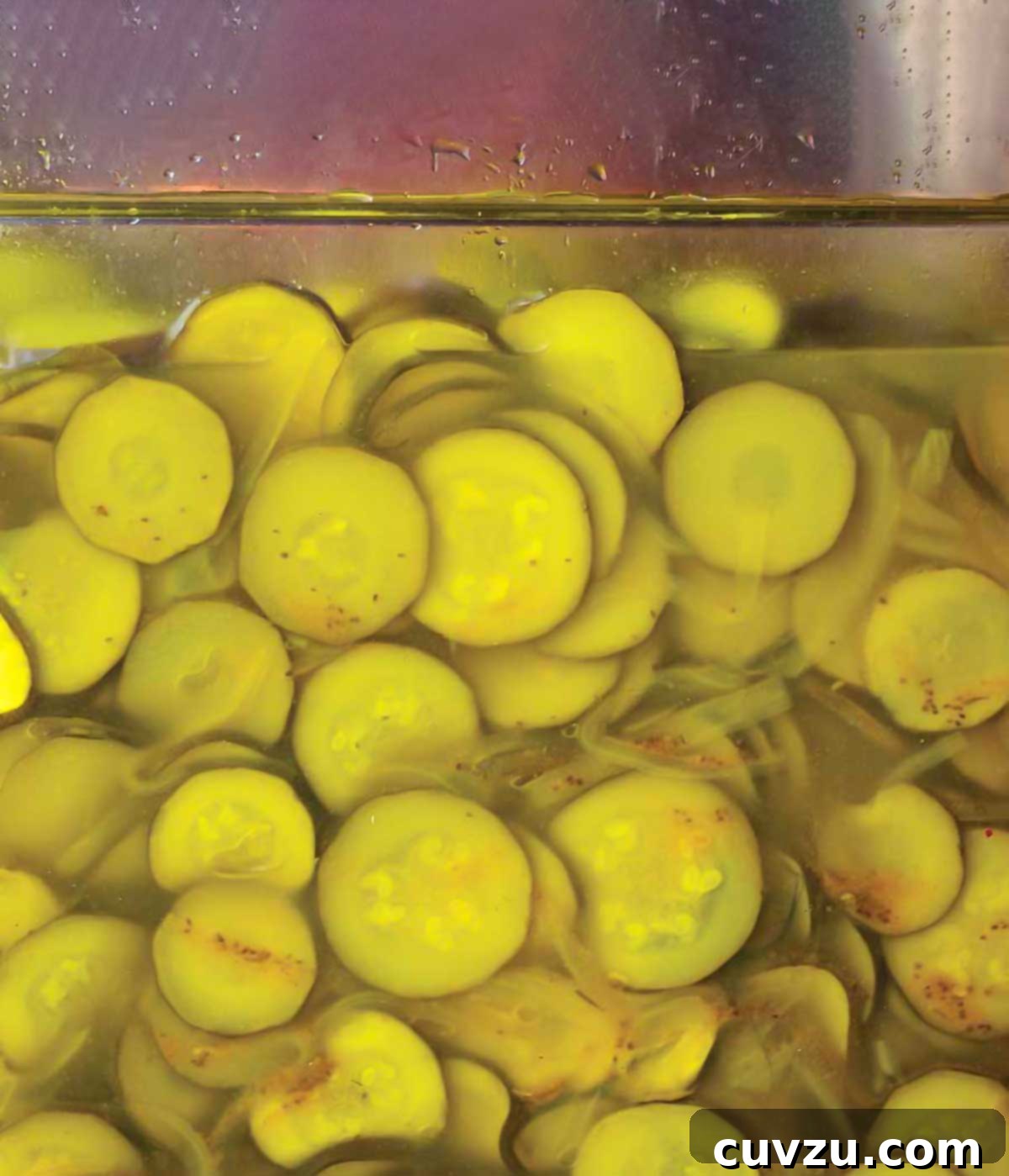
The Ultimate Guide to Making Flavorful Pickled Zucchini
Discover the art of creating irresistible pickled zucchini, a culinary gem bursting with unique flavors. Preserved with a delicate blend of Champagne vinegar, aromatic celery seeds, vibrant turmeric, and crisp onions, these pickles are incredibly easy to make. Unlike overly sweet or aggressively tangy varieties, our recipe strikes a perfect balance, offering a nuanced taste that will redefine your pickle experience. Prepare to enjoy them just as you would any traditional cucumber pickle, but with an exciting, fresh twist that makes them truly unforgettable.
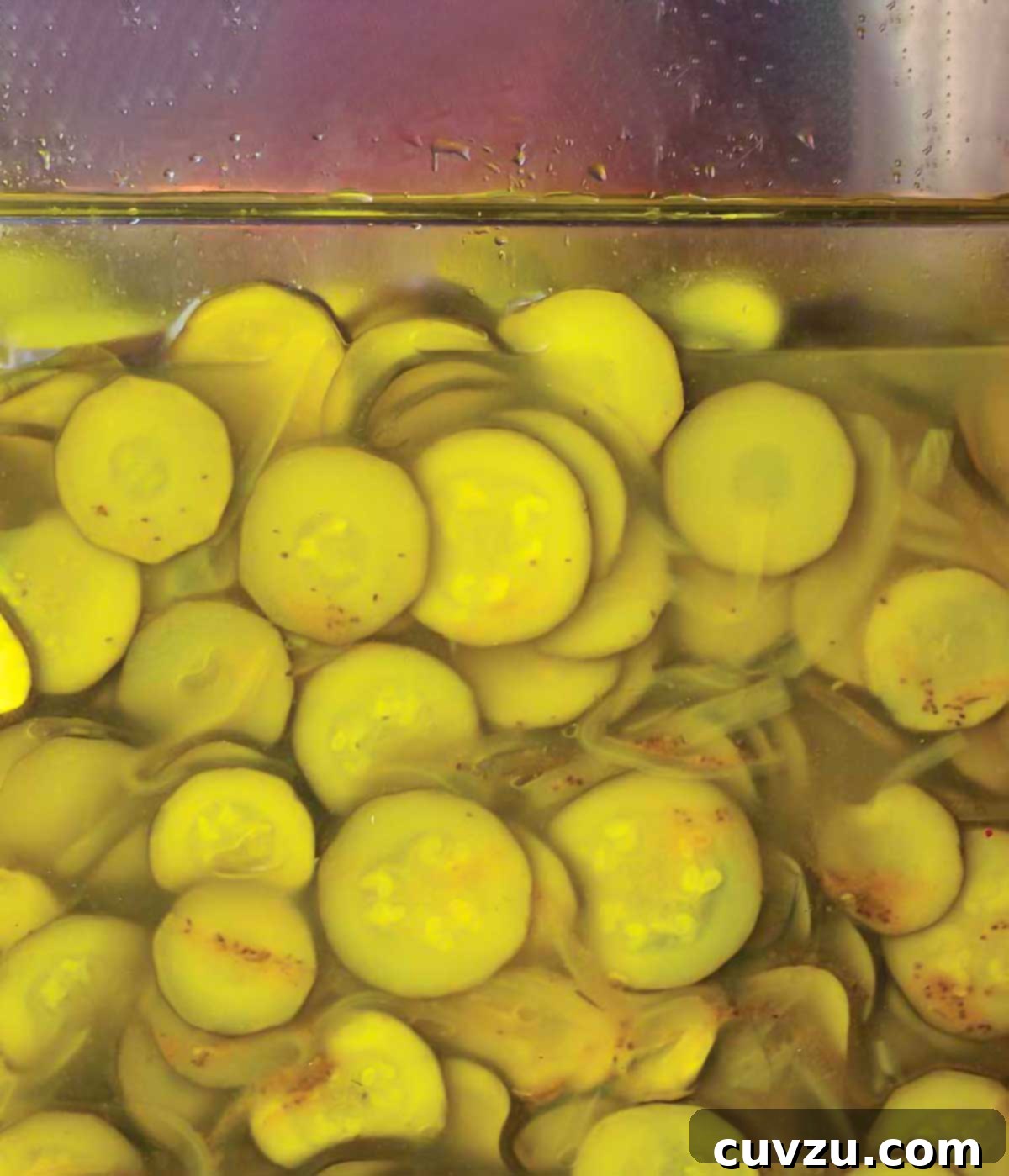
The Unforgettable Flavor of Homemade Pickled Zucchini
These homemade pickled zucchini are more than just a substitute for their cucumber cousins; they are a revelation in themselves. Describing their exact taste profile is a delightful challenge, as they defy simple categorization. They are neither excessively sweet nor overly sour, offering a harmonious blend that is distinctly different from anything you’ve likely encountered in the world of pickles. If we were pressed to make a comparison, they share a certain approachable, well-rounded character akin to classic bread and butter pickles, yet possess their own distinctive charm and freshness. But don’t just take our word for it; you simply must experience them to truly understand.
The magic lies in the carefully chosen ingredients. Champagne vinegar provides a milder, more sophisticated acidity compared to standard white vinegar, allowing the subtle notes of zucchini to shine through. Celery seeds introduce an earthy, aromatic depth, while turmeric lends a beautiful golden hue and a hint of warm, subtle spice. The thinly sliced onions soften in the brine, contributing a gentle sweetness and a pleasant textural contrast. Each component plays a crucial role in creating a pickle that is complex, refreshing, and utterly addictive.
Creative Ways to Enjoy Your Easy Pickled Zucchini
With a batch of these exquisite refrigerator zucchini pickles on hand, the culinary possibilities are endless. While we encourage you to explore and find your favorite pairings, a fantastic starting point is to use them anywhere you’d typically reach for a regular cucumber pickle. Their crisp texture and balanced flavor make them incredibly versatile. Imagine them:
- Nestled alongside your favorite sandwiches and burgers, adding a zesty crunch.
- As a vibrant addition to charcuterie boards, complementing cheeses and cured meats.
- Finely chopped and stirred into potato salad, tuna salad, or deviled eggs for an unexpected burst of flavor.
- Garnishing grilled fish or chicken, providing a bright, acidic counterpoint.
- Tossed into green salads for an extra layer of texture and tang.
- Serving as a delightful appetizer straight from the jar, a testament to their inherent deliciousness.
And, of course, for a truly indulgent experience, these pickles were specifically crafted with a certain Bacon Manchego Burger in mind. Their bright acidity perfectly cuts through the richness of the bacon and cheese, creating a symphony of flavors that will leave your taste buds singing.
This recipe yields a substantial quantity of pickled zucchini. While not literally “tons,” it’s certainly a generous amount – perfect for those fortunate enough to have a bumper crop of zucchini from their garden or local farmer’s market. If your zucchini supply is more modest, rest assured that this recipe is easily scalable. You can effortlessly adjust the ingredient quantities to suit your needs, ensuring you always have just the right amount of these delightful pickles on hand. Consider yourself warned, but also incredibly fortunate to have such a delicious solution for your summer zucchini bounty!
Pickled Zucchini FAQs
When seeking a substitute for Champagne vinegar, the closest match in terms of flavor profile and acidity is typically Asian rice vinegar. Its mild, slightly sweet character makes it an excellent alternative, ensuring your pickles retain their delicate balance. Other viable options include white wine vinegar or sherry vinegar, though it’s important to note these can be a tad more assertive in flavor. If these aren’t available, red wine vinegar or apple cider vinegar can also be used, but be aware that they possess much heavier and less sweet undertones than Champagne vinegar. Furthermore, both red wine and apple cider vinegars will impart a noticeable color change to your pickles, so consider this aesthetic aspect when making your choice.
For successful pickling, selecting the right kind of salt is crucial. Pickling salt is designed for this very purpose and is an excellent choice, as it is pure sodium chloride with no additives. However, you have other reliable options. Kosher salt, particularly brands like Diamond Kosher, is another fantastic choice due to its purity and flake size, which dissolves easily. What’s most important for pickling is to steer clear of salts that contain any added ingredients. This means avoiding common table salt, which often contains iodine or anti-caking agents. These additives can unfortunately react with the vegetables and brine, leading to a cloudy pickle liquid and potentially affecting the flavor. Always read the label carefully before you begin the pickling process to ensure a clear, delicious brine.
Ah, the quintessential late summer dilemma: a bountiful harvest of zucchini! It’s a familiar scenario for many home gardeners and market-goers. Beyond creating this truly fantastic pickled zucchini recipe, there are countless ways to transform your abundant squash. Here are a few creative and delicious ideas to make the most of your zucchini glut:
- Whip up a low-carb sheet pan zucchini pizza bake for a healthy and satisfying meal.
- Start your day with a savory and satisfying bowl of zucchini and eggs, a perfect brunch option.
- Simply roast or pan-fry it with a touch of olive oil and herbs for an effortless and delicious side dish alongside grilled meats or fish.
- Transform it into “zoodles” (zucchini noodles) using a spiralizer, a light and healthy alternative to pasta for your favorite sauces.
- Incorporate grated zucchini into baked goods, adding moisture and nutrients without altering the flavor, such as a decadent chocolate zucchini cake or a wholesome walnut bread.
- Make a batch of zucchini fritters, a crispy and flavorful appetizer or side.
- Blend it into creamy soups or smoothies for an extra dose of vegetables.
- Grill large zucchini slices and serve them as a base for salads or as a vegetarian main course.
With so many delicious options, your zucchini glut will quickly become a delightful opportunity to explore new recipes and flavors!
One of the many benefits of making refrigerator pickles is their simplicity and relatively long shelf life for a non-canned product. When stored properly in a covered, airtight glass jar and kept continuously in the refrigerator, these quick pickled zucchini will maintain their delicious flavor and crisp texture for an impressive period of up to 3 months. This makes them a convenient and practical way to enjoy the taste of summer zucchini well into the cooler seasons, or to have a savory condiment readily available for any meal or snack.
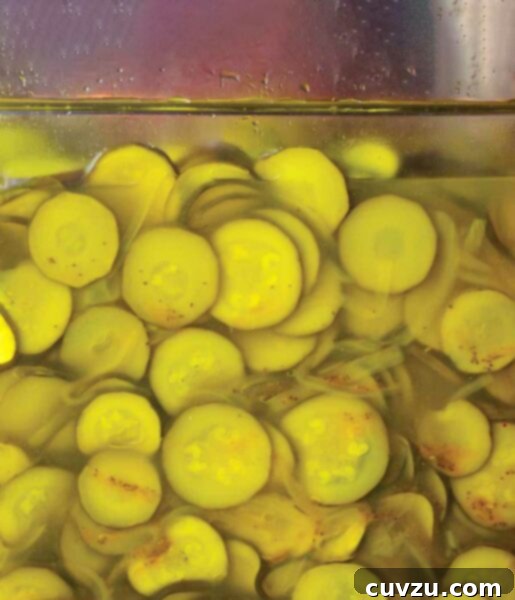
David Leite’s Signature Pickled Zucchini
David Leite
Saved
- PIN
Equipment
-
Mandoline
-
Mason jars and lids
-
Large nonreactive pot (stainless steel or ceramic-coated)
-
Shallow nonreactive pan (for cooling)
Ingredients
- 6 cups Champagne vinegar
- 1 1/2 cups granulated sugar
- 1/2 cup salt
- 3 teaspoons celery seeds
- 3 teaspoons turmeric powder
- 1 teaspoon dry mustard powder
- 2 yellow onions, julienned
- 5 pounds zucchini, unpeeled, thinly sliced with a mandoline about 1/4 or 1/8 inch thick
Instructions
-
In a large nonreactive pot (stainless steel or ceramic-coated, avoiding aluminum), combine the Champagne vinegar, granulated sugar, salt, celery seeds, turmeric powder, dry mustard powder, and julienned onions. Bring this mixture to a rolling boil over medium-high heat. Once boiling, remove the pot from the heat. This forms your flavorful pickling brine.
-
Add all the thinly sliced zucchini to the pot with the hot brine. Gently toss or press the zucchini slices to ensure that every single piece is fully immersed in the liquid. If some slices tend to float, you can use a small plate or a heatproof object to weigh them down, keeping them submerged. Allow the zucchini to rest and steep in the brine at room temperature for 1 hour. This initial soak helps the zucchini absorb the flavors and begin to soften.
-
Return the pot containing the zucchini and brine to medium-high heat, leaving it uncovered. Bring the mixture back to a boil. Once boiling, continue to boil the zucchini for precisely 3 minutes—no more, no less, as overcooking can result in mushy pickles. Promptly remove the pot from the heat. To halt the cooking process and preserve crispness, immediately pour the zucchini and its brine into a shallow nonreactive pan (again, avoid aluminum) and allow it to cool completely to room temperature. This rapid cooling is key for a firm pickle.
-
Once the zucchini and brine have fully cooled, carefully ladle them into your preferred clean glass jars. These are known as refrigerator pickles, meaning there’s no need for traditional canning or sealing methods. Simply ensure the jars are covered tightly and refrigerate them. The pickled zucchini will be ready to enjoy after just 1 day, allowing the flavors to meld beautifully. Stored in the refrigerator, these delicious pickles will last for up to 3 months, providing a convenient and flavorful condiment for an extended period.

Adapted From
Toro Bravo: Stories. Recipes. Number Nine. No. 12.
Buy On Amazon
Nutrition
Nutrition information is automatically calculated, so should only be used as an approximation.
Recipe Testers’ Reviews: Real Feedback on Our Pickled Zucchini
Our team of dedicated recipe testers put these Champagne vinegar pickled zucchini to the test, offering invaluable insights into their experience with the recipe. Their feedback confirms what we already knew: these pickles are a resounding success, offering a delightful twist on a classic condiment.
Natalie Reebel
Natalie found this to be “A great zucchini pickle,” highlighting its excellent taste and texture. She successfully scaled down the recipe to a third of the original amount, using 26 ounces of zucchini, which still produced a generous yield of just over 1 quart of pickles. Natalie experimented with both the thicker (1/4 inch) and thinner (1/8 inch) slice settings on her mandoline and was pleased to report that “Both sizes produced great results,” indicating flexibility in preparation based on personal preference for pickle crispness and bite. Her experience confirms the recipe’s adaptability and delicious outcome.
Linda Pacchiano
Linda praised the recipe for its “very simple” nature, appreciating the straightforward steps involved in creating these delightful pickles. Like Natalie, she opted to make a smaller quantity, which simplified the cooling process. Linda noted, “I only made a small amount and it was easy to cool them in the pan they were boiled in, so I skipped the step to transfer them to a shallow pan before placing them in a glass jar.” This practical tip is especially useful for those making a reduced batch, demonstrating the recipe’s forgiving nature and ease of adaptation for smaller kitchens or less volume.
Jackie Gorman
Jackie was thoroughly impressed with the outcome, stating, “The finished product was very good.” She even pondered whether one could discern that these were zucchini pickles rather than cucumber pickles, which speaks volumes about their quality and how well zucchini performs in this pickling method. Jackie also mentioned that “The pickles aren’t that fussy,” underscoring the recipe’s accessibility for home cooks. She, too, made a scaled-down version, preparing a quarter of the recipe, which still yielded “far more than enough pickles.” Her preference was for 1/8 inch-thick slices, achieved with a mandoline. Jackie offered a helpful tip regarding the addition of zucchini to the brine: “When adding the zucchini slices to the brine, I found that you need to gradually submerge the slices into the brine. They won’t all fit in at once,” providing practical guidance for smooth preparation.
Whether you’re dealing with an abundance of summer zucchini or simply seeking a fresh, flavorful addition to your condiment repertoire, these pickled zucchini are a must-try. Their unique blend of Champagne vinegar, delicate spices, and crisp texture creates a pickle that is both familiar and wonderfully new. Easy to prepare and incredibly versatile, they promise to elevate everything from everyday sandwiches to gourmet burgers. Don’t let another season pass without experiencing the delight of these remarkable homemade pickles!