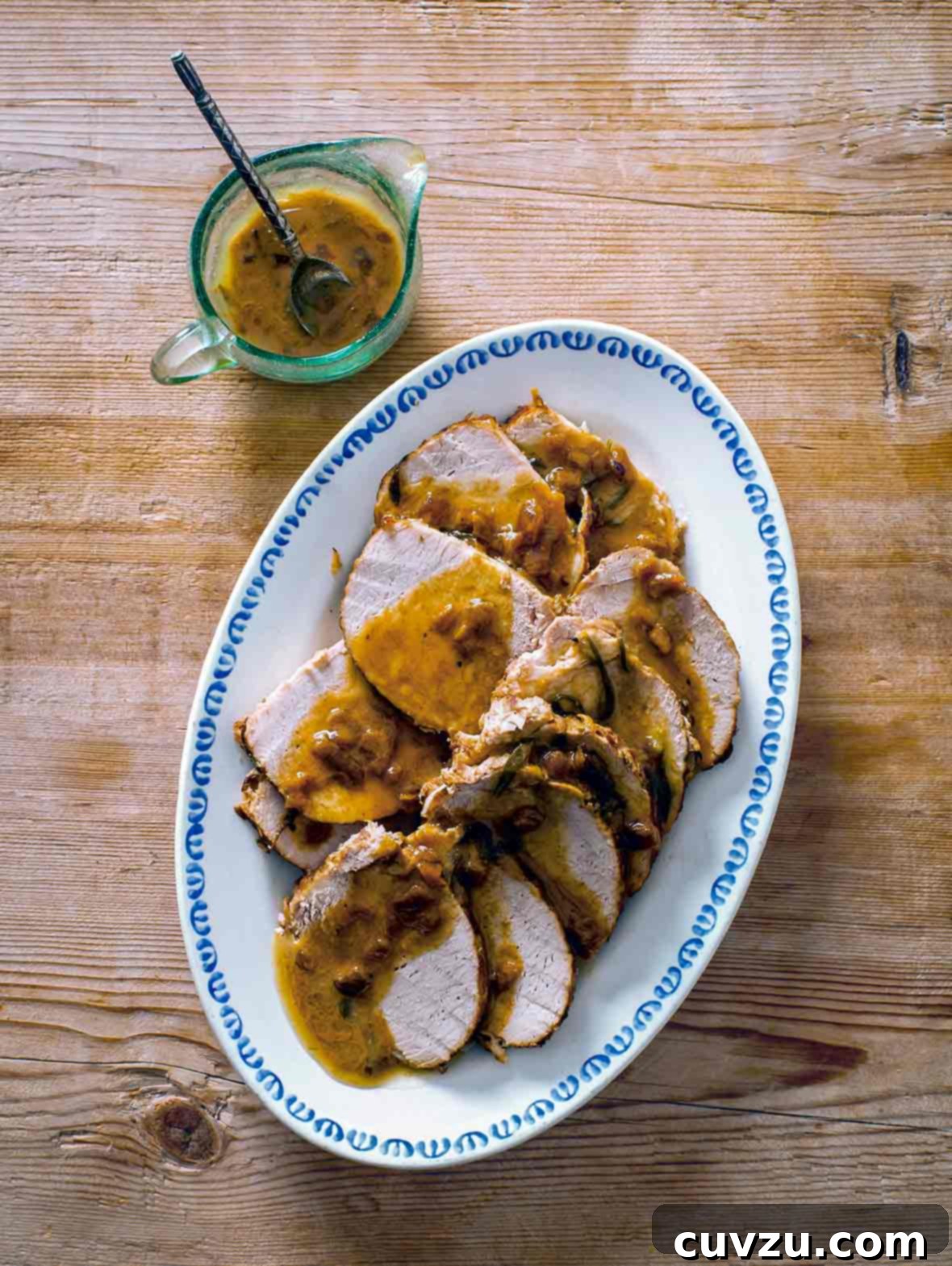
Welcome to a culinary journey that promises tender, flavorful results with minimal effort. Imagine a dish that brings warmth and comfort to your dinner table, transforming a simple ingredient into something truly extraordinary. Our Braised Pork Loin with Rosemary is precisely that – an effortlessly elegant meal perfect for a relaxed Sunday supper or an impressive dinner party. This recipe celebrates the humble pork loin, studding it with fragrant rosemary, searing it to a golden perfection alongside sweet onions and aromatic garlic, and then slowly braising it in a vibrant white wine. The magic doesn’t stop there; a magnificent pan sauce, born from the rich pork drippings, a splash of vinegar, a hint of olive oil, and a touch of Dijon mustard, adds a brilliant, acidic counterpoint that elevates every bite.
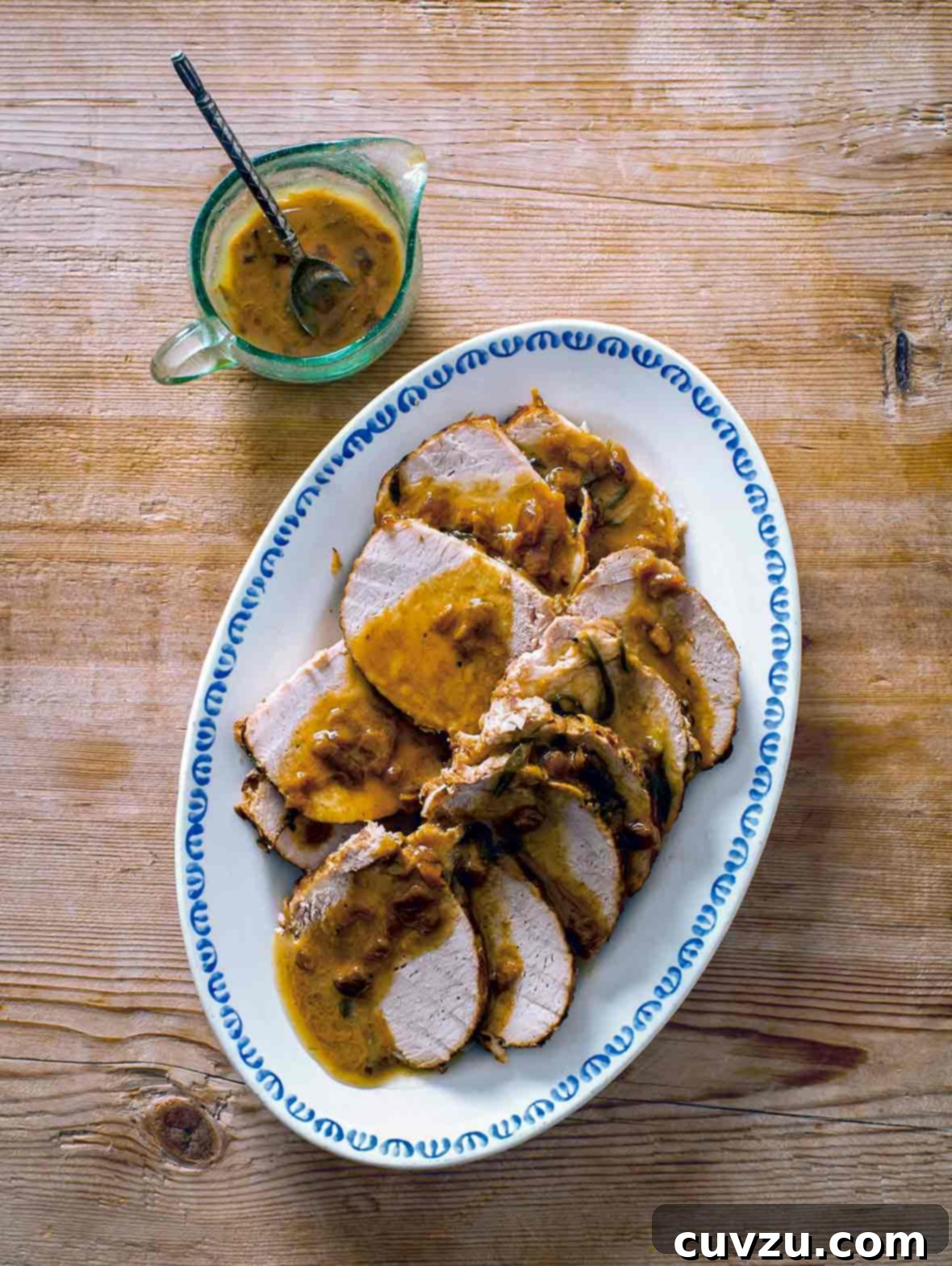
The beauty of braising lies in its ability to transform tougher cuts of meat into succulently tender masterpieces, but it also works wonders with leaner cuts like pork loin, infusing them with incredible depth of flavor. As one of our dedicated recipe testers, Angie Zoobkoff, enthusiastically noted, “Pork loin is always delicious. But pork loin is even better when it’s simmered in wine.” This sentiment perfectly encapsulates the essence of this dish, where the richness of pork meets the aromatic embrace of rosemary, garlic, and a bright, dry white wine. The best part? Achieving this impressive result is surprisingly simple, making it accessible for cooks of all skill levels.
Why Braise Pork Loin? The Secret to Unforgettable Flavor and Tenderness
Braising is an ancient cooking technique that involves searing food at a high temperature, then finishing it in a covered pot with liquid at a lower temperature. This two-step process creates a harmonious blend of textures and flavors that’s hard to beat. For pork loin, often considered a leaner cut, braising prevents it from drying out, ensuring it remains incredibly moist and fork-tender. The initial sear develops a rich, golden crust, locking in juices and building foundational flavor through the Maillard reaction. Then, the slow, gentle simmer in a fragrant liquid breaks down connective tissues, tenderizing the meat while allowing it to absorb all the wonderful aromas and tastes of the accompanying ingredients like rosemary, garlic, and wine. The result is a profoundly flavorful piece of meat that practically melts in your mouth, enveloped in a rich, aromatic sauce that begs to be savored.
Should Braising Liquid Cover the Meat? Understanding the Golden Rule
This is a common question, and the answer, surprisingly for many, is a resounding nope! When braising, whether it’s pork, beef, or poultry, the braising liquid should only come about a third of the way up the side of the meat. This isn’t just a guideline; it’s a crucial technique for maximizing flavor. When the liquid partially covers the meat, it allows the top portion to steam gently, while the bottom section is immersed, absorbing the liquid’s flavors directly. More importantly, it creates a concentrated environment. As the meat cooks, its natural juices and fats are released into this limited volume of liquid, mingling with the other ingredients. This concentrated interaction results in a deeply flavorful pan sauce. If you were to completely submerge the meat, the flavors would become diluted, and you would end up with a much weaker sauce. Less truly is more in this instance, ensuring every drop of that resulting pan sauce is bursting with astounding flavor.
Braised Pork Loin with Rosemary
David Leite
Ingredients
- 2 sprigs fresh rosemary
- 2 1/4 pounds pork loin, boned
- Kosher salt and freshly ground black pepper
- 2 tablespoons (1 oz) unsalted butter
- 6 tablespoons olive oil
- 1 garlic clove, crushed
- 1/2 onion, chopped
- 3/4 cup dry white wine, such as Sauvignon Blanc or Pinot Grigio
- 1 tablespoon white wine vinegar
- 1 teaspoon Dijon mustard
Instructions
-
Prepare the pork: Take one sprig of fresh rosemary and cut or snip it into 1-inch (25-mm) sections. Using a sharp knife or skewer, create small pockets in the pork loin and carefully insert the rosemary sprigs at even intervals across the surface of the meat. This infuses the pork with herbal fragrance from within. Neatly tie the pork loin with kitchen twine to help it hold its shape during cooking and ensure even braising. Season the pork generously on all sides with kosher salt and freshly ground black pepper. Remove the needles from the second sprig of rosemary and set aside.
-
Sear the pork: In a large, heavy-bottomed braising pan or Dutch oven, warm the unsalted butter and 4 tablespoons of olive oil over medium heat until the butter is melted and shimmering. Carefully add the seasoned pork loin to the hot pan. Cook, turning the pork frequently with tongs, until it is beautifully golden brown on all sides. This searing process should take approximately 10 minutes and is crucial for developing deep flavor and a delicious crust.
-
Braise to perfection: To the pan with the seared pork, add the crushed garlic, chopped onion, the remaining rosemary needles, dry white wine, a pinch more of salt, and freshly ground pepper. Ensure the liquid comes about a third of the way up the sides of the pork. Bring the liquid to a gentle simmer, then reduce the heat to low, cover the pan tightly, and continue to simmer until the pork is exquisitely tender. This will take approximately 1 to 1 1/2 hours, depending on the thickness of your pork loin. The aromas filling your kitchen will be incredible!
-
Rest the meat: Once tender, carefully transfer the braised pork loin from the pan to a clean plate. Loosely cover it with aluminum foil to keep it warm and allow it to rest for at least 10 minutes. Resting is vital; it allows the juices to redistribute throughout the meat, ensuring a moist and tender result when sliced.
-
Craft the pan sauce: While the pork rests, prepare the accompanying pan sauce. Stir the white wine vinegar, the remaining 2 tablespoons of olive oil, and the Dijon mustard into the savory cooking juices left in the braising pan. If the cooking juices appear a little thin, you can first let them simmer gently, uncovered, over medium heat until they reduce slightly and thicken to your desired consistency before adding the vinegar, oil, and mustard. Taste the sauce and adjust the seasoning with additional salt and pepper as needed to achieve a perfectly balanced flavor profile.
-
Serve: Remove and discard the kitchen twine from the rested pork loin. Using a sharp carving knife, slice the meat into fairly thick, generous portions. Arrange the sliced pork loin in a warm serving dish. Drizzle the irresistible pan sauce generously over the meat. Serve immediately and watch your guests delight in this comforting and elegant dish. Originally published April 2, 2018.

Adapted From
Recipes from an Italian Butcher
Buy On Amazon
Nutrition
Serving: 1 portion
Calories: 620 kcal
Carbohydrates: 3 g
Protein: 57 g
Fat: 37 g
Saturated Fat: 10 g
Monounsaturated Fat: 21 g
Trans Fat: 0.2 g
Cholesterol: 177 mg
Sodium: 143 mg
Fiber: 0.3 g
Sugar: 1 g
Nutrition information is automatically calculated, so should only be used as an approximation.
Tried this recipe?
Mention @leitesculinaria or tag #leitesculinaria!
Choosing the Right Pork Loin for Braising
For this recipe, selecting the right pork loin is key to ensuring the best results. A boneless pork loin roast, typically weighing between 2 to 3 pounds, is ideal. When shopping, look for meat that has a good amount of marbling (small streaks of fat throughout the muscle), as this fat contributes significantly to the flavor and keeps the meat moist during the long braising process. While a lean pork loin can still be delicious, a slightly fattier cut will yield a more succulent and flavorful dish. Avoid pork tenderloin for this recipe; it’s a much leaner, smaller cut designed for quick cooking methods, and it would likely dry out and become tough if subjected to extended braising.
The Role of Rosemary and Wine in Flavor Development
The combination of fresh rosemary and dry white wine is truly the heart of this braised pork loin. Rosemary, with its potent, piney, and slightly peppery notes, stands up beautifully to the richness of pork. By “studding” the pork loin with sprigs of rosemary, we ensure that its essential oils penetrate the meat from the inside out as it slowly braises, creating an incredibly aromatic experience. The wine, on the other hand, does more than just add liquid. A dry white wine, such as a Sauvignon Blanc or Pinot Grigio, contributes acidity and complex fruity notes that brighten the overall flavor profile, preventing the dish from becoming overly heavy. As the wine simmers, its alcohol evaporates, leaving behind a concentrated essence that intertwines with the pork drippings, creating an unparalleled depth of flavor in the finished sauce.
Serving Suggestions: What to Pair with Braised Pork Loin
This Braised Pork Loin with Rosemary is a meal in itself, but it truly shines when served alongside complementary side dishes. To soak up all that delicious pan sauce, classic choices like creamy mashed potatoes, fluffy polenta, or crusty artisanal bread are always winners. For vegetables, consider roasted root vegetables such as carrots and parsnips, which caramelize beautifully and add a touch of sweetness, or simple steamed green beans or asparagus for a fresh contrast. A crisp green salad with a light vinaigrette can also cut through the richness of the dish. For a truly Mediterranean touch, serve it with couscous or a wild rice pilaf. No matter your choice, ensure your sides are ready to absorb every last drop of the incredible rosemary-infused pan sauce.
Expert Tips for a Perfect Braise
Achieving a perfectly braised pork loin is simpler than you might think, especially with a few expert tips. First, don’t rush the searing process. A good, deep brown crust on the pork is essential for building flavor. Second, choose a heavy-bottomed braising pan or Dutch oven that can hold the pork snugly, allowing the liquid to concentrate effectively. Ensure your lid fits tightly to trap steam and moisture. Third, always allow the pork to rest after braising. This critical step, often overlooked, allows the muscle fibers to relax and reabsorb juices, guaranteeing a moist and tender slice every time. Finally, don’t be afraid to taste and adjust the seasoning of your pan sauce. A little extra salt, pepper, or even another dash of vinegar can make all the difference in balancing the flavors. With these pointers, you’re well on your way to a braised pork loin that rivals any restaurant creation.
Recipe Testers’ Reviews: Real Feedback from Real Cooks
Our community of recipe testers consistently raves about this Braised Pork Loin with Rosemary, highlighting its ease, comforting qualities, and impressive flavors. Their experiences offer invaluable insights into why this recipe has become a favorite:
K. Zimmerman
K. Zimmerman emphasized the inherent deliciousness of pork loin, noting how the wine braise elevates it further. “Roast pork loin is always delicious. But pork loin is even better when it’s simmered in wine. Simple and flavorful. The roast turned out tender and perfectly done,” she shared. The enticing aroma filling her home made the wait worthwhile, and she praised the meat’s tenderness and the sauce’s versatility on both the roast and side dishes, calling it “a simple recipe to use any night of the week.”
Helen Doberstein
Helen Doberstein highlighted the recipe’s flexibility, suitable for both weekend indulgence and weeknight meals, noting the minimal hands-on time. “This is a great braised pork loin recipe for weekend dining or a weekday dinner if you have the time. The hands-on time was pretty minimal,” she reported. She particularly appreciated how the vinegar added a “bright note” and the mustard gave “depth to the flavor” of the sauce. The dish was so good that even a self-professed non-pork lover went back for seconds!
L. Mitchell
L. Mitchell proclaimed this a “proper ‘Sunday Supper’ braise” for its ease, incredible aroma, and delicious outcome, calling it “comfort food with a little twist!” She praised the pan sauce, which reminded her of a classic vinaigrette, perfectly balancing the richness of the pork with its acidity. Mitchell, initially skeptical about braising pork loin for so long, was pleasantly surprised by the “tender and juicy” end result, stating it might become her new go-to method. The dish proved sophisticated enough for company yet familiar enough for family.
Mariella S.
For Mariella S., this recipe evoked cherished memories. Preferring pork to beef, she was excited to try it. Her husband’s reaction was “priceless,” with comments like, “The house smell so homey and it reminds me of my own memories back in Portugal.” Mariella agreed, finding the “incredible” aroma set the stage for a great evening. Her choice of Pinot Grigio, a dry, non-sweet wine, contributed perfectly to the dish’s flavor.
Jenny Latreille
Jenny Latreille found the recipe incredibly straightforward with an “impressive end result,” serving it to friends who “enjoyed it immensely.” She highlighted the pork’s tenderness and juiciness, but her favorite aspect was the sauce, loving the “combination of rosemary and white wine with pork.” Jenny appreciated how “easy to throw together” the dish was, requiring “barely any effort at all.” With nearly a cup of sauce, there was plenty to cover both the pork and roasted potatoes, and she plans to make it again without any adjustments.