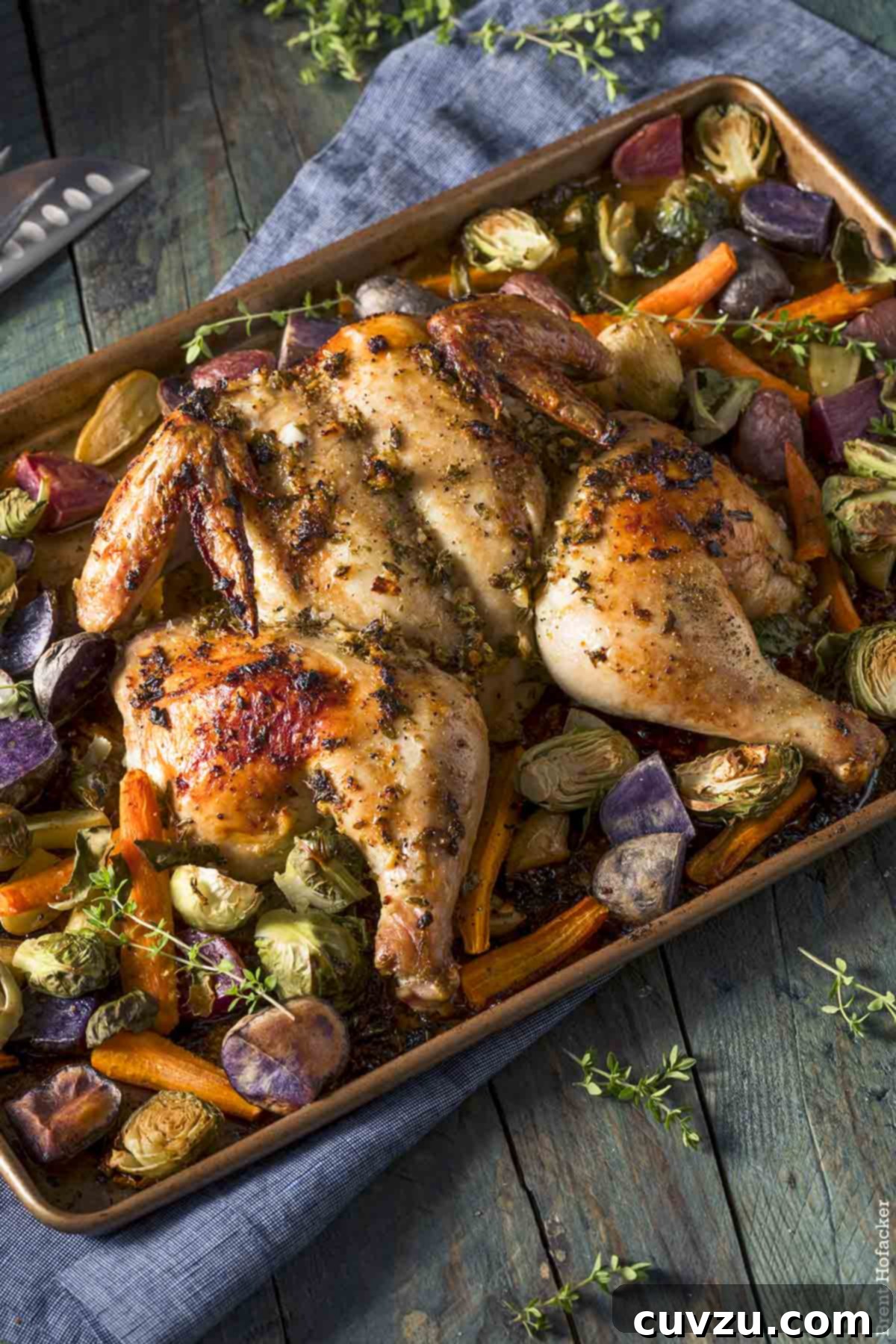
Spatchcocking, a term that might sound peculiar at first, is a remarkably simple yet highly effective culinary technique. At its core, it involves removing the backbone of a whole bird – be it a chicken, turkey, or even a game hen – allowing it to lie completely flat. This seemingly minor alteration fundamentally transforms the cooking process, leading to a more even cook, a significantly faster cooking time, and an exceptionally flavorful result. If you’re tired of unevenly cooked poultry with dry breasts and underdone legs, spatchcocking is the game-changer you need in your kitchen arsenal. All you need is a sturdy pair of kitchen shears, and you’re well on your way to mastering this essential cooking skill.
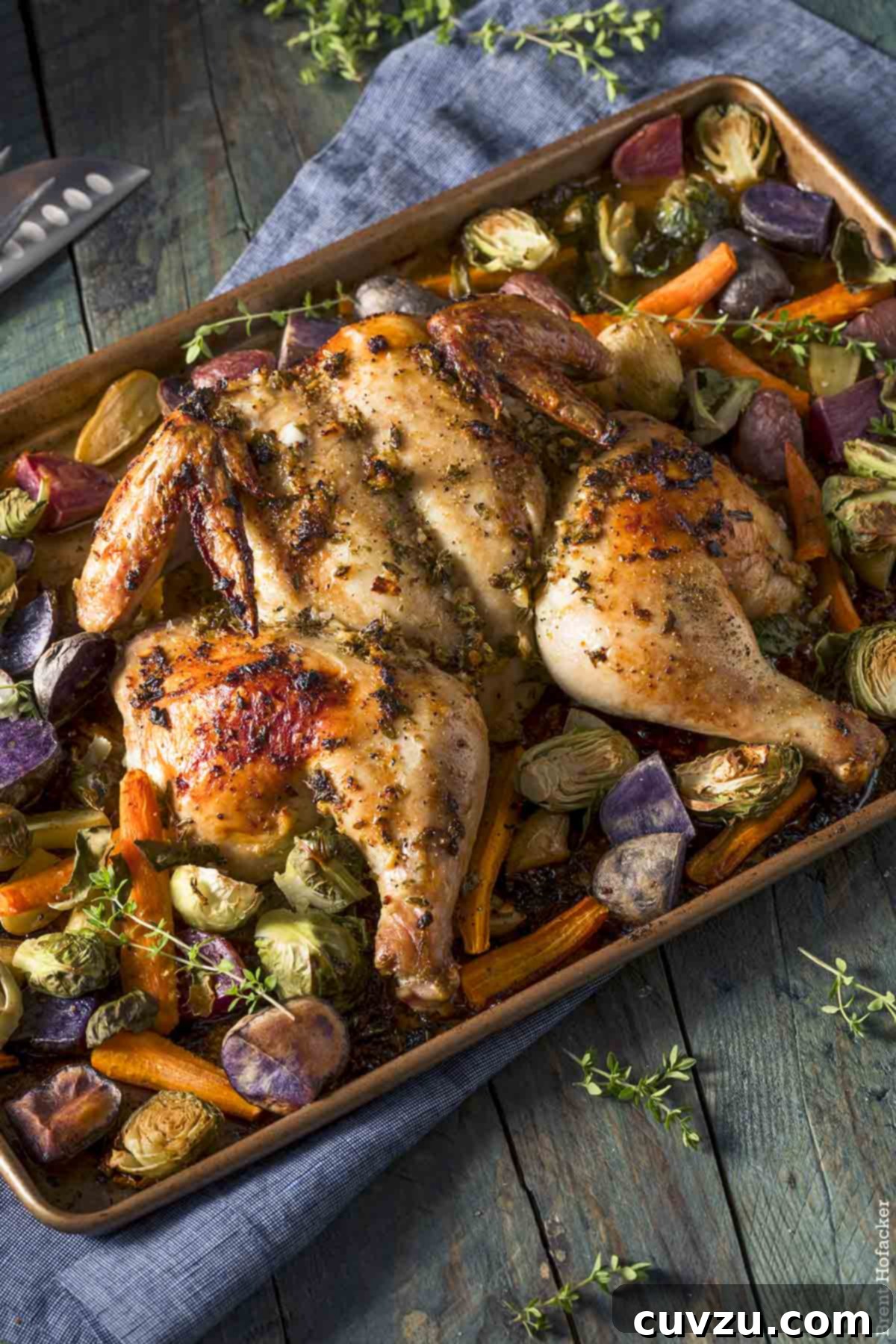
Traditionally, a spatchcocked chicken or smaller bird is a staple for grilling, where its flattened form ensures every part cooks uniformly over direct or indirect heat. The bird is effectively “butterflied,” opened up like a book, creating a wide, flat surface. This not only makes the bird significantly easier to handle and carve once cooked but also promotes unparalleled evenness in heat distribution. With its increased surface area, a spatchcocked bird becomes a canvas for culinary creativity, offering more room for basting with delectable sauces, slathering on aromatic compound butters, or tucking flavorful seasonings directly under the skin. While grilling remains a popular choice, the versatility of spatchcocking extends far beyond the barbecue. We routinely apply this method to chicken and turkey for roasting, broiling, and even smoking, consistently achieving superior results. The process itself is straightforward, but a few simple precautions ensure success and safety.
The Transformative Benefits of Spatchcocking Poultry
Beyond simply flattening a bird, spatchcocking offers a multitude of advantages that elevate your poultry cooking to a professional level. Understanding these benefits can further inspire you to adopt this technique for all your whole bird preparations:
- Unrivaled Even Cooking: This is arguably the primary benefit. When a whole bird is cooked conventionally, the breast, being lean, tends to cook faster and dry out before the thighs and drumsticks, which require higher temperatures and longer cooking times due to their higher fat and connective tissue content, are fully done. By flattening the bird, all parts are exposed to heat more uniformly. The legs and thighs, which are thicker, are positioned closer to the heat source, allowing them to cook at a similar rate to the thinner breast meat. This eliminates the dreaded dry breast syndrome, ensuring every bite is succulent and perfectly cooked.
- Significantly Faster Cooking Times: A flattened bird presents a larger surface area to the heat source, allowing for more efficient heat transfer and dramatically reducing the overall cooking duration. Whether you’re grilling, roasting, or broiling, you’ll find that a spatchcocked chicken cooks considerably faster – often by 25-30% – than its whole counterpart, making it an excellent technique for weeknight meals or when you’re short on time.
- Crispier Skin, Guaranteed: With the skin fully exposed and spread out across a flat surface, it crisps up beautifully and consistently across the entire bird. There are no hidden nooks or crannies for moisture to collect, resulting in that highly coveted, golden-brown, crackling skin that everyone loves. This uniform browning also contributes to an appealing visual presentation.
- Enhanced Flavor Penetration: The increased surface area and exposed flesh allow rubs, marinades, and seasonings to penetrate more deeply and evenly into the meat. You can also easily lift the skin to apply compound butters or herb mixtures directly onto the breast and thigh meat, infusing maximum flavor right where it’s needed most. This direct contact ensures every fiber is imbued with your chosen flavors.
- Easier to Carve and Serve: Once cooked, a spatchcocked bird retains its flat shape, making it incredibly simple to carve. There’s no awkward wrestling with a rounded, wobbly bird; you can easily separate the wings, legs, and slice the breast meat with precision, leading to neat, presentable portions that are a breeze to serve to guests.
How to Spatchcock a Bird: A Step-by-Step Guide
Spatchcocking might sound intimidating if you’ve never done it, but it’s surprisingly simple and quick. With the right tools and a little confidence, you’ll master it in no time. Follow these steps for a perfectly butterflied bird, ready for its culinary journey:
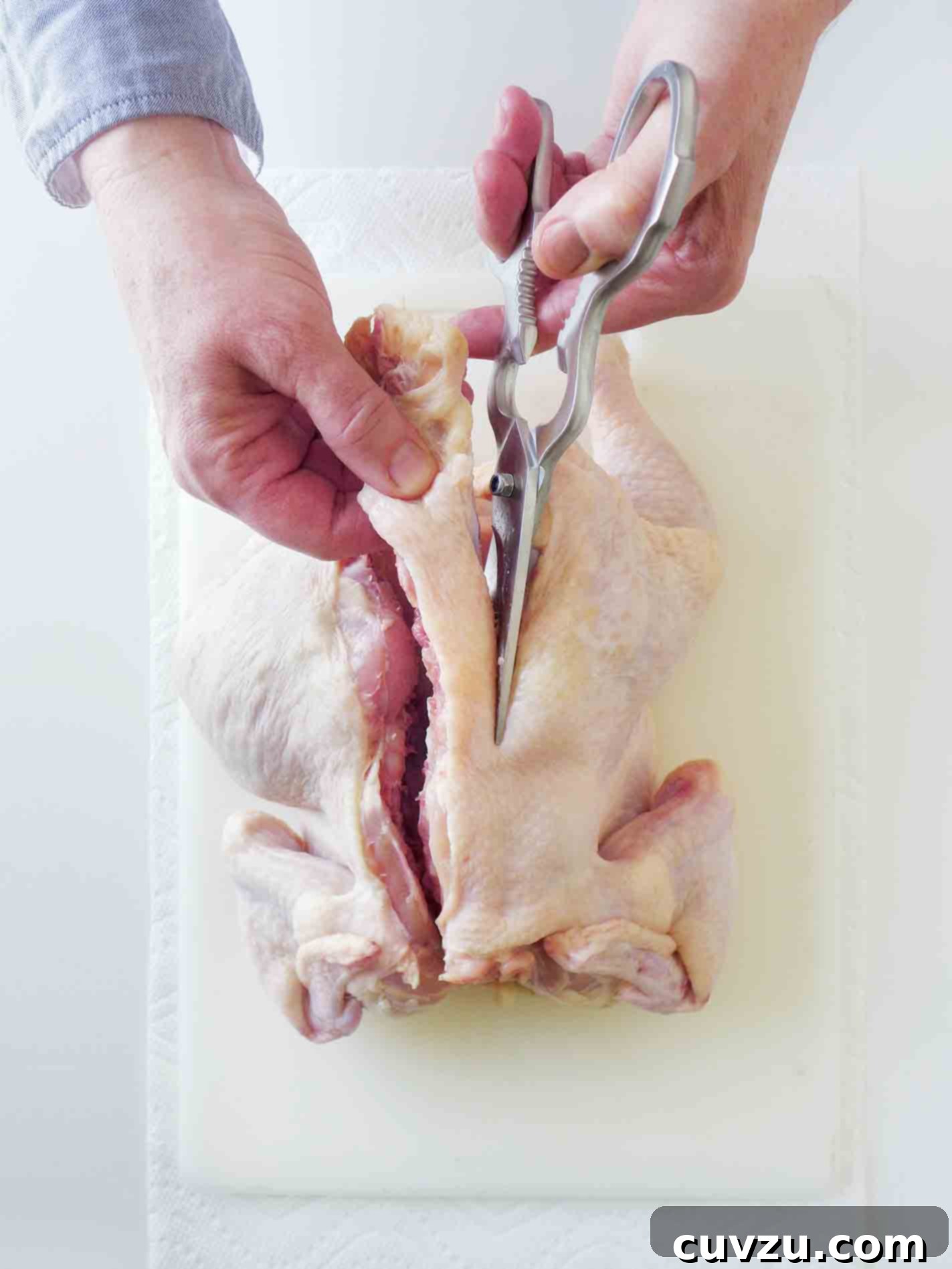
- Gather Your Tools: To effectively split a whole chicken or any small bird, a robust pair of kitchen or poultry shears is essential. These specialized shears are designed to cut through bone and cartilage with ease, offering superior control and safety compared to a knife. While a heavy, sharp chef’s knife or a cleaver can also work, they require more skill and precision and are generally less forgiving. Ensure your chosen tool is clean and sharp before you begin.
- Prepare the Bird for Cutting: Begin by removing any giblets from the cavity of the bird. Place the chicken breast-side down on a stable cutting board. This orientation provides the best access to the backbone and helps stabilize the bird during the cutting process. Pat the bird thoroughly dry with paper towels; this improves your grip and ensures a cleaner, safer cut.
- Remove the Backbone: Starting from the tail end, position your shears just to one side of the backbone. Cut firmly along one side of the backbone, all the way up to the neck cavity. You’ll be cutting through ribs and cartilage, so apply steady, even pressure. Repeat this process on the other side of the backbone, cutting parallel to your first incision. Once both cuts are made, the entire backbone section should be completely free and easily removable.
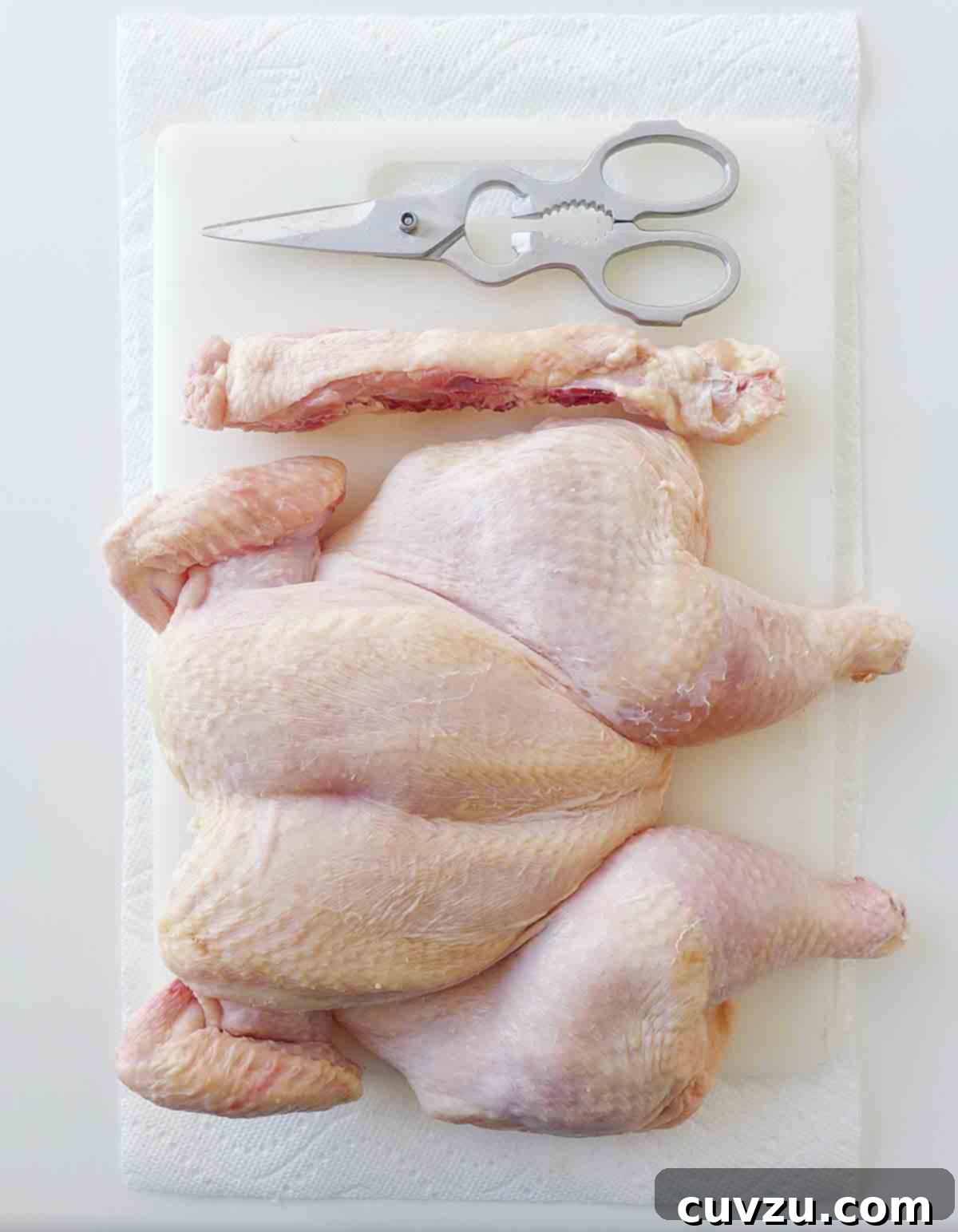
- Flatten the Bird: Open up the chicken like a book, exposing the interior cavity. Flip the bird over so it’s breast-side up. Using the heel of your hand, press down very firmly on the breastbone (the keel bone) until you hear a distinct crack. This action flattens the bird completely, ensuring it lies perfectly flat on your cooking surface. You can also make a small incision in the cartilage connecting the breast halves to help it lie even flatter if needed.
- Utilize the Backbone: Don’t discard the removed backbone, neck, or any giblets (excluding the liver, which can sometimes impart a bitter taste to stock)! These parts are packed with collagen and flavor, making an excellent foundation for a rich, simple chicken stock or gravy. Freeze them for later use, or simmer them immediately with aromatics like carrots, celery, and onions for a homemade stock that will elevate your future dishes and reduce food waste.
Cooking Methods for Spatchcocked Poultry
Once your bird is perfectly flattened and seasoned, it’s ready for a variety of cooking methods, each promising delicious results. The key is to leverage the bird’s new, uniform shape for optimal heat distribution and crispy perfection.
Grilling Spatchcocked Chicken
Grilling is a classic and highly recommended choice for spatchcocked chicken, delivering fantastic smoky flavor and beautifully charred, crispy skin. Its flat shape makes it ideal for managing heat zones on your grill. For best results, use a two-zone grilling setup: one side with direct high heat and the other with indirect low heat. Start the chicken skin-side down over direct heat for 5-7 minutes to get a nice sear and crisp the skin, then move it to the indirect side, closing the lid, to allow it to cook through evenly. This method prevents burning while ensuring the internal temperature reaches a safe 165°F (74°C) in the thickest part of the thigh, yielding juicy meat and perfect skin.
Roasting Spatchcocked Chicken or Turkey
Roasting a spatchcocked bird in the oven is perhaps the most popular and foolproof method for a succulent, crispy-skinned meal that requires minimal supervision. Preheat your oven to a high temperature, typically between 400°F and 450°F (200°C-230°C). Place the flattened bird on a roasting rack set over a baking sheet to allow for crucial air circulation around the entire bird, which is key to achieving uniformly crispy skin. Roast until the internal temperature in the thickest part of the thigh registers 165°F (74°C). The higher initial temperature helps render the fat and crisp the skin, while the even flattening ensures the meat cooks consistently without drying out. Roasting also allows for easily adding vegetables around the bird to cook simultaneously, absorbing all the delicious drippings and creating a flavorful one-pan meal.
Broiling for Quick Results
For a remarkably quick cooking method, especially for smaller birds or when you desire an intensely browned, crispy finish in a short amount of time, broiling a spatchcocked chicken can yield impressive results. Place the bird skin-side up on a baking sheet, positioning it several inches from the broiler element. Broilers can be very intense, so keep a close eye on the bird, rotating the pan or turning the bird as needed to ensure even cooking and prevent any parts from burning. This method is incredibly fast but requires constant vigilance to achieve a perfect cook without charring.
Smoking Spatchcocked Birds
For those who love deep, complex smoky flavors, spatchcocking is an excellent technique for smoking poultry. The flattened form allows for maximum smoke penetration across the entire bird’s surface and ensures it cooks more efficiently and evenly in a smoker. Maintain a consistent low temperature (around 225-275°F or 107-135°C) and use your favorite wood chips (like apple, cherry, or hickory) for several hours until the internal temperature is reached. The result is incredibly juicy meat with a beautiful smoke ring and an unforgettable flavor profile that penetrates deep into the flesh.
Elevating Flavor: Seasoning Your Spatchcocked Poultry
With its expanded surface area and exposed flesh, a spatchcocked bird offers unparalleled opportunities for flavor infusion. Don’t be shy with your seasonings; this is where you can truly make the dish your own!
- Classic Herbs & Spices: A simple, effective rub of coarse salt, freshly ground black pepper, garlic powder, onion powder, paprika, and dried herbs like rosemary, thyme, and sage works wonders. Apply generously all over the skin and, importantly, gently lift the skin to apply some directly onto the breast and thigh meat for deeper flavor.
- Compound Butters: Elevate your bird with a homemade compound butter. Mix softened unsalted butter with minced garlic, finely chopped fresh herbs (parsley, chives, tarragon), lemon zest, and a pinch of salt. Gently separate the skin from the breast and thigh meat and spread this flavorful butter directly onto the flesh before cooking. This not only adds immense flavor but also bastes the meat from within, helping to keep it incredibly moist.
- Marinades & Brines: If time permits, a good brine or marinade can significantly enhance moisture and flavor. For a marinade, consider a base of olive oil, fresh lemon juice, crushed garlic, and your favorite spices (e.g., cumin, coriander, oregano). For a brine, a simple salt and sugar solution with aromatics like bay leaves, peppercorns, and orange peel will greatly enhance juiciness and season the meat thoroughly. Ensure the flattened bird is fully submerged or turned frequently in your chosen liquid.
- Citrus & Aromatics: Before cooking, tuck lemon wedges, quartered onions, and garlic cloves around and under the bird on your roasting pan. Their aromatic essences will infuse the meat as it cooks, contributing to a more complex and fragrant flavor profile.
Tips and Tricks for Spatchcocking Success
To ensure your spatchcocking endeavors are always a resounding success, keep these expert tips in mind:
- Safety First with Shears: Always use sharp, heavy-duty kitchen or poultry shears. Dull tools increase the risk of slippage and injury, making the task more difficult than it needs to be. Be mindful of your fingers when making the cuts.
- Pat Dry for Crispy Skin: Before applying any seasonings or cooking, ensure the bird is thoroughly patted dry with paper towels. This crucial step removes surface moisture, which is essential for achieving that desirable, golden-brown, and audibly crispy skin.
- Trussing (Optional but Recommended): While the bird is flat, you might want to loosely tie the legs together with kitchen twine. This keeps the bird compact during cooking, helps it maintain its appealing shape, and ensures the legs cook evenly. Tuck the wing tips under the breast to prevent them from burning, as they are thinner and prone to overcooking.
- Monitor Internal Temperature: Always use a reliable digital meat thermometer to check for doneness. Insert it into the thickest part of the thigh, avoiding contact with bone. The target internal temperature for chicken and turkey is 165°F (74°C). This is the most accurate way to guarantee safety and prevent overcooking.
- Resting is Key: After cooking, resist the urge to carve immediately. Allow the spatchcocked bird to rest for 10-15 minutes (for chicken) or 20-30 minutes (for turkey) before carving. This critical resting period allows the juices to redistribute throughout the meat, resulting in a significantly more tender, moist, and flavorful bird.
- Don’t Waste the Backbone: As mentioned, save the backbone, neck, and any giblets (excluding the liver) for making homemade stock. It’s a simple, economical, and delicious way to get more mileage out of your poultry and create a flavorful base for soups, sauces, and risottos.
Spatchcocking is more than just a butchering technique; it’s a culinary hack that promises consistently superior results for any whole bird you prepare. By embracing this straightforward method, you unlock a world of perfectly cooked, succulent, and incredibly flavorful poultry, whether you choose to grill, roast, broil, or smoke it. Give it a try – you’ll wonder why you ever cooked poultry any other way, and your guests will thank you for the perfectly prepared meal!