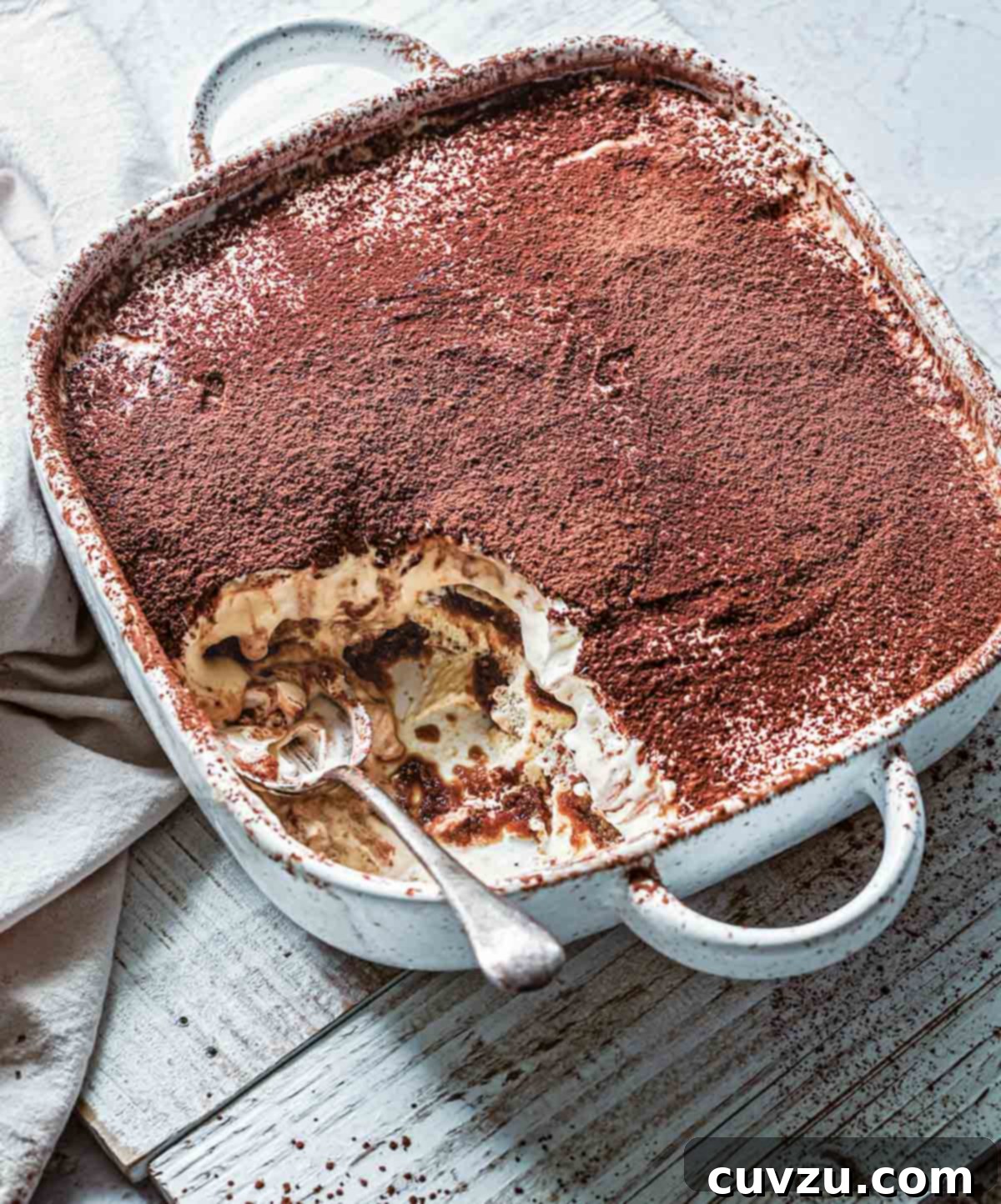
Indulge in the sublime pleasure of a truly **authentic Italian tiramisu**, a timeless dessert celebrated for its sophisticated blend of flavors and luxurious texture. This classic recipe layers delicate, coffee-infused ladyfingers with a rich, velvety mascarpone cream, brightened by a hint of vanilla and a touch of spirited liqueur. Each spoonful offers a harmonious symphony of sweet, bitter, and creamy notes, making it an irresistible treat that has captivated palates for generations.
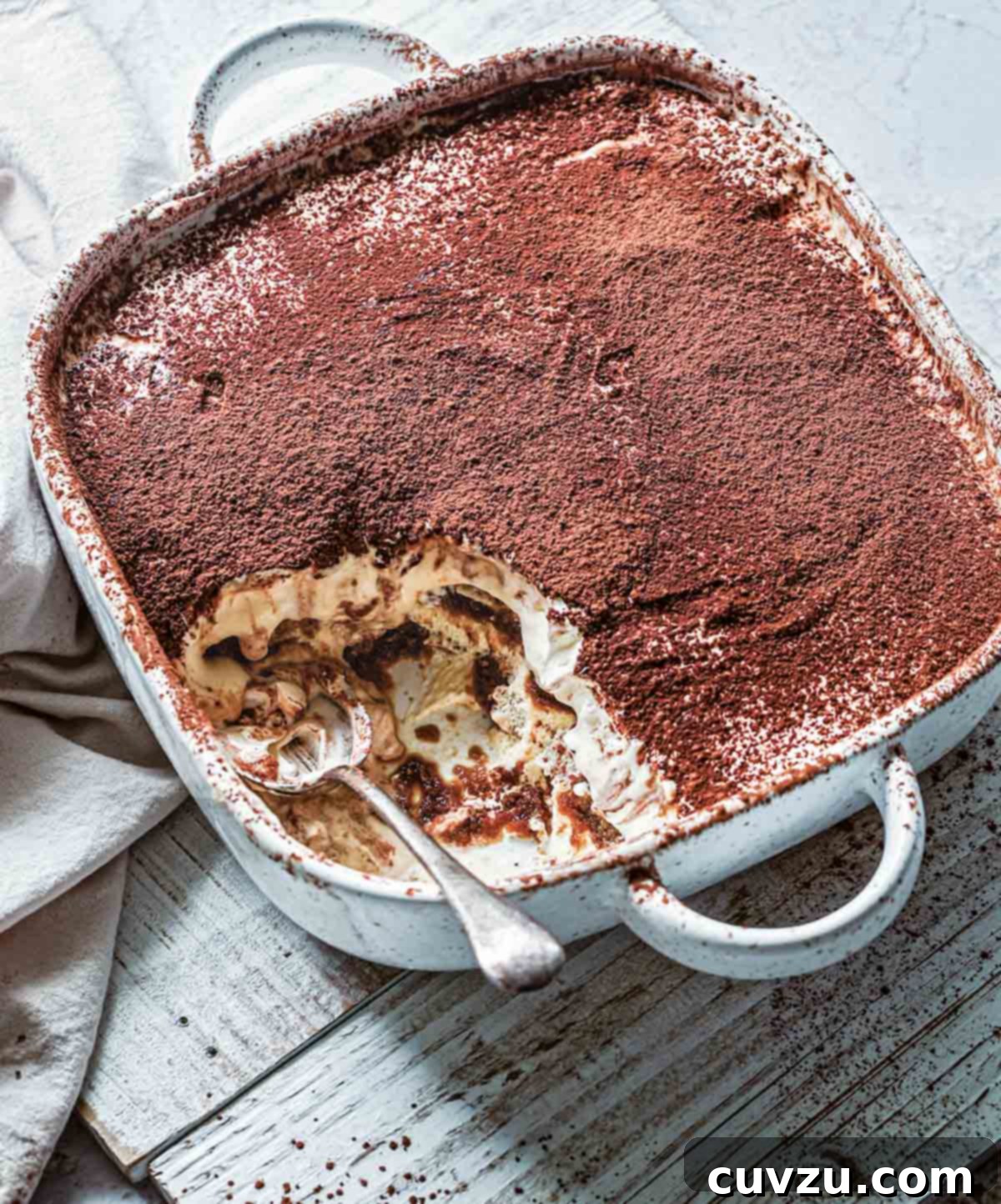
Tiramisu, which translates to “pick me up” or “cheer me up,” perfectly encapsulates the revitalizing essence of this beloved Italian creation. It’s a dessert that transcends simple sweetness, offering an invigorating blend of robust coffee and luxurious creaminess. While countless variations exist, ranging from fruit-infused to chocolate-heavy versions, the fundamental elements remain constant: crisp ladyfingers, strong coffee, creamy mascarpone, and a dusting of cocoa. This classic combination is not just a dessert; it’s an experience.
Growing up, my fondest party memories often involved a dessert table laden with delights. Among them were always two tiramisu dishes – one reserved for adults, featuring a subtle hint of liqueur like Frangelico or Marsala wine, and another specially prepared for us children, where chocolate milk replaced the coffee and the spirits were omitted entirely. This thoughtful adaptation ensured that no one missed out on the joy of tiramisu. If you prefer to skip the alcohol in your own culinary adventure, rest assured, the dessert remains utterly delightful. Its versatility makes it a perfect choice for any gathering, easily customized to suit all ages and preferences.
The Enduring History Behind Tiramisu
The precise origins of tiramisu are shrouded in a delicious mystery, debated among culinary historians and enthusiasts alike. While some accounts point to its creation in Treviso in the 19th century, others suggest roots in Siena or even as a dessert created for Cosimo III de’ Medici in the 17th century. Regardless of its exact birthplace, tiramisu evolved over centuries, with various regions and families adapting the recipe to their unique tastes and available ingredients. This organic evolution has cemented its status as a versatile and widely cherished Italian delicacy.
Traditionally, the core ingredients for tiramisu included Italian Savoiardi ladyfingers, fresh eggs, granulated sugar, rich mascarpone cheese, strong coffee, a dusting of cocoa powder, and often a splash of flavored liqueur such as Marsala wine, brandy, or a coffee-based spirit. Over time, as culinary practices evolved and dietary concerns became more prevalent, adaptations emerged. One common modification addresses the use of raw eggs. For those uncomfortable with consuming uncooked eggs, a popular alternative involves replacing them with an equal amount of whipped heavy cream, typically about 1 1/4 cups (300 ml). This substitution maintains the desired creamy texture while offering a comforting peace of mind, making tiramisu accessible to an even wider audience.
Why This Traditional Tiramisu Recipe Stands Out
Among the myriad tiramisu recipes available, this particular traditional Italian tiramisu recipe consistently garners rave reviews for its authentic flavor profile and perfectly balanced textures. It meticulously follows time-honored techniques to achieve that quintessential light-yet-rich mascarpone cream and the ideal coffee saturation in every ladyfinger. This recipe emphasizes quality ingredients, from full-fat mascarpone to freshly brewed espresso, ensuring a dessert that tastes genuinely Italian. Furthermore, it offers clear guidance on crucial steps like beating eggs to perfection and gently folding ingredients, making it approachable even for home bakers who might be new to this classic dessert. The optional addition of liqueur adds a sophisticated depth without overpowering the delicate balance, making it a truly exceptional and memorable tiramisu.
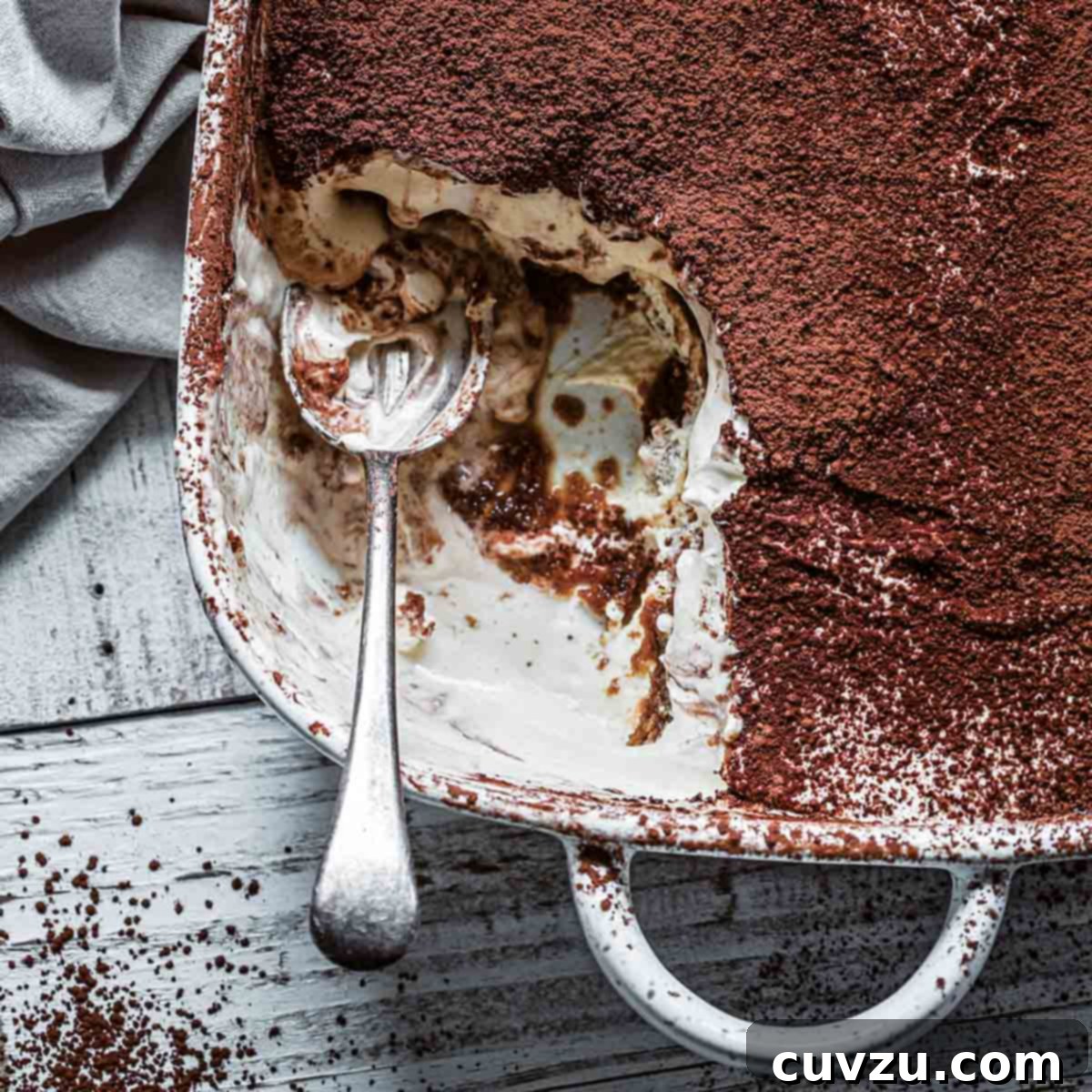
Tiramisu FAQs: Your Questions Answered
For optimal flavor and texture, it’s best to serve your homemade tiramisu within 1 to 2 days of preparation. If you have any leftovers, ensure they are promptly refrigerated to maintain freshness and food safety. Properly stored in an airtight container or tightly wrapped with plastic film, tiramisu will typically last for up to 4 days in the refrigerator. Always aim to consume it sooner rather than later to enjoy its peak deliciousness, as the flavors develop beautifully over the first 24 hours.
Yes, tiramisu can be successfully frozen, making it an excellent make-ahead dessert! To prevent an unappetizing skin from forming on the mascarpone cream and to protect its delicate texture, first, ensure the tiramisu is completely chilled and has not yet been dusted with cocoa powder. Then, press a layer of plastic wrap directly against the surface of the cream, ensuring no air pockets. Follow with another tight layer of plastic wrap, then cover the entire dish securely with aluminum foil. Freeze for up to 1-2 months.
When you’re ready to enjoy, transfer the frozen tiramisu to the refrigerator to thaw overnight. For quicker thawing, you can let it sit at room temperature for about 20-30 minutes before unwrapping and dusting generously with fresh cocoa powder just before serving. This method helps maintain its rich flavor and creamy consistency, offering a delightful treat whenever the craving strikes.
The consumption of raw eggs carries a small risk of salmonella, but with proper precautions, it can be minimized. Historically, tiramisu has been made with raw eggs for centuries in Europe without widespread issues. In many countries, strict food safety regulations ensure the quality of eggs available for consumption.
If you are pregnant, immunocompromised, or simply prefer to err on the side of caution, you have several excellent options. First, opt for store-bought pasteurized eggs. The USDA mandates that “All egg products are pasteurized as required by United States Department of Agriculture’s (USDA) Food Safety and Inspection Service (FSIS) to destroy bacteria.” These are widely available and eliminate the raw egg concern. Second, as advised in the recipe notes, you can substitute the eggs with 1 1/4 cups (300 ml) of heavy cream, whipped to stiff peaks, then gently folded into the mascarpone. This alternative ensures a delicious and worry-free dessert.
Mascarpone cheese, with its delicate structure, can curdle if over-beaten or if it experiences drastic temperature changes during mixing. To prevent curdling, always start with full-fat mascarpone cheese that is cold but not rock-hard. Use a large mixing bowl to give yourself ample space, and beat the mascarpone gently with a handheld mixer on a low speed until just combined with other ingredients – avoid over-mixing at all costs.
If your mascarpone does curdle, don’t despair! You can often rescue it. Gently transfer the curdled mixture to a heatproof bowl set over a double boiler (a saucepan with simmering water, ensuring the bowl does not touch the water). Whisk the mixture continuously and gently over the low heat until the lumps disappear and the texture becomes smooth again. Be careful not to overheat it, as this can cause it to separate further. Once smooth, remove from heat and let it cool completely to room temperature before reincorporating it into your tiramisu mixture. A little patience can save your luscious mascarpone cream!
Traditional Italian Tiramisu
4.88 / 8 votes
David Leite
Dessert
Italian
8
servings
472
kcal
40
minutes
2
hours
2
hours
40
minutes
Ingredients
-
2
cups
freshly brewed hot espresso or strong coffee -
1
shot
Frangelico liqueur,
Marsala wine, Amaretto, brandy, dark rum, or any coffee-flavored liqueur (optional) -
1 1/4
cups
full-fat mascarpone cheese -
1
teaspoon
vanilla extract,
vanilla bean paste, or 1 vanilla bean, halved and seeded -
4
large
eggs,
separated, with yolks in one large bowl and whites in another, at room temperature (see FAQ for raw egg alternatives) -
1/2
cup
granulated sugar -
One
(17.6-oz)
package Savoiardi ladyfingers (approx. 24-30 pieces) -
Cocoa powder,
for dusting
Instructions
-
Begin by preparing the coffee bath. Pour the freshly brewed hot espresso or strong coffee into a shallow bowl. Ensure the bowl is wide enough to comfortably accommodate the length of your Savoiardi ladyfingers for easy dipping. If you choose to use a flavored liqueur, such as Frangelico, Marsala wine, Amaretto, brandy, or dark rum, add it to the coffee now and stir gently to combine the aromas. Set this aside to cool slightly.
-
In a large mixing bowl, combine the full-fat mascarpone cheese with the vanilla extract (or vanilla bean paste/seeds from a vanilla bean). Using a handheld electric mixer, beat the mixture gently on a low speed until it is just combined and smooth. Be extremely careful not to overbeat the mascarpone, as it can curdle quickly and lose its desirable creamy consistency. Stop mixing as soon as it comes together.
-
Take the bowl containing the egg yolks and add the granulated sugar. Using the electric mixer (with clean beaters), beat the egg yolks and sugar together vigorously for approximately 5 minutes. Continue mixing until the yolks transform into a thick, pale yellow, and noticeably fluffy consistency. This step is crucial for achieving the characteristic richness and airy texture of the tiramisu cream.
-
Thoroughly clean and dry your whisk attachments to ensure no fat or residue remains, which could prevent the egg whites from stiffening. In the separate bowl with the egg whites, beat them with the electric mixer until they form stiff, glossy peaks, which typically takes about 4 to 5 minutes. Once stiff, gently fold these beaten egg whites into the pale, thick egg yolk mixture, incorporating them a little at a time. The goal is to maintain as much air as possible, keeping the mixture light and ethereal.
-
Now, gently fold the prepared mascarpone mixture into the light and fluffy beaten egg mixture. Take your time, folding carefully until all ingredients are well combined into a homogenous cream, making sure to preserve the airy volume. If you are substituting heavy cream for eggs, beat 1 1/4 cups (300 ml) of heavy cream for 2 to 3 minutes until stiff peaks form, then gently fold this into the mascarpone mix.
-
To begin assembling your tiramisu, spread a very thin, even layer of the mascarpone cream mixture on the bottom of your chosen serving dish. An 8- or 9-inch square baking dish is ideal, or you can use individual serving dishes like glasses or ramekins. This initial layer helps to anchor the ladyfingers and prevent them from shifting.
-
Working one Savoiardi ladyfinger at a time, quickly dip it into the coffee and liqueur mixture. Submerge it completely for just 1 to 2 seconds. The key is to dip quickly – ladyfingers absorb liquid very rapidly, and you want them soaked but not soggy or falling apart. Arrange these coffee-soaked ladyfingers in a single layer over the mascarpone base until it is completely covered. If using individual glasses or jars, you may need to break or cut the ladyfingers to fit.
-
Carefully cover the layer of coffee-soaked ladyfingers with approximately one-third of the remaining mascarpone cream mixture. Use an offset spatula to spread it out evenly from edge to edge. Repeat this layering process twice more, creating alternating layers of coffee-soaked ladyfingers and mascarpone cream, ensuring the top layer is entirely mascarpone cream.
-
Once assembled, cover the tiramisu tightly with plastic wrap, ensuring the wrap directly touches the surface of the cream to prevent any skin from forming. Refrigerate for at least 2 hours to allow the flavors to meld and the dessert to set properly. For the best possible flavor development and a truly cohesive texture, I highly recommend making your tiramisu the day before serving it, letting it chill overnight.
-
Just prior to serving, remove the plastic wrap and generously dust the top of the tiramisu with unsweetened cocoa powder. A fine-mesh sieve works perfectly for an even coating. Slice and serve, savoring each glorious bite of this classic Italian masterpiece.
Tips for the Perfect Tiramisu
Achieving tiramisu perfection involves a few key considerations. Firstly, always use high-quality ingredients. The flavor of your tiramisu heavily relies on good espresso, fresh eggs (or quality cream), and authentic full-fat mascarpone. Secondly, avoid over-soaking the ladyfingers; a quick dip is all they need to absorb enough coffee without becoming mushy. Thirdly, ensure your egg whites are beaten to stiff peaks and gently folded into the yolk mixture to create that signature airy cream. Finally, the chill time is non-negotiable. Allowing the tiramisu to refrigerate for at least 2 hours, or ideally overnight, lets all the distinct flavors meld beautifully and the structure to firm up, resulting in a dessert that truly lives up to its name.
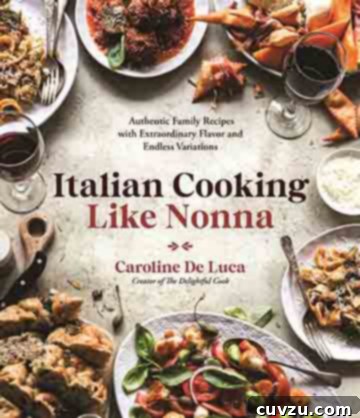
Adapted From
Italian Cooking Like Nonna
Buy On Amazon
Nutrition
Serving:
1
portion
Calories:
472
kcal
Carbohydrates:
51
g
Protein:
12
g
Fat:
24
g
Saturated Fat:
13
g
Monounsaturated Fat:
4
g
Trans Fat:
0.01
g
Cholesterol:
266
mg
Sodium:
148
mg
Fiber:
1
g
Sugar:
13
g
Nutrition information is automatically calculated, so should only be used as an approximation.
Tried this recipe?
Mention @leitesculinaria or tag #leitesculinaria!
Recipe Testers’ Reviews
Moira Ryan
I usually struggle with deflating batters when adding egg whites, so I was a bit skeptical about achieving the perfect custard for this tiramisu with my folding skills. However, to my delightful surprise, it turned out absolutely fantastic! The mascarpone cream was the ideal blend of airy lightness and creamy indulgence, making for a truly spectacular dessert.
Terry S.
This Italian tiramisu was truly exquisite, immediately bringing to mind a wonderful traditional tiramisu I once enjoyed in Venice. For years, I had held the misconception that tiramisu was an overly complicated dessert, something best left to professional chefs. I stand corrected! This recipe revealed that tiramisu is, in reality, a remarkably straightforward dessert that can be assembled quickly and with minimal fuss.
The finished tiramisu was wonderfully light, with all the various flavors and textures blending seamlessly to create a harmonious whole. As I discovered, it’s a very accessible dessert to make, even for an inexperienced baker. It also stands out as an excellent option for those occasions when you crave a delicious homemade treat but prefer to avoid turning on the oven.
Peter Quick
This version of classic tiramisu is indeed billed as decadent, and I can confirm it absolutely lives up to that promise – it was utterly delicious! Tiramisu is always my go-to dessert when I see it on a restaurant menu. This recipe, I can confidently say, is one of the best I have ever encountered, surpassing many professional versions.
The preparation for this recipe is surprisingly easy, coming together without any complications. I have always made tiramisu with whipped cream in the past, but this particular version utilizes raw eggs, which contributes significantly to its truly luxurious and decadent profile. The texture and richness achieved with the eggs are simply unparalleled.
Lydia Brimage
For this traditional Italian tiramisu, I opted to use eggs rather than heavy cream, adhering to the classic method. I used Boudoir trifle sponge fingers, which are quite similar to the traditional Savoiardi, and enhanced the coffee with Amaretto liqueur. It was a delightful combination.
I would have preferred to assemble my dessert in a long, flat rectangular tray, but circumstances led me to use a round bowl instead. This made arranging the sponge fingers in a consistent direction a bit more challenging, requiring some careful placement. I allowed my dessert to sit in the refrigerator overnight before serving, which is my usual practice for tiramisu.
After the overnight chill, I observed that the dessert seemed to settle more than it typically would if I had used cream instead of eggs. In terms of flavor, I felt the finished taste could have benefited from a stronger coffee presence, and I also thought the biscuits might have been even better with a slightly longer soaking time in the coffee/liqueur mix to ensure they were less dry and fully saturated. Overall, my dessert held up well after chilling overnight.
If I were to make this tiramisu again, I would definitely increase the amount of coffee and liqueur to achieve a more pronounced coffee flavor. Additionally, I would allow the sponge fingers to soak for a bit longer to prevent any dryness, ensuring a perfectly moist and flavorful dessert.