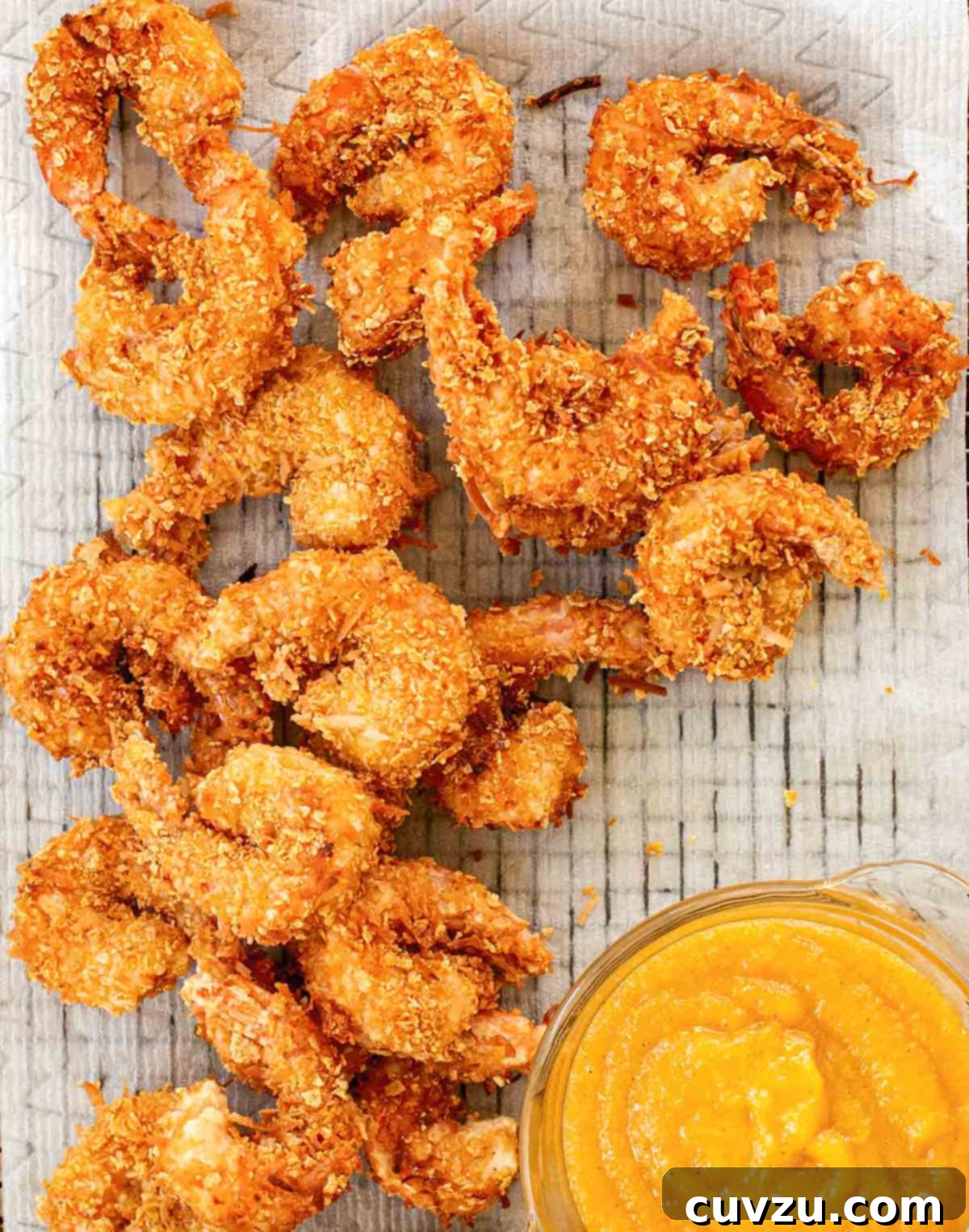
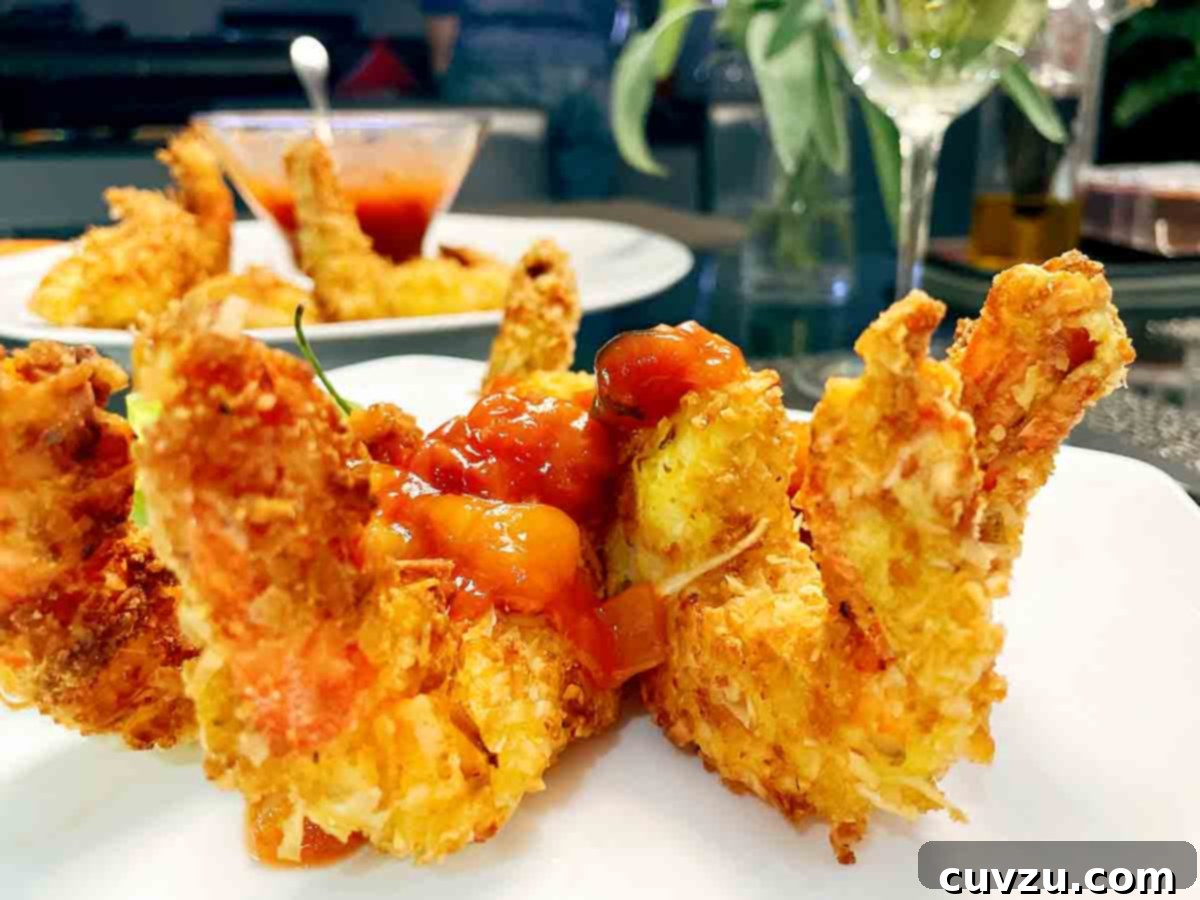
Coconut shrimp takes big, juicy shrimp and coats them with sweet, crispy coconut and breadcrumbs. After being lightly fried, they’re drizzled with a sweet and spicy mango habanero salsa. They make an exceptional dinner or appetizer.
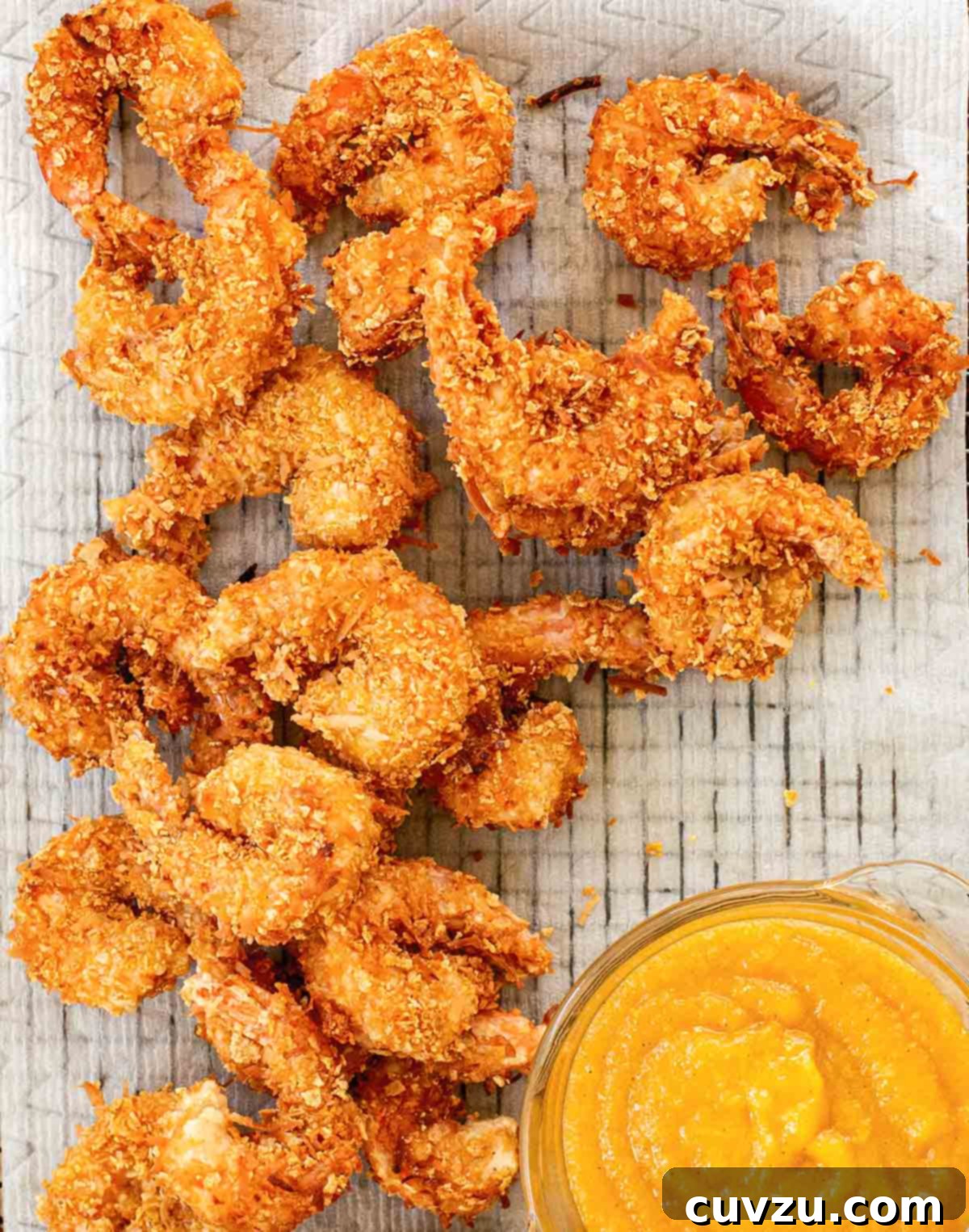
Crispy Coconut Shrimp with Zesty Mango Habanero Salsa: A Tropical Delight
Imagine biting into the most succulent shrimp, encased in a perfectly crisp, golden-brown coating of sweet and savory coconut, with tails still on for easy handling. Now, picture that culinary delight perfectly complemented by a vibrant, tangy, and subtly spicy mango habanero salsa. This isn’t just a meal; it’s an experience that transports your taste buds straight to a sun-drenched beach, making it an extraordinary choice for a festive yet fast dinner or an impressive appetizer.
Our journey to perfecting this tropical delight began in the charming, historic city of Campeche, a hidden gem nestled along the Gulf of Mexico in Mexico’s Yucatán Peninsula. While not as bustling as some of its Yucatecan neighbors, Campeche is renowned for its incredible seafood and picturesque towns, boasting a rich culinary heritage. It was there that we first tasted the magic of authentic Mexican-style coconut shrimp, a dish that inspired us to recreate its authentic flavors with a unique twist for home cooks seeking both ease and gourmet appeal.
The Secret to an Irresistible Coconut Coating
One of the most common debates among cooks is whether to use sweetened or unsweetened shredded coconut for the coating. For this recipe, we’ve found the ultimate solution: combine both! As celebrated chef Pati Jinich wisely suggests, the blend of textures and flavors is what truly elevates this dish:
“For the coating, some cooks use sweetened shredded coconut, others use unsweetened. I choose both because I love the chewy texture and moist sweetness of the sweetened coconut, but I also like the fragrance and drier crunch of unsweetened. I combine them with bread crumbs.” —Pati Jinich
This thoughtful combination ensures a coating that’s not overly sweet but boasts a delightful complexity—crispy, chewy, fragrant, and perfectly balanced. The breadcrumbs add an extra layer of crunch and help bind the coconut beautifully to the shrimp, ensuring every bite is a symphony of textures and tastes. This dual approach gives our coconut shrimp a unique depth that simple coatings can’t match.
Why This Coconut Shrimp Recipe Stands Out
Beyond the innovative dual-coconut coating, several elements contribute to making this particular coconut shrimp recipe a cut above the rest. We emphasize using the largest, freshest shrimp possible, ensuring each bite is plump, tender, and incredibly juicy. The precise frying technique guarantees that coveted golden crispness without any risk of overcooking the delicate shrimp inside. But what truly sets this recipe apart is the homemade Mango Habanero Salsa – a dynamic fusion of sweet tropical mangoes and the fiery, aromatic kick of habanero chiles. This vibrant salsa creates an unforgettable sweet and spicy counterpoint to the rich, savory coconut, transforming a simple fried shrimp into a gourmet experience that tantalizes every palate.
Crafting the Perfect Mango Habanero Salsa
The accompanying mango habanero salsa is far more than just a dipping sauce; it’s an integral component of the dish’s overall flavor profile, designed to perfectly balance the richness of the coconut shrimp. Sweet, ripe mangoes provide a tropical, fruity base, while carefully selected habanero peppers introduce a potent yet manageable heat that awakens the palate with a pleasant warmth rather than an overpowering burn. Ingredients like coarsely chopped white onion, unseasoned rice vinegar, water, dark brown sugar (or traditional piloncillo), and a hint of ground allspice are meticulously balanced to create a multifaceted salsa that is both refreshing and exciting. Cooking the salsa briefly allows the flavors to meld and deepen, taming the raw heat of the habanero just enough to be enjoyable and ensuring a smooth, harmonious blend. This vibrant sauce not only adds a burst of color but also a complex layer of sweet, tangy, and spicy notes that complete the dish.
Expert Tips for Making the Best Coconut Shrimp
Achieving perfectly crispy and flavorful coconut shrimp is easier than you think with these expert tips:
- Choose Your Shrimp Wisely: Always opt for extra-large shrimp (U/15 or 16-20 count if possible), peeled with tails left on for aesthetic appeal and easy handling. Fresh shrimp will always offer the best flavor and texture, but high-quality frozen shrimp (properly thawed and patted dry) also work exceptionally well. The size of the shrimp is crucial as it affects cooking time and the overall eating experience.
- The Dual Coconut Advantage: Do not skip the combination of sweetened and unsweetened shredded coconut. This blend is key to the unique texture and balanced sweetness of the coating. The sweetened variety adds a subtle chewiness and a hint of sweetness that balances the drier crunch and pronounced fragrance of the unsweetened flakes, creating a truly irresistible crust.
- Mastering the Fry: Maintaining a steady oil temperature of 350°F (180°C) is absolutely essential for achieving a beautifully golden, perfectly crispy crust without overcooking the shrimp. We highly recommend using a kitchen thermometer to monitor the oil’s temperature. If you don’t have one, you can test a small piece of the coconut coating; it should immediately sizzle and turn golden within seconds. Importantly, avoid overcrowding the pan; fry the shrimp in small batches to prevent the oil temperature from dropping too low, which can result in greasy, soggy shrimp.
- Don’t Overcook: Shrimp cooks incredibly quickly, usually requiring only 1 to 2 minutes per side until they turn pink and opaque. Overcooked shrimp will become tough, rubbery, and lose their delightful juiciness. Keep a close eye on them to pull them out at the peak of perfection.
- Serve Immediately: For the absolute best texture and flavor, coconut shrimp are meant to be enjoyed right after frying. The crispy coating can soften significantly if left to sit for too long or if attempts are made to reheat them. Prepare them just before serving for the ultimate culinary experience.
- Salsa Heat Adjustment: Habanero peppers are known for their intense heat! We recommend starting with just one chile when preparing the salsa, blending it, and then tasting the mixture before deciding whether to add the second (or part of it). Remember that the heat level of the habanero will mellow slightly as the salsa cooks and cools, offering a more nuanced spice.
Coconut Shrimp Frequently Asked Questions (FAQs)
What can I substitute for habanero peppers in the salsa?
The best substitute for habanero peppers depends on your desired heat level and availability. If you’re looking for a similar intensity of heat but can’t find habaneros, Scotch bonnet peppers are an excellent alternative, as they share a comparable spiciness and fruity undertone. For those who prefer a significantly milder flavor with less heat, jalapeño peppers or serrano peppers offer a fantastic option. Both have a fresh, slightly grassy flavor that complements mango well, but with a much gentler kick, making the salsa more accessible to a wider audience.
What is a good substitute for piloncillo?
Piloncillo is a traditional Mexican unrefined whole cane sugar, often found in cones or blocks. It’s known for its deep, earthy, and slightly caramelized flavor, with hints of both bitterness and sweetness that are more complex than standard refined sugars. Similar to brown sugar, piloncillo comes in two main types: blanco (light) and oscuro (dark). For this specific recipe, if piloncillo is unavailable, we highly recommend using dark brown sugar as the best substitute. Its rich molasses content provides a comparable deep, caramelized sweetness and a robust flavor that most closely mimics the unique profile of piloncillo, ensuring your salsa retains its intended depth.
Can I make these shrimp ahead of time for a party or meal prep?
Actually, no, this particular recipe is best enjoyed when eaten as soon as it’s ready. The magic of these coconut shrimp lies in their wonderfully crispy, crunchy coating and the tender, juicy interior. Unfortunately, letting them sit for extended periods, such as on a buffet, or attempting to reheat them will cause the delicate coconut crust to lose its desirable crispiness and become soft. For the freshest, most delightful texture and flavor, we strongly advise making and serving these delicious shrimp immediately after frying. This ensures every bite is as perfect as intended, delivering that satisfying crunch and succulent taste.
Coconut Shrimp
For this superb entrée or appetizer, select the largest shrimp available. Exercise care to avoid overcooking, ensuring the shrimp remain plump and juicy beneath their crunchy coconut exterior. They are ideally paired with a vibrant, fiercely flavorful mango-habanero salsa, creating a harmonious balance of sweet, spicy, and savory notes.
Recipe by David Leite
Course: Mains, Appetizer
Cuisine: Mexican
Servings: 4 to 6 servings
Calories: 1032 kcal
Prep Time: 30 minutes
Cook Time: 30 minutes
Total Time: 1 hour
Ingredients
For the Mango Habanero Salsa
- 3 large (about 3 pounds) mangoes, peeled, pitted, and cut into chunks (about 4 1⁄2 cups)
- ¾ cup (3 ¾ oz) coarsely chopped white onion
- ½ cup unseasoned rice vinegar or white vinegar
- ½ cup water
- ¼ cup (2 oz) packed dark brown sugar or grated piloncillo
- ¼ teaspoon ground allspice
- 1 teaspoon kosher salt, plus more if needed
- 1 to 2 fresh habanero chiles, quartered and seeded (adjust to desired heat)
- 2 tablespoons olive oil
For the Coconut Shrimp
- 1 cup (3 oz) shredded or flaked unsweetened coconut (not chips)
- 1 cup (3 oz) shredded or flaked sweetened coconut (not chips)
- 1 cup (3 oz) unseasoned bread crumbs
- 1 teaspoon kosher salt
- ½ teaspoon freshly ground black pepper
- 1 cup all-purpose flour
- 4 large eggs, beaten
- Mild vegetable oil, for deep-frying (approx. 4-6 cups depending on skillet size)
- 2 pounds extra-large shrimp, peeled, tails left on, and deveined
Instructions
Make the Mango Habanero Salsa
- In a blender, combine the mangoes, onion, vinegar, water, brown sugar, allspice, and salt. Purée until smooth.
- Add one habanero chile, blend, and taste. If you desire more heat, add the second chile (or part of it) and blend again until smooth. Keep in mind that cooking the salsa will slightly mellow its heat, and it will continue to calm down as it cools.
- In a medium saucepan over medium heat, warm the olive oil. Carefully add the mango mixture. Partially cover the saucepan (the salsa may splatter) and cook, stirring occasionally and scraping the bottom of the pan to prevent scorching. Continue cooking until the salsa thickens to a pudding-like consistency and heavily coats the back of a wooden spoon, which usually takes about 15 minutes.
- Remove the salsa from the heat and let it cool completely before serving. The prepared salsa can be stored, tightly covered, in the refrigerator for 5 to 7 days.
Make the Coconut Shrimp
- In a baking dish or a wide, shallow bowl, combine the unsweetened coconut, sweetened coconut, bread crumbs, ½ teaspoon of salt, and black pepper. Mix thoroughly until well combined.
- Place the all-purpose flour on a large plate or in another wide, shallow bowl. In a third shallow bowl, combine the eggs with the remaining ½ teaspoon salt and beat them well with a whisk or fork until thoroughly mixed and slightly frothy.
- In a large, deep skillet, Dutch oven, or deep fryer, heat about 1 inch (2.5 cm) of mild vegetable oil over medium heat until it reaches a temperature of 350°F (180°C). This typically takes at least 5 minutes. While the oil is heating, prepare a cooling rack set over a rimmed baking sheet lined with several layers of paper towels; this will be used for draining the fried shrimp.
- While the oil is heating, begin coating the shrimp. Take each individual shrimp and first dredge it completely in the flour, ensuring it is fully covered, then gently tap or shake off any excess flour. Next, dip the floured shrimp into the beaten eggs, turning to ensure it is thoroughly coated. Finally, place the egg-dipped shrimp onto the coconut mixture. Press down gently while firmly patting and pressing the coconut coating onto the shrimp with your hands so that it is entirely covered and adheres well. Carefully set the coated shrimp aside on a clean plate or cutting board.
- Once all the shrimp are coated and the oil is ready, carefully check the oil temperature again with a thermometer. If it’s not yet at 350°F (180°C), increase the heat slightly to medium-high. If you don’t have a thermometer, you can test the oil by dipping the tail of a single shrimp into it; it should immediately begin to bubble actively and steadily around the shrimp.
- Carefully fry the shrimp in several small batches, being careful not to overcrowd the skillet. Overcrowding can significantly lower the oil temperature, leading to greasy and less crispy shrimp. Fry until the shrimp are beautifully golden brown on all sides and cooked through, which usually takes about 1 to 2 minutes per side. Use rubber-tipped tongs, a slotted spoon, or a spatula to carefully turn them. It is crucial not to overcook the shrimp, as they will quickly become tough and rubbery. As each batch finishes, transfer the fried shrimp to the prepared cooling rack to drain off any excess oil. Repeat this process with the remaining shrimp until all are cooked.
- Serve the freshly fried, crispy coconut shrimp immediately with the cooled mango habanero salsa on the side for dipping.
Adapted From
Treasures of the Mexican Table
Buy On Amazon
Nutrition Facts
Nutrition information is automatically calculated and should be used as an approximation. Per serving:
- Serving Size: 1 serving
- Calories: 1032 kcal
- Carbohydrates: 130 g
- Protein: 49 g
- Fat: 37 g
- Saturated Fat: 21 g
- Monounsaturated Fat: 9 g
- Trans Fat: 1 g
- Cholesterol: 472 mg
- Sodium: 2796 mg
- Fiber: 14 g
- Sugar: 73 g
Loved this recipe? Share your creation!
Mention @leitesculinaria or tag #leitesculinaria on Instagram to show us your delicious coconut shrimp!
Real Reviews from Our Recipe Testers
Our dedicated team of recipe testers enthusiastically tried this coconut shrimp recipe, and here’s what they had to say about their experience, the vibrant flavors, and how it truly delivers a ‘wow’ factor that makes it a memorable dish for any occasion:
Ilda Costa-Sarnicki
I’m pretty sure my neighbors heard the crunch from the coconut shrimp coating! It was like biting into chicharrones without the fat. As for the flavor, plain salt and pepper and the delicate coconut allowed for the natural shrimp flavor to come through beautifully. The sweetened coconut did not make the shrimp overly sweet; instead, it mainly provided another layer of protection and an additional dimension of chewiness, contributing perfectly to that amazing crust. It’s truly a well-balanced flavor profile.
Did the shrimp need the mango salsa? Oh, yes it did! Here, for lack of time, I took a delightful shortcut and bought a good quality mango salsa that my family already enjoys. To elevate it further and add my own touch, I stirred in 1 chipotle in adobo sauce for a smoky heat, along with some fresh chopped cilantro for brightness. I also chose to leave the salsa chunky for more textural interest, which was a great complement to the crispy shrimp.
Nadine Bonda
Absolutely delicious! The batter is wonderfully light and incredibly crispy, providing the perfect contrast to the shrimp inside, which remain incredibly moist and tender. The mango-habanero salsa just works beautifully with these coconut shrimp; it’s a match made in culinary heaven. My entire family loved this recipe, making it an instant favorite that we’ll definitely be making again and again.
A crucial tip I learned: keeping your oil at a steady 350°F (180°C) is key to success. This ensures that your shrimp will achieve that perfect golden color without any burning, all while staying wonderfully moist and plump on the inside. The genius of using both sweetened and unsweetened coconut, combined with classic breadcrumbs, results in a coating that is remarkably tasty and perfectly balanced—it’s not too sweet, but offers ample texture and a delightful coconut aroma.
Then comes the salsa. The beauty of this recipe is its flexibility: you can customize the heat level precisely to your preference. I wanted only a hint of warmth, so I opted to use less of the habanero chiles than the recipe originally called for, which was perfect for my family. The combination of this vibrant, fresh salsa with these beautiful, crispy shrimp is simply perfect and creates an unforgettable flavor experience. This recipe yields a generous batch of shrimp. I even froze my leftover prepared shrimp on a baking sheet, then transferred them to a plastic freezer bag to easily pop under the broiler later for a quick snack, a delightful lunch, or even another easy dinner!
Angela Reynolds
Talk about a “WOW effect” delivered in a remarkably short amount of time! These coconut shrimp are definitely going into regular rotation for both quick, satisfying dinners and impressive hot appetizers. The sweetened coconut browned beautifully and became delightfully chewy, adding a fantastic dimension, while the unsweetened coconut contributed a fantastic, crisp crunch. Combine that perfect texture with the bright, zingy mango habanero salsa, and this recipe absolutely hits all the right notes for flavor and overall culinary appeal.
I used 16-20 count local shrimp, and they were devoured almost instantly by my family and guests. I would definitely agree with the serving suggestion of only 4 servings if this is intended as a main course, as you’ll want to enjoy plenty of them! For appetizers, it easily serves 8 to 10 people, making it a perfect party dish.
I especially appreciate the flexibility of being able to prepare the salsa and thaw the shrimp ahead of time. This thoughtful preparation allows you to pull everything else together right before serving, making the actual cooking process much smoother and less stressful. We served this as part of a tailgate spread, and it was a huge hit, but I’m really looking forward to having it again as a satisfying dinner. There was a good amount of salsa leftover, and I plan on freezing half of it to use again. It will be fantastic on fish tacos, delicious when served with cream cheese on a cracker, or even as an exciting, tropical addition to a charcuterie board!
Ready to Create Your Own Tropical Feast?
This Coconut Shrimp with Mango Habanero Salsa recipe is more than just a dish—it’s an invitation to explore vibrant flavors and create memorable meals that delight everyone. Whether you’re hosting a sophisticated dinner party, planning a casual get-together with an impressive appetizer spread, or simply treating yourself and your loved ones to a taste of the tropics, this recipe delivers on all fronts: flavor, texture, and ease. Don’t hesitate to dive in and experience the perfect harmony of crispy, juicy shrimp paired with the zesty, spicy kick of homemade salsa. We hope you enjoy making and savoring every delightful bite!