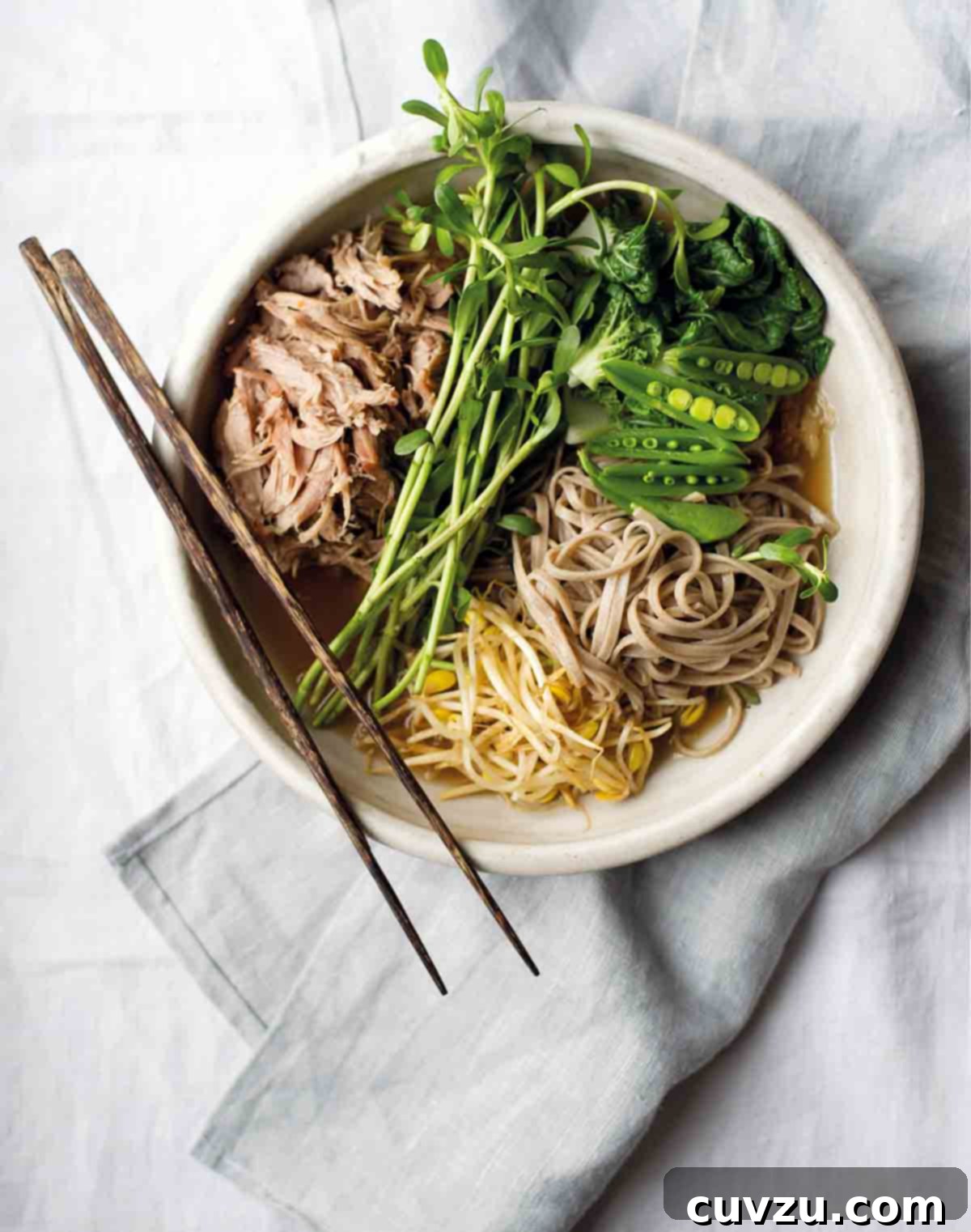
The Ultimate Homemade Chashu Pork Ramen: A Soul-Satisfying Japanese Delicacy
Experience the unparalleled comfort and rich flavors of traditional Japanese Chashu Pork Ramen right in your own kitchen. This recipe delivers a deeply satisfying bowl featuring succulent, slow-braised chashu pork, perfectly cooked soba noodles, and vibrant, crisp vegetables, all enveloped in an aromatic broth infused with sake, mirin, rice wine, and soy sauce. Prepare yourself for an authentically delicious and eminently slurpable meal that will undoubtedly become a cherished favorite.
Why Homemade Chashu Pork Ramen is a Must-Try
There’s an undeniable magic to a well-crafted bowl of ramen. It’s more than just a meal; it’s an experience that warms you from the inside out, offering comfort, sustenance, and a symphony of flavors and textures. Our Chashu Pork Ramen recipe stands out by transforming the rich, savory braising liquid from the pork into the very heart of the ramen broth. This ingenious method captures every ounce of the pork’s exquisite flavor, ensuring a depth and complexity that elevates the entire dish. As Angie Zoobkoff aptly puts it, this harmonious blend of melt-in-your-mouth pork, hearty soba noodles, and crisp, fresh vegetables is “soul-satisfying in that way only slowly cooked, fall-apart-tender pork can be.”
Making chashu pork ramen at home might seem daunting, but this recipe simplifies the process, breaking it down into manageable steps. The reward is a truly authentic Japanese experience that far surpasses typical takeout. The slow-braising of the pork allows it to absorb all the wonderful umami notes from the soy sauce, sake, mirin, and rice wine, creating a succulent centerpiece for your ramen bowl. Paired with fresh vegetables and springy soba noodles, this dish offers a balanced and incredibly flavorful culinary journey.
Chashu Pork Ramen
Recipe by David Leite
Mains
Asian, Japanese
4
servings
802
kcal
45 minutes
4 hours
45 minutes
5 hours
30 minutes
Ingredients
For the chashu pork
-
1 3/4
pounds
bone-in pork shoulder (Boston butt is also excellent for this) -
1/2
cup
light soy sauce (preferably low sodium) -
1
cup
sake (or substitute dry sherry or white wine for a non-traditional twist) -
1
cup
mirin (sweet Japanese rice wine) -
1
cup
rice wine (Chinese Shaoxing wine or dry white wine can be used) -
3 1/2
tablespoons
coconut sugar (or 3 tablespoons granulated sugar for sweetness) -
1
thumb-size piece
fresh ginger, thinly sliced -
6 to 7
medium (about 7 oz)
shallots, peeled and halved
For the noodles and vegetables
-
9
ounces
soba noodles (buckwheat noodles, or traditional ramen noodles) -
2
cups
sugar snap peas, trimmed -
8
ounces
baby bok choy, halved or quartered
For assembly and garnish
- Handful of fresh bean sprouts
- Handful of pea shoots or purslane (for a fresh, slightly peppery crunch)
- Optional garnishes: Sliced scallions, soft-boiled eggs (ramen eggs), nori (seaweed sheets), a drizzle of sesame oil, or a dash of chili oil for heat.
Instructions
Make the chashu pork
-
Preheat your oven to 300°F (150°C). This low and slow temperature is key for tender chashu.
-
In a sturdy Dutch oven or a flame-proof baking dish, place the pork shoulder. Add the soy sauce, sake, mirin, rice wine, coconut sugar (or granulated sugar), sliced ginger, and peeled shallots. Bring this mixture to a gentle boil over medium-high heat on your stovetop. Once boiling, cover the pot tightly with a lid and carefully transfer it to the preheated oven.
-
Allow the pork to cook in the oven until it becomes incredibly tender and can be easily shredded with a fork. This will typically take about 4 to 4 1/2 hours. The long braising time ensures maximum flavor absorption and a melt-in-your-mouth texture.
-
Once cooked, remove the Dutch oven from the oven, uncover it, and let the pork rest in its flavorful braising liquid until it’s cool enough to handle comfortably. This resting period helps the pork retain moisture and stay juicy.
Prepare the noodles and vegetables
-
Bring a large saucepan of generously salted water to a rolling boil over high heat. Add the soba noodles and cook them according to the package instructions. Soba noodles typically cook quickly, so keep an eye on them to prevent overcooking.
-
While the noodles are cooking, fill a large bowl halfway with ice water. Once the noodles are al dente, use tongs to immediately transfer the cooked noodles to the ice water. This stops the cooking process and keeps the noodles from clumping. Keep the same saucepan of water boiling for the vegetables.
-
Prepare another large bowl filled halfway with ice water. Blanch the trimmed sugar snap peas and the baby bok choy in the still-boiling water for just 1 minute. This brief blanching ensures the vegetables are crisp-tender and retain their vibrant color.
-
Using tongs or a slotted spoon, swiftly transfer the blanched vegetables from the boiling water into the second bowl of ice water. This “ice bath” instantly halts the cooking process, preserving their texture and bright hue. Drain the chilled vegetables thoroughly and pat them dry with a clean kitchen towel.
Assemble your ramen bowls
-
Carefully remove the cooled chashu pork from the braising liquid. Using two forks, shred the pork into bite-sized pieces. Skim any excess fat from the surface of the braising liquid. If preparing ahead, let the liquid cool completely, cover, and refrigerate for up to a couple of days. The fat will solidify, making it easier to skim before reheating.
-
To assemble, place about 1/2 cup of shredded chashu pork into each individual serving bowl. Evenly divide the drained soba noodles, blanched sugar snap peas, and baby bok choy among the bowls. Add a generous handful of fresh bean sprouts and some pea shoots or purslane to each. Finally, ladle a generous amount of the rich, reheated braising liquid from the pork dish into each bowl to serve as the flavorful ramen broth. Serve immediately and enjoy the satisfying warmth and complex flavors!
Adapted From
Nourish Bowls
Buy On Amazon
Nutrition
Serving:
1
serving
Calories:
802
kcal
Carbohydrates:
95
g
Protein:
59
g
Fat:
7
g
Saturated Fat:
2
g
Monounsaturated Fat:
3
g
Trans Fat:
0.03
g
Cholesterol:
119
mg
Sodium:
2253
mg
Fiber:
2
g
Sugar:
27
g
Nutrition information is automatically calculated, so should only be used as an approximation.
Tried this recipe?
Mention @leitesculinaria or tag #leitesculinaria!
Tips for Perfect Chashu Pork Ramen Every Time
- Choosing Your Pork: While pork shoulder (Boston butt) is specified, fatty pork belly can also be used for an even richer chashu. Trim excess fat but leave a good layer for flavor and moisture.
- The Braising Liquid is Gold: Do not discard the braising liquid! It is the foundation of your rich ramen broth. Skimming fat after chilling makes it easier to remove, resulting in a cleaner, yet still deeply flavored broth.
- Noodle Perfection: Cook noodles just until al dente. The ice bath is crucial for stopping the cooking process and preventing them from becoming mushy.
- Vegetable Crispness: The quick blanching and immediate ice bath ensure the vegetables retain their vibrant color and a delightful crisp-tender texture, adding a fresh contrast to the rich pork and broth.
- Ahead of Time Preparation: The chashu pork can be made a day or two in advance. Store the shredded pork and braising liquid separately in the refrigerator. Reheat gently before assembling your bowls.
- Customizing Your Bowl: Feel free to experiment with additional toppings like soft-boiled eggs (marinated for extra flavor), thinly sliced scallions, toasted nori seaweed, or a dash of chili oil for a spicy kick.
Recipe Testers’ Reviews
Helen Doberstein
This chashu pork ramen recipe is hands down way better than any take out I’ve ever had. From the moment I started, the process felt surprisingly straightforward, leading to truly spectacular results. The prepping of the meat for the braise was incredibly simple, requiring minimal hands-on time, which is a huge plus for busy home cooks. I took care to trim a fair amount of the excess fat from the pork shoulder, which I found contributed to a cleaner, yet still rich, broth. Assembling the rest of the ingredients for the braising liquid was also very quick and intuitive. I was fortunate enough to find coconut sugar, so I used that as directed, and it added a lovely, subtle sweetness that balanced the savory notes beautifully.
I wholeheartedly recommend utilizing the long braise time to get ahead on your vegetable preparation. Once the pork is slowly simmering away in the oven, you can easily tackle slicing the baby bok choy into halves and leaving the sugar snap peas as they are, ready for their quick blanch. This foresight will make the final assembly of the bowls a breeze, as everything moves very quickly once the noodles are cooked and vegetables are blanched. The aroma emanating from the oven as the pork braised was absolutely incredible, filling the kitchen with an enticing fragrance that promised a delicious meal to come.
Because I had trimmed most of the fat before cooking, there was very little to skim off the broth, which saved time and effort. We comfortably got about 6 generous servings from one batch of chashu, making it perfect for a family meal or leftovers. While the pea shoots added a wonderful freshness, I found them a little long and ungainly to eat whole in the bowl; next time, I’d definitely cut them into smaller, more manageable pieces. The blanching of the vegetables took almost no time at all, and the soba noodles cooked to perfection in just 6 minutes as per the package instructions, achieving a flexible yet firm texture that was just right. After layering the noodles, crisp veggies, and succulent pork, we ladled over about a cup of the aromatic broth, creating a deeply enjoyable meal that we all agreed surpassed our usual takeout options. This recipe is a keeper!
For ultimate convenience, you could easily prepare the chashu pork and its braising liquid on a weekend when you have more leisure time. Once cooled, both can be refrigerated for several days. Then, on a busy weeknight, all you’d need to do is gently reheat the meat and broth while quickly blanching your fresh vegetables and cooking the noodles. This adaptability also suggests that the pork could be prepared in a slow cooker, further simplifying dinner preparations for those who prefer that method, ensuring that tender, flavorful chashu is always within reach.

Emily Chen
As a seasoned home cook, I’m always searching for recipes that deliver big flavors without excessive fuss, and this Chashu Pork Ramen hit all the right notes. The initial setup for the pork braise was incredibly straightforward. I used a slightly fattier cut of pork shoulder, which rendered beautifully, creating a rich, unctuous element that infused the broth with even more depth. The combination of sake, mirin, and soy sauce is a classic for a reason, providing that perfect balance of umami, sweetness, and salinity. The ginger and shallots added a fragrant, aromatic complexity that was truly delightful.
One of my favorite aspects of this recipe is how the braising liquid becomes the ramen broth itself. It’s an economical and brilliant way to maximize flavor. I found that allowing the pork to cool slightly in the liquid was crucial; it really helped the meat reabsorb some of that incredible flavor. When it came to the vegetables, the quick blanching method was ideal. The sugar snap peas retained their satisfying crunch and bright color, offering a lovely textural contrast to the tender pork and soft noodles. The baby bok choy also cooked perfectly, remaining slightly firm yet tender.
Assembly was the most exciting part, putting all the components together. The shredded pork was incredibly moist and flavorful. I highly recommend adding a soft-boiled egg (or ‘ajitama’ ramen egg) as an extra topping; its creamy yolk and marinated whites truly complete the experience. A sprinkle of fresh scallions and a few threads of chili added visual appeal and a gentle kick. The balance of the savory broth, tender pork, springy noodles, and crisp vegetables made for an exceptionally satisfying meal. This recipe offers a genuine taste of Japanese comfort food, making it an excellent choice for anyone looking to recreate an authentic ramen experience at home.