
The Grand Revelation: Mastering Giant Ravioli (Ravioloni Valle Scannese) from Abruzzo
There’s something inherently charming about a dish that defies expectations, especially when it comes from the heart of Italian culinary tradition. Domenica Marchetti’s stunning rendition of the raviolone, a magnificent giant ravioli inspired by a dish from a Valle Scannese farm, is precisely that. Far from being a mere gimmick, this dish is a testament to the idea that sometimes, bigger truly is better. Filled with exceptionally fresh ricotta cheese and delicately finished with a simple, vibrant tomato sauce, it transforms into a showstopper that’s surprisingly approachable to create at home.
For a long time, I harbored a deep-seated aversion to oversized food. The concept of “supersizing” or “doubling-down” felt antithetical to the very essence of thoughtful eating. My philosophy was clear: food should be defined by its flavor, its quality, and the pleasure it brings, not by its sheer volume. You wouldn’t find me indulging in a monstrous bucket of popcorn at the cinema, nor would my family partake in the trend of endlessly expanding beverage sizes – whether it’s a Big Gulp, a venti, trenta, or quaranta, or whatever supersized option is trending these days. I believed in savoring, not merely consuming.
Yet, life, and Italy, have a way of challenging one’s convictions. And so, against all my culinary principles, I found myself utterly smitten with a single, colossal raviolo.
My capitulation, I argue, was almost inevitable given the circumstances. I was, after all, in Italy – a land where enchantment can be found in the most unexpected places. From the solitary, graceful umbrella pine silhouetted against a rolling hillside to the toothless 95-year-old contadina (peasant woman) selling baby zucchini so perfect they still bore their vibrant blossoms, Italy casts a spell. At that particular moment, I was enveloped by the rugged, unspoiled beauty of Abruzzo, a region celebrated for its dramatic landscapes and pristine culinary traditions. My destination was an organic caseficio, a cheese farm where ancient methods of cheesemaking were not just preserved but celebrated.
The proprietor of this idyllic farm was Gregorio Rotolo, a man as formidable in stature as he was renowned for his distinctive sheep’s milk cheeses. Always sporting his signature black woolen beanie, Gregorio exuded a rustic charm that was both welcoming and deeply authentic. He generously guided my husband, our children, and me through his operations, culminating in a tasting experience that I can only describe as divine. We were offered spoonfuls of warm ricotta, made just that morning and still gently draining in woven baskets. The taste was so ethereal, so pure, that for a fleeting moment, I questioned if the Rapture itself had arrived and I had been called. But then, my eyes refocused, drawn to tables in an adjacent room – a family-style restaurant, it turned out, nestled within the farm. A glance between my husband and me confirmed our mutual decision: we weren’t going anywhere for at least a couple of hours. The kids, with a sigh of resigned acceptance, prepared for another immersive Italian experience.
Scanning the menu, my gaze landed on an item listed simply as Raviolone. “Big raviolo,” I thought, “Big deal.” My immediate reaction was skepticism; it smacked of a culinary gimmick, something designed more for novelty than genuine flavor. We nearly passed it over, but my professional curiosity, especially as I was then researching a book on the pastas of Italy, compelled me to order it. I anticipated a plate of merely oversized half-moons, perhaps each the size of an espresso saucer. But what arrived on the platter utterly shamed my imagination. It was, indeed, one raviolo, just as the menu had stated. A singular, magnificent raviolo, stretching nearly a foot long – as substantial as a bistecca or a pounded veal cutlet. Its form was a perfect half-moon, edged with an elegant fluted border, dressed with deceptive simplicity: a delicate swirl of vibrant tomato sauce and a generous shower of grated cheese. The filling, I discovered with delight, was the very same fresh ricotta from the farm that had sent me into a momentary culinary trance just moments before.
The four of us gazed at it in awe, then with a shared sense of wonder, we divided and devoured it. The pasta was incredibly silky, tender, and yielded effortlessly, while the ricotta filling was profoundly fresh and subtly sweet. It was outrageous in its scale, yet at the same time, remarkably understated in its presentation and pure flavors. Suddenly, it felt like the most natural offering on the menu of this hidden restaurant in the Abruzzese hills. Of course, such a glorious form of ravioli existed. This was Italy, where culinary artistry and tradition converge in breathtaking ways.
Seated at that table, a firm resolve took root: I would attempt to recreate this marvel in my own kitchen. But it wasn’t until I returned to Virginia, far from the sun-drenched hills of Abruzzo, that the practical logistics truly hit me. How would I even begin to assemble such an enormous raviolo? What quantity of filling would be appropriate? How could I possibly boil it without it disintegrating? And once cooked, the ultimate challenge: how to extract it from the boiling water in one pristine piece?
For dramatic effect, I wish I could spin a tale of heroic culinary struggle, of countless failed attempts, a kitchen littered with discarded batches of dough and tubs of wasted ricotta, a saga of frustration preceding eventual triumph. That would make for a much more compelling story, wouldn’t it?
But the truth, in its refreshing simplicity, is that far from being a ridiculously difficult endeavor, recreating the giant ravioli was almost easy. Perhaps the first one or two attempts were a tad unwieldy, a learning curve to navigate its sheer size, but it was nowhere near the daunting task I had envisioned. The biggest challenge, I found, was gracefully lifting the cooked raviolo from the pot. Even that hurdle proved manageable, thanks to the indispensable aid of a very large skimmer, which provides the necessary support for such a delicate operation.
When I prepare ravioloni for my family now, which I do often, I make one colossal raviolo for each person. On paper, this might sound, well, downright…piggish. But when you consider that a single pound of fresh pasta dough yields precisely enough to create four of these magnificent ravioloni, it’s really no different than preparing a large batch of smaller, individual ravioli or simply cooking a pound of dried pasta. The impact, however, is entirely different.
There’s a magical quality to sitting down to a dinner of giant ravioli. No matter how chaotic or utterly cruddy the day has been, this meal possesses an extraordinary power to transport us. From our everyday lives in suburban northern Virginia, we are instantly whisked back to the rugged, beautiful landscapes of Abruzzo, to that sunlit cheese farm, and to my personal revelation: yes, sometimes, indeed, bigger is undeniably better. –Domenica Marchetti
Beyond the Giant: A Note on Sizing and Serving
While the allure of the giant ravioli is undeniable, Domenica reminds us of its versatility. If you prefer to serve these as a more modest first course, perhaps for a larger gathering, you can easily divide the filling and dough into eight equal portions instead of four. This yields eight smaller, though still substantial, ravioloni suitable for eight people. However, one might ask, why compromise on the grand experience when the giant version offers such a unique and memorable meal?

Giant Ravioli ~ Ravioloni Valle Scannese
David Leite
Equipment
-
Fluted pastry wheel (a sharp knife is a fine substitute)
-
Large skimmer or wide spatula (essential for lifting the cooked ravioli)
Ingredients
For the Filling
- 1 pound fresh sheep’s milk ricotta cheese or well-drained cow’s milk ricotta cheese
- 1 cup freshly grated Parmigiano-Reggiano cheese
- 1/2 cup shredded ricotta salata cheese
- Kosher or fine sea salt, to taste
- Freshly ground black pepper, to taste
- 2 large eggs, lightly beaten
For Assembling and Serving the Giant Ravioli
- Semolina flour for dusting the work surface
- 1 batch Fresh Egg Pasta Dough (approximately 1 pound)
- 2 cups Simple Tomato Sauce, warmed
- Extra-virgin olive oil, for drizzling
- Freshly grated Parmigiano-Reggiano cheese, for sprinkling
Instructions
-
Begin by preparing the delicious ricotta filling. Place the fresh ricotta cheese in a large bowl. Using a spatula, work the cheese until it becomes light, fluffy, and relatively smooth. This aeration helps create a more delicate filling. Gently fold in the grated Parmigiano-Reggiano, shredded ricotta salata, 1/2 teaspoon of salt, and a pinch of freshly ground black pepper. Taste the mixture and adjust the seasoning as needed; the salt levels in ricotta can vary. Finally, fold in the lightly beaten eggs just until they are fully incorporated. Be careful not to overmix. Cover the bowl and refrigerate the filling while you prepare your pasta dough. The filling can be made up to 2 days in advance, making this dish perfect for staggered preparation.
-
Before you begin rolling the pasta, set up your workspace to ensure a smooth assembly process. Cover a generously sized work surface – a large kitchen table is ideal – with a clean tablecloth or several flour sack towels. Lightly dust this cloth with semolina flour; this coarse flour will prevent the delicate pasta from sticking. Have your fluted pastry wheel (or a sharp knife) ready for cutting the ravioloni, a wide, sturdy spatula for carefully moving them, and a small bowl of water for sealing the edges.
-
Divide your freshly prepared pasta dough into 4 equal pieces. Keep 3 pieces tightly wrapped in plastic wrap to prevent them from drying out, and set them aside. Take one piece of dough and roll it out on your lightly floured work surface. Aim for a thickness of about 1/16 inch, or as thin as you can get it without tearing, and a length of approximately 28 inches. Next, cut this long strip of dough in half crosswise, creating two strips, each roughly 14 inches long. Spoon 1/4 of the chilled ricotta filling onto the center of one strip. Use the back of the spoon to gently spread the filling into a half-moon shape, ensuring you leave a generous border of at least 1 inch around the edge. Dip your fingertips into the small bowl of water and lightly moisten the dough border surrounding the filling. Carefully place the second strip of pasta dough over the first, aligning the edges. Gently but firmly press around the filling and along the edges to seal the two pasta layers together, expelling any air bubbles trapped inside. If using a fluted pastry wheel, trim around the edges to create a perfectly shaped half-moon ravioli, about 9 inches long, with an elegant decorative border. If you don’t have a pastry wheel, a sharp knife will work just as well. With the wide spatula, carefully transfer the newly formed raviolone onto your semolina-dusted cloth. Repeat this process with the remaining dough and ricotta filling, discarding any small pasta scraps. If you plan to serve the ravioloni the same day, they can rest on the tablecloth for up to 2 hours before cooking. For longer storage, the uncooked ravioloni can be frozen. Arrange them on two semolina-dusted rimmed baking sheets, ensuring they do not touch. Freeze until they are firm, usually about 1 hour. Once solid, transfer each raviolo to a large resealable plastic bag and return to the freezer for up to 1 month. Cook them directly from the freezer without thawing.
-
When you’re ready to cook, bring a very large pot of water to a rolling boil. Season the water generously with salt – it should taste like the sea. Carefully lower 2 ravioloni into the boiling water, one at a time, to avoid overcrowding the pot. Cover the pot briefly until the water returns to a boil, then uncover and continue to cook for 5 to 7 minutes, or until the pasta is perfectly al dente. The cooking time may vary slightly if cooking from frozen (add an extra minute or two). Using a wide skimmer, very carefully lift each raviolone out of the pot, allowing any excess water to drip back into the pot. Transfer the cooked ravioloni to individual warmed plates. Lightly cover them with aluminum foil to keep them warm while you cook the remaining two ravioloni in the same manner. Alternatively, you can place the plates of cooked ravioloni in a low-temperature oven to maintain their warmth.
-
To serve, spoon a thin, even layer of your warmed simple tomato sauce over each majestic raviolone. Drizzle a few drops of high-quality extra-virgin olive oil over each one to enhance its flavor and shine. Finish with a light sprinkling of freshly grated Parmigiano-Reggiano cheese. Serve immediately, allowing guests to marvel at its impressive size before indulging in the exquisite flavors.
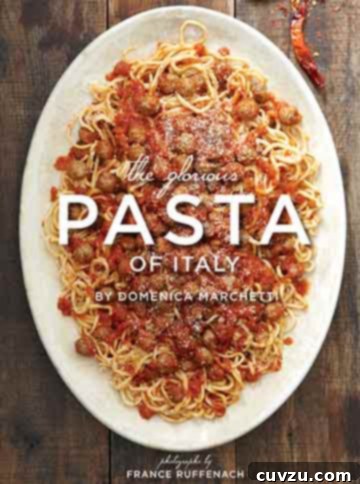
Adapted From
The Glorious Pasta of Italy
Buy On Amazon
Nutrition
Nutrition information is automatically calculated, so should only be used as an approximation.
Insights and Tips from Our Recipe Testers
Jackie Gorman
Jackie Gorman highlights the subtle yet rich quality of the filling. She strongly recommends seeking out fresh whole-milk ricotta cheese, specifically mentioning Calabro, a Connecticut-based company. She notes that their ricotta, often found in a distinctive tin resembling a small planter pot and domed with plastic, yields exceptional results for the filling due to its superior freshness and texture. The choice of high-quality ricotta is paramount for this recipe to truly shine.
Steve Subera
Steve Subera shares valuable practical advice, emphasizing that despite their size, these ravioloni are surprisingly light and satisfying. He suggests that the exquisite flavors of the cheese filling and simple tomato sauce require minimal adornment—perhaps just a few shavings of Parmigiano-Reggiano and a robust Chianti to complete the meal. Steve offers crucial tips for handling these delicate giants: employ large spatula(s) and exercise extreme care when removing them from the pot to prevent breakage. He recommends pausing for a few seconds, holding each raviolo over the simmering water to allow excess drips to fall back, before gently transferring it to a warmed plate.
Regarding ricotta preparation, Steve advises draining cow’s milk ricotta overnight if possible, noting that some types can release a considerable amount of liquid. He extracted about 1/2 cup of liquid, which helped achieve a perfect consistency for the filling. He also points out that achieving the full 1-foot length can be challenging and that a 9-inch raviolo is still impressively large and perfectly acceptable. Finally, Steve wisely suggests breaking down the preparation over several days to make the process more enjoyable. He made the sauce, dough, and filling on the first day, then rolled the pasta, assembled the ravioloni, and reheated the sauce on the second day. This phased approach allows for a relaxed and successful cooking experience.