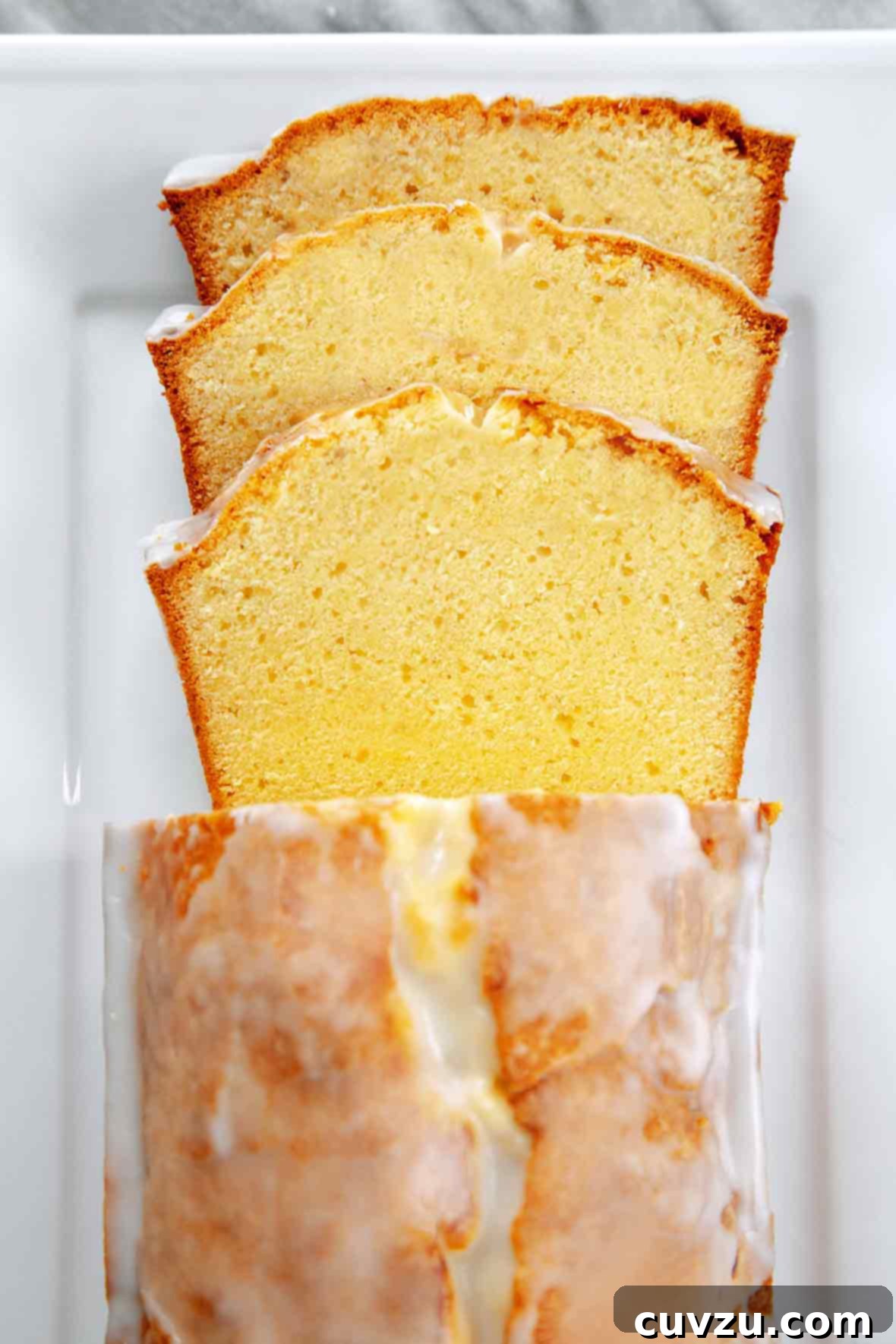
Prepare to be enchanted by this remarkable Cream Cheese Pound Cake, a dessert that redefines richness and moistness. Every slice promises a dense, finely textured crumb that melts in your mouth, perfectly complemented by a bright, puckery lemon glaze. This isn’t just any pound cake; it’s an experience in indulgent baking, where the subtle tang of cream cheese elevates a classic to new heights. The lemon glaze provides that ideal counterpoint, cutting through the cake’s luxuriousness with a refreshing zest, creating a harmonious balance of flavors that will leave you craving more.
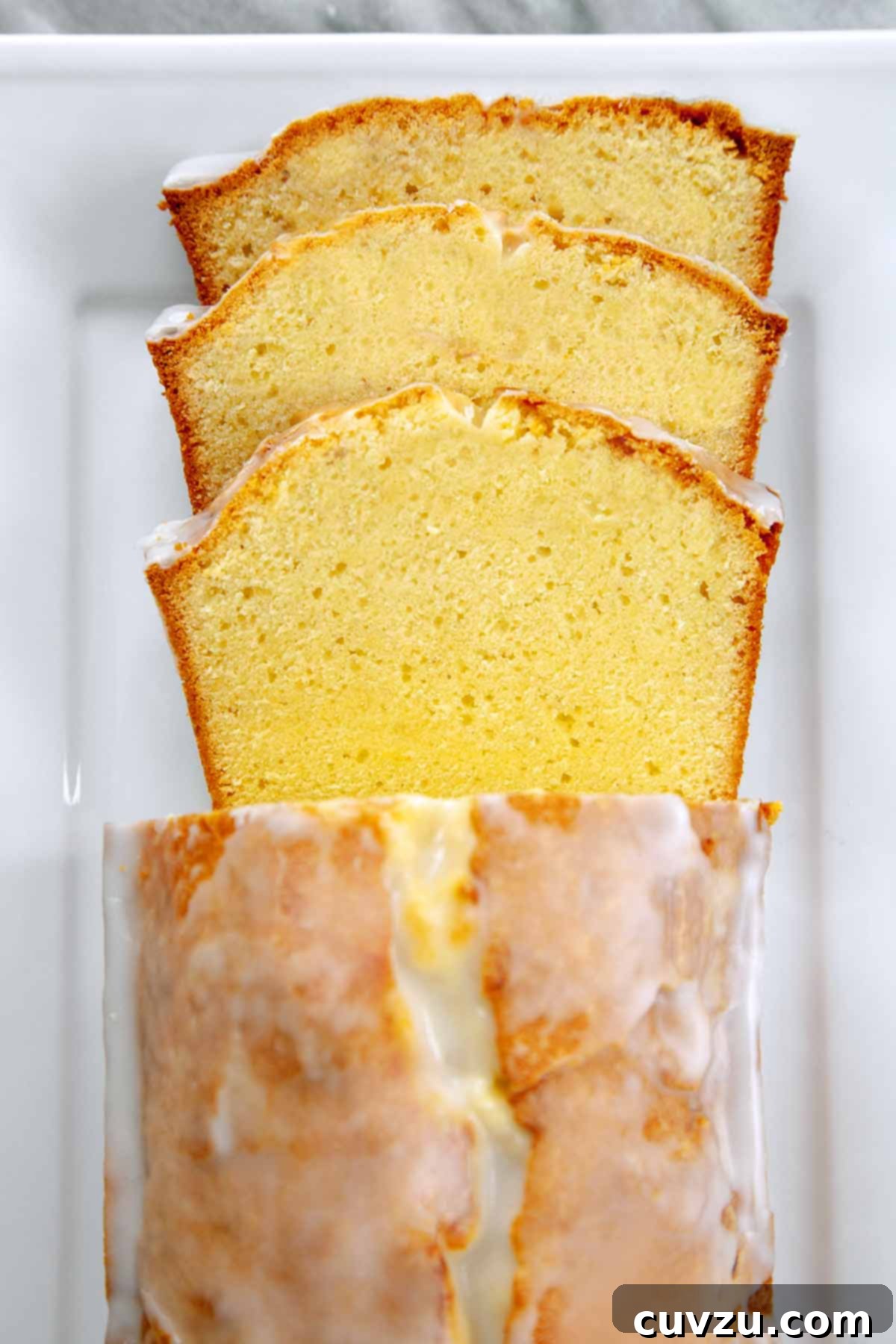
The magic of cream cheese pound cake lies in its ability to deliver a deeply satisfying moistness that is rarely found in traditional pound cakes. Forget about reaching for a glass of milk to wash down dry crumbs; this cake boasts a tender, almost velvety crumb that’s a pure delight. As if the cake itself weren’t enough, it’s generously drizzled with a lemon glaze that’s meticulously balanced – sweet enough to satisfy your dessert cravings, yet tart enough to tantalize your taste buds with a seductive lemon lilt. This recipe is an absolute treasure, yielding not one, but two glorious cakes. Both loaves store beautifully, giving you the delightful option to savor them throughout the week, share one with a loved one, or simply keep both for your own blissful indulgence. It’s a versatile and generous recipe designed for pure enjoyment. –Angie Zoobkoff
THE IRRESISTIBLE CHARM OF POUND CAKE: A TIMELESS DESSERT
Pound cake holds a special place in the hearts of dessert lovers worldwide. Its enduring appeal lies in its simplicity, its rich, buttery flavor, and its satisfyingly dense texture. Originally named for its traditional ingredients—a pound each of butter, sugar, eggs, and flour—this classic cake embodies comfort and indulgence. Over centuries, variations have emerged, each adding a unique twist to the beloved basic. This cream cheese pound cake, however, stands out as a truly exceptional evolution. The addition of cream cheese doesn’t just add moisture; it imbues the cake with a subtle tang and an incredibly tender crumb that elevates it beyond a mere dessert to a culinary masterpiece. It’s the kind of cake that makes any occasion feel more special, whether it’s a quiet afternoon tea or a grand family gathering.
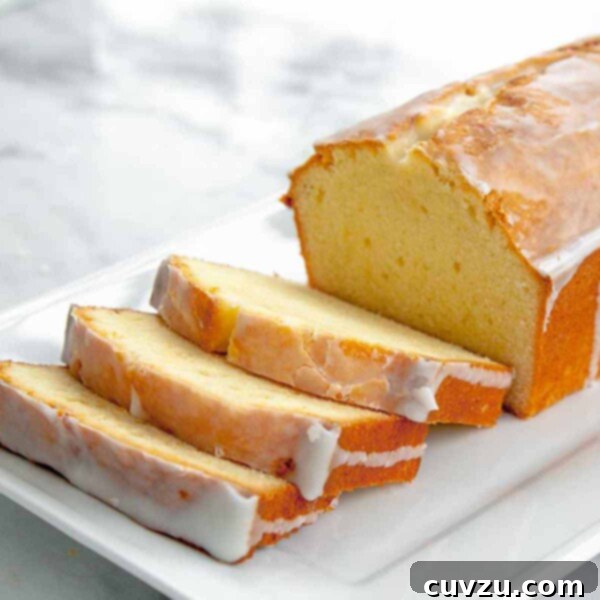
Cream Cheese Pound Cake Recipe
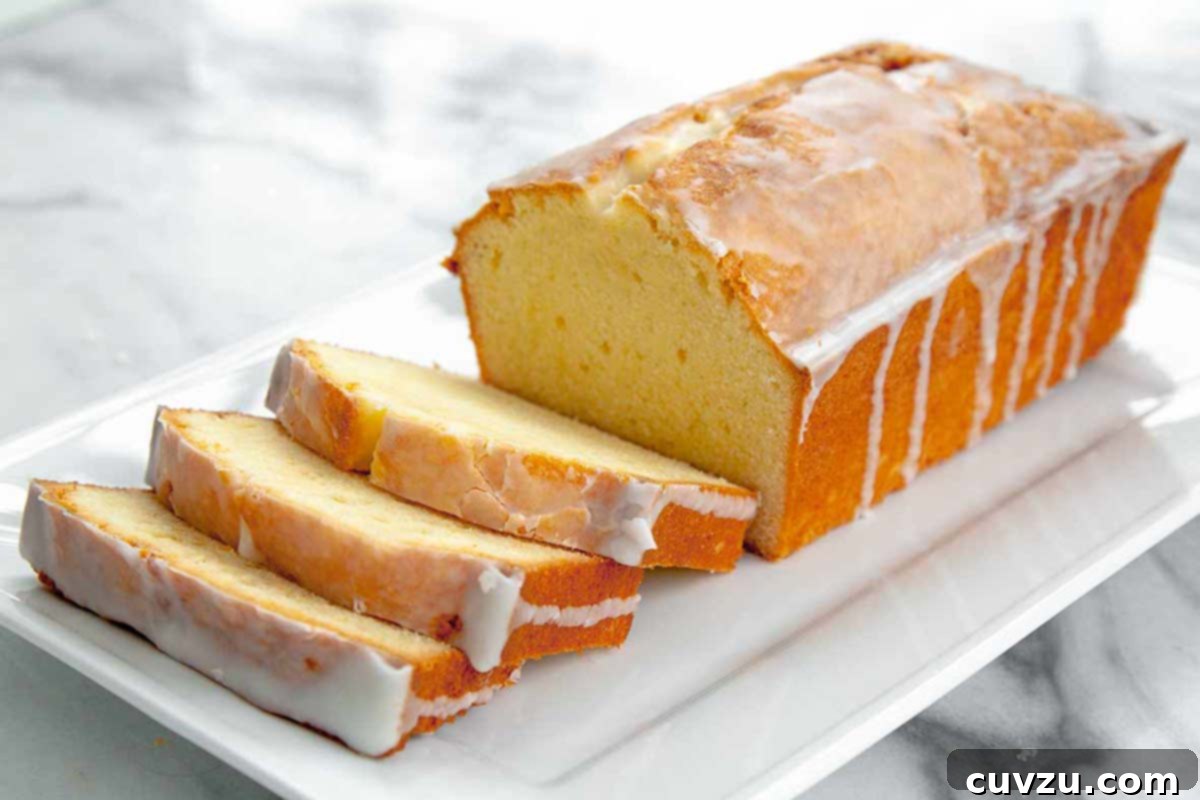
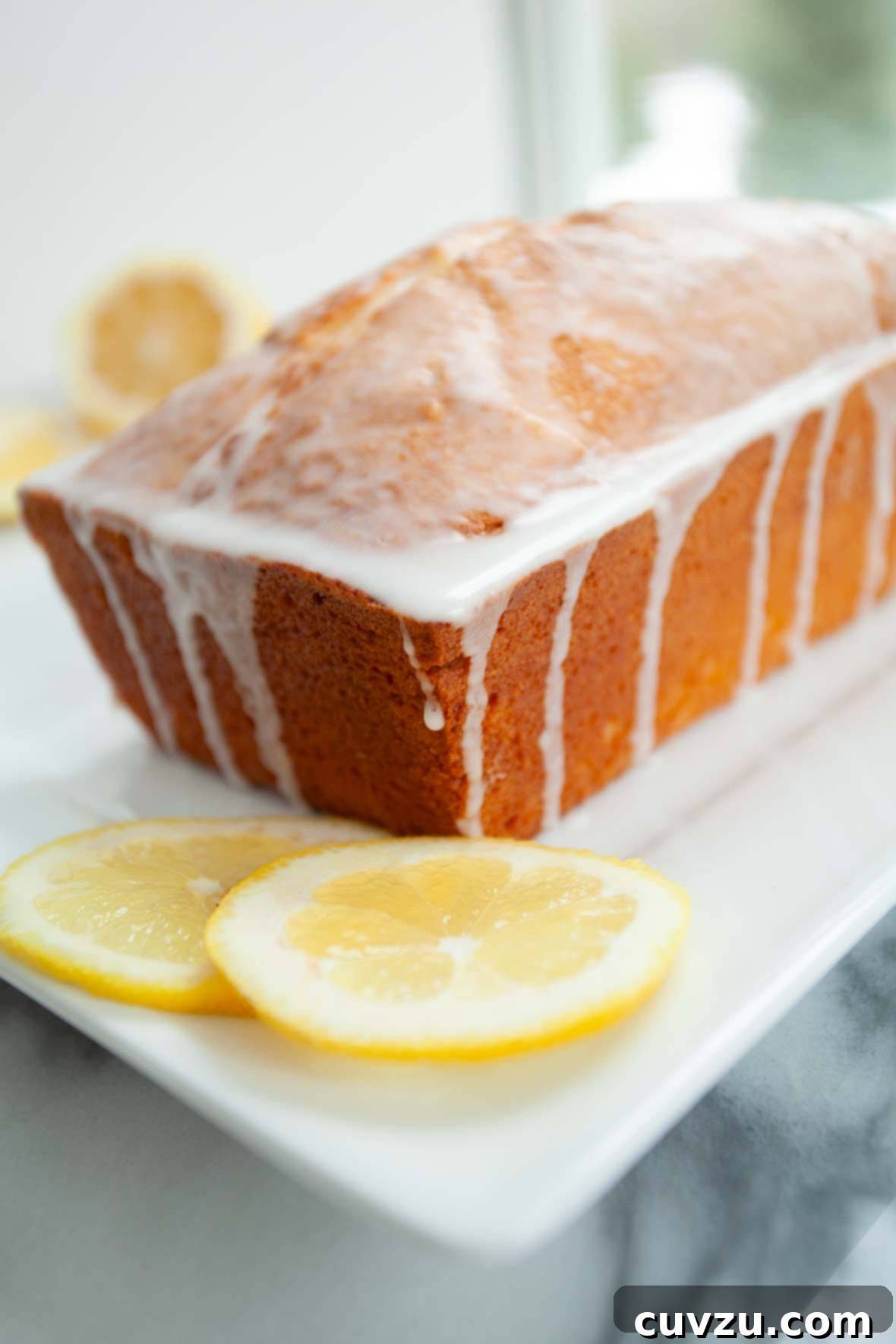
This cream cheese pound cake delivers everything you expect and more: a delightful dense, tight, and moist crumb, exquisitely balanced by a tart lemon glaze that provides the perfect counterpoint to its inherent richness. A truly unforgettable dessert.
Recipe by David Leite
Course: Dessert
Cuisine: American
Yields: 20 servings
Calories: 414 kcal per serving
Prep Time: 25 minutes
Cook Time: 1 hour 15 minutes
Total Time: 3 hours 40 minutes (includes cooling time)
Recipe Video Overview
Discover the simple steps to create this incredibly moist, rich, and delicious cream cheese pound cake. This easy-to-follow guide will walk you through the process, resulting in two perfect loaves ready for sharing or indulging. For a visual demonstration, search for “How to Make Cream Cheese Pound Cake” on popular video platforms.
Equipment
- Two 9-by-5-inch (23-by-13-cm) loaf pans
- Stand mixer or handheld electric mixer
- Large mixing bowls
- Whisk
- Offset spatula (optional)
- Wire rack for cooling
- Parchment-lined baking sheet (for glazing)
Ingredients
For the cream cheese pound cake
- Vegetable oil cooking spray or butter (for greasing pans)
- 3 cups all-purpose flour
- 2 teaspoons fine sea salt
- 3 sticks (12 oz) unsalted butter, softened to room temperature
- 8 ounces full-fat cream cheese, softened to room temperature
- 3 cups granulated sugar
- 6 large eggs
- 1 teaspoon vanilla extract
For the tart lemon glaze (highly recommended)
- 2 cups confectioners’ sugar
- 1/4 cup fresh lemon juice
Instructions
Make the pound cake
- Preheat your oven to 350°F (180°C). Prepare two 9-by-5-inch metal or ceramic loaf pans by generously coating them with cooking spray or butter. This crucial step prevents sticking and ensures easy release of your beautiful cakes.
- In a medium bowl, whisk together the all-purpose flour and fine sea salt until thoroughly combined. Set aside.
- In the bowl of a stand mixer fitted with the paddle attachment, or using a large bowl with a handheld electric mixer on high speed, beat the softened butter and cream cheese until the mixture is completely smooth and creamy, which usually takes about 1 to 3 minutes.
- Gradually add the granulated sugar to the butter and cream cheese mixture, beating continuously. Continue to beat until the mixture becomes pale in color and impressively fluffy, a process that can take anywhere from 4 to 8 minutes. This creaming step incorporates air, contributing to the cake’s tender texture.
- Add the large eggs, one at a time, ensuring each egg is fully incorporated into the batter before adding the next. This step helps maintain the emulsion and prevents the batter from curdling. After all eggs are mixed in, stir in the vanilla extract.
- Reduce the mixer speed to low. Add the whisked flour mixture in two separate batches, beating only until just combined after each addition. Be careful not to overmix the batter at this stage, as overmixing can lead to a tough cake. The total mixing time for the flour should be about 1 minute.
- Divide the prepared batter evenly between the two greased loaf pans. Gently tap the pans on your counter a few times to release any air bubbles and use an offset spatula to smooth the tops of the batter for an even bake.
- Bake the cakes in the preheated oven until they are golden brown and a cake tester (or a wooden skewer) inserted into the center comes out with a few moist crumbs attached. This typically takes 65 to 80 minutes. If you notice the tops browning too quickly, loosely tent the pans with aluminum foil to prevent excessive browning.
- Once baked, transfer the pans to a wire rack and allow the cakes to cool in their pans for approximately 10 minutes. After this initial cooling, carefully invert the cakes onto the wire rack to cool completely. This full cooling process will take about 2 hours, ensuring the cake structure sets properly.
- Storage Tip: These delicious pound cakes can be wrapped tightly in plastic wrap and stored at room temperature for up to 3 days, or frozen for up to 3 weeks. Always thaw wrapped cakes at room temperature before unwrapping and slicing to maintain their moistness and texture.
Make the glaze
- In a medium bowl, combine the confectioners’ sugar and fresh lemon juice. Whisk vigorously until the mixture is completely smooth and free of lumps. Adjust the consistency with a tiny bit more sugar or lemon juice if needed for your desired thickness.
- Place a wire rack over a parchment-lined baking sheet. This setup will catch any drips, making cleanup a breeze.
- Generously pour the prepared lemon glaze over the completely cooled pound cakes, allowing it to elegantly drip down the sides. Let the glazed cakes rest at room temperature until the glaze has fully set, which usually takes 30 to 60 minutes.
- Once the glaze is set, slice your beautiful pound cake and prepare to devour. Repeat as desired!
Adapted From
Martha Stewart’s Newlywed Kitchen
Buy On Amazon
Nutrition
Serving: 1 slice
Calories: 414 kcal
Carbohydrates: 57 g
Protein: 5 g
Fat: 19 g
Saturated Fat: 11 g
Trans Fat: 1 g
Cholesterol: 105 mg
Sodium: 293 mg
Fiber: 1 g
Sugar: 42 g
Nutrition information is automatically calculated and should be used as an approximation only.
Tried this recipe?
Mention @leitesculinaria or tag #leitesculinaria!
Recipe Testers’ Reviews: What Our Bakers Loved
Our dedicated team of recipe testers put this Cream Cheese Pound Cake through its paces, and the verdict is in: it’s a resounding success! Here’s what they had to say about its perfect crumb, rich flavor, and irresistible lemon glaze.
Lynn Kauffman
Lynn Kauffman, one of our esteemed recipe testers, declared this cake worthy of the “Perfect Pound Cake” title. She found it remarkably simple to prepare, noting that the cream cheese imparts precisely the right balance of tang and an exquisite texture. Despite the expected density of a pound cake, Lynn highlighted a surprising lightness in every bite—a quality that made a glass of milk entirely unnecessary, unlike many other pound cakes. This unique characteristic truly sets it apart.
Lynn strongly advised against skipping the lemon glaze, calling it the element that truly transforms this dessert into something extraordinary. She was pleased to find there was ample glaze to generously cover both loaves, ensuring every piece received its sweet and tart crowning glory. She also mused about the potential for adding lemon zest directly into the batter for an even more pronounced citrus note, an idea worth exploring for lemon lovers.
Another point of praise from Lynn was the accessibility of the ingredients. She noted that the recipe calls for items most home bakers likely already have on hand, making it a convenient choice for spontaneous baking endeavors. While she used two 9-by-5-inch loaf pans, one was slightly deeper than the other. She personally preferred the shape from the shallower pan, but confirmed both loaves were equally delicious and beautiful. Both cakes effortlessly released from their pans, yielding about 12 perfectly sliced portions per loaf. The cake also proved its excellent keeping quality, remaining deliciously moist even on the third day when simply wrapped in plastic at room temperature.
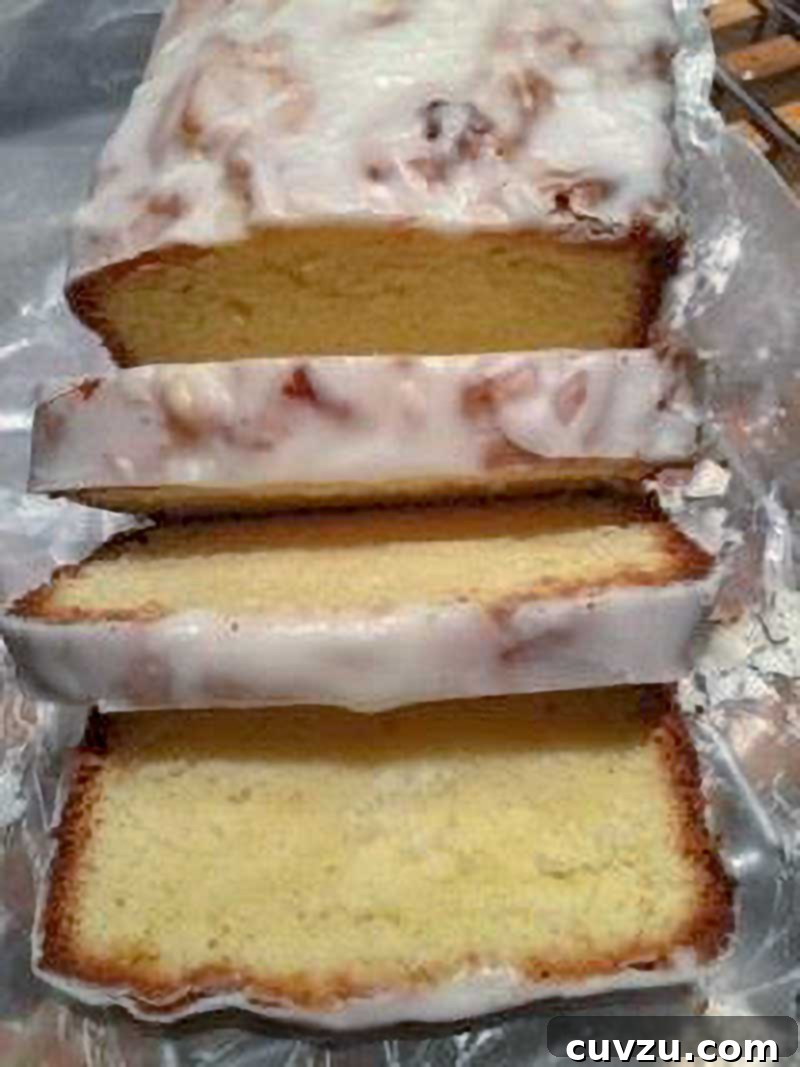
Jennifer Combs
Jennifer Combs described this cream cheese pound cake with descriptors like “buttery, moist, and, dare I say, decadent.” She affirmed that it checks all the boxes for what makes a great pound cake, but also possesses an addictive, rich flavor reminiscent of shortbread. Her friends, after taste-testing, were already clamoring for the recipe, solidifying its place as her new go-to pound cake recipe.
Initially, Jennifer was surprised by the amount of salt listed, but found it to be absolutely perfect. Using fine sea salt, she noted that there was no saltiness at all; instead, it imparted a profound depth of flavor, preventing the cake from being merely “sweet.” This balance makes the cake excellent on its own, but also incredibly versatile with various toppings. With two loaves at her disposal, Jennifer experimented by serving one with a lemon and blueberry compote, finished with a dollop of whipped cream. She even ventured into making “pound cake croutons” – cubes of cake browned in butter, served atop ice cream with a chocolate drizzle, turning a good thing into something even better.
Jennifer did encounter some initial baking challenges but was keen to share her learnings. Her first attempt saw the cake browning too quickly, requiring tenting with foil after only 30 minutes. This resulted in a beautifully golden top and moist interior, but overly brown sides. Her research revealed that glass loaf pans, which she used, can often cause this overbrowning. Solutions included reducing oven temperature by 25°F or using shiny metal pans. Opting for metal pans in her next attempt, she also realized her oven rack was in the lower position from a previous turkey roast. Repositioning the rack to the middle yielded perfectly golden tops and sides, though tenting was still required, no adjustment to baking time was needed. This highlights the importance of understanding your bakeware and oven calibration.
Jeanie McCallister
Jeanie McCallister praised the cake for its tight crumb and a delightful sweet, crunchy top and sides. Interestingly, she chose not to apply the lemon glaze, finding the cake to possess just the right amount of sweetness on its own, a testament to its perfectly balanced base flavor.
She found the cream cheese pound cake to be remarkably quick to assemble. With all ingredients at room temperature, it took her approximately 15 minutes from the start of mixing to having the batter ready for the oven. Jeanie affirmed the accuracy of the ingredient measurements. Baking in a convection oven for 75 minutes, she achieved a beautifully crisped top without the need for a foil tent, resulting in a perfect finish. She suggested that one loaf of this cake would generously serve 6 people with two slices each, making it an ideal companion for a good cup of English tea. For baking, she used an Emile Henry loaf pan and Bakers Joy spray, reporting that the cake effortlessly popped out of the pan after cooling for just 10 minutes, with no sticking whatsoever.
Chiyo Ueyama
Chiyo Ueyama noted that while the addition of cream cheese might diverge from a purist’s definition of pound cake, it undeniably results in a fantastic-tasting dessert. She observed that both the flavor, which is rich and buttery, and the texture, smooth with a tightly fine crumb, actually improved over time. The cake became more deeply flavored and evenly moist on the day after baking, making it an excellent make-ahead option.
Chiyo found the recipe to be as straightforward as any traditional pound cake. She emphasized the importance of using room-temperature ingredients, not just butter and cream cheese (which she left out overnight), but also recommending that eggs be left out of the fridge for about an hour prior to use for optimal blending. Lacking a stand mixer, she successfully used an electric handheld beater to whip the egg, cream cheese, and sugar mixture, reporting it took a full 8 minutes to achieve a pale, almost off-white, and fluffy consistency.
For her test, Chiyo prepared half the lemon glaze (using 1 cup confectioners’ sugar and 2 tablespoons lemon juice) for one loaf, which she served that day. The second loaf she thoughtfully froze unglazed for future enjoyment. Looking ahead, she expressed interest in trying a little almond extract in addition to vanilla in the batter, and exploring an orange juice glaze for a different citrus profile, showcasing the cake’s adaptability to creative variations.
Lisa Ward
Lisa Ward described the recipe as a “lovely, simple cream cheese pound cake,” affirming that the lemon glaze truly elevates it to something special and makes it very tasty. She chose to make a half batch, yielding one delicious pound cake. Like some other testers, Lisa also found it necessary to tent her cake during baking as it was browning quite rapidly, a common adjustment when baking pound cakes to ensure a perfectly golden, not burnt, crust while the interior finishes cooking.
Hillary Hawkins
Hillary Hawkins found this to be an excellent basic cream cheese pound cake recipe, praising its nice, dense texture with a tight yet tender crumb. She noted that her cake developed a crispy, crackly crust, a characteristic she discovered is highly prized by some bakers! This observation sparked her curiosity to conduct further experiments into this phenomenon, perhaps delving into baking textbooks to understand the science behind it. Hillary advised using parchment paper and opting for a lighter-colored loaf pan. She had initially used darker pans and, despite thoroughly spraying them, experienced some difficulty in removing the cakes, and the outsides became quite dark. For serving, Hillary suggested topping the pound cake with sugared berries and unsweetened whipped cream for a delightful dessert experience.
Henry Tsai
Henry Tsai, a first-time pound cake baker, was drawn to this recipe due to its simplicity and short ingredient list. He found the inclusion of cream cheese particularly interesting, believing it played a significant role in achieving the cake’s excellent overall texture. Henry was very pleased with the outcome: the cake was moist, perfectly dense without being heavy, and wonderfully not overly sweet. His experience underscores that this recipe is approachable even for novices, delivering impressive results.
Lydia Brimage
Lydia Brimage observed that neither the flavor nor the consistency of the cream cheese pound cake seemed to change over several days, indicating its excellent shelf stability. She noted the cake’s consistency was quite dense, yet distinctly moist, with a pleasant creamy taste. Lydia mentioned that her lemon drizzle topping appeared runnier than the one depicted in the recipe’s photograph. She speculated that the picture might have been taken after the glaze had set for a longer period than hers, a common nuance in baking where setting times can vary based on ambient conditions and glaze thickness.
Carol Hays
Carol Hays was delighted with the results, describing her cream cheese pound cake as fluffy and delicious. She expressed her intention to certainly use this recipe again for crafting a perfect pound cake. Carol opted not to apply the lemon glaze, instead serving her cake with fresh strawberries and whipped cream, transforming it into a delightful base for strawberry shortcake—a testament to its versatility.
True to the recipe’s promise, it yielded two full 9-by-5-inch loaves, with no issues of overage during baking. Carol baked her loaves until they achieved a beautiful golden brown on top, and a cake tester inserted into the middle emerged with only a few crumbs, indicating perfect doneness. Her cakes were baked for 65 minutes. She reported no problems with the cakes browning too quickly or excess batter overflowing the pans, suggesting good heat distribution in her oven. After allowing the loaves to cool completely for approximately 1.5 hours, she had no difficulty removing them from their pans, confirming an easy release.