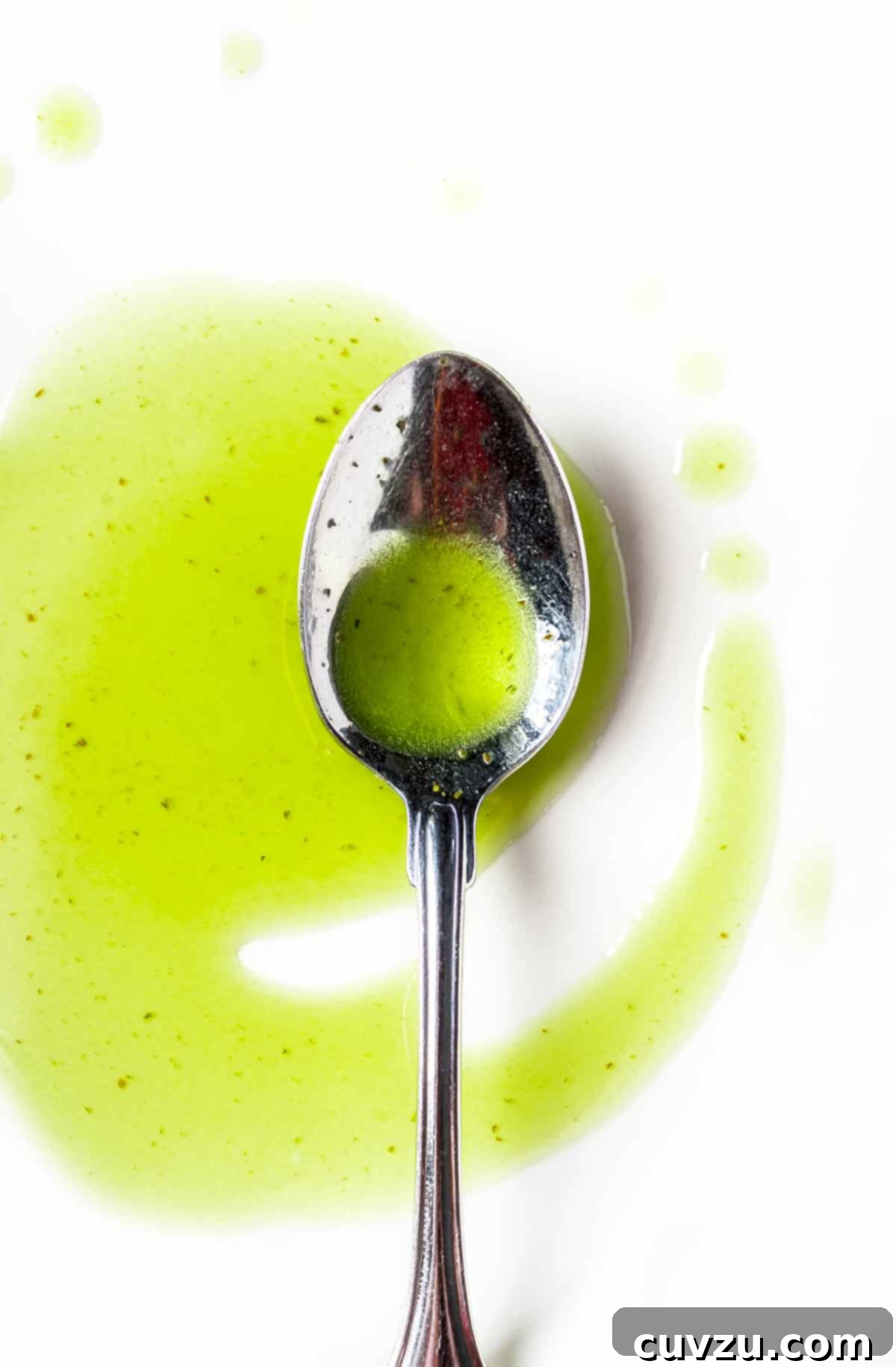
Unlock the vibrant essence of summer in your kitchen with this remarkably simple yet exquisitely flavorful basil oil. If you’ve ever found yourself with a generous bunch of basil slowly wilting in the refrigerator, destined for the compost bin, this recipe is your culinary savior. With just three fundamental ingredients – fresh basil, quality olive oil, and a touch of salt – you can transform those fragrant leaves into a dazzling emerald-green condiment. This versatile oil is perfect for effortlessly elevating a myriad of dishes, whether you’re dipping crusty bread, drizzling over a gourmet entrée, or adding a burst of fresh flavor to everyday meals. Get ready to discover how easy it is to create this kitchen essential.
Are you pondering what magical transformation awaits that half-used bunch of basil lingering in the crisper drawer? You’re about to be as delighted as we are by this ingenious basil oil recipe. In just three simple ingredients and a mere 15 minutes of active preparation, you can rescue your aromatic basil from its languishing fate and repurpose it into a truly versatile godsend of a condiment. Imagine the possibilities: a verdant drizzle over flaky fish, succulent chicken, perfectly seared steaks, al dente pasta, crispy crostini, or creamy artisanal cheeses. The applications are virtually endless. And should you find any delectable remnants in the bowl, simply grab a piece of warm, crusty bread and mop it all up. Pure bliss! – Angie Zoobkoff
Why Homemade Basil Oil is a Culinary Game-Changer
Making your own basil oil isn’t just a clever way to prevent food waste; it’s a step towards elevating your home cooking with unparalleled freshness and flavor. Store-bought oils, while convenient, often contain preservatives or lack the vibrant intensity of a freshly prepared batch. When you craft basil oil from scratch, you’re in complete control of the quality of your ingredients, ensuring a pure, unadulterated taste that simply can’t be matched.
Beyond its incredible flavor, homemade basil oil offers immense versatility. It’s more than just a dressing or a dip; it’s a flavor enhancer that can subtly perfume an entire dish or deliver a bold, herbaceous punch. Its bright, peppery notes, combined with the rich smoothness of olive oil, create a harmonious balance that complements a vast array of cuisines and ingredients. This simple preparation transforms a common herb into an extraordinary culinary tool, proving that sometimes, the most basic recipes yield the most profound results.
Basil Oil
David Leite
Condiments
American
16
servings | 1 cup
60
kcal
40 minutes
5 minutes
45 minutes
Ingredients
-
Fresh basil leaves -
Good quality olive oil, chilled -
Sea salt
Instructions
-
Bring a large pot of water to a rolling boil over high heat. Simultaneously, prepare a large bowl filled with ice water, ensuring it’s ready for immediate use. This ice bath is crucial for stopping the cooking process and preserving the basil’s vibrant green color.
-
Carefully remove the fresh basil leaves from their stems. Discard any bruised, discolored, or damaged leaves to ensure only the best quality basil goes into your oil. Tightly pack the selected basil leaves into your measuring cups.
-
Measure out half the amount of good quality olive oil as you have basil leaves. For example, if you have 1 cup of packed basil leaves, you will need 1/2 cup of chilled olive oil. For every cup of basil leaves, add 1/4 teaspoon of sea salt. This precise ratio ensures balanced flavor.
-
Once the water is boiling rapidly, plunge the packed basil leaves into the pot. Blanch them quickly, just until they wilt and turn a brighter green, typically 6 to 8 seconds. Immediately transfer the blanched basil to a strainer, then quickly submerge it into the prepared ice water. Gently stir the basil in the ice bath until it is completely cold, effectively stopping the cooking and preserving the vibrant chlorophyll.
-
Strain the basil once more to remove excess water. This is a critical step for preventing your basil oil from spoiling prematurely. Gently but firmly squeeze out as much water as possible, or blot the basil completely dry with paper towels. You can also use a salad spinner for an initial dry to remove more moisture efficiently. The drier the basil, the more intense the oil’s flavor and the longer its shelf life.
-
In a high-speed blender, combine the thoroughly dried basil, the measured chilled olive oil, and the sea salt. Blitz the mixture until it becomes completely smooth and uniformly green. Allow the blended oil to sit for 30 minutes; this resting period allows the flavors to meld and any remaining solids to settle. Afterwards, carefully pour the mixture through a fine-mesh strainer lined with two layers of cheesecloth. Use a spatula or the back of a spoon to press firmly on the basil solids, extracting every last drop of flavorful oil.
-
Transfer the strained basil oil into a clean, airtight jar or bottle. Cover tightly. This fresh basil oil is best used immediately to enjoy its peak freshness. If storing, refrigerate it for up to a week. Before each use, allow the oil to return to room temperature, as olive oil can solidify slightly when chilled.

Adapted From
Cast-Iron Cooking for Two
Buy On Amazon
Explore More with AI
Substitutions
Scale
Summarize
Nutrition
Serving:
1
tablespoon
Calories:
60
kcal
Carbohydrates:
0.04
g
Protein:
0.05
g
Fat:
7
g
Saturated Fat:
1
g
Monounsaturated Fat:
5
g
Sodium:
0.2
mg
Fiber:
0.02
g
Sugar:
0.004
g
Nutrition information is automatically calculated, so should only be used as an approximation.
Tried this recipe?
Mention @leitesculinaria or tag #leitesculinaria!
The Essential Elements: A Closer Look at Ingredients
While basil oil is incredibly simple, the quality and preparation of its few ingredients make all the difference in the final product. Understanding each component helps you achieve that stunning emerald hue and intensely fresh flavor.
Fresh Basil: The Star of the Show
The core of this recipe is, of course, fresh basil. For the best results, select basil that has vibrant green leaves, with no signs of wilting, black spots, or bruising. Varieties like Sweet Basil or Genovese basil are ideal for their classic, robust flavor. The blanching process isn’t just for color; it briefly cooks the basil, which helps to mellow some of its sharper, peppery notes, allowing its sweet, aromatic essence to shine through more clearly. Always discard the stems and any less-than-perfect leaves, as they can introduce bitterness or a brownish tint to your oil.
Quality Olive Oil: The Perfect Canvas
The choice of olive oil significantly impacts the taste and texture of your basil oil. A good quality extra virgin olive oil is recommended for its naturally fruity and slightly peppery notes, which beautifully complement the basil. However, if you prefer a milder flavor, a light olive oil can also work. The recommendation to use chilled olive oil is an excellent tip; colder oil helps maintain the basil’s bright green color during blending by minimizing oxidation and friction-induced heat, which can dull the color and potentially introduce unwanted bitterness.
Sea Salt: The Flavor Enhancer
Sea salt plays a crucial role beyond just seasoning. It helps to draw out the natural flavors of the basil, enhancing its sweetness and balancing the oil’s richness. Using a good quality fine sea salt ensures it dissolves evenly and integrates smoothly into the oil, contributing to a harmonious taste profile without any gritty texture.
Beyond the Drizzle: Creative Uses for Your Homemade Basil Oil
Once you’ve experienced the fresh, aromatic delight of homemade basil oil, you’ll find countless ways to incorporate it into your culinary repertoire. It’s far more than just a simple condiment; it’s a flavor powerhouse ready to transform any dish.
- Dipping & Spreading: The most classic use! Serve it with slices of artisan bread, focaccia, or ciabatta. It also makes a fantastic addition to a charcuterie board.
- Salad Dressings: Whisk it into your favorite vinaigrette, or simply drizzle it directly over a fresh caprese salad, mixed greens, or a vibrant tomato and mozzarella platter.
- Pasta Perfection: Toss freshly cooked pasta with a generous amount of basil oil, a sprinkle of Parmesan, and perhaps some cherry tomatoes for a quick, elegant meal. It can also be swirled into pesto or used as a finishing oil for richer pasta dishes.
- Grilled & Roasted Delights: Brush basil oil over grilled chicken, fish, or steaks before or after cooking for an extra layer of herbaceous flavor. It’s also phenomenal drizzled over roasted vegetables like asparagus, zucchini, or bell peppers.
- Soups & Sauces: Swirl a spoonful into warm tomato soup, minestrone, or even a simple vegetable broth just before serving for an aromatic finish. It can also be incorporated into homemade sauces to add depth.
- Eggs & Breakfast: A surprising but delightful pairing! Drizzle over scrambled eggs, omelets, or a frittata for a gourmet touch.
- Pizza & Flatbreads: Finish a homemade pizza or flatbread with a delicate drizzle of basil oil after it comes out of the oven for a burst of fresh flavor.
- Marinades: Use it as a base for marinades for poultry, seafood, or vegetables, infusing them with bright basil notes.
The possibilities are truly endless. Let your culinary imagination guide you and discover new favorite ways to enjoy this vibrant oil!
Storing Your Homemade Basil Oil Safely
Proper storage is key to enjoying your fresh basil oil for as long as possible while maintaining its quality and safety. After straining, transfer your basil oil into a meticulously clean, airtight glass jar or bottle. Keep it refrigerated, where it will maintain its peak freshness and flavor for up to one week. You might notice that olive oil can solidify slightly when chilled; this is a natural occurrence and does not affect its quality. Simply allow the oil to return to room temperature for about 15-30 minutes before using it, and it will liquefy again.
For longer-term storage, basil oil can be frozen. Pour it into ice cube trays and freeze until solid. Once frozen, transfer the basil oil cubes to a freezer-safe bag or container. This method allows you to have convenient portions of basil oil ready whenever inspiration strikes, extending its shelf life for several months. Always remember to allow frozen portions to thaw completely before use. Keep an eye out for any signs of spoilage, such as an off-odor, mold, or significant discoloration, and discard if present.
Recipe Testers’ Reviews
Danielle Roberson
This basil oil is a fantastic way to utilize all that beautiful basil growing in your garden! The resulting oil tastes absolutely fantastic and boasts a stunning, rich emerald green color with a truly wonderful flavor profile.
I followed the recipe using 1 1/2 cups of basil, 3/4 cup of oil, and 3/8 teaspoon of salt. I might consider a tiny bit less salt next time for my personal preference, but otherwise, it was utterly delicious!
This is a seriously easy method to impress guests at the dinner table! I drizzled it generously over a fresh Wild Mushroom Risotto, and the combination was nothing short of magical.
Mel H.
What an incredibly easy and delicious method to preserve extra basil. It’s truly genius! So much so that I’m already planning to try this technique with other herbs the next time I find myself with more than I need. The oil came together quickly, and I believe chilling the olive oil definitely helped it emulsify beautifully and produce a richly flavored oil.
My batch had a truly lovely, vivid green color, much better than what the original photo conveys. I spooned a little over some fresh tomato and mozzarella and am eagerly planning to drizzle some over an autumn panzanella featuring roasted squash and toasted pumpkin seeds. I intend to liberally douse it on salads and pasta for as long as it lasts. I’m convinced it will work exceptionally well with both panzanella and caprese salads.
The recipe itself was very straightforward and easy to follow. I’m not entirely convinced that blotting dry with a paper towel is the most effective method, however. I gently squeezed out the water, and honestly, the paper towel didn’t seem to do anything better than a good, firm but gentle squeeze could accomplish. Plus, squeezing means less waste!
Embrace the simplicity and vibrant flavor of homemade basil oil. This easy recipe ensures that no fragrant leaf goes to waste, transforming humble basil into a versatile condiment that will elevate your meals and impress your guests. Dive in, experiment with its many uses, and savor the taste of fresh summer basil all year round!