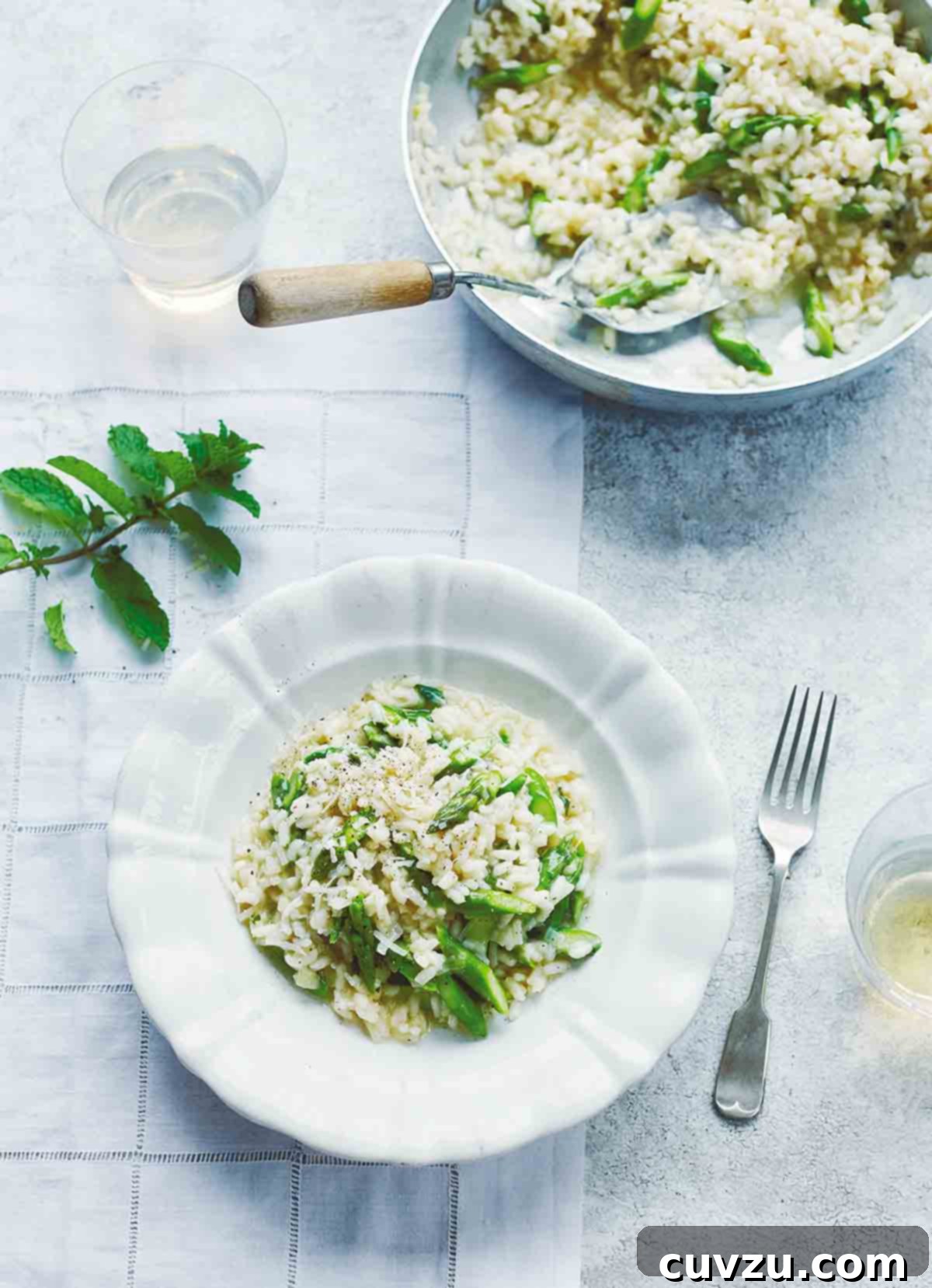
Embrace the essence of spring with this incredibly easy and luxuriously creamy Asparagus Risotto. A culinary delight crafted with fresh asparagus, rich Parmesan cheese, aromatic shallots, savory garlic, a touch of butter, a splash of white wine, and authentic Italian Arborio rice, this dish transforms a traditional Italian classic into a vibrant, seasonal masterpiece. Perfect for a weeknight meal or an elegant dinner party, you can achieve this indulgent creation in under an hour, bringing the fresh flavors of spring right to your table.
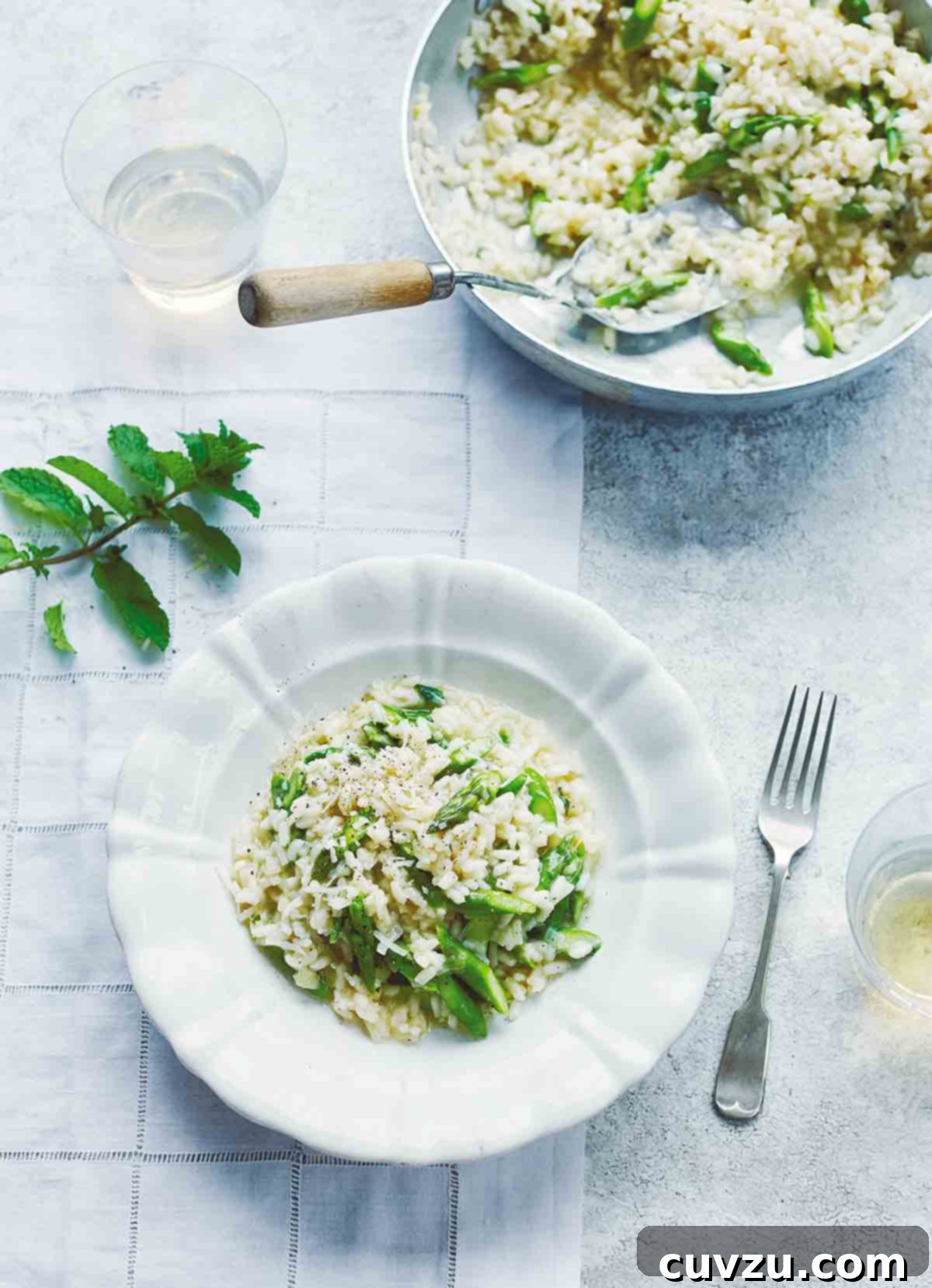
This Asparagus Risotto isn’t just a recipe; it’s an experience. It captures the heart of Italian comfort food, delivering all the rich, indulgent, and creamy goodness you’d expect from a classic risotto, yet it feels refreshingly light and modern with its springtime twist. Imagine velvety rice contrasting beautifully with crisp-tender spears of asparagus and delicate flecks of fresh mint. As renowned culinary expert Angie Zoobkoff beautifully puts it, “Creamy rice is juxtaposed with spears of tender asparagus and flecks of fresh mint. A glass of wine in hand while you’re stirring makes the zen-like process all the more pleasant.” This dish embodies culinary elegance and simplicity, proving that sophisticated flavors can be achieved with ease, transforming your kitchen into a sanctuary of seasonal delights.
Unlocking the Secrets to Perfect Risotto
Many home cooks might view risotto as a daunting task, best left to seasoned chefs or Italian nonnas. However, that couldn’t be further from the truth! Crafting a restaurant-quality risotto at home is entirely achievable with a few key techniques and a little patience. Forget the myth that it’s overly complicated; with our expert tips, you’ll be stirring up creamy perfection in no time. The true magic of risotto lies in understanding a few fundamental principles that elevate it from a simple rice dish to an unforgettable culinary creation.
The Essential Role of Hot Broth
One of the most crucial, yet often overlooked, secrets to a successful risotto is maintaining a consistently hot cooking environment. Always heat your broth in a separate saucepan and keep it at a gentle simmer before you begin adding it to your rice mixture. Introducing cold liquid into a hot pan of rice will significantly drop the temperature, halting the cooking process and preventing the rice from releasing its starches properly. This not only prolongs the overall cooking time but can also result in a less creamy, unevenly cooked risotto. Keeping your broth consistently hot ensures a smooth, uninterrupted cooking process, allowing the starches to release steadily and contribute to that coveted velvety texture.
The Art of Stirring: Finding the Right Rhythm
You’ve likely heard the advice to “stir constantly” when making risotto. While stirring is indeed vital, “constantly” is a bit of an exaggeration and can actually be counterproductive. The goal is to keep things moving, ensuring the rice doesn’t stick to the bottom of the pan and allowing for even absorption of the broth. However, overzealous or vigorous stirring can incorporate too much air into the risotto, cooling it down and again, extending the cooking time unnecessarily. Instead, aim for frequent, gentle stirring – enough to steadily release the starches that create that signature creamy texture, but not so much that you’re beating air into it. This rhythmic process is not only effective but also surprisingly meditative, turning cooking into a peaceful activity.
Choosing Your Rice: The Foundation of Creaminess
The type of rice you select is paramount to achieving that dreamy, creamy risotto texture. The secret lies in the rice’s starch content, specifically amylopectin. For this reason, only medium or short-grain varieties of rice are suitable for a proper risotto. These grains, unlike long-grain varieties, are naturally rich in amylopectin, a type of starch that readily dissolves into the cooking liquid as you stir, creating the velvety consistency that defines a great risotto.
Avoid long-grain rices like Basmati or Jasmine, as they simply don’t contain enough of this crucial starch and will result in a more separated, less creamy dish, resembling boiled rice rather than true risotto. The most recommended short-grain varieties for risotto are Carnaroli, Arborio, and Vialone Nano. Arborio is the most widely available and often the most budget-friendly option, making it an excellent choice for home cooks eager to try their hand at risotto. While Carnaroli and Vialone Nano are prized by chefs for their slightly firmer bite, higher starch release, and ability to absorb more liquid without becoming mushy, Arborio delivers fantastic results and is a perfect starting point for any risotto enthusiast.
Building Flavor: Soffritto and Wine
Before the rice even enters the picture, the complex foundation of your risotto’s flavor is built upon a classic Italian soffritto. Finely chopped shallots and garlic are gently sautéed in a combination of olive oil and butter until they become softened and beautifully fragrant, creating a sweet and savory base. This aromatic start is absolutely crucial for developing a deep, rich background flavor. Following the soffritto, a splash of dry white wine is added. This step, known as “toasting” the rice, not only introduces a lovely acidity that brightens the entire dish but also deglazes the pan, lifting any flavorful browned bits from the bottom. The alcohol evaporates during this brief stage, leaving behind a nuanced layer of taste that perfectly complements the fresh asparagus and savory Parmesan cheese.
Asparagus Risotto FAQs
Should I Rinse My Rice Before Preparing Risotto?
Please don’t rinse your risotto rice! This is a critical point that differentiates risotto from many other rice dishes. The rice’s natural starches are absolutely essential to dissolve into and thicken the cooking liquid, creating that signature creamy, dreamy texture that defines a proper risotto. Rinsing your rice, as you might for dishes like pilaf or sushi, washes away these valuable surface starches, leaving you with individual, firmer grains rather than the desired luxurious creaminess. Embrace the starch for a truly authentic, richly textured risotto experience.
Can I Use Something Besides Arborio Rice to Make Risotto?
Yes, you can, but it’s vital to remember that the starch content in your chosen rice variety is the key to your dish’s success. Stick exclusively to medium or short-grain rice types specifically bred for risotto. The most recommended varieties include Carnaroli, Arborio, and Vialone Nano. Carnaroli is often considered the “king” of risotto rice due to its high starch content and remarkable ability to hold its shape while remaining creamy, while Vialone Nano is excellent for delicate risottos. Arborio, however, is the most widely available and offers a fantastic balance of creaminess and structure at a more accessible price point. Absolutely avoid any long-grain rices, such as Basmati or Jasmine, as they lack the necessary starch to achieve the characteristic creaminess of risotto, resulting in a dish that will not have the desired consistency.
What Can I Add During Cooking if I Prefer to Not Use Wine?
If you prefer to omit white wine from your risotto, the best and most effective substitute is an equivalent amount of chicken or vegetable broth combined with just a few drops of lemon or lime juice. The acidity from the citrus is crucial as it mimics the brightness and complexity that wine typically provides, preventing the dish from tasting flat or one-dimensional. In this recipe, you would simply add 1/2 cup of broth (either chicken or vegetable) mixed with a couple of drops of lemon or lime juice in place of the wine in step two, allowing it to absorb completely before proceeding to step three. It’s important to avoid using any type of vinegar as a substitute, as its distinct and often harsh flavor could easily overpower and ruin the delicate balance of tastes in your final risotto.
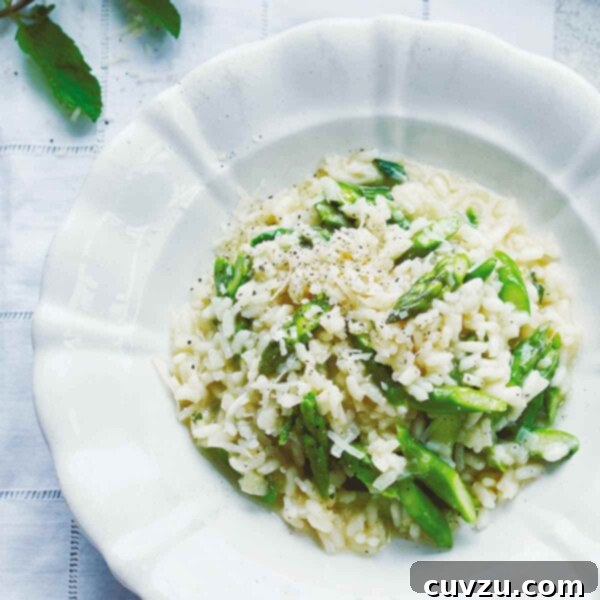
Asparagus Risotto
David Leite
- PIN
Print Recipe
Mains
Italian
6
servings
269
kcal
15
minutes
25
minutes
40
minutes
Ingredients
-
10 1/2
ounces
asparagus,
about 30 thin spears -
2
tablespoons
olive oil
,
plus more for drizzling -
1
tablespoon (1/2 oz)
unsalted butter -
2
small shallots,
finely chopped -
9
ounces
risotto rice
,
about 1 1/4 cups, such as Arborio -
1/2
cup
white wine,
such as sauvignon blanc -
2
garlic cloves,
minced -
3 to 4
cups
store-bought or
homemade chicken stock or
vegetable stock
-
1
ounce
Parmesan cheese,
about 1/2 cup, grated -
Small handful fresh mint leaves,
finely chopped -
Sea salt -
Freshly ground black pepper
Instructions
-
Snap the tough, woody ends off the asparagus spears and discard them. Then, slice the tender asparagus portions on the diagonal into 1/2-inch (1-cm) lengths. Set aside.
-
In a large, wide saucepan or a Dutch oven, warm the olive oil and butter over medium heat. Add the finely chopped shallots and the Arborio rice, and cook, stirring frequently, until the shallots soften and the rice grains begin to turn translucent around the edges, about 4 to 6 minutes. Pour in the white wine, add the minced garlic, then reduce the heat to medium-low. Gently cook, stirring until the wine is fully absorbed by the rice, which should take approximately 2 to 3 minutes.
-
Concurrently, in a small saucepan on a separate burner, warm your chicken or vegetable stock over medium-high heat. It’s crucial to keep the stock hot throughout the risotto-making process.
-
Now, begin the gradual addition of stock. Add one ladleful of warm stock to the rice mixture at a time (approximately 1/2 cup). Stir the rice almost constantly until nearly all the liquid has been absorbed. This slow, continuous stirring and gradual liquid addition is what encourages the rice to release its starches, creating the signature creamy texture of risotto.
-
Continue cooking the risotto in this manner, gradually adding a ladleful of hot stock only after the previous addition has been almost completely absorbed. This process will take about 20 to 25 minutes, and you will use a total of 3 to 4 cups of stock. You’re looking for the risotto to be creamy but not overly soupy, and the rice should be al dente – tender with a slight chew in the center. At this point, stir in the prepared asparagus pieces and cook for an additional 5 minutes, adding a little more stock if the risotto appears too dry. The final risotto should be wonderfully tender and creamy, and the asparagus should be tender but still have a pleasant bite.
-
Remove the saucepan or Dutch oven from the heat. Stir in the grated Parmesan cheese and the finely chopped fresh mint. Use a wooden spoon to vigorously beat the risotto for about a minute; this step, known as “mantecatura,” helps incorporate air and further enhances the creamy texture. Taste the risotto and season with sea salt and freshly ground black pepper to your preference. If you desire a slightly thicker consistency, cover the pot and let it rest for a few minutes. Otherwise, ladle the creamy asparagus risotto into warm serving dishes immediately and prepare for rave reviews!
Adapted From
Gatherings
Buy On Amazon
Explore More with AI
Substitutions
Scale Recipe
Summarize Key Insights
Nutrition
Serving:
1
portion
Calories:
269
kcal
Carbohydrates:
38
g
Protein:
6
g
Fat:
8
g
Saturated Fat:
3
g
Trans Fat:
1
g
Cholesterol:
9
mg
Sodium:
510
mg
Fiber:
3
g
Sugar:
2
g
Nutrition information is automatically calculated and provided for informational purposes only. It should be used as an approximation, as ingredient variations and preparation methods can affect final nutritional values.
Tried this recipe?
Share your culinary creations! Mention
@leitesculinaria or tag
#leitesculinaria on Instagram to show off your delicious Asparagus Risotto! We love seeing your takes on our recipes.
What Our Recipe Testers Are Saying
We believe the true measure of a recipe’s success lies in the honest feedback from real home cooks like you. Our dedicated team of recipe testers put this Asparagus Risotto through its paces in their own kitchens, and their glowing reviews confirm it’s a dish worthy of your table. From its perfect creamy consistency to the vibrant burst of fresh spring flavors and the surprisingly simple cooking process, discover why this risotto has quickly become a new favorite among those who tried it. Their experiences offer valuable insights and an authentic peek into what you can expect when you create this delightful dish.
K. Zimmerman
This asparagus risotto truly hits all the right notes. The rice achieves a beautiful creamy and tender texture, complemented by just enough salty Parmesan. Adding the asparagus in the final few minutes of stirring ensures the vegetable is perfectly cooked with an ideal bite, while the fresh mint provides a vibrant burst of flavor that ties everything together. It’s simply perfect.
The result was a lovely, creamy risotto with tender-crisp asparagus and invigorating fresh mint. I followed the suggestion to turn off the heat and cover the pot, letting it rest for about 5 minutes while I finished preparing the rest of my meal. This allowed the risotto to set beautifully, yielding a firm yet creamy dish with distinct individual grains of rice.
Chelsea Dubreuil
I embraced the advice from the beginning of this asparagus risotto recipe: making risotto slowly with a glass of wine in hand. It was an incredibly pleasant experience. Having never made risotto before, I was genuinely surprised by how delicious it tasted and how much easier it was than I had imagined.
The texture of the risotto once completed was delightful – creamy and satisfyingly filling, with a firm yet yielding appearance. I opted for a Sauvignon Blanc, and it was the perfect choice; I enjoy flavors that are a little more bitter than sweet, so it added a wonderful touch. I used about 12 thin spears of asparagus. If I were to make one small alteration, I might consider omitting the mint or swapping it for some rosemary or parsley. For my palate, the mint didn’t significantly enhance the dish.
Jackie Gorman
“This tastes like spring!” my husband exclaimed as we began to savor this beautiful asparagus risotto. I truly couldn’t have come up with a better description myself. Whether you’ve been enduring endless snowstorms, freezing temperatures, or a particularly wet winter, this dish serves as a bright beacon, signaling the return of sunshine, birdsong, and blossoms. It tastes incredibly fresh, clean, and vibrant.
For the best results, use the highest quality ingredients you can find, especially the asparagus. Good springtime asparagus, when harvested at its peak, is never stringy. Its tender crunch is a clear sign that spring has arrived, bringing with it all the promise of renewal and delicious seasonal produce.
Linda Pacchiano
This asparagus risotto recipe consistently produces an excellent risotto—easily one of the best I’ve ever tasted.
The cooking process follows the standard, tried-and-true method for risotto. From start to finish, it takes approximately an hour, all of which is hands-on time, ensuring you’re actively engaged in creating a perfect dish. This recipe is ample enough to serve 4 as a satisfying main course or more if offered as a side dish. I used a Chardonnay, and found that precisely 3/4 cup of fresh mint leaves delivered just the right subtle note – not overpowering, but distinctly discernible and a truly perfect complement to the fresh asparagus.
Sandy Hill
This asparagus risotto is absolutely worth making! The instructions were consistent with other reliable risotto recipes but we particularly loved the vibrant addition of asparagus. After 25 to 35 minutes of careful cooking, the rice was perfectly tender and creamy, and the asparagus maintained its ideal texture – tender yet not mushy.
The fresh mint introduced a wonderful herbal flavor that we found complemented the asparagus beautifully. Even after taking the pot off the heat, the risotto retained its creamy consistency and did not firm up prematurely before serving, which is often a concern with risottos. The recipe generously provided 4 ample entrée servings. For an added touch, I tossed in some grilled shrimp right before serving, which paired exquisitely.
Rosie Coelho
If you’re new to making risotto, I wholeheartedly encourage you to try this asparagus risotto recipe! I had never tackled risotto before and, frankly, I was always intimidated by the process. I’ve certainly had my share of mediocre risottos, alongside some wonderfully rich, creamy, and truly delicious dishes. I can confidently say this recipe falls into the latter category. Don’t let the inclusion of mint deter you. I was a little skeptical initially, but I adhered to the recipe and added the full recommended amount (though I was tempted to use less). The mint imparted a bright, refreshing quality to the otherwise rich dish, proving to be a truly welcome addition.
With asparagus season soon upon us, I will undoubtedly be making this asparagus risotto again and again. It is the perfect recipe to celebrate the season. The risotto was exceptionally creamy and tender, and notably, it maintained its delightful consistency without firming up too much, even after being served on the plate.
Kim Graham
This asparagus risotto is destined to become a staple spring dish that I’ll look forward to craving each year as asparagus reappears at the farmers market. The rice delivers pure creamy, cheesy comfort food, while the asparagus is cooked to a perfect firm tenderness. We enjoyed it as a side dish alongside a simple broiled salmon. The two complemented each other beautifully and were incredibly easy to coordinate in terms of cooking timing. Initially, I harbored some reservations about the mint in the risotto, given its strong flavor, but in this particular recipe, it worked exceptionally well, adding a refreshing counterpoint without overpowering.
Jenny Latreille
This asparagus risotto recipe is fairly standard in its approach, but the thoughtful addition of fresh asparagus and mint truly gives it something extra special. It’s an absolutely perfect recipe for celebrating the arrival of spring. I allowed it to sit for a few minutes off the heat before serving, which helped to subtly enhance its texture. The final dish generously served four people and was wonderfully creamy, tender, and incredibly flavorful. It did thicken up slightly after resting, but only a little, maintaining its delightful consistency.
Lou Ann Traster
Risotto captivates me every single time. I adore its rich, plush texture and the comforting, complete meal-in-a-bowl satisfaction it provides. This particular asparagus risotto recipe offers excellent, clear directions to help even novice cooks achieve this seemingly “chef-y” dish with confidence.
It’s worth noting that depending on the rate of evaporation and absorption in your specific pan, heat source, and kitchen environment, you might find yourself needing to add a bit more stock than indicated. The precise quantity of liquid is less critical; what truly matters is the continuous, gradual addition of stock until the rice reaches its desired doneness, which typically takes around 25 minutes. I recommend setting a timer for 25 minutes once you begin adding liquid. When the timer sounds, taste the risotto. If it’s perfectly cooked, I add one final drizzle of stock, turn off the heat, and then stir in any finishing touches.
On one occasion, I couldn’t find fresh mint, so I successfully used parsley as a substitute. Upon tasting, I felt it needed a touch more acidity – a bit of lemon juice works beautifully with asparagus, so I gradually incorporated the juice of one lemon half until the balance was perfect. This versatile recipe could easily be adapted with other vegetable additions, such as spinach, peas, or even shredded zucchini matchsticks, all of which would be delicious. I genuinely appreciated these instructions; they make a truly attainable and delicious risotto!