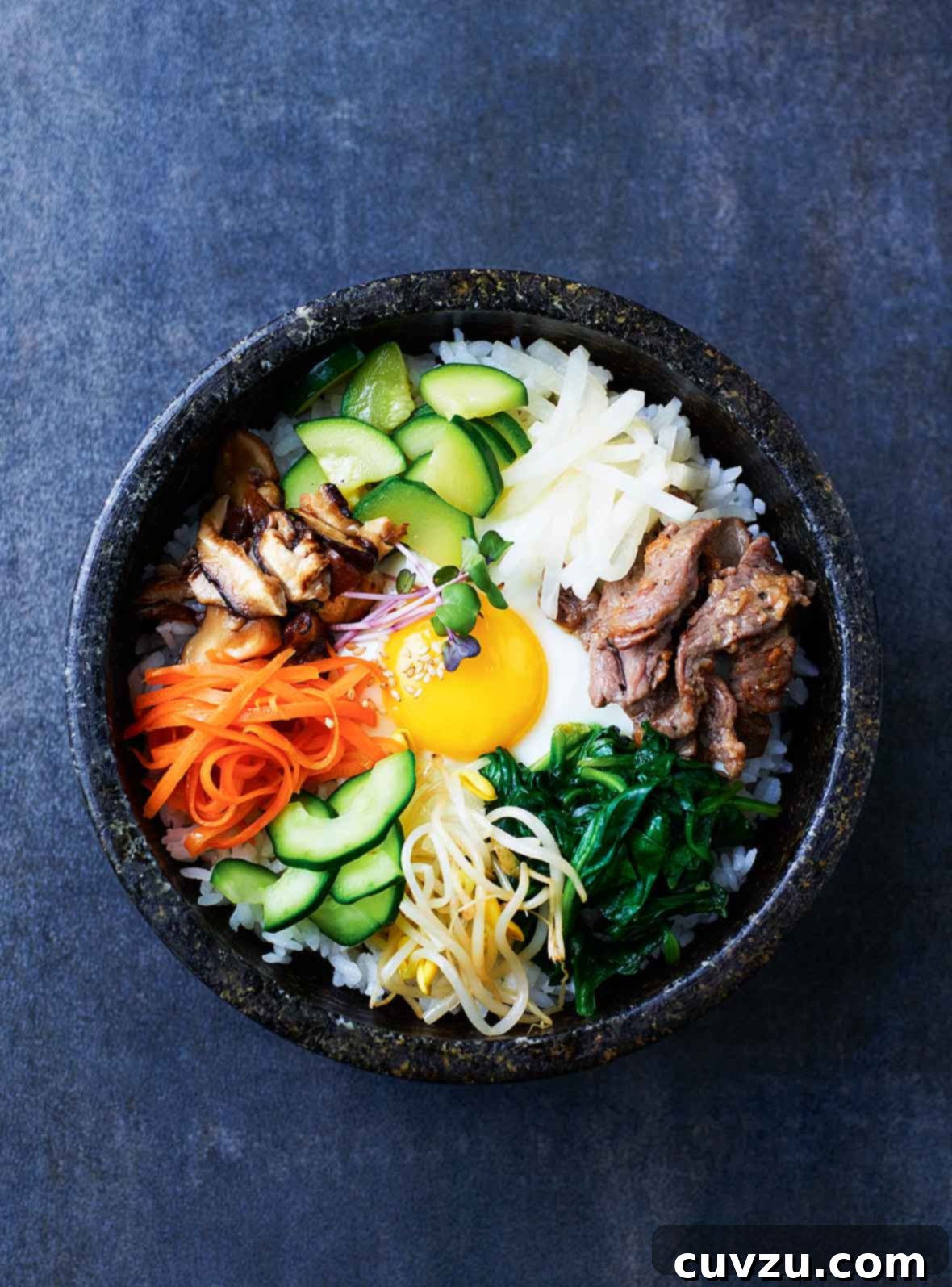
Prepare to revolutionize your perception of wholesome cuisine with this incredible Bibimbap recipe. Featuring an effortlessly crafted, smoky, and subtly sweet sauce, this dish is poised to become a new favorite in your culinary repertoire.
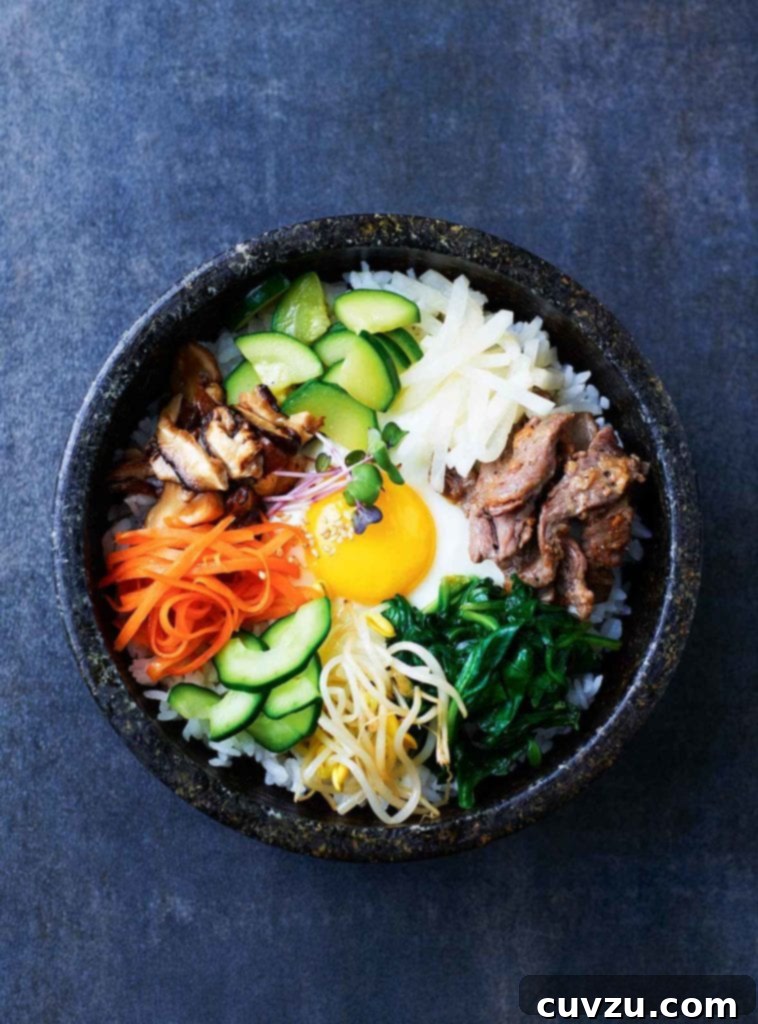
Bibimbap, a name as delightful to pronounce as the dish is to behold, captivates with its mesmerizing array of jewel-toned vegetables. Yet, its initial visual charm is merely a prelude to the true experience. The moment you drizzle it with the unique smoky-sweet sauce and thoroughly blend all the components, its aesthetic beauty transforms into an unparalleled symphony of flavors and textures. And trust us, you’ll be more than happy with the trade-off.
What is Bibimbap? The Heart of Korean Mixed Rice
In its essence, Bibimbap (비빔밥), meaning “mixed rice,” is a cherished and quintessential Korean dish. It traditionally consists of a warm bowl of white rice (bap) topped with an assortment of sautéed and seasoned vegetables (namul), often including carrots, spinach, bean sprouts, and zucchini. Complementing these vibrant vegetables are sliced meats (commonly marinated beef or chicken), a fried egg, and the star condiment: a dollop of spicy gochujang (Korean chili paste) sauce. Before indulging, the dish is thoroughly stirred (bibim) to combine all the ingredients, creating a harmonious blend of tastes, textures, and colors in every bite.
Bibimbap is more than just a meal; it’s a cultural staple in Korea, frequently enjoyed for its nutritional balance and versatility. It embodies the Korean culinary philosophy of combining diverse elements to create a complete and satisfying dish. While traditionally served hot in a regular bowl, a popular variation, Dolsot Bibimbap, is served in a sizzling hot stone pot. This method creates a deliciously crispy layer of rice at the bottom, adding another dimension of texture to an already exciting dish.
Why You’ll Fall in Love with This Bibimbap Recipe
There are countless reasons why this particular Bibimbap recipe stands out and is sure to become a beloved staple in your kitchen. First and foremost, it demystifies what many perceive as a complex Korean dish, making it accessible even for novice cooks. The beauty of this recipe lies in its balanced flavors – a smoky, slightly sweet, and perfectly spicy kick from the gochujang sauce that complements the fresh, crisp vegetables and savory marinated beef.
Beyond its incredible taste, this Bibimbap is a feast for the eyes. The vibrant colors of each ingredient, meticulously arranged, create a stunning presentation before they are artfully mixed together. It’s a dish that encourages interaction, inviting you to create your perfect bite. Furthermore, it’s incredibly versatile and adaptable to various dietary preferences. Whether you’re looking for a hearty, protein-packed meal or a lighter, more vegetable-focused option, Bibimbap can be customized to suit your needs. It’s truly a healthy eating powerhouse, packed with nutrients, fiber, and lean protein, making it an ideal choice for a satisfying and guilt-free meal. Prepare to be amazed by how easily this recipe elevates your home cooking.
Bibimbap: The Ultimate Korean Mixed Rice Bowl
David Leite
PIN
Print Recipe
Mains
Korean
4
servings
669
kcal
40
20
1
Ingredients
For the gochujang sauce
- 3 tablespoons store-bought or homemade gochujang chile paste
- 1 tablespoon soy sauce
- 1 tablespoon roasted (dark) sesame seed oil
- 2 garlic cloves, crushed
- 1 tablespoon sugar or maple syrup
For the marinated beef
- 10 ounces beef sirloin
- 2 1/2 tablespoons soy sauce
- 2 teaspoons roasted (dark) sesame seed oil
- 3 garlic cloves, crushed
- 3 scallions, very finely chopped
- 1/2 teaspoon ground black pepper
For the bibimbap
- 2 cups short-grain white rice
- 5 ounces carrots, cut into very thin ribbons using a vegetable peeler
- 2/3 pound zucchini, quartered lengthwise and thinly sliced
- 5 ounces cucumber, halved lengthwise, seeded and thinly sliced
- 5 ounces daikon radish, peeled and cut into thin strips
- 5 ounces bean sprouts
- Roasted (dark) sesame seed oil, to season
- Soy sauce, to season
- Mild vegetable oil, for frying
- 7 ounces shiitake mushrooms, stemmed and sliced
- 10 ounces spinach
- 4 large eggs
- Toasted sesame seeds, to serve
- A few leaves of salad greens or watercress, to serve (optional)
Instructions
Make the gochujang sauce
-
In a bowl, combine all the sauce ingredients: gochujang chile paste, soy sauce, roasted sesame seed oil, crushed garlic cloves, and sugar or maple syrup. Whisk until well combined and smooth. Set aside to allow the flavors to meld.
Prepare the marinated beef
-
Slice the beef sirloin very thinly, aiming for slightly less than 1/8-inch thick pieces. For easier slicing, partially freeze the beef for about 30 minutes before cutting. This firms up the meat and allows for precise, thin cuts.
-
In a clean bowl, prepare the marinade by mixing together the soy sauce, roasted sesame seed oil, crushed garlic, finely chopped scallions, and ground black pepper. Add the thinly sliced beef to this marinade, ensuring all pieces are well coated. Cover the bowl and let the beef marinate at room temperature for 30 to 60 minutes. This infuses the beef with deep, savory flavors.
Assemble the bibimbap components
-
Begin by cooking the short-grain white rice according to the package instructions. Once cooked, keep it warm until serving.
-
Fill a large saucepan with water and bring it to a rolling boil. One by one, blanch the prepared vegetables: carrots, zucchini, cucumber, and daikon radish for exactly 1 minute each. Blanch the bean sprouts for 2 1/2 minutes. After blanching, use a slotted spoon or sieve to promptly remove each vegetable from the boiling water and drain them thoroughly. Immediately season each blanched vegetable separately with about 1/2 teaspoon of roasted sesame seed oil and a dash of soy sauce. It’s crucial to keep each vegetable type separate to maintain distinct flavors and aesthetics.
-
Heat 1 tablespoon of mild vegetable oil in a skillet over medium-high heat. Add the sliced shiitake mushrooms and stir-fry them until they are tender and lightly browned, which usually takes 4 to 5 minutes. Transfer the cooked mushrooms to a bowl and season them with 1/2 teaspoon each of roasted sesame seed oil and soy sauce.
-
Return the same skillet to medium-high heat (or use a fresh pan). Add the spinach and sprinkle it with 2 teaspoons of water. Cook for a few minutes, stirring constantly, until the spinach has wilted completely. Remove the spinach from the pan, squeeze out any excess water to prevent sogginess, and season it with 1/2 teaspoon each of roasted sesame seed oil and soy sauce. Note: In traditional Korean fashion, these prepared vegetables are often served at room temperature, so there’s no need to keep them warm.
-
Place the skillet back on medium-high heat. Add the marinated beef along with its marinade. Stir-fry constantly until the sauce has reduced and the beef is cooked through. This should take approximately 3 minutes, though cooking time may vary slightly depending on the thickness of your beef slices. Transfer the cooked beef to a plate.
-
Wipe the skillet clean or use a fresh pan, then fry the large eggs to your preferred doneness—sunny-side up with a runny yolk is traditional for Bibimbap, as the yolk adds richness to the mixed dish.
-
To serve, divide the warm cooked rice evenly among 4 individual serving bowls. Carefully place one fried egg in the center of the rice in each bowl. Artfully arrange the prepared vegetables and the marinated beef around the central egg, creating a visually appealing presentation. Sprinkle generously with toasted sesame seeds and, if desired, add a few leaves of fresh salad greens or watercress for an extra touch of freshness. Serve immediately with the prepared gochujang sauce on the side. Advise your guests to add a couple of spoonfuls of the sauce to their bowl and mix everything together thoroughly before eating. They can always add more gochujang sauce to taste, adjusting the spice and flavor to their liking. Enjoy this vibrant and delicious Korean meal!
Adapted From
Our Korean Kitchen
Buy On Amazon
Customizing Your Bibimbap: Endless Possibilities
One of the most delightful aspects of Bibimbap is its incredible versatility. While this recipe provides a classic foundation, feel free to get creative and tailor it to your personal preferences or what you have on hand. For a vegetarian or vegan version, simply omit the beef and egg. You can substitute the beef with firm tofu, tempeh, or even a medley of wild mushrooms. Ensure your gochujang sauce is vegan-friendly (most are, but check labels). The egg can be replaced with extra seasoned vegetables or a sprinkle of nutritional yeast for a cheesy umami flavor.
Don’t be afraid to experiment with different vegetables! Kimchi is a common addition, offering a tangy, spicy crunch. Other popular choices include bell peppers, broccoli florets, or even blanched asparagus. Just remember to cook each vegetable separately to retain its distinct texture and flavor. For a different protein, consider chicken or pork, thinly sliced and marinated in a similar soy-sesame mixture. You can also explore different grains beyond white rice, such as brown rice, quinoa, or a mix of grains, for added nutritional benefits. The key is to maintain a balance of textures—crisp, tender, chewy—and flavors—savory, spicy, sweet, and umami—to achieve the authentic Bibimbap experience.
The Magic of Gochujang Sauce
At the very heart of an authentic Bibimbap lies its signature gochujang sauce. Gochujang is a savory, sweet, and spicy fermented Korean condiment made from gochugaru (chili powder), glutinous rice, meju (fermented soybean powder), yeotgireum (barley malt powder), and salt. The fermentation process gives it a complex depth of flavor that is truly unique.
Our gochujang sauce recipe enhances this complexity with the addition of soy sauce for umami, roasted sesame seed oil for nutty aroma, crushed garlic for a pungent kick, and a touch of sugar or maple syrup to balance the heat with sweetness. This specific blend creates a sauce that is not just spicy, but also incredibly addictive—a perfect counterpoint to the fresh vegetables and savory beef. It’s the secret ingredient that transforms a bowl of rice and toppings into the magical experience that is Bibimbap. Don’t skimp on the sauce; it’s what ties everything together!
Tips for the Perfect Bibimbap Experience
Achieving Bibimbap perfection involves a few key techniques and considerations:
- Mise en Place is Key: Because Bibimbap involves several components, prepping all your ingredients before you start cooking (chopping vegetables, slicing beef, mixing sauces) will make the assembly process much smoother and more enjoyable.
- Thinly Sliced Beef: As mentioned in the recipe, partially freezing the beef makes it significantly easier to slice paper-thin. This ensures the beef cooks quickly and becomes tender, melting in your mouth.
- Individual Vegetable Seasoning: It might seem like an extra step, but seasoning each blanched vegetable individually with sesame oil and soy sauce adds layers of flavor. This ensures every component tastes delicious on its own and contributes to the overall complexity of the dish when mixed.
- The Fried Egg: A sunny-side-up egg with a runny yolk is highly recommended. When mixed into the hot rice and vegetables, the yolk creates a creamy, rich sauce that binds everything together beautifully.
- Don’t Be Afraid to Mix: The joy of Bibimbap is in the mixing! Encourage your guests to thoroughly combine all the ingredients in their bowl. This ensures they get a taste of every component and every flavor profile in each spoonful.
- Adjust Spice to Taste: The gochujang sauce can be quite potent. Start with a smaller amount and add more as desired. You can also make a milder sauce by reducing the gochujang and increasing the sweetness with extra maple syrup or a touch of honey.
- Dolsot Bibimbap Variation: If you have a stone bowl (dolsot), heat it thoroughly with a little sesame oil before adding the rice and toppings. The hot bowl will create a coveted crispy rice layer at the bottom, adding an irresistible textural element.
Health Benefits of Bibimbap: A Nutritious Delight
Bibimbap is celebrated not just for its exquisite taste but also for its remarkable nutritional profile, making it an incredibly healthy meal option. It’s a testament to how delicious food can also be incredibly good for you. Here’s why Bibimbap stands out as a healthy choice:
- Rich in Vegetables: The dish is loaded with a variety of fresh and blanched vegetables like carrots, spinach, zucchini, bean sprouts, and daikon radish. These provide a significant amount of dietary fiber, vitamins (A, C, K, folate), and minerals essential for overall health, digestion, and immunity.
- Balanced Macronutrients: Bibimbap offers a great balance of carbohydrates from the rice, lean protein from the beef and egg, and healthy fats from the sesame oil. This ensures sustained energy and satiety.
- Lean Protein Source: With options like lean beef sirloin or even tofu/tempeh, Bibimbap provides high-quality protein necessary for muscle repair, growth, and other bodily functions. The egg further boosts protein content and adds choline, vital for brain health.
- Healthy Fats: Roasted sesame seed oil, used in moderation for seasoning, is rich in healthy monounsaturated and polyunsaturated fats, including omega-6 fatty acids, which are important for heart health and reducing inflammation.
- Fermented Goodness: Gochujang, the cornerstone of the sauce, is a fermented chili paste. Fermented foods are known to introduce beneficial probiotics into the gut, supporting a healthy digestive system and potentially enhancing nutrient absorption and immune function.
- Customizable for Dietary Needs: Its inherent versatility allows for easy modifications to suit various dietary restrictions, such as making it vegetarian, vegan, or gluten-free (by using tamari instead of soy sauce). This adaptability ensures almost everyone can enjoy a healthful version of Bibimbap.
By incorporating a wide array of ingredients, Bibimbap offers a holistic approach to nutrition, delivering a satisfying and health-conscious meal in one vibrant bowl.
Frequently Asked Questions About Bibimbap
What kind of rice is best for Bibimbap?
Short-grain white rice is traditionally preferred for Bibimbap. Its sticky texture helps all the ingredients bind together when mixed, providing a satisfying mouthfeel. However, you can use medium-grain rice or even brown rice for a healthier, nuttier alternative.
Can I prepare Bibimbap ahead of time?
Yes, many components of Bibimbap can be prepared in advance. The vegetables can be blanched, seasoned, and stored in separate airtight containers in the refrigerator for up to 2-3 days. The beef can be marinated the day before, and the gochujang sauce can also be made and stored. Cook the rice and fry the eggs just before serving for the best results.
What if I don’t like spicy food?
If you’re not a fan of intense spice, you can easily adjust the gochujang sauce. Use less gochujang paste and increase the amount of sugar or maple syrup to mellow out the heat. You can also add a touch of extra soy sauce or a squeeze of lime juice for flavor without adding more spice. Some people also opt for a non-spicy soy-based sauce as an alternative.
Are there vegetarian or vegan options for Bibimbap?
Absolutely! Bibimbap is wonderfully adaptable for vegetarian and vegan diets. Omit the beef and egg. For protein, you can use marinated firm tofu (pan-fried or baked), tempeh, or a variety of sautéed mushrooms. Ensure your gochujang is vegan-friendly (most are, but always check labels) and use a vegan egg substitute or simply extra vegetables.
How do I store leftover Bibimbap?
Leftover Bibimbap can be stored in an airtight container in the refrigerator for up to 2-3 days. It’s best to store the components separately if possible before mixing, but if already mixed, it will still keep. Reheat gently in a microwave or a skillet over medium heat, adding a splash of water if it seems dry. Note that the texture of some vegetables might soften slightly upon reheating.
What other vegetables can I add to Bibimbap?
The possibilities are endless! Common additions include kimchi (a fermented spicy cabbage), bell peppers, spinach, mung bean sprouts, various types of mushrooms, fernbrake (gosari), and balloon flower root (doraji). Feel free to use any vegetables you enjoy and blanch or sauté them as needed.
Nutrition
Serving:
1
portion
Calories:
669
kcal
Carbohydrates:
101
g
Protein:
35
g
Fat:
14
g
Saturated Fat:
3
g
Monounsaturated Fat:
5
g
Trans Fat:
1
g
Cholesterol:
225
mg
Sodium:
690
mg
Fiber:
8
g
Sugar:
13
g
Nutrition information is automatically calculated and should be used as an approximation.
Tried this recipe?
Mention @leitesculinaria or tag #leitesculinaria!
Recipe Testers’ Reviews
Lisa Ward
I love everything about this bibimbap recipe. The marinated beef is so tasty with all the different veggies and the sauce has an addictive, slightly spicy, barbecue flavor. (I used sugar, but I could see maple syrup being equally or even better tasting. I had intended to use maple syrup, but there was none to be found when I went to make it.)
Another great thing about it is that it can be tailored to your personal tastes by adding or leaving off toppings of choice.
Elie Nassar
I love bibimbap, the Korean dish of mix-it-all-up dish of rice, meat, and vegetables, but I’ve never made it at home. I’m glad I finally did thanks to this recipe. It’s pretty well written with simple instructions and produces a delicious bowl of food that’s lovely to look at and even better to mix up and devour with the savory spicy gochujang sauce. It has a perfect mix of textures and colors and the best part is it can be endlessly customizable with all kinds of vegetables in various ratios to the rice. The best part is that the kids loved it, vegetables and all—well, minus the mushrooms for them.
This is not, however, a quick dish. It takes time to wash, chop, marinate, and cook all the vegetables separately. So plan accordingly but it’s worth the effort. The timing for blanching all the vegetables was perfect. Everything was tender but retained a good crispy texture without the rawness. I could not find shiitake mushrooms so I ended up with regular brown mushrooms, but the cooking time worked well. The beef should be sliced very thin for this. I got it sliced about 1/8-inch but thinner is probably better. It helps if you partially freeze the beef before slicing.
A lot of the work can be done ahead of time. I wanted to serve this for a midweek dinner so I had all the vegetables cut, blanched, and seasoned the night before. I stored them in separate containers and refrigerated them until about 2 hours before serving. So when we were ready to eat, they were at room temperature. This made 4 generous servings with some vegetables leftover.
Shauna Hinchen-Joyal
Stock up on Korean gochujang sauce and transform your rice bowls! This bibimbap recipe is easy to follow and quick to make. It’s the perfect weekday dish or a unique meal for a weekend dinner party.
I found the sauce to have the perfect balance of umami and spice and loved the fresh veggies and fried egg added to the top. I found the prep moved along quickly. While the beef marinated, I cooked the rice and the veggies and prepared the sauce. While the beef cooked, I used a separate pan and fried the eggs.