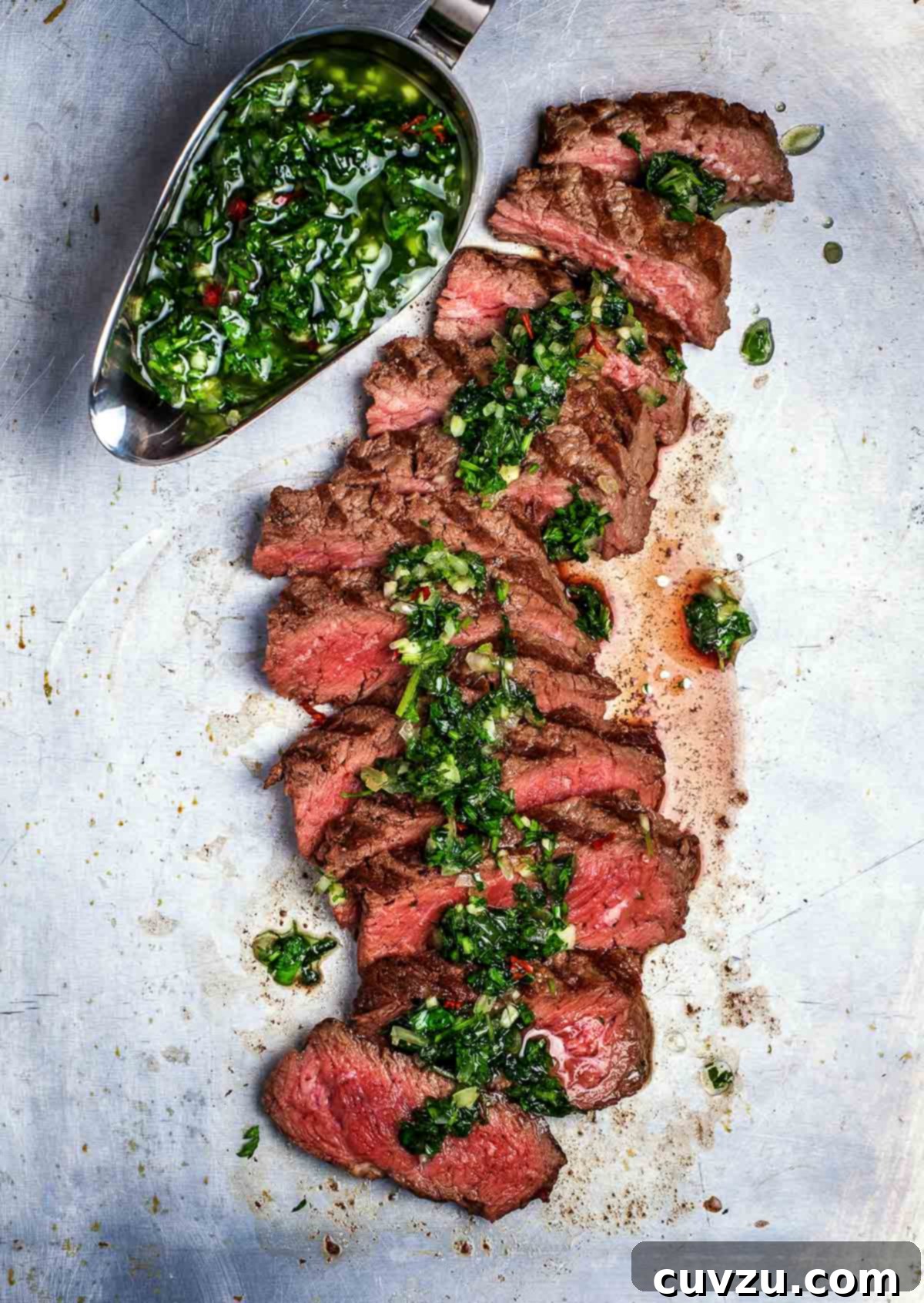
Prepare to elevate your grilling game with this exquisite Steak Chimichurri recipe. Rooted in the rich culinary traditions of Argentina, chimichurri is far more than just a sauce; it’s a vibrant, herbaceous concoction that effortlessly doubles as a marinade, infusing your grilled strip, rib-eye, or even flank steak with an unparalleled depth of flavor. This remarkable sauce comes together with surprising ease, utilizing common pantry staples like sherry or red wine vinegar, olive oil, fresh parsley, oregano, garlic, and a hint of red pepper flakes for that characteristic kick. It’s the secret to transforming a simple cut of beef into an impressive, show-stopping meal that tastes like it took hours, but can be whipped up at a moment’s notice.
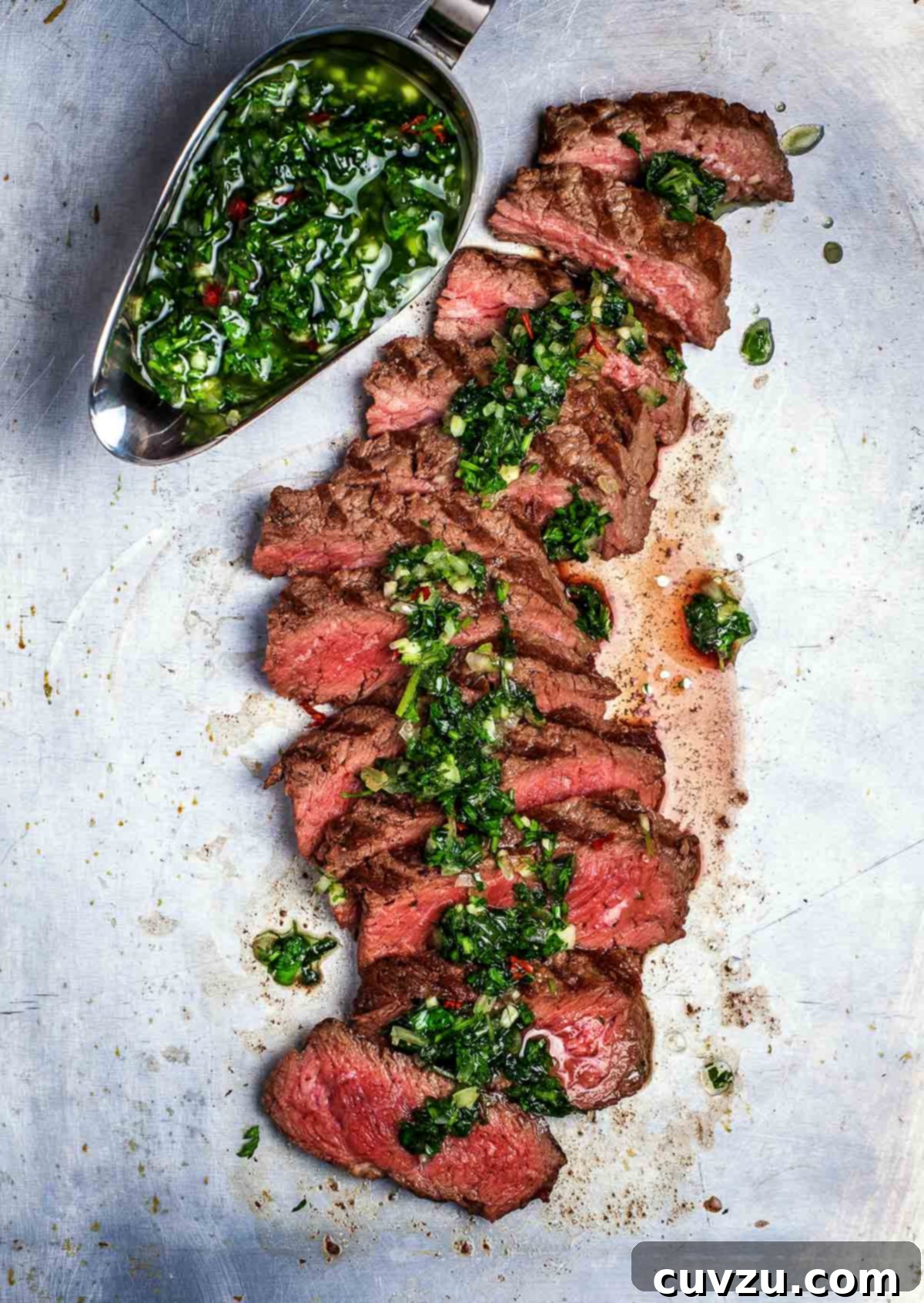
In today’s fast-paced world, finding time to plan elaborate meals can be a challenge. How many of us realistically have hours to marinate a cut of beef during a busy week? We understand completely. If steak au poivre has been your default for spontaneous steak dinners, it’s time to expand your repertoire. This summery grilled steak chimichurri offers an equally impressive, yet incredibly straightforward alternative. It’s ideal for those spontaneous weeknight dinners or when you want to dazzle guests without all the fuss.
Chimichurri sauce is a culinary marvel, a deceptively simple blend of fresh parsley, pungent garlic, fruity olive oil, and tangy vinegar that delivers an explosion of taste with every bite. Its potent flavor profile makes it incredibly versatile, working wonders not just over grilled steak, but also as a bright accompaniment to grilled chicken, delicate fish, or even your favorite roasted vegetables. The beauty of chimichurri lies in its adaptability: while it excels as a marinade, it’s equally phenomenal when drizzled generously over your protein immediately after grilling. Forget about lengthy planning; this dish proves that incredible flavor can be achieved with minimal lead time. As David Leite himself emphasizes, “Just douse it after grilling if you don’t have time to marinate it in the morning. To heck with planning ahead of time.”
Beyond its incredible flavor, chimichurri offers a fresh, vibrant contrast to the rich, savory notes of grilled beef. The acidity from the vinegar tenderizes the meat while cutting through its richness, creating a perfectly balanced bite. The aromatic herbs and garlic provide a burst of freshness that awakens the palate, making this dish surprisingly light and invigorating, especially during warmer months. Whether you’re a seasoned grill master or just starting out, this recipe promises to be a staple in your summer cooking rotation, offering both simplicity and sophistication in one unforgettable package.
Choosing the right cut of steak is key to a truly magnificent steak chimichurri. While strip steak and rib-eye are fantastic choices for their marbling and tenderness, don’t shy away from more economical cuts like flank steak or skirt steak. These cuts, often lauded for their rich, beefy flavor, absorb marinades beautifully and become incredibly tender when grilled properly and sliced against the grain. The chimichurri works its magic on all these options, transforming them into a succulent, aromatic feast. Consider the thickness of your steak as well; a ¾-inch cut is ideal for absorbing flavor and cooking quickly to that perfect medium-rare.
When it comes to the chimichurri itself, fresh ingredients are paramount. The vibrant green hue of freshly chopped parsley, the earthy aroma of oregano, and the pungent kick of garlic are what give this sauce its distinctive character. A good quality olive oil binds everything together, while the vinegar—whether sherry for a nuanced sweetness or red wine for a bolder tang—provides the essential acidity. Red pepper flakes add a controllable heat, allowing you to customize the spice level to your preference. Remember, a little goes a long way, but don’t be afraid to experiment to find your ideal balance of flavors. Making the sauce is a therapeutic process, a simple chop-and-mix that rewards you with an incredibly complex condiment.
Steak Chimichurri FAQs
Absolutely! Chimichurri is one of those fantastic sauces that often tastes even better after the flavors have had a chance to meld. While it can be made and served immediately, we highly recommend preparing it in advance. Store your chimichurri in an airtight container in the refrigerator for up to a week. For the best flavor and texture, remember to pull it out about an hour before mealtime, allowing it to come to room temperature. This helps to release its full aromatic potential and ensures the olive oil isn’t too congealed.
Achieving your preferred steak doneness is crucial for a perfect grilled experience. The most accurate way to gauge this is with a reliable meat thermometer inserted into the thickest part of your steak, avoiding any bones. Here’s a general guide:
- Rare: 120°F (49°C) – A cool red center.
- Medium-Rare: 130°F (54°C) – A warm red center, as shown in the photo, often considered ideal for flavor and tenderness.
- Medium: 140°F (60°C) – A warm pink center.
- Medium-Well: 150°F (66°C) – A slightly pink center.
- Well Done: 160°F (71°C) and above – Cooked through with little to no pink.
Once your steak reaches the desired temperature, promptly remove it from the heat. It’s essential to let it rest on a cutting board for at least 5 minutes before slicing and serving. This resting period allows the juices to redistribute throughout the meat, ensuring a more tender and flavorful result. For that incredibly juicy, pink interior showcased in our photographs, aim for a perfect medium-rare.
Without a doubt! Chimichurri is an incredibly versatile condiment that shines beyond beef. Its bright, tangy, and herbaceous profile makes it a welcome addition to a wide array of dishes. It’s excellent atop whole grilled chicken, providing a fresh counterpoint to the poultry’s richness. It also pairs beautifully with grilled fish, adding a zesty kick that complements the delicate flavors of seafood. Don’t stop there; try it on roasted vegetables, lamb, pork, or even as a flavorful dressing for salads. Its adaptability is one of its greatest strengths.
To complete your Argentine-inspired meal, serve this grilled steak chimichurri with complementary sides that enhance its flavors. Roasted potatoes on the grill are an excellent choice, soaking up any stray chimichurri drippings. A fresh and vibrant succotash salad provides a delightful contrast in textures and flavors. Other great options include grilled asparagus, a simple green salad with a light vinaigrette, or even warm crusty bread to sop up every last drop of the delicious sauce. For a truly authentic experience, pair it with a glass of robust Malbec wine.
Absolutely! While strip steak and rib-eye are delicious, you can certainly achieve fantastic results with more budget-friendly cuts. If the price tag of premium cuts is too high, give this seared skirt steak with salsa a whirl, substituting the salsa for chimichurri from this recipe. Skirt steak and flank steak are wonderful alternatives, offering rich beefy flavor that stands up beautifully to the assertive chimichurri. These cuts are often more affordable and, when marinated and grilled correctly, deliver a similar explosion of flavor that will leave your taste buds thoroughly satisfied.
Steak Chimichurri
Steak chimichurri is a classic Argentinian dish that marries tender grilled beef with a punchy herb and vinegar sauce. Here, rib eye steak is marinated in the chimichurri, grilled to perfection, and served with more chimichurri on top.
David Leite
Mains
Argentine
4 servings
591 kcal
20 minutes
2 hours 30 minutes
2 hours 50 minutes
Ingredients
- Four (1/2 to 3/4 pound) strip or rib eye steaks, 3/4-inch (2 cm) thick
- Chimichurri (prepared according to the linked recipe)
- Salt and freshly ground pepper, to taste
Instructions
- Place the steaks in a large, nonreactive baking dish. Pour 1/3 cup of the prepared chimichurri into a small separate dish; this will be reserved for serving. Pour the remaining chimichurri over the steaks, ensuring both sides are thoroughly coated. Cover both the reserved chimichurri and the marinated steaks, then refrigerate for at least 2 hours or up to 6 hours, turning the steaks occasionally to ensure even marination.
- Approximately 30 minutes before you plan to grill, remove the steaks from the refrigerator to allow them to come closer to room temperature. This promotes more even cooking. Meanwhile, prepare your charcoal or gas grill for direct grilling over high heat. Ensure the grill grates are clean and well-oiled to prevent sticking.
- Place the marinated steaks directly over the hottest part of the grill. Grill, turning only once and brushing with any remaining marinade from the dish (if desired, though not strictly necessary if well-marinated), until nicely charred and cooked to your preferred doneness. For a perfect medium-rare, this usually takes about 3 1/2 to 5 minutes per side. Use a meat thermometer to confirm internal temperature (130°F / 54°C for medium-rare).
- Once cooked, transfer the steaks to a clean cutting board. Let them rest uncovered for at least 5 minutes before slicing. This allows the internal juices to redistribute, resulting in a more tender and flavorful steak. Slice the steaks against the grain and serve immediately with the reserved chimichurri sauce on the side for drizzling and dipping.
Notes
Appetizer, Not Entree, Steak Chimichurri
This versatile steak chimichurri recipe can easily be adapted into a delightful appetizer. Simply cut the grilled steak into bite-sized cubes, skewer them onto toothpicks for easy handling, and serve alongside a bowl of extra chimichurri as a vibrant dipping sauce. It’s a fantastic way to offer a taste of Argentina at your next gathering.
Chimichurri Texture
While traditionally finely chopped, the chimichurri can also be made with a few pulses in a food processor for a slightly smoother, quicker preparation. Be careful not to over-process, as you want to maintain some texture from the fresh herbs.
Vinegar Variations
Sherry vinegar offers a unique depth and sweetness, but if unavailable, red wine vinegar is a classic choice. For a slightly different profile, apple cider vinegar can also be used, lending a fruitier, milder tang.

Adapted From
Williams-Sonoma Essentials of Grilling
Buy On Amazon
Nutrition
Calories: 591 kcal
Protein: 46 g
Fat: 46 g
Saturated Fat: 16 g
Monounsaturated Fat: 25 g
Cholesterol: 138 mg
Sodium: 118 mg
Nutrition information is automatically calculated, so should only be used as an approximation.
Mention @leitesculinaria or tag #leitesculinaria!
Recipe Testers’ Reviews
Steak chimichurri is a classic and this turned out great. I went the distance and marinated my steaks for a full 6 hours. This really paid off—my steaks were full of flavor. Don’t forget to set aside some chimichurri to drizzle over the steaks after they’re sliced.
Those of you who just salt and pepper your rib eyes, you must consider using this chimichurri marinade at least once. You’ll be rewarded with flavor and texture that you’ve only dreamed about.
There was plenty of chimichurri sauce to marinate our steaks and to use as a dip with our grilled meat.
Fantastic! I wanted to grill something for our 4th of July celebration, and this steak chimichurri recipe caught my eye.
I searched several stores in our area for sherry vinegar, with no luck. I did an online search and several suggested substituting balsamic vinegar, so I forged ahead. Flat-leaf parsley is often hard to find in our area as well, but I found that at the second store. I also made some marinade for some chicken breasts, since our daughter doesn’t eat red meat. She loved her chicken as much as we did the steaks.
I know I’ll be making these again, hoping one day to actually find some sherry vinegar. I served the steaks with a recipe also on the LC site, green bean, tomato and mint salad, along with some garlic bread and an apple pie my daughter made for dessert. We were all happy campers.
The steak was tender and seemed lighter than other strip steaks I have had in the past. The herb flavor was subtle, with a just a hint of citrus. The balance was great. This recipe is a summer keeper.
While preparing the chimichurri, I found myself wondering if this prep could be done with a few pulses of the food processor. My husband grilled the marinated steaks over a high flame for about 4 1/2 minutes per side. They came out a perfect medium-rare. The marinade had slightly infused the meat with flavor but it wasn’t overwhelming.
This chimichurri steak recipe was truly a surprise. I typically do not favor a strip steak, but it seemed like a good idea to give it a try for this recipe. I’d like to make it again and try some different cuts of meat, like a flank steak or maybe even a flatiron.
We made this steak chimichurri recipe when we were having guests over for dinner. It was a big hit! To be honest, when I tasted the chimichurri sauce on its own, I thought the vinegar was overwhelming. However, when taken with the cooked steak, it was fantastic and cut the richness of the rib eye steaks.
We marinated 3/4-inch steaks for about 4 hours and grilled them to medium-rare and rare. Fantastic! They were so fresh and flavorful. This is a great way to feed a lot of people, and the leftovers were pretty good too. Will make this one again and again!
This recipe for chimichurri is spot on for my taste. There’s just enough heat from the red pepper flakes, the snap of the sherry vinegar, and the wonderful warmth of the garlic. Of course, this needs some cool-down from the fresh parsley and oregano. All in all, a beautiful dish at all times—while marinating, grilling, and resting on the cutting board. And it tastes even better than it looks! The suggested cooking time was also just right.
The chimichurri tasted good even before adding flank steak to the equation which is telling. Chimichurri + Flank Steak = Delicious. Sometimes chimichurri (and other marinades and sauces) can be assertively vinegary, but this combination was a great ratio.
Sherry vinegar is one of my favorite vinegars ever and I’m happy to use it whenever I can. Its flavor really came through for me–in a good way. The recipe calls for 2/3 cup but I used 3/4 and also increased the 1/4 cup olive oil to 1/2 cup. Perhaps next time I will try apple cider vinegar out of curiosity. Recipes that require fresh herbs appeal to me as I grow many of our own. Fresh oregano has sort of a mustiness to it but when teamed up with the remaining ingredients it was subtle yet added that flavor so traditional in chimichurri. The red pepper flakes and garlic make this really sing!
The chimichurri is a very easy marinade to make and the smell was amazing. I ended up using T-bones for this steak chimichurri recipe. When it was time to grill, I decided to remove the smallest steak, destined for my toddler, and cleaned it to remove the chile peppers. We grilled as instructed but didn’t drizzle any chimichurri on the smallest steak. ALL of the steaks were extremely flavorful, tender, and had a slight kick, yet weren’t crazy spicy. Even the toddler’s came out amazing. Our guests asked for the recipe, as they want to do it, too!
This steak chimichurri recipe was a very easy dish to prepare. The tangy, fresh, herby sauce nicely balances the meaty steak. We served it with the first corn of the season. A summer treat!
Rib eye is a flavorful cut to begin with, but with garlic, herbs, and a bit of vinegar, the deliciousness of the beef is amplified. The fresh oregano became a little weak when cooked, but it was so wonderful with garlic. You’ll understand when you drizzle the reserved chimichurri on the cooked steak.
Fire up the grill and make steak chimichurri—you’ll have the best-smelling backyard in the neighborhood.
This steak chimichurri recipe is a great summertime grilling dish that you can prep ahead of time and then, when you’re ready to fire up the grill, can be ready to eat in 15 minutes. In my mind, this is a great entertaining recipe, because you can walk away from it and enjoy your guests.
The steak chimichurri recipe says the chimichurri should be drizzled on the top of the dish; mine was a little dense. My grocery store only had the larger elephant garlic so 6 cloves was a lot of garlic. But I imagine with a more normal garlic head, it would be an adequate amount. (I love garlic anyway, so this wasn’t a problem for me!) I marinated the meat for 2 hours, and that imparted a nice flavor to the meat. I would definitely add a sprinkling of kosher salt and black pepper to each steak after marinating and before putting on the grill.
We found out at the last minute that one of our dinner guests did not eat red meat (eek!) so I used a portion of the chimichurri to marinate a salmon filet. That turned out really well, too. This is a testament that this marinade is great with a variety of proteins! I think it would work well on chicken, pork, and even other types of seafood.