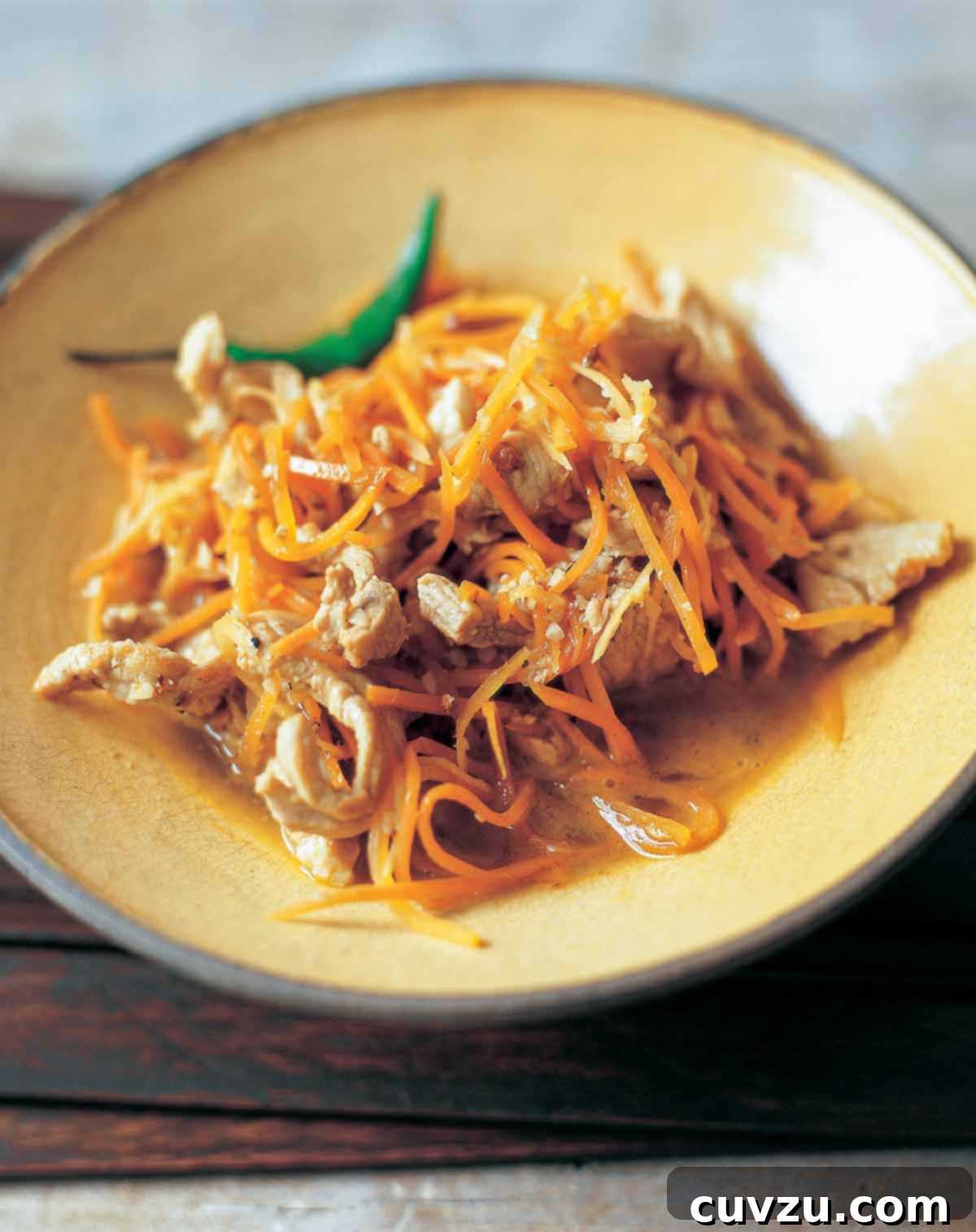
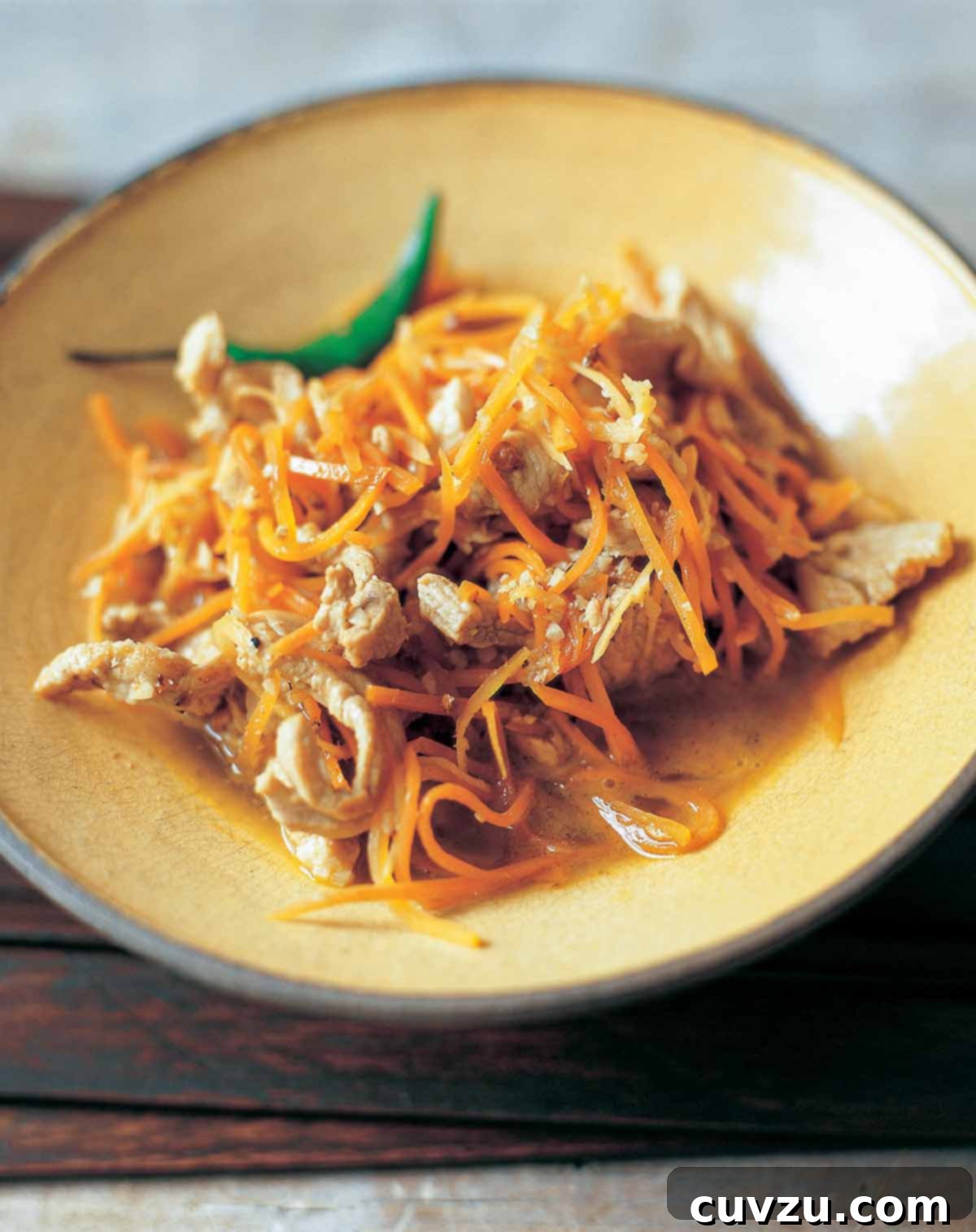
Unlock the vibrant flavors of Asia right in your kitchen with this exceptional Ginger and Carrot Stir-Fry with Pork. A culinary gem that’s both incredibly simple and remarkably delicious, this dish transforms everyday ingredients into a memorable weeknight meal. Imagine tender matchsticks of fresh ginger and sweet carrots mingling with succulent pork, all brought together by the invigorating kick of chiles, the subtle tingle of Szechuan peppercorns, and the savory depth of soy sauce. This Chinese-inspired creation is not just a feast for the taste buds; it’s a healthy, quick, and fuss-free solution that can be on your table in under 30 minutes, making it an ideal choice for busy evenings.
The Power of Ginger: A Flavorful and Healthy Ingredient
There’s an undeniable magic to ginger. Its warming potency is far from subtle, offering a tongue-tingling, sinus-clearing, and stomach-settling sensation that invigorates the senses. Even in small doses, this remarkably versatile rhizome adds an undeniable oomph to any dish, let alone when featured prominently as in this stir-fry. For those who enthusiastically embrace its zesty zing, this recipe promises an exhilarating culinary adventure. However, if you’re not a die-hard ginger enthusiast, rest assured that the natural sweetness of the carrots beautifully tempers ginger’s intensity, softening its edge by a notch or three. This harmonious balance ensures that the dish is accessible and enjoyable for a wide range of palates, delivering warmth and complex flavor without overwhelming spice.
Ginger’s Remarkable Health Benefits
Beyond its distinctive flavor, ginger is a nutritional powerhouse lauded for centuries in traditional medicine. It’s rich in compounds like gingerol, which gives it its medicinal properties. Ginger is renowned for its anti-inflammatory and antioxidant effects, helping to reduce oxidative stress and soothe bodily discomfort. It’s a well-known remedy for nausea and indigestion, making this stir-fry not just delicious but also a comforting meal for your digestive system. Regular consumption of ginger may also support immune function and contribute to overall well-being, adding another layer of appeal to this already fantastic recipe.
Carrots: Sweetness, Crunch, and Vital Nutrients
Carrots, with their vibrant color and natural sweetness, are the perfect counterpoint to ginger’s spirited kick. These humble root vegetables are packed with essential vitamins and minerals, most notably beta-carotene, which converts to Vitamin A in the body. Vitamin A is crucial for good vision, immune function, and skin health. Carrots also provide a good source of fiber, aiding in digestion and contributing to a feeling of fullness. When sliced into delicate matchsticks, they add a delightful crunch and a beautiful visual appeal to the stir-fry, enhancing both texture and flavor. Their inherent sweetness mellows the bolder spices, creating a well-rounded and deeply satisfying flavor profile.
Ginger and Carrot Stir-Fry
David Leite
Ingredients
- About 1/3 pound ginger, (pretty much an entire hand or branch or whatever you call those things)
- About 2/3 pound carrots
- 2 tablespoons peanut oil or lard
- 1 tablespoon minced garlic
- 1/3 pound boneless pork butt, shoulder, or loin, thinly sliced and cut into 1/2-by-1 1/2 -inch strips
- 2 whole green cayenne chili peppers, or 3 dried red chili peppers
- 1/4 teaspoon salt, or to taste (optional)
- 1 cup cold water
- 10 to 12 Szechuan peppercorns, (may substitute jalapeno for milder heat or Serrano for slightly more heat) or 3 dried red chilis
- 2 tablespoons soy sauce, or to taste
- Cooked white or brown rice, for serving
Instructions
-
Peel the ginger and cut it lengthwise in half before cutting the pieces lengthwise into narrower strips the size of matchsticks. (You should have about 1 cup of ginger sticks.) Do the same with the carrots. (You should have about 1 3/4 cups carrot sticks.)
-
Heat a wok or large skillet over high heat. Add the oil or lard and swirl to coat the bottom of the pan. Toss in the garlic and stir-fry for 10 seconds or so, then toss in the pork and chilis. Stir-fry the ingredients, separating the pork so each slice gets exposed to the hot pan, until they’ve started to change color all over. This should take less than 2 minutes.
-
Toss in the carrots and ginger and stir-fry for about 1 minute. Add the salt, if desired, and stir-fry for another minute.
-
Add the water, cover, and boil vigorously for about 3 minutes, then remove the lid and let the liquid boil down for a minute or two.
-
Add the Sichuan peppercorns and soy sauce. Stir-fry just until the carrots and ginger are tender but still a touch firm, about a minute. Turn the stir-fry onto a platter or into a shallow bowl and serve hot or warm with rice.

Adapted From
Beyond the Great Wall
Buy On Amazon
Nutrition
Calories: 181 kcal
Carbohydrates: 16 g
Protein: 11 g
Fat: 9 g
Saturated Fat: 2 g
Monounsaturated Fat: 4 g
Trans Fat: 1 g
Cholesterol: 23 mg
Sodium: 493 mg
Fiber: 3 g
Sugar: 5 g
Nutrition information is automatically calculated, so should only be used as an approximation.
Expert Tips for a Perfect Ginger Carrot Stir-Fry
Achieving a perfect stir-fry is often about technique and ingredient preparation. Here are some insights to elevate your Ginger Carrot Stir-Fry:
The Art of Matchstick Cutting
Several recipe testers highlighted the time-consuming nature of cutting ginger and carrots into matchsticks by hand. While meditative for some, others found a mandoline slicer to be an invaluable tool for speed and uniformity. Uniform matchsticks ensure even cooking, allowing both ginger and carrots to become tender-crisp simultaneously. If opting for manual cutting, take your time and aim for consistent sizes to achieve the best texture in your finished dish.
Pork Perfection and Alternatives
The recipe calls for boneless pork butt, shoulder, or loin, thinly sliced. Pork shoulder is often preferred for stir-fries due to its marbling, which keeps the meat tender and flavorful. If pork shoulder is unavailable, ground pork makes an excellent and easier-to-use alternative, contributing richness to the dish. Leaner cuts like pork loin can be used, but as one tester noted, they might be too lean for optimal flavor and moisture. For an added layer of flavor, consider marinating the pork slices in a simple mixture of soy sauce, a dash of oil, and a pinch of sugar for 15-20 minutes before stir-frying, as suggested by a Cantonese expert. This small step can significantly enhance the meat’s depth and tenderness.
For those who prefer a vegetarian or vegan option, the pork can be easily omitted. The dish remains incredibly flavorful due to the abundance of ginger, carrots, chiles, and Szechuan peppercorns. Tofu or tempeh, cut into strips and pan-fried separately until golden, could also be added as a protein substitute, absorbing the delicious sauce beautifully.
Customizing the Heat and Spice Profile
The potency of ginger and chiles is a central feature of this stir-fry. If you’re sensitive to heat, the carrots’ sweetness naturally mellows the ginger. For the chiles, using whole peppers will impart a milder heat, while slicing or mincing them will release more of their capsaicin, resulting in a spicier dish. Szechuan peppercorns provide a unique citrusy, floral note with a characteristic numbing sensation. To maximize their herbal fragrance and flavor, one tester recommended adding them to the hot oil at the very beginning of the stir-fry process, allowing their essence to infuse the cooking oil.
Regarding salt, remember that soy sauce is a key ingredient and contributes significant salinity. It’s wise to add salt cautiously and taste as you go, adjusting to your preference at the end. Many find that a pinch of salt combined with the soy sauce is perfectly sufficient.
Exploring Variations and Additions
While this recipe shines in its simplicity, it’s also highly adaptable. Some testers suggested increasing the amount of ginger for a bolder flavor, while others preferred to scale it back. This flexibility allows you to tailor the dish precisely to your taste. If you enjoy more vegetables in your stir-fries, feel free to add broccoli florets, asparagus spears, sliced bell peppers, or onions. These can be added with the carrots and ginger, ensuring they cook to a tender-crisp consistency. Mushrooms are another excellent addition, contributing an earthy umami flavor that complements the other ingredients beautifully. Experiment with different types of soy sauce, such as light and dark soy sauce, to add more complexity to the sauce, as suggested by one experienced cook.
Serving Your Flavorful Stir-Fry
This Ginger and Carrot Stir-Fry is best served hot or warm, immediately after cooking. The generous, savory broth created during the cooking process is an absolute highlight, infused with all the wonderful flavors of ginger, garlic, pork, and chiles. Be sure to spoon plenty of these delicious juices over your accompaniment. Steamed white or brown rice is the classic pairing, providing a neutral base that perfectly soaks up the rich sauce and balances the vibrant flavors of the stir-fry. For an extra touch, garnish with fresh cilantro or chopped green onions before serving.
Conclusion: A Stir-Fry to Savor
This Ginger and Carrot Stir-Fry with Pork is more than just a recipe; it’s an invitation to experience bold flavors and simple, satisfying cooking. Its swift preparation makes it a true weeknight hero, while its depth of flavor ensures it feels like a special meal. Whether you’re a ginger aficionado or looking for a healthy and versatile dish to add to your repertoire, this stir-fry promises to deliver warmth, comfort, and an unforgettable taste experience. Prepare to be delighted by the harmonious blend of sweet carrots, spicy ginger, and savory pork, creating a dish you’ll want to make again and again.
Insights from Recipe Testers
Our team of recipe testers tried this Ginger and Carrot Stir-Fry, offering valuable feedback and clever tips based on their experiences. Their insights highlight the dish’s versatility and how it can be adapted to various preferences and cooking styles.

Angie Hsing
Angie found the stir-fry fabulous, noting the amazing combination of sweet carrots, spicy ginger, red chile pepper, and Szechuan peppercorns. She loved the sauce, pouring it over brown jasmine rice, and described the dish as warm and comforting. She enthusiastically stated she would make it again.

Chiyo Ueyama
Chiyo and her family loved this stir-fry, acknowledging that while chopping carrots and ginger takes time, the actual cooking is very fast, emphasizing the importance of prep work. She found the sweet carrots complemented the ginger and chili heat perfectly. She noted the sauce was slightly salty on its own but ideal when served with plain rice. Chiyo also provided a helpful tip for sourcing Szechuan peppercorns, explaining they might be labeled as “Red Peppercorns” but are recognizable by their open red husks with tiny black berries.

Melissa Maedgen
Melissa was initially surprised by the large amount of ginger but found its flavor mellowed beautifully after simmering. She appreciated the dish’s soupy, homey broth. For faster preparation, she suggested using a mandoline for the matchsticks and recommended substituting ground pork for shoulder if the latter is hard to find or if a leaner cut (like loin chop) proves too dry for the dish.

Joan Osborne
Joan found the dish delicious over rice, emphasizing the importance of the flavorful juices. She agreed that cutting carrots into matchsticks was the most challenging part and would use a mandoline next time. She opted for lard as she didn’t use pork and used a jalapeño whole, but noted it didn’t add much heat, suggesting cutting it in half for more spice. She also found a pinch of salt was sufficient with the soy sauce.

Karen Taylor
Karen found the recipe a keeper, though with a little more ginger than her preference. As a Cantonese cook, she noted the unusual stir-frying method for pork without prior marination. While satisfied with the results, she plans to marinate the pork next time and use both dark and light soy sauces for added depth. She also suggested adding chiles and Szechuan peppercorns to hot oil initially to release their flavors, especially for the herbal fragrance of the peppercorns.

Natalie Reebel
Natalie described the dish as a warm and surprisingly satisfying autumn meal, highlighting the wonderful pairing of sweet carrots with the tang and heat of ginger. She found the pork and chiles added extra layers of flavor, making it a good weeknight dinner. Despite the 40-minute prep time for peeling ginger (using a vegetable peeler) and chopping, she found the resulting dish with its great texture well worth the effort. She also noted the whole chiles worked well and planned to research selecting fresh ginger to avoid bitter bits.

Lauren P.
Lauren loved the recipe, especially the abundance of healthy ginger. She praised the divine combination of ginger’s heat and spice with the sweetness of carrots and the saltiness of soy sauce. She didn’t use pork initially but recognized its potential as a main course and plans to try it next time. Like others, she mentioned using a mandoline or food processor for julienning the ingredients in the future and stressed the importance of using fresh, fist-sized ginger.

Nancy A. Mosher
Nancy, a fan of carrots, enjoyed this new preparation method. She omitted the pork and still found the dish full of flavor. She described it as quite spicy due to the ginger and peppers but ultimately delicious, confirming it’s a recipe she’ll make repeatedly.

Jeremy Schweitzer
Jeremy suggested a “warning label” for ginger lovers due to the large quantity. He found the recipe simple and quick, taking about 45 minutes even with a mandoline. He plans to reduce the ginger amount by half or slightly more in future attempts and suggested adding mushrooms. He also cut the salt in half, finding it just right. Despite his personal adjustments, he approved of the clearly written recipe and its good flavor with few ingredients.

Cindi Kruth
Cindi was drawn to the dish’s spice profile. She found the amount of ginger alarming and used only half, which she felt was plenty for her taste. She praised the recipe’s simplicity, noting it comes together quickly enough to steam rice simultaneously, and emphasized the need for rice to soak up the delicious sauce. She cautioned watching the salt due to the late addition of soy sauce. Cindi also liked that using only water for the sauce allowed the pork, garlic, and ginger flavors to dominate, with carrots adding a nice touch of sweetness. She noted the recipe’s adaptability for adding other vegetables like broccoli, asparagus, or onions.