Authentic Vietnamese Pho: Crafting the Soulful Noodle Soup at Home
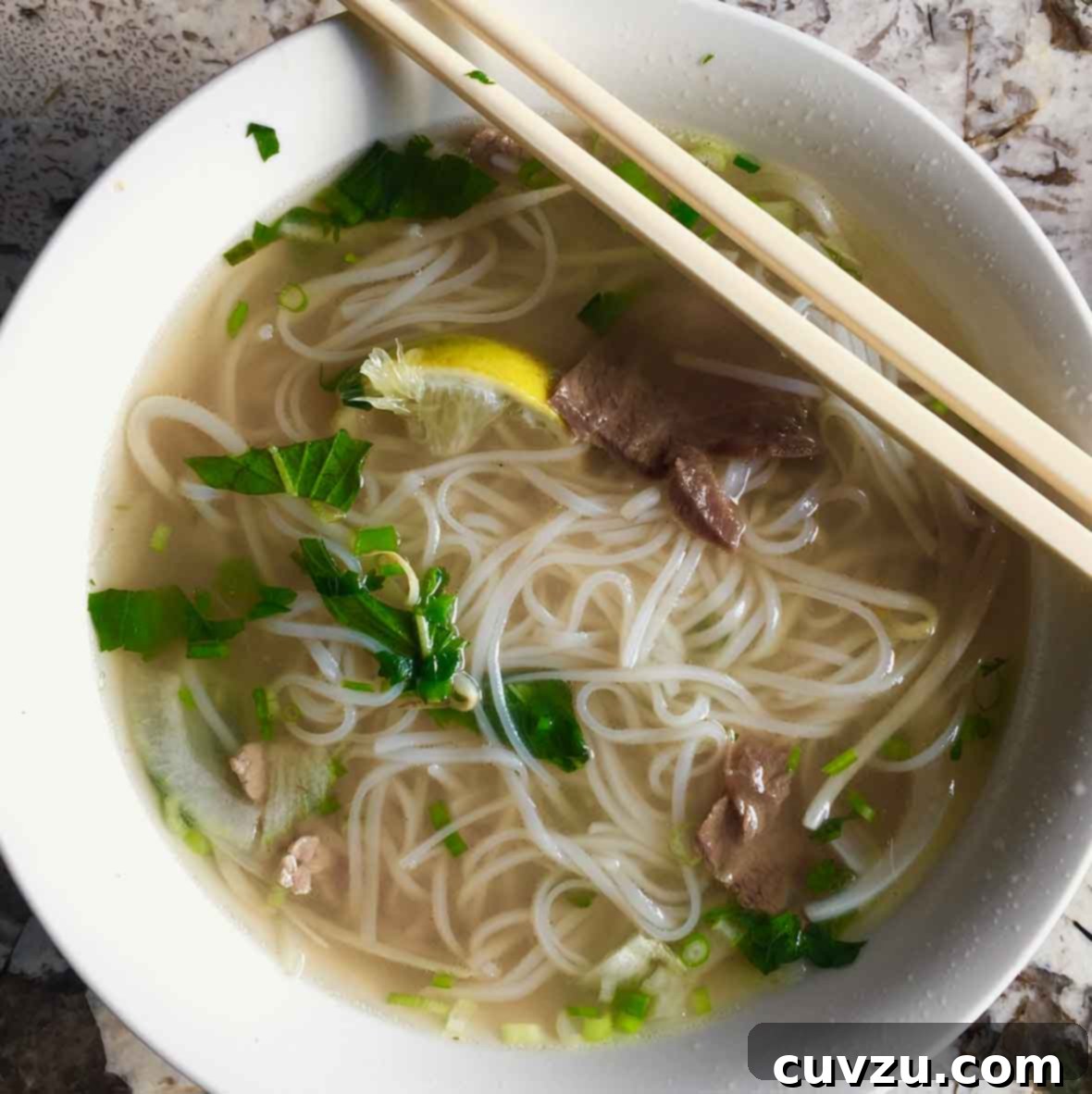
Vietnamese Pho (pronounced “fuh”) transcends the definition of a mere soup; it is a profound culinary experience, a fragrant tapestry of flavors and textures that cradles the soul. At its very essence lies a meticulously prepared beef broth, a clear, amber elixir infused with the aromatic brilliance of ginger, the warm embrace of star anise, and the savory depth of fish sauce. This exceptional foundation perfectly complements tender rice noodles, thinly sliced beef, crisp scallions, fresh bean sprouts, and a vibrant medley of fresh herbs, culminating in a dish that is both profoundly comforting and refreshingly intricate.
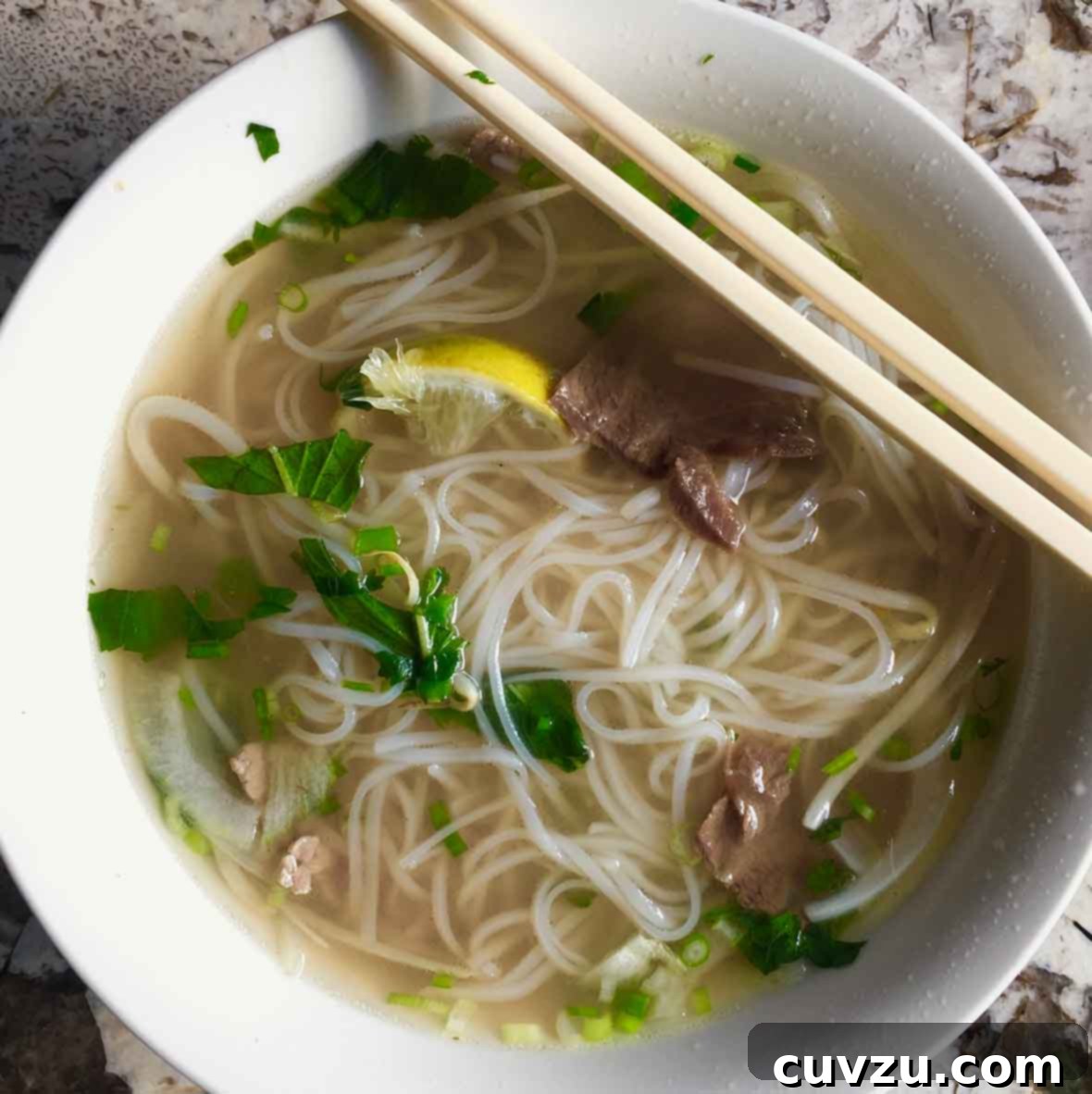
Across Vietnam, pho holds a deeply cherished status, often enjoyed as a beloved breakfast staple – a truly invigorating way to start the day. For many, the irresistible aroma of a gently simmering pho broth offers the best possible motivation to greet the morning, or indeed, to seek comfort at any time. It’s a dish that goes far beyond simple sustenance, offering a heartfelt glimpse into the rich traditions of Vietnamese culinary heritage. As esteemed food writer David Leite eloquently describes, it is an “exquisitely spiced soup constructed of a clear beef broth fragrant with ginger and star anise and slippery rice noodles,” a testament to its profound and enduring appeal.
The Enduring Allure of Pho: A Journey Through History and Culture
The culinary narrative of pho is as rich and complex as its flavor, deeply interwoven with Vietnam’s vibrant history and gastronomic evolution. While the precise origins remain a subject of delightful debate among food historians, most theories converge on its emergence in northern Vietnam during the late 19th and early 20th centuries. This period saw a fascinating blend of influences, notably French culinary techniques, which introduced the use of beef bones for simmering flavorful broths, alongside existing Chinese noodle traditions. Over generations, pho meticulously adapted and diversified, spreading southward and giving rise to distinct regional variations, each with its own loyal following. Today, pho stands as a proud national dish of Vietnam, celebrated globally for its unique character, profound depth of flavor, and its unparalleled ability to evoke warmth and nostalgia.
What truly sets pho apart is its remarkable balance. It represents a delicate interplay of the five fundamental tastes: savory, sweet, umami, spicy, and herbaceous. The broth, which serves as the very soul and foundation of the dish, demands patience and dedication, often taking hours to gently simmer. This extended cooking process meticulously extracts every nuanced flavor from the beef bones and aromatic spices, transforming humble ingredients into a transcendent liquid gold. This unwavering commitment to crafting the perfect broth is precisely what elevates pho from a simple noodle soup to an extraordinary culinary masterpiece, offering a truly immersive and unforgettable dining experience.
Mastering the Art of Eating Pho: A Guide to the Traditional Vietnamese Way
For both eager newcomers and seasoned aficionados of this magnificent dish, understanding the traditional etiquette of eating pho significantly enriches the entire experience. Esteemed cookbook author Mai Pham, a renowned authority on Vietnamese cuisine, generously shares invaluable insights into how to properly savor every spoonful, guiding us through the delicate art of garnishing and fully appreciating the broth’s intricate tapestry of flavors.
The Broth: The Irreplaceable Heart of Pho
At the core of any truly exceptional pho lies its broth. While certain recipes might suggest using oxtail bones exclusively, the authentic Vietnamese approach, championed by Mai Pham and countless traditional cooks, often involves a thoughtful combination of beef marrow bones and beef chuck. This blend is crucial, yielding a broth with a far richer, more complex, and deeply nuanced flavor profile. The meticulous preparation begins with blanching the bones and beef – a vital step that removes impurities and results in a remarkably clear and pristine broth, essential for aesthetic appeal and flavor purity. Key aromatic elements, such as generous pieces of ginger and yellow onions, are then traditionally charred directly over an open flame until their outer layers are lightly blackened and they release an intoxicating fragrance. This charring process imparts an irreplaceable smoky depth and a subtle sweetness that cannot be replicated otherwise, adding yet another layer to the broth’s already intricate complexity. These charred aromatics, alongside carefully toasted whole spices like star anise and cloves, are then gently simmered for hours. This patient process allows their essences to fully meld and harmonize with the beef bones and chuck, creating an unparalleled foundation. Finally, a judicious touch of premium fish sauce provides essential umami and a balanced salinity, while a small amount of rock sugar or granulated sugar expertly balances the flavors, culminating in a harmonious, deeply satisfying, and utterly unforgettable broth.
Choosing Your Beef: A Symphony of Textures
Pho offers a delightful and versatile array of beef components, allowing for a personalized culinary journey. Diners can select from exquisitely thinly sliced rare beef sirloin, which gently cooks to tender perfection directly in the hot broth upon serving; succulent, pre-cooked beef chuck, slow-simmered until melt-in-your-mouth tender; hearty brisket; savory beef meatballs; delightfully chewy tripe; or rich, gelatinous tendon. For those preparing pho at home, a combination of thinly sliced raw sirloin and tender, slow-simmered beef chuck (often prepared directly within the broth itself) offers an exceptional balance of textures and flavors, making this traditional dish wonderfully accessible for any home cook aspiring to authentic results.
The Ritual of Garnishing: Freshness and Personalization
The true magic and interactive joy of eating pho often lie in the art of garnishing. Upon receiving your steaming bowl, the ritual begins by adding a handful of fresh bean sprouts for an invigorating crunch and earthy freshness. Next, with careful hands, pluck the aromatic leaves of Asian basil from their sprigs, releasing their distinctive perfume. If you are fortunate enough to find it, saw-leaf herb (also known as culantro) can be delicately shredded and added, contributing its unique, slightly more robust, cilantro-like flavor profile. Fresh chiles, such such as fiery Thai bird chiles or milder serrano chiles, sliced into thin rings, allow for a customizable level of heat, catering to individual preferences. Finally, a generous squeeze of fresh lime juice delivers a bright, zesty acidity, cutting through the richness and elevating the entire dish with its vibrant citrus notes.
An important piece of advice from seasoned pho connoisseurs is to add the herbs and chiles incrementally, as you progress through your meal. This thoughtful approach serves several crucial purposes: it prevents the hot broth from cooling too rapidly, ensures that the delicate herbs retain their fresh, vibrant texture and aromatic potency throughout your meal, and allows you to experience their bright, evolving flavors with each spoonful. Gently use your chopsticks to push the freshly added garnishes into the steaming broth, delicately turning the noodles to ensure an even distribution of flavors and to perfectly cook the paper-thin slices of raw beef sirloin.
Condiments: A Delicate Balance or a Bold Statement?
While chili sauce (such as Sriracha) and hoisin sauce are frequently presented as traditional condiments alongside pho, a nuanced discussion exists regarding their application. Many purists and seasoned pho aficionados, including the insightful Mai Pham, often recommend using these strong, flavorful sauces sparingly, especially when adding them directly into the broth. Their intense profiles, while undeniably delicious on their own, possess the potential to overpower and mask the subtle, complex nuances of a meticulously crafted pho broth. If you find yourself drawn to these condiments, a more considerate approach is to dispense them onto a separate small dipping plate. This allows you to dip individual pieces of meat into the sauces, enjoying their bold flavors without compromising the intricate integrity of the broth itself, thus preserving the authentic pho experience.
Embracing the Experience: The Art of Slurping and Savoring
Pho is unequivocally a dish designed to be savored piping hot. Delaying its consumption will inevitably lead to the rice noodles expanding and becoming soggy, which regrettably diminishes the overall delicate flavor and texture of the dish. Some truly dedicated pho connoisseurs even advocate for minimizing conversation while eating, preferring instead to fully immerse themselves in the rich sensory experience that pho offers. With a spoon held gracefully in one hand and chopsticks expertly wielded in the other, gracefully pull the glistening noodles from the fragrant broth, intertwining them with tender slices of beef and fresh, aromatic herbs. It is not only perfectly acceptable but often encouraged to audibly slurp your noodles and broth – it is a genuine sign of enjoyment and, for many, enhances the perception of its exquisite flavors. Do not feel self-conscious if a few noodles playfully dangle from your mouth, or if your eyes gently squint from the invigorating steam; these are all quintessential elements of an authentic and truly enjoyable pho experience.
While the broth is traditionally served in generous quantities, primarily to maintain the warmth of the noodles and to thoroughly season the entire dish, it is generally not expected that every last drop must be consumed. However, should you find yourself irresistibly captivated by the rich, savory depth of the broth, tipping the bowl to savor every final, precious taste is by no means considered impolite. On the contrary, it is often seen as a genuine testament to the broth’s undeniable deliciousness and the sheer pleasure it brings!
Authentic Vietnamese Pho: The Ultimate Recipe
Authentic Vietnamese Pho
This traditional Vietnamese pho recipe guides you in creating a rich, deeply flavored beef broth, complemented by tender sirloin, delicate rice noodles, fresh scallions, crunchy bean sprouts, and aromatic basil. Prepare to indulge in a truly authentic culinary delight.
Recipe by: David Leite
Ingredients
For the Pho Broth
- 5 pounds beef marrow or knuckle bones
- 2 pounds beef chuck, cut into 2 pieces
- Two (3-inch) pieces ginger, halved lengthwise, lightly bruised with the flat side of a knife, and charred* (see notes below)
- 2 yellow onions, peeled and charred* (see notes below)
- 1/4 cup fish sauce
- 3 ounces rock sugar (found at Asian markets) or 3 tablespoons granulated sugar
- 10 whole star anise, lightly toasted in a dry pan
- 6 whole cloves, lightly toasted in a dry pan
- 1 tablespoon sea salt, or to taste
For Assembling the Pho
- 1 pound dried 1/16-inch (2 mm) wide rice noodles (banh pho), soaked and cooked according to package instructions
- 1/3 pound beef sirloin, slightly frozen, then sliced paper-thin across the grain
- 1/2 yellow onion, sliced paper-thin
- 3 scallions, cut into thin rings
- 1/3 cup chopped cilantro
- 1 pound bean sprouts
- 10 sprigs Asian basil (may substitute regular basil or mint)
- 1 dozen saw-leaf herb leaves (optional)
- 6 Thai bird chiles or 1 serrano chile, cut into thin rings
- 1 lime, cut into 6 thin wedges
- Freshly ground black pepper, to taste
- Chili sauce, to taste (optional condiment)
- Hoisin sauce, to taste (optional condiment)
Instructions
To Make the Pho Broth
-
In a large stockpot, bring 6 quarts (24 cups) of water to a rolling boil over high heat.
-
Meanwhile, in a separate, smaller pot, place the beef bones and beef chuck. Add just enough water to fully cover them. Bring this to a vigorous boil and cook for 5 minutes. This crucial step, known as blanching, helps to remove impurities from the bones and meat, ensuring a cleaner, clearer broth. Carefully remove the pot from the heat. Using tongs, transfer the blanched bones and beef to the large pot of boiling water, discarding the murky water from the smaller pot.
-
Once the water in the large pot returns to a boil, reduce the heat immediately to a very gentle simmer. It’s important to maintain a gentle simmer, with only an occasional bubble rising to the surface, to prevent the broth from becoming cloudy. Skim any foam or scum that rises to the surface throughout the cooking process. Add the charred ginger and onions, fish sauce, and rock sugar (or granulated sugar) to the simmering broth. Continue to gently simmer, skimming as needed, until the beef chuck is wonderfully tender, which typically takes about 40 minutes.
-
Carefully remove one piece of cooked chuck from the broth. Submerge it immediately in a bowl of cold water for 10 minutes to halt the cooking process and preserve its texture. Drain the cooled chuck, then thinly slice it against the grain. Refrigerate the sliced beef chuck until ready to assemble the pho. Allow the remaining piece of beef chuck to continue simmering gently in the broth for another 50 minutes.
-
After the broth has simmered for a total of 90 minutes, prepare a spice bag: wrap the toasted star anise and cloves in a spice bag or a piece of cheesecloth, tying it securely. Gently drop this spice bag into the simmering broth. Allow the spices to infuse their fragrant aromas and flavors into the broth for an additional 30 minutes. By this point, the broth will have simmered for a total of 2 hours, developing its full, complex character.
-
Remove and discard both the spice bag and the charred onions. Leave the remaining beef chuck in the pot, continuing to gently simmer the broth. Skim any foam or fat as necessary until you are ready to assemble and serve the pho. At this stage, the broth may taste slightly salty on its own, but it will achieve perfect balance once the rice noodles and fresh accompaniments are added. Before serving, carefully strain the broth through a fine-mesh sieve, discarding all solids (bones, remaining chuck, etc.) to ensure a clear, refined broth.
To Assemble and Serve the Pho
-
Begin by preparing your serving bowls. Place the cooked rice noodles into individual preheated bowls. If the noodles have cooled, a brief dip in boiling water will warm them up without making them soggy, ensuring they don’t cool your precious broth. Arrange a few slices of the reserved thinly sliced cooked beef chuck and the paper-thin raw beef sirloin elegantly over the noodles.
-
Carefully ladle 2 to 3 cups of the steaming hot, strained pho broth into each bowl. The intense heat of the broth will gently cook the delicate raw beef sirloin to a perfect, tender blush.
-
Garnish each bowl generously with the thinly sliced raw onions, vibrant scallions, and a sprinkle of fresh chopped cilantro. Serve immediately. Allow each individual to further customize their bowl of pho with the fresh accompaniments provided: crunchy bean sprouts, fiery chiles, a squeeze of fresh lime juice, and a dash of freshly ground black pepper. Enjoy your homemade, authentic Vietnamese Pho!
Notes and Pro Tips
CHARRING ONION AND GINGER: AN ESSENTIAL TECHNIQUE
To char the ginger and onions as required for the pho broth, hold each ingredient individually with a pair of long-handled tongs. Place it directly over an open flame on a gas burner, or place it onto a medium-hot electric burner or even under a broiler. Rotate the ginger and onion frequently, charring until the outer layers are noticeably blackened and the aromatics become wonderfully fragrant. This typically takes 3 to 4 minutes. Once charred, peel and discard the blackened skins. Rinse the remaining fragrant ginger and onion lightly before adding them to your broth. This step is crucial for developing the characteristic deep flavor and aroma of authentic pho broth.
A Note on Broth Clarity: Maintaining a very gentle simmer and diligently skimming impurities are key to a clear, beautiful pho broth. Avoid letting the broth come to a rolling boil after the initial blanching phase.
Ingredient Sourcing: For authentic results, seek out fish sauce, rock sugar, star anise, and specific rice noodles (banh pho) at your local Asian market. These ingredients truly make a difference in the final flavor profile.
Adapted From
Pleasures of the Vietnamese Table by Mai Pham
Buy On Amazon
Nutrition Information
Calories: 576 kcal
Carbohydrates: 94 g
Protein: 27 g
Fat: 11 g
Saturated Fat: 4 g
Monounsaturated Fat: 5 g
Trans Fat: 1 g
Cholesterol: 66 mg
Sodium: 2151 mg
Fiber: 5 g
Sugar: 22 g
Note: Nutrition information is an estimation, automatically calculated, and should be used as an approximation. Individual results may vary based on exact ingredient quantities and preparation methods.
Tried this authentic Pho recipe? Share your culinary success!Mention @leitesculinaria or tag #leitesculinaria on Instagram to share your delicious creation!
What Our Recipe Testers Say About This Authentic Pho Recipe

Renee H.
After diligently trying countless pho recipes over the past years, my relentless search for the perfect bowl finally culminated with this extraordinary recipe. It truly captures the authentic essence of the beefy elixir found in the most esteemed pho joints – that magical quality that never fails to soothe the soul and calm the mind. Every single element, from the crucial scorched onion and ginger to the delicately balanced spices, is in absolute perfect proportion to one another. It’s rare for me to follow a recipe strictly after the initial attempt, but I assure you, I follow this one to the letter every single time. Even my 12-year-old nephew, who is notoriously a very picky eater, mind you, doesn’t turn his nose up at this; he devours it with gusto!

Sofia Reino
I have personally prepared this pho recipe an untold number of times, and it consistently delivers exceptional results. Whether my family members are feeling slightly under the weather or if it’s simply a cold, dreary day outside, this incredibly comforting soup has a magical way of making everything feel better. The broth itself is truly outstanding – it’s brimming with deep, complex flavors and the varied textures of the ingredients, from the tender beef to the slippery noodles, enhance it even further. While I personally adore adding a little extra spice to my bowlful just before I begin slurping, the rest of my family prefers it exactly as-is, appreciating its inherent, exquisite balance. This recipe is also remarkably versatile; I’ve successfully experimented by adding shrimp or even adapting it to be completely vegetarian with different vegetable combinations. And as a wonderful bonus, your entire house will be filled with the most amazing, inviting aroma of the simmering broth – a delightful experience in itself that hints at the deliciousness to come!