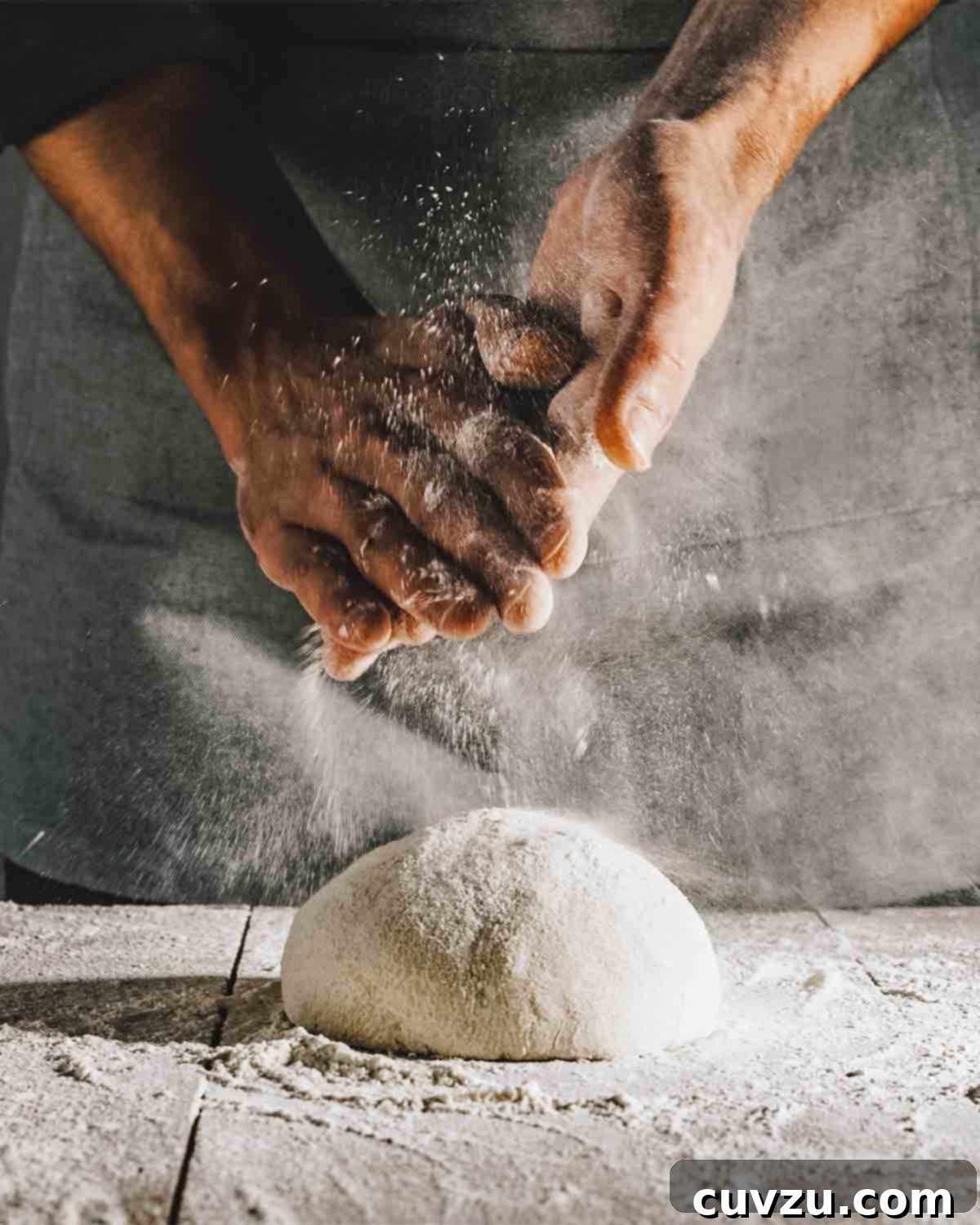
Forget long waiting times and complicated recipes. This quick pizza dough is incredibly simple to make, requiring just 1 hour to rest, meaning that delicious homemade pizza on any weeknight is no longer a distant dream but a delightful reality. Prepare to transform your kitchen into your favorite pizzeria!
The Magic of Quick Pizza Dough: Your Weeknight Pizza Solution
Many traditional pizza dough recipes demand a lengthy initial rise—often overnight or even longer—sometimes followed by a second proofing. While the results of such slow-fermented doughs can be truly exceptional, they present a significant hurdle for those spontaneous pizza cravings or busy weeknight dinners. Pizza desires, much like time, wait for no one, and certainly not for a dough that needs an entire day to develop. Rather than compromising on quality or resorting to less-than-ideal store-bought options, we present this game-changing quick pizza dough. It’s incredibly easy to work with and reliably doubles in size within just an hour, putting delicious, fresh pizza within immediate reach. This fantastic recipe comes from the culinary minds behind the delightful riff on white pizza with mushrooms and ricotta, a testament to their mastery of approachable yet gourmet cooking.
What makes this particular recipe so revolutionary is its blend of speed and quality. It achieves a tender, airy, and flavorful crust without the extensive planning usually associated with homemade pizza. This means you can decide to have pizza for dinner just an hour or two before you want to eat, making it a perfect fit for even the most hectic schedules. Whether you’re a seasoned baker or a novice in the kitchen, this recipe promises a rewarding experience and a delicious outcome that will impress your family and friends. Say goodbye to takeout menus and hello to the satisfaction of crafting your own perfect pizza, right from scratch.
Why Choose a Quick Pizza Dough?
The appeal of a quick pizza dough extends beyond mere convenience. It opens up a world of possibilities for home cooks:
- Spontaneity: No need to plan a day in advance. Craving pizza? You can have a homemade pie on the table in about an hour and a half from start to finish.
- Freshness: Enjoy the superior taste and texture of freshly made dough compared to pre-made crusts or frozen alternatives.
- Weeknight Feasible: Transform a busy Tuesday night into a fun, interactive family meal without feeling rushed or overwhelmed by complex steps.
- Customization: Starting with a great base allows you to unleash your creativity with toppings, tailoring each pizza to individual preferences.
- Cost-Effective: Making your own pizza dough is significantly cheaper than ordering delivery or buying specialty frozen pizzas.
This recipe is designed to integrate seamlessly into your life, making homemade pizza an accessible pleasure rather than a weekend project.
Quick Pizza Dough Recipe
By David Leite
Print Recipe
Mains
Italian
4
servings
329
kcal
10 minutes
1 hour
5 minutes
1 hour
15 minutes
Ingredients
For a perfect batch of quick pizza dough, you will need the following:
-
1 1/4
cups
warm water (about 105-115°F or 40-46°C, crucial for activating yeast) -
1
tablespoon
granulated sugar (feeds the yeast, aiding a quick rise and browning) -
1
package (1/4 ounce)
active dried yeast (or 2 1/4 teaspoons, the powerhouse for our quick rise) -
3 1/2
cups
“00” flouror all-purpose flour,
plus more for dusting the work surface -
3
tablespoons
olive oil (adds richness, flavor, and helps with elasticity) -
2
teaspoons
kosher salt (essential for flavor and dough structure)
Ingredient Deep Dive: Understanding Your Pizza Dough
Each ingredient plays a crucial role in creating the perfect quick pizza dough. Understanding their function can elevate your baking game:
- “00” Flour vs. All-Purpose Flour: While “00” flour (often labeled as “pizza flour”) is traditionally favored for its finely milled texture and lower protein content, resulting in a tender, chewy crust with delightful crisp edges, all-purpose flour works remarkably well too. If using “00” flour, you might notice a slightly softer, more pliable dough. For all-purpose flour, you’ll still achieve a fantastic, crisp crust. Don’t let the lack of specialty flour deter you from making this recipe!
- Active Dry Yeast: This is the leavening agent responsible for the dough’s rapid rise. Ensure your warm water is within the specified temperature range (105-115°F or 40-46°C). Water that is too cold won’t activate the yeast, and water that is too hot will kill it, preventing your dough from rising. You’ll know it’s active when it becomes foamy after sitting with sugar and water.
- Granulated Sugar: A small amount of sugar acts as food for the yeast, helping it to activate quickly and promoting a beautiful golden-brown crust during baking. It doesn’t make the dough sweet, but rather enhances the overall flavor profile.
- Olive Oil: Extra virgin olive oil contributes to the dough’s flavor, tenderness, and elasticity. It also helps create a smooth, manageable dough and prevents it from sticking too much.
- Kosher Salt: More than just a seasoning, salt strengthens the gluten structure in the dough, leading to a better texture. It also slows down yeast activity, which might seem counterintuitive for a quick dough, but it ensures a controlled rise and contributes immensely to the flavor.
Instructions: Step-by-Step Guide to Perfect Pizza Dough
Follow these simple steps to create a versatile and delicious quick pizza dough:
-
Activate the Yeast: In the bowl of an electric mixer fitted with the dough hook attachment, combine the warm water, granulated sugar, and active dried yeast. Stir gently to dissolve the sugar. Let this mixture sit undisturbed for 5 minutes. You should see it become foamy or bubbly on the surface; this indicates your yeast is active and ready to work its magic.
-
Combine Ingredients: Add the flour, olive oil, and kosher salt to the yeast mixture in the mixer bowl. Begin mixing on low speed, allowing the dough hook to gently incorporate all the flour. Continue mixing for about 1 minute until the mixture forms a shaggy dough and no dry streaks of flour remain.
-
Knead the Dough: Increase the mixer speed to medium and continue mixing for 4 to 8 minutes. During this time, the dough will transform from shaggy to smooth, elastic, and slightly tacky but not sticky. It should pull away from the sides of the bowl. If it’s too sticky, add a tablespoon of flour at a time. If it seems too dry, add a teaspoon of water at a time. Once smooth, remove the dough from the hook.
-
First Rise: Lightly oil a large bowl. Place the dough ball into the oiled bowl, turning it once to coat all sides with oil. Cover the bowl tightly with plastic wrap or a clean kitchen towel. Place it in a warm spot in your kitchen (such as a sunny windowsill or a slightly warm oven, turned off) and let it rise for 1 hour, or until it has noticeably doubled in size.
-
Divide and Rest: Once the dough has finished rising, gently punch it down to release the air. Transfer it to a lightly floured work surface and divide it in half (each half will be approximately 14 ounces or 400 grams). Knead each piece lightly for about 1 minute to form a smooth ball. Cover both dough balls with a clean cloth and allow them to rest for another 10 minutes. This short rest allows the gluten to relax, making the dough much easier to shape.
-
Shape and Bake: Your quick pizza dough is now ready to be shaped and topped according to your favorite pizza recipe. Preheat your oven with a pizza stone or baking steel if you have one, or use a baking sheet. Gently stretch or roll out each dough ball to your desired thickness and size. Add your sauce, cheese, and toppings, then bake until the crust is golden brown and the cheese is bubbly and melted.
Essential Equipment for Homemade Pizza Success
To make this quick pizza dough, having the right tools can make the process even smoother:
- Electric Stand Mixer with Dough Hook: While manual kneading is possible, a stand mixer significantly speeds up and simplifies the dough-making process.
- Large Mixing Bowl: Essential for the dough’s initial rise. Ensure it’s large enough for the dough to double in volume.
- Measuring Cups and Spoons: Accurate measurements are key in baking.
- Kitchen Scale (Optional but Recommended): For precise ingredient measurements, especially flour, a kitchen scale can ensure consistent results.
- Plastic Wrap or Clean Kitchen Towel: To cover the dough during its rise, keeping it from drying out.
- Baking Surface: A pizza stone, baking steel, or heavy-duty baking sheet is crucial for a crisp crust.
- Pizza Peel: Highly recommended for easily transferring your pizza to and from the hot oven.
Tips for Shaping and Baking Your Pizza
Once your dough is ready, the next step is shaping and baking it into a delicious pizza. Here are some tips for success:
- Preheat Thoroughly: Always preheat your oven to the highest possible temperature (usually 450-500°F or 230-260°C) with your pizza stone or baking steel inside for at least 30-60 minutes. A hot surface is crucial for a crispy crust.
- Flour Your Surface: Lightly dust your work surface with flour or cornmeal to prevent sticking while shaping. Semolina flour also works wonderfully for this.
- Gentle Shaping: Avoid overworking the dough. Use your fingertips to gently press and stretch it into a round shape. If the dough resists, cover it and let it rest for another 5-10 minutes before trying again. This allows the gluten to relax.
- Topping Wisely: Don’t overload your pizza with toppings, as this can make the crust soggy and prevent it from cooking evenly. Less is often more for optimal flavor and texture.
- Transferring with Ease: If you’re nervous about transferring your pizza to a hot stone, assemble it on parchment paper dusted with cornmeal. You can slide the parchment and pizza onto the stone together and remove the parchment halfway through baking if desired.

Adapted From
This fantastic quick pizza dough recipe is adapted from The Bite Me Balance Cookbook.
Buy On Amazon
Explore More with AI (External Links)
Substitutions
Scale Recipe
Summarize Key Insights
Nutrition Information
- Serving:
- 1 serving
- Calories:
- 329 kcal
- Carbohydrates:
- 50 g
- Protein:
- 7 g
- Fat:
- 11 g
- Saturated Fat:
- 2 g
- Monounsaturated Fat:
- 8 g
- Sodium:
- 1169 mg
- Fiber:
- 2 g
- Sugar:
- 3 g
Nutrition information is automatically calculated and should be used as an approximation only.
Tried this recipe?
Mention @leitesculinaria or tag #leitesculinaria!
Insights from Our Recipe Testers
Our team of dedicated recipe testers put this quick pizza dough through its paces. Their invaluable feedback and tips help ensure that every recipe we share is tried, true, and delicious. Read on to see what they had to say and glean some extra wisdom!
Jenny Latreille
As someone who makes a lot of pizza at home, I can confidently say that the dough in this recipe is particularly excellent. The method is straightforward enough for even a beginner, yet the finished product is impressive enough to earn approval from seasoned bakers. I used a combination of “00” flour (324 grams) and standard white flour (228 grams) simply because that’s what I had on hand, and it worked out beautifully. The resulting crust was delightfully airy and wonderfully elastic.
While I initially thought that 1 tablespoon of sugar might be a bit too much, it didn’t noticeably affect the taste of the finished pizza. This dough delivers a truly satisfying homemade pizza experience without the usual fuss. It’s definitely a keeper for anyone looking to make great pizza at home efficiently.
Lisa Amtower
This is truly a quick and easy recipe for those moments when an intense craving for pizza strikes! I found this dough to be the easiest I have ever made. My stand mixer, which seems to have a lot of power, only required about 4 minutes of mixing on low speed for the dough to come together perfectly. It then rose beautifully and exactly as expected within just one hour, proving its “quick” claim to be entirely accurate. This recipe is a fantastic solution for anyone wanting to enjoy a delicious, freshly made pizza without the long wait.
Irene Seales
While I certainly never say no to a pizza night, I’m not always the best at planning far enough ahead (ideally a day before, as many recipes suggest). I’ve experimented with several “hurry up” or same-day dough recipes in the past, often feeling a little underwhelmed by the results. This quick pizza dough, however, is a remarkable exception. It consistently produces an absolutely delicious pizza that genuinely comes together in about two hours from start to finish. This recipe has truly changed my perspective on spontaneous homemade pizza.
As we are a small household, I typically only want to cook one pizza at a time. So, after the initial rise, I saved the second ball of dough in a lightly oiled 1-quart container and stored it in the fridge for the next day. This created a wonderful “bonus pizza” experience! The overnight rest allowed the dough to develop even more flavor and rise again beautifully. The next day, I lightly degassed it when transferring it to a larger bowl, covered it with cling wrap, and let it gently come to room temperature for about two hours before I planned to assemble my pizza. I found that when it was time to shape this rested dough, I needed even less flour and could almost completely hand-shape it, using a small pastry roller only for the final, delicate stretching.
For an extra touch of flavor, I slightly increased the herbs in my toppings (doubling the oregano and using a generous two teaspoons of fresh thyme) while reducing the ricotta slightly to balance. On the brushed edges of the crust, I sprinkled just a pinch of Maldon sea salt flakes—they baked onto the crust like little glistening gems, providing a delightful burst of salty crunch. If you’re like me and not entirely confident transferring a raw pizza to a hot pizza stone, I highly recommend assembling your pizza on parchment paper dusted with a bit of cornmeal. You can leave the parchment under the pizza while it bakes, removing it during the last few minutes if you prefer a crispier bottom. This method has yielded very good results for me and eliminates any stress about sticking!
For both pizzas I made, I used the parchment and cornmeal method to assemble and bake, mainly to avoid any oil seeping into and potentially burning my baking stone. I appreciate the distinct burst of salt that the Maldon flakes add. Interestingly, the second pizza, made with the overnight-rested dough, had a slightly smaller weight but looked larger because it rose more and developed those lovely, desirable air bubbles in the crust. While this is an excellent recipe for a 2-hour pizza, making the dough ahead for a second-day bonus truly elevates the experience.
My stand mixer is a well-experienced (and older) K5SS model, so I stayed close to it to ensure the bowl didn’t jump off the arms, especially when mixing. Newer models or those with a fixed base probably won’t require hand-steadying the bowl at medium to higher speeds. However, this is a relatively light weight of dough, and the dough hook can sometimes cause movement unless there’s sufficient weight in the recipe to keep it stable.