
Have you ever found yourself scratching your head over the best way to store eggs, how to gauge their freshness, or even what to do with that abundance of colorful Easter eggs after the holiday hunt? You’re not alone! Eggs are a fundamental ingredient in countless kitchens worldwide, yet many of us still have questions about these versatile pantry staples. This comprehensive guide aims to crack open all the essential information you need, ensuring your eggs are always fresh, safe, and ready for your culinary adventures. From understanding global storage practices to decoding carton dates and discovering creative recipes, we’re here to provide clear, simple answers to all your egg-related queries.

Global Perspectives on Egg Sales and Storage
The way eggs are sold and stored can vary significantly depending on your geographical location. In countries like the U.S., Japan, Australia, Canada, and certain parts of Scandinavia, you’ll typically find eggs nestled in the refrigerated dairy aisle, alongside milk, cheese, and yogurt. This practice is deeply rooted in food safety regulations specific to these regions.
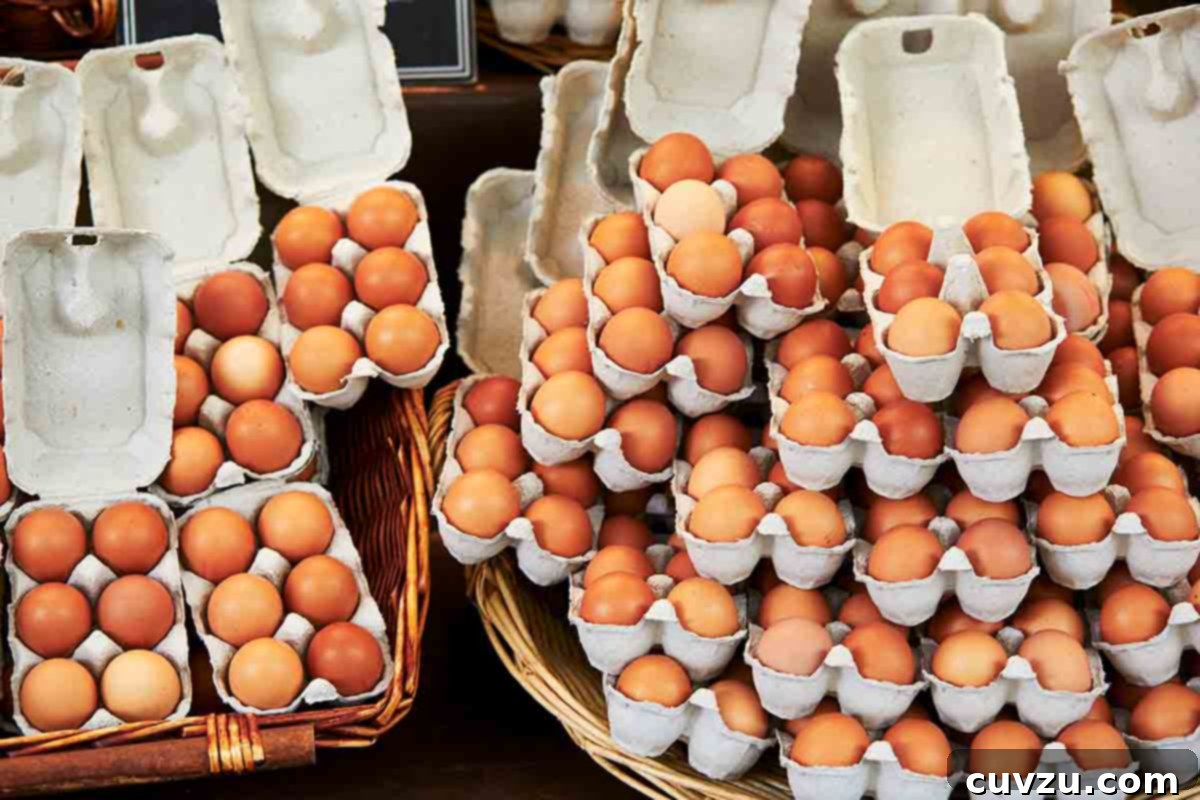
However, venture to countries such as Britain, France, and much of Asia, and you’ll often discover eggs displayed at ambient room temperature, far from any refrigeration (as seen in the photo below). This striking difference is primarily due to varying approaches to food safety and the natural protective mechanisms of an egg. In many countries, especially those where eggs are sold refrigerated, regulations mandate that eggs undergo a washing process before they reach consumers. This washing removes a natural protective layer on the eggshell called the “bloom” or “cuticle.” The bloom acts as a barrier, sealing the egg’s pores and preventing bacteria, like Salmonella, from entering. Washing, while aiming to reduce surface contamination, also removes this vital natural defense, thereby necessitating immediate refrigeration to prevent bacterial growth and maintain freshness.
The Essential Role of Refrigeration for Washed Eggs
The moment an egg is washed, its natural bloom is stripped away. This makes the eggshell significantly more porous and vulnerable. Without the bloom, the egg’s interior is more susceptible to bacterial invasion, including Salmonella, which can be present on the shell, especially from chickens raised in less-than-ideal conditions. Therefore, once washed, eggs must be kept refrigerated at a consistent cool temperature to inhibit bacterial multiplication and ensure their safety for consumption.
Furthermore, maintaining a consistent cold temperature is paramount. Taking refrigerated eggs out and letting them sit at room temperature for extended periods is not advisable. When cold eggs are exposed to a warmer environment, condensation forms on the shell’s surface. This moisture, combined with the warmer temperature, creates an ideal breeding ground for bacteria. These bacteria can then more easily penetrate the now porous shell, contaminating the egg within. While bringing eggs to room temperature for a recipe is often recommended for better baking and cooking results, it’s crucial to use them within a maximum of two hours to minimize any food safety risks. Always return unused eggs to the refrigerator promptly.
Mastering Proper Egg Refrigeration Techniques
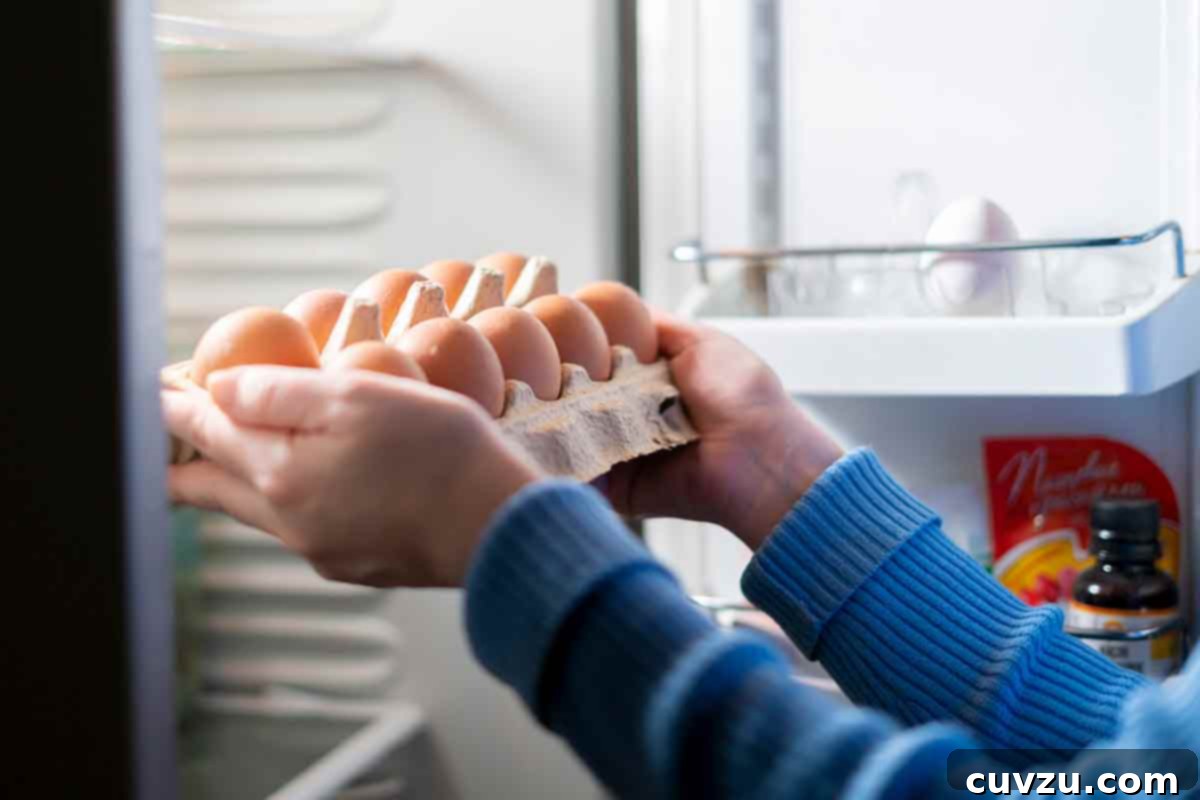
Now that we’ve established the ‘why’ behind refrigerating eggs, let’s explore the ‘how’ to ensure optimal freshness and safety. The ideal temperature for egg storage is 40°F (4.5°C) or cooler. The best location within your refrigerator is on an inside shelf, rather than the door. The refrigerator door is subjected to frequent temperature fluctuations each time it’s opened, which can compromise the eggs’ quality and shorten their shelf life. Interior shelves maintain a more consistent and colder temperature, providing a more stable environment for your eggs.
Always store eggs in their original carton. This cardboard container serves multiple important purposes: it helps retain moisture, preventing the eggs from drying out; it shields them from absorbing strong odors and flavors from other foods in your fridge (cardboard provides a surprisingly good barrier); and it offers physical protection against accidental cracking. While the carton offers some defense, it’s still wise to keep them away from extremely pungent items, as cardboard can only do so much to block intense smells.
If you have raw eggs that have been removed from their shells, perhaps leftover from a recipe, they can still be stored. Place them in a tightly covered, airtight container and refrigerate immediately. To prevent shelled egg yolks from drying out and forming a film, you can cover them gently with a thin layer of water or milk. Simply drain the liquid before using them, and they’ll be as good as freshly cracked. Egg whites, on the other hand, don’t require this extra step, just ensure they are in a sealed container.
Freezing Raw Eggs for Extended Storage
If you find yourself with an abundance of eggs that you can’t possibly use within a few weeks, freezing them is an excellent solution to prevent food waste. However, there’s a crucial rule: raw eggs absolutely must be shelled before freezing. Freezing whole eggs in their shells is a recipe for disaster; the liquid inside expands as it freezes, causing the shells to crack and often explode, leaving you with a messy, frozen egg bomb to clean up.
You can freeze eggs in any combination that suits your needs: whole, yolks only, or whites only. For convenience, freeze them in freezer-safe containers or freezer bags in the portions you typically use for recipes. For example, measure out 1/4 cup portions (approximately 4 large eggs) for easy thawing and use. When you’re ready to use them, simply thaw the frozen eggs overnight in the refrigerator. Never thaw them at room temperature, as this can encourage bacterial growth.
A special consideration arises when freezing egg yolks. Raw egg yolks tend to thicken and become gel-like when frozen, making them difficult to use in recipes. To prevent this undesirable texture change, you can add a small amount of salt or sugar before freezing. For savory applications, whisk in 1/8 teaspoon of salt per 1/4 cup of yolks (roughly 4 large eggs). If the yolks are destined for desserts or sweet dishes, incorporate 1 1/2 teaspoons of sugar or corn syrup per 1/4 cup of yolks. Beat the mixture thoroughly before transferring it to freezer containers. It’s highly recommended to label your containers “sweet” or “salty” along with the date, especially if your freezer, like many, becomes a treasure trove of forgotten culinary experiments!
Deciphering Egg Carton Dates: A Guide to Freshness

Understanding the various dates stamped on egg cartons is crucial for ensuring both food safety and optimal quality. These dates provide guidance for consumers and retailers alike.
Sell-By Date
The “sell-by” date is primarily for retailers, indicating the last day a store should display the eggs for sale. It ensures product turnover and quality. While stores are required to pull eggs from shelves by this date, eggs are typically still perfectly safe and good to eat for several weeks beyond it, provided they have been stored correctly.
Expiration Date (or Use-By Date)
Often appearing after the “sell-by” date, the “expiration” or “use-by” date marks the last day recommended for the eggs to be used for peak quality. The United States Department of Agriculture (USDA) suggests that eggs should be consumed within this timeframe. While eggs might still be acceptable shortly after this date, their quality and freshness will begin to decline, and it’s generally advised to discard them if significantly past this point to err on the side of caution.
Pack Date (Julian Date)
Beyond the common “sell-by” and “expiration” dates, the USDA also mandates that all graded eggs display a “pack date” or “Julian date” on the carton. This is a three-digit number, usually found on the end of the carton near the other dates, representing the day the eggs were washed, graded, and packaged. January 1st is typically 001, and December 31st is 365. This number is incredibly helpful for consumers, especially in states that don’t explicitly require a “sell-by” date. By counting approximately four to five weeks from the Julian date, you can estimate a reasonable “sell-by” window, ensuring you consume your eggs while they are still at their best quality.
Reliable Methods to Assess Egg Freshness
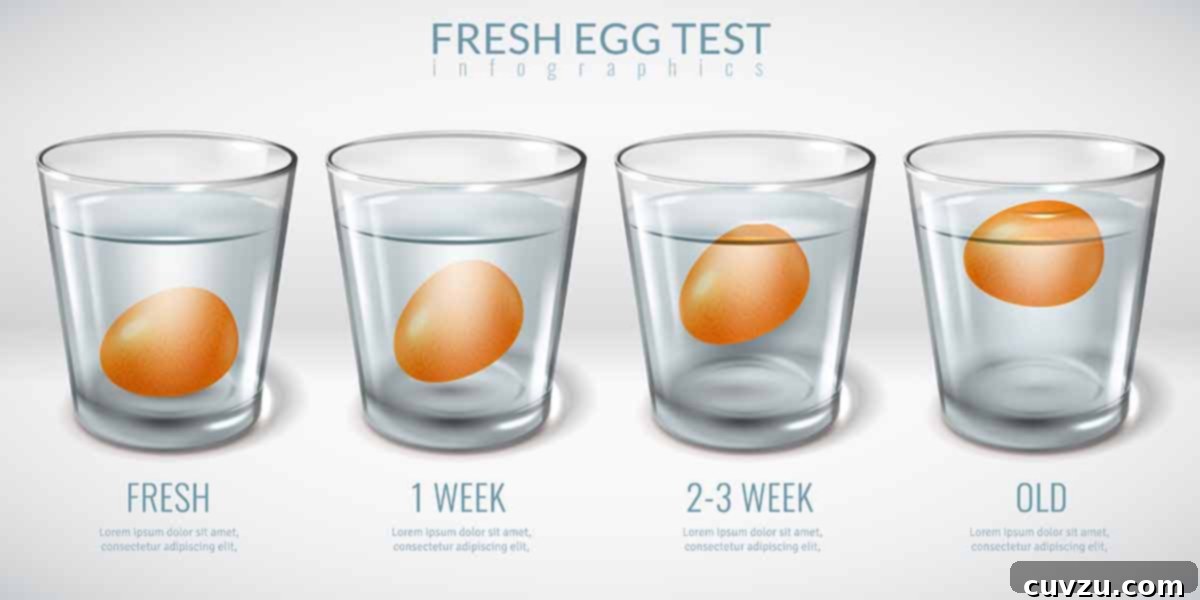
While the dates on your egg carton are the most straightforward indicators of freshness, sometimes labels get smudged, or you might have eggs from an unknown source. Thankfully, there are several simple yet effective ways to gauge an egg’s age. The most popular method is the “float test,” a reliable indicator of how long an egg has been sitting around. It’s important to note that this test indicates age, not spoilage. A floating egg isn’t necessarily bad, but it is definitely older.
To perform the float test, gently place your egg in a bowl of tepid water. As eggs age, their shells, despite appearing solid, are actually porous. Over time, moisture inside the egg gradually evaporates through these pores, and air replaces it, causing the air cell at the blunt end of the egg to enlarge. Here’s what different float positions indicate:
- Very Fresh Egg: Sinks to the bottom and lies flat on its side. It has a very small air cell.
- Still Fresh (1-2 weeks old): Sinks but stands upright or tilts slightly, with the blunt end pointing upwards. The air cell has slightly expanded.
- Older (3-5 weeks old): Floats on the surface. The air cell is significantly larger, causing the egg to be buoyant. While older, these eggs are still safe to eat if stored properly, though their quality for certain culinary uses might be reduced.
Beyond the float test, other sensory clues can help: a fresh egg, when cracked, will have a firm, domed yolk and a thick, high albumen (egg white) that clings closely to the yolk. Older eggs will have a flatter yolk and a runnier, more spread-out white. Most importantly, trust your nose: if an egg smells sulfuric or foul when cracked, it has spoiled and should be discarded immediately, regardless of its age or float test results.
Optimal Uses for Fresh Eggs
The pristine quality of fresh eggs makes them ideal for dishes where their delicate flavor and firm structure are paramount. They are perfect for scrambling, poaching, and frying, as their firm yolks are less likely to break, and their whites hold together beautifully. Fresh eggs also excel in quiches, custards, and omelets, offering clean, vibrant flavors.
Best Uses for Older Eggs
Older eggs, with their larger air cells and slightly thinner whites, are surprisingly better suited for certain applications. The increased air space makes them easier to peel when hard-boiled. Their thinner whites also whip up into larger volumes of meringue faster than very fresh eggs, making them excellent for baking, especially in recipes for meringues, soufflés, and cakes where you won’t notice a slight loss of their original robustness or delicate flavor.
Unraveling the Mystery of Eggshell Colors
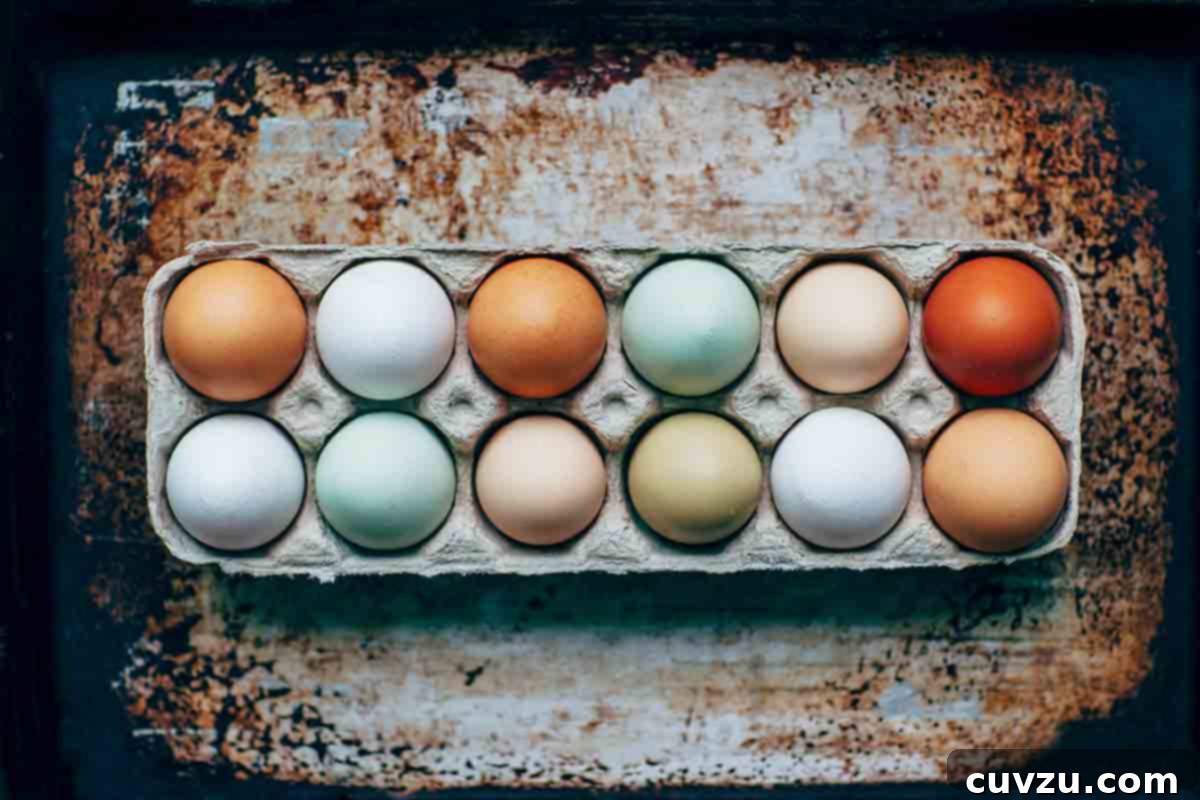
The variety of eggshell colors, from classic white and brown to the more exotic blue and green, often sparks curiosity. The truth behind these hues is quite simple and purely genetic, with no impact on the egg’s nutritional value, taste, or cooking properties. It all comes down to the breed of the hen and, surprisingly, the color of her earlobes!
- White Eggs: These are typically laid by chickens with white feathers and white earlobes, such as the Leghorn breed.
- Brown Eggs: Hens with red or brownish feathers and red earlobes, like Rhode Island Reds or Plymouth Rocks, are responsible for brown eggs. The pigment responsible for the brown color is called protoporphyrin.
- Blue and Green Eggs: These distinctive colors come from specific breeds, such as Araucanas, Ameraucanas, and Olive Eggers. The blue pigment, oocyanin, is deposited on the shell during formation and actually permeates the entire shell, rather than just being a surface coating. Green eggs are a result of a blue egg gene combined with a brown egg gene.
Despite popular belief, there is no inherent nutritional difference between white and brown eggs unless the hen’s feed has been specifically enhanced (e.g., with Omega-3s). The slight price difference often seen with brown eggs is typically due to the fact that the breeds that lay brown eggs tend to be larger, require more feed, and thus cost more to raise, rather than any superior quality of the egg itself.
The Secret Behind Yolk Color: A Hen’s Diet
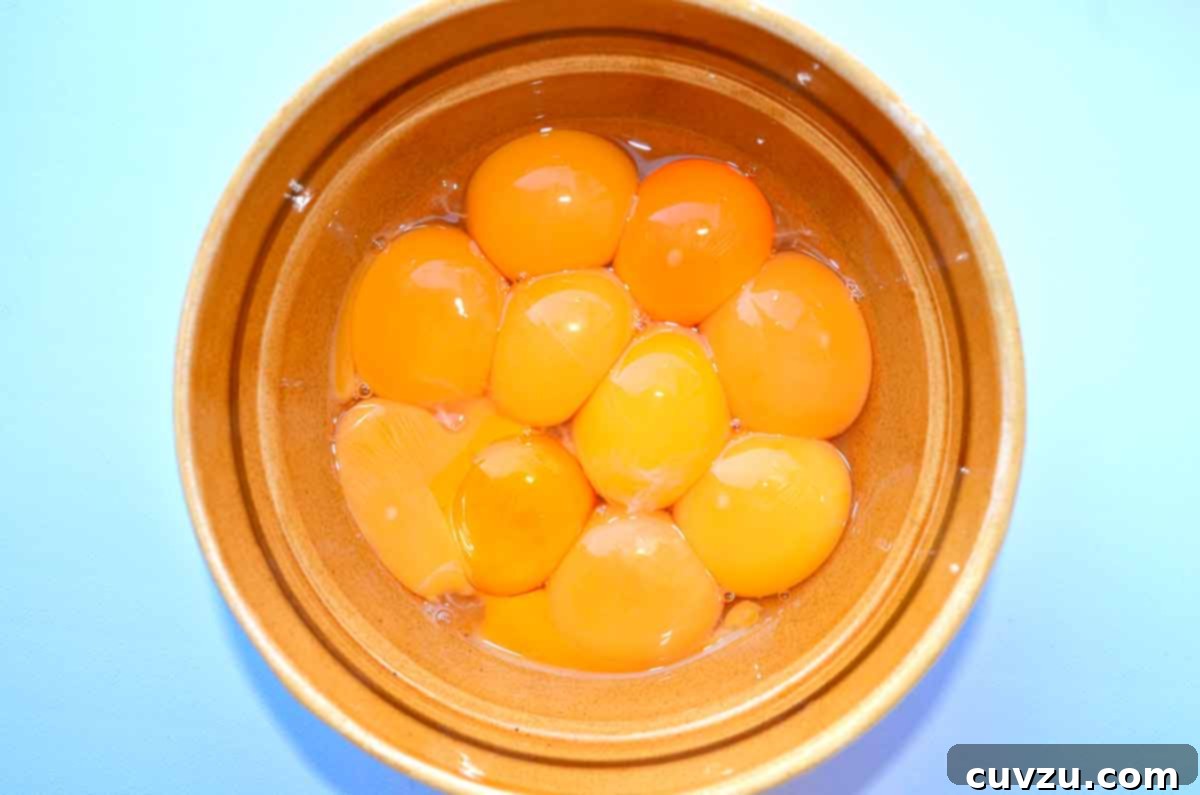
Unlike shell color, which is determined by genetics, the vibrant hue of an egg yolk is entirely influenced by the hen’s diet. The pigments responsible for yolk color are called carotenoids, which are naturally found in certain plants. A hen’s intake of these carotenoids directly dictates how pale or deep orange her yolks will be.
- Pale Yellow Yolks: Hens fed primarily on a wheat-based diet will typically produce lighter, pale yellow yolks.
- Deep Yellow/Orange Yolks: Chickens whose feed is rich in corn, alfalfa, or even marigold petals will lay eggs with much deeper yellow or even rich orange yolks. These ingredients are packed with carotenoids, which are then transferred to the yolk.
It’s a common misconception that a darker yolk signifies a more nutritious egg. While a deeper color might indicate a diet richer in certain plant compounds, it doesn’t necessarily mean a significant difference in the overall nutritional profile, such as protein or fat content. It’s more about aesthetics and what the hen has been eating.
Creative Culinary Ideas for Leftover Easter Eggs
After all the fun of decorating and hiding those beautifully dyed Easter eggs, it’s a shame to simply discard them. With proper handling, these “yellow-eyed jewels” can become delicious components of meals for days to come. Food safety is paramount, so here’s how to ensure they’re edible and enjoyable:
- Start with Hard-Boiling: First and foremost, all Easter eggs intended for consumption must be hard-boiled. If you haven’t mastered your preferred method yet, we recommend this easy technique for perfectly steamed, easy-to-peel hard-boiled eggs.
- Use Food-Safe Dyes: Ensure that any dyes used for coloring are non-toxic and food-safe. Many natural options, made from common kitchen ingredients, are available and create stunning hues, such as these natural Easter egg dyes.
- Proper Storage is Key: To maximize their lifespan, store hard-boiled eggs unpeeled in an airtight container in the refrigerator. The shell acts as a protective barrier against bacteria. Properly stored, hard-boiled eggs will keep for about one week. Once peeled, they should be eaten almost immediately.
- Mind the Hunt: The USDA advises that “the total time for hiding and hunting eggs should be no more than two hours.” This limits their exposure to temperatures where bacteria can thrive. Additionally, be vigilant during the hunt; if any eggshells crack, bacteria could contaminate the egg, making it unsafe to eat, and it should be discarded.
Now for the fun part: what to do with them? Beyond the usual egg salad sandwiches or potato salad, a world of delicious possibilities awaits! Consider these inventive ideas:
- Pickled Eggs: A classic and flavorful way to preserve them, often infused with spices and vinegar. Find a great recipe for pickled eggs here.
- Eggs with Dukkah: A simple yet elegant snack. Slice hard-boiled eggs and sprinkle generously with dukkah, an Egyptian spice blend of nuts, seeds, and spices.
- Chinese Tea Eggs: Steeped in a savory, aromatic broth of tea, soy sauce, and spices, these eggs develop a beautiful marbled pattern and rich flavor.
- Deviled Eggs: A crowd-pleaser with endless variations. Try a spicy twist with Sriracha deviled eggs for a kick.
- Cobb Salad: A hearty and colorful salad where sliced hard-boiled eggs are a star ingredient alongside bacon, chicken, avocado, and blue cheese.
- Scotch Eggs: A British classic, wrapping a hard-boiled egg in sausage meat, coating it in breadcrumbs, and frying it until golden.
- Curried Egg Salad: Elevate your egg salad with the addition of curry powder, chives, and a touch of fruit like raisins or apples.
With these ideas, your leftover Easter eggs are sure to be enjoyed to the last bite!
Further Resources for Egg Safety
For comprehensive guidelines and the latest information on egg safety, always refer to official sources. You can find the complete U.S. Food and Drug Administration (FDA) guide to egg safety here, ensuring you have the most accurate and up-to-date advice.