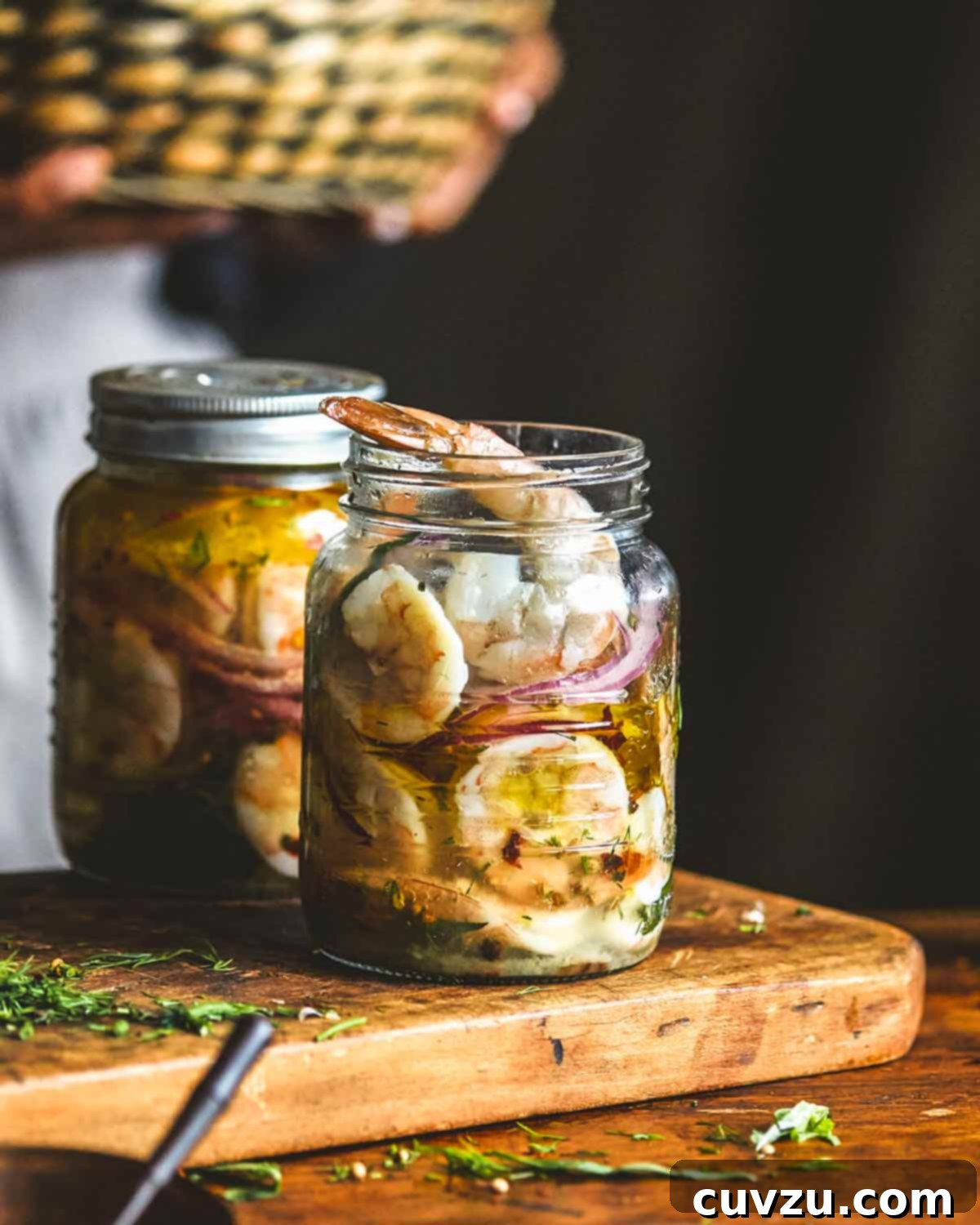
The Ultimate Pickled Shrimp Recipe: A Southern Staple Reimagined
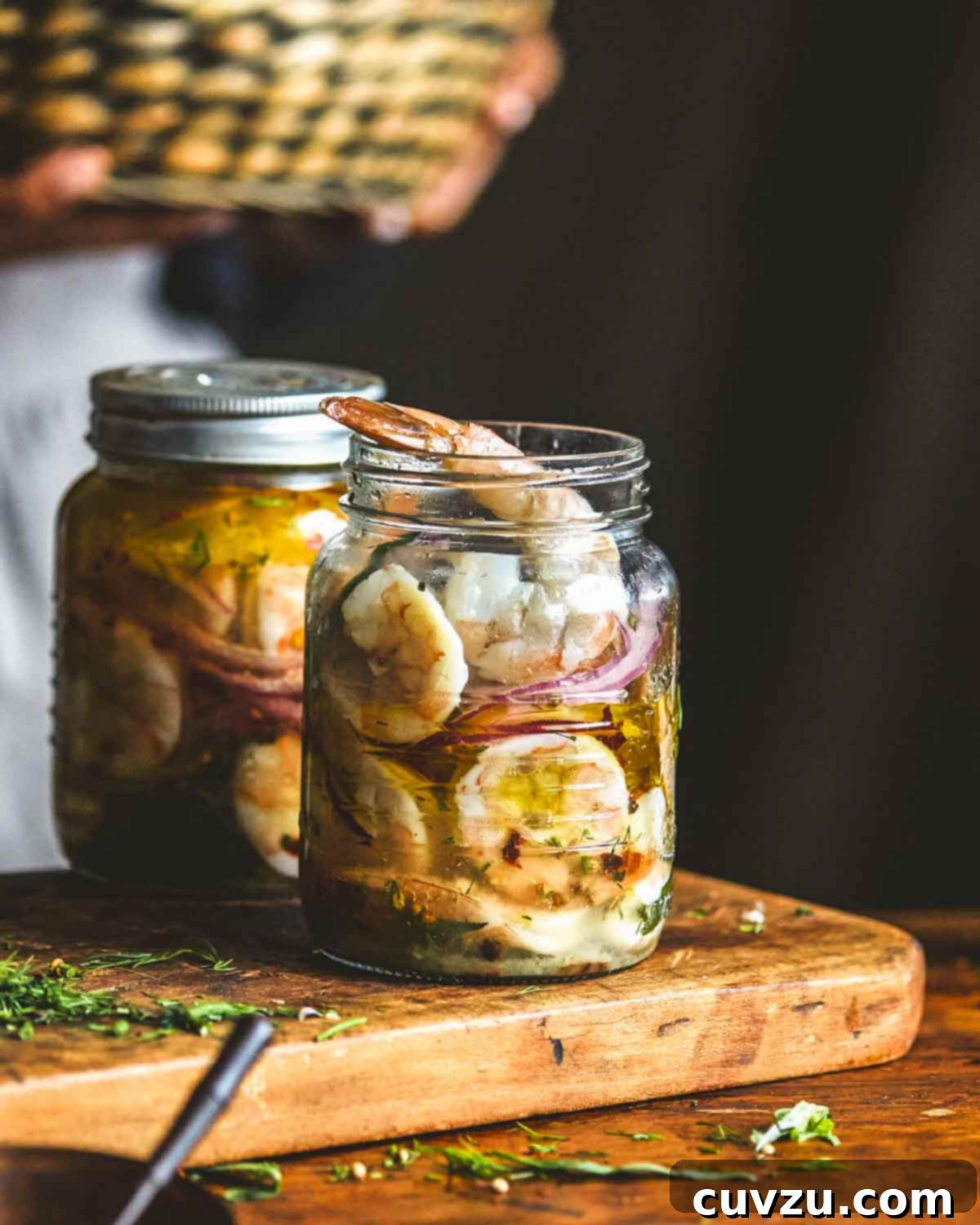
Dive into the vibrant flavors of the American South with this quintessential pickled shrimp recipe. Far more than just a simple appetizer, these succulent, perfectly poached shrimp are infused with a zesty lemon, aromatic garlic, and fresh dill brine, creating an unforgettable culinary experience. This dish is a true testament to the art of pickling, transforming humble ingredients into a sophisticated and refreshingly piquant delicacy that graces tables from casual gatherings to elegant soirées.
Making pickled shrimp might sound intricate, but at its heart, it’s a remarkably straightforward process, often as simple as boiling water and then exercising a little patience. The magic truly happens during the marination, as the shrimp absorb the vibrant flavors of the brine. This recipe, adapted from the acclaimed “Jubilee” cookbook, offers a foundational approach to this Southern classic, while also encouraging creative customization. Whether you’re aiming for a spicy kick reminiscent of Jamaican “pepper shrimp” or a bright, Texan-inspired zest, the possibilities are endless. These flavorful shrimp are equally adept at satisfying guests as an elegant starter or elevating an everyday salad into a truly memorable meal.
Why Pickled Shrimp is a Must-Try Delicacy
Pickled shrimp holds a special place in Southern culinary tradition, prized for its refreshing tang, tender texture, and incredible versatility. It’s a dish that embodies the charm of Southern hospitality – easy to prepare ahead of time, yet impressive enough to steal the show. The brining process not only preserves the shrimp but also imbues it with a complex layering of flavors from the vinegar, citrus, herbs, and spices. Unlike heavier fried or sauced seafood dishes, pickled shrimp offers a light, bright, and utterly addictive alternative that tantalizes the palate without overwhelming it.
This recipe, crafted for clarity and optimal flavor, ensures that even novice cooks can achieve perfectly pickled shrimp every time. The balance of acidity from lemon and vinegar, the warmth of pickling spice, and the fresh aromatics of dill and tarragon create a symphony of tastes that perfectly complements the natural sweetness of the shrimp. It’s a dish that’s as delightful to look at as it is to eat, making it an ideal candidate for entertaining or a simple, sophisticated treat for yourself.
Classic Pickled Shrimp Recipe
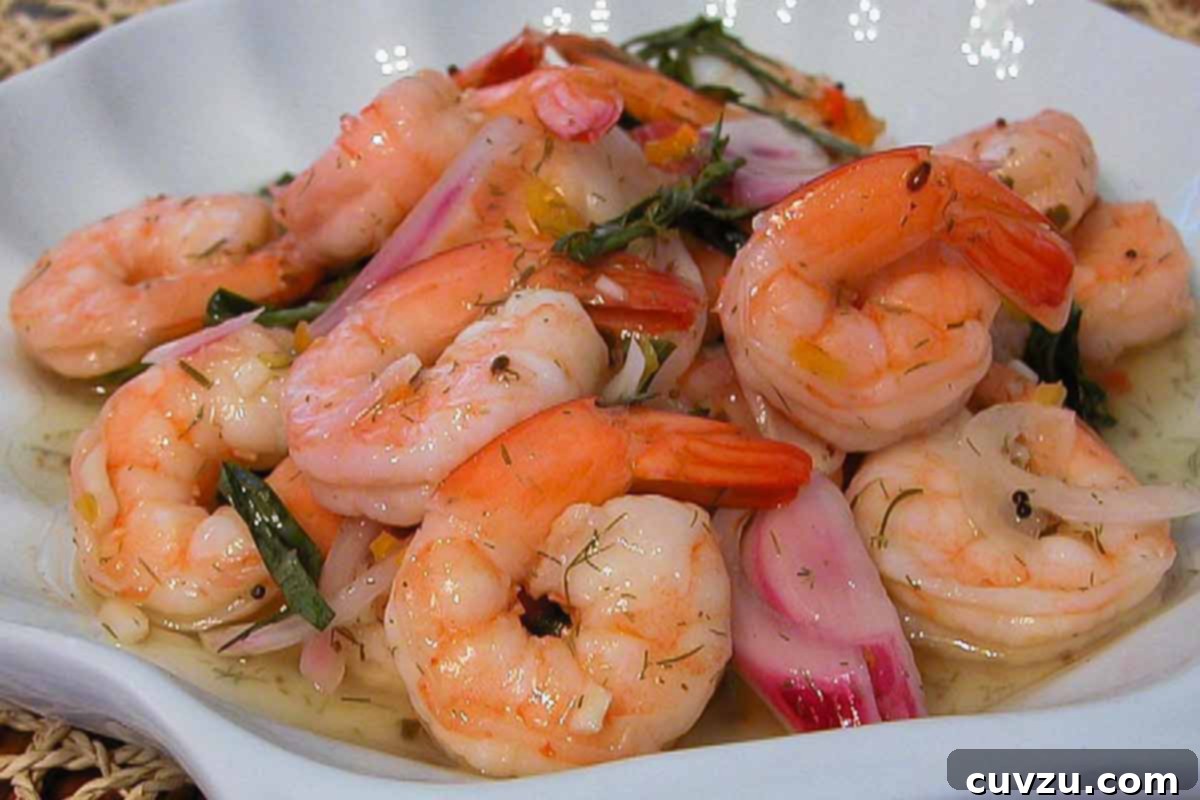
Pickled Shrimp
These pickled shrimp are a Southern staple made with perfectly poached shrimp marinated in a spicy lemon, garlic, and dill brine. A guaranteed crowd-pleaser!
Author: David Leite
Print Recipe
Course: Appetizers
Cuisine: Southern
Servings: 6 servings
Calories: Approximately 638 kcal
Prep Time: 35 minutes
Cook Time: 8 hours 5 minutes (includes marination)
Total Time: 8 hours 40 minutes
Ingredients
- For Poaching the Shrimp:
- 1 1/2 teaspoons kosher salt, plus more for cooking the shrimp
- 3 medium celery stalks, diced
- 1 cup (4 1/2 oz) thinly sliced yellow or white onion
- 2 whole bay leaves
- 1 large lemon, preferably organic, thinly sliced (1/8 inch | 3 mm)
- 2 pounds shell-on large (31/35 count) or jumbo (21/25 count) shrimp
- For the Zesty Brine:
- 1/2 cup fresh lemon juice (approx. 2-3 lemons)
- 1 1/2 cups white wine vinegar or apple cider vinegar
- 1 tablespoon pickling spice, gently toasted in a dry pan until fragrant
- 2 teaspoons dried dill or 2 tablespoons fresh dill, chopped, or more to taste
- 1 Scotch bonnet or jalapeño pepper, finely minced, or 1 teaspoon crushed red pepper flakes, adjusted to your preferred heat level
- 2 teaspoons minced garlic (about 2-3 cloves)
- 3 sprigs fresh tarragon
- 1 1/2 cups extra-virgin olive oil, high quality recommended
- 1/2 cup (2 1/2 oz) thinly sliced red onion
Instructions
- Prepare the Poaching Liquid: In a large saucepan, combine 2 quarts of well-salted water (enough to generously cover the shrimp when added), the diced celery, sliced yellow or white onion, bay leaves, and thinly sliced lemon. Bring this mixture to a rolling boil over high heat.
- Poach the Shrimp: Once the poaching liquid is boiling vigorously, add the raw, shell-on shrimp to the pan. Cook for a brief 2 to 3 minutes, or just until the shrimp turn pink and opaque throughout. It’s crucial not to overcook them at this stage, as they will continue to cure in the acidic brine. Immediately transfer the cooked shrimp to a colander using a slotted spoon and rinse under cool running water to halt the cooking process.
Chef’s Insight: Do not discard the flavorful poaching liquid! This can be saved for a homemade shrimp stock. For an even richer stock, you can simmer the shrimp shells (after peeling) in this reserved liquid for an additional 20 minutes before straining.
- Peel and Cool the Shrimp: Once the shrimp are cool enough to comfortably handle, proceed to peel and devein them. Ensure they are completely cool, which should take about 5 minutes, before moving to the next step.
- Assemble the Brine: In a large glass bowl, or a very large, wide-mouthed Mason jar (alternatively, 2 to 3 smaller jars), combine the fresh lemon juice, white wine or apple cider vinegar, toasted pickling spice, dill (dried or fresh), minced chile pepper (Scotch bonnet or jalapeño) or crushed red pepper flakes, minced garlic, fresh tarragon sprigs, extra-virgin olive oil, and 1 teaspoon of kosher salt. Whisk or shake vigorously until all ingredients are well blended and the salt is dissolved. Add the thinly sliced red onion and the completely cooled, peeled shrimp to this brine mixture.
- Marinate for Flavor Infusion: Cover the bowl securely with plastic wrap or tightly seal the lid(s) on your jar(s). Transfer the shrimp to the refrigerator and allow them to marinate for a minimum of 8 hours, ideally up to 24 hours. The longer the shrimp steep in the brine, the more intensely flavored they will become, particularly with the aromatic pickling spices.
- Serve and Enjoy: Before serving, give the bowl of pickled shrimp and onions a gentle stir, or shake the jar(s) well, to evenly distribute the brine and flavors. Use a slotted spoon or fork to lift out portions of shrimp and onion, taking care to avoid any hard pickling spices that may have settled at the bottom. Serve chilled and savor the exquisite taste!
Serving Suggestions and Creative Flavor Variations
Pickled shrimp are a wonderfully versatile dish, perfect for a multitude of occasions. Their bright, piquant flavor makes them a fantastic addition to almost any meal or spread. Here are some ideas to inspire your serving and customization:
Serving Ideas to Impress:
- Elegant Appetizer: Serve chilled in small glasses or on a platter with toothpicks for easy grabbing. They pair beautifully with a crisp white wine or a refreshing cocktail.
- Salad Star: Transform any green salad into a hearty and memorable meal by topping it with a generous portion of pickled shrimp. Add some avocado, cherry tomatoes, and a light vinaigrette for a complete dish.
- Crostini or Crackers: Spoon the shrimp and a few brined onions onto toasted baguette slices or your favorite crackers for a sophisticated bite-sized snack.
- Mezze Platter: Incorporate them into a Mediterranean-inspired mezze or charcuterie board alongside olives, cheeses, roasted vegetables, and crusty bread.
- Sandwich Filler: For a unique lunch, chop the pickled shrimp and mix with a little mayonnaise and fresh herbs for a zesty “shrimp salad” sandwich.
- Garnish for Soups: A few pickled shrimp can add a burst of flavor and visual appeal to cold soups like gazpacho.
Customize Your Pickled Shrimp to Your Liking:
The beauty of this recipe lies in its adaptability. Don’t hesitate to experiment with the ingredients to create a flavor profile that perfectly suits your preferences:
- Adjusting the Heat: For a fiery kick, consider increasing the amount of Scotch bonnet or jalapeño pepper, or experiment with other hot peppers like serrano or even a touch of habanero for a truly bold flavor. For a milder approach, stick to crushed red pepper flakes and adjust to taste.
- Citrus Variations: While lemon is classic, incorporating fresh lime juice (perhaps replacing half the lemon juice) can lend a brighter, more tropical or Texan-inspired zest.
- Herb Exploration: The recipe uses dill and tarragon, but feel free to experiment with other fresh herbs. Fresh parsley, chives, cilantro (especially if leaning towards a Texan profile), or even a hint of oregano can introduce new layers of flavor.
- Personalized Spice Blend: If you don’t have a pre-made pickling spice, you can easily create your own. Common components include whole black peppercorns, mustard seeds, coriander seeds, allspice berries, and cloves. Toasting these whole spices lightly before grinding or adding to the brine enhances their aroma.
- Vinegar Choices: Both white wine vinegar and apple cider vinegar work wonderfully. For a slightly sweeter, fruitier undertone, you could even try a good quality champagne vinegar.
- Onion Profile: Red onion provides a distinct sharpness and beautiful color, but thinly sliced shallots or even sweet white onions can offer a milder, more delicate onion flavor.
- Additional Aromatics: Consider adding thinly sliced bell peppers for color and crunch, or a few sprigs of fresh thyme to the poaching liquid for an added herbaceous note.
Tips for Perfectly Pickled Shrimp Every Time
Achieving impeccably tender and flavorful pickled shrimp is simple when you keep a few key principles in mind. Drawing from the wisdom of experienced cooks and recipe testers, these tips will help ensure your pickled shrimp are nothing short of spectacular:
- Do Not Overcook the Shrimp Initially: This is perhaps the most critical advice. Shrimp cook very quickly, and the acidic brine will continue to “cure” them as they marinate. Slightly undercooked shrimp during the poaching phase will result in a perfectly tender texture after marinating, preventing them from becoming rubbery or tough. Aim for just pink and opaque.
- Start with High-Quality Shrimp: Since shrimp is the star of this dish, choose the freshest, plumpest shell-on shrimp available. Shell-on shrimp often have superior flavor and texture compared to pre-peeled varieties.
- Optimal Marinating Time: While the recipe suggests a minimum of 8 hours, many find that the flavors truly deepen and meld beautifully after 24 hours. Some even prefer two days of marination for maximum complexity. However, balance this with your preferred texture; longer marination can lead to a firmer shrimp. Experiment to find your sweet spot!
- Consider a Spice Bag for Whole Spices: If your pickling spice contains large or tough whole spices (like cinnamon sticks or large bay leaf pieces), consider tying them in a cheesecloth bag before adding them to the brine. This makes for easier removal and prevents unwanted tough shards from mixing with the shrimp, ensuring a smoother eating experience.
- Thoroughly Cool Shrimp Before Brining: Ensure the poached and peeled shrimp are completely cool before adding them to the prepared brine. Adding warm shrimp to cold brine can affect food safety and potentially alter the texture in undesirable ways.
- Taste and Adjust the Brine: Before adding the shrimp, taste your brine mixture. This is your chance to adjust the salt, lemon juice, or chili pepper heat to your personal preference. Remember, the flavors will concentrate somewhat during marination.
- Storage: Properly stored in an airtight container in the refrigerator, pickled shrimp can last for several days, often up to a week, making them an excellent make-ahead option.
Insights from Leite’s Culinaria Recipe Testers
This beloved pickled shrimp recipe has been thoroughly tested and enjoyed by our dedicated team of home cooks. Their diverse experiences and valuable feedback provide a comprehensive view of this dish’s appeal and offer practical advice for success. Here’s a summary of what they discovered:
Janet O.
Janet O. enthusiastically praised this pickled shrimp recipe as “fabulous” and deceptively easy, noting that the hardest part was simply waiting for it to marinate overnight! She highlighted the perfect balance of acidity in the brine, beautifully tempered by the olive oil and added spices, resulting in a wonderfully flavorsome outcome. Janet recommended these versatile shrimp for various occasions: as an elegant nibble with drinks, a delightful starter on a bed of salad, or a key component in a vibrant mezze spread. She also offered a crucial reminder to avoid overcooking the shrimp during the initial poaching phase, as they will continue to “cure” and firm up in the marinade.
Helen Doberstein
Helen Doberstein declared this recipe a “definite winner” and an easy, tasty triumph. Living where fresh shrimp are scarce, she successfully utilized frozen shrimp, offering a valuable tip from her “fish guy”: thaw them in a colander under a trickle of cold water for about 15 minutes, or preferably, defrost them overnight in the fridge to maintain firmness. Helen followed the poaching instructions carefully and marinated the shrimp overnight in a large glass bowl. She was delighted by the outcome – firm shrimp with a slight bite, delicately pickled, boasting a mellowed jalapeño heat and subtle hints of tarragon and lemon. She particularly “LOVED it” and looked forward to adding these to her salads. Her experience also provided insight into jar packing, noting that she used three 500 ml wide-mouth jars but could have used fewer with tighter packing.
Jenny Howard
Jenny Howard found this pickled shrimp recipe to be a “novel idea that didn’t disappoint,” praising its fabulous ease and reminding her that pickling is often simpler than it seems. She emphasized the importance of using really high-quality, fresh, and plump shrimp as they are the star of the dish. Jenny also noted that she improvised some ingredients, making a homemade pickling spice mix and substituting dried tarragon for fresh. While she initially wished for “a bit more zip” in her batch and considered a habanero for next time, she thoroughly enjoyed the bright and flavorful results. She observed that the texture of the shrimp softened perfectly by the second day, and the lemon and onion flavors became even more pronounced, making them “pretty much irresistible for snacking.”
Samantha Fisher
Samantha Fisher, declaring it the “Summer of Salads,” hailed these “zippy shrimp” as an excellent addition to her array of fridge-ready ingredients. She expressed her appreciation for how the extended brine bath transformed shrimp, making them lively and flavorful, unlike “listless, plain, cold shrimp” often found on salads. Samantha shared a creative shortcut idea for the future: using brine directly from a pickle jar to replace pickling spices and vinegar if in a pinch. She also suggested boosting the celery notes with lovage from her garden. A practical observation from Samantha was that if breaking a cinnamon stick or using tough whole spices, some shards might mix with the shrimp, hinting at the potential benefit of a spice bag.
Linda McElroy
Linda McElroy greatly enjoyed these pickled shrimp on a bed of salad greens, appreciating their ease of preparation and the added bonus of having a lovely shrimp stock as a byproduct. Her main insight revolved around personal texture preference: she planned to shorten the marination time in future attempts, perhaps to just 4 to 8 hours. Linda noted that after 24 hours, the shrimp had a more “cooked” texture, which, while likely the desired outcome for traditional pickled shrimp, was a bit firmer than her ideal. She acknowledged that pickled shrimp are not meant to have the texture of freshly cooked ones but expressed a desire for a slightly less cured bite, believing that even with lighter pickling, the essential flavors would still shine through.
Dan Kraan
Dan Kraan found the pickled shrimp in this recipe “excellent and more than a little addictive!” He particularly lauded their wonderful array of flavors and perfect texture, distinguishing them from commercially prepared varieties. He described the pickling liquid as very smooth and lightly tart, with “just a hint of a heat tickle,” even though he used a Scotch Bonnet pepper. Dan suggested that the complexity of the flavors would benefit from an additional day or two of marinating beyond the initial overnight period. His valuable tips included leaving the tails on the shelled shrimp for a more elegant presentation and easing back on the tarragon, as three 6-inch sprigs imparted a definite Béarnaise taste that masked other flavors. He also recommended using an olive oil with peppery notes rather than grassy ones to allow the other flavors to assert themselves more effectively.
Adapted From

This exceptional pickled shrimp recipe is proudly adapted from the critically acclaimed cookbook, Jubilee: Recipes from Two Centuries of African American Cooking by Toni Tipton-Martin. “Jubilee” celebrates the rich culinary heritage and enduring traditions of African American cuisine. To discover more treasured recipes and immerse yourself in this incredible collection, we highly recommend purchasing the book:
Buy Jubilee On Amazon
Nutrition Information
Here’s an approximation of the nutritional content per serving for these pickled shrimp:
- Serving: 1 portion
- Calories: 638 kcal
- Carbohydrates: 12 g
- Protein: 22 g
- Fat: 56 g
- Saturated Fat: 8 g
- Monounsaturated Fat: 40 g
- Trans Fat: 1 g
- Cholesterol: 191 mg
- Sodium: 1447 mg
- Fiber: 2 g
- Sugar: 4 g
Please note: Nutrition information is automatically calculated and should only be used as an approximation. Actual values may vary based on specific ingredients and preparation methods.
Share Your Culinary Creations with Us!
Have you had the pleasure of trying this irresistible pickled shrimp recipe? We absolutely adore seeing your culinary masterpieces and hearing about your experiences in the kitchen!
Don’t forget to mention @leitesculinaria or tag #leitesculinaria on Instagram when you share your photos and stories. Join our vibrant community and let us celebrate your delicious creations!