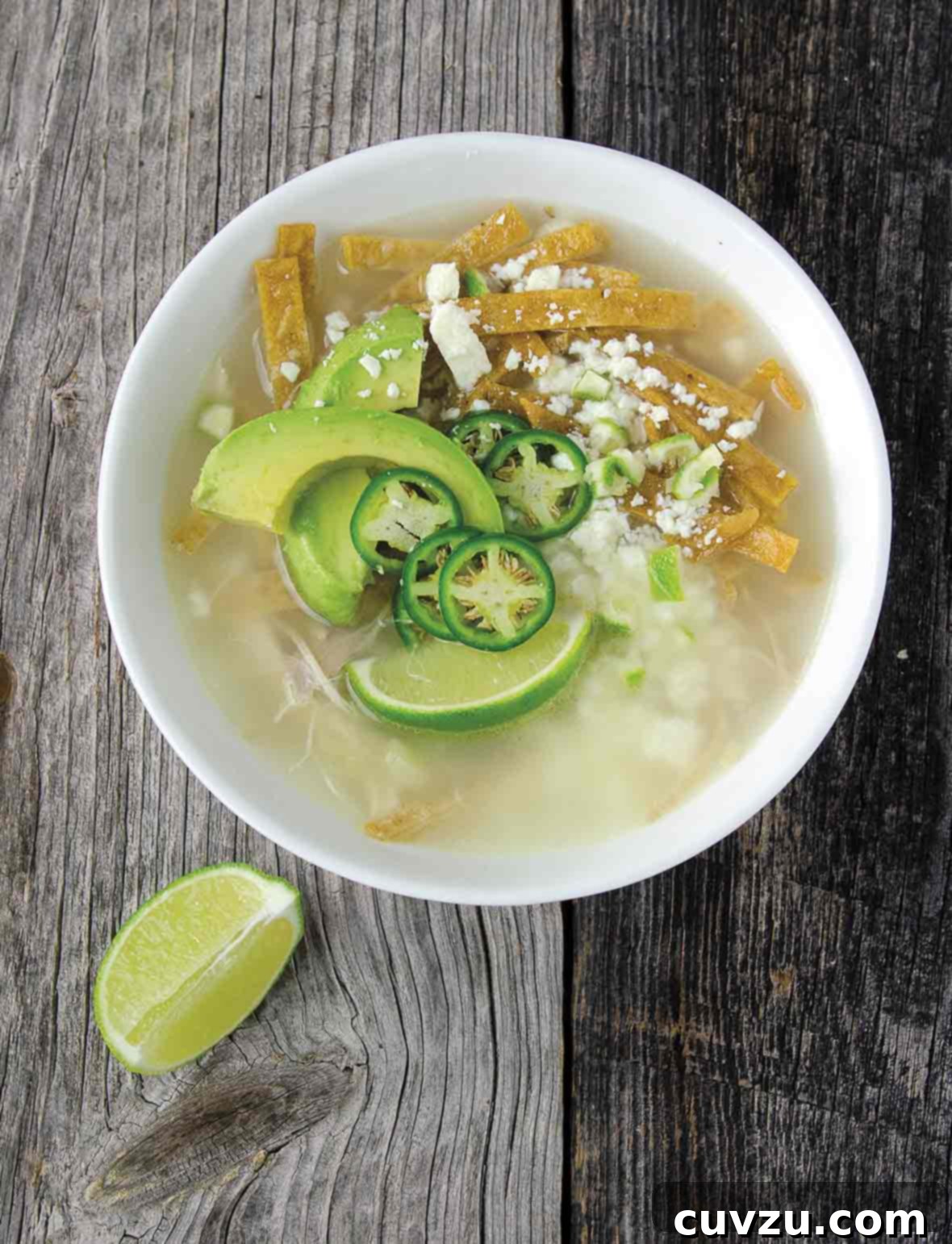
This Mexican chicken soup is authentic Yucatan fare that’s simply broth, avocado, lime, tortilla, and rice. The sum is far more than the parts. And it’s comforting as heck.
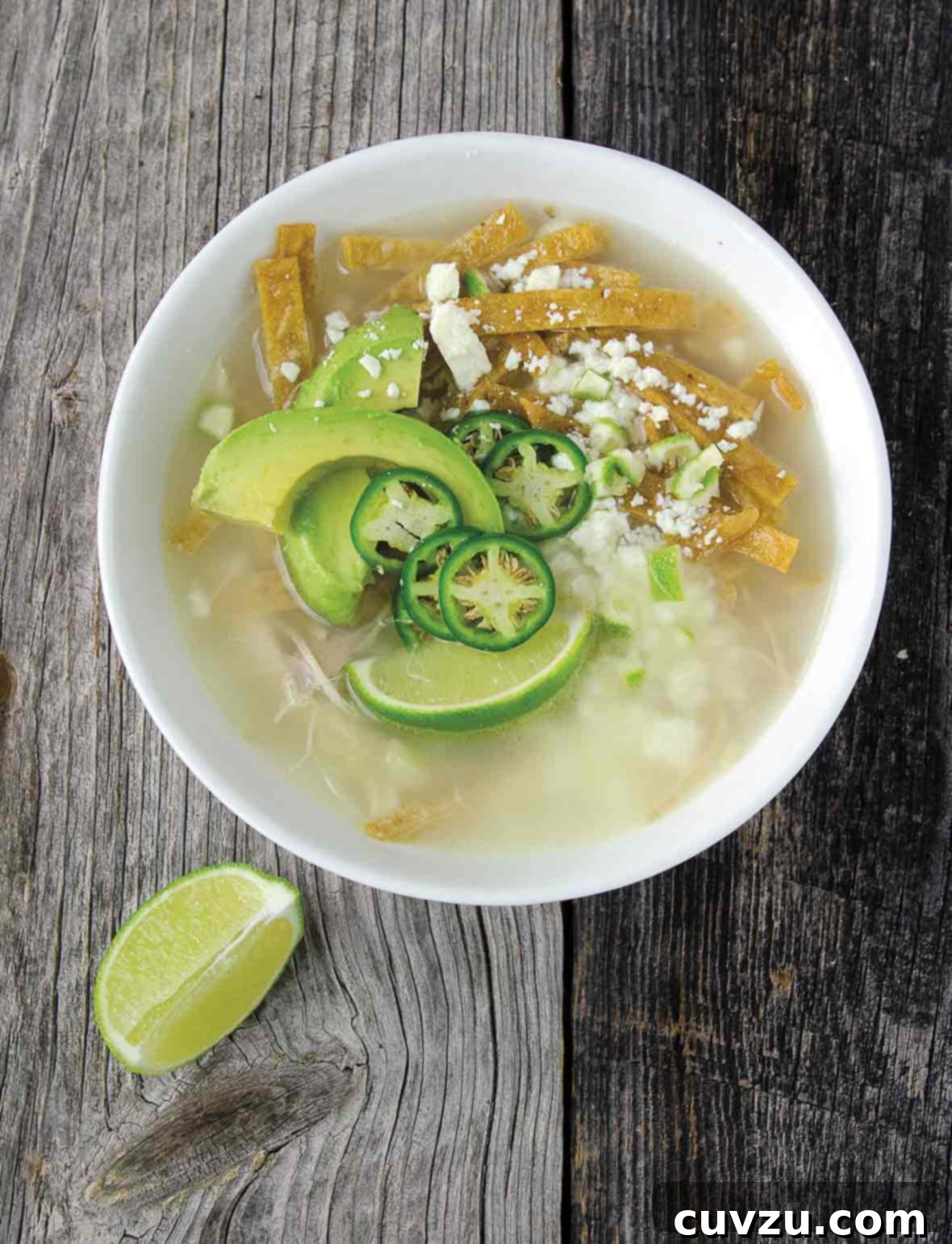
Authentic Mexican Chicken Soup: The Soul-Warming Sopa de Lima from Yucatán
Embark on a culinary journey to the sun-drenched Yucatán Peninsula with this extraordinary Mexican chicken soup, universally known as Sopa de Lima. Far from an ordinary chicken broth, this dish is a testament to the region’s rich culinary heritage, blending indigenous flavors with Spanish influences to create a soup that is both subtly complex and incredibly comforting. It’s a harmonious symphony of fresh ingredients, proving that sometimes, the simplest components can yield the most profound flavors.
At its core, Sopa de Lima is an elegant combination of tender, poached chicken and fluffy white rice, bathed in a vibrant, savory broth. What truly distinguishes this soup, however, is the generous and indispensable addition of fresh lime. Unlike many other Mexican soups, Sopa de Lima champions the bright, aromatic zest and juice of Yucatán limes, which infuse the entire dish with a distinctive, refreshing tang. But the experience doesn’t end there; this soup is a canvas for customization, inviting you to personalize each bowl with an array of garnishes such as creamy avocado, fragrant cilantro, thinly sliced jalapeños for a gentle warmth, and irresistibly crispy tortilla strips. A sprinkle of authentic Cotija cheese adds a final touch of salty richness. Each spoonful promises a delightful interplay of textures and a burst of fresh, earthy, and zesty notes, making it more than just a meal—it’s a soothing balm, traditionally believed to possess restorative powers. This cherished recipe, adapted by David Leite, promises an authentic and unforgettable taste of Yucatán’s heart.
Authentic Yucatán Sopa de Lima (Mexican Chicken Soup)
Experience the authentic and comforting flavors of the Yucatán Peninsula with this vibrant Sopa de Lima. This traditional Mexican chicken soup features tender poached chicken, aromatic broth, fluffy rice, and a refreshing burst of fresh lime, complemented by an array of delightful, customizable toppings.
By David Leite
Mains, Soup
Mexican, Yucatecan
8 to 10 servings
30 minutes
2 hours 30 minutes
3 hours
Ingredients
For the Crispy Tortilla Strips:
- About 2 cups lard or coconut oil, for frying
- One (8-ounce) package yellow or white corn tortillas, sliced into strips 1/4 inch by 1 inch (0.6 by 2.5 cm)
For the Flavorful Soup Base:
- 1 (3 lbs) whole chicken, preferably free-range for best flavor
- 1 (5 oz) white onion, thinly sliced
- 2 cups cooked long-grain white rice
- Kosher salt, to taste (start with 2 teaspoons, adjust as needed)
- 3 to 4 thin-skinned limes (Yucatán limes are ideal; Key limes or regular limes can be used)
For Garnish (Highly Recommended for Authenticity and Flavor):
- Fresh jalapeños, thinly sliced (remove seeds for less heat, leave them for more)
- Crumbled Cotija cheese or queso fresco, for a salty, creamy contrast
- Fresh cilantro sprigs, finely chopped, for herbaceous notes
- Avocado slices or diced avocado, for richness and texture
- Extra lime wedges, for an additional burst of citrus at the table
- Your freshly prepared crispy tortilla strips
Instructions for Crafting Your Sopa de Lima
-
Step 1: Prepare Your Tortilla Strips. Begin by lining a large plate or a baking sheet with several layers of paper towels or a clean cotton kitchen towel. This will be essential for draining the fried tortillas, ensuring maximum crispness. Next, place a medium-sized, heavy-bottomed skillet, ideally cast-iron for its superior heat retention, over medium heat. Add enough lard or coconut oil to reach approximately 1/2 inch (1 cm) up the sides of the skillet once it has melted. Allow the fat to heat thoroughly until it is completely liquid and shimmering faintly. To test if it’s hot enough, carefully drop a single tortilla strip into the oil. It should immediately sizzle vigorously, crisp up, and turn a beautiful golden brown within 60 to 90 seconds. If it browns too quickly, reduce the heat; if it barely sizzles, increase it slightly. Working in small batches is crucial to prevent overcrowding the pan, which can significantly lower the oil’s temperature and lead to soggy rather than perfectly crisp strips. Fry the tortilla strips, turning them as necessary, until they achieve a uniform golden brown and a delightful crunch. Using a slotted spoon, carefully transfer the fried strips to your prepared towel-lined plate to drain away any excess oil and cool completely. Once all strips are fried, turn off the heat under the skillet and set the crispy tortillas aside.
-
Step 2: Poach the Chicken and Create the Broth. Gently nestle the whole chicken into a large stockpot. Pour cold water over the chicken until it is submerged by approximately 2 inches (5 cm). This ensures the chicken is fully covered for even cooking and optimal broth extraction. Bring the water to a gentle boil over medium-high heat. As soon as a rolling boil is achieved, immediately reduce the heat to medium-low. The goal is to maintain a very gentle simmer, not a vigorous boil, as this will yield a clearer, more flavorful broth and tender chicken. Partially cover the pot with a lid. Allow the chicken to simmer undisturbed for about 2 hours, or until it is thoroughly cooked through and the meat is so tender it can be easily shredded with a fork. This slow poaching method is key to developing a rich, savory chicken stock and ensuring succulent chicken.
-
Step 3: Shred the Chicken. Once the chicken is perfectly cooked, turn off the heat. Carefully remove the chicken from the stockpot and transfer it to a large plate or cutting board. Allow it to rest and cool slightly until it is comfortable enough to handle. Once cooled, remove and discard the skin and bones. Using two forks, pull the tender chicken meat from the bones, shredding it into bite-sized pieces. Set the shredded chicken aside; it will be added back to the soup later.
-
Step 4: Refine the Broth and Assemble the Soup. Carefully strain the chicken cooking liquid, now your rich homemade stock, through a fine-mesh sieve into a separate, clean bowl or container. This step is vital for removing any impurities or small bones, ensuring a clear and smooth broth. Discard any solids collected in the sieve. Wipe out the original stockpot to clean it, then return the strained stock and the reserved shredded chicken meat to the pot. Add the thinly sliced white onion, the cooked long-grain white rice, and 2 teaspoons of Kosher salt to the pot. Stir all the ingredients gently to ensure they are well combined. Bring the soup to a gentle simmer over medium heat. While the soup is warming, squeeze the fresh juice from 1 to 2 limes directly into the pot, tasting and adjusting the quantity to your preferred level of brightness and tanginess. Continue to cook, stirring occasionally, for about 10 minutes, or until the sliced onion is soft and translucent and the chicken is thoroughly warmed through. Taste the finished soup and adjust the seasoning as needed, adding more lime juice for extra zing or additional salt to elevate the overall flavor profile. The balance of savory broth and tangy lime is critical for an authentic Sopa de Lima.
-
Step 5: Final Preparations and Serving. As the soup finishes its final simmer, prepare the remaining limes. For an authentic Yucatán touch, if you have thin-skinned, aromatic limes (such as Yucatán or Key limes), finely chop the remaining 2 limes, peel and all. The finely chopped peel adds a wonderful depth of citrus oil and slight bitterness that is characteristic of the dish. However, if your limes have thicker or tougher peels, it’s best to simply juice them to avoid any undesirable bitterness in the soup. To serve, ladle the hot Sopa de Lima into individual serving bowls, making sure to scoop a generous portion of both chicken and rice from the bottom of the pot. Arrange small bowls of the chopped or juiced lime, thinly sliced jalapeños, crumbled Cotija cheese, fresh avocado slices, and your crispy fried tortilla strips on the side. This traditional “buffet-style” serving allows each diner to customize their bowl, adding their desired amount of garnishes and adjusting the vibrant lime flavor to their personal taste. Serve immediately and savor this truly authentic Mexican comfort food.
Expert Tips for Mastering Your Sopa de Lima
Achieving the perfect Sopa de Lima is a delightful culinary pursuit. Here are some expert tips to ensure your soup is nothing short of spectacular:
- Lime Selection is Paramount: The soul of Sopa de Lima lies in its lime. Whenever possible, seek out thin-skinned Yucatán limes, also known as key limes or even sour oranges (naranja agria) if you’re feeling adventurous. These varieties offer a more complex, fragrant, and less acidic profile than common Persian limes. If using Persian limes, you might need to use more juice and consider grating some of the zest for added aroma, as their peels can be thicker and more bitter.
- The Foundation of Broth: A high-quality chicken broth is non-negotiable. While poaching a whole chicken yields the most authentic and flavorful stock, you can use a good quality store-bought chicken broth for a quicker preparation. If using store-bought, consider simmering it with half an onion and a few garlic cloves for about 20-30 minutes to enhance its depth before adding the chicken and rice. As one of our testers noted, if your homemade stock feels “anemic,” a tablespoon of a good chicken stock concentrate or bouillon can work wonders without altering the flavor profile too much.
- Customize Your Spice Level: The heat from jalapeños is optional and entirely customizable. For a milder soup, remove all seeds and membranes from the jalapeños before slicing. For those who crave more heat, consider adding a few slices of serrano peppers or even a habanero for a true Yucatán kick (use sparingly!).
- Embrace the Fresh Garnishes: The garnishes are not mere decoration; they are integral to the Sopa de Lima experience. The cool, creamy avocado, the fresh bite of cilantro, and the satisfying crunch of tortilla strips provide essential textural and flavor contrasts that elevate the soup from good to extraordinary. Don’t skimp on these!
- Strategic Rice Addition: Adding cooked rice directly to the soup pot means it will absorb some of the broth. If you plan to have leftovers, or prefer a thicker consistency, you can serve the rice separately, allowing each diner to add it to their bowl as desired. This also prevents the rice from getting too soft if the soup is reheated multiple times.
Beyond the Bowl: Serving and Pairing Suggestions
Sopa de Lima is a complete meal in itself, but its vibrant flavors can be beautifully complemented by other dishes:
- Refreshing Sides: Serve alongside a simple green salad with a light vinaigrette to cleanse the palate.
- Complementary Appetizers: Begin your meal with a classic Mexican starter like guacamole and totopos (corn chips) or a fresh ceviche to echo the citrus notes.
- Beverage Pairings: A crisp, light Mexican lager, a chilled glass of dry white wine (like Sauvignon Blanc or Albariño), or a refreshing Agua Fresca (such as horchata or jamaica) would pair wonderfully with the soup’s bright flavors.
- A Sweet Ending: Conclude your authentic Mexican meal with a light dessert like churros with chocolate dipping sauce, flan, or fresh tropical fruit.

Adapted From
Broth & Stock From The Nourished Kitchen
Buy On Amazon
Nutrition Information (Approximate)
Serving: 1 bowl
Calories: 529 kcal
Carbohydrates: 14 g
Protein: 1 g
Fat: 55 g
Saturated Fat: 47 g
Monounsaturated Fat: 3 g
Cholesterol: 1 mg
Sodium: 1 mg
Fiber: 1 g
Sugar: 1 g
Note: Nutrition information is automatically calculated and should be used as an approximation only. Actual values may vary significantly based on specific ingredients, preparation methods, and portion sizes.
Tried this delicious recipe?
Share your culinary creation! Mention @leitesculinaria or tag #leitesculinaria on Instagram!
Insights from Our Esteemed Recipe Testers
Our dedicated team of recipe testers plays a crucial role in refining and perfecting every recipe we share. Their real-world kitchen experiences and valuable feedback ensure that our dishes are not only delectable but also accessible and rewarding for home cooks. Here’s what two of our expert testers discovered while preparing this authentic Yucatán Sopa de Lima:
Angie Zoobkoff’s Experience: A Quest for Perfect Balance
Angie Zoobkoff was particularly enamored with this Sopa de Lima, finding it to embody everything a simple yet satisfying chicken soup should be: deeply comforting, remarkably soothing, and exquisitely balanced in its nuanced flavors. She highlighted the immense joy in customizing her individual bowl, appreciating how the various toppings allowed her to fine-tune the soup to her precise taste. Angie noted that the soup’s base flavor is subtly elegant, but it’s the critical addition of fresh lime juice that truly elevates and harmonizes the entire dish. Her detailed account provided an invaluable insight regarding the flexibility required with the lime component:
Angie’s chosen chicken was quite substantial, weighing approximately 3 1/2 pounds, which consequently required a significant volume of water to ensure it was fully submerged during the poaching process. After adding the juice of just one lime to the finished soup, she observed that the distinct lime flavor was almost non-existent. Undeterred, she proceeded to juice a second lime, bringing the total to about 1/4 cup of fresh lime juice. This second addition proved to be the magic touch, as the flavors suddenly coalesced into a beautifully balanced and wonderfully subtle lime essence. Her experience serves as a vital reminder that the amount of lime juice may need to be adjusted based on the specific volume of broth produced and individual preferences for tartness. The chicken itself, after a steady 2-hour simmer, was perfectly cooked, described by Angie as “meltingly tender” and effortlessly shreddable with a fork, affirming the recipe’s reliable cooking method. Angie’s review underscores the dynamic nature of cooking and the importance of tasting and adjusting throughout the process, particularly when working with fresh, vibrant ingredients.
Karen Taylor’s Strategic Adaptations: Scaling for a Crowd and Flavor Enhancement
Karen Taylor, encountering a larger-than-usual organic roaster chicken (a robust 5.98 lbs), made the practical decision to double the entire recipe to accommodate the substantial chicken and ensure an ample yield. This demonstrates the recipe’s inherent flexibility. She meticulously adjusted the ingredients, incorporating two medium onions and the juice from two limes, and allowed the generous pot of soup to simmer for an additional 15 minutes. Recognizing that such a large batch would span several meals, Karen thoughtfully adopted a “buffet-style” serving approach. This clever method involved allowing each person to portion their desired amounts of rice, shredded chicken, avocado, cheese, and cilantro into their individual bowls only at the point of serving. This not only prevented the rice from becoming over-saturated and potentially soggy over time but also preserved the fresh integrity of each component. The outcome, as described by Karen, was nothing short of “stupendous.” The soup proved to be both filling and deeply nourishing, with the distinctive aroma of lime and onion creating an intriguing yet comforting profile, even prompting her husband to liken it to a superior pho.
Karen also provided valuable insights into enhancing the foundational depth of the broth. She initially found the stock, prepared without the benefit of roasted bones or additional aromatics like carrots, to be somewhat “anemic in flavor.” While acknowledging the recipe’s intention to showcase pure, bright flavors, she sought a solution that wouldn’t compromise the delicate lime and cilantro notes. Her ingenious solution was to incorporate a tablespoon of Penzey’s chicken stock concentrate. This simple addition instantly fortified the chicken flavor without introducing any competing aromas that might detract from the soup’s intended profile. Karen also suggested alternative strategies for boosting broth richness, such as utilizing a rotisserie chicken or adding roasted chicken bones during the stock-making process. Karen’s contributions offer excellent guidance for home cooks seeking to elevate the foundational flavor of their Sopa de Lima, ensuring a robust and satisfying broth while preserving the soup’s authentic, bright essence. Her review reinforces that even classic recipes can benefit from thoughtful adjustments to suit ingredients on hand and personal preferences.