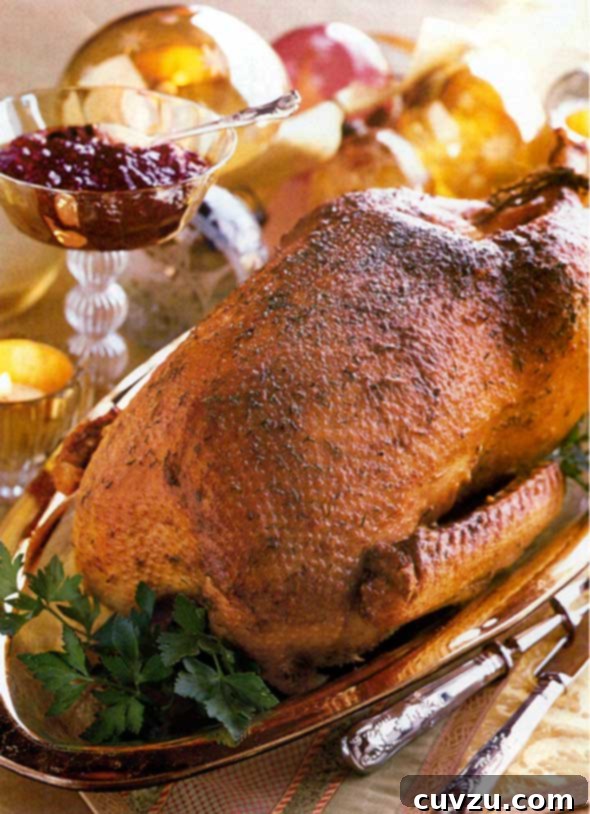
The Ultimate Mustard and Garlic Roast Goose: A Holiday Masterpiece
Prepare to elevate your holiday feast with this spectacular **mustard and garlic roast goose**. Hailed as the finest rendition ever tasted, this recipe transforms a festive classic into an unforgettable culinary experience. Paired exquisitely with vibrant red currant jelly, it promises a meal that will leave a lasting impression on your guests, making it the perfect centerpiece for Christmas, New Year’s, or any special occasion.
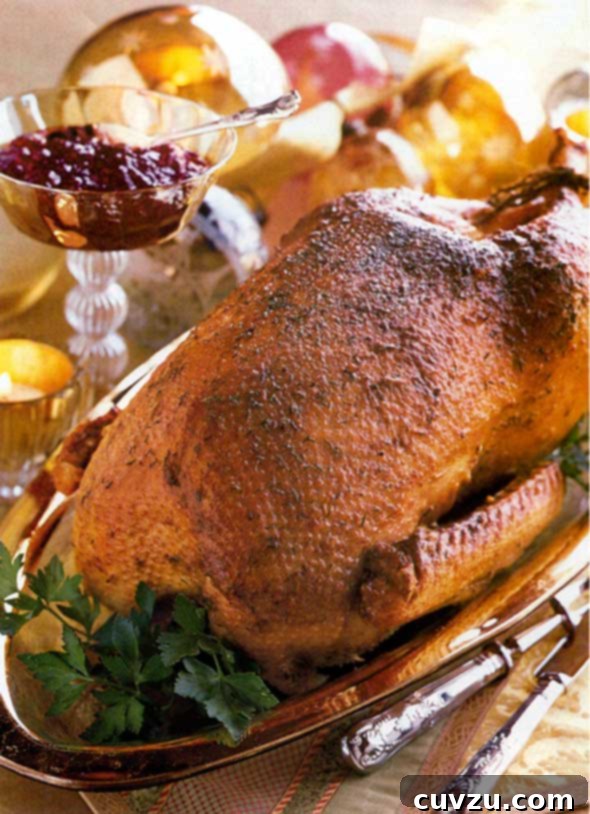
For many, the idea of roasting a whole goose can seem daunting, perhaps even a culinary Everest. Yet, as our journey with this particular recipe proves, mastering proper fowl cookery is not just achievable but incredibly rewarding. After some initial trials, a dedicated decade of refinement led to this triumphant method, creating a roast goose that is consistently succulent on the inside with wonderfully crispy, golden skin. This isn’t just a recipe; it’s a testament to persistence and the joy of perfect holiday cooking.
Why Choose Roast Goose for Your Holiday Table?
While turkey and ham often dominate holiday menus, roast goose offers a rich, distinctive flavor that stands out. Its deeper, more gamey taste and incredibly crispy skin, achieved through careful rendering of its abundant fat, provide a luxurious alternative. Historically a prized dish for celebrations, a perfectly roasted goose brings a touch of old-world charm and grandeur to any modern gathering. This specific mustard and garlic preparation infuses the bird with bright, zesty notes that cut through the richness, creating a beautifully balanced and incredibly appetizing dish.
The Secret to Success: Flavor and Technique
Our recipe hinges on a masterful combination of flavor and precise technique. The simple yet potent rub of Dijon mustard, fresh lemon juice, minced garlic, salt, pepper, and dried savory forms an incredible crust, locking in moisture and infusing the goose with aromatic deliciousness. But the magic truly unfolds in the roasting process. By initially roasting at a high temperature and then reducing it, coupled with strategic turning and fat rendering, we ensure every part of the goose cooks evenly, yielding tender meat and that coveted crackling skin. The rendered goose fat, often considered “liquid gold” by chefs, is a fantastic bonus, perfect for roasting potatoes or vegetables.
Mustard and Garlic Roast Goose Recipe
This extraordinary roast goose recipe, originating from our Connecticut neighbor, is truly the best we’ve ever had. Its unique preparation ensures a tender, flavorful bird with irresistibly crispy skin. Our neighbor Danny’s unwavering insistence? It absolutely *must* be served with red currant jelly – a pairing that delivers pure culinary harmony.
Recipe by David Leite
Mains
American
6 servings
940 kcal
50 minutes
3 hours 40 minutes
4 hours 30 minutes
Ingredients
For the Mustard and Garlic Goose
- One (13-pound) goose, thawed if frozen; neck, heart, gizzard, and wing tips reserved for stock
- 3 tablespoons Dijon mustard
- 2 tablespoons fresh lemon juice
- 2 garlic cloves, minced
- 1 teaspoon salt, plus more for seasoning
- 1/2 teaspoon freshly ground black pepper, plus more for seasoning
- 1/2 teaspoon dried savory
For the Stock
- Three (14-ounce) cans low-sodium canned chicken broth, or 5 1/4 cups homemade chicken stock
- 1 carrot, cut into 1-inch (25-mm) pieces
- 1 small onion, sliced
- 3 1/2 tablespoons balsamic vinegar
- 3 sprigs flat-leaf parsley
- Reserved goose neck (cut into 3-inch [8-cm] pieces), heart, gizzard, and wing tips
For the Gravy
- 1/2 cup plus 2 tablespoons Tawny Port
- 1/3 cup all-purpose flour
Instructions
Make the Mustard and Garlic Roast Goose
-
Prepare the Goose: Position an oven rack in the bottom third of your oven and preheat to 425°F (220°C). Thoroughly remove any excess fat and skin from both the main body cavity and the neck cavity. Using a sharp fork, meticulously pierce the goose skin all over, paying special attention to areas where the fat is thickest, such as the legs and lower breast. This crucial step allows the fat to render out, leading to exceptionally crispy skin. Generously sprinkle the inside cavities and the exterior skin with salt and freshly ground black pepper. Tie the goose legs together with kitchen twine to help the bird maintain its shape during roasting and cook more evenly. Place the prepared goose, breast-side down, on a V-shaped rack set inside a sturdy roasting pan. Pour enough water into the bottom of the pan to reach a depth of 1/2 inch; this prevents drippings from burning. Roast for 40 minutes.
Chef’s Tip: Don’t skip the piercing! It’s the key to rendering the fat and achieving that glorious crispy skin. The water in the pan also helps create a steamy environment initially, which can further aid in fat rendering before the skin crisps.
-
Render and Turn: After the initial 40 minutes, carefully remove the roasting pan from the oven. Using a large spoon or ladle, skim off all the rendered fat from the surface of the liquid in the pan. Reserve 1/4 cup of this precious rendered goose fat for the gravy, which will add incredible depth of flavor. Reduce the oven temperature to 350°F (175°C). With the aid of sturdy tongs, carefully turn the goose onto one of its sides. Continue roasting for another 30 minutes. Then, turn the goose onto its other side and roast for an additional 30 minutes. This method of turning ensures even cooking and promotes fat rendering from all sides.
Pro Tip: Goose fat is incredibly flavorful and stable. Store any extra rendered fat in a sealed container in the refrigerator for future use – it’s wonderful for roasting potatoes or vegetables!
-
Apply Glaze and Finish Roasting: While the goose is continuing its side-roasting, prepare the flavorful glaze. In a small bowl, whisk together the Dijon mustard, fresh lemon juice, minced garlic, a teaspoon of salt, 1/2 teaspoon of black pepper, and 1/2 teaspoon of dried savory until well combined. This creates a vibrant, aromatic coating. Carefully turn the goose breast-side up in the roasting pan. Using a pastry brush, generously brush the entire surface of the goose with the mustard-garlic mixture. Return the goose to the oven and continue roasting until a meat thermometer inserted into the thickest part of the thigh (without touching bone) registers 175°F (80°C). The juices from the thigh should also run clear when pierced with a fork. This final roasting stage typically takes about 50 minutes, but always rely on the internal temperature for accuracy. Once cooked, carefully transfer the beautifully roasted goose to a warm platter. Tent it loosely with aluminum foil to keep it warm and allow it to rest for at least 15-20 minutes before carving. This resting period is vital for the juices to redistribute, ensuring a tender and moist bird. Remember to reserve the precious pan juices from the roasting pan for your gravy.
Cooking Insight: Resting the goose is just as important as the cooking itself. It allows the meat to relax and reabsorb its juices, resulting in a more tender and flavorful final product. Don’t rush this step!
Meanwhile, Make the Stock
-
Simmer the Stock: While your goose is diligently roasting, turn your attention to preparing the flavorful stock. In a large saucepan, combine all the stock ingredients: the canned chicken broth (or homemade stock), the chopped carrot, sliced onion, balsamic vinegar, parsley sprigs, and the reserved goose neck pieces, heart, gizzard, and wing tips. Bring this mixture to a rolling boil over high heat. Once boiling, reduce the heat to medium-low and allow it to simmer, uncovered, until the liquid has reduced to approximately 3 cups. This concentration process intensifies the flavors. Make sure to occasionally skim any foam or impurities from the surface during simmering, which usually takes about 1 hour. Once reduced, carefully strain the stock into a clean bowl, discarding the solids. Spoon off any fat that rises to the surface; this degreased stock will form the delicious base for your gravy. Set aside.
Flavor Builder: Using the goose giblets and bones for the stock adds an unparalleled depth of flavor, making your gravy truly exceptional. Don’t throw them away!
Make the Gravy
-
Deglaze and Thicken: Once the goose is resting and you’ve reserved the pan juices, carefully spoon off any remaining fat from the top of these juices in the roasting pan. Place the roasting pan across two burners on your stovetop. Add 1/2 cup of Tawny Port to the pan. Bring the mixture to a boil over medium-high heat, whisking occasionally, and allow it to reduce until the liquid measures about 1 cup. This deglazing step captures all the flavorful browned bits from the pan. In a separate medium saucepan, over medium-low heat, whisk together the reserved 1/4 cup of goose fat and the 1/3 cup of all-purpose flour. Cook this mixture, stirring constantly, for about 5 minutes, or until the roux achieves a light brown color. This is your flavorful thickening base. Gradually whisk the reduced Port mixture from the roasting pan into the roux, followed by 2 1/2 cups of the degreased stock you prepared earlier. Bring the gravy to a gentle simmer, whisking constantly, until it thickens enough to beautifully coat the back of a spoon, which typically takes about 3 minutes. Finally, stir in the remaining 2 tablespoons of Tawny Port for an extra layer of sophisticated flavor. Season the gravy to taste with salt and pepper. Carve the rested goose and serve generous portions alongside this rich, savory gravy and, of course, a dollop of red currant jelly as recommended by Danny!
Gravy Perfection: The Tawny Port adds a wonderful sweetness and complexity to the gravy, perfectly complementing the goose. Gradual whisking is key to a smooth, lump-free gravy.

An LC Original
This recipe is a Leite’s Culinaria Original, developed and perfected through years of passion for exceptional food. Explore more unique culinary creations from our collection.
View More Original Recipes
Nutrition Information (per serving)
Calories: 940 kcal
Carbohydrates: 16 g
Protein: 42 g
Fat: 78 g
Saturated Fat: 23 g
Monounsaturated Fat: 41 g
Trans Fat: 0.002 g
Cholesterol: 181 mg
Sodium: 701 mg
Fiber: 1 g
Sugar: 5 g
Nutrition information is automatically calculated and should only be used as an approximation. Individual results may vary based on exact ingredients and preparation.
Beyond the Plate: Serving and Pairing Suggestions
While red currant jelly is the traditional and highly recommended accompaniment for this mustard and garlic roast goose, consider expanding your holiday spread with other complementary dishes. Roasted root vegetables like parsnips, carrots, and potatoes (especially if roasted in some of that glorious rendered goose fat!) make excellent companions. A light green salad with a sharp vinaigrette can offer a refreshing counterpoint to the richness of the goose. For stuffing, consider a hearty bread-based stuffing with herbs like sage and thyme.
To complement the bold flavors of the goose and its rich gravy, choose a wine with good structure. A Pinot Noir with its earthy notes and bright acidity, or a Syrah/Shiraz with its darker fruit and peppery spice, would both be excellent choices. For those who prefer a beer pairing, a robust Belgian Dubbel or a malty English Brown Ale can stand up to the richness.
Making It Your Own: Variations and Tips
- Herb Boost: Feel free to experiment with other herbs in the mustard-garlic rub. Rosemary or thyme can add a different aromatic dimension.
- Citrus Twist: Instead of just lemon juice, try a blend of lemon and orange juice for a sweeter, more fragrant glaze. You could also stuff the cavity with half a lemon and an onion for added aroma.
- Goose Fat Utilization: Remember that rendered goose fat is a culinary treasure. It has a high smoke point and imparts an incredible flavor to anything cooked in it. Save it for crispy roast potatoes, Yorkshire puddings, or even frying eggs.
- Leftovers: If you’re lucky enough to have leftovers, carved goose meat is fantastic in sandwiches, salads, or even repurposed into a hearty goose pie.
A Feast to Remember
This mustard and garlic roast goose recipe is more than just a meal; it’s an event, a tradition, and a celebration of rich, comforting flavors. It’s the kind of dish that gathers loved ones around the table, sparking conversations and creating cherished memories. The time and effort invested are richly rewarded with a centerpiece that is as visually stunning as it is delicious.
We encourage you to embark on this culinary adventure and discover the unparalleled taste of a perfectly roasted goose. Share your triumph with us and let this magnificent bird become a new highlight of your holiday traditions.
Tried this recipe?
Mention @leitesculinaria or tag #leitesculinaria on social media! We love seeing your creations.