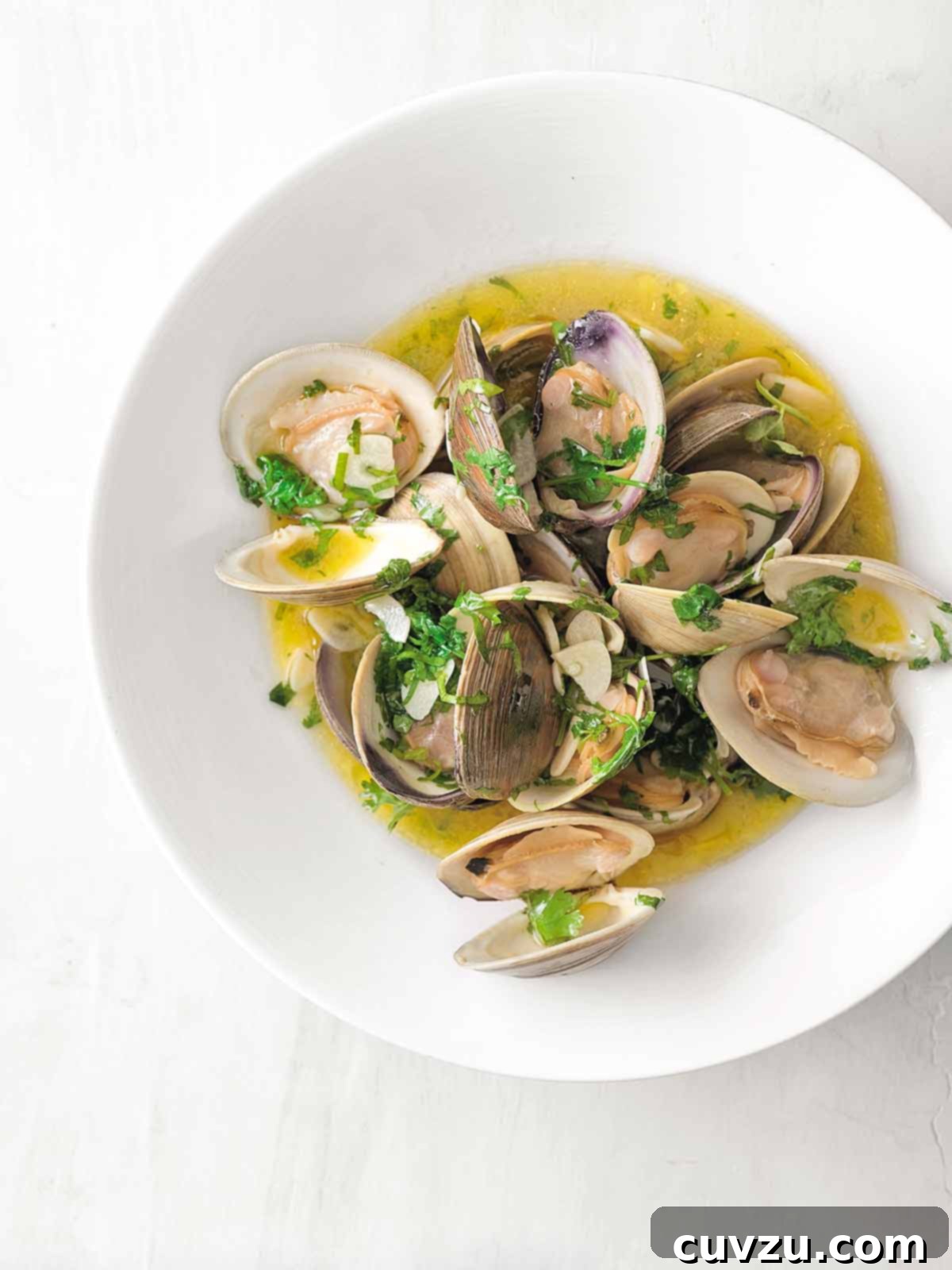
Portuguese clams with Vinho Verde, known locally as *Amêijoas à Bulhão Pato*, represent more than just a dish; they embody a culinary poem, a love letter to the ocean, and the heart of Portuguese coastal dining. This timeless classic, served generously with robust hunks of crusty bread, invites diners to luxuriate in a deeply aromatic, garlic and cilantro-rich sauce. It’s a meal that brilliantly evokes the serene beauty of seaside evenings, making it an impeccable choice for warm summer gatherings or any occasion where you crave a taste of the sea’s profound freshness.
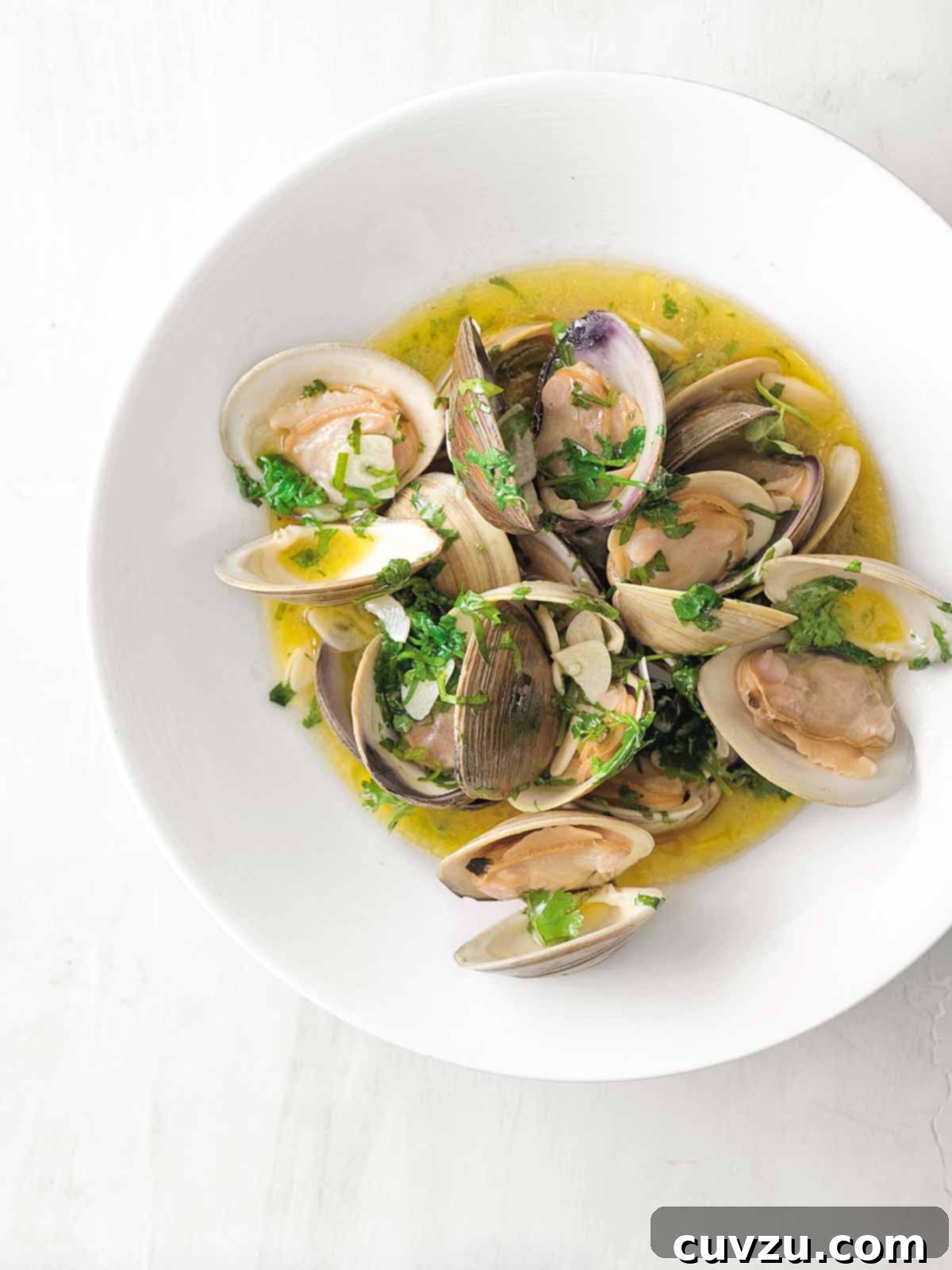
Throughout Portugal, *Amêijoas à Bulhão Pato* holds a revered place in gastronomic tradition. Its intriguing name pays homage to Bulhão Pato, a 19th-century Portuguese poet renowned less for his verses and more for his epicurean sensibilities. While his literary works may have faded from collective memory, this namesake dish has achieved legendary status, celebrated for its pure, unadulterated essence of the ocean. It’s a testament to simple ingredients prepared with profound respect, yielding an experience that is both humble and deeply luxurious.
The beauty of this dish lies in its exquisite simplicity and captivating flavor profile. As Chef George Mendes aptly describes, “This dish is so simple and delicious, I could eat it every day. Once I finish the clams, I like to spoon the sauce with the garlic and cilantro onto hunks of good crusty buttered and toasted bread.” This sentiment perfectly captures the allure: a vibrant, intensely flavored broth that begs to be savored long after the last clam has been enjoyed. It’s a hands-on, convivial eating experience that encourages sharing and lingering over every savory drop.
Portuguese Clams FAQs: Your Guide to Perfect Seafood
It’s a common culinary question, and generally speaking, a clam that remains stubbornly closed after cooking is likely dead. While the thought of not wasting food might tempt you, it’s strongly advised to discard any unopened clams. The reason for their demise before reaching your kitchen is unknown, and consuming them could pose a health risk. Furthermore, before cooking, always check your clams: if an open clam doesn’t close promptly when tapped on the counter, it’s also dead and should be discarded. Occasionally, some clams are simply so tightly sealed or robustly joined to their shells that they won’t open during cooking, even if alive. These “stubborn bastards,” as they are affectionately called, are best avoided as their toughness often makes them unpalatable anyway.
Selecting the freshest clams is paramount for a safe and delicious seafood experience. Always look for live clams with tightly closed shells when purchasing. If any are slightly ajar, a gentle tap should make them snap shut; if they don’t, discard them. It’s crucial to buy from a licensed and reputable seafood supplier or fishmonger who can provide details about their origin. Fresh clams (and other shellfish) in many regions should bear a “Harvested in the USA” or similar regional label, and your supplier should readily be able to tell you the exact harvest date and location. Don’t be alarmed if you notice a bit of dirt or sand on your clams; this “muck” actually helps keep them moist and alive until you’re ready to use them. Before cooking, ensure you properly clean them by soaking them in cold, salted water (mimicking the ocean) and scrubbing their shells thoroughly with a stiff brush to remove any lingering grit and sand. This meticulous preparation ensures that only the purest flavors of the sea make it to your plate.
Vinho Verde, meaning “green wine,” is a unique and often effervescent wine from the Vinho Verde region in northern Portugal. It’s typically light-bodied, crisp, and slightly spritzy, with notes of citrus, green apple, and sometimes a hint of salinity, making it an ideal pairing and cooking ingredient for seafood. Its bright acidity cuts through the richness of the clams and enriches the sauce without overpowering the delicate flavors. While Vinho Verde is highly recommended for authenticity, if you cannot find it, a good substitute would be another dry, crisp white wine with similar characteristics. Look for options like a dry Sauvignon Blanc, Pinot Grigio (preferably Italian), or an unoaked Albariño. Avoid sweet or heavily oaked wines, as they will alter the traditional flavor profile of the dish. The goal is to maintain that vibrant, fresh, and slightly acidic backdrop for the clams.
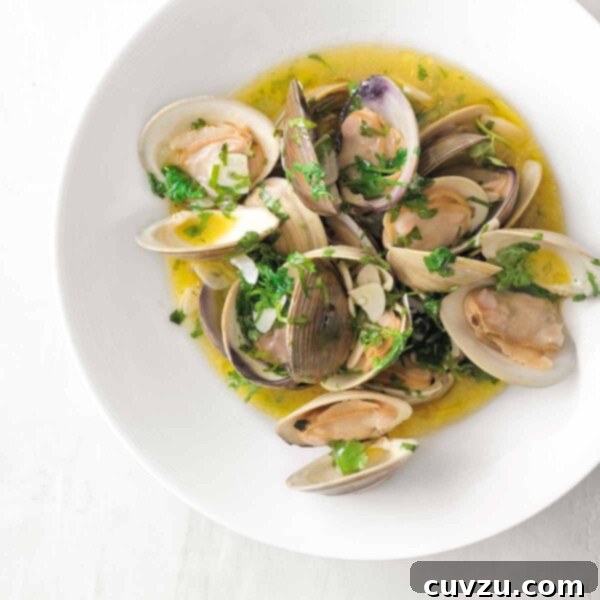
Portuguese Clams with Vinho Verde ~ Amêijoas à Bulhão Pato
David Leite
Ingredients
- Kosher salt, to taste
- 12 medium (1 1/2 pounds) littleneck clams
- Extra-virgin olive oil, for cooking and finishing
- 2 large garlic cloves, very thinly sliced crosswise
- 1 fresh bay leaf, notches torn every 1/2 inch to release maximum aroma
- 1/2 cup dry white vinho verde
- 2 sprigs plus 1/2 cup sliced fresh cilantro leaves, for garnish and flavor
- Crusty bread, for serving, ideally buttered and toasted
Instructions
-
Begin by preparing your clams. Fill a large bowl with cold water and dissolve enough kosher salt into it until the water tastes noticeably briny, much like the ocean itself. Gently submerge your clams in this salted water. Allow them to sit undisturbed for at least 10 minutes, or longer if needed, until they naturally expel any sand and grit they may contain. You’ll observe sand collecting at the bottom of the bowl as they cleanse themselves. Carefully lift the clams out of the bowl, leaving the sandy water behind, and transfer them to a colander. With a stiff-bristled brush (a clean toothbrush works wonderfully if you don’t have a kitchen brush handy), vigorously scrub each clam shell under cold running water until it is impeccably clean. This crucial step ensures a grit-free, delightful eating experience.
-
Next, prepare the aromatic base for your sauce. Heat a medium saucepan over medium-low heat. Drizzle enough extra-virgin olive oil to lightly coat the bottom of the pan. Add the very thinly sliced garlic cloves and the fresh bay leaf, with its notches torn to release its essential oils. Cook this mixture, stirring continuously to prevent burning, until the garlic becomes beautifully aromatic, gently bubbling, and turns a delicate golden hue. This usually takes about 4 minutes, ensuring the flavors are fully developed without browning too much.
-
Introduce the cleaned clams into the saucepan. Toss them gently to ensure they are thoroughly coated in the fragrant olive oil and garlic mixture, allowing them to sizzle lightly. Pour in the dry white Vinho Verde and add the cilantro sprigs. Immediately cover the saucepan with a tight-fitting lid. Increase the heat to medium-high and cook, shaking the saucepan frequently to distribute the heat and steam evenly. Monitor closely; the clams will begin to open within 5 to 8 minutes, with the liquid boiling vigorously. As soon as a clam opens, use tongs to promptly remove it and transfer it to a serving dish. This prevents them from overcooking and becoming tough.
-
Continue the cooking process. Cover the saucepan again and allow the remaining clams to cook, pulling them out as soon as they open. It is imperative to discard any clams that do not open after 5 minutes of vigorous boiling; they are dead and unsafe to eat. Patience and careful observation are key during this stage to ensure all edible clams are perfectly cooked.
-
Once all clams are cooked and removed, discard the spent bay leaf and cilantro sprigs from the saucepan. Carefully strain the exquisite cooking liquid into a large, clean bowl, ensuring no stray bits of shell or impurities remain. Swirl in about 1 tablespoon of fresh extra-virgin olive oil into the strained sauce; this adds a luxurious finish and brightens the flavors. Gently fold the opened clams back into this vibrant sauce, along with the freshly sliced cilantro leaves for a burst of herbaceous freshness.
-
Serve your Portuguese Clams with Vinho Verde immediately, while still piping hot. Accompany this delectable dish with an abundance of good crusty bread, perfect for soaking up every last drop of the glorious garlic-infused, wine-scented broth. For an even richer experience, lightly toast and butter your bread before drenching it in the sauce. A chilled glass of Vinho Verde alongside makes for an authentic and unforgettable culinary journey.
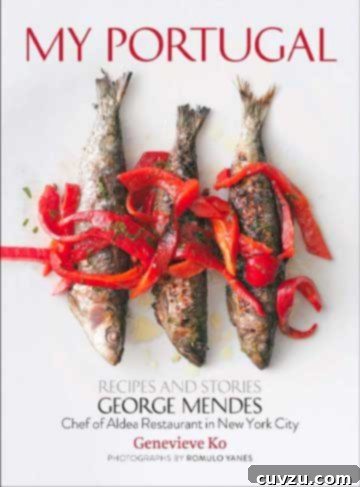
Adapted From
My Portugal
Buy On Amazon
Nutrition
Nutrition information is automatically calculated, so should only be used as an approximation.
Recipe Testers’ Reviews: A Culinary Journey from Our Kitchens to Yours
Analise Spacucello
I recently embarked on the delightful journey of making these Portuguese clams with Vinho Verde, and I must say, it was an absolutely joyous experience, perfectly complemented by a cold glass of Espiral. Having this particular Vinho Verde on hand was actually the catalyst for my decision to make the dish, and what a fortuitous decision it turned out to be! The meal was surprisingly simple to prepare and remarkably economical. I often find myself intimidated by cooking fresh seafood due to the perceived cost, but the total expense for this entire meal, including a full bottle of wine, came to a mere $20. My boyfriend and I savored every bite, imagining ourselves dining oceanside at a charming Portuguese restaurant, despite it being a Friday afternoon during a pandemic. This dish truly has the power to transport you and bring immense joy.
My strategy for maximum enjoyment involved first soaking hunks of toasted bread in the rich, aromatic sauce, ensuring each piece scooped up plenty of the tender garlic. The simple complexities of each bite—the refreshing burst of fresh cilantro, the deep aroma of garlic—were just sublime. We followed the recipe’s suggestion to the letter after devouring all the clams, spreading salted Irish butter on our remaining bread and thoroughly drenching it in the leftover sauce. It was an indulgent and utterly satisfying conclusion. I am already planning to make this dish again, and I even have plans to repurpose the incredible sauce for a pasta dinner, effectively getting two magnificent meals out of one. While you could certainly serve the clams and pasta together, I opted for a pure clam, bread, and wine lunch. The directions are incredibly straightforward and easy to follow, making this recipe accessible to cooks of all levels. And here’s a perhaps unconventional yet useful tip: I used a clean toothbrush to clean my clams since I didn’t have a kitchen brush, and it worked perfectly! For those wondering, Espiral Vinho Verde is often available at Trader Joe’s for about $4.99. Its effervescent, slightly tart, and very sippable character pairs exquisitely with the briny clams. This recipe generously serves 2, especially when accompanied by a crusty baguette, salted butter, and a refreshing glass of Espiral.
Lisa Bennett
This recipe for Portuguese clams with Vinho Verde lived up to every expectation and then some. The preparation was exceedingly easy, a delightful surprise considering the sophisticated flavors it delivered. The dish proved to be incredibly satisfying, especially when paired with a rustic loaf of Portuguese bread, perfect for soaking up every precious drop of the aromatic liquid infused with tender bits of garlic and fresh cilantro. I particularly enjoyed serving this to guests; they were thoroughly impressed and utterly unaware of how quickly and effortlessly this gourmet-quality meal came together. It truly feels like a dish born of hours in the kitchen, when in reality, it’s a testament to simple ingredients prepared with finesse.
To enhance the experience, I swirled in an extra tablespoon of high-quality olive oil just before serving, which added a wonderful sheen and richness to the sauce. For a complete and memorable dinner, I presented the clams alongside roasted lemon chicken, prepared in a cast-iron skillet, accompanied by perfectly roasted potatoes and vibrant steamed broccoli. To cap off the meal with a truly authentic touch, I made a tres leches cake from a recipe found on this very site for dessert. Of course, I also served the recommended Vinho Verde, which beautifully complemented the seafood and created a harmonious dining experience. This dish is a definite crowd-pleaser and a superb example of how simple ingredients can yield extraordinary results.