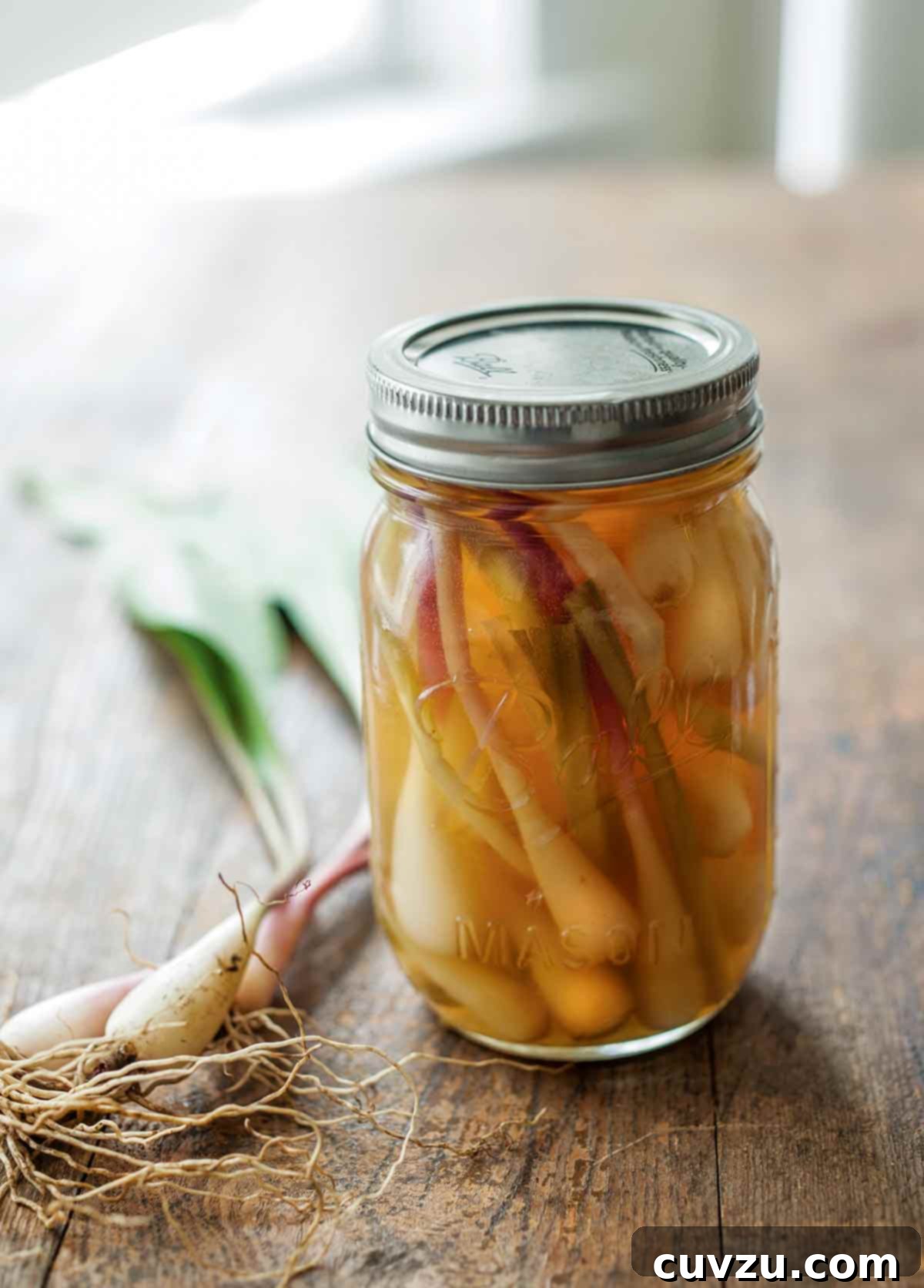
There are few culinary delights that herald the arrival of spring quite like ramps. These elusive, wild leeks emerge for just a few precious weeks each year, captivating chefs and home cooks alike with their distinctive garlicky, oniony, and subtly sweet flavor. When you encounter a bounty of fresh ramps, the urge to gather armloads is irresistible. But what to do with them all before their fleeting season ends? The answer, dear friends, lies in the art of preservation, specifically, these enchanting quick pickled ramps.
Our quick pickled ramps recipe offers a simple yet profoundly rewarding way to capture the essence of spring. Using a vibrant blend of red wine vinegar, water, turbinado sugar, and a touch of salt and freshly ground black pepper, these spring onions are transformed into a tangy, savory condiment that’s ready to enjoy within an hour. More importantly, this method extends their ephemeral shelf life, allowing you to savor their unique flavor for months in your refrigerator. Imagine the sweet, salty, garlicky smack of these ramps long after spring has faded – a true culinary treasure that brightens any meal.
What Are Ramps? The Elusive Wild Leek Explained
For those uninitiated into the world of ramps, prepare to be captivated by this extraordinary ingredient. Scientifically known as Allium tricoccum, ramps are a cherished species of wild onion native to the Eastern woodlands of North America. They present as broad, flat, lily-like green leaves that gracefully narrow to a slender, often white or purplish-red bulb, complete with delicate root hairs. Every single part of this remarkable plant is edible and bursting with a potent, yet incredibly nuanced, flavor profile that expertly combines the pungent notes of garlic with the delicate sweetness of spring onions and the fresh bite of chives.
Ramps are not easily cultivated on a large scale due to their specific habitat requirements. They thrive exclusively in shaded, moist environments, typically found beneath deciduous trees in forests from the Carolinas all the way up to Canada. This particularity, combined with their notoriously brief appearance each spring (usually from late April through early June, depending on local climate conditions), elevates ramps to the status of a highly coveted delicacy. They are truly a harbinger of spring, eagerly sought after by both passionate foragers and esteemed culinary professionals, frequently making fleeting appearances at farmers’ markets and quaint roadside stands.
The intense devotion that ramps inspire among food enthusiasts is profoundly well-deserved. Their flavor is genuinely unlike any other allium; it’s a wild, untamed, and more complex version of their cultivated relatives, offering an aromatic punch that is both distinct and unforgettable. This makes them incredibly versatile in the kitchen, capable of imparting a gourmet touch to a diverse array of dishes, from simple scrambled eggs and comforting pasta to elegantly roasted meats and crisp salads. However, their notoriously short season often presents a delicious conundrum for home cooks: how can one enjoy their exquisite taste beyond those precious few weeks? The answer lies in effective preservation methods, with pickling standing out as a perfect solution for locking in their vibrant taste for future culinary explorations.
The Magic of Quick Pickling: Preserving Spring’s Ephemeral Bounty
While traditional canning methods involve a more extensive and rigorous process to achieve long-term, shelf-stable preservation, quick pickling—also widely known as refrigerator pickling—offers a considerably simpler, faster, and equally effective technique for capturing and extending the fresh flavors of seasonal produce such as ramps. Unlike fermented pickles, which undergo a lengthy natural fermentation process, quick pickles rely on a rapid infusion of ingredients with a hot, acidic brine. This method efficiently imparts a tangy zest and preserves the produce for several weeks, or even months, when stored correctly in the refrigerator.
The inherent beauty of quick pickling is undoubtedly its immediacy and accessibility. Within a mere hour of preparation, your pickled ramps will be ready to enjoy, offering a delightful, albeit milder, “pickle tang” that will progressively deepen and intensify with each passing day. This method is particularly adept at ensuring that the delicate, fresh texture of the ramps is largely preserved, delivering a satisfying crispness that perfectly complements their naturally robust and aromatic flavor. It stands as a fantastic and approachable technique for preserving the peak freshness of seasonal ingredients without the intimidation or time commitment often associated with traditional water bath canning, making it an ideal choice for both seasoned cooks and culinary novices alike.
For ramps specifically, quick pickling is an exceptionally suitable method because it allows their unique and multifaceted characteristics to truly shine. The red wine vinegar base, rich in acidity, not only enhances their inherent garlicky notes but also introduces a pleasant sharpness that expertly cuts through the richness of various dishes. The addition of turbinado sugar in the brine plays a crucial role in balancing the vinegar’s sharp edge, meticulously crafting a harmonious sweet-and-sour profile that exquisitely complements the ramps’ natural sweetness. This preservation technique is far more than just a means to extend shelf life; it is an artful process that elevates an already extraordinary ingredient into something truly sublime and versatile, ready to transform everyday meals into gourmet experiences.
Quick Pickled Ramps: A Springtime Delicacy
By David Leite
- PIN
Print Recipe
Side Dish, Condiment
American
20 servings | 1 quart jar
24 kcal
30 minutes
5 minutes
1 hour 30 minutes
Equipment
- A 1-quart jar with a tight-fitting lid (sterilized for best practice)
- Large deep pot (non-reactive, e.g., stainless steel or enamel-coated)
- Tongs or a small slotted strainer
- Large bowl for ice bath
- Paper towels or clean kitchen towel
Ingredients
- 2 cups red wine vinegar (ensure good quality for best flavor)
- 1/2 cup water
- 1/4 cup turbinado sugar (or granulated sugar; turbinado adds a subtle molasses note)
- 1 teaspoon kosher salt (or other non-iodized salt)
- 1/2 teaspoon freshly ground black pepper
- 15 to 20 small to medium ramp bulbs (approx. 1 bunch, trimmed; see notes for preparation instructions)
Instructions
-
**Prepare the Ramps:** Begin by meticulously cleaning your ramps. Gently brush off any dirt or debris from both the bulbs and leaves under cold running water. Carefully trim off any small, stringy roots from the bottom of the bulbs. Next, snip off the vibrant green floppy leaves from the white/purplish bulbs. Reserve these flavorful greens for another culinary use, such as making a delicious ramp pesto, incorporating them into a stir-fry, or chopping them into omelets. For this pickling recipe, we will focus solely on the tender bulbs.
-
**Prepare the Brine and Ice Bath:** In a deep, non-reactive pot (such as stainless steel or enamel-coated), combine the red wine vinegar, water, turbinado sugar, kosher salt, and freshly ground black pepper. Place the pot over medium-high heat and bring the pickling liquid to a rolling boil, stirring occasionally to ensure that the sugar and salt completely dissolve. Simultaneously, prepare an ice bath: fill a large bowl generously with ice cubes and add just enough cold water to allow the ice to float freely. This ice bath is a critical step, as it will instantly halt the cooking process and preserve the ramps’ desirable crisp texture.
-
**Blanch the Ramps:** Once your pickling liquid is at a vigorous, rolling boil, carefully plunge the trimmed ramp bulbs into the hot liquid. It’s essential that the ramps are fully submerged in the brine. Blanch the ramps for a very brief duration, typically between 15 to 30 seconds. The exact timing will depend on the thickness of your ramp bulbs – skinnier ramps will cook faster and require less time, while thicker ones may need a few additional seconds. The objective here is to lightly blanch them, not to cook them until they become soft or limp.
-
**Chill the Ramps and Brine:** Immediately after blanching, swiftly use a pair of tongs or a small slotted strainer to gently remove the ramps from the hot pickling liquid. Transfer them directly into the prepared ice water bath. Allow the ramps to cool completely in the ice bath, which should take only a couple of minutes. This rapid chilling process is vital for retaining their vibrant color and crisp texture. Remove the pickling liquid from the heat and set it aside to cool completely to room temperature – do not pour hot liquid over the ramps in the jar.
-
**Dry the Ramps:** Once the ramps are thoroughly chilled and cool to the touch, drain them from the ice water. Pat them meticulously dry with clean paper towels or a fresh kitchen towel. It is crucial to remove as much excess moisture as possible, as any residual water could potentially dilute your carefully prepared brine and affect the quality of the pickle.
-
**Jar the Ramps:** Neatly arrange the dried ramps into a clean, sterilized 1-quart glass jar. Pack them snugly but gently, avoiding crushing the delicate bulbs. Once the pickling liquid has cooled completely to room temperature, pour it over the ramps in the jar, ensuring that all the ramps are entirely submerged. If any ramps tend to float, you can use a clean fermentation weight or even a small piece of plastic wrap pressed down gently to keep them under the liquid, which is essential for proper pickling and preservation.
-
**Store and Enjoy:** Seal the jar tightly with its lid and immediately transfer it to the refrigerator for storage. The quick pickled ramps are technically ready to nibble within an hour, offering a delicate tang. However, their flavor will significantly deepen and become much more pronounced after at least a day or two. They will keep beautifully and safely for several months in the refrigerator, providing a delightful taste of spring whenever you desire. Remember, the longer they remain submerged in the brine, the more intense and complex their tangy, garlicky pickle flavor will become.
Notes on Ramps & Preparation
While the initial recipe notes provided a basic definition of ramps, it’s important to reiterate their unique nature. Ramps are distinct from regular spring onions or scallions due to their potent garlic and onion flavor profile. When preparing them for pickling, remember to trim the roots and leaves. While the bulbs are perfect for pickling, don’t discard the vibrant green leaves! They are highly flavorful and excellent for sautéing, making pesto, or finely chopping into salads and omelets. Utilizing both parts of the ramp ensures no part of this seasonal gem goes to waste.

Adapted From
Breakfast
Buy On Amazon
Nutrition Facts
Serving: 1 pickled ramp
Calories: 24 kcal
Carbohydrates: 5 g
Protein: 1 g
Fat: 1 g
Saturated Fat: 1 g
Sodium: 58 mg
Fiber: 1 g
Sugar: 3 g
Nutrition information is automatically calculated, so should only be used as an approximation.
Tried this recipe?
Mention @leitesculinaria or tag #leitesculinaria!
Serving Suggestions for Your Quick Pickled Ramps
Once you’ve mastered the art of pickling ramps, a world of culinary possibilities opens up before you. Their distinctive tangy, garlicky crunch makes them an incredibly versatile condiment, capable of elevating a wide spectrum of dishes from the everyday to the gourmet. Here are some delectable and creative ways to incorporate your homemade quick pickled ramps into your meals:
- **Charcuterie and Cheese Boards:** Arrange these vibrant pickled ramps artfully on any cheese or charcuterie board. Their bright, piquant flavor provides a delightful contrast to rich cheeses, savory cured meats, creamy pâtés, and crusty bread.
- **Elevated Sandwiches and Burgers:** Add a few whole or sliced pickled ramps to your favorite sandwich, wrap, or gourmet burger for an unexpected burst of flavor and a satisfying textural crunch. They pair exceptionally well with grilled chicken, slow-cooked pulled pork, robust veggie burgers, or a classic Reuben.
- **Flavorful Salads:** Chop your pickled ramps and toss them into green salads, hearty potato salads, or refreshing pasta salads for an extra layer of zest. The leftover pickling liquid can also be whisked into a homemade vinaigrette to create an even more intense ramp-infused dressing.
- **Brunch and Breakfast Brilliance:** Instantly elevate your breakfast or brunch offerings by serving pickled ramps alongside scrambled eggs, fluffy omelets, savory frittatas, or even stylishly layered on top of creamy avocado toast.
- **Garnish for Soups and Stews:** A spoonful of finely chopped pickled ramps can add a fresh, acidic, and zesty finishing touch to rich, creamy soups, hearty stews, or even a comforting bowl of instant ramen.
- **Wholesome Grain Bowls:** Incorporate them into your healthy grain bowls alongside roasted vegetables, lean proteins, and a flavorful dressing for an enhanced texture and an invigorating tang that brightens the entire dish.
- **Sophisticated Cocktail Garnish:** For a truly unique touch, use a pickled ramp as a sophisticated garnish for savory cocktails, much in the same vein as a pickled onion in a classic Gibson martini or a spicy Bloody Mary.
- **Antipasto Platters:** Feature them prominently on an antipasto platter, alongside marinated olives, roasted red peppers, artichoke hearts, and other pickled vegetables for a vibrant spread.
- **Pizza Topping Perfection:** Slice the pickled ramps thinly and scatter them over a freshly baked pizza immediately after it comes out of the oven. The warmth will slightly soften them while preserving their pungent, fresh appeal.
- **Gourmet Grilled Cheese:** As enthusiastically shared by one of our recipe testers, a unique jam made from pickled ramps can be an exceptional addition to a super-special grilled cheese sandwich. You can also simply tuck a few whole pickled ramps inside for a tangy surprise.
Storage Tips for Maximum Freshness and Longevity
The inherent beauty of quick pickling lies in the significantly extended shelf life it graciously grants to highly seasonal ingredients like ramps. To ensure your homemade quick pickled ramps remain as fresh, delicious, and safe as possible for an extended period, adhering to these straightforward storage guidelines is paramount:
- **Refrigeration is Absolutely Essential:** Always, without exception, store your sealed jar of pickled ramps in the refrigerator. The consistently cold temperature is fundamental for inhibiting the growth of spoilage-causing microorganisms and for maintaining the overall integrity and crispness of the pickle.
- **Complete Submersion in Brine:** It is crucial to ensure that all of the ramp bulbs are completely and continuously submerged in the pickling liquid. Any ramps that are exposed to air, even for short periods, are susceptible to spoilage much more quickly. If you notice any ramps floating above the brine, gently press them down with a clean spoon or, for a more permanent solution, use a small, clean glass weight or a specialized fermentation weight to keep them firmly under the liquid.
- **Maintain Utensil Cleanliness:** To prevent the introduction of any potential contaminants that could drastically shorten their shelf life, always use impeccably clean utensils when reaching into the jar to remove pickled ramps. Avoid using your fingers or utensils that have touched other foods without being washed.
- **Understanding Shelf Life:** When properly stored in the refrigerator, quick pickled ramps can safely last for several months. While they are technically safe to consume for an extended duration, their optimal texture and peak flavor will typically be experienced within the first 2 to 3 months. Beyond this period, the ramps may begin to soften slightly, and the pickle tang might become exceptionally intense, but they will generally remain perfectly edible.
- **Vigilance for Spoilage:** Although occurrences are rare when proper pickling techniques and refrigeration protocols are followed, it is always wise to trust your senses. If you detect any unusual or off-putting smells, observe the presence of mold, or notice any uncharacteristic changes in texture, color, or the appearance of the liquid, it is always best practice to err on the side of caution and discard the entire batch.
Recipe Testers’ Reviews
Elsa M. Jacobson
These special treasures will be happily enjoyed as a condiment, savoring each bite with the knowledge that these are a once-a-year treat.
The recipe itself is straightforward, easy, and quick. Because I had super-skinny ramps, I needed to be especially gentle when removing the ramps from the boiling pickling liquid. Also, the cooling process was barely a couple of minutes. The ramps fit nicely in a quart jar. I put them in the refrigerator after about an hour and a half. I tasted one the next day and it was delicious—a little pickley, a little oniony, a little garlicky.
This quick pickled ramps recipe was partly the thrill of the chase—I thought they would be easy to come by, but, after a number of failed attempts, I located the most beautiful, pencil-thin, super-fresh ramps in Denver. The sign on the ramps said, “Only available for a few weeks!” Two weeks later, tonight, at the time of this writing, I just spotted ramps in a store here in Chicago that looked equally fresh but much bigger than the ones I had purchased out West. The biggest difference between the photograph above and my beautiful pickled ramps is that my pickling liquid is VERY deep and beautifully red from the red wine vinegar I used and not at all the pale Champagne color of the liquid in the photo. I look forward to testing these special treats in several months.
Speaking of treats, when I shared with a friend that I had made these ramp pickles, she shared in return that she has enjoyed a jam made from pickled ramps in a super-special grilled cheese sandwich, and I’m maybe going to need to try this before I’m out of stock of pickled ramps!
Mary Kate K.
I am a self-professed onion and garlic lover. I love onions—white, green, red, sweet, or plain old yellow. The same is true with garlic— shallots, scallions, leeks, all members are welcome in my kitchen. And there’s so much hype about ramps! With all the talk of their limited availability, I was so excited when I went to Whole Foods and saw a large display as soon as I walked in. This recipe was pretty straightforward, with no real surprises. The resulting pickled ramps were delicious with a great texture.
Once the ramps were cleaned and cut down, there wasn’t much left. I would have purchased twice the amount since there was quite a lot of liquid (just over a quart). The ramps were perfectly blanched in less than 30 seconds but still had a nice bite to them. I used an 18-ounce confiture jar to store the ramps. I tried the ramps after the pickling liquid cooled and I had poured it over the ramps in the jar. The flavor of the brine went nicely with the sweet, mildly leeky, garlicky flavor of the ramps. I felt almost guilty not using the leafy greens in the same recipe, I felt like they were so valuable (and not cheap).
Although I wish I had bought twice as many since they were addictive and I could have eaten the entire batch. I can now add ramps to another member of the onion and garlic family that I love.
Conclusion: Savoring Spring All Year Round
The fleeting appearance of ramps each spring is a truly joyous and eagerly anticipated event for food enthusiasts and culinary adventurers alike. While their season is undeniably short, the quick pickling method offers a fantastic and accessible opportunity to extend this delight, allowing you to enjoy the unique, intensely garlicky-onion flavor of these wild leeks for many months to come. This simple yet effective recipe not only serves to preserve these precious springtime onions but also ingeniously transforms them into an incredibly versatile and flavorful condiment that possesses the power to elevate countless dishes, from the most humble everyday sandwiches to the most elaborate and sophisticated charcuterie boards.
We encourage you to embrace the seasonal magic that ramps bring. Take the opportunity to gather your ramps, immerse yourself in this quick pickling adventure, and prepare to be rewarded handsomely. You will find your refrigerator stocked with beautiful jars full of tangy, vibrant goodness that will serve as a delicious reminder of spring’s fresh promise, no matter what time of year it is. Happy pickling, and enjoy the taste of spring all year long!